Tiji Festival 2027 in Upper Mustang: Complete Travel Guide to Lo Manthang

The Tiji Festival 2027 is a three-day Buddhist celebration held in Lo Manthang, Upper Mustang, Nepal, combining sacred masked dances, religious rituals, traditional costumes, music, prayers, and centuries-old Himalayan culture. The 2027 festival is scheduled for June 1–3, 2027.
The festival follows the Tibetan lunar calendar, so the Gregorian dates change each year. For travelers planning the 2027 celebration, reaching Lo Manthang before June 1 is strongly recommended because Upper Mustang is a remote, high-altitude region where road and transportation conditions can affect travel times.
The Upper Mustang Tiji Festival Tour 2027 combines the festival with a scenic journey through Kathmandu, Pokhara, Marpha, Samar, Lo Manthang, and Jomsom, providing an opportunity to experience both the religious celebration and the distinctive cultural landscape of Mustang.
Tiji Festival 2027 at a Glance
| Category | Details |
|---|---|
| Festival Name | Tiji Festival / Tenchi Festival |
| Year | 2027 |
| Festival Dates | June 1–3, 2027 |
| Duration | 3 Days |
| Main Location | Lo Manthang, Upper Mustang |
| Country | Nepal |
| Religious Tradition | Vajrayana Buddhism |
| Main Performances | Sacred masked dances and rituals |
| Tour Duration | 12 Days |
| Highest Altitude | Approx. 3,800–3,840 m |
| Main Cultural Site | Lo Manthang |
| Main Travel Style | Cultural, Scenic & Adventure |
| Best For | Culture, Photography, Heritage & Adventure |
What Is the Tiji Festival?
The Tiji Festival is a sacred Buddhist festival celebrated annually in Lo Manthang, Upper Mustang. Nepal Tourism Board identifies Tiji, also known as Tenchi, as a sacred Buddhist ritual associated with Vajrakila, also known as Dorje Phurba or Vajrakumar, a powerful figure in Vajrayana Buddhism associated with removing negative forces.
The festival is famous for its masked dances performed by Buddhist monks, colorful ceremonial costumes, religious music, prayers, and rituals. The performances communicate a religious story through movement and symbolism.
For visitors, Tiji provides a rare opportunity to observe a living Himalayan Buddhist tradition in its historic cultural setting rather than experiencing a festival designed only for tourism.
What Does Tiji Festival Mean?
The Tiji Festival is associated with the removal of negative forces and the restoration of peace, harmony, and prosperity.
The festival's religious traditions are connected with Vajrakila practice and the symbolic victory of positive forces over destructive influences. Nepal Tourism Board explains the festival through its connection with Vajrakila and the removal of negative forces.
The main themes include:
- Peace
- Protection
- Harmony
- Spiritual purification
- Prosperity
- Community well-being
- Victory over negative forces
- Preservation of Buddhist culture
History of Tiji Festival
The Tiji tradition has deep roots in the religious history of Upper Mustang. Nepal Tourism Board states that the festival began in the early 15th century, was revived in the 17th century, and was restored again in 1963.
The tradition is connected with the Buddhist practice of Vajrakila, which has historical links to Buddhist masters including Padmasambhava.
Upper Mustang itself has a remarkable political and cultural history. Lo Manthang was the historic capital of the Kingdom of Mustang, and the region maintained a distinct cultural identity for centuries.
This historical background helps explain why the Tiji Festival remains such an important part of local identity.
Tiji Festival 2027 Dates
The Tiji Festival 2027 will be celebrated from June 1 to June 3, 2027 in Lo Manthang.
| Festival Day | Date | Traditional Name | Main Theme |
|---|---|---|---|
| Day 1 | June 1, 2027 | Tsa Chham | Awakening and cleansing |
| Day 2 | June 2, 2027 | Nga Chham | Battle against destructive forces |
| Day 3 | June 3, 2027 | Rha Chham | Victory, final rituals and blessings |
Current 2027 festival information identifies these three days and their traditional names.
Tiji Festival 2028 Dates
Current published festival schedules list the 2028 Tiji Festival for May 21–23, 2028. Since Tiji follows the Tibetan lunar calendar, future dates should be reconfirmed before making non-refundable travel arrangements.
| Year | Festival Dates |
|---|---|
| 2027 | June 1–3, 2027 |
| 2028 | May 21–23, 2028 |
Where Is the Tiji Festival Celebrated?
The Tiji Festival is celebrated in Lo Manthang, the historic walled settlement of Upper Mustang.
Lo Manthang is one of Nepal's most culturally distinctive Himalayan destinations. Traditional architecture, Buddhist monasteries, ancient streets, prayer flags, chortens, and the surrounding high-altitude landscape create a unique setting for the festival.
Nepal Tourism Board identifies Lo Manthang as the historic cultural center and former capital of Upper Mustang.
Why Is Lo Manthang Important to Tiji Festival?
Lo Manthang is not simply the location where Tiji takes place. The settlement is deeply connected with the history, religion, architecture, and cultural identity of Upper Mustang.
Visitors can combine the festival with exploration of:
- Historic walled city
- Ancient monasteries
- Traditional houses
- Royal heritage
- Buddhist shrines
- Prayer wheels
- Mani walls
- Traditional streets
This combination makes a Tiji Festival journey considerably more comprehensive than attending the festival alone.
What Happens During Tiji Festival?
The three-day celebration includes sacred masked dances, prayers, chanting, traditional music, costumes, religious rituals, and ceremonial performances.
The performances are traditionally carried out by monks associated with the monasteries of Lo Manthang. Current travel information describes the three days as Tsa Chham, Nga Chham, and Rha Chham, representing different stages of the festival's religious narrative.
The exact daily schedule can vary according to local religious arrangements, so travelers should follow the final program announced locally.
Day 1: Tsa Chham, June 1, 2027
The first day of the Tiji Festival begins the religious narrative through sacred masked dances and rituals.
The first day's performances are associated with the awakening and cleansing of the festival space from negative influences.
Travelers can expect:
- Masked monk dances
- Traditional costumes
- Religious chanting
- Ceremonial music
- Buddhist rituals
- Local community participation
Day 2: Nga Chham, June 2, 2027
The second day develops the central religious story through more elaborate masked dances and ritual performances.
Current festival descriptions associate this day with the battle against destructive forces.
The atmosphere is particularly vibrant, with colorful costumes, masks, traditional instruments, and large gatherings around the festival area.
Day 3: Rha Chham, June 3, 2027
The third day brings the religious narrative toward its victory and symbolic conclusion.
The final rituals are associated with the banishment of negative forces and blessings for peace and prosperity.
For travelers, attending the final day completes the experience of the three-day festival rather than seeing only one part of the celebration.
Tiji Festival Masked Dance
The Tiji Festival masked dance is the most visually recognizable element of the celebration.
Monks perform traditional ritual dances while wearing elaborate masks and colorful ceremonial clothing. The movements, masks, music, and costumes have religious significance.
Important visual elements include:
- Traditional masks
- Colorful robes
- Ceremonial headwear
- Drums
- Cymbals
- Long horns
- Religious gestures
- Structured dance movements
For photographers, the festival provides exceptional opportunities to capture cultural portraits, religious ceremonies, traditional costumes, architecture, and Himalayan landscapes.
Tiji Festival and Tibetan Buddhist Culture
Upper Mustang has a strong Tibetan Buddhist cultural heritage.
The culture can be experienced through:
| Cultural Element | What Travelers Can See |
|---|---|
| Monasteries | Religious buildings and Buddhist traditions |
| Prayer Flags | Colorful flags around villages and sacred sites |
| Prayer Wheels | Traditional Buddhist religious objects |
| Mani Walls | Stone walls containing sacred inscriptions |
| Chortens | Buddhist religious monuments |
| Masked Dances | Religious festival performances |
| Traditional Architecture | Historic houses and monasteries |
The Tiji Festival brings many of these cultural elements together in one celebration.
Upper Mustang Landscape
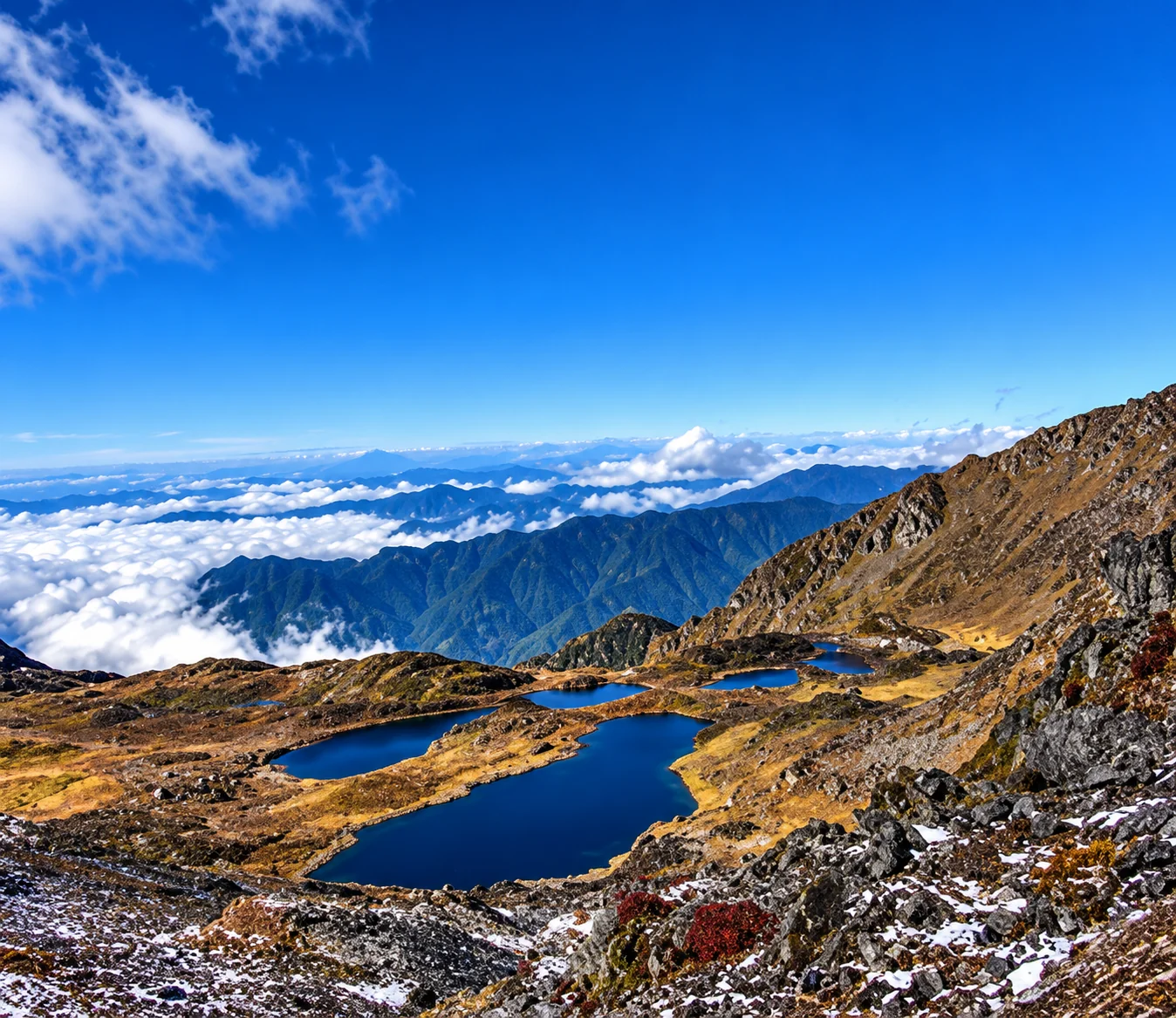
Upper Mustang is famous for its dry, rugged, high-altitude landscape, which differs dramatically from the green hills and forests found in many other parts of Nepal.
The region lies within the Himalayan rain shadow, resulting in comparatively dry conditions. Nepal Tourism Board identifies Upper Mustang as a rain-shadow area and notes its distinctive landscape and cultural character.
Travelers can expect:
- Red cliffs
- Brown and ochre mountains
- Dry valleys
- Rock formations
- Deep gorges
- High Himalayan peaks
- Traditional villages
- Kali Gandaki Valley
Nearby Places to Visit During the Tiji Festival Tour
| Destination | Main Attraction | Travel Interest |
|---|---|---|
| Lo Manthang | Tiji Festival and walled city | Culture & heritage |
| Chhoser | Ancient cave settlements | History & archaeology |
| Tsarang | Buddhist heritage | Culture |
| Ghami | Mani walls and traditional village | Heritage |
| Samar | Himalayan settlement | Local culture |
| Marpha | Thakali village | Architecture & food |
| Jomsom | Kali Gandaki Valley | Scenery & transport |
Marpha Village
Marpha is one of the best-known traditional villages in Mustang.
The village is recognized for its:
- Whitewashed houses
- Stone-paved streets
- Apple orchards
- Thakali culture
- Traditional architecture
- Mountain scenery
Marpha provides a cultural transition between the lower Mustang region and the more remote Upper Mustang landscape.
Samar Village
Samar is a traditional mountain settlement on the route toward Lo Manthang.
The village offers:
- Traditional houses
- Mountain scenery
- Local community experiences
- Dry Himalayan landscapes
- Quiet village surroundings
Ghami Village
Ghami is one of Upper Mustang's culturally significant settlements.
Highlights include:
- Traditional houses
- Buddhist heritage
- Mani walls
- Dry mountain scenery
- Local village life
Tsarang Village
Tsarang is an important cultural stop in Upper Mustang.
Visitors can explore:
- Traditional architecture
- Buddhist heritage
- Monastery areas
- Historic settlement
- Mountain landscapes
Chhoser Cave Settlements
Chhoser is particularly attractive for travelers interested in ancient cave settlements and Himalayan archaeology.
The surrounding area includes:
- Ancient caves
- Rock formations
- Traditional villages
- Buddhist cultural sites
- Dramatic landscapes
Jomsom and Kali Gandaki Valley
Jomsom is one of the main gateways to the Mustang region.
The area provides views of:
- Kali Gandaki River Valley
- Rocky mountains
- Traditional villages
- Dhaulagiri and Annapurna landscapes
- Dry Himalayan terrain
Jomsom is also an important transportation point for journeys between Mustang and Pokhara.
Upper Mustang Tiji Festival Tour 2027 Route
The 12-day itinerary follows:
Kathmandu → Pokhara → Marpha → Samar → Lo Manthang → Jomsom → Pokhara → Kathmandu
| Route | Main Experience |
|---|---|
| Kathmandu → Pokhara | Scenic Himalayan foothill journey |
| Pokhara → Marpha | Kali Gandaki and Mustang scenery |
| Marpha → Samar | Traditional Mustang villages |
| Samar → Lo Manthang | Upper Mustang landscapes |
| Lo Manthang | Three-day Tiji Festival |
| Lo Manthang → Jomsom | Scenic Mustang return |
| Jomsom → Pokhara | Kali Gandaki Valley |
| Pokhara → Kathmandu | Return journey |
12-Day Upper Mustang Tiji Festival Tour 2027 Itinerary
| Day | Date | Program | Meals |
|---|---|---|---|
| Day 1 | May 27 | Arrival in Kathmandu | Dinner |
| Day 2 | May 28 | Kathmandu to Pokhara | Breakfast & Dinner |
| Day 3 | May 29 | Pokhara to Marpha | Breakfast & Dinner |
| Day 4 | May 30 | Marpha to Samar | Breakfast & Dinner |
| Day 5 | May 31 | Samar to Lo Manthang | Breakfast & Dinner |
| Day 6 | June 1 | First Day of Tiji Festival | Breakfast & Dinner |
| Day 7 | June 2 | Second Day of Tiji Festival | Breakfast & Dinner |
| Day 8 | June 3 | Third Day of Tiji Festival | Breakfast & Dinner |
| Day 9 | June 4 | Lo Manthang to Jomsom | Breakfast & Dinner |
| Day 10 | June 5 | Jomsom to Pokhara | Breakfast & Dinner |
| Day 11 | June 6 | Pokhara to Kathmandu | Breakfast & Dinner |
| Day 12 | June 7 | Final Departure or Trip Extension | Breakfast |
Day 1: Arrival in Kathmandu
Arrive at Tribhuvan International Airport and meet the representative for a private transfer to the hotel. After check-in, relax and prepare for the Upper Mustang journey.
Activity: Airport Arrival & Hotel Transfer
Meals: Dinner
Accommodation: Hotel
Day 2: Kathmandu to Pokhara
Drive from Kathmandu to Pokhara through Nepal's scenic hill country. The journey passes through river valleys, terraced hillsides, rural settlements, and mountain scenery.
Activity: Scenic Drive to Pokhara
Meals: Breakfast & Dinner
Accommodation: Hotel
Day 3: Pokhara to Marpha
Continue toward Mustang and travel to Marpha, one of the region's most attractive traditional villages.
The landscape gradually changes from green hills into the dry mountain environment of Mustang.
Activity: Scenic Drive & Village Exploration
Meals: Breakfast & Dinner
Accommodation: Hotel / Guesthouse
Day 4: Marpha to Samar
Continue toward Upper Mustang through increasingly dramatic mountain landscapes.
The journey provides opportunities to observe traditional villages, Buddhist cultural sites, and the changing geography of the Mustang region.
Activity: Mountain Road Journey
Meals: Breakfast & Dinner
Accommodation: Guesthouse
Day 5: Samar to Lo Manthang
Continue toward Lo Manthang, the historic walled settlement and cultural center of Upper Mustang.
Arrive before the festival begins, check in, and prepare for the three-day Tiji celebration.
Activity: Drive to Lo Manthang
Meals: Breakfast & Dinner
Accommodation: Hotel / Guesthouse
Day 6: First Day of Tiji Festival
Attend the first day of Tiji Festival 2027.
Experience sacred masked dances, traditional costumes, religious music, Buddhist rituals, and local community participation.
Activity: Tiji Festival Day 1
Meals: Breakfast & Dinner
Accommodation: Hotel / Guesthouse
Day 7: Second Day of Tiji Festival
Attend the second day of the Tiji Festival and continue experiencing the traditional masked dances and religious ceremonies.
The day provides additional opportunities for cultural observation and photography.
Activity: Tiji Festival Day 2
Meals: Breakfast & Dinner
Accommodation: Hotel / Guesthouse
Day 8: Third Day of Tiji Festival
Experience the final day of Tiji Festival 2027 and witness the closing religious rituals and symbolic conclusion of the celebration.
Activity: Tiji Festival Day 3
Meals: Breakfast & Dinner
Accommodation: Hotel / Guesthouse
Day 9: Lo Manthang to Jomsom
Begin the return journey from Lo Manthang to Jomsom through the spectacular landscapes of Upper Mustang.
Activity: Scenic Drive to Jomsom
Meals: Breakfast & Dinner
Accommodation: Hotel / Guesthouse
Day 10: Jomsom to Pokhara
Continue from Jomsom to Pokhara through the Kali Gandaki Valley.
Activity: Scenic Drive to Pokhara
Meals: Breakfast & Dinner
Accommodation: Hotel
Day 11: Pokhara to Kathmandu
Drive back to Kathmandu. After arrival, enjoy free time for shopping, relaxation, or additional sightseeing.
Activity: Drive to Kathmandu
Meals: Breakfast & Dinner
Accommodation: Hotel
Day 12: Final Departure or Extend the Trip
Transfer to Tribhuvan International Airport for the international departure.
Travelers with additional time can extend the journey with other destinations and activities in Nepal.
Activity: Airport Departure / Trip Extension
Meals: Breakfast
Best Time to Visit Upper Mustang for Tiji Festival
For the Tiji Festival 2027, the ideal travel period is late May to early June, with the main festival taking place from June 1–3.
Upper Mustang's rain-shadow geography makes it considerably drier than many areas of Nepal.
| Season | Months | Travel Experience |
|---|---|---|
| Spring | March–May | Dry weather and scenic landscapes |
| Tiji Festival | May–June | Best period for festival travel |
| Monsoon | June–August | Relatively dry Upper Mustang conditions |
| Autumn | September–November | Clear mountain views |
| Winter | December–February | Very cold and challenging conditions |
Upper Mustang Weather During Tiji Festival
Travelers visiting in early June should prepare for:
- Cold mornings
- Cool evenings
- Strong afternoon winds
- Dry air
- Strong sunlight
- Changing mountain weather
Layered clothing is recommended because temperatures can vary considerably between daytime and nighttime.
Upper Mustang Tiji Festival Tour Difficulty
The road-based itinerary is generally moderate because most long-distance travel is by vehicle rather than on foot.
Travelers should nevertheless be prepared for:
- High altitude
- Long mountain drives
- Winding roads
- Short walks
- Cold weather
- Remote travel conditions
The highest point of the itinerary is approximately 3,800–3,840 meters around Lo Manthang.
Upper Mustang Altitude
Lo Manthang is approximately 3,800 meters above sea level, with some travel references using approximately 3,840 meters.
Travelers should:
- Stay hydrated
- Walk slowly
- Rest adequately
- Avoid excessive alcohol
- Eat regular meals
- Inform the guide about concerning symptoms
Upper Mustang Travel Permits
Upper Mustang is a restricted travel area and requires the applicable restricted-area permit.
The current Department of Immigration trekking-route fee table lists USD 50 per person per day for the Upper Mustang restricted area. However, official Department of Immigration pages currently show differing fee information, so the applicable fee for a 2027 journey should be confirmed before booking.
A registered travel agency can assist with:
- Restricted-area permits
- Required documentation
- Transportation
- Accommodation
- Guide arrangements
- Festival logistics
Upper Mustang Accommodation
| Destination | Accommodation | Typical Facilities |
|---|---|---|
| Kathmandu | Hotel | Modern facilities |
| Pokhara | Hotel | Comfortable tourist facilities |
| Marpha | Hotel / Guesthouse | Local mountain accommodation |
| Samar | Guesthouse | Basic facilities |
| Lo Manthang | Hotel / Guesthouse | Local Himalayan hospitality |
| Jomsom | Hotel / Guesthouse | Comfortable mountain stay |
Because the Tiji Festival creates increased demand, early accommodation booking is recommended.
Food During the Tiji Festival Tour
| Food Category | Common Options |
|---|---|
| Nepali | Dal Bhat, curry, vegetables |
| Tibetan | Momos, thukpa, Tibetan bread |
| Chinese | Fried rice, noodles |
| Continental | Pasta, eggs, sandwiches |
| Soups | Vegetable and noodle soups |
| Beverages | Tea, coffee, hot lemon, hot chocolate |
Vegetarian food is generally available. Special dietary requirements should be communicated before departure.
Tiji Festival 2027 Packing List
| Item | Purpose |
|---|---|
| Warm Jacket | Cold mountain temperatures |
| Fleece | Warm layering |
| Thermal Layers | Cold mornings and evenings |
| Windproof Jacket | Protection from strong winds |
| Comfortable Shoes | Walking around villages and festival areas |
| Warm Socks | Cold-weather comfort |
| Gloves | Hand protection |
| Warm Hat | Protection from cold |
| Sunglasses | Strong Himalayan sunlight |
| Sunscreen | UV protection |
| Water Bottle | Hydration |
| Power Bank | Limited charging options |
| Personal Medicines | Individual requirements |
| Camera | Festival and landscape photography |
Tiji Festival Photography Guide
The festival is particularly suitable for cultural and documentary photography.
Popular subjects include:
- Masked dancers
- Monks
- Traditional costumes
- Festival ceremonies
- Lo Manthang architecture
- Monasteries
- Prayer flags
- Traditional villages
- Himalayan landscapes
Always respect local photography restrictions and ask permission before taking close-up portraits.
Tiji Festival Cultural Etiquette
| Recommended | Avoid |
|---|---|
| Dress respectfully | Inappropriate clothing |
| Ask before portraits | Taking close-up photos without permission |
| Follow festival instructions | Entering restricted areas |
| Respect monks | Interrupting ceremonies |
| Keep the area clean | Leaving waste |
| Respect sacred objects | Touching religious objects |
| Maintain quiet during rituals | Excessive noise |
Responsible Tourism in Upper Mustang
Upper Mustang contains valuable cultural and environmental heritage. Travelers can help protect the destination by:
- Supporting local businesses
- Staying in local accommodation
- Buying local products
- Reducing plastic waste
- Using reusable water bottles
- Respecting monasteries
- Protecting historic structures
- Keeping villages clean
- Following local regulations
- Respecting local traditions
Travel Insurance for Upper Mustang
Travel insurance is strongly recommended for an Upper Mustang journey.
A suitable policy should ideally cover:
- Medical emergencies
- Emergency evacuation
- Trip cancellation
- Trip interruption
- Travel delays
- Lost baggage
Travelers should check whether the policy covers the maximum elevation of the itinerary.
Upper Mustang Tiji Festival Tour Cost
The total tour price depends on:
| Cost Factor | Price Impact |
|---|---|
| Group Size | Private groups generally cost more per person |
| Vehicle | Vehicle type affects transportation cost |
| Accommodation | Hotel category affects total cost |
| Permits | Government fees vary according to regulations |
| Guide Services | Guide and support requirements |
| Meals | Selected meal plan |
| Travel Dates | Festival-period availability |
| Customization | Additional services and destinations |
| Trip Extension | Extra days increase total cost |
For an accurate quotation, the package should be priced according to the group size, services, accommodation, vehicle, and current government permit requirements.
Can the Upper Mustang Tiji Festival Tour Be Customized?
Yes. The itinerary can be extended or customized according to:
- Travel dates
- Group size
- Accommodation
- Transportation
- Photography requirements
- Additional sightseeing
- Budget
- Trip duration
Additional destinations such as Chitwan, Lumbini, Pokhara, Kathmandu, or other Himalayan regions can also be incorporated where practical.
Tiji Festival 2027 FAQs
1. What is the Tiji Festival in Nepal?
The Tiji Festival is a three-day Buddhist festival celebrated in Lo Manthang, Upper Mustang, featuring sacred masked dances, religious rituals, traditional music, prayers, and cultural ceremonies.
2. When is the Tiji Festival 2027?
The Tiji Festival 2027 is scheduled from June 1 to June 3, 2027, in Lo Manthang, Upper Mustang.
3. Where is the Tiji Festival celebrated?
The Tiji Festival is celebrated in Lo Manthang, Upper Mustang, Nepal, the historic cultural center of the Mustang region.
4. How many days does the Tiji Festival last?
The Tiji Festival lasts for three days, with each day featuring different religious performances and rituals.
5. What is the main attraction of the Tiji Festival?
The main attraction is the traditional masked dance performed by Buddhist monks, accompanied by religious music, prayers, and ceremonial rituals.
6. Why is the Tiji Festival celebrated?
The festival is celebrated to represent the victory of positive forces over negative forces and to promote peace, protection, harmony, and prosperity.
7. What religion is associated with the Tiji Festival?
The Tiji Festival is associated with Vajrayana Buddhism and the Buddhist religious traditions of Upper Mustang.
8. What happens during the Tiji Festival?
The celebration includes masked dances, Buddhist rituals, prayers, chanting, traditional costumes, ceremonial music, and religious performances.
9. What are the three days of Tiji Festival called?
The three festival days are commonly known as Tsa Chham, Nga Chham, and Rha Chham, representing different stages of the traditional religious narrative.
10. What happens on the first day of Tiji Festival?
The first day introduces the festival's religious narrative through masked dances, prayers, music, and ceremonial performances.
11. What happens on the second day of Tiji Festival?
The second day features more elaborate masked dances and rituals representing the struggle against negative or destructive forces.
12. What happens on the third day of Tiji Festival?
The third day brings the celebration toward its symbolic victory and conclusion through final dances, rituals, and blessings.
13. What is the Tiji Festival masked dance?
The Tiji Festival masked dance is a traditional Buddhist ritual performed by monks wearing elaborate masks and ceremonial costumes.
14. Why do monks wear masks during Tiji Festival?
The masks represent religious figures and symbolic forces within the Buddhist story presented through the festival's ritual dances.
15. Is the Tiji Festival suitable for photographers?
Yes. The festival offers excellent opportunities for cultural, documentary, portrait, architecture, and landscape photography.
16. Can travelers take photographs during Tiji Festival?
Photography is generally possible, but travelers should respect local customs, religious ceremonies, photography restrictions, and personal privacy.
17. What is the best time to visit Upper Mustang for Tiji Festival?
The best period for attending the Tiji Festival in Upper Mustang is late May to early June, with the 2027 festival taking place from June 1–3.
18. What is Lo Manthang famous for?
Lo Manthang is famous for its historic walled city, Buddhist monasteries, traditional architecture, former royal heritage, and Tiji Festival.
19. Where is Lo Manthang located?
Lo Manthang is located in Upper Mustang in northern Nepal, close to the Tibetan Plateau.
20. What is Upper Mustang famous for?
Upper Mustang is famous for ancient Buddhist culture, Lo Manthang, traditional villages, monasteries, caves, dramatic landscapes, and the Tiji Festival.
21. Is Upper Mustang a restricted area?
Yes. Upper Mustang is a restricted travel area in Nepal, and applicable permits are required for foreign travelers.
22. Is a permit required for the Upper Mustang Tiji Festival Tour?
Yes. Travelers need the applicable Upper Mustang restricted-area permit along with other required entry permits and documentation.
23. How much does the Upper Mustang permit cost?
Permit fees are determined by the Government of Nepal and can change. Travelers should confirm the latest applicable fee before the 2027 journey.
24. Who arranges the Upper Mustang permit?
A registered travel or trekking agency can arrange the required Upper Mustang permits and supporting documentation.
25. What documents are required for an Upper Mustang Tiji Festival Tour?
Travelers generally need a valid passport, visa where applicable, passport photographs, travel information, and documents required for restricted-area permits.
26. How difficult is the Upper Mustang Tiji Festival Tour?
A road-based Upper Mustang Tiji Festival Tour is generally moderate, although high altitude, mountain roads, long driving days, and changing weather require preparation.
27. What is the maximum altitude of the Tiji Festival Tour?
The highest point is around 3,800–3,840 meters above sea level, around the Lo Manthang area.
28. Is altitude sickness a concern during the Tiji Festival Tour?
Altitude can be a concern because Lo Manthang is located at approximately 3,800 meters. Proper acclimatization, hydration, rest, and responsible travel are important.
29. How do travelers reach Lo Manthang for Tiji Festival?
A common road itinerary travels Kathmandu → Pokhara → Marpha → Samar → Lo Manthang, followed by the return journey through Jomsom and Pokhara.
30. What is the best route for the Tiji Festival Tour 2027?
A popular 12-day route is Kathmandu → Pokhara → Marpha → Samar → Lo Manthang → Jomsom → Pokhara → Kathmandu.
31. How many days are needed for the Tiji Festival Tour?
A 12-day itinerary provides sufficient time to travel from Kathmandu to Lo Manthang, attend all three festival days, and return through Jomsom and Pokhara.
32. Can the Upper Mustang Tiji Festival Tour be customized?
Yes. The tour can be customized according to travel dates, group size, transportation, accommodation, sightseeing interests, and budget.
33. Can the Tiji Festival Tour be extended?
Yes. The journey can be extended with additional days in Upper Mustang, Pokhara, Kathmandu, Chitwan, Lumbini, or other Nepal destinations.
34. Can the Tiji Festival Tour start from Pokhara?
Yes. A customized itinerary can start from Pokhara instead of Kathmandu.
35. Can the Tiji Festival Tour end in Pokhara?
Yes. Travelers can customize the itinerary to finish in Pokhara instead of returning to Kathmandu.
36. Where do travelers stay during the Tiji Festival?
Travelers generally stay in local hotels, guesthouses, and lodges in Lo Manthang during the festival.
37. Should accommodation in Lo Manthang be booked early?
Yes. Early accommodation booking is recommended for Tiji Festival 2027 because demand increases during the three-day celebration.
38. Is luxury accommodation available in Upper Mustang?
Accommodation in Upper Mustang is generally simpler than luxury hotels in Kathmandu and Pokhara, with locally operated hotels and guesthouses being common.
39. What food is available during the Upper Mustang Tiji Festival Tour?
Common meals include Dal Bhat, momos, thukpa, Tibetan bread, noodles, fried rice, curry, vegetables, soups, eggs, tea, and coffee.
40. Is vegetarian food available during the Tiji Festival Tour?
Yes. Vegetarian meals are generally available along the main travel route, although food choices become more limited in remote areas.
41. What should travelers pack for Tiji Festival 2027?
Essential items include warm clothing, thermal layers, a windproof jacket, comfortable shoes, sunglasses, sunscreen, gloves, a warm hat, water bottle, personal medicines, and a power bank.
42. Is warm clothing necessary for Upper Mustang?
Yes. Warm and layered clothing is recommended because mornings and evenings can be cold, while mountain winds can make conditions feel colder.
43. Are sunglasses necessary for Upper Mustang?
Yes. UV-protection sunglasses are recommended because high-altitude sunlight can be strong.
44. Is travel insurance recommended for Upper Mustang?
Yes. Comprehensive travel insurance covering medical emergencies and high-altitude evacuation is strongly recommended.
45. What are the best places to visit near Lo Manthang?
Important nearby attractions include Chhoser, ancient cave settlements, monasteries, traditional villages, historic sites, and surrounding Himalayan viewpoints.
46. What is Marpha famous for?
Marpha is famous for its traditional whitewashed houses, stone-paved streets, apple orchards, Thakali culture, and mountain scenery.
47. What is Samar famous for?
Samar is a traditional Upper Mustang settlement known for its mountain scenery, local lifestyle, traditional architecture, and position along the route to Lo Manthang.
48. What is Ghami famous for?
Ghami is known for its traditional village setting, Buddhist heritage, Mani walls, and dramatic dry mountain landscapes.
49. What is Tsarang famous for?
Tsarang is known for its traditional architecture, Buddhist heritage, monastery areas, and historic settlement.
50. What is Chhoser famous for?
Chhoser is particularly known for its ancient cave settlements, rock formations, Buddhist cultural sites, and unique Upper Mustang landscapes.
51. What is Jomsom famous for?
Jomsom is an important gateway to Mustang, known for the Kali Gandaki Valley, mountain scenery, traditional settlements, and transportation connections.
52. Is the Tiji Festival good for cultural tourism?
Yes. The festival is one of the best opportunities for experiencing Upper Mustang's Buddhist culture, religious traditions, traditional clothing, music, dance, and community life.
53. Is the Tiji Festival good for Himalayan photography?
Yes. The combination of masked dancers, traditional costumes, ancient architecture, monasteries, villages, and dramatic Himalayan landscapes makes Tiji highly attractive for photography.
54. Is Tiji Festival suitable for first-time visitors to Upper Mustang?
Yes. A well-organized guided and private itinerary can provide first-time visitors with transportation, accommodation, permits, cultural sightseeing, and festival arrangements.
55. Is Tiji Festival suitable for families?
Yes. Families can join a private Tiji Festival tour, although travelers should consider the high altitude and long mountain road journeys.
56. Is a guide required for an Upper Mustang Tiji Festival Tour?
Travelers visiting the restricted Upper Mustang region should use authorized travel arrangements, and a professional local guide is highly recommended for permits, logistics, cultural interpretation, and safety.
57. What makes the Upper Mustang Tiji Festival Tour unique?
The tour combines a three-day Buddhist festival, historic Lo Manthang, traditional Himalayan villages, ancient cultural heritage, dramatic landscapes, and an off-the-beaten-path travel experience.
58. How much does the Upper Mustang Tiji Festival Tour 2027 cost?
The cost depends on group size, vehicle type, accommodation, meals, permits, guide services, and customization. A final quotation should be based on the selected services and current government fees.
59. Can private transportation be arranged for the Tiji Festival Tour?
Yes. Private transportation can be arranged throughout the road-based Upper Mustang itinerary.
60. Can the Tiji Festival Tour be arranged for private groups?
Yes. Private Tiji Festival tours can be arranged for families, couples, friends, photography groups, and other private groups.
61. Can the Tiji Festival Tour include additional Nepal destinations?
Yes. The itinerary can be extended to include Kathmandu, Pokhara, Chitwan, Lumbini, or other suitable Nepal destinations.
62. What is included in an Upper Mustang Tiji Festival Tour?
Depending on the selected package, services can include accommodation, meals, private transportation, guide services, permits, sightseeing, airport transfers, and local travel assistance.
63. How early should travelers book Tiji Festival 2027?
Travelers should book as early as possible, particularly because the festival has fixed dates and accommodation and transportation availability can become limited.
64. Can travelers explore Lo Manthang after the Tiji Festival?
Yes. Additional time can be arranged to explore Lo Manthang's historic streets, monasteries, traditional buildings, cultural sites, and nearby attractions.
65. What is the best way to experience all three days of Tiji Festival?
The best approach is to arrive in Lo Manthang at least one day before the festival begins and stay through June 3, 2027, allowing time to experience the complete three-day celebration.
66. What makes Tiji Festival 2027 different from a regular Upper Mustang tour?
A regular Upper Mustang tour focuses mainly on landscapes, villages, monasteries, caves, and cultural heritage, while Tiji Festival 2027 adds the rare opportunity to experience a three-day traditional Buddhist celebration in Lo Manthang.
67. Where can travelers find the complete Upper Mustang Tiji Festival Tour 2027 itinerary?
The complete itinerary, travel information, and package details are available on the Upper Mustang Tiji Festival Tour 2027 page.
68. Can travelers request a customized Tiji Festival itinerary?
Yes. Travelers can request a customized Upper Mustang Tiji Festival itinerary based on group size, travel duration, accommodation preferences, transportation requirements, and additional destinations.
69. What is the best way to book an Upper Mustang Tiji Festival Tour 2027?
Travelers can review the itinerary, confirm travel dates and group size, check the required permits and services, and contact Khushi Travels and Consulting Group for customized arrangements.
70. Why should travelers visit Tiji Festival 2027?
The Tiji Festival 2027 offers a rare combination of Buddhist culture, sacred masked dances, historic Lo Manthang, traditional Himalayan communities, ancient heritage, photography opportunities, and spectacular Upper Mustang landscapes.
Why Choose the Upper Mustang Tiji Festival Tour 2027?
| Experience | Main Highlight |
|---|---|
| Tiji Festival | Three days of sacred Buddhist celebrations |
| Lo Manthang | Historic walled city |
| Buddhist Culture | Monasteries, rituals and traditions |
| Upper Mustang | Dramatic Trans-Himalayan landscapes |
| Traditional Villages | Marpha, Samar and other settlements |
| Photography | Masks, ceremonies and landscapes |
| History | Heritage of the former Kingdom of Mustang |
| Adventure | Remote Himalayan road journey |
| Food | Nepali and Tibetan-influenced cuisine |
| Local Hospitality | Traditional mountain guesthouses |
Explore the Official Upper Mustang Tiji Festival Tour 2027
For travelers who want the complete itinerary, route, accommodation details, tour information, and booking options, visit the dedicated Upper Mustang Tiji Festival Tour 2027 page:
Upper Mustang Tiji Festival Tour 2027: Explore Lo Manthang & Ancient Himalayan Culture
The tour can also be extended or customized according to travel dates, group size, accommodation preferences, transportation requirements, photography interests, and additional destinations.
Plan the Upper Mustang Tiji Festival Tour 2027
The Tiji Festival 2027 provides a rare opportunity to experience one of Nepal's most distinctive Buddhist celebrations in the historic setting of Lo Manthang, Upper Mustang.
The journey combines:
Tiji Festival + Lo Manthang + Tibetan Buddhist Culture + Ancient Himalayan Heritage + Traditional Villages + Dramatic Mountain Landscapes
The three festival days, from June 1 to June 3, 2027, are the centerpiece of the journey. Arriving in Lo Manthang before June 1 allows travelers to experience the complete celebration without relying on a tight arrival schedule.
For trip planning and customized arrangements:
Important Note: Tiji Festival dates, permit fees, government regulations, road conditions, accommodation availability, festival schedules, and travel requirements can change. Confirm the latest official information before departure.
Contact Us
Khushi Travels and Consulting Group Pvt. Ltd.
📧 Email: info@khushiservice.com
📧 Email: booking@khushiservice.com
☎️ Phone: +977 014975759
📱 Mobile: +977 9768988868
🌐 Website: www.khushiservice.com
Plan your Upper Mustang Tiji Festival journey with Khushi Travels and Consulting Group and experience the rich culture, ancient heritage, and breathtaking landscapes of Lo Manthang.
Similar Blogs
We are associated with