


3-Day Lwang Village & Tea Garden Tour with Himalayan Experience
Trip Snapshot
Everything you need to know at a glance
Trip Overview
Escape the busy streets of Pokhara and discover the peaceful beauty of Lwang Village, a charming Gurung settlement surrounded by lush hills, traditional homes, terraced farmland, tea gardens, and spectacular Himalayan scenery. This 3-day Lwang Village tour from Pokhara offers a wonderful combination of nature, culture, local lifestyle, and authentic village hospitality.
The journey takes you into the heart of the Lwang Tea Garden, where you can walk through scenic tea plantations, enjoy fresh mountain air, and learn about the local tea-growing tradition. Along the way, experience the warm hospitality of the Gurung community and discover their traditional culture, food, customs, and everyday way of life.
During the tour, you will enjoy easy village walks, tea garden exploration, Himalayan views, cultural interaction, photography, and a traditional homestay experience. The surrounding landscape provides beautiful views of the Annapurna and Machhapuchhre region when weather conditions are clear.
This tour is ideal for travelers looking for a short cultural and nature escape from Pokhara without committing to a long trek. It combines the peaceful atmosphere of rural Nepal with authentic local experiences, making it a memorable option for couples, families, photographers, and travelers interested in Nepalese culture.
Key Highlights
- Explore the scenic Lwang Village and its peaceful mountain surroundings
- Walk through the beautiful Lwang Tea Gardens
- Experience authentic Gurung culture, traditions, and village lifestyle
- Enjoy warm hospitality at a traditional village homestay
- Admire spectacular Himalayan views, including the Annapurna and Machhapuchhre ranges
- Enjoy scenic village walks and nature exploration
- Taste authentic local Nepali and Gurung cuisine
- Learn about traditional tea cultivation and local farming
- Capture beautiful landscapes and cultural moments through photography
- Enjoy a peaceful 3-day escape from Pokhara
- Experience the natural beauty of rural Nepal
- Interact with friendly local communities and learn about their daily lives
Important Note: This tour can be fully customized according to your interests, preferences, and available time. You can adjust the activities, sightseeing, walking routes, accommodation, meals, and overall itinerary to create a personalized Lwang Village experience.
Departure Dates & Availability
No guaranteed departures available for this tour.
Detailed Day-by-Day Itinerary
Inclusions / Exclusions
Included
Excluded
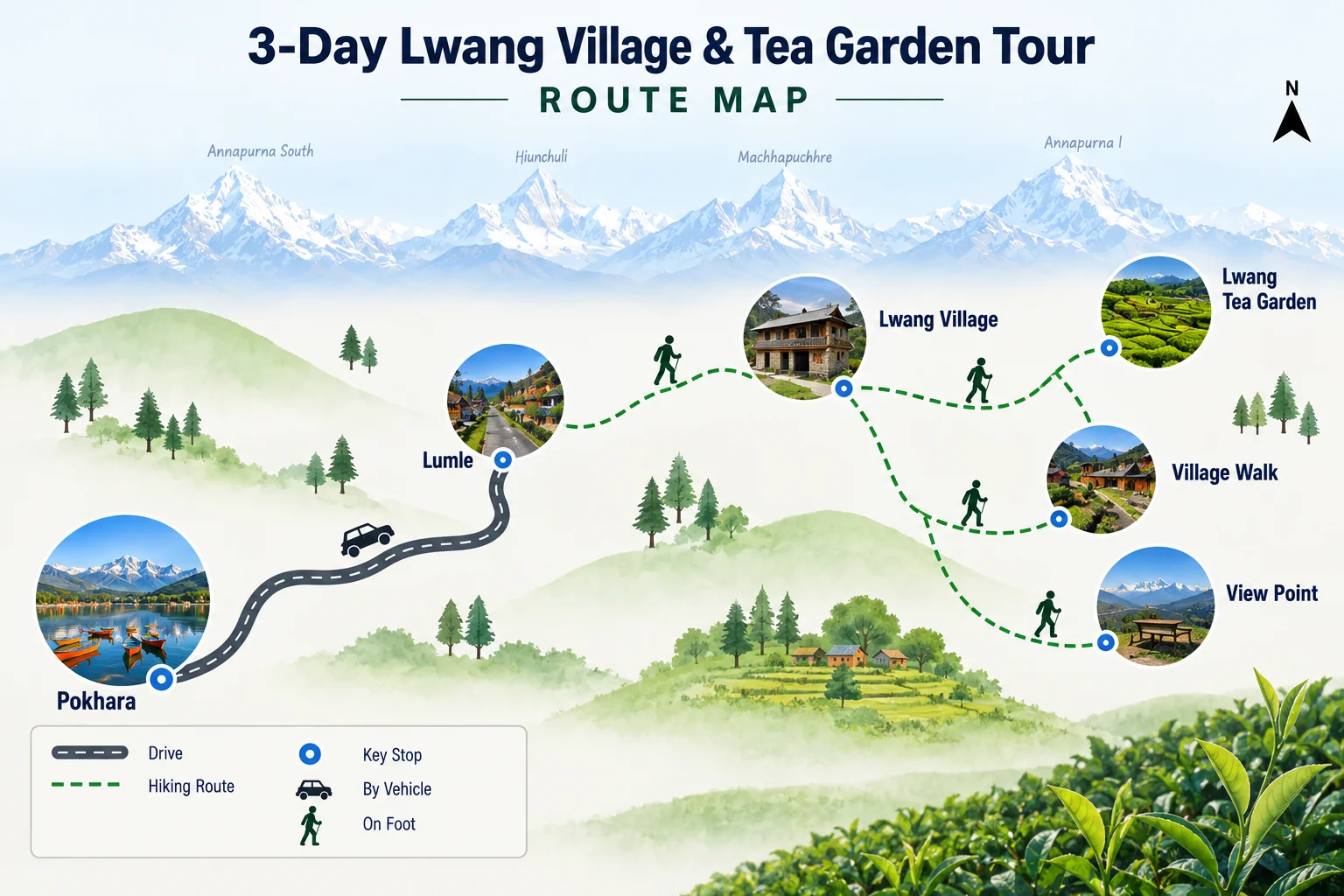
Route Map
Gear List / Packing Guide
| Essential Gear | Recommended |
|---|---|
| Comfortable Hiking Shoes | ✓ |
| Lightweight Daypack | ✓ |
| Warm Jacket / Fleece | ✓ |
| Rain Jacket / Poncho | ✓ |
| Sun Hat & Sunglasses | ✓ |
| Sunscreen | ✓ |
| Water Bottle | ✓ |
| Personal Toiletries & Medicines | ✓ |
| Camera / Smartphone | ✓ |
| Power Bank | ✓ |
| Small First Aid Kit | ✓ |
FAQ
The 3-Day Lwang Village & Tea Garden Tour is a cultural and nature experience from Pokhara featuring Gurung culture, village life, tea gardens, Himalayan scenery, local cuisine, and traditional homestay accommodation.
The Lwang Village Tour starts in Pokhara and ends in Pokhara after exploring Lwang Village, tea gardens, viewpoints, and surrounding areas.
The Lwang Village Tour requires 3 days and includes 2 nights of accommodation in a traditional village homestay.
Major highlights include Gurung culture, traditional village life, Lwang Tea Garden, Himalayan views, scenic walks, local cuisine, community interaction, and homestay experiences.
March to May and September to November are generally the best months for visiting Lwang Village, with pleasant temperatures, greenery, and better opportunities for mountain views.
The tour reaches approximately 1,900 meters at a scenic viewpoint, depending on the selected walking route.
Yes, the Lwang Village Tour is suitable for families, couples, groups, and travelers looking for a relaxed cultural and nature experience.
The Lwang Village Tour is generally easy to moderate, with village walks and tea garden trails rather than demanding high-altitude trekking.
Lwang Village is approximately 45 kilometers from Pokhara by road, although the exact distance can vary depending on the route and road conditions.
The drive generally takes around 2 to 3 hours, depending on traffic, road conditions, stops, and the selected route.
Accommodation is provided at a traditional village homestay in Lwang Village, offering an opportunity to experience local hospitality and community life.
The Lwang Village Tour includes 2 nights in a traditional village homestay.
Meals generally include traditional Nepali and Gurung dishes prepared with fresh local ingredients. Dal bhat, vegetables, pickles, bread, tea, and other local dishes may be available.
Yes, vegetarian meals can generally be arranged at the village homestay with advance notice.
The standard itinerary includes breakfast, lunch, and dinner according to the daily itinerary. Meal inclusions can be customized according to the selected package.
Lwang Tea Garden offers opportunities to walk among tea plantations, observe tea cultivation, learn about local farming practices, enjoy fresh tea, and photograph the surrounding landscape.
Yes, travelers can interact with local residents and learn about Gurung traditions, lifestyle, food, culture, and community practices.
Traditional Gurung music and dance performances may be arranged depending on local availability and group requirements.
Photography is generally permitted in outdoor areas, tea gardens, and village surroundings. Permission should be requested before photographing local residents or private activities.
Yes, the tour includes easy village walks and tea garden hiking. The overall hiking distance can be adjusted according to fitness level and interests.
The standard itinerary involves approximately 8 to 12 kilometers of walking over three days, depending on the selected trails and activities.
Yes, longer hiking routes and additional viewpoints can be included by customizing the itinerary according to available time and fitness level.
Yes, clear weather can provide views of the Annapurna region, Machhapuchhre, and surrounding Himalayan peaks.
A professional local tour guide can accompany the Lwang Village Tour, particularly for cultural interpretation, village exploration, and local sightseeing.
A trekking guide is generally not necessary for the standard Lwang Village Tour because the itinerary focuses on easy village walks and cultural exploration. A trekking guide can be arranged for longer or more challenging routes.
An Annapurna Conservation Area Permit may be required because Lwang Village is located within the Annapurna Conservation Area. Permit requirements and applicable fees should be confirmed according to traveler nationality and the final route.
Applicable entrance fees can vary according to the final itinerary. Any required local entrance charges can be included or advised separately during booking.
Private transportation is recommended for the Pokhara to Lwang Village journey, providing greater comfort and flexibility for stops along the route.
Yes, Khushi Travels and Consulting Group can customize the Lwang Village Tour according to travel interests, group size, preferred activities, accommodation, hiking distance, transportation, and available time.
Travelers can contact Khushi Travels and Consulting Group for availability, customized itineraries, pricing, transportation arrangements, guide services, accommodation, and other travel requirements for the Lwang Village & Tea Garden Tour.
More Details
 Lwang Village Tour Accommodation Types
Lwang Village offers a peaceful and authentic accommodation experience, mainly through traditional Gurung homestays and small local guesthouses. Staying in the village allows visitors to experience local hospitality, traditional food, village life, and the surrounding tea gardens in a comfortable and natural environment.
Traditional Gurung Homestays
The most popular accommodation option in Lwang Village is a local homestay. These homestays are generally operated by local families who welcome visitors into their homes and provide basic but comfortable rooms and meals.
A homestay is an excellent choice for travelers who want to experience the local lifestyle, Gurung culture, traditional architecture, and community-based tourism of Lwang Village.
What Homestay Accommodation Usually Provides
- Private or shared guest rooms
- Comfortable beds with blankets
- Clean bedding and basic furniture
- Shared or private bathroom facilities depending on the property
- Traditional Nepali and local Gurung meals
- Breakfast and dinner options
- Tea or coffee
- Common dining and sitting areas
- Local family hospitality
- Information about village walks and tea gardens
Local Guesthouses
Some visitors may prefer a small local guesthouse rather than staying directly with a host family. These properties generally provide simple rooms and essential facilities suitable for short stays.
Guesthouses can be a convenient option for travelers who prefer a little more privacy while still staying close to the village and tea garden.
Typical Accommodation Facilities
| Facility | Availability |
|---|---|
| Comfortable Bed | Usually Available |
| Blankets | Usually Available |
| Private Room | Available in Many Homestays |
| Shared Bathroom | Common |
| Hot Shower | Available in Some Properties |
| Wi-Fi | Limited / Property Dependent |
| Electricity | Available |
| Meals | Available |
| Tea / Coffee | Usually Available |
| Common Dining Area | Usually Available |
Accommodation Experience in Lwang Village
Accommodation in Lwang is more focused on local experience and hospitality than luxury. Travelers should expect a simple, clean, and comfortable environment rather than the facilities of a city hotel.
The peaceful surroundings, traditional homes, mountain atmosphere, and interaction with local families are some of the main highlights of staying overnight in Lwang.
What Travelers Should Expect
- Simple and clean rooms
- Warm local hospitality
- Traditional home-cooked meals
- Peaceful village surroundings
- Limited luxury facilities
- Possible shared bathroom facilities
- Basic internet connectivity
- A quiet environment away from busy city areas
- Opportunities to interact with local residents
Food and Dining at Accommodation
Most homestays provide meals as part of the stay or can arrange meals for guests. Visitors can enjoy traditional Nepali dishes such as dal bhat, vegetables, achar, roti, local snacks, tea, and other home-cooked meals.
Meals are generally prepared using locally available ingredients, providing travelers with an opportunity to experience authentic village cuisine.
How to Choose the Right Accommodation
When selecting accommodation in Lwang Village, consider:
- Room privacy
- Bathroom facilities
- Availability of hot water
- Meal options
- Cleanliness
- Location within the village
- Family or group requirements
- Accessibility for elderly travelers
- Availability of electricity and charging facilities
- Reviews or recommendations from your travel provider
Tips for Staying in Lwang Village
- Carry basic toiletries and personal items.
- Do not expect luxury hotel facilities.
- Confirm meal arrangements before arrival.
- Carry some cash because card facilities may be limited.
- Respect the host family's daily routine and privacy.
- Keep noise low, especially at night.
- Inform the host if you have specific dietary requirements.
- Carry a power bank for charging electronic devices.
- Enjoy the homestay as a cultural experience rather than simply a place to sleep.
Why Accommodation Is an Important Part of the Lwang Village Tour
Accommodation is an important part of the Lwang Village & Tea Garden Tour because staying with local families makes the journey more than just a sightseeing trip. It gives travelers a chance to experience Gurung hospitality, traditional food, village life, and the peaceful atmosphere of the tea-growing community while directly supporting local tourism.
 What to Expect from the Lwang Village & Tea Garden Tour
The Lwang Village & Tea Garden Tour offers a relaxing combination of village exploration, tea garden walks, local culture, natural scenery, and authentic community hospitality. Rather than being a fast-paced sightseeing trip, this experience allows travelers to slow down and enjoy the peaceful surroundings of the Gurung village and its green tea plantations.
Beautiful Village and Mountain Environment
Lwang Village is surrounded by green hills, forests, farmland, and mountain landscapes. During the tour, visitors can enjoy peaceful walking trails and views of the surrounding countryside while experiencing the natural atmosphere of rural Nepal.
The environment is especially enjoyable for travelers looking for a break from the busy streets of Kathmandu or Pokhara.
Tea Garden Exploration
One of the main highlights of the tour is visiting the tea garden of Lwang Village. Travelers can walk through the tea plantations, observe tea plants, learn about local tea cultivation, and enjoy the fresh surroundings.
Depending on the season, visitors may also see local people involved in tea-related agricultural activities.
Tea Garden Experience May Include
- Walking through green tea plantations
- Learning about local tea cultivation
- Observing tea leaves and farming practices
- Photographing the tea garden
- Enjoying the peaceful hill environment
- Interacting with local tea growers
- Tasting locally produced tea when available
Authentic Gurung Village Experience
Lwang is known for its Gurung community and village lifestyle. Travelers can observe traditional houses, local customs, farming practices, and the daily activities of residents.
Staying in a local homestay can make the experience even more meaningful by allowing visitors to interact directly with local families.
Homestay and Local Hospitality
Travelers can expect a warm and simple homestay experience. Local families generally provide comfortable accommodation and home-cooked meals while introducing visitors to their community and lifestyle.
The experience is particularly suitable for travelers interested in community-based tourism and cultural experiences.
What You May Experience During Your Stay
- Welcoming local families
- Traditional Nepali meals
- Local tea and refreshments
- Village conversations
- Traditional lifestyle
- Peaceful evenings
- Local cultural experiences
- Short walks around the settlement
Easy Village Walks and Nature Exploration
The tour generally involves walking around the village, tea gardens, nearby trails, and natural surroundings. The walks can be adjusted according to the traveler's available time, fitness level, and itinerary.
Visitors should be prepared for uneven village paths and gentle uphill or downhill sections.
Local Food Experience
Food is another enjoyable part of the Lwang Village experience. Visitors can expect freshly prepared local meals, often using ingredients available within the community.
Typical meals may include dal bhat, vegetables, achar, roti, local snacks, tea, and other home-cooked dishes.
Photography Opportunities
Lwang Village provides plenty of opportunities for photography. The tea gardens, traditional village houses, agricultural landscapes, forests, hills, and local lifestyle can all provide interesting subjects.
Early morning and late afternoon can be particularly pleasant times for capturing the changing light across the landscape.
Good Photography Subjects
- Tea plantations
- Traditional village houses
- Local farming activities
- Village pathways
- Forests and hills
- Local people with permission
- Sunrise and sunset scenery
- Traditional food and homestay life
Peaceful and Relaxing Atmosphere
One of the biggest differences between Lwang and busy tourist destinations is its peaceful atmosphere. Travelers can spend time walking through the village, drinking local tea, enjoying the surroundings, and relaxing without a crowded urban environment.
This makes the tour suitable for couples, families, solo travelers, photographers, and travelers looking for a short rural escape.
Interaction with Local Community
The tour also provides opportunities to communicate with local residents and learn about their way of life. Travelers are encouraged to interact respectfully and ask questions about the village, tea farming, traditions, food, and local activities.
Responsible Travel Expectations
Visitors should:
- Respect local customs and traditions.
- Ask permission before photographing people.
- Avoid damaging tea plants or crops.
- Keep the village environment clean.
- Avoid unnecessary noise.
- Respect private homes and community spaces.
- Support local businesses where possible.
- Follow local guidance during village and tea garden walks.
What You Should Not Expect
Lwang Village is a rural destination, so travelers should not expect the same facilities available in major cities or luxury resorts.
You may experience:
- Basic accommodation
- Limited internet connectivity
- Simple bathrooms
- Limited shopping facilities
- Fewer restaurants and cafés
- Uneven walking trails
- Rural transportation conditions
- Weather-dependent road conditions
Why Choose the Lwang Village & Tea Garden Tour
The Lwang Village & Tea Garden Tour is ideal for travelers who want to experience a quieter side of Nepal. The combination of tea gardens, Gurung culture, village walks, local food, homestay hospitality, and natural surroundings makes it a rewarding short escape from the usual tourist routes.
 Best Time / Season to Visit Lwang Village
Lwang Village can be visited throughout the year, but the experience changes with the season. The best time to visit Lwang Village and its tea garden generally depends on weather, greenery, visibility, local activities, and the type of experience you want. Spring and autumn are particularly pleasant for outdoor activities, while the monsoon brings lush green landscapes and winter offers a quieter village atmosphere.
Spring Season: March to May
Spring is one of the most attractive periods to visit Lwang Village. The weather is generally pleasant, the hills become greener, and the surrounding natural landscape becomes vibrant.
The comfortable conditions make spring suitable for tea garden walks, village exploration, photography, and outdoor activities.
Highlights of Spring
- Pleasant daytime temperatures
- Green hills and forests
- Comfortable conditions for village walks
- Fresh natural scenery
- Good photography opportunities
- Suitable conditions for tea garden exploration
- Increasing local agricultural activity
Summer and Monsoon Season: June to August
The summer and monsoon months bring frequent rainfall to the region. Lwang can become particularly lush and green, creating a beautiful landscape around the tea gardens and village.
However, travelers should be prepared for wet conditions and possible road or trail difficulties caused by heavy rainfall.
Things to Consider During Monsoon
- Frequent rainfall
- Wet and slippery village paths
- Possible muddy trails
- Road conditions can change with rain
- Cloudy or limited mountain visibility
- Carry waterproof clothing and footwear
- Allow extra travel time when necessary
For travelers who enjoy green landscapes, misty hills, and a quieter atmosphere, monsoon can still be an interesting time to visit.
Autumn Season: September to November
Autumn is generally considered one of the best seasons for visiting Lwang Village. After the monsoon, the surroundings are fresh and green, while weather conditions are usually more favorable for outdoor exploration.
This period is especially suitable for travelers who want to combine village sightseeing, tea garden walks, photography, and scenic views.
Highlights of Autumn
- Generally clear and pleasant weather
- Fresh green landscapes after the monsoon
- Comfortable walking conditions
- Good visibility on suitable days
- Excellent photography opportunities
- Suitable for village and tea garden exploration
- Pleasant conditions for overnight homestays
Winter Season: December to February
Winter brings cooler temperatures to Lwang Village. The mornings and evenings can be cold, while daytime conditions may remain comfortable when the weather is clear.
Winter can be a good option for travelers who prefer quiet surroundings and fewer visitors.
Things to Consider in Winter
- Cold mornings and evenings
- Warm clothing is recommended
- Carry a jacket and warm layers
- Shorter daylight hours
- Weather can be chilly during overnight stays
- Tea garden landscapes may look different from spring and monsoon
Best Season for Different Activities
| Activity | Best Season |
|---|---|
| Tea Garden Walk | Spring / Autumn |
| Village Exploration | Spring / Autumn |
| Photography | Spring / Autumn |
| Green Landscapes | Monsoon |
| Comfortable Walking | Spring / Autumn |
| Quiet Village Experience | Winter |
| Cultural Experience | Throughout the Year |
| Homestay Experience | Throughout the Year |
| Nature Observation | Spring / Autumn |
| Relaxing Short Escape | Spring / Autumn |
Best Time of Day to Explore Lwang
The morning is usually a pleasant time for exploring the village and tea gardens. The air is generally fresh, and early hours can provide beautiful natural light for photography.
The late afternoon is also suitable for relaxed village walks and enjoying the surrounding landscape before returning to the homestay.
Recommended Daily Timing
- Morning: Tea garden walk and village exploration
- Late Morning: Local sightseeing and cultural interaction
- Afternoon: Relaxation, photography, or nearby exploration
- Evening: Return to the homestay and enjoy local food and tea
Weather and Road Conditions
Travelers should consider current weather conditions before traveling to Lwang, particularly during the monsoon season. Since the destination is accessed by road from the Pokhara area, heavy rainfall can affect travel conditions.
It is advisable to check the local weather and road situation before departure and maintain some flexibility in the itinerary during periods of heavy rain.
Which Season Is Best for You?
The best season ultimately depends on your travel preference:
- For comfortable weather: Spring and autumn
- For lush green scenery: Monsoon
- For quieter travel: Winter
- For photography: Spring and autumn
- For tea garden exploration: Spring and autumn
- For a peaceful homestay: Any season
Why Spring and Autumn Are Popular for Lwang Village
Spring and autumn provide a good balance between pleasant weather, comfortable walking conditions, natural scenery, and outdoor exploration. These seasons are therefore particularly suitable for travelers planning a complete Lwang Village and Tea Garden experience.
 Nearby Places to Explore from Lwang Village
Lwang Village is surrounded by beautiful hills, forests, traditional settlements, tea gardens, and scenic viewpoints. Travelers staying in Lwang can combine the village and tea garden experience with visits to nearby destinations around the Pokhara and Annapurna region. The exact places included can depend on the available time, road conditions, and the tour itinerary.
Ghalel Village
Ghalel is a nearby traditional settlement that can be included in a village exploration itinerary around Lwang. The area provides opportunities to experience rural life, local culture, agricultural landscapes, and mountain surroundings.
Things to Experience in Ghalel
- Traditional village environment
- Local community and lifestyle
- Mountain and hill scenery
- Village walking trails
- Agricultural landscapes
- Local cultural experiences
- Photography
Ghachowk
Ghachowk is another nearby rural destination that can be explored around the Lwang area. It is known for its peaceful countryside setting and views of the surrounding hills and mountains.
The area can be suitable for travelers interested in combining village sightseeing with short nature walks.
Lumle
Lumle is located in the wider area surrounding Lwang and can be included depending on the selected route. The area is known for its green hills, agricultural landscapes, and peaceful rural environment.
Travelers can experience a different side of the countryside while traveling between villages in the region.
Pokhara Valley
Pokhara is the main tourist hub used to access Lwang Village. Travelers can combine their Lwang experience with sightseeing around Pokhara Valley before or after the village tour.
Popular attractions around Pokhara include lakes, viewpoints, caves, temples, and other natural and cultural sites.
Popular Pokhara Attractions to Combine with Lwang
- Phewa Lake
- World Peace Pagoda
- Sarangkot
- Davis Falls
- Gupteshwor Cave
- International Mountain Museum
- Lakeside Pokhara
Phewa Lake
Phewa Lake is one of Pokhara's most popular attractions and can be visited before or after traveling to Lwang.
Visitors can enjoy boating, lakeside walks, mountain views, and the lively atmosphere of the Lakeside area.
World Peace Pagoda
The World Peace Pagoda is located on a hill overlooking Phewa Lake and the Pokhara Valley. It can be combined with the Lwang tour for travelers who have additional time in Pokhara.
The viewpoint provides a peaceful environment and panoramic views across the valley on clear days.
Sarangkot
Sarangkot is another popular destination near Pokhara, particularly known for its sunrise and panoramic Himalayan views when weather conditions are favorable.
Travelers with an extended itinerary can combine Sarangkot and Lwang Village as separate experiences around Pokhara.
Nearby Natural and Cultural Attractions
| Place | Main Attraction | Suitable For |
|---|---|---|
| Ghalel | Traditional village | Culture & Village Walk |
| Ghachowk | Rural landscape | Nature & Photography |
| Lumle | Hills & countryside | Village Exploration |
| Phewa Lake | Lake & boating | Relaxation |
| World Peace Pagoda | Viewpoint & peace monument | Scenic Views |
| Sarangkot | Sunrise & mountain views | Photography |
| Pokhara Lakeside | Tourism & restaurants | Relaxation & Dining |
Best Nearby Places for Photography
Lwang and its surrounding area offer many opportunities for photography. Tea plantations, traditional houses, agricultural fields, forests, hills, and village pathways can all provide attractive subjects.
Photography Highlights
- Tea gardens
- Traditional Gurung houses
- Village landscapes
- Green hills
- Agricultural terraces
- Forest trails
- Local lifestyle
- Pokhara Valley views
- Mountain scenery on clear days
How Many Places Can You Visit?
The number of nearby destinations you can visit depends on the length of your Lwang tour.
For a short one-day experience, it is better to focus on Lwang Village, the tea garden, and nearby village surroundings rather than trying to cover too many places.
For a longer itinerary, additional destinations such as Ghalel, Ghachowk, Lumle, or Pokhara attractions can be incorporated.
Tips for Exploring Nearby Places
- Start early if you want to visit several destinations.
- Allow extra time for rural road travel.
- Check road and weather conditions during monsoon.
- Wear comfortable walking shoes.
- Carry drinking water.
- Keep some cash for local expenses.
- Ask locals before entering private farmland or homes.
- Respect local communities and cultural sites.
- Keep the surroundings clean.
- Avoid rushing through villages because the local experience is an important part of the journey.
Why Explore the Nearby Places Around Lwang?
Exploring nearby destinations adds variety to the Lwang Village & Tea Garden Tour. Travelers can experience not only tea plantations and Gurung village life but also rural landscapes, neighboring settlements, natural scenery, and the major attractions of the Pokhara Valley, creating a more complete experience of western Nepal.
 Foods Available on the Lwang Village Tour
Food is an important part of the Lwang Village & Tea Garden Tour, especially when staying in a local homestay. Travelers can enjoy freshly prepared Nepali and local-style meals while experiencing the warm hospitality of the village community. Most meals are simple, nutritious, and prepared with locally available ingredients.
Traditional Nepali Food
The most common meal available during a Lwang Village stay is dal bhat, the traditional Nepali combination of rice, lentil soup, vegetables, and pickle. It is filling and suitable for travelers who are spending the day walking around the village and tea gardens.
Common Nepali Meals
- Dal bhat
- Rice
- Lentil soup
- Seasonal vegetables
- Vegetable curry
- Achar
- Roti
- Local bread
- Salad
- Soup
- Tea
- Coffee
Local Gurung-Style Food
Depending on the homestay and season, visitors may also have the opportunity to taste local Gurung-style dishes and traditional village foods. The exact menu can vary from one household to another.
Local food is generally prepared using fresh ingredients and traditional cooking methods.
Possible Local Food Experiences
- Traditional home-cooked meals
- Seasonal vegetables
- Local pickles
- Homemade breads
- Traditional snacks
- Locally prepared soups
- Fresh dairy products when available
- Local tea
Breakfast in Lwang Village
Breakfast is generally simple and filling. Travelers can usually expect items such as roti, bread, eggs, potatoes, tea, coffee, or other locally prepared foods, depending on the homestay.
Typical Breakfast Options
| Food / Drink | Availability |
|---|---|
| Roti | Common |
| Bread | Usually Available |
| Eggs | Usually Available |
| Potatoes | Common |
| Tea | Usually Available |
| Coffee | Available at Some Homestays |
| Seasonal Fruits | Depending on Availability |
| Local Snacks | Depending on Homestay |
Lunch During the Tour
Lunch arrangements depend on the itinerary. Travelers staying in the village may have lunch at their homestay, while those taking a day tour may eat at a local restaurant or arrange a packed meal.
A typical lunch can include rice, dal, vegetables, curry, and achar.
Dinner at the Homestay
Dinner is usually served at the homestay and provides an opportunity to experience a relaxed village evening with the host family.
A traditional dinner may include dal bhat, vegetables, curry, pickle, and other locally prepared dishes.
Tea from the Local Tea Garden
One of the special experiences of visiting Lwang is enjoying locally produced tea when available. After exploring the tea garden, travelers can have tea while relaxing and enjoying the peaceful surroundings.
Tea Experience May Include
- Local tea tasting
- Learning about tea cultivation
- Drinking freshly prepared tea
- Visiting tea-growing areas
- Talking with local tea producers
- Enjoying tea with traditional snacks
Vegetarian and Non-Vegetarian Food
Vegetarian food is commonly available in village homestays. Depending on the property and advance arrangements, travelers may also be able to request non-vegetarian dishes.
If you have specific dietary requirements, it is best to inform the homestay or travel company before arrival.
Food for Different Dietary Requirements
Travelers with dietary restrictions should communicate their requirements in advance.
Common Requests
- Vegetarian meals
- Vegan meals
- No-spice meals
- Allergy-related restrictions
- No-meat meals
- Special children's meals
Availability depends on the individual homestay, ingredients, and advance notice.
Food Hygiene and Drinking Water
Travelers should follow basic food and water safety practices during their stay. Drinking treated, filtered, or bottled water is recommended rather than relying on untreated natural water sources.
Food Safety Tips
- Drink safe or treated water.
- Wash your hands before meals.
- Eat freshly prepared food when possible.
- Avoid uncovered food that has been sitting for a long time.
- Inform your host about food allergies.
- Carry personal snacks if you have specific dietary needs.
- Keep yourself hydrated during village walks.
Food Experience for Travelers
The food experience in Lwang is less about luxury dining and more about fresh home-cooked meals, local ingredients, traditional recipes, and interaction with the host family.
Travelers should be prepared for a simple rural dining experience and take the opportunity to try local dishes that may not be commonly available in city restaurants.
Why Try Local Food in Lwang Village?
Trying local food adds another dimension to the Lwang Village & Tea Garden Tour. Along with exploring the tea garden and surrounding landscapes, travelers can experience traditional Nepali cuisine, local ingredients, homemade meals, and authentic village hospitality, making the journey more culturally meaningful.
 Culture and Etiquette of Lwang Village
Lwang Village is known for its Gurung community, traditional lifestyle, local hospitality, and community-based tourism. During the Lwang Village & Tea Garden Tour, travelers have the opportunity to experience rural village life and interact with local residents. Respecting local customs and traditions helps create a positive experience for both visitors and the host community.
Gurung Culture and Community
The Gurung community has a strong cultural presence in Lwang Village. Local traditions, family life, food, clothing, celebrations, and community activities form an important part of the village experience.
Travelers should take time to observe and learn about the local way of life rather than treating the village only as a sightseeing destination.
Respect Local Traditions
Visitors should respect local traditions and customs during their stay. Some practices may be different from what travelers are accustomed to in their own countries.
Good Practices
- Observe local customs respectfully.
- Ask questions politely when learning about traditions.
- Follow guidance from your host family or guide.
- Dress appropriately when visiting cultural or religious places.
- Avoid making jokes about local customs.
- Respect community gatherings and ceremonies.
- Follow local instructions when visiting private or cultural areas.
Homestay Etiquette
If you stay with a local family, remember that you are staying in someone's home rather than a conventional hotel. A friendly and respectful attitude helps create a better cultural exchange.
During a Homestay
- Greet your host family politely.
- Keep your room and shared spaces clean.
- Respect household rules.
- Ask before using household items.
- Avoid excessive noise.
- Respect the family's privacy.
- Follow agreed meal times when possible.
- Thank your hosts for their hospitality.
Dress Code
Lwang is a traditional rural community, so travelers should choose comfortable and respectful clothing. There is no need for formal clothing, but extremely revealing clothing may be inappropriate when visiting homes, cultural sites, or interacting with local residents.
Recommended Clothing
- Comfortable trousers or long pants
- T-shirts or modest tops
- Comfortable walking shoes
- Light jacket or warm layer depending on season
- Appropriate clothing for cultural visits
- Rain protection during the monsoon
Photography Etiquette
Lwang offers excellent opportunities for photography, but visitors should remember that local people are not tourist attractions.
Always ask permission before taking close-up photographs of local residents, particularly children, elderly people, families, or people participating in cultural activities.
Photography Guidelines
- Ask permission before photographing people.
- Respect anyone who does not want to be photographed.
- Avoid entering private homes or farmland for photographs without permission.
- Do not disturb people while they are working.
- Ask before photographing religious or cultural ceremonies.
- Avoid damaging tea plants or crops while taking photographs.
Interaction with Local People
Talking with local residents can be one of the most enjoyable parts of the Lwang experience. Travelers can ask about village life, agriculture, tea cultivation, food, traditions, and daily activities.
A simple greeting and a friendly attitude can make interactions more comfortable.
Helpful Behavior
- Smile and greet people politely.
- Be patient when communication is difficult.
- Show genuine interest in local culture.
- Listen when residents share their experiences.
- Avoid making assumptions about local lifestyles.
- Respect personal boundaries.
Respect for Religious and Cultural Places
When visiting temples, shrines, monasteries, or other culturally significant places, travelers should follow local instructions.
Remember To
- Remove shoes when required.
- Dress respectfully.
- Speak quietly.
- Do not touch religious objects without permission.
- Follow local customs.
- Ask before taking photographs.
- Avoid disturbing ceremonies or prayers.
Environmental Etiquette
Lwang's natural environment and tea gardens are important parts of the local community. Visitors should help protect the surroundings during their stay.
Responsible Travel Practices
- Do not throw plastic or other waste on trails.
- Use designated waste bins where available.
- Avoid damaging plants.
- Stay on established paths when possible.
- Do not disturb wildlife.
- Reduce unnecessary single-use plastic.
- Carry reusable water bottles when practical.
- Leave natural and cultural sites as you found them.
Tipping and Gifts
Tipping is not always mandatory, but travelers may choose to show appreciation for good service from guides, drivers, or homestay hosts.
If you wish to give a gift to a host family, practical items or something meaningful from your home country can be appropriate. Gifts should be offered respectfully and without creating an expectation.
Cultural Experiences and Local Activities
Depending on the season and local arrangements, visitors may have opportunities to participate in or observe community activities, traditional food preparation, local celebrations, music, dance, or other cultural experiences.
Participation should always be voluntary and respectful, especially when cultural activities are organized for visitors.
Important Etiquette for Travelers
| Situation | Recommended Behavior |
|---|---|
| Meeting Local People | Greet Politely |
| Homestay | Respect Household Rules |
| Photography | Ask Permission |
| Cultural Sites | Follow Local Customs |
| Tea Gardens | Avoid Damaging Plants |
| Local Meals | Respect the Host's Hospitality |
| Village Walks | Keep Noise Low |
| Waste | Dispose of Properly |
| Private Property | Ask Before Entering |
| Cultural Events | Observe Respectfully |
Why Culture and Etiquette Matter in Lwang
Respecting the culture and etiquette of Lwang Village allows travelers to experience the destination in a more meaningful way. By showing consideration toward Gurung traditions, local families, cultural places, tea gardens, and the natural environment, visitors can enjoy genuine community interaction while also supporting responsible and respectful tourism.
 Safety and Security on the Lwang Village Tour
Lwang Village is a peaceful rural destination, and the Lwang Village & Tea Garden Tour is suitable for travelers who follow normal travel and outdoor safety practices. However, as the tour includes village roads, walking trails, tea gardens, and rural surroundings, travelers should remain aware of weather, road conditions, personal belongings, and their physical surroundings.
Road and Transportation Safety
The journey to Lwang involves travel through hilly areas, where roads can include winding sections and uneven surfaces. During the monsoon, rainfall can affect road conditions and travel times.
Transportation Safety Tips
- Always use a properly maintained vehicle.
- Wear a seat belt whenever available.
- Avoid rushing on winding mountain roads.
- Follow the driver's instructions.
- Check road conditions during heavy rainfall.
- Allow extra travel time when weather conditions are poor.
- Avoid unnecessary travel on unsafe roads during severe weather.
Safety During Village Walks
Walking around Lwang and the tea gardens is generally manageable for visitors with reasonable mobility, but some paths may be uneven, steep, muddy, or slippery, particularly after rainfall.
While Walking
- Wear comfortable shoes with good grip.
- Walk carefully on wet or uneven paths.
- Stay on established trails where possible.
- Avoid walking alone in unfamiliar areas.
- Follow your guide or host's instructions.
- Take care on downhill sections.
- Carry drinking water.
Tea Garden Safety
Tea gardens are working agricultural areas. Visitors should be careful not to damage tea plants or enter restricted areas.
Important Guidelines
- Stay on designated paths where possible.
- Do not step on tea plants.
- Do not pick tea leaves without permission.
- Avoid entering private farmland.
- Be careful on steep slopes.
- Follow local instructions.
- Ask permission before participating in agricultural activities.
Weather-Related Safety
Weather can change quickly in the hills. Rainfall, fog, strong winds, or reduced visibility can affect outdoor activities and road travel.
Travelers should check the weather before departure and remain flexible with their itinerary.
| Weather Condition | Recommended Action |
|---|---|
| Light Rain | Continue with Suitable Rain Gear |
| Heavy Rain | Consider Delaying Outdoor Activities |
| Fog / Low Visibility | Walk Carefully and Follow Your Guide |
| Strong Wind | Avoid Exposed Areas |
| Hot Weather | Carry Water and Take Breaks |
| Cold Weather | Wear Warm Layers |
Monsoon Safety
The monsoon season requires additional care because wet conditions can make village trails and roads slippery. Landslides or temporary road disruptions can also occur in hilly areas during periods of heavy rainfall.
Monsoon Travel Tips
- Carry a rain jacket or umbrella.
- Use footwear with good traction.
- Protect phones and cameras from rain.
- Check road conditions before departure.
- Avoid unnecessary trail walks during heavy rain.
- Follow local advice regarding unsafe areas.
- Keep your itinerary flexible.
Personal Belongings and Valuables
Lwang is a rural destination, but travelers should still take normal precautions with money, passports, phones, cameras, and other valuables.
Protect Your Belongings
- Keep important documents secure.
- Avoid carrying unnecessary valuables.
- Keep cash in a secure place.
- Use a small day bag during walks.
- Do not leave valuables unattended.
- Keep electronic devices protected from rain and moisture.
Food and Drinking Water Safety
Travelers should pay attention to basic food and water hygiene during their stay.
Recommended Practices
- Drink bottled, filtered, or properly treated water.
- Carry a reusable water bottle.
- Wash your hands before eating.
- Eat freshly prepared meals when possible.
- Inform your host about food allergies or dietary restrictions.
- Carry personal snacks if required.
Emergency Preparedness
Before starting the tour, travelers should keep important contact information accessible and inform their guide or host if they have any concerns.
It is useful to carry:
- Mobile phone
- Power bank
- Basic first-aid supplies
- Personal medication
- Emergency contact details
- Identification documents
- Travel insurance information, where applicable
Traveling with Children and Elderly Travelers
Families traveling with children or elderly members should consider the condition of walking trails and the amount of walking included in the itinerary.
For Families
- Supervise children near slopes and uneven paths.
- Keep children away from agricultural areas unless permitted.
- Carry snacks and drinking water.
- Allow regular rest breaks.
- Choose accommodation according to family needs.
For elderly travelers, the itinerary can be adjusted to reduce unnecessary walking and allow additional rest.
Respecting Local Community Safety
Safety also means respecting the people and environment of Lwang. Travelers should avoid entering private homes, farmland, or community areas without permission.
Responsible Behavior
- Respect private property.
- Ask before entering homes or farms.
- Avoid disturbing local activities.
- Do not litter.
- Follow local instructions.
- Keep noise under control.
- Respect cultural and religious places.
Basic Safety Checklist
| Safety Item | Recommendation |
|---|---|
| Comfortable Shoes | Recommended |
| Rain Gear | Important During Monsoon |
| Drinking Water | Carry With You |
| Power Bank | Recommended |
| First Aid Kit | Recommended |
| Personal Documents | Keep Secure |
| Warm Clothing | Useful in Cooler Seasons |
| Mobile Phone | Carry Fully Charged |
| Travel Insurance | Recommended |
| Local Guide | Useful for Exploration |
Why Safety Matters on the Lwang Village Tour
Good preparation makes the Lwang Village & Tea Garden Tour more comfortable and enjoyable. By paying attention to road conditions, weather, walking trails, personal belongings, food and water safety, and local guidance, travelers can explore the tea gardens and village environment with greater confidence while respecting the local community.
 Transportation Facilities for the Lwang Village Tour
Lwang Village can be reached from Pokhara by road, making it a convenient destination for a short village and tea garden tour. Travelers can choose transportation according to their group size, budget, comfort requirements, and itinerary. The journey itself is part of the experience, with scenic countryside, hills, villages, and agricultural landscapes along the route.
Transportation from Pokhara to Lwang Village
Most travelers begin the journey from Pokhara, which is the main gateway for visiting Lwang Village. The trip is generally arranged by road using a private vehicle, tourist vehicle, jeep, or other suitable local transportation.
The exact travel time can vary depending on the road condition, weather, traffic, and selected route.
Common Transportation Options
| Transportation | Suitable For | Main Advantage |
|---|---|---|
| Private Car | Couples / Small Groups | Comfortable and Flexible |
| SUV / Jeep | Families / Groups | Better for Rural Roads |
| Tourist Vehicle | Groups | Convenient Group Travel |
| Local Bus | Budget Travelers | Lower Cost |
| Private Van | Medium Groups | Comfortable Group Transfer |
| Hired Vehicle with Driver | All Types of Travelers | Flexible Itinerary |
Private Car
A private car is a convenient option for couples, families, and small groups. Travelers can arrange the departure time according to their itinerary and stop along the way for photographs, refreshments, or sightseeing.
Advantages of a Private Car
- Flexible departure time
- Comfortable journey
- Suitable for small groups
- Stops can be arranged when appropriate
- Convenient for combining Lwang with Pokhara sightseeing
- Door-to-door transportation can be arranged depending on the starting point
Jeep and SUV
A jeep or SUV can be a practical option for travelers who prefer additional space or are traveling in a larger group. It can also be useful when road conditions are less favorable, particularly during periods of rainfall.
Suitable For
- Families
- Small groups
- Travelers carrying luggage
- Travelers seeking additional comfort
- Flexible village tour itineraries
Tourist Van or Group Vehicle
For larger groups, a tourist van or suitable group vehicle can be arranged. This allows travelers to travel together and coordinate the transportation for the entire tour.
The appropriate vehicle depends on the number of passengers, luggage, road conditions, and itinerary.
Local Bus Transportation
Budget-conscious travelers may choose local public transportation where services are available. Local buses can provide a more economical way to travel, but schedules, comfort, stops, and journey times may be less predictable than private transportation.
Travelers using local transportation should allow additional time and confirm the latest route and schedule locally.
Transportation Within and Around Lwang
Once in Lwang, many attractions are best explored on foot, particularly the village, tea garden, nearby trails, and local surroundings.
For destinations farther from the village, local vehicles may be required depending on the itinerary.
Getting Around Lwang
- Walking through the village
- Walking through tea gardens
- Short nature walks
- Local vehicle transfers
- Private vehicle for nearby destinations
- Jeep transportation for suitable rural routes
Road Conditions
Road conditions can vary depending on the season. During the dry months, travel is generally more convenient, while monsoon rainfall can make rural roads muddy, slippery, or slower to travel.
Travelers should allow some flexibility in their schedule, particularly during periods of heavy rain.
Monsoon Transportation Considerations
During the rainy season:
- Roads may become muddy or slippery.
- Travel time can increase.
- Heavy rainfall may affect road conditions.
- Temporary road disruptions are possible.
- Certain walking routes may become difficult.
- Travelers should follow local road and weather advice.
Transportation for Families and Elderly Travelers
Families with children and travelers with limited mobility should discuss transportation requirements before booking. A private vehicle can provide greater flexibility because unnecessary walking and waiting can be reduced.
Recommended for Comfortable Travel
- Private car for couples or small families
- SUV or jeep for groups
- Private van for larger groups
- Experienced local driver familiar with the route
- Flexible itinerary with sufficient travel time
Vehicle Rental with Driver
Travelers can also arrange a vehicle with a local driver for the Lwang tour. This option is useful for visitors who want transportation from Pokhara, sightseeing along the route, and return transportation without having to arrange separate vehicles.
Benefits of Hiring a Vehicle with Driver
- Convenient pickup and drop-off
- Flexible travel schedule
- Local route knowledge
- Easier communication
- Convenient for multiple stops
- Suitable for customized tours
- No need to drive on unfamiliar rural roads
Transportation Planning Tips
Before starting the Lwang Village & Tea Garden Tour, travelers should consider:
- Starting location in Pokhara
- Number of travelers
- Amount of luggage
- Vehicle type
- Road conditions
- Weather forecast
- Return schedule
- Additional sightseeing destinations
- Need for child or elderly-friendly transportation
Transportation Options at a Glance
| Travel Requirement | Recommended Option |
|---|---|
| Couple | Private Car |
| Small Family | Private Car / SUV |
| Larger Family | SUV / Van |
| Group Tour | Tourist Van |
| Budget Travel | Local Bus Where Available |
| Flexible Tour | Private Vehicle with Driver |
| Monsoon Travel | Suitable SUV / Jeep |
| Multiple Destinations | Private Vehicle |
| Short Village Exploration | Walking |
Why Choose Private Transportation for the Lwang Tour?
Private transportation provides greater flexibility and convenience for the Lwang Village & Tea Garden Tour. Travelers can choose suitable departure times, make reasonable stops along the route, adjust the itinerary according to weather and road conditions, and return to Pokhara according to their schedule. For families, groups, and travelers seeking a comfortable experience, a private vehicle with an experienced driver can be particularly practical.
 Lwang Village Tour Difficulty and Physical Fitness Required
The Lwang Village & Tea Garden Tour is generally suitable for travelers who have a basic level of physical fitness and are comfortable with walking on rural village paths. It is not a high-altitude trekking route, but visitors should be prepared for uneven trails, gentle uphill and downhill sections, and walking around the tea gardens and village.
Overall Difficulty Level
The Lwang Village Tour can generally be considered easy to moderate, depending on the itinerary and amount of walking included.
Unlike long Himalayan trekking routes, the tour does not normally require extensive trekking experience or specialized mountaineering skills.
Difficulty Overview
| Factor | Level |
|---|---|
| Overall Difficulty | Easy to Moderate |
| High-Altitude Risk | Low Compared with Himalayan Treks |
| Walking Requirement | Moderate |
| Technical Skills | Not Required |
| Trekking Experience | Not Required |
| Suitable for Beginners | Yes |
| Suitable for Families | Yes |
| Suitable for Older Travelers | With Suitable Itinerary |
| Guide Required | Useful but Not Always Necessary for Simple Walks |
Walking Around the Village
Exploring Lwang generally involves walking through village paths, tea gardens, agricultural areas, and surrounding trails. Some sections may be uneven or inclined.
Travelers should wear comfortable walking shoes with good grip, especially during the rainy season.
Tea Garden Walking
Walking through the tea garden is one of the main activities of the tour. The terrain may include grassy, earthy, or uneven paths, so visitors should take care while walking between tea plants.
For Comfortable Tea Garden Exploration
- Wear comfortable shoes.
- Walk at a relaxed pace.
- Stay on appropriate paths.
- Be careful on wet surfaces.
- Take breaks when necessary.
- Follow your guide or local host.
- Avoid stepping on tea plants.
Physical Fitness Required
You do not need to be an experienced trekker to enjoy Lwang. A traveler who can comfortably walk for a few hours with occasional uphill and downhill sections should generally be able to participate in the standard village exploration.
The amount of walking can also be adjusted according to your age, fitness level, available time, and personal preference.
For Beginners
Lwang is a good option for travelers who want to experience Nepal's rural landscape without committing to a multi-day Himalayan trek.
Beginners should simply maintain a comfortable walking pace and avoid pushing themselves unnecessarily.
Beginner Tips
- Start slowly.
- Take regular breaks.
- Stay hydrated.
- Wear proper footwear.
- Carry light luggage during walks.
- Inform your guide about any difficulty.
- Avoid unnecessary steep routes.
For Families with Children
Families can enjoy Lwang Village, but parents should supervise children around uneven paths, slopes, agricultural areas, and tea gardens.
A flexible itinerary with shorter walks and regular breaks can make the experience more comfortable.
Family-Friendly Recommendations
- Choose easy walking routes.
- Carry drinking water and snacks.
- Keep children supervised.
- Avoid slippery areas.
- Allow enough rest time.
- Choose comfortable transportation.
- Inform the tour provider about children's requirements.
For Elderly Travelers
Older travelers can also enjoy the Lwang Village experience if the itinerary is planned according to their mobility and fitness.
Instead of covering every walking trail, the itinerary can focus on comfortable village sightseeing, tea garden viewpoints, local food, and homestay experiences.
Helpful Arrangements for Older Travelers
- Private vehicle transportation
- Shorter walking routes
- Frequent rest breaks
- Comfortable accommodation
- Reduced uphill walking
- Flexible sightseeing schedule
- Assistance from a guide or local host
Weather and Difficulty
Weather can influence the difficulty of walking around Lwang. During the monsoon, trails may become muddy and slippery, while winter mornings can be cold.
Seasonal Conditions
| Season | Walking Condition |
|---|---|
| Spring | Generally Comfortable |
| Summer | Warm and Generally Manageable |
| Monsoon | Wet and Potentially Slippery |
| Autumn | Generally Comfortable |
| Winter | Cool, Especially Morning and Evening |
What Can Make the Tour More Difficult?
The difficulty may increase because of:
- Heavy rainfall
- Muddy trails
- Slippery paths
- Steep village sections
- Long walking itineraries
- Lack of suitable footwear
- Carrying heavy luggage
- Insufficient rest
- Unexpected weather changes
Recommended Personal Preparation
Travelers can prepare for the tour by maintaining basic physical activity before their trip. Regular walking, light hiking, or similar activities can make village exploration more comfortable.
You do not need intensive trekking training for a standard Lwang Village tour.
Useful Items for Comfortable Walking
- Comfortable walking shoes
- Lightweight daypack
- Drinking water
- Sun protection
- Rain jacket during monsoon
- Light warm layer when needed
- Personal medication
- Small snacks
Is Lwang Suitable for You?
The Lwang Village & Tea Garden Tour is particularly suitable if you:
- Enjoy short walks.
- Want to experience rural Nepal.
- Prefer a relaxed itinerary.
- Are interested in tea gardens.
- Want to experience homestay culture.
- Do not want a demanding Himalayan trek.
- Prefer nature and village environments.
- Are comfortable walking on uneven paths.
Why Lwang Is a Good Short Hiking and Village Experience
Lwang offers a balance between nature exploration, village walking, tea garden visits, and cultural experiences without requiring the level of physical preparation associated with longer Himalayan trekking routes. With an appropriately planned itinerary, the experience can be adapted for beginners, families, and travelers seeking a relaxed rural escape.
 Lwang Village Tour Cost Breakdown
The cost of the Lwang Village & Tea Garden Tour depends on the duration of the trip, transportation, accommodation, meals, group size, and additional activities included in the itinerary. A private tour with a dedicated vehicle will generally cost more than using shared or public transportation.
Main Factors That Determine the Tour Cost
Several components contribute to the overall cost of a Lwang Village tour.
Major Cost Components
- Transportation from Pokhara to Lwang
- Return transportation
- Accommodation at a local homestay
- Breakfast, lunch, and dinner
- Guide or local assistance
- Tea garden activities
- Sightseeing and village walks
- Applicable entrance or conservation-area fees
- Personal expenses
- Additional sightseeing destinations
Transportation Cost
Transportation is often one of the main components of the total tour price. The cost depends on whether you choose a private car, SUV, jeep, van, or public transportation.
Private transportation provides greater flexibility but may have a higher total cost, particularly for solo travelers or small groups.
Transportation Options
| Transportation | Cost Level | Suitable For |
|---|---|---|
| Local Bus | Low | Budget Travelers |
| Private Car | Moderate | Couples / Small Groups |
| SUV / Jeep | Moderate to High | Families / Groups |
| Tourist Van | Group-Based | Larger Groups |
| Private Vehicle with Driver | Flexible | Customized Tours |
Accommodation Cost
If your itinerary includes an overnight stay, the accommodation cost will depend on the type of property and services provided.
Local homestays generally offer simple rooms, meals, and basic facilities, making them a practical option for travelers seeking an authentic village experience.
Accommodation May Include
- Overnight stay
- Bed and bedding
- Breakfast
- Dinner
- Tea or coffee
- Basic bathroom facilities
- Local hospitality
Always confirm whether accommodation and meals are included in your package before booking.
Food and Meal Costs
Food costs depend on the tour package and accommodation arrangement. A package may include some or all meals, while travelers on a day tour may purchase meals separately.
Typical meals can include:
- Breakfast
- Lunch
- Dinner
- Dal bhat
- Seasonal vegetables
- Roti
- Achar
- Tea or coffee
- Local snacks
Guide Cost
A local guide or experienced tour guide may be included depending on the package. A guide can make the experience more informative by explaining the village, tea cultivation, local culture, walking routes, and nearby attractions.
For private tours, guide costs may vary according to the duration, group size, and services required.
Additional Sightseeing Costs
If you combine Lwang with other destinations around Pokhara, additional transportation, entrance fees, meals, or guide services may increase the overall cost.
For example, adding several sightseeing locations to a short Lwang itinerary can require additional vehicle hours and travel expenses.
Possible Additional Expenses
Travelers should keep some additional money available for expenses that may not be included in the main package.
Personal Expenses May Include
- Bottled or treated drinking water
- Snacks
- Additional tea or coffee
- Souvenirs
- Local handicrafts
- Additional sightseeing
- Tips
- Personal shopping
- Additional activities
Group Size and Cost
The number of travelers can significantly affect the per-person price.
With private transportation, the vehicle cost can often be shared among several travelers, making the per-person cost lower for groups than for solo travelers.
Example of Cost Structure
| Cost Component | Solo Traveler | Couple | Group |
|---|---|---|---|
| Transportation | Higher Per Person | Shared | Lower Per Person |
| Accommodation | Individual | Shared Room Option | Shared |
| Guide | Higher Per Person | Shared | Shared |
| Meals | Individual | Individual | Group Arrangement |
| Vehicle | Higher Share | Shared | Shared |
| Overall Value | Moderate | Good | Better Per Person |
Day Tour vs Overnight Tour
A one-day Lwang Village tour can be more economical because it does not require overnight accommodation. An overnight tour, however, provides more time to experience the village, tea garden, local food, and homestay lifestyle.
Day Tour
Generally includes:
- Transportation
- Village exploration
- Tea garden visit
- Guide or local assistance if selected
- Meals depending on package
Overnight Tour
May include:
- Transportation
- Homestay accommodation
- Breakfast
- Dinner
- Tea garden exploration
- Village sightseeing
- Guide or local assistance
- Additional cultural experiences
What to Check Before Paying
Before confirming your Lwang Village tour, ask the travel company exactly what is included in the quoted price.
Important Questions
- Is transportation included?
- Is the vehicle private or shared?
- Is a driver included?
- Is accommodation included?
- Are meals included?
- Is a guide included?
- Are applicable permits or entry fees included?
- Are entrance fees included?
- Are additional sightseeing stops included?
- Are there any extra charges?
How to Keep the Tour Budget-Friendly
Travelers can reduce costs by choosing suitable transportation and traveling with a small group.
Budget-Saving Tips
- Travel with a group and share transportation.
- Choose a local homestay.
- Select a package with meals included.
- Avoid unnecessary additional transfers.
- Confirm inclusions before booking.
- Carry reusable drinking water.
- Plan nearby attractions efficiently.
- Compare complete package prices rather than looking only at the advertised base price.
Package Cost and Customized Tour Cost
A fixed package can be convenient for travelers who want a straightforward itinerary. A customized tour may be more suitable if you want to change the vehicle, duration, accommodation, sightseeing stops, or meal arrangements.
The final price should therefore be confirmed according to your specific travel requirements.
Why Understanding the Cost Breakdown Matters
Understanding the Lwang Village Tour Cost Breakdown helps travelers plan their budget clearly and avoid unexpected expenses. Before booking, always confirm the complete list of inclusions and exclusions so you know exactly what you are paying for and can choose a package that matches your budget, group size, transportation preference, and travel style.
 Tips for Your Lwang Village & Tea Garden Tour
A little preparation can make your Lwang Village & Tea Garden Tour more comfortable, enjoyable, and memorable. Since Lwang is a peaceful rural destination, travelers should prepare for village roads, walking trails, local homestays, changing weather, and a simple community-based travel experience.
Plan Your Tour in Advance
Before traveling to Lwang, decide whether you want a day trip or overnight experience. An overnight stay gives you more time to enjoy the village, tea garden, local food, and homestay atmosphere without rushing.
Before Your Trip
- Decide the duration of your tour.
- Confirm your transportation.
- Book accommodation in advance if staying overnight.
- Check the weather forecast.
- Confirm meal arrangements.
- Ask about the walking route.
- Confirm what is included in your tour package.
- Keep some extra time for unexpected road delays.
Choose Comfortable Transportation
For travelers who want flexibility and comfort, a private vehicle can be a convenient option. Families and groups may prefer an SUV, jeep, or suitable van depending on the number of passengers and luggage.
During the monsoon, allow additional travel time because road conditions can change.
Wear Comfortable Walking Shoes
The Lwang Village & Tea Garden Tour includes walking around the village and tea garden. Some paths may be uneven, inclined, muddy, or slippery.
Recommended Footwear
- Comfortable walking shoes
- Shoes with good grip
- Lightweight footwear
- Waterproof footwear during rainy periods
Avoid wearing uncomfortable shoes simply for photographs because they can make village walking difficult.
Carry Suitable Clothing
Weather conditions can vary by season, so clothing should be selected according to the time of your visit.
Useful Clothing
- Comfortable daytime clothing
- Light jacket
- Warm layer during colder months
- Rain jacket during monsoon
- Hat or cap
- Comfortable walking trousers
- Extra clothes for overnight stays
Carry Drinking Water
Keep drinking water with you during village walks and tea garden exploration. A reusable bottle is particularly useful and helps reduce unnecessary plastic waste.
Other Useful Personal Items
- Sunglasses
- Sunscreen
- Personal toiletries
- Small first-aid kit
- Personal medication
- Power bank
- Phone and camera
- Small daypack
- Some cash
Keep Your Luggage Light
If you are staying overnight, carry only the essentials. A small backpack or day bag is easier to carry when walking through village paths and tea gardens.
Avoid carrying unnecessary heavy luggage during sightseeing.
Respect the Local Community
Lwang is a living village rather than simply a tourist attraction. Travelers should respect local people, homes, agricultural areas, and community spaces.
Responsible Travel Tips
- Ask permission before photographing people.
- Do not enter private property without permission.
- Do not damage tea plants.
- Avoid unnecessary noise.
- Respect local traditions.
- Keep the village clean.
- Dispose of waste properly.
- Follow the instructions of local hosts and guides.
Try Local Food and Tea
One of the best ways to experience Lwang is to enjoy locally prepared food and tea. Instead of looking only for familiar international dishes, consider trying traditional Nepali meals and locally available products.
This also provides direct support to local households and community businesses.
Keep Some Cash With You
Rural destinations may have fewer ATM and card-payment facilities than major tourist areas. Carrying sufficient Nepali rupees in cash is useful for snacks, drinks, souvenirs, local products, tips, and other personal expenses.
Be Flexible with the Itinerary
Mountain and rural road travel can be affected by weather and road conditions. During periods of heavy rainfall, travel may take longer than expected.
Keep your itinerary flexible and avoid planning important onward connections too tightly.
Start Early for a Day Tour
If you are visiting Lwang as a day trip from Pokhara, an early start can provide more time for sightseeing and reduce the pressure of returning late.
An early departure can allow you to enjoy:
- Village exploration
- Tea garden walking
- Photography
- Local meals
- Nearby attractions
- Relaxation before returning to Pokhara
Take Care of the Environment
The natural landscape and tea gardens are important parts of the Lwang experience. Visitors should help preserve the area for the local community and future travelers.
Environmental Tips
- Avoid littering.
- Carry reusable water bottles.
- Minimize single-use plastic.
- Do not pick plants without permission.
- Stay on appropriate trails.
- Do not disturb wildlife.
- Take your waste with you when proper disposal facilities are unavailable.
Respect the Homestay Rules
If you stay with a local family, remember that you are their guest. Simple courtesy can make the homestay experience much more enjoyable.
Homestay Etiquette
- Greet your hosts politely.
- Keep your room clean.
- Follow household rules.
- Respect meal times.
- Keep noise low.
- Ask before using household items.
- Respect the family's privacy.
- Thank the hosts for their hospitality.
Check Weather Before Tea Garden Walks
Rain can make tea garden paths slippery, while clear weather can provide more comfortable walking conditions and better visibility.
If heavy rain occurs, consider postponing longer walks and spending more time enjoying the homestay or local village environment.
Photography Tips
Lwang offers excellent opportunities for photographs of tea gardens, village houses, landscapes, and everyday life.
For Better Photography
- Visit the tea garden during suitable daylight hours.
- Carry extra phone or camera battery power.
- Protect equipment from rain.
- Ask permission before photographing people.
- Avoid stepping into tea plants.
- Take time to photograph the surrounding landscape.
Travel with a Local Guide When Useful
A local guide can help travelers understand the village, tea cultivation, culture, walking routes, and nearby attractions. A guide can also make communication with local residents easier and help travelers navigate unfamiliar trails.
Important Tips at a Glance
| Tip | Why It Matters |
|---|---|
| Wear Comfortable Shoes | Helps with Village and Tea Garden Walking |
| Check Weather | Helps Prepare for Changing Conditions |
| Carry Cash | Useful for Local Purchases |
| Carry Drinking Water | Helps Stay Hydrated |
| Pack Light | Easier for Walking |
| Respect Local Culture | Supports Responsible Tourism |
| Ask Before Photography | Respects Local Privacy |
| Carry Rain Gear | Useful During Wet Weather |
| Book Homestay Early | Helps Secure Suitable Accommodation |
| Keep Itinerary Flexible | Useful for Rural Road Conditions |
Why These Tips Matter
Following these simple tips can make your Lwang Village & Tea Garden Tour smoother and more enjoyable. Proper preparation, comfortable clothing, suitable transportation, respect for local culture, and responsible environmental behavior allow travelers to experience Lwang's tea gardens, Gurung village life, local food, and peaceful surroundings in a more meaningful way.
 Documents Required for the Lwang Village Tour
The Lwang Village & Tea Garden Tour is a relatively simple domestic travel experience, and most travelers do not need extensive documentation for the village visit itself. However, travelers should carry appropriate identification and travel documents, particularly when traveling with a tour company, staying overnight, or continuing to other destinations in Nepal.
Passport for International Travelers
International travelers should carry their valid passport throughout their Nepal trip. Your passport may be required for hotel or homestay registration, transportation arrangements, identification, or other travel-related purposes.
It is advisable to keep the original passport secure and carry a photocopy or digital backup separately.
Nepal Visa for International Travelers
Foreign visitors entering Nepal generally need the appropriate Nepal visa or entry authorization according to their nationality and circumstances.
If you are already traveling in Nepal and planning a Lwang tour, make sure your visa remains valid for the entire duration of your stay.
Before Traveling
- Check your passport validity.
- Confirm your Nepal visa status.
- Keep a copy of important documents.
- Store digital copies securely.
- Keep emergency contact information accessible.
Identification Documents
Travelers should carry an acceptable form of identification during the tour.
Useful Identification
| Traveler Type | Recommended Document |
|---|---|
| Nepali Citizen | Citizenship Certificate / Government ID |
| International Traveler | Passport |
| Child | Passport / Appropriate Identification |
| Student Traveler | Student ID, Where Relevant |
| Group Traveler | Individual Identification Documents |
Travel Insurance Documents
Travel insurance is not necessarily a requirement for a simple Lwang Village tour, but it can be useful for travelers, particularly those combining the visit with other outdoor activities or longer trips in Nepal.
If you have travel insurance, keep your policy details and emergency assistance information accessible.
Transportation Documents
When traveling by private vehicle or organized tour, travelers normally do not need to arrange vehicle documents themselves. The transportation provider is responsible for the vehicle and required operational documentation.
However, travelers should keep their personal identification available when required.
Accommodation Information
If you are staying overnight in a local homestay, the accommodation provider or travel company may request basic identification details for registration.
It is useful to have your passport or appropriate identification available at check-in.
Booking Confirmation
If you have booked the Lwang Village & Tea Garden Tour through a travel company, keep your booking confirmation or voucher accessible.
The confirmation can help verify:
- Tour date
- Number of travelers
- Transportation
- Accommodation
- Included meals
- Pickup location
- Contact information
- Payment status
- Special arrangements
Emergency Contact Information
Travelers should keep important contact information available throughout the journey.
Useful Contacts to Keep
- Travel company
- Tour guide
- Driver
- Accommodation or homestay
- Travel insurance provider
- Emergency contacts
- Family or personal emergency contact
Documents for Children
Families traveling with children should carry the child's appropriate identification and travel documents. International families should ensure that children's passports and visa documentation are valid where applicable.
Documents for Group Travelers
For group tours, it is useful for the tour organizer to maintain the necessary traveler information before departure. Each traveler should still carry their own identification documents.
Keep Digital Backups
Making secure digital copies of important documents can be helpful if the original is lost or damaged.
Consider Keeping Digital Copies of
- Passport
- Visa
- Identification
- Travel insurance
- Tour booking confirmation
- Accommodation confirmation
- Emergency contacts
Important Documents Checklist
| Document | Nepali Travelers | International Travelers |
|---|---|---|
| Government ID | Recommended | Recommended |
| Passport | Not Normally Required | Required |
| Nepal Visa | Not Applicable | Where Applicable |
| Booking Confirmation | Recommended | Recommended |
| Travel Insurance | Optional / Recommended | Optional / Recommended |
| Emergency Contacts | Recommended | Recommended |
| Accommodation Details | Recommended | Recommended |
Do You Need Special Documents to Visit Lwang?
For a standard Lwang Village & Tea Garden Tour, travelers should not assume that special documentation is required beyond the applicable identification, travel, and conservation-area requirements for their itinerary.
If your tour includes areas or activities requiring additional permits, the travel company or guide should inform you before departure.
Tips for Keeping Documents Safe
- Keep your passport in a secure place.
- Carry only necessary original documents.
- Keep photocopies separately.
- Save secure digital backups.
- Do not leave important documents unattended.
- Inform your guide or travel company if you lose a document.
- Keep emergency contact information easily accessible.
Why Documents Are Important for the Lwang Village Tour
Having the correct documents and identification makes the Lwang Village & Tea Garden Tour easier to organize and helps avoid unnecessary problems during transportation, accommodation, and onward travel. International travelers should pay particular attention to passport and visa validity, while all travelers should keep their identification, booking information, and important emergency details accessible.
 Permits Needed for the Lwang Village Tour
The Lwang Village & Tea Garden Tour is a relatively straightforward village experience, but the documentation requirements can depend on the exact route and activities included in your itinerary. Since Lwang is associated with the Annapurna Conservation Area, travelers should confirm the applicable conservation-area entry requirements before traveling.
Annapurna Conservation Area Permit
Lwang Village is located within the wider Annapurna Conservation Area, so an applicable Annapurna Conservation Area entry permit (ACAP) may be required for visitors entering the conservation area.
The permit requirements and applicable fees can change, so travelers should confirm the latest requirements with the relevant authority or their travel company before departure.
Who Needs to Check the Permit Requirement?
International travelers should pay particular attention to conservation-area entry requirements. Nepali travelers should also confirm whether any current entry or registration requirements apply to their particular itinerary.
Before Your Lwang Tour
- Confirm whether an ACAP entry permit is required for your route.
- Check the latest official permit requirements.
- Confirm whether the permit is included in your tour package.
- Keep your identification documents available.
- Ask your travel company if they arrange the permit on your behalf.
Does the Lwang Village Tour Require a Trekking Permit?
A standard Lwang Village & Tea Garden Tour should not be confused with a restricted-area Himalayan trekking route. The exact permit requirements depend on where your itinerary travels and whether you continue toward other trekking destinations.
If your tour only covers the normal Lwang village and tea garden experience, your travel provider should confirm the applicable conservation-area requirements.
Who Arranges the Permit?
If you book an organized tour through a travel company, the company can generally help determine and arrange the required permits or advise you about the process.
Before booking, confirm clearly whether permit fees are included in the quoted tour price.
Questions to Ask Your Travel Company
- Is an ACAP entry permit required for my itinerary?
- Is the permit fee included?
- Who will arrange the permit?
- Do I need to provide my passport details?
- Are there any additional entry fees?
- Are permits required for any additional destinations in the itinerary?
Documents That May Be Needed for Permit Processing
Depending on the current permit procedure and traveler category, identification details may be required.
International Travelers
- Valid passport
- Valid Nepal visa, where applicable
- Passport details required for permit processing
- Tour or itinerary information, where applicable
Nepali Travelers
- Appropriate government identification, where required
- Travel or group information, where applicable
Permit Fees
Permit fees are subject to the current official rates and traveler category. Because government and conservation-area fees can change, travelers should verify the latest fee before making their final budget.
Do not rely on an old quoted permit price when planning your trip.
Permit Validity and Conditions
Travelers should follow the conditions attached to any conservation-area entry permit. If your itinerary changes and you decide to continue toward another trekking area, additional requirements may apply.
Your guide or travel company can help verify whether the changed itinerary requires additional permits.
If You Combine Lwang with Another Trek
If the Lwang visit is part of a longer itinerary involving destinations in the Annapurna region, permit requirements may differ from those of a simple village tour.
For example, an itinerary that continues into trekking areas may require additional documentation depending on the specific route.
Permit Checklist
| Requirement | Recommendation |
|---|---|
| ACAP Requirement | Confirm Before Travel |
| Passport | Required for International Travelers |
| Identification | Carry With You |
| Permit Fee | Confirm Current Official Rate |
| Permit Arrangement | Confirm with Tour Company |
| Additional Trekking Permits | Check if Route Continues Elsewhere |
| Permit Inclusions | Confirm Before Booking |
Important Note About Permit Information
Permit regulations and fees can be updated by the relevant authorities. Therefore, travelers should verify the latest official requirements before departure, particularly when traveling during a different season or combining Lwang with another destination.
Why Checking Permits Is Important
Checking the applicable permits before the Lwang Village & Tea Garden Tour helps prevent unnecessary delays and ensures that your itinerary complies with current conservation-area regulations. A reputable travel company can verify the requirements for your specific route and clearly explain which permits, entry fees, and documentation are included in your package.
 Booking and Payment Procedures for the Lwang Village & Tea Garden Tour
Booking the Lwang Village & Tea Garden Tour in advance helps ensure that transportation, accommodation, meals, guides, and other services are properly arranged. Travelers can choose a ready-made package or request a customized itinerary based on their preferred travel date, group size, budget, and activities.
Choose Your Tour Package
The first step is to select the type of Lwang Village experience you want. Depending on your requirements, you can choose a day tour, overnight homestay tour, private tour, or customized itinerary.
Common Booking Options
- Lwang Village day tour
- Lwang Village and tea garden tour
- Overnight homestay experience
- Private tour from Pokhara
- Family tour
- Group tour
- Customized village and nature tour
Provide Your Travel Details
When making an inquiry, provide accurate information so the travel company can prepare the appropriate transportation and services.
Information Usually Required
| Information | Purpose |
|---|---|
| Travel Date | To Check Availability |
| Number of Travelers | Transportation and Accommodation |
| Pickup Location | Transportation Arrangement |
| Tour Duration | Itinerary Planning |
| Accommodation Requirement | Homestay / Room Arrangement |
| Food Preference | Meal Planning |
| Age of Travelers | Activity Planning |
| Special Requirements | Customized Arrangements |
Confirm the Itinerary
Before making payment, carefully review the proposed itinerary. Make sure you understand where the tour starts and ends and which activities and services are included.
Confirm
- Pickup and drop-off location
- Transportation type
- Tea garden visit
- Village sightseeing
- Accommodation
- Meals
- Guide services
- Applicable permits or entry fees
- Additional sightseeing
- Tour duration
Check What Is Included
Different travel companies may offer different packages. Therefore, travelers should check the inclusions before comparing prices.
Possible Inclusions
- Private transportation
- Driver
- Fuel and transportation expenses
- Accommodation
- Breakfast
- Lunch
- Dinner
- Tea or coffee
- Guide service
- Applicable entry or permit fees
- Village and tea garden sightseeing
Check What Is Not Included
Some personal or optional expenses may not be included in the package price.
Possible Exclusions
- Personal expenses
- Extra meals outside the itinerary
- Additional sightseeing
- Souvenirs
- Additional activities
- Tips
- Travel insurance
- Expenses caused by itinerary changes
Always ask for a clear list of exclusions before confirming your booking.
Confirm the Total Tour Price
Before making payment, request the final total price based on your exact group size and selected services.
The price may depend on:
- Number of travelers
- Transportation type
- Number of days
- Accommodation
- Meals
- Guide requirement
- Additional destinations
- Customized services
Payment Procedure
The travel company may request a deposit or advance payment to confirm transportation, accommodation, or other arrangements. The remaining balance, if applicable, should be clearly explained before booking.
The exact payment schedule depends on the tour provider and package.
Before Making Payment
Confirm:
- Total tour price
- Advance payment amount
- Remaining balance
- Payment deadline
- Accepted payment methods
- Cancellation policy
- Refund conditions
- Services included in the payment
Available Payment Methods
Depending on the travel company, payment may be possible through different methods.
Possible Payment Options
- Bank transfer
- Digital payment
- Online payment
- Cash payment
- Other payment methods offered by the tour provider
International travelers should confirm which payment method is most convenient before booking.
Receive Your Booking Confirmation
After the booking and required payment are completed, request a written confirmation of your tour arrangements.
Booking Confirmation Should Ideally Mention
- Traveler name
- Travel date
- Number of travelers
- Pickup location
- Tour duration
- Transportation
- Accommodation
- Meals
- Guide service
- Total price
- Payment status
- Contact information
Cancellation and Rescheduling
Travelers should understand the cancellation and rescheduling conditions before making an advance payment.
Cancellation policies can differ depending on the service provider and whether transportation or accommodation has already been confirmed.
Ask About
- Cancellation deadline
- Refund eligibility
- Rescheduling options
- No-show policy
- Weather-related changes
- Road-condition-related changes
- Changes requested by the traveler
Booking for Families and Groups
Groups should provide the correct number of travelers when making a reservation. This helps the travel company select an appropriate vehicle and accommodation arrangement.
Families should also mention:
- Number of children
- Children's ages
- Room requirements
- Food requirements
- Special assistance requirements
- Preferred transportation
Customized Lwang Village Tour
Travelers who want a more flexible experience can request a customized itinerary. The tour can potentially be adjusted according to available time, interests, transportation, and nearby destinations.
Possible Customizations
- Different departure time
- Private vehicle
- Longer village exploration
- Additional nearby destinations
- Overnight homestay
- Special meal requirements
- Family-friendly itinerary
- Photography-focused itinerary
Booking Tips
- Book accommodation in advance for overnight trips.
- Confirm transportation before departure.
- Ask for the complete cost breakdown.
- Check all inclusions and exclusions.
- Keep your booking confirmation accessible.
- Provide accurate traveler information.
- Inform the company about dietary or mobility requirements.
- Understand cancellation and refund conditions.
- Keep the travel company's contact details with you.
Simple Booking Process
| Step | Procedure |
|---|---|
| 1 | Send Travel Inquiry |
| 2 | Provide Travel Details |
| 3 | Select Tour Type |
| 4 | Confirm Itinerary |
| 5 | Confirm Price and Inclusions |
| 6 | Make Required Payment |
| 7 | Receive Booking Confirmation |
| 8 | Travel to Lwang Village |
Why Book Through a Professional Travel Company?
Booking through an experienced travel company can make the Lwang Village & Tea Garden Tour easier to organize by coordinating transportation, accommodation, meals, guides, and itinerary details. It also gives travelers a clear point of contact before and during the journey, helping them enjoy the village experience with fewer logistical concerns.
 Factors to Consider Before Choosing the Lwang Village & Tea Garden Tour
Choosing the right Lwang Village & Tea Garden Tour depends on your travel time, budget, preferred transportation, accommodation, physical fitness, and the type of experience you want. Considering these factors before booking helps you select an itinerary that is comfortable, practical, and suitable for your group.
Travel Duration
First, decide how much time you want to spend in Lwang. A day tour is suitable for travelers with limited time, while an overnight stay provides more opportunity to experience the village, tea garden, local food, and homestay lifestyle.
Choose According to Your Time
| Duration | Suitable For |
|---|---|
| Day Tour | Travelers with Limited Time |
| 1 Night / 2 Days | Homestay and Village Experience |
| Longer Stay | Relaxed Exploration and Nearby Places |
| Customized Duration | Travelers with Specific Requirements |
Transportation Preference
Transportation can significantly influence your comfort and overall tour experience. Consider whether you prefer a private vehicle, shared transportation, or local public transportation.
Transportation Options
- Private car
- SUV or jeep
- Tourist van
- Local transportation where available
- Private vehicle with driver
For families, couples, and groups looking for flexibility, private transportation can be a convenient choice.
Accommodation Requirements
If you plan to stay overnight, consider whether you are comfortable with a traditional village homestay or prefer a more private accommodation arrangement.
Lwang is primarily a rural destination, so travelers should expect simpler facilities than those available in city hotels.
Consider
- Private or shared room
- Bathroom facilities
- Hot water availability
- Meal arrangements
- Cleanliness
- Location
- Family requirements
- Comfort level
Budget
Your budget should include more than just the advertised tour price. Consider transportation, accommodation, meals, guide services, entry or permit fees where applicable, and personal expenses.
Main Budget Components
| Expense | Consideration |
|---|---|
| Transportation | Vehicle Type and Distance |
| Accommodation | Homestay / Guesthouse |
| Meals | Included or Separate |
| Guide | Required or Optional |
| Permits / Entry Fees | According to Current Requirements |
| Personal Expenses | Snacks, Drinks, Souvenirs |
| Additional Sightseeing | Extra Transportation and Fees |
Physical Fitness
Although Lwang is not a demanding high-altitude trekking destination, the tour can involve walking on uneven village paths, tea garden trails, and gentle uphill or downhill sections.
Consider your own fitness level and the fitness levels of everyone traveling with you.
Suitable for
- Beginners
- Families
- Couples
- Solo travelers
- Older travelers with a suitable itinerary
- Travelers interested in easy nature walks
Weather and Season
Weather can influence the quality and comfort of your experience. Spring and autumn are generally favorable for outdoor exploration, while the monsoon can bring wet and slippery conditions.
Before booking, consider the expected weather during your travel dates.
Tea Garden Experience
If your main interest is the tea garden, make sure the itinerary provides sufficient time for tea garden exploration rather than simply passing through Lwang by vehicle.
Tea Garden Activities May Include
- Walking through tea plantations
- Learning about tea cultivation
- Tea tasting when available
- Photography
- Meeting local tea producers
- Observing agricultural activities
Cultural Experience
Travelers interested in local culture should consider an itinerary that allows enough time to interact with the Gurung community and local families.
An overnight homestay can provide a deeper cultural experience than a short stop.
Food Preferences
If you have dietary restrictions or specific food preferences, inform the travel company or homestay before your trip.
Mention in Advance
- Vegetarian diet
- Vegan diet
- Food allergies
- No-spice preference
- Children's meals
- Other dietary requirements
Family and Group Requirements
The needs of a couple, family, solo traveler, and large group can be very different. Make sure the tour is designed around the actual size and needs of your group.
For Groups
Consider:
- Appropriate vehicle size
- Number of rooms
- Meal arrangements
- Guide requirements
- Luggage space
- Group walking ability
Nearby Destinations
If you want to visit other destinations around the area, confirm whether they can be included in your itinerary.
Depending on your available time, the tour may be combined with other Pokhara Valley and nearby village attractions.
Safety and Road Conditions
Consider current weather and road conditions before finalizing your itinerary, particularly during the monsoon. Rural hill roads can require additional travel time when affected by rainfall.
A flexible schedule can make the journey more comfortable.
Responsible Tourism
Choose an itinerary that supports the local community and respects the environment.
Responsible Travel Practices
- Stay at local homestays where appropriate.
- Support local businesses.
- Respect local customs.
- Ask permission before photographing people.
- Do not damage tea plants.
- Avoid littering.
- Reduce unnecessary plastic use.
- Respect private property.
Check Tour Inclusions and Exclusions
Before booking, carefully review what the tour price includes. Two tours with similar advertised prices may provide very different services.
Always Confirm
- Transportation
- Driver
- Accommodation
- Meals
- Guide
- Tea garden visit
- Applicable permits or entry fees
- Pickup and drop-off
- Additional sightseeing
- Personal expenses
Check Cancellation and Payment Policies
Before making an advance payment, understand the company's cancellation, refund, and rescheduling policies.
This is particularly important if your travel dates may change because of weather, transportation conditions, or personal circumstances.
Choose a Reliable Travel Company
A reliable travel company should provide clear information about the itinerary, price, transportation, accommodation, inclusions, exclusions, and booking conditions.
Questions to Ask Before Booking
- What exactly is included in the package?
- What type of vehicle will be provided?
- Is accommodation included?
- Are meals included?
- Is a guide included?
- Are applicable permits or entry fees included?
- What happens if weather affects the itinerary?
- What is the cancellation policy?
- Can the itinerary be customized?
Factors to Consider at a Glance
| Factor | What to Check |
|---|---|
| Duration | Day Trip or Overnight |
| Transportation | Private or Shared |
| Accommodation | Homestay or Guesthouse |
| Budget | Complete Tour Cost |
| Fitness | Walking Requirements |
| Season | Weather Conditions |
| Food | Meal and Dietary Requirements |
| Culture | Homestay and Local Interaction |
| Safety | Road and Trail Conditions |
| Permits | Current Applicable Requirements |
| Group Size | Vehicle and Room Requirements |
| Nearby Places | Additional Sightseeing |
| Booking | Payment and Cancellation Terms |
| Environment | Responsible Travel Practices |
Why These Factors Matter
Considering these factors before choosing the Lwang Village & Tea Garden Tour helps you select an experience that matches your time, budget, comfort level, physical ability, interests, and travel expectations. A well-planned tour allows you to enjoy the tea gardens, Gurung culture, local food, homestay hospitality, and peaceful natural surroundings without unnecessary logistical difficulties.
Tour You Might Also Like


We are associated with