

Cultural Exploration Tour Of Patan Durbar Square
Trip Snapshot
Everything you need to know at a glance
Trip Overview
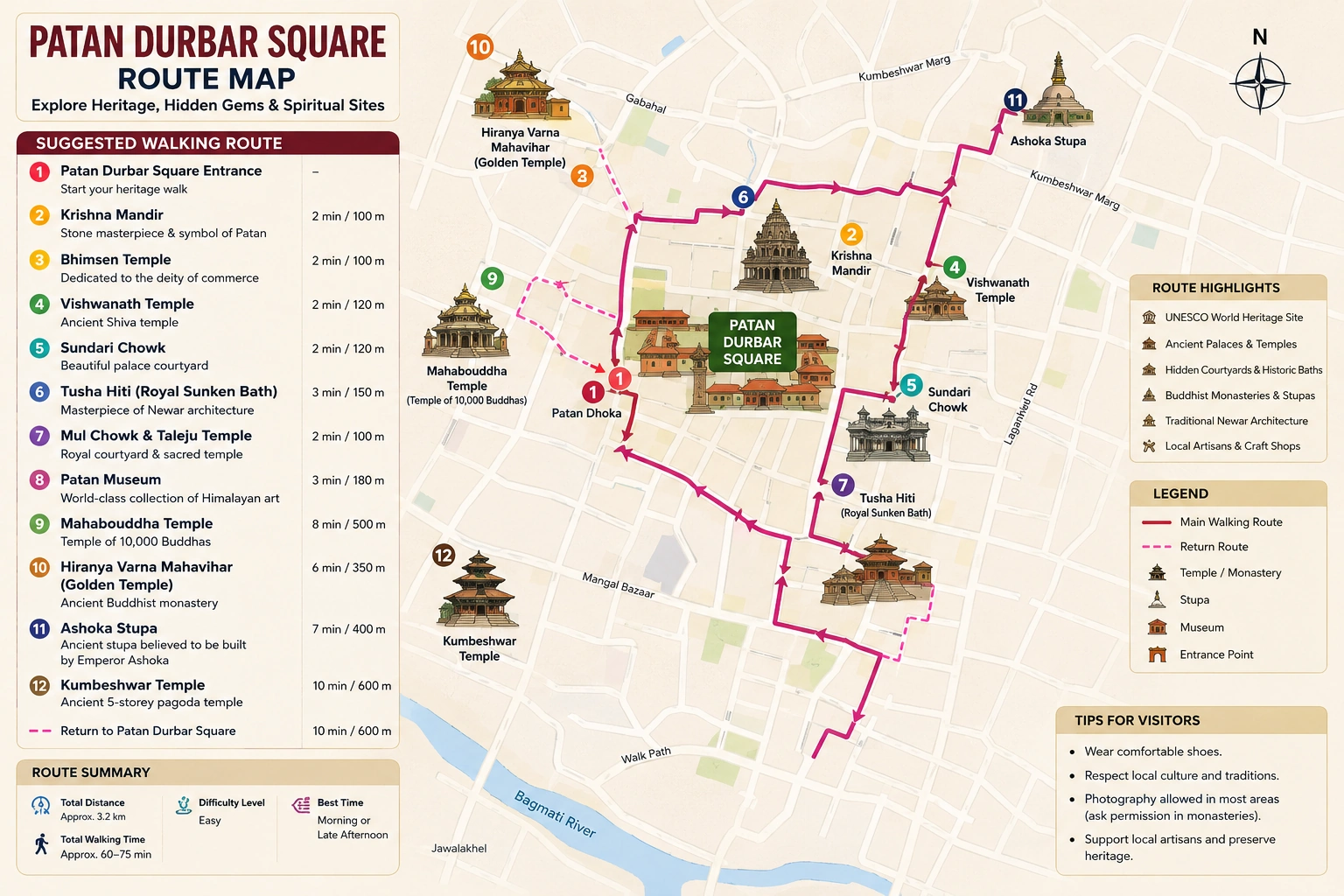
Patan Durbar Square is a UNESCO World Heritage Site and the cultural heart of Lalitpur, celebrated for its magnificent Newar architecture, ancient royal palaces, intricately carved temples, and vibrant local traditions. Beyond the main square, visitors can explore hidden gems such as the Mahabouddha Temple, famously known as the Temple of 10,000 Buddhas for its thousands of handcrafted terracotta Buddha images, the peaceful Hiranya Varna Mahavihar (Golden Temple), and the historic Ashoka Stupas, believed to have been built by Emperor Ashoka in the 3rd century BCE. Together, these remarkable landmarks offer a fascinating journey through Nepal's rich history, spirituality, art, and timeless craftsmanship.
Additional Note:
This itinerary is fully customizable and can be tailored to match the interests, preferences, travel style, budget, and schedule of each guest. Additional sightseeing, activities, accommodation upgrades, or extra nights can be arranged upon request to create a personalized travel experience.
Departure Dates & Availability
No guaranteed departures available for this tour.
Detailed Day-by-Day Itinerary
Inclusions / Exclusions
Included
Excluded
Route Map
Gear List / Packing Guide
| Category | Recommended Gear | Purpose |
|---|---|---|
| Clothing | Comfortable lightweight clothing | Suitable for walking and sightseeing |
| Footwear | Comfortable walking shoes or sneakers | Easy movement on stone-paved streets and courtyards |
| Outerwear | Light jacket or windbreaker | Useful during cool mornings and evenings |
| Rain Protection | Compact umbrella or rain jacket | Protection during unexpected rain showers |
| Sun Protection | Sun hat or cap | Shields from direct sunlight |
| Sun Protection | Sunglasses | Protects eyes from bright daylight |
| Sun Protection | Sunscreen (SPF 30+) | Prevents sunburn during outdoor exploration |
| Day Bag | Small backpack or daypack | Carry personal essentials comfortably |
| Water | Reusable water bottle | Stay hydrated throughout the tour |
| Snacks | Energy bars or light snacks | Useful during longer walking tours |
| Photography | Camera or smartphone | Capture heritage monuments and local culture |
| Electronics | Power bank | Backup power for phones and cameras |
| Documents | Passport or government-issued ID | Required for identification if needed |
| Money | Cash (Nepalese Rupees) | Entrance fees, shopping, cafés, and local purchases |
| Hygiene | Hand sanitizer and wet wipes | Maintain personal hygiene while traveling |
| Health | Personal medications | Carry prescribed medicines if required |
| Safety | Basic first aid kit | For minor cuts, blisters, or headaches |
| Cultural Etiquette | Modest clothing | Appropriate when visiting temples and monasteries |
| Optional | Travel guidebook or printed map | Helps understand historical landmarks |
| Optional | Notebook and pen | Useful for travel notes, sketches, or observations |
FAQ
Patan Durbar Square offers heritage sightseeing, temple visits, museum exploration, photography, traditional artisan workshops, Newari cuisine, and visits to hidden cultural landmarks such as Mahabouddha Temple and the Ashoka Stupas.
Patan Durbar Square is renowned for its exceptional Newar architecture, medieval royal palace, living cultural traditions, intricate wood carvings, ancient temples, and UNESCO World Heritage status.
A full-day cultural tour of 6 to 8 hours is ideal for exploring the major attractions, museums, hidden monasteries, artisan workshops, and local markets.
Spring (March to May) and autumn (September to November) offer pleasant weather, while early morning and late afternoon provide the best lighting for sightseeing and photography.
Patan Durbar Square is suitable for history enthusiasts, architecture lovers, photographers, students, families, senior citizens, pilgrims, and cultural travelers.
Patan Durbar Square is one of the best heritage destinations for first-time visitors seeking history, culture, architecture, and authentic Newari traditions.
Patan Durbar Square provides outstanding value by combining UNESCO heritage monuments, museums, temples, artisan workshops, and cultural experiences within a compact area.
Patan Durbar Square's hidden courtyards, Mahabouddha Temple, Golden Temple, Tusha Hiti, and the Ashoka Stupas are among the most underrated cultural attractions.
Patan Durbar Square is an excellent destination for a half-day or full-day cultural holiday.
Patan Durbar Square is one of Nepal's finest destinations for exploring medieval history, royal heritage, and traditional Newar civilization.
Yes. Patan Durbar Square is family-friendly with easy walking routes, educational attractions, museums, temples, and open courtyards suitable for visitors of all ages.
Patan Durbar Square is well suited for senior citizens because of its relatively flat walking paths, short distances between attractions, and comfortable sightseeing pace.
Patan Durbar Square introduces children to Nepal's history, architecture, art, religion, museums, and traditional craftsmanship through interactive cultural exploration.
Patan Durbar Square combines heritage monuments, museums, traditional markets, artisan workshops, and local cuisine for an enjoyable family experience.
Patan Durbar Square is among the top photography destinations due to its historic temples, palace courtyards, intricate carvings, vibrant festivals, and traditional streets.
Mahabouddha Temple, also known as the Temple of 10,000 Buddhas, is decorated with thousands of handcrafted terracotta Buddha images, making it one of Nepal's most remarkable Buddhist monuments.
The Four Ashoka Stupas are ancient Buddhist monuments believed to have been built by Emperor Ashoka during the 3rd century BCE, marking the historic boundaries of ancient Patan.
Krishna Mandir is famous for being Nepal's first temple built entirely from stone in the Shikhara architectural style and for its detailed carvings depicting the Mahabharata and Ramayana.
Patan Museum houses one of Nepal's finest collections of traditional religious art, bronze sculptures, wood carvings, and historical artifacts inside the restored royal palace.
Tusha Hiti is a beautifully carved royal sunken bath located within Sundari Chowk, showcasing remarkable medieval hydraulic engineering and stone craftsmanship.
Hiranya Varna Mahavihar, commonly known as the Golden Temple, is a historic Buddhist monastery famous for its gilded architecture, bronze sculptures, and peaceful courtyard.
Yes. Most attractions are located within walking distance, making Patan Durbar Square one of the best destinations for a guided walking tour.
Yes. Ancient temples, royal courtyards, traditional festivals, artisan workshops, and Newari architecture provide outstanding photography opportunities throughout the year.
Yes. Visitors can observe skilled Newar artisans creating bronze statues, wood carvings, religious artifacts, metal crafts, and traditional handicrafts.
Traditional Newari dishes such as Bara, Chatamari, Yomari, Choila, Samay Baji, and Juju Dhau are highly recommended.
A full-day tour generally includes 4 to 6 kilometers of leisurely walking on flat stone-paved streets and heritage courtyards.
Yes. Patan Durbar Square remains accessible throughout the year, although carrying an umbrella or rain jacket is recommended during the monsoon months.
Yes. Patan Durbar Square can easily be combined with Kathmandu Durbar Square, Bhaktapur Durbar Square, Swayambhunath, Boudhanath, and Pashupatinath in a multi-day cultural itinerary.
Comfortable walking shoes and modest clothing are recommended, especially when entering temples, monasteries, and other religious sites.
A guided tour provides historical insights, cultural interpretation, access to hidden attractions such as the Temple of 10,000 Buddhas and the Ashoka Stupas, and a richer understanding of Patan's architectural and religious heritage.
More Details
 Accommodation Types for the Cultural Exploration Tour of Patan Durbar Square
The Cultural Exploration Tour of Patan Durbar Square is a comfortable heritage day tour based in Kathmandu Valley. Travelers stay in hotels located in Kathmandu or Lalitpur, allowing convenient access to Patan Durbar Square and nearby UNESCO World Heritage Sites. Accommodation options range from budget guesthouses to luxury heritage hotels, providing modern amenities, excellent hospitality, and easy transportation to the cultural attractions. Whether choosing a boutique hotel in Patan or a luxury property in Kathmandu, visitors can enjoy a relaxing stay while exploring Nepal's rich history and living heritage.
Accommodation Overview
| Location | Accommodation Type |
|---|---|
| Kathmandu | 3★–5★ Hotels, Boutique Hotels & Guesthouses |
| Lalitpur (Patan) | Heritage Hotels, Boutique Hotels & Modern Hotels |
| Thamel | Tourist Hotels, Boutique Hotels & Luxury Hotels |
| Patan Heritage Area | Traditional Newari Heritage Hotels & Guesthouses |
Room Facilities
Most hotels and heritage accommodations provide comfortable rooms designed for leisure and cultural travelers.
Twin-sharing or double rooms with comfortable beds
Private attached bathrooms
Air conditioning or heating (depending on the season)
Free Wi-Fi access
Flat-screen television
Tea and coffee making facilities
Daily housekeeping service
Fresh towels and complimentary toiletries
24-hour front desk assistance
Safe luggage storage
Dining Facilities
Hotels and restaurants around Patan Durbar Square offer a wide variety of local and international cuisine.
Dining facilities include:
Complimentary breakfast at most hotels
Traditional Newari cuisine
Nepali, Indian, Chinese, and Continental dishes
Freshly brewed tea and coffee
Local snacks and desserts
Vegetarian and vegan meal options
Comfortable indoor and outdoor dining spaces
Rooftop restaurants overlooking Patan Durbar Square
Additional Facilities
| Facility | Availability |
|---|---|
| Free Wi-Fi | Available in most hotels |
| Air Conditioning | Available in selected hotels |
| Hot Shower | Available in all standard hotels |
| Laundry Service | Available |
| Airport Transfer | Available on request |
| Luggage Storage | Available |
| Room Service | Available in most hotels |
| Parking | Available at selected properties |
Additional Charges
Some services may require additional payment.
| Service | Approximate Cost |
|---|---|
| Airport Transfer | Varies by hotel |
| Laundry Service | Charged per item |
| Room Service | According to hotel menu |
| Extra Bed | Varies by hotel category |
| Premium Dining | According to restaurant pricing |
What to Expect
Accommodation during the Cultural Exploration Tour of Patan Durbar Square combines modern comfort with authentic cultural charm. Travelers can choose from elegant heritage hotels featuring traditional Newari architecture or contemporary hotels equipped with modern amenities. Most properties are conveniently located within a short drive or walking distance of Patan Durbar Square, allowing visitors to maximize sightseeing time while enjoying a comfortable and relaxing stay.
You can expect:
Comfortable hotel accommodation with modern facilities
Warm Nepalese hospitality
Easy access to Patan Durbar Square and nearby attractions
Traditional Newari architectural ambiance in heritage hotels
Excellent dining options featuring local and international cuisine
Convenient transportation to major UNESCO World Heritage Sites
Accommodation Tips
Choose accommodation near Patan Durbar Square for convenient sightseeing.
Book hotels early during peak tourist seasons.
Select heritage hotels for an authentic cultural experience.
Carry a light jacket during winter evenings.
Confirm airport transfer before arrival if required.
Keep valuables in the hotel safety deposit box.
Choose hotels with breakfast included for added convenience.
Explore local cafés and traditional Newari restaurants within walking distance of Patan Durbar Square.
Why You'll Love Staying During the Cultural Exploration Tour of Patan Durbar Square
Accommodation during the Cultural Exploration Tour of Patan Durbar Square provides much more than a comfortable place to stay. Heritage hotels and boutique accommodations allow visitors to experience traditional Newari architecture, warm local hospitality, authentic cuisine, and easy access to one of Nepal's finest UNESCO World Heritage Sites. Combining modern comfort with centuries-old cultural surroundings creates an unforgettable stay that perfectly complements the rich history, art, and traditions of Patan.
 What to Expect from the Cultural Exploration Tour of Patan Durbar Square
The Cultural Exploration Tour of Patan Durbar Square offers an unforgettable journey through one of Nepal's most beautiful UNESCO World Heritage Sites. Located in the historic city of Lalitpur, the tour showcases centuries-old royal palaces, intricately carved temples, peaceful Buddhist monasteries, hidden courtyards, ancient water spouts, traditional artisan workshops, and vibrant local culture. Walking through Patan feels like stepping into a living museum where history, religion, architecture, and daily life blend together in perfect harmony. Every street, courtyard, and monument reflects the remarkable craftsmanship and artistic heritage of the Newar civilization.
Major Heritage Attractions
Throughout the tour, visitors will explore some of the most iconic cultural landmarks in Kathmandu Valley.
| Attraction | Highlights |
|---|---|
| Patan Durbar Square | UNESCO World Heritage Site & Royal Palace Complex |
| Krishna Mandir | Nepal's Finest Stone Temple |
| Patan Museum | Traditional Nepalese Art & History |
| Golden Temple | Ancient Buddhist Monastery |
| Mahabouddha Temple | Temple of 10,000 Buddhas |
| Ashoka Stupas | Historic Buddhist Monuments |
| Kumbeshwar Temple | One of Patan's Oldest Temples |
| Tusha Hiti | Royal Sunken Bath |
Historic Royal Palaces and Courtyards
The Cultural Exploration Tour passes through the magnificent royal palace complex of the former Malla Kingdom.
Visitors can explore:
Mul Chowk
Sundari Chowk
Royal Palace Complex
Ancient royal courtyards
Traditional Newari architecture
Beautiful carved wooden windows
Historic stone sculptures
Royal ceremonial spaces
Hidden Cultural Treasures
Beyond the main square, Patan reveals several fascinating hidden attractions rarely explored by ordinary visitors.
You'll discover:
Mahabouddha Temple (Temple of 10,000 Buddhas)
Four Ancient Ashoka Stupas
Hiranya Varna Mahavihar (Golden Temple)
Traditional Newari courtyards
Hidden monasteries
Ancient stone water spouts
Traditional artisan workshops
Local heritage streets
Traditional Art and Handicrafts
Patan has been Nepal's artistic center for centuries.
Visitors can experience:
Bronze statue workshops
Wood carving studios
Metal handicraft production
Traditional paubha painting
Handmade religious artifacts
Local handicraft shops
Generations of skilled Newar artisans
Newari Culture and Heritage
The Cultural Exploration Tour introduces visitors to the rich traditions of the Newar community.
You'll experience:
Ancient Hindu temples
Historic Buddhist monasteries
Traditional Newari settlements
Daily religious ceremonies
Local festivals and rituals
Authentic Newari architecture
Living cultural traditions
Traditional community courtyards
Photography Opportunities
The Cultural Exploration Tour offers numerous outstanding photography locations.
Popular photography spots include:
Krishna Mandir
Patan Durbar Square
Royal Palace Courtyards
Golden Temple
Mahabouddha Temple
Ashoka Stupas
Traditional alleyways
Local artisan workshops
Traditional Food Experience
Visitors can enjoy authentic Newari cuisine throughout the tour.
Recommended dishes include:
Samay Baji
Bara
Chatamari
Choila
Yomari
Juju Dhau
Traditional Nepali Thali
Local sweets and tea
A Typical Day on the Cultural Tour
Every tour follows a comfortable sightseeing schedule with plenty of time for exploration and photography.
| Time | Activity |
|---|---|
| Morning | Arrival at Patan Durbar Square and guided heritage tour |
| Mid-Morning | Visit royal palace, temples, museum, and courtyards |
| Lunch | Traditional Newari lunch at a local restaurant |
| Afternoon | Explore Golden Temple, Temple of 10,000 Buddhas, Ashoka Stupas, and artisan workshops |
| Late Afternoon | Shopping, photography, tea break, and tour conclusion |
What Makes the Cultural Exploration Tour of Patan Durbar Square Special?
The Cultural Exploration Tour of Patan Durbar Square is much more than a heritage sightseeing experience. The tour combines UNESCO-listed monuments, medieval royal palaces, beautifully carved temples, hidden monasteries, the famous Temple of 10,000 Buddhas, the historic Ashoka Stupas, traditional artisan workshops, authentic Newari cuisine, and living cultural traditions into one unforgettable journey. Every step reveals centuries of history, exceptional craftsmanship, and spiritual heritage, making Patan one of the finest cultural destinations in Nepal.
 Best Time / Season to Visit the Cultural Exploration Tour of Patan Durbar Square
The Cultural Exploration Tour of Patan Durbar Square can be enjoyed throughout the year, as the destination is located in the Kathmandu Valley and remains easily accessible in every season. Each season offers a unique cultural experience, from blooming gardens and pleasant weather in spring to colorful festivals in autumn. Winter provides clear skies and comfortable sightseeing during the daytime, while the monsoon season brings lush surroundings and fewer crowds. Spring and autumn are considered the best seasons due to their mild temperatures, clear weather, and excellent conditions for heritage walks, photography, and cultural exploration.
Best Seasons at a Glance
| Season | Months | Weather | Tour Experience |
|---|---|---|---|
| 🌸 Spring | March – May | Mild & Pleasant | Best for sightseeing, photography, and blooming gardens |
| ☀️ Summer / Monsoon | June – August | Warm & Rainy | Green surroundings, fewer visitors, and occasional rainfall |
| 🍂 Autumn | September – November | Cool & Clear | Ideal weather, major festivals, and excellent visibility |
| ❄️ Winter | December – February | Cool & Dry | Clear skies, peaceful atmosphere, and comfortable daytime visits |
🌸 Spring (March – May)
Spring is one of the best seasons to explore Patan Durbar Square.
Highlights include:
Pleasant daytime temperatures
Clear skies for sightseeing
Beautiful flowering gardens
Excellent photography conditions
Comfortable walking weather
Ideal season for cultural exploration
🍂 Autumn (September – November)
Autumn is considered the peak tourism season in Kathmandu Valley.
Why choose autumn?
Crystal-clear weather
Comfortable temperatures
Excellent visibility
Major cultural festivals
Vibrant local celebrations
Perfect conditions for heritage walks
❄️ Winter (December – February)
Winter offers peaceful sightseeing with fewer tourists.
Expect:
Cool mornings and evenings
Clear blue skies
Comfortable daytime temperatures
Less crowded monuments
Excellent photography opportunities
Pleasant walking conditions
☀️ Summer / Monsoon (June – August)
Although monsoon brings occasional rain, cultural tours remain enjoyable.
During this season:
Lush green surroundings
Fewer visitors
Cooler afternoons after rainfall
Beautiful heritage photography
Occasional short rain showers
Comfortable indoor museum visits
Average Temperature
| Season | Daytime | Nighttime |
|---|---|---|
| Spring | 20°C to 28°C | 10°C to 15°C |
| Summer / Monsoon | 24°C to 30°C | 18°C to 22°C |
| Autumn | 18°C to 27°C | 10°C to 15°C |
| Winter | 12°C to 20°C | 2°C to 8°C |
Weather Tips
Wear comfortable walking shoes for exploring heritage streets.
Carry a hat, sunglasses, and sunscreen during sunny days.
Bring a light jacket for winter mornings and evenings.
Carry a compact umbrella during the monsoon season.
Keep a reusable water bottle for hydration.
Visit early in the morning or late afternoon for the best photography.
Major Festivals to Experience
Visitors traveling during festival seasons can witness Patan's vibrant cultural celebrations.
Popular festivals include:
Rato Machhindranath Jatra
Krishna Janmashtami
Indra Jatra
Dashain
Tihar
Buddha Jayanti
Why Spring & Autumn Are Recommended
Spring and autumn provide the perfect combination of pleasant weather, comfortable temperatures, vibrant cultural festivals, and excellent photography conditions. These seasons allow visitors to fully appreciate the magnificent architecture of Patan Durbar Square, explore hidden attractions such as the Temple of 10,000 Buddhas and the Ashoka Stupas, and enjoy authentic Newari culture in the most comfortable sightseeing conditions.
 Nearby Places to Explore from the Cultural Exploration Tour of Patan Durbar Square
The Cultural Exploration Tour of Patan Durbar Square offers much more than exploring the royal palace and historic temples. The surrounding area is home to ancient monasteries, Buddhist stupas, hidden courtyards, traditional Newari settlements, museums, artisan workshops, and several UNESCO World Heritage Sites. If you have additional time before or after your cultural tour, these nearby attractions provide an even deeper understanding of Nepal's rich history, architecture, religion, and artistic heritage.
Popular Places to Explore
| Destination | Highlights |
|---|---|
| Golden Temple (Hiranya Varna Mahavihar) | Ancient Buddhist Monastery & Gilded Courtyard |
| Mahabouddha Temple | Temple of 10,000 Buddhas |
| Ashoka Stupas | Historic Buddhist Monuments |
| Kumbeshwar Temple | One of Patan's Oldest Temples |
| Patan Museum | Nepalese Religious Art & History |
| Kathmandu Durbar Square | UNESCO World Heritage Site |
| Swayambhunath Stupa | Ancient Buddhist Temple & Hilltop Viewpoint |
| Boudhanath Stupa | One of the World's Largest Buddhist Stupas |
| Pashupatinath Temple | Nepal's Most Sacred Hindu Temple |
| Bhaktapur Durbar Square | Medieval Royal City & UNESCO Heritage Site |
Golden Temple (Hiranya Varna Mahavihar)
Located just a few minutes from Patan Durbar Square, the Golden Temple is one of Nepal's most important Buddhist monasteries.
Highlights include:
Beautiful golden courtyard
Ancient Buddhist architecture
Prayer wheels
Bronze sculptures
Peaceful monastery atmosphere
Traditional Newari craftsmanship
Mahabouddha Temple (Temple of 10,000 Buddhas)
Mahabouddha Temple is one of Patan's hidden architectural masterpieces.
Visitors can enjoy:
Thousands of handcrafted terracotta Buddha images
Unique brick architecture
Peaceful surroundings
Exceptional photography opportunities
Important Buddhist heritage
Ashoka Stupas
The Four Ashoka Stupas are among the oldest Buddhist monuments in Nepal.
Highlights include:
Historic Buddhist heritage
Peaceful meditation sites
Ancient brick structures
Connection to Emperor Ashoka
Excellent cultural experience
Kumbeshwar Temple
Kumbeshwar Temple is one of Patan's oldest Hindu temples.
Visitors can experience:
Five-story pagoda architecture
Sacred pond
Ancient religious traditions
Historic Newari architecture
Peaceful temple surroundings
Patan Museum
Located inside the Royal Palace Complex, Patan Museum is regarded as one of Nepal's finest museums.
Why visit?
Traditional Nepalese sculptures
Bronze and stone artifacts
Religious artwork
Historical exhibitions
Beautiful palace courtyard
Kathmandu Durbar Square
Located approximately 6 km from Patan, Kathmandu Durbar Square offers another remarkable UNESCO World Heritage experience.
Things to enjoy:
Historic royal palace
Ancient temples
Living Goddess Kumari House
Traditional architecture
Cultural markets
Swayambhunath Stupa
Also known as the Monkey Temple, Swayambhunath is one of Nepal's oldest Buddhist pilgrimage sites.
Visitors can experience:
Panoramic Kathmandu Valley views
Ancient Buddhist stupa
Prayer wheels
Monasteries
Beautiful sunset views
Boudhanath Stupa
Boudhanath is one of the largest Buddhist stupas in the world.
Highlights include:
Massive white stupa
Tibetan Buddhist monasteries
Prayer wheels
Traditional cafés
Peaceful spiritual atmosphere
Pashupatinath Temple
Pashupatinath is Nepal's most sacred Hindu temple dedicated to Lord Shiva.
Visitors can enjoy:
Ancient temple complex
Bagmati River
Traditional Hindu rituals
Historic architecture
UNESCO World Heritage Site
Bhaktapur Durbar Square
Bhaktapur Durbar Square preserves the medieval charm of the Kathmandu Valley.
Highlights include:
Royal Palace
Nyatapola Temple
Pottery Square
Traditional Newari culture
Beautiful heritage streets
Cultural & Local Experiences
Besides heritage sightseeing, visitors can also enjoy:
Traditional Newari cuisine
Local handicraft shopping
Metal sculpture workshops
Wood carving studios
Cultural photography
Historic alleyway walks
Local cafés and tea houses
Traditional festivals
Why Extend Your Cultural Tour?
Adding a few extra hours or an additional day allows visitors to discover the rich cultural landscape surrounding Patan Durbar Square. Exploring nearby UNESCO World Heritage Sites, ancient Buddhist monasteries, historic Hindu temples, traditional artisan workshops, and hidden Newari neighborhoods creates a more complete understanding of Nepal's remarkable history and living heritage. Whether visiting the Temple of 10,000 Buddhas, the Ashoka Stupas, Boudhanath, Swayambhunath, or Bhaktapur Durbar Square, every destination adds another unforgettable chapter to the cultural journey through Kathmandu Valley.
 Foods Available During the Cultural Exploration Tour of Patan Durbar Square
The Cultural Exploration Tour of Patan Durbar Square is an excellent opportunity to experience the authentic flavors of Newari cuisine alongside a variety of Nepali and international dishes. The heritage area is home to traditional Newari restaurants, local cafés, rooftop dining venues, and modern eateries serving freshly prepared meals throughout the day. Whether you want to enjoy a traditional cultural lunch or simply relax with tea while overlooking the ancient temples, Patan offers a memorable culinary experience that complements its rich history and heritage.
Breakfast Options
Start your day with a delicious breakfast before exploring Patan Durbar Square.
Common breakfast choices include:
Traditional Nepali Breakfast
Toast with Butter and Jam
Pancakes
French Toast
Omelets
Boiled Eggs
Muesli with Yogurt
Fresh Seasonal Fruits
Tea or Coffee
Fresh Fruit Juice
Lunch & Dinner Options
Patan is famous for authentic Newari cuisine as well as a wide variety of international dishes.
Popular dishes include:
Samay Baji
Bara
Chatamari
Choila
Yomari
Thakali Set Meal
Dal Bhat
Momos
Chowmein
Fried Rice
Thukpa
Vegetable Curry
Pizza
Pasta
Continental Meals
Drinks Available
Visitors can enjoy a wide range of refreshing beverages throughout the tour.
Available drinks include:
Black Tea
Milk Tea
Masala Tea
Ginger Tea
Lemon Honey Tea
Fresh Coffee
Hot Chocolate
Fresh Fruit Juice
Soft Drinks
Mineral Water
Fresh Lassi
Local Foods to Try
Experience the authentic taste of Newari culture during the tour.
Recommended local dishes include:
Samay Baji
Chatamari
Bara
Choila
Yomari
Juju Dhau
Aloo Tama
Sel Roti
Newari Pickles
Traditional Sweets
Food Safety Tips
Following basic food safety practices will help ensure an enjoyable dining experience.
Eat freshly prepared meals.
Drink bottled or filtered drinking water.
Choose clean and reputable restaurants.
Wash or sanitize your hands before meals.
Inform restaurant staff about any food allergies.
Avoid overeating before long walking tours.
Stay hydrated throughout the day.
Vegetarian & Vegan Options
Most restaurants around Patan Durbar Square offer vegetarian and vegan meals.
Common choices include:
Vegetable Dal Bhat
Vegetable Momos
Vegetable Chowmein
Fried Rice
Seasonal Vegetable Curry
Porridge
Fresh Salads
Fresh Fruits
Vegan Soups
Tea and Coffee
Dining Experience
Dining around Patan Durbar Square is much more than enjoying delicious food. Many traditional restaurants are located inside beautifully restored Newari houses featuring carved wooden windows, brick courtyards, and rooftop terraces overlooking centuries-old temples. Visitors can enjoy authentic local cuisine while experiencing the historic atmosphere of one of Nepal's finest cultural heritage sites. The combination of traditional hospitality, unique architecture, and flavorful cuisine makes every meal a memorable part of the cultural journey.
Why Food Matters During the Cultural Exploration Tour of Patan Durbar Square
Food is an important part of Patan's cultural identity. Sampling authentic Newari dishes allows visitors to experience traditions that have been preserved for generations. From enjoying a traditional Samay Baji platter and freshly prepared Bara to tasting the famous Yomari and Juju Dhau, every meal provides a deeper connection to the rich heritage of Lalitpur. Combined with the historic surroundings of Patan Durbar Square, the local culinary experience becomes one of the highlights of the cultural exploration tour.
 Culture and Etiquette of the Cultural Exploration Tour of Patan Durbar Square
The Cultural Exploration Tour of Patan Durbar Square offers an excellent opportunity to experience the rich traditions, religious harmony, and artistic heritage of the Newar community. Patan has been a center of Hinduism and Buddhism for centuries, where ancient temples, monasteries, courtyards, and traditional neighborhoods continue to preserve living cultural practices. Respecting local customs and etiquette not only enhances the travel experience but also helps preserve the cultural significance of one of Nepal's most treasured UNESCO World Heritage Sites.
Local Communities
Patan is home primarily to the Newar community, who have preserved their unique culture, architecture, cuisine, and craftsmanship for generations.
You'll experience:
Traditional Newar culture
Warm Nepalese hospitality
Ancient family traditions
Religious harmony between Hinduism and Buddhism
Traditional artisan communities
Historic neighborhood living
Colorful local festivals
Authentic cultural experiences
Cultural Highlights
Throughout the Cultural Exploration Tour, visitors will encounter numerous historic and religious landmarks.
These include:
Patan Durbar Square
Krishna Mandir
Golden Temple
Mahabouddha Temple
Ashoka Stupas
Traditional courtyards
Stone water spouts
Royal palace complex
Ancient temples and monasteries
Traditional artisan workshops
Famous Religious Sites
Several important religious monuments can be visited during the tour.
| Religious Site | Highlights |
|---|---|
| Krishna Mandir | Nepal's Finest Stone Temple |
| Golden Temple | Ancient Buddhist Monastery |
| Mahabouddha Temple | Temple of 10,000 Buddhas |
| Kumbeshwar Temple | Historic Hindu Temple |
| Ashoka Stupas | Ancient Buddhist Monuments |
Local Etiquette
Respecting local customs creates a more meaningful cultural experience.
Follow these simple guidelines:
Greet local people with "Namaste."
Dress modestly when visiting temples and monasteries.
Remove shoes before entering religious buildings where required.
Ask permission before photographing local people.
Respect prayer ceremonies and religious rituals.
Speak quietly inside temples and monasteries.
Avoid touching religious statues and sacred objects.
Walk clockwise around stupas and prayer wheels.
Keep heritage sites clean and well preserved.
Follow instructions provided by local guides.
Responsible Tourism
Help preserve Patan's cultural and architectural heritage by practicing responsible travel.
You can contribute by:
Carrying a reusable water bottle.
Avoiding single-use plastics.
Supporting local restaurants and artisan workshops.
Purchasing authentic handmade handicrafts.
Respecting religious sites and local traditions.
Disposing of waste responsibly.
Protecting historic monuments from damage.
Choosing responsible local tour operators.
Local Festivals
Visitors traveling during festival seasons may experience some of Patan's most vibrant celebrations.
Popular festivals include:
Rato Machhindranath Jatra
Krishna Janmashtami
Dashain
Tihar
Buddha Jayanti
Indra Jatra
Holi
Gai Jatra
These festivals feature colorful processions, traditional music, cultural dances, religious ceremonies, and community celebrations.
Traditional Newar Lifestyle
The Newar community has preserved its cultural identity for centuries.
You'll notice:
Traditional brick houses
Beautiful carved wooden windows
Ancient community courtyards
Traditional family businesses
Religious shrines at street corners
Metal sculpture workshops
Wood carving studios
Traditional Newari cuisine
Strong community traditions
Cultural Tips for Visitors
To enjoy a respectful and memorable cultural experience:
Learn a few basic Nepali greetings.
Respect local customs and religious beliefs.
Support local businesses whenever possible.
Dress respectfully while visiting temples.
Keep noise levels low around religious sites.
Ask permission before taking photographs inside monasteries.
Follow local cultural practices during festivals.
Leave heritage sites exactly as they are found.
Why Culture Makes the Cultural Exploration Tour of Patan Durbar Square Special
The Cultural Exploration Tour of Patan Durbar Square is much more than visiting historic monuments. It is an opportunity to experience centuries-old Newar traditions, remarkable craftsmanship, sacred Hindu temples, peaceful Buddhist monasteries, vibrant festivals, authentic cuisine, and living cultural heritage. Exploring the Temple of 10,000 Buddhas, the Ashoka Stupas, traditional artisan workshops, and the beautifully preserved palace complex creates an unforgettable journey through one of Nepal's richest cultural landscapes, where history and daily life continue to exist side by side.
 Safety and Security for the Cultural Exploration Tour of Patan Durbar Square
The Cultural Exploration Tour of Patan Durbar Square is one of the safest and most enjoyable sightseeing experiences in Nepal. Located in the heart of Lalitpur, the heritage area is well maintained, easily accessible, and regularly visited by both domestic and international travelers. The tour mainly involves walking through historic streets, palace courtyards, temples, museums, and cultural sites. By following basic travel safety practices, respecting local customs, and staying aware of your surroundings, visitors can enjoy a safe and memorable cultural experience.
General Safety Tips
Following these precautions will help ensure a comfortable and secure tour.
Travel with a licensed guide or reputable travel company.
Wear comfortable walking shoes with good grip.
Stay with your group during guided tours.
Keep valuable belongings secure.
Carry a fully charged mobile phone.
Drink sufficient water throughout the day.
Follow instructions provided by the tour guide.
Respect barriers and restricted areas around heritage monuments.
Personal Safety
Although Patan Durbar Square is considered very safe, basic precautions are always recommended.
Keep wallets, cameras, and mobile phones secure.
Avoid displaying large amounts of cash.
Carry only the essentials during the walking tour.
Be aware of uneven stone pavements.
Watch your step while exploring ancient courtyards and staircases.
Keep children supervised at all times.
Walking Safety
Most sightseeing is completed on foot through heritage streets and courtyards.
Be careful when:
Walking on stone-paved streets.
Climbing narrow temple staircases.
Exploring historic courtyards.
Crossing busy local roads.
Walking during rainy weather.
Taking photographs near elevated viewpoints.
Weather Safety
Weather in Kathmandu Valley is generally pleasant, but conditions can change during the monsoon season.
Carry:
Comfortable walking shoes
Sun hat or cap
Sunglasses
Sunscreen
Light jacket during winter
Umbrella or rain jacket during monsoon
Reusable water bottle
Health & Hygiene
Maintaining good personal hygiene helps ensure a pleasant travel experience.
Drink bottled or filtered drinking water.
Wash or sanitize your hands before meals.
Eat freshly prepared food.
Carry personal medications if required.
Wear comfortable clothing suitable for walking.
Take short breaks during sightseeing.
Stay hydrated throughout the tour.
Emergency Services
In case of an emergency:
Contact your tour guide immediately.
Medical clinics and hospitals are available nearby.
Police assistance is easily accessible in Lalitpur.
Emergency transportation can be arranged if required.
Keep emergency contact numbers saved on your phone.
Carry identification throughout the tour.
Essential Safety Gear
Carry these useful items for a comfortable cultural tour:
Reusable water bottle
Small daypack
Mobile phone
Power bank
Sunscreen
Sunglasses
Umbrella or rain jacket
Personal medications
Basic first-aid kit
Camera
Identification document
Safety Tips for Visitors
To enjoy a safe and relaxing heritage experience:
Start sightseeing early to avoid crowds.
Dress modestly while visiting temples and monasteries.
Respect local customs and religious ceremonies.
Avoid climbing on heritage monuments.
Keep Patan Durbar Square clean by disposing of waste responsibly.
Stay on designated visitor pathways.
Protect personal belongings in crowded areas.
Follow all guidance provided by local authorities and tour guides.
Why Safety Matters
A safe and well-planned visit allows travelers to fully appreciate the remarkable cultural heritage of Patan Durbar Square. By following simple safety guidelines, respecting historic monuments, and practicing responsible tourism, visitors can comfortably explore the Royal Palace Complex, Krishna Mandir, the Temple of 10,000 Buddhas, the Ashoka Stupas, the Golden Temple, and many other cultural treasures while enjoying one of Nepal's most rewarding heritage experiences.
 Transportation Facilities for the Cultural Exploration Tour of Patan Durbar Square
The Cultural Exploration Tour of Patan Durbar Square is easily accessible from Kathmandu and other major destinations within the Kathmandu Valley. Located approximately 5 km south of Kathmandu city center, Patan Durbar Square is well connected by private vehicles, tourist vehicles, taxis, ride-sharing services, and public transportation. Most visitors prefer private transportation for greater comfort and flexibility, while the heritage area itself is best explored on foot. Walking through the ancient streets, palace courtyards, temples, and hidden alleys allows visitors to fully experience the rich architectural and cultural heritage of Lalitpur.
Transportation Overview
| Route | Transportation | Duration |
|---|---|---|
| Tribhuvan International Airport → Patan Durbar Square | Private Vehicle / Taxi | 20–30 Minutes |
| Thamel → Patan Durbar Square | Private Vehicle / Taxi | 20–30 Minutes |
| Kathmandu City → Patan Durbar Square | Private Vehicle / Tourist Vehicle | 15–25 Minutes |
| Bhaktapur → Patan Durbar Square | Private Vehicle | 40–60 Minutes |
| Patan Durbar Square | Guided Walking Tour | 5–8 Hours |
Transportation Options
Depending on your travel style and budget, several transportation options are available.
Private Tourist Vehicle
Private Car
Taxi
Ride-Sharing Services
Tourist Van
Public Bus
Walking Tour
Private Vehicle
Private transportation is the most convenient way to reach Patan Durbar Square.
Vehicle features include:
Comfortable air-conditioned vehicles
Flexible departure times
Hotel pickup and drop-off
Professional driver
Ideal for families and groups
Convenient sightseeing experience
Taxi Services
Taxis are readily available throughout Kathmandu Valley.
Advantages include:
Easy availability
Flexible travel schedule
Comfortable city transportation
Suitable for individual travelers and couples
Direct access to Patan Durbar Square
Public Transportation
Budget travelers can also reach Patan Durbar Square using local buses and microbuses.
Advantages include:
Economical transportation
Regular daily services
Experience local travel
Easy access from Kathmandu city
Travelers should note:
Public vehicles may become crowded during peak hours.
Walking Tour
After arriving at Patan Durbar Square, the entire cultural exploration is completed on foot.
During the walking tour, visitors will experience:
Historic palace courtyards
Ancient temples
Traditional Newari streets
Hidden monasteries
Artisan workshops
Stone-paved heritage lanes
Local markets
Historic squares
Luggage Management
Travelers are advised to carry only essential personal belongings during the walking tour.
Typical recommendations include:
| Item | Recommendation |
|---|---|
| Small Daypack | Recommended |
| Camera | Recommended |
| Water Bottle | Recommended |
| Personal Valuables | Carry Personally |
| Large Luggage | Leave at Hotel |
| Shopping Items | Carry After Tour Completion |
Transportation Tips
To enjoy a smooth and comfortable cultural tour:
Start the tour early to avoid city traffic.
Use private transportation for maximum convenience.
Wear comfortable walking shoes.
Carry a reusable water bottle.
Keep valuable items secure.
Bring a camera for heritage photography.
Allow extra travel time during festivals and weekends.
Why Transportation Is Part of the Experience
Transportation to Patan Durbar Square is simple and convenient, while the walking tour through the historic streets of Lalitpur becomes an unforgettable part of the journey. From the moment visitors enter the beautifully preserved royal square and begin exploring ancient temples, hidden courtyards, the Temple of 10,000 Buddhas, the Ashoka Stupas, and traditional artisan workshops, every step offers a deeper connection to Nepal's remarkable cultural heritage. Walking remains the best way to appreciate the timeless beauty, architecture, and vibrant atmosphere of Patan Durbar Square.
 Cultural Exploration Tour of Patan Durbar Square Difficulty and Physical Fitness Required
The Cultural Exploration Tour of Patan Durbar Square is considered a very easy sightseeing experience suitable for travelers of all ages. The tour involves leisurely walking through historic streets, palace courtyards, temples, museums, monasteries, and traditional neighborhoods. No trekking, climbing, or technical skills are required. With a relaxed pace and frequent stops for sightseeing, photography, and cultural interpretation, the tour is ideal for families, senior citizens, students, photographers, and first-time visitors to Nepal.
Tour Overview
| Category | Details |
|---|---|
| Difficulty Level | Easy |
| Maximum Elevation | 1,330 m |
| Tour Duration | Full Day (6–8 Hours) |
| Walking Duration | 4–6 Hours (Leisurely) |
| Walking Distance | Approximately 4–6 km |
| Trail Type | Stone-Paved Streets, Heritage Squares & Courtyards |
Physical Fitness Required
The Cultural Exploration Tour is suitable for:
Beginners
Families with children
Senior citizens
History enthusiasts
Cultural travelers
Photography lovers
Educational groups
International tourists
Physical Preparation
No special training is required before joining the tour.
Recommended preparation includes:
Wear comfortable walking shoes.
Carry a reusable water bottle.
Wear light and comfortable clothing.
Bring a hat and sunglasses during sunny weather.
Carry a light jacket during winter.
Maintain normal daily fitness for comfortable walking.
Tour Challenges
Although the tour is easy, visitors may encounter:
Uneven stone-paved streets
Narrow heritage alleyways
Ancient staircases inside temples
Busy local streets
Warm temperatures during summer afternoons
Moderate walking throughout the day
Walking Considerations
The tour follows a relaxed walking pace with regular sightseeing breaks.
Key walking areas include:
Patan Durbar Square
Royal Palace Complex
Krishna Mandir
Golden Temple
Mahabouddha Temple
Ashoka Stupas
Traditional Newari streets
Artisan workshops
No altitude-related health concerns exist during the tour.
Tips for a Comfortable Tour
To enjoy the cultural tour comfortably:
Wear comfortable walking shoes.
Carry drinking water.
Apply sunscreen before the tour.
Take short breaks whenever necessary.
Follow the guide's instructions.
Respect local customs and heritage sites.
Carry a camera for photography.
Keep personal belongings secure.
Who Is This Tour Suitable For?
The Cultural Exploration Tour of Patan Durbar Square is ideal for travelers interested in history, architecture, religion, photography, and local culture. The easy walking route makes the tour suitable for solo travelers, couples, families, senior citizens, school groups, and international visitors. No previous hiking or trekking experience is required, allowing everyone to enjoy Nepal's rich cultural heritage at a comfortable pace.
Why Physical Fitness Matters
Although the Cultural Exploration Tour of Patan Durbar Square is not physically demanding, a reasonable level of fitness helps visitors comfortably enjoy several hours of walking while exploring temples, royal courtyards, museums, monasteries, hidden alleyways, the Temple of 10,000 Buddhas, and the Ashoka Stupas. With comfortable footwear, proper hydration, and a relaxed pace, visitors can fully appreciate one of Nepal's finest UNESCO World Heritage Sites while creating unforgettable cultural memories.
 Cost Breakdown for the Cultural Exploration Tour of Patan Durbar Square
The cost of the Cultural Exploration Tour of Patan Durbar Square varies depending on the tour type, transportation, group size, guide services, entrance fees, and optional experiences. Most cultural tour packages include transportation, a professional guide, and sightseeing according to the itinerary, while personal expenses such as meals, shopping, beverages, and souvenirs are generally excluded. Planning your budget in advance allows you to enjoy a comfortable and hassle-free cultural experience in one of Nepal's most important UNESCO World Heritage Sites.
Estimated Cost Breakdown
| Expense | Estimated Cost (USD) |
|---|---|
| Cultural Exploration Tour Package | $30–100 |
| Private Transportation | Usually Included |
| Professional Tour Guide | Usually Included |
| Patan Durbar Square Entrance Fee | Usually Included or Extra |
| Patan Museum Entrance Fee | Usually Included or Extra |
| Lunch | Optional |
| Personal Expenses | $10–50 |
| Travel Insurance | Optional |
What's Usually Included?
Most Cultural Exploration Tour packages include:
Hotel pickup and drop-off
Private transportation
Professional cultural guide
Guided sightseeing tour
Visit to Patan Durbar Square
Visit to Krishna Mandir
Visit to Golden Temple
Visit to Mahabouddha Temple
Visit to the Ashoka Stupas
Government taxes and service charges
Personal Expenses
Visitors should budget extra for the following items:
Lunch and beverages
Coffee and refreshments
Museum entrance fees (if not included)
Souvenirs and handicrafts
Photography charges (where applicable)
Personal shopping
Tips for guides and drivers
Additional snacks
Payment Methods
Most travel companies accept a variety of secure payment options.
Available payment methods include:
Credit Card
Debit Card
Bank Transfer
Online Payment Gateway
Cash (Nepalese Rupees or USD)
Money-Saving Tips
To manage your travel budget more effectively:
Book the tour in advance.
Join a group tour to reduce costs.
Carry a reusable water bottle.
Choose a package that includes transportation and guide services.
Carry enough Nepalese Rupees for personal purchases.
Compare package inclusions before booking.
Additional Costs to Consider
You may also wish to budget for:
| Optional Expense | Estimated Cost |
|---|---|
| Lunch at a Traditional Restaurant | $5–15 |
| Coffee or Tea | $2–5 |
| Souvenirs and Handicrafts | Varies |
| Museum Entry (if excluded) | According to current rates |
| Guide & Driver Tips | Optional |
Budgeting Tips
Before starting the tour:
Carry sufficient Nepalese Rupees for small purchases.
Keep small denomination notes for easier payments.
Store emergency cash separately.
Inform your bank before using international cards in Nepal.
Carry a reusable shopping bag for handicraft purchases.
Why Budget Planning Is Important
Planning your budget before joining the Cultural Exploration Tour of Patan Durbar Square helps ensure a smooth and enjoyable experience without unexpected expenses. Although many tour packages include transportation and guide services, visitors may wish to purchase local handicrafts, enjoy authentic Newari cuisine, visit museums, or relax in heritage cafés. Proper budgeting allows travelers to fully experience the remarkable history, architecture, traditional culture, the Temple of 10,000 Buddhas, the Ashoka Stupas, and the artistic heritage of Patan while making the most of every moment.
 Tips for the Cultural Exploration Tour of Patan Durbar Square
Proper preparation will help you enjoy a comfortable, safe, and memorable Cultural Exploration Tour of Patan Durbar Square. Although the tour is easy and suitable for all age groups, wearing comfortable clothing, respecting local customs, and carrying a few essential items will enhance your overall experience. Planning your day well allows you to fully appreciate the remarkable history, architecture, hidden courtyards, ancient temples, and vibrant Newari culture that make Patan one of Nepal's finest cultural destinations.
Before the Tour
Prepare yourself before arriving at Patan Durbar Square.
Wear comfortable walking shoes.
Check the weather forecast before departure.
Carry a reusable water bottle.
Wear comfortable and modest clothing.
Bring a hat and sunglasses during sunny weather.
Carry a light jacket during winter.
Charge your phone and camera.
Start the tour early to avoid crowds.
During the Tour
Following these tips will make your cultural experience more enjoyable.
Walk at a relaxed pace.
Follow your guide's instructions.
Respect local customs and religious practices.
Stay hydrated throughout the day.
Take regular breaks during sightseeing.
Wear sunscreen on sunny days.
Keep personal belongings secure.
Avoid climbing on heritage monuments.
Packing Essentials
Make sure you carry the following items:
Passport or Identification Card
Comfortable Walking Shoes
Light Jacket
Hat or Cap
Sunglasses
Reusable Water Bottle
Umbrella or Rain Jacket
Camera or Smartphone
Power Bank
Sunscreen
Personal Medications
Hand Sanitizer
Small Daypack
Cash (Nepalese Rupees)
Health & Hydration Tips
Maintaining good health throughout the tour ensures a comfortable experience.
Drink plenty of water.
Eat freshly prepared meals.
Wash or sanitize your hands before eating.
Wear weather-appropriate clothing.
Carry personal medications if required.
Take short rest breaks during the walking tour.
Avoid excessive exposure to direct sunlight.
Money & Communication Tips
Planning ahead helps avoid unnecessary inconvenience.
Carry sufficient Nepalese Rupees for personal expenses.
Keep small denomination notes for local purchases.
Most cafés and hotels accept digital payments.
Mobile network coverage is excellent throughout Patan.
Carry a power bank to keep devices charged.
Keep emergency contact numbers saved on your phone.
Responsible Tourism Tips
Help preserve Patan's unique cultural heritage for future generations.
Carry a reusable water bottle.
Avoid single-use plastics.
Respect temples and monasteries.
Support local artisans and businesses.
Purchase authentic handmade handicrafts.
Dispose of waste responsibly.
Avoid touching ancient carvings and monuments.
Respect local religious ceremonies.
Helpful Advice
Begin sightseeing early in the morning.
Dress modestly when entering religious sites.
Carry only essential personal belongings.
Allow extra time for photography.
Respect local people and cultural traditions.
Explore nearby hidden attractions such as the Temple of 10,000 Buddhas and the Ashoka Stupas.
Enjoy authentic Newari cuisine during lunch.
Take time to appreciate the history rather than rushing through the monuments.
Why These Tips Matter
The Cultural Exploration Tour of Patan Durbar Square is much more than a sightseeing experience. Careful preparation, respectful behavior, and responsible travel habits allow visitors to fully enjoy the magnificent royal palace, Krishna Mandir, Patan Museum, Golden Temple, Temple of 10,000 Buddhas, Ashoka Stupas, traditional artisan workshops, and centuries-old Newari neighborhoods. Following these practical tips ensures a safe, comfortable, and rewarding cultural journey while helping preserve one of Nepal's most remarkable UNESCO World Heritage Sites for future generations.
 Documents Required for the Cultural Exploration Tour of Patan Durbar Square
Before joining the Cultural Exploration Tour of Patan Durbar Square, it is important to carry the necessary travel documents for identification, hotel check-ins, transportation, and entry to heritage sites where applicable. While the tour is a straightforward cultural sightseeing experience within Kathmandu Valley, keeping both printed and digital copies of important documents helps ensure a smooth and hassle-free journey.
Essential Documents
| Document | Required |
|---|---|
| Valid Passport (Minimum 6 Months Validity) | ✅ Foreign Nationals |
| Nepal Tourist Visa | ✅ Foreign Nationals |
| Government-Issued Photo ID | ✅ Nepalese & Indian Citizens |
| Passport-sized Photographs | Recommended |
| Travel Insurance Certificate | Recommended |
| Hotel Booking Confirmation | Recommended |
| Tour Booking Confirmation | Recommended |
| Emergency Contact Details | Recommended |
For Indian Citizens
Indian nationals can travel to Nepal using either of the following:
Valid Passport
Original Voter ID Card
A Nepal Tourist Visa is not required for Indian citizens.
Nepal Tourist Visa
Most foreign nationals can obtain a Visa on Arrival at Tribhuvan International Airport, Kathmandu.
| Visa Duration | Fee (USD) |
|---|---|
| 15 Days | $30 |
| 30 Days | $50 |
| 90 Days | $125 |
Required for Visa on Arrival:
Valid Passport
Completed Visa Application Form
Passport-sized Photograph (recommended)
Visa Fee (USD or other accepted currency)
Travel Insurance
Travel insurance is recommended for all international travelers.
Your policy should ideally cover:
Medical treatment
Trip cancellation or interruption
Personal accident coverage
Lost or delayed baggage
Emergency medical assistance
Transportation Documents
Keep the following documents readily accessible during the tour.
Passport or Government-Issued ID
Tour Booking Confirmation
Hotel Reservation Confirmation
Transportation Booking Details (if applicable)
Emergency Contact Information
Recommended Additional Documents
It is useful to carry:
Passport photocopies
Digital copies stored on your phone or cloud storage
Travel itinerary
Emergency contact numbers
Medical prescriptions (if applicable)
Credit or Debit Cards
Document Safety Tips
To protect your important documents during the tour:
Keep originals in a waterproof document pouch.
Carry photocopies separately from the originals.
Save digital copies on your phone and cloud storage.
Carry identification in your daypack.
Avoid carrying unnecessary valuable documents during sightseeing.
Before You Travel
Before beginning the Cultural Exploration Tour, make sure you have:
✔️ Valid Passport or Government-Issued ID
✔️ Nepal Tourist Visa (if applicable)
✔️ Hotel Booking Confirmation
✔️ Tour Booking Confirmation
✔️ Passport Copies
✔️ Emergency Contact Information
✔️ Sufficient Cash for Personal Expenses
✔️ Travel Insurance (Recommended)
Why Having the Right Documents Is Important
Carrying the appropriate travel documents helps ensure a smooth and enjoyable Cultural Exploration Tour of Patan Durbar Square. From hotel check-ins and transportation to identification and emergency situations, having your documents well organized allows you to focus on exploring the magnificent royal palace, Krishna Mandir, Patan Museum, Golden Temple, Temple of 10,000 Buddhas, Ashoka Stupas, and the remarkable cultural heritage of Lalitpur with complete peace of mind.
 Permits Needed for the Cultural Exploration Tour of Patan Durbar Square
The Cultural Exploration Tour of Patan Durbar Square does not require any special travel permits for most visitors. As one of Nepal's most important UNESCO World Heritage Sites, visitors are only required to purchase the applicable heritage entrance ticket at the official ticket counter. The entrance fees contribute to the conservation, restoration, maintenance, and protection of the historic monuments, temples, museums, and cultural heritage of Patan Durbar Square.
Required Entry Tickets
| Entry Ticket | Required | Purpose |
|---|---|---|
| Patan Durbar Square Entry Ticket | ✅ Yes (Foreign Visitors) | Entry to the UNESCO World Heritage Site |
| Patan Museum Entry Ticket | Optional / Included in Some Tickets | Entry to Patan Museum |
| Special Photography Permit | Generally Not Required | Commercial photography may require prior permission |
Note: Nepalese citizens generally have free or discounted entry according to current regulations. SAARC nationals may receive concessional entrance fees.
Patan Durbar Square Entry Ticket
An entrance ticket is required for most international visitors entering Patan Durbar Square.
Ticket Details
Required for most foreign visitors.
Issued at the official entrance gate.
Valid for entry during the visiting day.
Supports conservation and restoration of heritage monuments.
Provides access to the Royal Palace Complex and surrounding heritage area.
Patan Museum Entry
Patan Museum is one of Nepal's finest museums and is located inside the Royal Palace Complex.
Entry Details
Museum entry may be included with the heritage ticket depending on the current ticket policy.
Additional entry fees may apply for certain visitors.
Access to traditional religious art, bronze sculptures, and historical collections.
Excellent educational experience.
Documents Required for Entry
Prepare the following before beginning the tour:
Valid Passport
Government-Issued Identification
Entry Ticket
Tour Booking Confirmation (if applicable)
Student Identification Card (if eligible for discounts)
Why Are Entrance Fees Important?
Entrance fees help support:
Conservation of Patan Durbar Square.
Restoration of ancient temples and monuments.
Preservation of traditional Newar architecture.
Maintenance of museums and historic courtyards.
Protection of Nepal's UNESCO World Heritage Sites.
Sustainable cultural tourism.
Where Can You Purchase Entry Tickets?
You can obtain entrance tickets from:
| Ticket | Available At |
|---|---|
| Patan Durbar Square Entry Ticket | Official Ticket Counter at Patan Durbar Square |
| Patan Museum Entry Ticket | Patan Museum Ticket Counter (if applicable) |
Most guided tour operators assist visitors with ticket arrangements before entering the heritage area.
Entry Tips
Purchase entry tickets before beginning the guided tour.
Carry your passport or identification for verification.
Keep your ticket accessible throughout the visit.
Follow all heritage site regulations.
Respect restricted areas and preservation guidelines.
Book a guided cultural tour for a smoother sightseeing experience.
Before You Start Your Tour
Before entering Patan Durbar Square, make sure you have:
✔️ Valid Passport or Government-Issued ID
✔️ Patan Durbar Square Entry Ticket
✔️ Patan Museum Entry Ticket (if required)
✔️ Tour Booking Confirmation
✔️ Camera and Personal Essentials
✔️ Sufficient Cash or Digital Payment Option
Why Entry Tickets Matter
Patan Durbar Square is one of Nepal's most valuable cultural treasures, preserving centuries of history, religion, architecture, and traditional craftsmanship. Entry fees play an important role in protecting magnificent landmarks such as Krishna Mandir, the Royal Palace Complex, Patan Museum, the Temple of 10,000 Buddhas, the Ashoka Stupas, and many other historic monuments. By purchasing an official entrance ticket, visitors directly contribute to the preservation of this extraordinary UNESCO World Heritage Site for future generations.
 Booking and Payment Procedures for the Cultural Exploration Tour of Patan Durbar Square
Booking the Cultural Exploration Tour of Patan Durbar Square is simple and can be completed through a licensed travel agency or tour operator. Most companies offer both private and group departures, allowing travelers to choose a schedule that best suits their interests. Advance booking is recommended during Nepal's peak travel seasons, especially in spring and autumn, when hotels, guides, and transportation services are in high demand. Early reservations also provide better availability and a smoother travel experience.
Booking Process
| Step | Description |
|---|---|
| 1 | Choose your preferred Cultural Exploration Tour package |
| 2 | Select your preferred travel date |
| 3 | Review the tour inclusions and exclusions |
| 4 | Submit your personal and travel details |
| 5 | Pay the booking deposit (if applicable) |
| 6 | Receive your booking confirmation |
| 7 | Complete the remaining payment before the tour begins |
Information Required for Booking
To confirm your booking, you will usually need to provide:
Full name
Nationality
Passport copy (for foreign nationals)
Government-issued ID (for domestic travelers)
Preferred travel date
Hotel details (if pickup is required)
Emergency contact information
Special dietary or medical requirements (if applicable)
Payment Methods
Most travel companies accept a variety of secure payment options.
Available payment methods include:
Bank Transfer
Credit Card
Debit Card
Online Payment Gateway
Cash (Nepalese Rupees or USD)
Mobile Wallet (where available)
Booking Deposit
Some travel companies may require a deposit to confirm your reservation.
The booking deposit is generally used to:
Reserve transportation
Confirm professional guide services
Arrange hotel pickup and drop-off
Reserve private vehicle (if selected)
Secure tour operations
Before Confirming Your Booking
Before making your payment, carefully review:
Tour itinerary
Package inclusions and exclusions
Transportation details
Guide services
Entrance fees
Lunch arrangements
Cancellation and refund policy
Pickup and drop-off information
Last-Minute Bookings
Last-minute bookings are usually available depending on guide and vehicle availability.
Keep in mind:
Private vehicles may have limited availability during festivals.
Professional guides may be fully booked during peak seasons.
Early booking provides greater flexibility.
Advance reservations ensure smoother tour arrangements.
Booking Tips
To make your booking process simple and hassle-free:
Book the tour several days in advance during peak tourist seasons.
Read the itinerary carefully before confirming.
Verify all inclusions and exclusions.
Keep copies of booking confirmations and payment receipts.
Inform the tour operator about special requests in advance.
Confirm pickup time one day before the tour.
Carry identification on the day of travel.
Cancellation & Refund Policy
Cancellation policies vary between travel companies, but generally:
Cancellation charges may apply depending on the notice period.
Transportation bookings may have separate cancellation terms.
Entrance tickets may be non-refundable once issued.
Refund eligibility depends on the company's booking policy.
Travel insurance may cover certain trip cancellations.
Why Book with a Licensed Travel Company?
Choosing a registered and experienced travel company provides a safer and more enjoyable experience.
Benefits include:
Experienced professional guides
Comfortable transportation
Well-organized itinerary
Reliable customer support
Flexible private and group tour options
Knowledgeable cultural interpretation
Safe and hassle-free travel experience
Final Booking Advice
Booking the Cultural Exploration Tour of Patan Durbar Square with a trusted local travel company ensures a smooth, comfortable, and enriching cultural experience. Planning ahead, reviewing the itinerary carefully, confirming transportation arrangements, and understanding the payment and cancellation policies will help you avoid unexpected issues. With everything organized in advance, you can fully enjoy the magnificent royal palace, Krishna Mandir, Patan Museum, the Temple of 10,000 Buddhas, the Ashoka Stupas, hidden courtyards, traditional Newari culture, and the remarkable heritage of one of Nepal's finest UNESCO World Heritage Sites.
 Factors to Consider Before Choosing the Cultural Exploration Tour of Patan Durbar Square
The Cultural Exploration Tour of Patan Durbar Square is one of the best heritage experiences in Nepal, offering a perfect blend of history, architecture, religion, art, and local culture. Before booking the tour, it is important to consider factors such as your available time, travel season, interests, budget, transportation, and whether you prefer a private or group experience. Proper planning will help you enjoy a comfortable, informative, and memorable visit to one of Nepal's most treasured UNESCO World Heritage Sites.
Tour Overview
| Factor | Details |
|---|---|
| Tour Duration | Half Day or Full Day |
| Difficulty Level | Easy |
| Maximum Elevation | 1,330 m |
| Best Seasons | Spring (Mar–May) & Autumn (Sep–Nov) |
| Accommodation | Hotels in Kathmandu or Lalitpur |
| Transportation | Private Vehicle, Tourist Vehicle, Taxi & Walking Tour |
Available Time
Choose a tour that matches your travel schedule.
Options include:
Half-Day Cultural Tour
Full-Day Cultural Exploration Tour
Patan with Kathmandu Durbar Square Tour
Patan with Bhaktapur Durbar Square Tour
Private Customized Heritage Tour
Kathmandu Valley UNESCO Heritage Tour
Travel Interests
Choose the tour based on your personal interests.
The tour is ideal for:
History enthusiasts
Architecture lovers
Photography enthusiasts
Religious and spiritual travelers
Families
Educational groups
Senior citizens
Cultural explorers
Best Time to Travel
Selecting the right season will enhance your sightseeing experience.
Consider:
Spring for pleasant weather and blooming gardens.
Autumn for clear skies and major cultural festivals.
Winter for peaceful sightseeing and fewer crowds.
Monsoon for lush surroundings and quieter heritage sites.
Budget Planning
Before booking, estimate your total travel expenses.
Your budget should include:
Tour package cost
Transportation
Entrance fees
Meals and beverages
Shopping and souvenirs
Guide tips
Personal expenses
Emergency funds
Walking Considerations
Although the tour is easy, visitors should consider the amount of walking involved.
Before choosing the tour, consider:
Comfortable walking for several hours.
Uneven stone-paved heritage streets.
Ancient staircases inside some monuments.
Comfortable footwear for sightseeing.
Weather conditions during the visit.
Accommodation & Food
Think about your preferred comfort level before planning the tour.
Accommodation options include:
Luxury hotels
Boutique heritage hotels
Modern city hotels
Guesthouses
Meals commonly include:
Traditional Newari cuisine
Nepali dishes
Indian cuisine
Chinese cuisine
Continental meals
Vegetarian and vegan options
Transportation
Travel to Patan Durbar Square is convenient from anywhere within Kathmandu Valley.
You'll typically experience:
Private vehicle transportation
Tourist vehicle services
Taxi or ride-sharing options
Hotel pickup and drop-off
Comfortable walking tour inside the heritage area
Choosing the Right Travel Company
A professional travel company greatly enhances your overall experience.
Look for a company that offers:
Government registration and licensing
Experienced cultural guides
Transparent pricing
Comfortable transportation
Customized itineraries
Excellent customer reviews
24/7 customer support
Professional tour management
Essential Questions Before Booking
Ask yourself:
Do I have enough time for a half-day or full-day tour?
Does the package include transportation and entrance fees?
Is a professional cultural guide included?
What attractions are covered in the itinerary?
Does the package include hotel pickup and drop-off?
Which season is best for my visit?
Would I prefer a private or group tour?
Why Careful Planning Matters
The Cultural Exploration Tour of Patan Durbar Square becomes far more rewarding with thoughtful planning. Choosing the right season, tour duration, transportation, and travel company allows visitors to comfortably explore the magnificent Royal Palace Complex, Krishna Mandir, Patan Museum, Golden Temple, Temple of 10,000 Buddhas, Ashoka Stupas, traditional Newari neighborhoods, and artisan workshops. With proper preparation, travelers can fully appreciate the timeless beauty, living traditions, and remarkable architectural heritage of one of Nepal's most celebrated UNESCO World Heritage Sites.
Tour You Might Also Like


We are associated with