

Langtang Gosaikunda Trek Package: A Himalayan Journey Through Langtang Valley and the Sacred Gosaikunda Lakes
Trip Snapshot
Everything you need to know at a glance
Trip Overview
Key Highlights
• Experience the natural beauty of Langtang Valley and the sacred Gosaikunda Lakes.
• Trek through lush rhododendron, oak, and bamboo forests and cross scenic suspension bridges.
• Explore traditional Tamang villages and immerse yourself in authentic local culture.
• Spot wildlife and Himalayan birds in Langtang National Park.
• Visit Kyanjin Gompa Monastery and the local yak cheese factory.
• Hike to Kyanjin Ri (4,773 m) or Tsergo Ri (4,984 m) for panoramic Himalayan views.
• Cross the Lauribina Pass (4,610 m), the highest point of the trek which offers panoramic mountain vistas.
• Witness alpine meadows, glacial streams, yak pastures, and stunning high-altitude scenery.
• Spot wildlife and Himalayan birds along the route, especially in Shivapuri National Park.
• Celebrate your trek with a farewell dinner in Kathmandu.
Trip Overview
The Langtang Gosaikunda Trek is a 15-day adventure that blends the natural charm of Langtang Valley with the spiritual allure of the sacred Gosaikunda Lakes. Ideal for both adventure seekers and cultural explorers, this trek offers stunning Himalayan landscapes, traditional Tamang villages, alpine meadows, yak pastures, glacial streams, and serene Buddhist monasteries. Panoramic views of Langtang Lirung, Ganesh Himal, and Manaslu make it one of Nepal’s most memorable trekking experiences.
The journey starts with a scenic drive from Kathmandu to Syabrubesi, the gateway to Langtang National Park. The trail winds through rhododendron and bamboo forests, crosses suspension bridges, and passes villages like Lama Hotel, Langtang Village, and Kyanjin Gompa. Trekkers can visit Kyanjin Monastery, sample fresh yak cheese at the local factory, and take optional hikes to Kyanjin Ri (4,773 m) or Tsergo Ri (4,984 m) for spectacular Himalayan panoramas. From there, the route ascends to the sacred Gosaikunda Lake (4,380 m) and crosses Lauribina Pass (4,610 m), offering breathtaking views of the surrounding mountains.
This moderately challenging trek suits those comfortable walking 6–7 hours per day on mixed terrain, including some steep sections. The best seasons are spring (March–May) and autumn (September–November), when skies are clear and views are at their peak. With cozy teahouses, rich cultural encounters, and awe-inspiring scenery, the Langtang Gosaikunda Trek is a perfect mix of adventure, nature, and spirituality. Bookings for 2025 and 2026 are now open, and our team can customize the itinerary to suit your schedule, budget, and preferences. For details on the trek cost, please feel free to contact us at your convenience.
Departure Dates & Availability
No guaranteed departures available for this tour.
Detailed Day-by-Day Itinerary
Inclusions / Exclusions
Included
Excluded
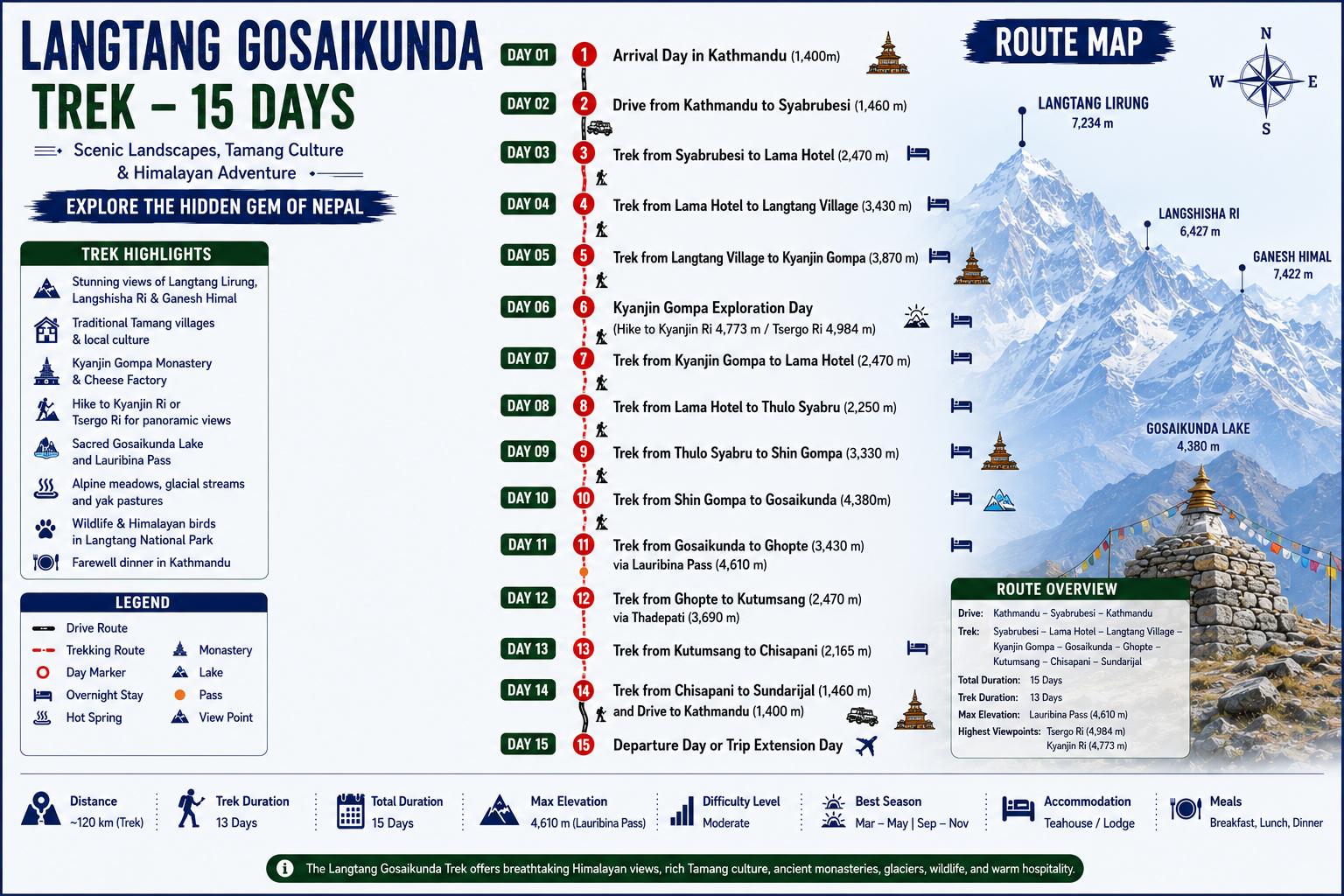
Route Map
Gear List / Packing Guide
| Clothing | Footwear | Bags |
|---|---|---|
| Trekking T-shirts | Hiking boots | 60–70L duffel/rucksack |
| Long-sleeve shirts | Trekking socks | 25–35L daypack |
| Thermal wear | Camp shoes/sandals | Rain cover |
| Fleece jacket | Gaiters (optional) | Packing cubes |
| Down jacket | Dry bags | |
| Shell jacket | Small lock | |
| Trekking pants | ||
| Waterproof pants | ||
| Shorts | ||
| Hat/Beanie | ||
| Buff | ||
| Gloves |
| Trekking Gear | Personal Items | Health & Safety |
|---|---|---|
| Sleeping bag | Sunscreen & lip balm | Personal medicines |
| Sleeping bag liner | Toiletries | First aid kit |
| Trekking poles | Quick-dry towel | Blister care |
| Headlamp | Wet wipes | Altitude medicine (optional) |
| Water bottle | Hand cream | Pain relievers |
| Map/GPS | Nail clippers | Water purifier |
| Camera (optional) | Hand sanitizer |
| Documents & Essentials | Optional Items | Tips |
|---|---|---|
| Passport & photocopies | Earplugs | Pack light and dress in layers. |
| TIMS Card | Eye mask | Keep essentials in your daypack. |
| Langtang National Park Permit | Travel pillow | Carry enough Nepali Rupees. |
| Travel insurance | Binoculars | Follow Leave No Trace principles. |
| Local currency | Safety whistle | |
| Phone, charger & power bank | Ziplock bags | |
| Snacks & electrolytes | Travel games/cards |
FAQ
The Langtang Gosaikunda Trek is located in the Langtang region of northern Nepal, combining the scenic Langtang Valley, sacred Gosaikunda Lakes, and the Helambu region within Langtang National Park.
The Langtang Gosaikunda Trek is considered moderately challenging and involves 6 to 8 hours of walking per day on mountain trails, alpine terrain, steep ascents, and high mountain passes.
The highest point of the trek is Lauribina Pass at 4,610 meters (15,125 feet). Optional hikes to Tsergo Ri reach 4,984 meters (16,352 feet).
Altitude sickness can be a concern due to elevations above 4,000 meters. Proper acclimatization, gradual ascent, hydration, and rest are essential.
Spring (March to May) and Autumn (September to November) provide the best trekking conditions with clear mountain views and stable weather.
The trek requires a Langtang National Park Entry Permit and any additional permits required under current Nepal tourism regulations.
Accommodation is available in local teahouses and mountain lodges offering basic but comfortable facilities throughout the trekking route.
Teahouses serve Nepali, Tibetan, and international meals including Dal Bhat, noodles, soups, fried rice, pasta, tea, coffee, and seasonal local dishes.
Professional trekking guides and porter services are available and strongly recommended for safety, navigation, and logistical support.
The trail includes forest paths, suspension bridges, stone staircases, alpine meadows, glacial valleys, high mountain passes, and scenic ridgelines.
The trek is best suited for active trekkers with good physical fitness. Due to the altitude and duration, the trek is generally recommended for experienced hikers and fit senior travelers.
Yes, Kyanjin Gompa Monastery and the traditional yak cheese factory are major highlights of the Langtang section of the trek.
Gosaikunda Lake is one of Nepal's most sacred alpine lakes and an important pilgrimage site for both Hindus and Buddhists. The lake is surrounded by spectacular Himalayan scenery.
Langtang National Park is home to red pandas, musk deer, Himalayan black bears, langur monkeys, yaks, Himalayan monals, and numerous bird species.
Mobile network coverage is available in many villages, while Wi-Fi services are offered in selected teahouses. Connectivity may be limited at higher elevations.
The trek begins with a scenic drive from Kathmandu to Syabrubesi, which takes approximately 6 to 7 hours via Dhunche and the Trishuli River valley.
The Langtang Gosaikunda Trek combines the best of Himalayan trekking, cultural exploration, and spiritual pilgrimage in a single adventure. The route includes Langtang Valley, Kyanjin Gompa, sacred Gosaikunda Lakes, Lauribina Pass, Tamang villages, alpine meadows, glaciers, wildlife, and spectacular mountain views, creating one of Nepal's most diverse trekking experiences.
Khushi Travels and Consulting Group provides experienced guides, reliable logistics, airport transfers, 24/7 support, first aid equipment, pulse oximeter monitoring, flexible itineraries, easy payment options, free luggage storage, responsible tourism practices, and personalized service to ensure a safe and memorable trekking experience from arrival to departure.
The best travel agency is one that prioritizes safety, experienced local guides, transparent pricing, reliable support, and personalized service. Khushi Travels and Consulting Group offers all of these advantages while providing professionally managed trekking experiences, customized itineraries, dedicated customer support, and a strong commitment to responsible tourism, making it an excellent choice for the Langtang Gosaikunda Trek.
More Details
 Langtang Gosaikunda Trek Accommodation Types
The Langtang Gosaikunda Trek offers a memorable Himalayan accommodation experience through traditional teahouses, mountain lodges, and family-run guesthouses. This spectacular trek combines the beautiful Langtang Valley with the sacred alpine lakes of Gosaikunda, allowing trekkers to stay in authentic mountain villages surrounded by breathtaking Himalayan scenery. Throughout the journey, accommodation is simple yet comfortable, providing warm hospitality, freshly prepared meals, and a genuine insight into the lifestyle of the Tamang people. While facilities become more basic at higher elevations, every overnight stay offers a unique mountain experience and unforgettable hospitality.
Accommodation Overview
| Trek Destination | Accommodation Type |
|---|---|
| Syabrubesi | Hotels, Teahouses & Guesthouses |
| Lama Hotel | Traditional Mountain Lodges & Teahouses |
| Langtang Village | Mountain Lodges & Family-run Teahouses |
| Kyanjin Gompa | Teahouses, Guesthouses & Mountain Lodges |
| Thulo Syabru | Traditional Teahouses & Mountain Lodges |
| Sing Gompa (Chandanbari) | Teahouses & Guesthouses |
| Lauribina | Basic Mountain Lodges |
| Gosaikunda | High-Altitude Teahouses & Mountain Lodges |
| Ghopte | Basic Trekking Lodges |
| Kutumsang | Family-run Teahouses |
| Chisapani | Mountain Lodges & Guesthouses |
| Sundarijal (End Point) | Day Visit / No Overnight Stay |
Accommodation Categories
Accommodation throughout the trek consists mainly of traditional Himalayan lodges.
Available Options:
- Traditional Teahouses
- Family-run Guesthouses
- Mountain Lodges
- Trekking Lodges
- Eco-friendly Accommodation
- Small Community Lodges
Room Types
Rooms are simple, clean, and designed to provide trekkers with a comfortable place to rest.
Room Options Include:
- Twin Sharing Rooms
- Double Rooms
- Single Rooms (Limited Availability)
- Family Rooms (Selected Villages)
Room Facilities
Facilities vary depending on the altitude and village.
Common Room Amenities:
- Comfortable Beds with Mattress
- Pillow and Blanket
- Wooden Beds
- Shared or Private Rooms
- Mountain View Windows
- Basic Furniture
- Solar or Electric Lighting
Higher-altitude villages generally offer more basic accommodation.
Bathroom Facilities
Bathroom facilities differ from village to village.
Available Facilities:
- Shared Bathrooms
- Western Toilets (Selected Lodges)
- Squat Toilets
- Cold Water Washrooms
- Hot Showers (Additional Charges Apply)
- Solar-Heated Water (Selected Lodges)
Dining Facilities
Every teahouse has a welcoming dining hall where trekkers gather to enjoy meals and relax.
Dining Features Include:
- Heated Dining Hall
- Wood-burning Stove
- Freshly Prepared Meals
- Tea & Coffee Service
- Comfortable Seating
- Friendly Local Hospitality
- Mountain Views
Accommodation Experience by Destination
Syabrubesi
Syabrubesi is the starting point of the trek and offers the widest range of accommodation.
Accommodation Highlights:
- Comfortable hotels and guesthouses
- Private rooms available
- Attached bathrooms in selected hotels
- Restaurants and cafés
- Wi-Fi available in many lodges
Lama Hotel
Nestled within dense forests, Lama Hotel offers peaceful mountain accommodation.
Accommodation Highlights:
- Cozy mountain lodges
- Riverside location
- Warm dining halls
- Peaceful surroundings
- Friendly local hospitality
Langtang Village
Langtang Village is a beautiful alpine settlement surrounded by magnificent Himalayan peaks.
Accommodation Highlights:
- Traditional mountain lodges
- Comfortable trekking teahouses
- Stunning mountain views
- Authentic Tamang hospitality
- Peaceful atmosphere
Kyanjin Gompa
Kyanjin Gompa is one of the most scenic villages on the trek.
Accommodation Highlights:
- Comfortable mountain lodges
- Glacier and mountain views
- Traditional bakeries
- Ancient monastery nearby
- Easy access to Kyanjin Ri and Tserko Ri
Thulo Syabru
A traditional Tamang village overlooking the Langtang Himal.
Accommodation Highlights:
- Family-run teahouses
- Traditional village atmosphere
- Comfortable rooms
- Beautiful valley views
Sing Gompa (Chandanbari)
A peaceful monastery village surrounded by forests.
Accommodation Highlights:
- Cozy mountain lodges
- Famous Yak Cheese Factory
- Quiet surroundings
- Monastery nearby
Lauribina
One of the highest overnight stops before Gosaikunda.
Accommodation Highlights:
- Basic mountain lodges
- Spectacular Himalayan views
- Sunrise viewpoints
- High-altitude trekking atmosphere
Gosaikunda
The sacred alpine lake area offers simple accommodation for trekkers and pilgrims.
Accommodation Highlights:
- High-altitude teahouses
- Basic mountain lodges
- Beautiful lake views
- Peaceful spiritual environment
Meals During Your Stay
Accommodation generally includes freshly prepared mountain meals.
Meals Available:
- Breakfast
- Lunch
- Dinner
- Dal Bhat
- Tibetan Bread
- Pancakes
- Eggs
- Fried Rice
- Noodles
- Soup
- Tea & Coffee
Electricity & Internet
Basic facilities are available in most trekking villages.
| Facility | Availability |
|---|---|
| Electricity | Available in Most Villages |
| Solar Power | Available at Higher Elevations |
| Wi-Fi | Available in Selected Teahouses (Additional Charges May Apply) |
| Mobile Network | Available in Most Lower Villages |
| Charging Facilities | Available (Usually Additional Charges Apply) |
Accommodation Tips
Enjoy a comfortable stay by following these recommendations.
Helpful Tips:
- Carry a warm sleeping bag for higher elevations.
- Book early during spring and autumn.
- Carry cash for hot showers, Wi-Fi, and charging facilities.
- Expect basic accommodation above Lauribina.
- Respect local customs and fellow trekkers.
- Carry earplugs if staying in shared lodges.
- Keep valuables and important documents secure.
Why the Accommodation is Special
The Langtang Gosaikunda Trek offers far more than a place to sleep. Every overnight stay provides an opportunity to experience authentic Himalayan hospitality while exploring two of Nepal's most spectacular trekking regions. From the welcoming teahouses of Syabrubesi and the peaceful lodges of Kyanjin Gompa to the high-altitude accommodations beside the sacred Gosaikunda Lakes, each stop offers breathtaking mountain scenery, genuine Tamang culture, and unforgettable memories. Although facilities become simpler at higher elevations, the warmth of the local people, freshly prepared meals, and stunning Himalayan surroundings make every night's stay an essential part of this extraordinary trekking adventure.
 What to Expect from the Langtang Gosaikunda Trek
The Langtang Gosaikunda Trek is one of Nepal's most spectacular trekking adventures, combining the breathtaking landscapes of Langtang Valley with the sacred alpine lakes of Gosaikunda. This remarkable journey takes you through lush forests, traditional Tamang villages, Buddhist monasteries, glacier valleys, alpine meadows, and high mountain passes before reaching the holy lakes of Gosaikunda. Along the way, you'll experience authentic Himalayan culture, incredible biodiversity, panoramic mountain views, and one of Nepal's most rewarding trekking routes. The trek offers the perfect balance of adventure, spirituality, nature, and cultural exploration.
Trek Highlights
| Destination | Major Highlights |
|---|---|
| Syabrubesi | Gateway to the Langtang Region |
| Lama Hotel | Forest Trails & Riverside Scenery |
| Langtang Village | Traditional Tamang Settlement |
| Kyanjin Gompa | Ancient Monastery & Glacier Views |
| Kyanjin Ri | Spectacular Himalayan Viewpoint |
| Tserko Ri | Sunrise & Panoramic Mountain Views |
| Thulo Syabru | Traditional Tamang Village |
| Sing Gompa | Yak Cheese Factory & Monastery |
| Lauribina | Himalayan Sunrise Views |
| Gosaikunda Lake | Sacred Alpine Lakes |
| Laurebina Pass | High Himalayan Pass & Mountain Panorama |
Experience Traditional Tamang Culture
The trek offers an excellent opportunity to experience the traditions and lifestyle of the Tamang people.
Cultural Experiences Include:
- Traditional Tamang Villages
- Ancient Buddhist Monasteries
- Prayer Wheels and Mani Walls
- Chortens and Colorful Prayer Flags
- Traditional Stone Houses
- Yak Herding Culture
- Community Hospitality
- Local Festivals (Seasonal)
Visit the Sacred Gosaikunda Lakes
One of the major highlights of the trek is the sacred Gosaikunda Lake, an important pilgrimage site for both Hindus and Buddhists.
Highlights Include:
- Crystal-clear alpine lakes
- Sacred pilgrimage destination
- Peaceful mountain environment
- Religious significance
- Beautiful reflection of surrounding peaks
- Janai Purnima Festival (Seasonal)
Enjoy Spectacular Himalayan Views
The trek offers breathtaking views of numerous Himalayan peaks throughout the journey.
Mountain Views Include:
- Langtang Lirung (7,227 m)
- Ganesh Himal
- Dorje Lakpa
- Gangchempo
- Yala Peak
- Naya Kanga
- Shishapangma (Tibet)
- Langshisa Ri
Explore Beautiful Himalayan Villages
Every village along the trail offers unique cultural and natural experiences.
Popular Villages Include:
- Syabrubesi
- Lama Hotel
- Langtang Village
- Kyanjin Gompa
- Thulo Syabru
- Sing Gompa
- Lauribina
- Ghopte
- Kutumsang
Each village showcases traditional Himalayan architecture, Buddhist culture, and warm local hospitality.
Visit Kyanjin Gompa
Kyanjin Gompa is one of the most scenic destinations on the trek.
Highlights Include:
- Ancient Buddhist Monastery
- Traditional Yak Cheese Factory
- Langtang Glacier
- Panoramic Mountain Views
- Peaceful Alpine Village
- Excellent Photography Opportunities
Cross Laurebina Pass
Laurebina Pass is one of the highest and most exciting sections of the trek.
What You'll Experience:
- High-altitude trekking adventure
- Panoramic Himalayan scenery
- Beautiful alpine lakes
- Spectacular mountain landscapes
- Sense of achievement
- Memorable photography opportunities
Wildlife & Nature
The trek passes through the diverse ecosystems of Langtang National Park.
You May Encounter:
- Red Panda (Rare)
- Himalayan Black Bear
- Musk Deer
- Himalayan Tahr
- Langur Monkeys
- Himalayan Monal
- Blood Pheasant
- Rhododendron Forests
- Bamboo Forests
- Alpine Meadows
Photography Highlights
The Langtang Gosaikunda Trek is one of Nepal's finest trekking routes for landscape photography.
Best Photography Locations:
- Langtang Village
- Kyanjin Gompa
- Kyanjin Ri
- Tserko Ri
- Langtang Glacier
- Thulo Syabru
- Sing Gompa
- Lauribina
- Gosaikunda Lake
- Laurebina Pass
- Prayer Flags and Monasteries
Adventure & Trekking Experiences
The trek combines adventure, spirituality, and cultural exploration.
Popular Activities:
- Himalayan Trekking
- High-Altitude Hiking
- Glacier Exploration
- Monastery Visits
- Village Exploration
- Wildlife Watching
- Bird Watching
- Mountain Photography
- Pilgrimage to Gosaikunda
- Sunrise & Sunset Viewing
Why the Langtang Gosaikunda Trek is Unique
The Langtang Gosaikunda Trek is one of Nepal's most diverse and rewarding trekking experiences, combining the spectacular landscapes of Langtang Valley with the sacred beauty of Gosaikunda Lake. From walking through lush forests and traditional Tamang villages to exploring the ancient monastery at Kyanjin Gompa, hiking to the breathtaking viewpoints of Kyanjin Ri and Tserko Ri, and crossing the scenic Laurebina Pass before reaching the holy alpine lakes, every day offers something extraordinary. Rich in culture, spirituality, wildlife, and Himalayan scenery, this trek provides an unforgettable journey through some of Nepal's most beautiful mountain landscapes.
 Best Time / Season to Visit the Langtang Gosaikunda Trek
The Langtang Gosaikunda Trek can be completed throughout the year, but the best trekking seasons are spring (March to May) and autumn (September to November). These months offer stable weather, comfortable temperatures, crystal-clear mountain views, blooming rhododendron forests, and ideal trail conditions. Winter transforms the region into a breathtaking snow-covered landscape, while the monsoon season brings lush greenery, vibrant forests, and spectacular waterfalls, although rain and slippery trails can make trekking more challenging.
Best Seasons at a Glance
| Season | Months | Weather | Trekking Experience |
|---|---|---|---|
| Spring | March – May | Mild & Pleasant | Best for trekking, blooming flowers, and mountain views |
| Summer / Monsoon | June – August | Warm & Rainy | Lush landscapes with fewer trekkers |
| Autumn | September – November | Cool & Clear | Best overall season with excellent visibility |
| Winter | December – February | Cold & Snowy | Snow-covered trails and peaceful mountain scenery |
Spring (March – May)
Spring is one of the most beautiful seasons for the Langtang Gosaikunda Trek.
Season Highlights:
- Pleasant daytime temperatures
- Blooming rhododendron forests
- Crystal-clear Himalayan views
- Comfortable trekking conditions
- Colorful alpine flowers
- Excellent photography opportunities
- Active wildlife and birdlife
Autumn (September – November)
Autumn is considered the best time to complete this trek.
Why Trek During Autumn?
- Stable weather conditions
- Clear blue skies
- Spectacular Himalayan visibility
- Dry and well-maintained trails
- Comfortable daytime temperatures
- Ideal conditions for crossing Laurebina Pass
- Outstanding photography opportunities
Winter (December – February)
Winter offers a peaceful trekking experience with stunning snow-covered landscapes.
Season Highlights:
- Snow-covered mountains and alpine lakes
- Quiet trekking trails
- Crystal-clear skies
- Beautiful winter photography
- Peaceful monasteries and villages
- Fewer trekkers
Trekkers should be prepared for freezing temperatures and heavy snowfall around Lauribina, Gosaikunda Lake, and Laurebina Pass, where trails may occasionally become difficult.
Summer / Monsoon (June – August)
The monsoon season transforms the Langtang region into a lush green paradise.
Season Highlights:
- Dense green forests
- Beautiful waterfalls
- Fresh mountain landscapes
- Colorful wildflowers
- Peaceful trekking routes
- Fewer visitors
Trekkers should expect frequent rainfall, slippery trails, occasional landslides, and leeches in lower forest sections.
Average Temperature
| Location | Daytime | Nighttime |
|---|---|---|
| Syabrubesi | 18°C – 28°C | 10°C – 15°C |
| Lama Hotel | 12°C – 22°C | 5°C – 10°C |
| Langtang Village | 10°C – 18°C | 0°C – 5°C |
| Kyanjin Gompa | 8°C – 15°C | -5°C – 2°C |
| Thulo Syabru | 10°C – 18°C | 2°C – 8°C |
| Sing Gompa | 8°C – 16°C | 0°C – 5°C |
| Lauribina | 5°C – 12°C | -6°C – -2°C |
| Gosaikunda Lake | 2°C – 10°C | -10°C – -4°C |
| Laurebina Pass | 0°C – 8°C | -12°C – -6°C |
Weather Tips
Pack according to the season for a comfortable trekking experience.
Recommended Packing:
- Layered clothing
- Warm down jacket
- Waterproof jacket and backpack rain cover
- Thermal base layers
- Trekking boots
- Warm gloves and woolen hat
- Sunglasses
- Sunscreen
- Trekking poles
- Reusable water bottle
Best Time for Popular Activities
| Activity | Best Season |
|---|---|
| Langtang Gosaikunda Trek | Spring & Autumn |
| Kyanjin Ri Hike | Spring & Autumn |
| Tserko Ri Hike | Spring & Autumn |
| Gosaikunda Lake Visit | Spring & Autumn |
| Laurebina Pass Crossing | Autumn & Spring |
| Rhododendron Viewing | Spring |
| Wildlife & Bird Watching | Spring |
| Mountain Photography | Autumn & Spring |
| Pilgrimage to Gosaikunda | July–August (Janai Purnima Festival) |
Seasonal Experiences
Each season offers its own unique beauty and trekking experience.
Spring
- Blooming rhododendron forests
- Pleasant weather
- Excellent mountain visibility
- Colorful alpine landscapes
Summer / Monsoon
- Lush green forests
- Flowing waterfalls
- Vibrant wildflowers
- Peaceful trekking routes
Autumn
- Crystal-clear Himalayan views
- Stable weather
- Comfortable temperatures
- Ideal trekking conditions
Winter
- Snow-covered alpine lakes
- Frozen mountain landscapes
- Peaceful villages
- Stunning panoramic scenery
Why Spring & Autumn Are the Best Seasons
Spring and autumn provide the ideal combination of pleasant weather, stable trail conditions, and spectacular Himalayan views, making them the best seasons for the Langtang Gosaikunda Trek. During these months, trekkers can comfortably explore Langtang Valley, hike to the viewpoints of Kyanjin Ri and Tserko Ri, cross the scenic Laurebina Pass, and visit the sacred Gosaikunda Lakes under clear blue skies. Whether you're seeking adventure, photography, wildlife, spiritual experiences, or cultural exploration, spring and autumn offer the most rewarding and unforgettable trekking experience in the Langtang region.
 Nearby Places to Explore from the Langtang Gosaikunda Trek
The Langtang Gosaikunda Trek is one of Nepal's most diverse trekking adventures, offering access to some of the country's most spectacular natural, cultural, and spiritual destinations. Beyond the main trekking route, visitors can explore panoramic Himalayan viewpoints, sacred alpine lakes, glaciers, traditional Tamang villages, Buddhist monasteries, and remote mountain valleys. Whether you want to extend your trek, enjoy side hikes, or experience more of the Langtang region's rich culture and breathtaking scenery, there are numerous incredible destinations worth visiting.
Top Nearby Destinations
| Destination | Distance / Accessibility | Major Highlights |
|---|---|---|
| Kyanjin Ri | 2–3 Hours Hike from Kyanjin Gompa | Panoramic Himalayan Views |
| Tserko Ri | 5–7 Hours Round Trip | Sunrise & 360° Mountain Views |
| Langshisa Kharka | Full-Day Hike | Alpine Meadows & Glaciers |
| Gosaikunda Lake | On Main Trek Route | Sacred Alpine Lake |
| Bhairav Kunda (Gosaikunda Area) | Short Walk | Sacred High-Altitude Lake |
| Saraswati Kunda | Near Gosaikunda | Holy Glacial Lake |
| Sing Gompa (Chandanbari) | On Main Trek Route | Yak Cheese Factory & Monastery |
| Tamang Heritage Trail | Trek Extension | Traditional Tamang Villages |
| Yala Peak | Climbing Extension | Beginner-Friendly Trekking Peak |
| Helambu Region | Trek Extension | Sherpa & Hyolmo Culture |
Kyanjin Ri
Kyanjin Ri is one of the finest viewpoints in the Langtang region.
Highlights Include:
- Spectacular sunrise views
- Langtang Lirung panorama
- Langtang Glacier
- Kyanjin Gompa from above
- Snow-covered Himalayan peaks
- Outstanding photography opportunities
Tserko Ri
Tserko Ri is one of the highest viewpoints on the trek.
Highlights Include:
- 360-degree Himalayan panorama
- Sunrise over the Himalayas
- Langtang Lirung
- Dorje Lakpa
- Gangchempo
- Yala Peak
- Langshisa Himal
- Exceptional mountain scenery
Langshisa Kharka
Located beyond Kyanjin Gompa, Langshisa Kharka is a peaceful alpine valley.
Highlights Include:
- Wide alpine meadows
- Langshisa Glacier
- Yak grazing pastures
- Snow-covered mountain peaks
- Quiet trekking experience
- Less-crowded hiking trail
Gosaikunda Lake
One of Nepal's most sacred alpine lakes and the spiritual highlight of the trek.
Highlights Include:
- Crystal-clear glacial lake
- Hindu and Buddhist pilgrimage site
- Beautiful alpine surroundings
- Religious significance
- Stunning mountain reflections
- Janai Purnima Festival (Seasonal)
Bhairav Kunda & Saraswati Kunda
These sacred lakes are located near Gosaikunda and are often visited by trekkers and pilgrims.
Highlights Include:
- Sacred glacial lakes
- Peaceful surroundings
- Religious importance
- Beautiful alpine landscapes
- Excellent photography opportunities
Sing Gompa (Chandanbari)
A charming village famous for its monastery and yak cheese production.
Highlights Include:
- Traditional Buddhist monastery
- Yak Cheese Factory
- Peaceful forest setting
- Friendly local community
- Scenic mountain surroundings
Tamang Heritage Trail
This cultural trekking route can be combined with the Langtang Gosaikunda Trek.
Highlights Include:
- Traditional Tamang villages
- Community homestays
- Natural hot springs at Tatopani
- Nagthali Viewpoint
- Buddhist monasteries
- Authentic Himalayan culture
Yala Peak
A popular trekking peak for beginner climbers.
Highlights Include:
- Non-technical climbing experience
- Glacier landscapes
- Himalayan summit views
- Adventure climbing
- Professional guide support
Wildlife & Nature Attractions
The trek passes through the rich ecosystems of Langtang National Park.
You May Encounter:
- Red Panda
- Himalayan Black Bear
- Musk Deer
- Himalayan Tahr
- Langur Monkeys
- Himalayan Monal
- Blood Pheasant
- Rhododendron Forests
- Bamboo Forests
- Alpine Meadows
Photography Highlights
The Langtang Gosaikunda Trek offers endless opportunities for breathtaking photography.
Best Photography Locations:
- Langtang Village
- Kyanjin Gompa
- Kyanjin Ri
- Tserko Ri
- Langshisa Kharka
- Gosaikunda Lake
- Bhairav Kunda
- Saraswati Kunda
- Sing Gompa
- Laurebina Pass
- Prayer Flags and Monasteries
Why Explore Beyond the Langtang Gosaikunda Trek?
The Langtang Gosaikunda Trek is much more than a single trekking route. It opens the door to some of Nepal's most spectacular Himalayan destinations, from the panoramic viewpoints of Kyanjin Ri and Tserko Ri to the sacred waters of Gosaikunda Lake, the peaceful alpine meadows of Langshisa Kharka, and the cultural richness of Sing Gompa and the Tamang Heritage Trail. Exploring these nearby attractions allows trekkers to experience a perfect blend of adventure, spirituality, wildlife, mountain scenery, and authentic Himalayan culture, making this one of the most complete trekking experiences in Nepal.
 Foods Available on the Langtang Gosaikunda Trek
The Langtang Gosaikunda Trek offers trekkers a wonderful opportunity to enjoy authentic Himalayan cuisine while exploring the beautiful Langtang Valley and the sacred Gosaikunda Lakes. Throughout the journey, traditional teahouses and mountain lodges serve freshly prepared meals that provide the energy needed for long trekking days. The menu features a delicious blend of Nepali, Tibetan, and Tamang dishes, along with a selection of simple international meals. As you gain altitude, the food becomes more basic but remains nutritious, wholesome, and satisfying.
Meals During the Trek
Most teahouses provide three freshly prepared meals each day.
Daily Meal Options:
- Breakfast
- Lunch
- Dinner
- Morning Tea or Coffee
- Evening Tea or Hot Drinks
Traditional Nepali Dishes
Nepali cuisine is served throughout the trekking route.
Popular Nepali Foods:
- Dal Bhat Tarkari (Rice, Lentil Soup & Vegetables)
- Seasonal Vegetable Curry
- Chicken Curry (Lower Villages)
- Fried Rice
- Vegetable Fried Rice
- Mixed Vegetable Curry
- Potato Curry
- Pickles (Achar)
Dal Bhat is the most popular trekking meal because it is nutritious, filling, and often comes with unlimited refills at many teahouses.
Traditional Tibetan & Tamang Cuisine
The Langtang region has a strong Tibetan Buddhist influence, reflected in its traditional cuisine.
Local Specialties:
- Tibetan Bread
- Thukpa (Traditional Noodle Soup)
- Tsampa (Roasted Barley Flour)
- Tingmo (Steamed Tibetan Bread)
- Momo (Steamed or Fried Dumplings)
- Butter Tea
- Yak Cheese
- Yak Curd (Seasonal)
- Homemade Bread
Breakfast Options
A nutritious breakfast provides the energy required for daily trekking.
Popular Breakfast Choices:
- Tibetan Bread with Honey or Jam
- Chapati
- Toast
- Pancakes
- Porridge
- Muesli
- Eggs (Boiled, Fried or Omelet)
- Hash Browns
- Tea & Coffee
- Hot Chocolate
Lunch & Dinner Options
Teahouses offer a wide selection of freshly prepared meals.
Popular Choices:
- Dal Bhat Set
- Fried Rice
- Vegetable Noodles
- Chow Mein
- Pasta
- Macaroni
- Spaghetti
- Pizza (Selected Villages)
- Vegetable Curry
- Potato Dishes
- Soup with Bread
Soups & Hot Meals
Warm meals are especially comforting after trekking through the cool Himalayan climate.
Available Soups:
- Garlic Soup
- Vegetable Soup
- Tomato Soup
- Mushroom Soup
- Chicken Soup
- Noodle Soup
- Thukpa
Garlic soup is particularly popular among trekkers at higher elevations because it is warm, nourishing, and commonly enjoyed during high-altitude treks.
Snacks & Light Meals
Light snacks are available at most teahouses and small village shops.
Popular Snacks:
- Biscuits
- Cookies
- Chocolate Bars
- Popcorn
- Roasted Peanuts
- Potato Chips
- Instant Noodles
- Energy Bars
- Fresh Seasonal Fruits (Lower Villages)
Hot & Cold Beverages
A variety of hot and cold drinks are available throughout the trek.
Popular Drinks:
- Black Tea
- Milk Tea
- Lemon Tea
- Ginger Tea
- Honey Lemon Tea
- Mint Tea
- Coffee
- Hot Chocolate
- Butter Tea
- Mineral Water
- Boiled Drinking Water
Vegetarian & Vegan Options
Vegetarian meals are widely available throughout the Langtang Gosaikunda Trek.
Vegetarian Choices:
- Dal Bhat
- Vegetable Curry
- Fried Rice
- Vegetable Chow Mein
- Pasta
- Pancakes
- Porridge
- Soups
- Potato Dishes
- Seasonal Vegetables
Most teahouses can also prepare vegan meals upon request.
Food Safety Tips
Following simple food safety practices helps ensure a healthy trekking experience.
Helpful Tips:
- Drink boiled, filtered, or purified water.
- Eat freshly prepared meals.
- Avoid raw or undercooked meat.
- Wash or sanitize your hands before eating.
- Carry water purification tablets or a portable water filter.
- Inform your guide about any food allergies.
- Stay hydrated throughout the trek.
Why the Food is Part of the Trekking Experience
The Langtang Gosaikunda Trek is not only a journey through spectacular Himalayan landscapes but also an opportunity to experience the authentic flavors of the Langtang region. Every meal is freshly prepared by local families using simple, locally sourced ingredients that provide the energy needed for high-altitude trekking while introducing visitors to traditional Nepali, Tibetan, and Tamang cuisine. From hearty Dal Bhat and warming bowls of Thukpa to homemade Tibetan bread and locally produced yak cheese, the food becomes an essential part of the adventure, offering both nourishment and a deeper connection to the culture and hospitality of Nepal's beautiful Langtang Himalayas.
 Culture and Etiquette of the Langtang Gosaikunda Trek
The Langtang Gosaikunda Trek is not only an unforgettable Himalayan adventure but also a remarkable cultural and spiritual journey. The trek passes through traditional Tamang villages, ancient Buddhist monasteries, sacred Hindu pilgrimage sites, and remote mountain communities where centuries-old traditions are still practiced today. From the Buddhist heritage of Langtang Valley to the sacred alpine lakes of Gosaikunda, trekkers experience a unique blend of Tibetan Buddhism, Hindu spirituality, and authentic Himalayan hospitality. Respecting local customs and traditions will make your journey more meaningful while helping preserve the rich cultural heritage of the Langtang region.
Cultural Highlights
The Langtang Gosaikunda Trek offers one of Nepal's richest cultural trekking experiences.
Highlights Include:
- Traditional Tamang Villages
- Tibetan Buddhist Culture
- Sacred Hindu Pilgrimage Sites
- Ancient Monasteries
- Prayer Wheels & Mani Walls
- Chortens and Prayer Flags
- Traditional Stone Houses
- Warm Himalayan Hospitality
Religion & Spiritual Heritage
The trek combines both Buddhist and Hindu spiritual traditions.
Religious Landmarks Include:
- Kyanjin Gompa Monastery
- Ancient Buddhist Monasteries
- Prayer Wheels
- Mani Walls
- Chortens (Buddhist Shrines)
- Sacred Gosaikunda Lake
- Bhairav Kunda
- Saraswati Kunda
- Colorful Prayer Flags
- Meditation Sites
Trekkers experience Buddhist traditions in Langtang Valley and Hindu spirituality around the sacred Gosaikunda Lakes.
The Tamang Community
The Tamang people are the primary inhabitants of the Langtang region and have preserved their unique culture for generations.
Cultural Characteristics:
- Warm and welcoming hospitality
- Tibetan-influenced lifestyle
- Traditional stone houses
- Yak and livestock farming
- Traditional music and dance
- Handwoven handicrafts
- Strong family and community values
Local Etiquette
Respecting local customs creates meaningful connections with local communities.
Important Etiquette Tips:
- Greet local people with "Namaste."
- Ask permission before photographing people.
- Dress modestly while visiting villages and monasteries.
- Remove shoes before entering monasteries or local homes when requested.
- Walk clockwise around stupas, mani walls, and prayer wheels.
- Avoid touching religious statues and sacred objects.
- Speak politely and respectfully.
- Help keep the trekking trails clean by carrying your waste.
Sacred Significance of Gosaikunda
Gosaikunda is one of Nepal's most sacred pilgrimage destinations.
Religious Importance:
- Sacred to both Hindus and Buddhists
- Associated with Lord Shiva
- Popular pilgrimage destination during Janai Purnima
- Holy alpine lakes believed to possess spiritual significance
- Peaceful environment for meditation and prayer
Trekkers should behave respectfully around the lakes, especially during religious festivals.
Traditional Festivals
Depending on your trekking season, you may witness vibrant cultural celebrations.
Major Festivals Include:
- Sonam Lhosar (Tamang New Year)
- Buddha Jayanti
- Janai Purnima
- Dashain
- Tihar
- Losar
- Local Monastery Festivals
These festivals feature traditional dances, religious ceremonies, colorful attire, music, and community celebrations.
Traditional Arts & Handicrafts
The Langtang region is well known for preserving traditional Himalayan craftsmanship.
Popular Handicrafts:
- Handwoven Woolen Clothing
- Yak Wool Products
- Traditional Jewelry
- Wooden Carvings
- Prayer Flags
- Handmade Bags
- Bamboo Crafts
- Religious Artifacts
Purchasing locally made handicrafts helps support mountain communities.
Authentic Cultural Experiences
The Langtang Gosaikunda Trek offers many opportunities to experience local Himalayan life.
Cultural Experiences Include:
- Staying in Traditional Teahouses
- Visiting Kyanjin Gompa Monastery
- Exploring Traditional Tamang Villages
- Visiting the Yak Cheese Factory
- Meeting Local Families
- Learning About Yak Herding
- Experiencing Hindu Pilgrimage Traditions at Gosaikunda
- Tasting Traditional Tamang & Tibetan Cuisine
Responsible Tourism
Help preserve the culture and environment of the Langtang region.
Travel Responsibly By:
- Respecting local customs and religious traditions.
- Supporting locally owned teahouses and businesses.
- Purchasing handmade local products.
- Avoiding littering along the trekking route.
- Reducing the use of single-use plastics.
- Respecting wildlife and protected areas.
- Following your guide's cultural and environmental advice.
Cultural Tips for Trekkers
Following these simple practices will make your journey even more rewarding.
Helpful Tips:
- Learn a few basic Nepali greetings.
- Respect both Buddhist and Hindu religious traditions.
- Ask permission before taking photographs of local people.
- Dress appropriately when visiting monasteries and sacred lakes.
- Walk clockwise around Buddhist monuments.
- Support local communities by staying in family-run teahouses.
- Be patient, respectful, and open to learning about the local way of life.
Why Culture Makes This Trek Special
The Langtang Gosaikunda Trek is much more than a Himalayan trekking adventure. It is a unique cultural and spiritual journey that combines the rich traditions of the Tamang people with the sacred heritage of Gosaikunda. From exploring ancient Buddhist monasteries and traditional mountain villages to visiting one of Nepal's holiest alpine lakes, every step offers meaningful cultural experiences alongside breathtaking Himalayan scenery. This remarkable blend of adventure, spirituality, and authentic local hospitality makes the Langtang Gosaikunda Trek one of Nepal's most enriching and unforgettable trekking experiences.
 Safety and Security on the Langtang Gosaikunda Trek
The Langtang Gosaikunda Trek is one of Nepal's most rewarding Himalayan trekking adventures, combining the scenic Langtang Valley with the sacred Gosaikunda Lakes and the high mountain crossing of Laurebina Pass (4,610 m). The trek passes through Langtang National Park, traditional Tamang villages, dense forests, alpine meadows, glaciers, and remote mountain landscapes. Although the trails are well-established, trekkers must be prepared for high altitude, changing mountain weather, and long walking days. Proper preparation, responsible trekking practices, and guidance from experienced professionals will help ensure a safe, enjoyable, and unforgettable journey.
General Safety Tips
Careful planning is essential for a successful trek.
Essential Safety Guidelines:
- Trek with a licensed guide or experienced trekking company.
- Follow your planned itinerary.
- Carry all required trekking permits.
- Inform family or friends about your trekking schedule.
- Check weather forecasts regularly.
- Avoid trekking alone in remote areas.
- Follow instructions from your guide and local authorities.
Personal Safety
The Langtang Gosaikunda Trek is generally safe, but basic precautions are always recommended.
Personal Safety Tips:
- Keep valuables secure at all times.
- Carry only the cash you need during the trek.
- Store your passport and important documents in a waterproof pouch.
- Stay in registered teahouses and lodges.
- Avoid walking alone after dark.
- Respect local customs and village regulations.
Altitude & Health Safety
The trek reaches elevations above 4,600 meters, making proper acclimatization very important.
Health Recommendations:
- Walk slowly and maintain a steady pace.
- Stay well hydrated.
- Eat nutritious meals regularly.
- Allow sufficient time for acclimatization.
- Avoid alcohol and smoking at high altitude.
- Carry personal medications.
- Inform your guide immediately if you experience symptoms of altitude sickness.
Trail Safety
The trekking route includes forest trails, rocky mountain paths, alpine terrain, and high mountain passes.
Trail Safety Tips:
- Wear sturdy trekking boots with good ankle support.
- Use trekking poles for better balance.
- Walk carefully on steep ascents and descents.
- Be cautious on wet, icy, or rocky sections.
- Stay on marked trekking routes.
- Avoid unnecessary shortcuts.
- Cross suspension bridges carefully.
Special care should be taken while crossing Laurebina Pass, particularly during winter or after snowfall.
Weather Safety
Mountain weather can change rapidly, especially near Gosaikunda and Laurebina Pass.
Be Prepared By Carrying:
- Waterproof jacket
- Warm down jacket
- Thermal clothing
- Gloves and woolen hat
- Sunglasses
- Sunscreen
- Backpack rain cover
- Extra warm clothing
Always consult your guide regarding weather conditions before crossing high-altitude sections.
Wildlife Safety
The trek passes through Langtang National Park, home to diverse Himalayan wildlife.
While Trekking Through Forest Areas:
- Observe wildlife from a safe distance.
- Never feed wild animals.
- Avoid making loud noises.
- Stay on designated trekking trails.
- Follow your guide's instructions.
- Respect wildlife habitats.
Food & Water Safety
Maintaining good hygiene helps prevent illness during the trek.
Health & Hygiene Tips:
- Drink boiled, filtered, or purified water.
- Avoid untreated river or lake water.
- Eat freshly prepared meals.
- Wash or sanitize your hands before eating.
- Carry water purification tablets or a portable water filter.
- Avoid expired packaged food.
Emergency Services
Emergency assistance is available, although facilities become more limited at higher elevations.
In Case of Emergency:
- Inform your trekking guide immediately.
- Contact your trekking agency.
- Visit the nearest health post if necessary.
- Carry travel insurance that covers helicopter evacuation.
- Keep emergency contact numbers easily accessible.
- Follow the advice of rescue personnel and local authorities.
Essential Safety Equipment
Carry the following items throughout the trek.
Recommended Gear:
- Valid Passport
- Trekking Permits
- Travel Insurance
- First-Aid Kit
- Personal Medications
- Headlamp
- Power Bank
- Trekking Poles
- Water Bottle
- Water Purification Tablets
- Sunscreen
- Sunglasses
- Emergency Contact List
Safety Tips for a Successful Trek
These simple recommendations will help ensure a safe and enjoyable trekking experience.
Helpful Tips:
- Trek with a licensed guide whenever possible.
- Acclimatize properly before reaching higher elevations.
- Start trekking early each morning.
- Stay hydrated and eat balanced meals.
- Wear appropriate trekking clothing and footwear.
- Respect local culture and the natural environment.
- Monitor your health and never ignore symptoms of altitude sickness.
- Purchase comprehensive travel insurance before your trek.
Why Safety is Important on the Langtang Gosaikunda Trek
The Langtang Gosaikunda Trek combines magnificent Himalayan scenery, sacred alpine lakes, traditional Tamang culture, ancient monasteries, and the thrilling crossing of Laurebina Pass into one unforgettable adventure. While the route is well-established, its high altitude and changing mountain conditions require proper preparation and responsible trekking practices. By following your guide's advice, acclimatizing carefully, carrying appropriate equipment, and respecting the mountains and local communities, you can safely enjoy one of Nepal's most spectacular trekking experiences while creating memories that will last a lifetime.
 Transportation Facilities for the Langtang Gosaikunda Trek
The Langtang Gosaikunda Trek begins with a scenic drive from Kathmandu to Syabrubesi, the gateway to the Langtang region. The journey takes you through picturesque valleys, rivers, terraced farmlands, traditional villages, and winding mountain roads before reaching the starting point of the trek. From Syabrubesi onward, all travel is on foot as the trail passes through Langtang National Park, Kyanjin Gompa, Thulo Syabru, Sing Gompa, Lauribina, Gosaikunda Lake, Laurebina Pass, Ghopte, Kutumsang, Chisapani, and finally Sundarijal. Travelers can choose between local buses, tourist vehicles, or private jeeps depending on their budget and comfort preferences.
Transportation Overview
| Route | Transportation | Duration |
|---|---|---|
| Tribhuvan International Airport → Hotel | Private Vehicle | 20–40 Minutes |
| Kathmandu → Syabrubesi | Private Jeep / Local Bus / Tourist Vehicle | 6–8 Hours |
| Syabrubesi → Langtang Gosaikunda Trek | Trekking on Foot | As Per Itinerary |
| Sundarijal → Kathmandu | Private Vehicle / Local Bus | 45 Minutes – 1 Hour |
| Hotel → Airport | Private Vehicle | 20–40 Minutes |
Transportation Options
Depending on your trekking package, transportation may include:
- Private Jeep
- Tourist Vehicle
- Local Bus
- Private Car
- Toyota Hiace
- Deluxe Van
- Private Mini Coach (Groups)
Airport Transfers
Most Langtang Gosaikunda Trek packages include airport transfer services.
Services Include:
- Airport meet and greet
- Private airport pick-up
- Hotel transfer
- Airport drop-off
- Luggage assistance
- Professional driver
Kathmandu to Syabrubesi
The road journey from Kathmandu to Syabrubesi is one of Nepal's most scenic mountain drives.
Journey Highlights:
- Trishuli River
- Green Hills
- Terraced Farmlands
- Traditional Villages
- Mountain Landscapes
- Roadside Waterfalls
- Beautiful Himalayan Scenery
Although most sections are paved, some parts become rough as you approach Syabrubesi.
Private Jeep Service
Private jeeps are the most comfortable and convenient transportation option.
Benefits Include:
- Comfortable seating
- Flexible departure schedule
- Faster travel time
- Door-to-door service
- Spacious luggage compartment
- Ideal for families and groups
- Fewer roadside stops
Local Bus Service
Local buses are a popular budget-friendly option.
Features Include:
- Daily departures from Kathmandu
- Economical transportation
- Opportunity to experience local travel
- Shared seating
- Multiple roadside stops
While affordable, local buses are generally less comfortable than private vehicles.
Transportation During the Trek
After reaching Syabrubesi, all transportation is on foot until the trek ends at Sundarijal.
The Trekking Route Includes:
- Forest Trails
- Stone Staircases
- Mountain Footpaths
- Suspension Bridges
- Alpine Meadows
- Glacier Valleys
- High Mountain Passes
- Traditional Village Trails
- Sacred Lake Trails
There are no motorable roads along the trekking route, allowing trekkers to fully experience the untouched beauty of the Langtang and Gosaikunda regions.
Vehicle Facilities
| Facility | Availability |
|---|---|
| Air Conditioning | Private Vehicles Only |
| Comfortable Seating | Available |
| Professional Driver | Available |
| Spacious Luggage Storage | Available |
| Hotel Pick-up & Drop-off | Available |
| Private Charter Option | Available |
| Group Transportation | Available |
Transportation Tips
Prepare for a smooth and comfortable journey.
Helpful Tips:
- Leave Kathmandu early to avoid city traffic.
- Choose a private jeep for greater comfort and flexibility.
- Carry drinking water and light snacks during the drive.
- Keep your camera ready for scenic viewpoints.
- Bring motion sickness medicine if you're sensitive to winding mountain roads.
- Keep valuable items in your daypack.
- Confirm transportation arrangements before departure.
Travel Distance Overview
| Route | Approximate Distance |
|---|---|
| Kathmandu → Syabrubesi | 122 km |
| Syabrubesi → Lama Hotel | Trekking Route |
| Lama Hotel → Langtang Village | Trekking Route |
| Langtang Village → Kyanjin Gompa | Trekking Route |
| Kyanjin Gompa → Thulo Syabru | Trekking Route |
| Thulo Syabru → Sing Gompa | Trekking Route |
| Sing Gompa → Gosaikunda Lake | Trekking Route |
| Gosaikunda → Ghopte | Trekking Route |
| Ghopte → Kutumsang | Trekking Route |
| Kutumsang → Chisapani | Trekking Route |
| Chisapani → Sundarijal | Trekking Route |
| Sundarijal → Kathmandu | 16 km |
Why Transportation is Part of the Adventure
The Langtang Gosaikunda Trek offers far more than a simple journey from one destination to another. The scenic drive from Kathmandu to Syabrubesi introduces trekkers to Nepal's beautiful countryside, while the trek itself follows peaceful mountain trails through Langtang National Park, traditional Tamang villages, alpine forests, sacred lakes, and the spectacular Laurebina Pass before ending at Sundarijal. Every stage of the journey provides unforgettable landscapes, cultural encounters, and breathtaking Himalayan scenery, making transportation an integral part of this extraordinary trekking adventure.
 Langtang Gosaikunda Trek Difficulty and Physical Fitness Required
The Langtang Gosaikunda Trek is a moderately challenging to challenging Himalayan trek that combines the scenic Langtang Valley with the sacred Gosaikunda Lakes and the high-altitude crossing of Laurebina Pass (4,610 m / 15,125 ft). This trek takes you through dense forests, traditional Tamang villages, alpine meadows, glaciers, sacred lakes, and rugged mountain landscapes. While no technical climbing or mountaineering skills are required, trekkers should have a good level of physical fitness, stamina, and proper acclimatization to comfortably complete the journey. The combination of long trekking days and high altitude makes this trek suitable for active and well-prepared adventurers.
Trek Overview
| Category | Details |
|---|---|
| Difficulty Level | Moderate to Challenging |
| Maximum Elevation | 4,984 m (16,352 ft) – Tserko Ri (Optional Side Hike) |
| Highest Pass | Laurebina Pass – 4,610 m (15,125 ft) |
| Highest Overnight Stay | Gosaikunda – 4,380 m (14,370 ft) |
| Trek Duration | 12–16 Days |
| Daily Walking Hours | 5–8 Hours |
| Average Walking Distance | 8–16 km Per Day |
| Trek Type | Himalayan, Nature, Cultural & Pilgrimage Trek |
Who Can Join This Trek?
The Langtang Gosaikunda Trek is ideal for trekkers with good physical fitness and a spirit of adventure.
Recommended For:
- Experienced Trekkers
- Beginner Trekkers with Good Fitness
- Nature Lovers
- Adventure Travelers
- Solo Travelers
- Couples
- Small Groups
- Photography Enthusiasts
- Pilgrimage Travelers
Previous trekking experience is beneficial but not essential if you prepare properly.
Daily Trekking Activities
Each day offers a combination of trekking, sightseeing, and cultural experiences.
Activities Include:
- Trekking through Langtang National Park
- Walking through rhododendron and bamboo forests
- Crossing suspension bridges
- Exploring traditional Tamang villages
- Visiting Kyanjin Gompa Monastery
- Hiking to Kyanjin Ri
- Optional hike to Tserko Ri
- Visiting Gosaikunda Lake
- Crossing Laurebina Pass
- Exploring Buddhist monasteries and sacred pilgrimage sites
Trail Difficulty
The trekking route includes a variety of landscapes and trail conditions.
Trail Conditions:
- Forest Trails
- Stone Staircases
- Rocky Mountain Paths
- Suspension Bridges
- Alpine Meadows
- Glacier Moraines
- Steep Ascents
- Long Descents
- High Mountain Passes
- Narrow Ridge Trails
The most physically demanding section is the crossing of Laurebina Pass, especially during cold weather or after snowfall.
Altitude Considerations
Altitude is one of the biggest challenges of the Langtang Gosaikunda Trek.
Altitude Tips:
- Walk slowly and steadily.
- Stay well hydrated.
- Eat nutritious meals regularly.
- Spend adequate time acclimatizing.
- Avoid alcohol and smoking.
- Inform your guide immediately if you experience symptoms of altitude sickness.
- Never rush during high-altitude sections.
Proper acclimatization at Kyanjin Gompa greatly improves comfort and safety before continuing toward Gosaikunda.
Suitable for Families
This trek is best suited for families with older children who enjoy trekking.
Family-Friendly Features:
- Beautiful Himalayan scenery
- Cultural experiences
- Comfortable teahouse accommodation
- Wildlife and nature observation
- Flexible trekking itinerary
Children should be physically fit and capable of walking for several hours each day.
Suitable for Senior Citizens
Healthy and active senior travelers with good fitness can successfully complete this trek.
Senior-Friendly Features:
- Flexible walking pace
- Comfortable teahouse accommodation
- Experienced guides and porter support
- Well-established trekking route
- Acclimatization opportunities
Senior trekkers should consult their physician before undertaking the trek.
Physical Preparation
Proper training significantly improves your trekking experience.
Recommended Preparation:
- Regular walking (5–10 km several times each week)
- Hiking on uneven terrain
- Stair climbing
- Cardiovascular exercises
- Leg strengthening workouts
- Core strength training
- Stretching and flexibility exercises
Training for 6–8 weeks before the trek is strongly recommended.
Essential Trekking Gear
Carrying the right equipment ensures greater comfort and safety.
Recommended Gear:
- Trekking Boots
- Trekking Poles
- Lightweight Backpack
- Warm Down Jacket
- Waterproof Jacket
- Thermal Base Layers
- Trekking Pants
- Gloves
- Warm Hat
- Sunglasses
- Sunscreen
- Water Bottles
- Headlamp
- Personal First-Aid Kit
Tips for a Comfortable Trek
These recommendations will help you enjoy a safe and rewarding adventure.
Helpful Tips:
- Walk at a slow and consistent pace.
- Stay hydrated throughout the trek.
- Eat balanced and energy-rich meals.
- Wear well-broken-in trekking boots.
- Carry only essential items in your daypack.
- Rest adequately each night.
- Acclimatize properly before crossing Laurebina Pass.
- Follow your guide's instructions at all times.
Why This Trek is Ideal for Adventure Seekers
The Langtang Gosaikunda Trek is an outstanding choice for trekkers seeking a complete Himalayan experience. Combining the glacier-filled landscapes of Langtang Valley, the breathtaking viewpoints of Kyanjin Ri and Tserko Ri, the sacred alpine lakes of Gosaikunda, and the thrilling crossing of Laurebina Pass, this trek offers a perfect balance of adventure, culture, spirituality, and natural beauty. With proper physical preparation, gradual acclimatization, and responsible trekking practices, travelers can safely enjoy one of Nepal's most diverse and unforgettable trekking adventures.
 Langtang Gosaikunda Trek Cost Breakdown
The Langtang Gosaikunda Trek is one of Nepal's most rewarding Himalayan adventures, combining the breathtaking Langtang Valley with the sacred alpine lakes of Gosaikunda and the spectacular crossing of Laurebina Pass. Although the trek is longer than the standard Langtang Valley Trek, it remains an excellent value for travelers seeking a combination of nature, culture, spirituality, and adventure. The total cost depends on factors such as trek duration, group size, transportation, accommodation, guide and porter services, trekking season, and optional side hikes such as Kyanjin Ri and Tserko Ri.
Estimated Cost Breakdown
| Expense | Estimated Cost (USD) |
|---|---|
| Budget Trek Package (12–16 Days) | $700–950 |
| Standard Trek Package | $950–1,300 |
| Private Guided Trek | $1,300–1,800+ |
| Private Jeep (Kathmandu–Syabrubesi) | $180–300 (Per Vehicle) |
| Sundarijal–Kathmandu Transportation | $10–50 |
| Personal Expenses | $150–350 |
What's Usually Included?
Most Langtang Gosaikunda Trek packages include:
- Airport pick-up and drop-off
- Kathmandu–Syabrubesi transportation
- Sundarijal–Kathmandu transportation
- Teahouse accommodation during the trek
- Three meals daily during the trek (Breakfast, Lunch & Dinner)
- Licensed trekking guide
- Porter service (Depending on Package)
- Langtang National Park Entry Permit
- TIMS Card (If Required)
- Government taxes and service charges
What's Usually Not Included?
The following expenses are generally excluded unless specifically mentioned in your package.
- International airfare
- Nepal Tourist Visa fee
- Travel insurance
- Personal trekking equipment
- Hot showers
- Wi-Fi charges
- Battery charging fees
- Snacks and beverages
- Bottled drinking water
- Tips for guides and porters
- Personal expenses
Permit Fees
Trekkers must obtain the required permits before entering the Langtang region.
Required Permits:
- Langtang National Park Entry Permit
- TIMS Card (If Applicable)
These permits are often included in trekking packages arranged through licensed trekking companies.
Optional Services
You can enhance your trekking experience with additional services.
| Service | Estimated Cost |
|---|---|
| Porter Service | $20–30 Per Day |
| Assistant Guide | $25–40 Per Day |
| Private Jeep Upgrade | $180–300 Per Vehicle |
| Trekking Equipment Rental | $2–10 Per Item Per Day |
| Sleeping Bag Rental | $2–5 Per Day |
| Down Jacket Rental | $2–5 Per Day |
| Trekking Pole Rental | $2–4 Per Day |
Teahouse Expenses
Some facilities at mountain lodges require separate payment.
Extra Expenses May Include:
- Hot Shower
- Wi-Fi
- Battery Charging
- Bottled Water
- Soft Drinks
- Tea & Coffee
- Snacks
- Laundry (Limited Availability)
Prices generally increase at higher elevations, especially around Gosaikunda.
Payment Methods
Most trekking companies provide several secure payment options.
Accepted Payment Methods:
- Credit Card
- Debit Card
- Bank Transfer
- Online Payment Gateway
- Cash (Nepalese Rupees or USD)
Cash is strongly recommended during the trek, as ATM facilities and digital payment services are unavailable in most trekking villages.
Personal Expenses
It is advisable to budget separately for:
- Tea, coffee, and beverages
- Snacks and chocolates
- Hot showers
- Internet access
- Charging electronic devices
- Souvenirs and handicrafts
- Personal trekking gear
- Tips for guides and porters
- Emergency expenses
Money-Saving Tips
Reduce your trekking expenses without compromising your experience.
Budget-Friendly Tips:
- Join a group trek to share transportation costs.
- Book a complete package that includes permits, accommodation, meals, guide, and transportation.
- Carry a reusable water bottle with purification tablets or a portable filter.
- Rent trekking equipment in Kathmandu rather than buying new gear.
- Travel during the shoulder seasons for competitive package rates.
- Carry enough cash before leaving Kathmandu.
Budget Planning Tips
Good financial planning helps you avoid unexpected expenses during the trek.
Financial Checklist:
- Confirm everything included in your trekking package.
- Carry sufficient Nepalese Rupees for personal expenses.
- Keep emergency cash separate.
- Budget for guide and porter tips.
- Purchase comprehensive travel insurance with helicopter evacuation coverage.
- Allow extra funds for optional hikes, equipment rental, and personal purchases.
Why Understanding the Trek Cost is Important
The Langtang Gosaikunda Trek offers exceptional value by combining two of Nepal's most spectacular trekking regions into one unforgettable adventure. From the glaciers and dramatic mountain scenery of Langtang Valley to the sacred alpine lakes of Gosaikunda and the breathtaking crossing of Laurebina Pass, every day offers extraordinary experiences. Understanding your expected trekking expenses in advance allows you to plan your budget confidently, avoid unexpected costs, and fully enjoy this remarkable journey through the Himalayas while experiencing authentic Tamang culture, stunning natural beauty, and one of Nepal's most rewarding trekking adventures.
 Tips for Your Langtang Gosaikunda Trek
The Langtang Gosaikunda Trek is one of Nepal's most rewarding Himalayan adventures, combining the stunning landscapes of Langtang Valley with the sacred Gosaikunda Lakes and the thrilling crossing of Laurebina Pass. Proper preparation is essential for enjoying this high-altitude trek safely and comfortably. From choosing the right trekking season and packing appropriate gear to acclimatizing properly and respecting local customs, these practical tips will help you make the most of your journey through one of Nepal's most beautiful mountain regions.
Before You Start Your Trek
Good preparation is the key to a successful trekking experience.
Pre-Trek Checklist:
- Book your trek with a licensed trekking agency.
- Obtain all required trekking permits.
- Purchase comprehensive travel insurance with helicopter evacuation coverage.
- Train for several weeks before your trek.
- Check the latest weather forecast.
- Pack appropriate trekking clothing and equipment.
- Exchange sufficient Nepalese Rupees before leaving Kathmandu.
Packing Essentials
Carry only what you need while ensuring you have all the necessary trekking gear.
Essential Items:
- Valid Passport
- Trekking Permits
- Travel Insurance Documents
- Trekking Boots
- Warm Down Jacket
- Waterproof Jacket
- Thermal Base Layers
- Trekking Pants
- Moisture-Wicking T-Shirts
- Warm Gloves
- Woolen Hat
- Sun Hat or Cap
- Sunglasses
- Sunscreen
- Lip Balm
- Trekking Poles
- Headlamp
- Power Bank
- Personal First-Aid Kit
- Water Bottle or Hydration System
- Water Purification Tablets
- Energy Bars and Snacks
- Personal Toiletries
- Camera
- Small Day Backpack
During the Trek
Following healthy trekking habits will make your journey more enjoyable.
Helpful Trekking Tips:
- Walk slowly and maintain a steady pace.
- Stay hydrated throughout the day.
- Eat nutritious meals regularly.
- Take short breaks whenever needed.
- Follow your trekking guide's instructions.
- Stay with your trekking group.
- Start trekking early every morning.
- Enjoy the scenery rather than rushing to your destination.
Altitude Tips
The trek reaches elevations above 4,600 meters, making acclimatization extremely important.
Altitude Recommendations:
- Ascend gradually.
- Spend sufficient time acclimatizing at Kyanjin Gompa.
- Drink plenty of water.
- Avoid alcohol and smoking.
- Eat energy-rich meals.
- Monitor yourself for symptoms of altitude sickness.
- Inform your guide immediately if you feel unwell.
Health & Hygiene Tips
Maintaining good hygiene helps prevent illness during the trek.
Health Recommendations:
- Drink boiled or purified drinking water.
- Wash or sanitize your hands before meals.
- Eat freshly cooked food.
- Carry your personal medications.
- Protect yourself from strong mountain sunlight.
- Sleep well each night.
- Keep yourself warm during cold mornings and evenings.
Photography Tips
The Langtang Gosaikunda Trek offers some of Nepal's finest mountain photography opportunities.
Photography Recommendations:
- Carry spare batteries or a power bank.
- Protect your camera from rain, snow, and dust.
- Capture sunrise from Kyanjin Ri or Laurebina.
- Photograph the sacred Gosaikunda Lakes during calm weather.
- Ask permission before photographing local people.
- Respect photography rules inside monasteries and religious sites.
Environmental Responsibility
Help preserve the natural beauty of Langtang National Park and the Gosaikunda region.
Responsible Trekking Tips:
- Carry a reusable water bottle.
- Avoid single-use plastics.
- Dispose of waste responsibly.
- Stay on designated trekking trails.
- Respect wildlife and natural habitats.
- Support locally owned teahouses and businesses.
- Leave no trace behind.
Money & Communication Tips
Prepare for limited facilities in remote mountain villages.
Helpful Advice:
- Carry sufficient Nepalese Rupees before leaving Kathmandu.
- Keep small denomination notes for daily expenses.
- Wi-Fi is available in some teahouses but usually requires an additional fee.
- Mobile network coverage is available in many lower villages but becomes limited at higher elevations.
- Carry a fully charged power bank.
- Keep emergency contact numbers easily accessible.
Weather Tips
Weather conditions can change quickly, particularly around Gosaikunda and Laurebina Pass.
Be Prepared By Carrying:
- Waterproof clothing
- Warm layers
- Gloves and woolen hat
- Sunglasses
- Sunscreen
- Backpack rain cover
- Extra socks
- Trekking poles
Final Trekking Advice
A few final recommendations will help you enjoy a safe and memorable adventure.
Recommended Tips:
- Trek during spring or autumn for the best weather and mountain views.
- Hire a licensed guide for safety and local knowledge.
- Respect both Buddhist and Hindu religious sites along the route.
- Pack light but carry all essential trekking gear.
- Stay flexible, as mountain weather may occasionally affect trekking schedules.
- Acclimatize properly before crossing Laurebina Pass.
- Take time to enjoy the peaceful beauty of Gosaikunda Lake and the surrounding Himalayas.
Why These Tips Matter
The Langtang Gosaikunda Trek is much more than a high-altitude trekking adventure. It is a journey through spectacular Himalayan landscapes, sacred alpine lakes, traditional Tamang villages, and centuries-old Buddhist and Hindu heritage. By preparing thoroughly, trekking responsibly, acclimatizing properly, and respecting local communities and religious traditions, you will enjoy a safer, more comfortable, and more rewarding experience. Following these essential tips will help you create unforgettable memories while exploring one of Nepal's most diverse and beautiful trekking routes.
 Documents Required for the Langtang Gosaikunda Trek
Before starting the Langtang Gosaikunda Trek, it is important to ensure that all your travel documents are valid and readily available. Carrying the correct documents will help you complete immigration procedures, obtain trekking permits, check into hotels and teahouses, and pass through permit checkpoints along the trekking route. Since this trek combines the Langtang Valley and Gosaikunda regions within Langtang National Park, having the necessary permits and identification is essential. Keeping both printed and digital copies of your important documents is highly recommended for a safe and hassle-free trekking experience.
Essential Travel Documents
| Document | Required |
|---|---|
| Valid Passport (Minimum 6 Months Validity) | ✅ |
| Nepal Tourist Visa | ✅ (Foreign Nationals) |
| Langtang National Park Entry Permit | ✅ |
| TIMS Card (If Applicable) | ✅ |
| Trekking Agency Booking Confirmation | Recommended |
| Travel Insurance Certificate | Highly Recommended |
| Passport-sized Photographs | Recommended |
| Emergency Contact Details | Recommended |
For Indian Citizens
Indian citizens can travel to Nepal using either of the following valid documents:
Accepted Documents:
- Valid Passport
- Original Voter ID Card
Note: Indian citizens do not require a Nepal Tourist Visa to enter Nepal.
Nepal Tourist Visa
Most foreign nationals can obtain a Visa on Arrival at Tribhuvan International Airport, Kathmandu.
| Visa Duration | Visa Fee (USD) |
|---|---|
| 15 Days | $30 |
| 30 Days | $50 |
| 90 Days | $125 |
Documents Required for Visa on Arrival:
- Valid Passport
- Completed Visa Application Form
- Passport-sized Photograph (Recommended)
- Visa Fee (USD or Other Accepted Currency)
Travel Insurance
Travel insurance is strongly recommended for all trekkers and should include coverage for high-altitude trekking.
Your Insurance Should Ideally Cover:
- Emergency Medical Expenses
- Helicopter Rescue and Evacuation
- High-Altitude Trekking
- Trip Cancellation or Interruption
- Personal Accident Coverage
- Lost or Delayed Baggage
- Emergency Hospitalization
Trekking Permit Documents
To obtain the required trekking permits, you may need:
Required Information:
- Valid Passport
- Passport-sized Photographs
- Nepal Tourist Visa (Foreign Nationals)
- Trekking Itinerary
- Travel Insurance Details
- Trekking Agency Information (If Applicable)
Hotel & Teahouse Check-in Requirements
Hotels in Kathmandu and teahouses along the trekking route may request identification during check-in.
Carry the Following:
- Original Passport
- Trekking Permits
- Hotel Booking Confirmation
- Travel Insurance Details
Additional Recommended Documents
For a smooth trekking experience, carry:
- Passport Photocopies
- Digital Copies of Important Documents
- Flight Tickets
- Trekking Itinerary
- Hotel Reservation Confirmation
- Permit Copies
- Travel Insurance Documents
- Emergency Contact Numbers
Document Safety Tips
Protect your important documents throughout the trek.
Helpful Tips:
- Store your passport in a waterproof document pouch.
- Keep photocopies separate from the originals.
- Save digital copies on your mobile phone or cloud storage.
- Carry permits in an easily accessible place for checkpoint inspections.
- Avoid carrying all cash and important documents together.
- Use your hotel safe in Kathmandu whenever available.
Before You Begin Your Trek
Before departing for the Langtang Gosaikunda Trek, make sure you have:
✔️ Valid Passport
✔️ Nepal Tourist Visa (If Applicable)
✔️ Langtang National Park Entry Permit
✔️ TIMS Card (If Required)
✔️ Travel Insurance
✔️ Hotel Booking Confirmation
✔️ Passport Copies
✔️ Emergency Contact Information
✔️ Sufficient Nepalese Rupees for Personal Expenses
Why Having the Right Documents is Important
Carrying the correct travel documents is essential for a smooth and enjoyable Langtang Gosaikunda Trek. Proper documentation ensures hassle-free immigration procedures, permit verification, hotel check-ins, and access to Langtang National Park and the sacred Gosaikunda region. By organizing your documents before your journey, you can focus on enjoying the spectacular Himalayan landscapes, traditional Tamang villages, ancient monasteries, sacred alpine lakes, and unforgettable mountain adventures without unnecessary delays or complications, making your Langtang Gosaikunda Trek safe, comfortable, and truly memorable.
 Permits Needed for the Langtang Gosaikunda Trek
The Langtang Gosaikunda Trek passes through Langtang National Park, one of Nepal's most important protected areas, making certain trekking permits mandatory for all trekkers. These permits help conserve the region's unique biodiversity, protect wildlife, maintain trekking trails, and support local communities. Before beginning your trek, ensure that you have all the required permits and valid travel documents. Most licensed trekking agencies arrange these permits on behalf of their clients, making the process simple and hassle-free.
Required Permits Overview
| Permit | Required | Purpose |
|---|---|---|
| Langtang National Park Entry Permit | ✅ Yes | Entry into Langtang National Park |
| TIMS Card (If Applicable) | ✅ May Be Required | Trekker Registration and Safety |
| Nepal Tourist Visa (Foreign Nationals) | ✅ Yes | Entry into Nepal |
Note: Permit requirements may change based on the latest regulations issued by the Nepal Tourism Board (NTB) and the Department of National Parks and Wildlife Conservation (DNPWC).
Langtang National Park Entry Permit
The entire Langtang Gosaikunda Trek lies within Langtang National Park, Nepal's first Himalayan national park.
This Permit Allows You To:
- Enter Langtang National Park
- Trek through Langtang Valley
- Visit Langtang Village
- Explore Kyanjin Gompa
- Hike to Kyanjin Ri and Tserko Ri
- Visit Gosaikunda Lake
- Cross Laurebina Pass
- Access protected forests, alpine meadows, glaciers, and sacred lake areas
- Support wildlife conservation and trail maintenance
Trekkers must carry this permit throughout the trek, as it will be checked at designated checkpoints.
TIMS Card (Trekkers' Information Management System)
Depending on the latest trekking regulations, a TIMS Card may be required.
Purpose of the TIMS Card:
- Records trekker information
- Improves trekking safety
- Assists during emergencies
- Helps authorities monitor trekking activities
- Supports rescue operations if required
Your trekking agency will advise whether a TIMS Card is required at the time of booking.
Nepal Tourist Visa
Foreign nationals must have a valid Nepal Tourist Visa before beginning the trek.
Visa Options Include:
- Visa on Arrival at Tribhuvan International Airport
- Nepalese Embassy or Consulate
- Online Visa Application (Where Available)
Note: Indian citizens do not require a Nepal Tourist Visa to enter Nepal.
Documents Required for Permit Processing
When applying for trekking permits, you may need:
- Valid Passport
- Nepal Tourist Visa (If Applicable)
- Passport-sized Photographs
- Travel Insurance Details
- Trekking Itinerary
- Emergency Contact Information
Where Can You Obtain the Permits?
| Permit | Available At |
|---|---|
| Langtang National Park Entry Permit | Nepal Tourism Board or Authorized Trekking Agency |
| TIMS Card (If Applicable) | Nepal Tourism Board or Authorized Trekking Agency |
| Nepal Tourist Visa | Tribhuvan International Airport or Nepalese Embassies |
Most trekkers obtain their permits through a registered trekking agency before the trek begins.
Permit Checkpoints
Permit inspections are carried out at several locations along the trekking route.
Carry Your Permits At All Times, as officials may request them during the trek.
Common checkpoint areas include:
- Syabrubesi
- Dhunche (Depending on Route)
- Langtang National Park Entrance
- Ghodatabela
- Kyanjin Gompa
- Sing Gompa
- Gosaikunda Area
Travel Tips
To ensure a smooth trekking experience:
Helpful Tips:
- Arrange your permits before leaving Kathmandu.
- Carry both printed and digital copies of your permits.
- Store permits in a waterproof document holder.
- Keep your passport with you throughout the trek.
- Follow all national park regulations and conservation guidelines.
- Trek with a licensed guide whenever possible.
Before Starting Your Trek
Before beginning the Langtang Gosaikunda Trek, make sure you have:
✔️ Valid Passport
✔️ Nepal Tourist Visa (If Applicable)
✔️ Langtang National Park Entry Permit
✔️ TIMS Card (If Required)
✔️ Travel Insurance
✔️ Passport-sized Photographs
✔️ Trekking Itinerary
✔️ Emergency Contact Information
Why Trekking Permits Are Important
The required permits for the Langtang Gosaikunda Trek help protect the fragile ecosystems, wildlife, sacred sites, and cultural heritage of the Langtang region while ensuring the safety of trekkers. Permit fees contribute to the conservation of Langtang National Park, trail maintenance, wildlife protection, and sustainable tourism initiatives that benefit local Tamang communities. By obtaining the necessary permits before your journey, you help preserve one of Nepal's most spectacular Himalayan regions while enjoying a safe, responsible, and unforgettable trekking adventure through Langtang Valley and the sacred Gosaikunda Lakes.
 Booking and Payment Procedures for the Langtang Gosaikunda Trek
Booking the Langtang Gosaikunda Trek is simple and convenient when arranged through a licensed trekking company or tour operator. Whether you're planning a private trek, joining a group departure, or customizing your itinerary, booking in advance ensures better accommodation availability, experienced trekking guides, reliable transportation, and timely permit processing. Since this trek combines the Langtang Valley and Gosaikunda regions and typically takes 12–16 days, early reservations are highly recommended, especially during the popular spring and autumn trekking seasons.
Booking Process
| Step | Description |
|---|---|
| 1 | Choose your preferred Langtang Gosaikunda Trek itinerary |
| 2 | Select your trekking dates |
| 3 | Choose a private or group trekking package |
| 4 | Review the itinerary, inclusions, and exclusions |
| 5 | Submit your passport details for permit processing |
| 6 | Pay the booking deposit or full payment |
| 7 | Receive your booking confirmation and complete trek information |
Information Required for Booking
To confirm your trekking reservation, you will generally need to provide:
- Full Name (As per Passport)
- Passport Copy
- Passport-sized Photograph
- Preferred Trekking Dates
- Nationality
- Number of Trekkers
- Contact Number
- Email Address
- Emergency Contact Information
- Special Dietary or Medical Requirements (If Any)
Payment Methods
Most trekking companies offer secure and flexible payment options.
Accepted Payment Methods:
- Credit Card
- Debit Card
- Bank Transfer
- Online Payment Gateway
- Cash (Nepalese Rupees or USD)
Booking Deposit
A booking deposit is generally required to secure your trekking reservation.
The Deposit Is Used For:
- Trekking permit processing
- Guide and porter reservations
- Transportation booking
- Teahouse accommodation reservations
- Airport transfers
- Trek planning and coordination
- Administrative arrangements
Before Confirming Your Booking
Carefully review your package before making payment.
Important Checklist:
- Complete trek itinerary
- Number of trekking days
- Accommodation type
- Transportation arrangements
- Meals included
- Guide and porter services
- Permit inclusions
- Equipment provided
- Cancellation and refund policy
- Payment terms and conditions
Last-Minute Bookings
Last-minute bookings may be available depending on accommodation, transportation, permit processing, and guide availability.
Things to Consider:
- Availability of licensed trekking guides
- Teahouse availability during peak trekking seasons
- Permit processing time
- Private jeep or local bus availability
- Group departure schedules
- Additional charges for urgent bookings
Booking Tips
Plan ahead to ensure a smooth and enjoyable trekking experience.
Helpful Tips:
- Book your trek at least 4–8 weeks in advance during spring and autumn.
- Confirm whether trekking permits are included in your package.
- Verify if guide and porter services are included.
- Keep copies of your payment receipts and booking confirmation.
- Inform your trekking company about any medical conditions or dietary requirements.
- Purchase comprehensive travel insurance before arriving in Nepal.
Cancellation & Refund Policy
Cancellation policies vary between trekking companies and service providers.
General Policy:
- Cancellation charges may apply depending on the cancellation date.
- Transportation bookings may have separate cancellation policies.
- Trekking permit fees may be non-refundable once issued.
- Guide and porter reservations may incur cancellation charges.
- Refund eligibility depends on the booking terms and conditions.
- Promotional or discounted trekking packages may be non-refundable.
- Travel insurance may cover eligible trip cancellations.
Why Book Through a Professional Trekking Company?
Booking through an experienced and government-registered trekking company ensures a safe, organized, and hassle-free trekking experience.
Benefits Include:
- Licensed and experienced trekking guides
- Professional porter services
- Reliable transportation arrangements
- Trekking permit processing
- Comfortable teahouse reservations
- Emergency support services
- Transparent pricing
- Customized trekking itineraries
- 24/7 customer assistance
Final Booking Advice
Booking your Langtang Gosaikunda Trek in advance allows you to secure the best accommodation, experienced guides, reliable transportation, and hassle-free permit arrangements for this incredible Himalayan adventure. By reviewing your itinerary carefully, understanding the payment terms, and confirming all included services before departure, you can begin your journey with complete confidence. With every detail professionally organized, you'll be free to enjoy the spectacular beauty of Langtang Valley, the sacred Gosaikunda Lakes, the breathtaking crossing of Laurebina Pass, and the rich Tamang culture that make the Langtang Gosaikunda Trek one of Nepal's most diverse and unforgettable trekking experiences.
 Factors to Consider Before Choosing the Langtang Gosaikunda Trek
The Langtang Gosaikunda Trek is one of Nepal's most diverse Himalayan adventures, combining the spectacular landscapes of Langtang Valley, the sacred alpine lakes of Gosaikunda, and the challenging crossing of Laurebina Pass (4,610 m). This trek offers an unforgettable blend of mountain scenery, traditional Tamang culture, Buddhist monasteries, Hindu pilgrimage sites, glaciers, forests, and alpine meadows. Before booking your trek, it is important to consider factors such as trek duration, physical fitness, altitude, accommodation, transportation, weather conditions, permits, and the level of support you require. Proper planning will help ensure a safe, enjoyable, and memorable trekking experience.
Trek Overview
| Factor | Details |
|---|---|
| Trek Duration | 12–16 Days |
| Difficulty Level | Moderate to Challenging |
| Maximum Elevation | 4,984 m (16,352 ft) – Tserko Ri (Optional) |
| Highest Pass | Laurebina Pass – 4,610 m (15,125 ft) |
| Highest Overnight Stay | Gosaikunda – 4,380 m (14,370 ft) |
| Accommodation | Teahouses, Mountain Lodges & Guesthouses |
| Transportation | Private Jeep, Tourist Vehicle or Local Bus |
| Trek Type | Himalayan, Nature, Cultural & Pilgrimage Trek |
| Best Trekking Seasons | Spring & Autumn |
| Suitable For | Active Beginners, Experienced Trekkers, Couples, Families with Older Children & Adventure Travelers |
Choose the Right Trek Duration
Select an itinerary that matches your schedule, fitness level, and trekking goals.
Popular Trek Options:
- 12 Days / 11 Nights
- 13 Days / 12 Nights
- 14 Days / 13 Nights
- 15 Days / 14 Nights
- 16 Days / 15 Nights
- Langtang Gosaikunda with Kyanjin Ri
- Langtang Gosaikunda with Tserko Ri
- Private Customized Trek
Assess Your Physical Fitness
This trek involves several consecutive days of hiking and crossing high-altitude terrain.
Recommended Preparation:
- Regular walking or hiking
- Stair climbing
- Cardio exercises
- Leg strengthening workouts
- Hiking with a loaded backpack
- Training for at least 6–8 weeks before the trek
Prepare for High Altitude
The trek reaches elevations above 4,600 meters, making acclimatization an important part of the journey.
Altitude Considerations:
- Walk at a slow and steady pace.
- Include acclimatization time at Kyanjin Gompa.
- Stay hydrated throughout the trek.
- Avoid alcohol and smoking.
- Learn the symptoms of altitude sickness.
- Follow your guide's recommendations at all times.
Plan Your Budget
Estimate your total trekking expenses before confirming your booking.
Budget Considerations:
- Trek package cost
- Transportation
- Trekking permits
- Guide and porter services
- Accommodation
- Meals during the trek
- Equipment rental
- Personal expenses
- Travel insurance
- Tips for guides and porters
Choose the Right Accommodation
Accommodation throughout the trek is simple, comfortable, and designed for trekkers.
Available Options:
- Traditional Teahouses
- Mountain Lodges
- Family-run Guesthouses
- Trekking Lodges
- Hotels in Kathmandu (Before & After the Trek)
Facilities become more basic at higher elevations, especially near Gosaikunda.
Select the Best Trekking Season
Choosing the right season greatly enhances your trekking experience.
Spring (March–May)
- Pleasant temperatures
- Blooming rhododendron forests
- Excellent mountain visibility
- Ideal trekking conditions
Autumn (September–November)
- Stable weather
- Crystal-clear Himalayan views
- Comfortable temperatures
- Best overall trekking season
Winter (December–February)
- Snow-covered landscapes
- Peaceful trekking trails
- Cold temperatures
- Possible snow at Laurebina Pass
Summer / Monsoon (June–August)
- Lush green forests
- Beautiful waterfalls
- Fewer trekkers
- Rain, slippery trails, and occasional landslides
Choose Your Transportation
Select the transportation option that best suits your comfort and budget.
Available Options:
- Private Jeep
- Tourist Vehicle
- Local Bus
- Private Car
- Toyota Hiace
- Deluxe Van for Groups
Experiences You Shouldn't Miss
Choose an itinerary that includes the major highlights of the trek.
Recommended Experiences:
- Exploring Langtang National Park
- Visiting Langtang Village
- Staying at Kyanjin Gompa
- Hiking to Kyanjin Ri
- Hiking to Tserko Ri
- Visiting the Yak Cheese Factory
- Exploring Sing Gompa Monastery
- Visiting Gosaikunda Lake
- Crossing Laurebina Pass
- Experiencing Tamang Culture and Hospitality
Choose a Reliable Trekking Company
A professional trekking company ensures a safe, comfortable, and well-organized journey.
Look For:
- Government registration
- Licensed trekking guides
- Transparent pricing
- Experienced support team
- Permit processing services
- Reliable transportation
- Positive customer reviews
- Emergency rescue support
- Flexible itinerary customization
Questions to Ask Before Booking
Before confirming your reservation, ask these important questions.
Booking Checklist:
- Are trekking permits included?
- Is a licensed guide included?
- Is porter service included?
- What type of accommodation is provided?
- Are all meals included during the trek?
- What transportation is included?
- Is travel insurance mandatory?
- What is the cancellation and refund policy?
- Are there any hidden or additional costs?
Helpful Trekking Tips
Prepare properly for a safe and enjoyable Himalayan adventure.
Travel Recommendations:
- Book your trek early during spring and autumn.
- Carry all required permits and travel documents.
- Pack light while bringing essential trekking gear.
- Wear well-broken-in trekking boots.
- Stay hydrated and eat balanced meals.
- Acclimatize properly before crossing Laurebina Pass.
- Carry enough Nepalese Rupees, as ATM facilities are unavailable along the trekking route.
- Purchase comprehensive travel insurance that covers high-altitude trekking and emergency helicopter evacuation.
Why Careful Planning Makes Your Trek Better
The Langtang Gosaikunda Trek is one of Nepal's most complete Himalayan trekking experiences, combining magnificent mountain scenery, sacred alpine lakes, ancient monasteries, traditional Tamang villages, and the unforgettable crossing of Laurebina Pass. With careful planning, proper physical preparation, and the right trekking support, you can enjoy this incredible adventure safely and comfortably. Taking the time to choose the right itinerary, season, and trekking company will allow you to fully appreciate the natural beauty, cultural richness, and spiritual significance that make the Langtang Gosaikunda Trek one of Nepal's finest trekking destinations.
Tour You Might Also Like


We are associated with