

Mohare Khopra Danda Trek: Scenic Himalayan Views & Village Trails
Trip Snapshot
Everything you need to know at a glance
Trip Overview
Trip Overview
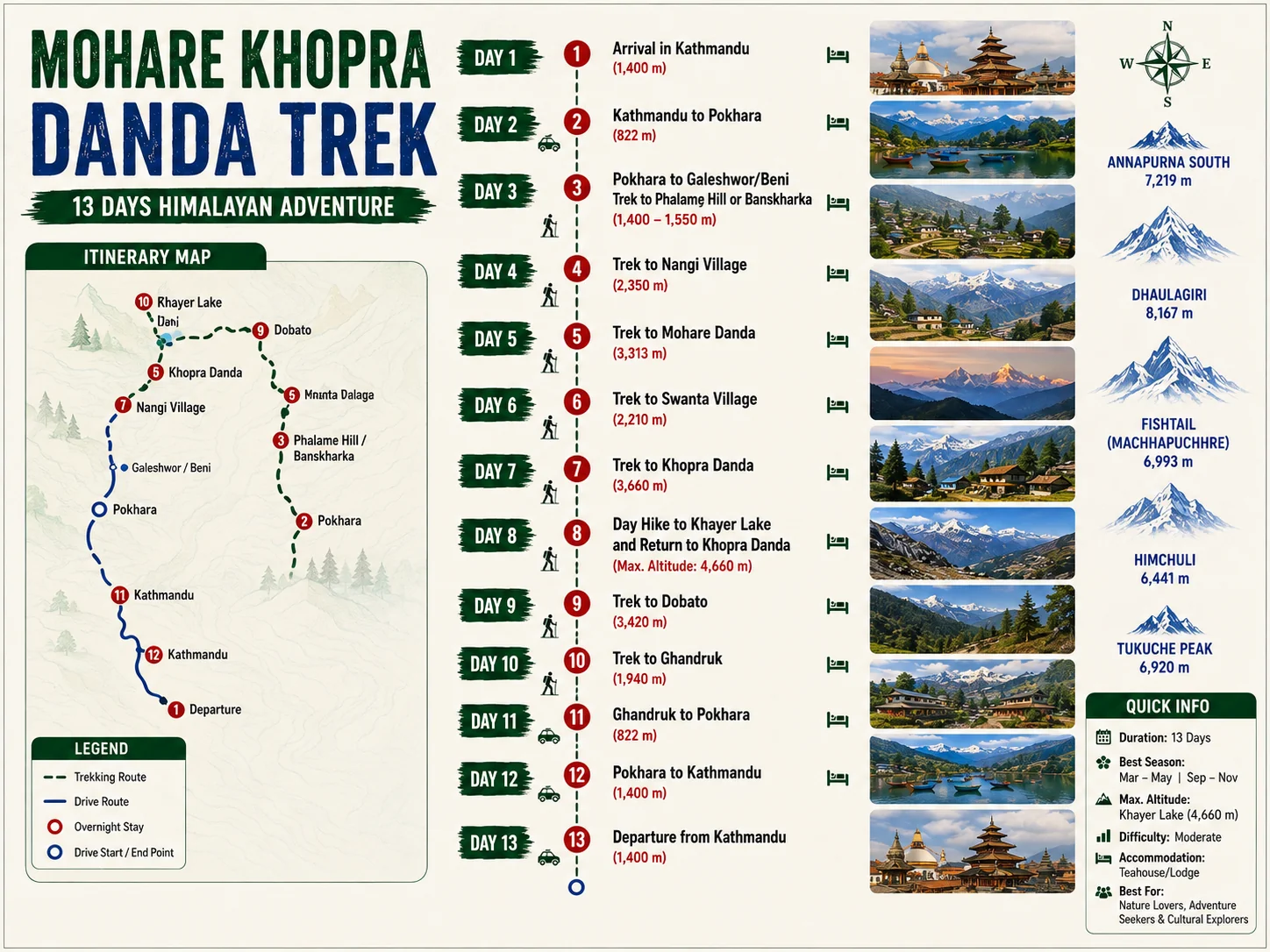
The Mohare Khopra Danda Trek is a spectacular off-the-beaten-path Himalayan adventure combining peaceful mountain villages, dense rhododendron forests, panoramic Himalayan viewpoints, and the remote landscapes of the Annapurna region. The journey begins in Kathmandu and continues to Pokhara before entering the scenic foothills of the Annapurna and Dhaulagiri ranges.
The trek follows a beautiful route through Phalame Hill or Banskharka, Nangi, Mohare Danda, Swanta, Khopra Danda, Khayer Lake, Dobato, and Ghandruk. Along the way, trekkers experience traditional Gurung and Magar communities, terraced farmland, forest trails, alpine landscapes, and exceptional views of snow-covered Himalayan peaks.
A major highlight is the stay at Mohare Danda, known for its spectacular sunrise and mountain panorama. The route then continues to Khopra Danda, offering impressive views of the Annapurna and Dhaulagiri ranges. An optional challenging day hike to Khayer Lake adds a remote high-altitude experience before descending through Dobato and reaching the culturally rich village of Ghandruk.
The 13-day journey combines trekking with scenic road travel, making it an excellent choice for travelers seeking a quieter Himalayan experience away from the busier trails.
Key Highlights
- Trek through the peaceful and less-crowded trails of the Annapurna region.
- Enjoy panoramic Himalayan views from Mohare Danda at approximately 3,313 m.
- Experience spectacular mountain scenery from Khopra Danda at approximately 3,660 m.
- Hike toward the remote and sacred Khayer Lake.
- Witness spectacular sunrise and sunset views over the Annapurna and Dhaulagiri ranges.
- Walk through beautiful rhododendron, pine, and alpine forests.
- Explore traditional Magar and Gurung villages and experience authentic Himalayan culture.
- Pass through terraced farmland, mountain settlements, forests, and scenic ridgelines.
- Experience the traditional village atmosphere of Nangi, Swanta, and Ghandruk.
- Enjoy breathtaking views of some of Nepal's most impressive Himalayan peaks.
- Combine mountain trekking with scenic drives between Kathmandu and Pokhara.
- Experience a quieter alternative to some of Nepal's more crowded trekking routes.
Departure Dates & Availability
No guaranteed departures available for this tour.
Detailed Day-by-Day Itinerary
Inclusions / Exclusions
Included
Excluded
Route Map
Gear List / Packing Guide
| Category | Essential Gear |
|---|---|
| Clothing | T-shirts, trekking pants, fleece, down jacket, thermal wear |
| Footwear | Trekking boots, sandals, warm socks |
| Rain & Cold | Rain jacket, waterproof pants, gloves, warm hat |
| Trekking Gear | Backpack, daypack, trekking poles, headlamp |
| Sleeping | Sleeping bag, sleeping bag liner |
| Sun Protection | Sunglasses, sunscreen, sun hat |
| Hydration | Water bottle, water purification tablets |
| Personal Care | Toiletries, quick-dry towel, lip balm |
| Health | Basic first-aid kit, personal medicines |
| Electronics | Mobile phone, power bank, charging cables |
| Documents | Passport, permits, travel insurance |
| Optional | Camera, binoculars, snacks, earplugs |
FAQ
The complete itinerary takes 13 days and 12 nights, including arrival and departure in Kathmandu, scenic drives between Kathmandu and Pokhara, trekking through the Annapurna region, and the Khayer Lake day hike.
The highest point of the itinerary is Khayer Lake, approximately 4,500–4,660 m (14,764–15,289 ft). Khopra Danda itself is approximately 3,660 m (12,008 ft).
Mohare Danda is approximately 3,313 m (10,869 ft) above sea level and is one of the major viewpoints on the trek.
The best seasons are generally spring, from March to May, and autumn, from September to November, when the weather is usually favorable and mountain visibility is good.
The trek can be suitable for reasonably fit beginners with proper preparation. However, the Khayer Lake day hike is challenging because of the high altitude and long walking hours.
The trek is generally considered moderate to challenging, particularly because of the elevation gain, several consecutive trekking days, and the Khayer Lake day hike.
Yes. Day 8 is dedicated to a day hike from Khopra Danda to Khayer Lake and back to Khopra Danda.
The Khayer Lake excursion generally requires approximately 7–8 hours round trip, depending on trail conditions, walking pace, weather, and acclimatization.
The trek provides impressive views of the Annapurna and Dhaulagiri mountain ranges, along with numerous surrounding Himalayan peaks and ridgelines.
The trek combines spectacular Himalayan viewpoints with traditional mountain villages, rhododendron forests, terraced farmland, alpine landscapes, and quieter trails in the Annapurna region.
The route is generally considered a quieter alternative to some of the more established trekking routes in the Annapurna region, making it appealing to travelers seeking a more peaceful mountain experience.
The itinerary passes through or stays in Phalame Hill or Banskharka, Nangi, Mohare Danda, Swanta, Khopra Danda, Dobato, and Ghandruk.
Accommodation during the trekking section is generally provided in local teahouses and lodges. Hotel accommodation is provided in Kathmandu and Pokhara according to the itinerary.
Yes. The package includes breakfast, lunch, and dinner from Day 2 to Day 12. Breakfast is included on Day 1 and Day 13.
The itinerary includes road transportation between Kathmandu, Pokhara, Galeshwor/Beni, Ghandruk, and the return journeys. Trekking sections are completed on foot along mountain trails.
The drive from Kathmandu to Pokhara generally takes around 6–7 hours, depending on road conditions, traffic, weather, and stops along the way.
Yes. The itinerary can generally be customized according to travel dates, trekking pace, accommodation preferences, transportation arrangements, and additional nights in Kathmandu or Pokhara.
Trekkers may require the applicable Annapurna Conservation Area and trekking permits. Permit requirements can depend on the final route and current regulations.
Travel insurance is strongly recommended, particularly because the itinerary reaches high altitude and includes the challenging Khayer Lake day hike. Insurance should provide appropriate trekking and emergency coverage.
Essential items include good trekking shoes, warm layers, a rain jacket, trekking pants, a sleeping bag, backpack, trekking poles, sunglasses, sunscreen, water bottle, headlamp, personal medicines, and basic toiletries.
A sleeping bag is recommended for the trekking section because temperatures can become cold at higher elevations, particularly around Mohare Danda and Khopra Danda.
Families with older children and good physical fitness may be able to undertake the trek. However, the Khayer Lake day hike and high-altitude sections require careful consideration of each traveler's fitness and experience.
It can be suitable for physically fit senior travelers with previous trekking experience, but the itinerary includes several long trekking days and a challenging high-altitude hike to Khayer Lake. A slower or customized itinerary may be preferable.
Travelers who prefer a less demanding itinerary can remain at Khopra Danda and enjoy the mountain scenery, sunrise, and surrounding landscapes instead of undertaking the Khayer Lake day hike.
The trek passes through traditional mountain communities where travelers can experience local village life, traditional houses, farming landscapes, community-based tourism, and Gurung and Magar cultural surroundings.
Yes. Ghandruk is included on Day 10 of the itinerary. It is one of the most well-known traditional Gurung villages in the Annapurna region.
Yes. The Mohare Khopra Danda Trek provides spectacular Himalayan scenery while following a different route through the Annapurna region, making it an attractive option for travelers who want a Himalayan trekking experience without undertaking the Everest Base Camp route.
A good level of cardiovascular fitness and regular walking experience is recommended. Training with uphill and downhill walking before the trek can help prepare for the consecutive trekking days and the Khayer Lake hike.
Major highlights include Mohare Danda at approximately 3,313 m, Khopra Danda at approximately 3,660 m, the Khayer Lake day hike, Annapurna and Dhaulagiri mountain views, rhododendron forests, traditional villages, Dobato, Ghandruk, and scenic drives between Kathmandu and Pokhara.
The trek is an excellent choice for travelers looking for a combination of Himalayan scenery, peaceful trails, authentic village experiences, cultural encounters, forest walks, high-altitude landscapes, and spectacular mountain viewpoints within a well-rounded 13-day / 12-night Nepal itinerary.
More Details
 Mohare Khopra Danda Trek Accommodation Types
The Mohare Khopra Danda Trek offers an authentic Himalayan accommodation experience through traditional teahouses, mountain lodges, community lodges, and family-run guesthouses. The route passes through peaceful Magar and Gurung villages, allowing trekkers to enjoy warm local hospitality, freshly prepared meals, and beautiful mountain surroundings. From the lower villages of Phalame Hill and Nangi to the high-altitude settlements of Mohare Danda and Khopra Danda, each overnight stop provides a unique experience of Himalayan village life.
Accommodation Overview
| Trek Destination | Accommodation Type |
|---|---|
| Kathmandu | Hotels & Guesthouses |
| Pokhara | 3★, 4★ & 5★ Hotels |
| Phalame Hill / Banskharka | Teahouses & Local Lodges |
| Nangi Village | Community Lodges & Family-run Teahouses |
| Mohare Danda | Mountain Lodges & Teahouses |
| Swanta Village | Family-run Guesthouses & Teahouses |
| Khopra Danda | Mountain Lodges & Teahouses |
| Dobato | Mountain Lodges & Teahouses |
| Ghandruk | Teahouses, Guesthouses & Mountain Lodges |
Accommodation Categories
The Mohare Khopra Danda Trek offers a variety of simple yet comfortable accommodation options.
Available Options:
- Traditional Teahouses
- Family-run Guesthouses
- Community Lodges
- Mountain Lodges
- Trekking Lodges
- Eco-friendly Accommodation
- Hotels in Kathmandu
- Hotels in Pokhara
Room Types
Rooms are designed to provide trekkers with a comfortable place to rest after each day's hike.
Room Options Include:
- Twin Sharing Rooms
- Double Rooms
- Single Rooms (Subject to Availability)
- Family Rooms (Limited Availability)
Room Facilities
Most teahouses and mountain lodges provide basic but comfortable facilities.
Common Room Amenities:
- Comfortable Beds with Mattress
- Pillow and Blanket
- Wooden Beds
- Shared or Private Rooms
- Windows with Mountain Views
- Basic Furniture
- Solar or Electric Lighting
As altitude increases, facilities become simpler and more basic.
Bathroom Facilities
Bathroom facilities vary depending on the village and elevation.
Available Facilities:
- Shared Bathrooms
- Western Toilets (Selected Lodges)
- Squat Toilets
- Cold Water Washrooms
- Hot Showers (Available at Additional Cost)
- Solar-Heated Water (Selected Lodges)
Dining Facilities
Every teahouse has a welcoming dining area where trekkers relax after a day on the trail.
Dining Features Include:
- Heated Dining Hall
- Wood-burning Stove
- Freshly Cooked Meals
- Tea & Coffee Service
- Comfortable Seating
- Mountain Views
- Friendly Local Hospitality
Accommodation Experience by Destination
Phalame Hill / Banskharka
Phalame Hill or Banskharka provides the first mountain accommodation experience of the trekking route, surrounded by rural landscapes, forests, terraced farmland, and traditional settlements.
Accommodation Highlights:
- Local Teahouses and Lodges
- Peaceful Rural Surroundings
- Traditional Mountain Hospitality
- Comfortable Basic Rooms
- Local Dining Facilities
Nangi Village
Nangi is a peaceful mountain village offering community-based accommodation surrounded by forests, terraced fields, and Himalayan landscapes.
Accommodation Highlights:
- Community-run Lodges
- Family-run Teahouses
- Traditional Village Environment
- Mountain Views
- Local Hospitality
Mohare Danda
Mohare Danda offers a memorable high-altitude accommodation experience with spectacular views of the surrounding Himalayan ranges.
Accommodation Highlights:
- Mountain Lodges
- Traditional Teahouses
- Panoramic Mountain Views
- Peaceful Himalayan Atmosphere
- Sunrise and Sunset Views
- Warm Dining Areas
Swanta Village
Swanta provides peaceful mountain accommodation surrounded by traditional houses, terraced fields, forests, and scenic landscapes.
Accommodation Highlights:
- Family-run Guesthouses
- Traditional Teahouses
- Village Hospitality
- Peaceful Mountain Surroundings
- Local Food Experience
Khopra Danda
Khopra Danda is one of the most scenic overnight stops on the trek, offering spectacular views of the Annapurna and Dhaulagiri ranges.
Accommodation Highlights:
- Mountain Lodge
- Simple and Comfortable Rooms
- Spectacular Himalayan Views
- Peaceful High-altitude Setting
- Scenic Sunrise and Sunset
- Traditional Dining Area
Dobato
Dobato offers a peaceful mountain lodge experience surrounded by forested ridges and Himalayan scenery.
Accommodation Highlights:
- Mountain Lodges
- Traditional Teahouses
- Forest Surroundings
- Mountain Views
- Quiet Himalayan Atmosphere
Ghandruk
Ghandruk is one of the most developed village stops along the route and offers a wider selection of teahouses, guesthouses, and mountain lodges.
Accommodation Highlights:
- Comfortable Teahouses
- Family-run Guesthouses
- Mountain Lodges
- Traditional Gurung Hospitality
- Mountain Views
- Restaurants and Dining Facilities
Meals During Your Stay
Accommodation usually includes freshly prepared mountain meals during the trekking section.
Meals Available:
- Breakfast
- Lunch
- Dinner
- Dal Bhat
- Tibetan Bread
- Pancakes
- Eggs
- Fried Rice
- Noodles
- Soup
- Tea & Coffee
Electricity & Internet
Basic communication and charging facilities are available at selected locations along the trekking route.
| Facility | Availability |
| Electricity | Available in Most Villages |
| Solar Power | Available at Higher Elevations |
| Wi-Fi | Available in Selected Teahouses (Additional Charges May Apply) |
| Mobile Network | Available in Some Areas |
| Charging Facilities | Available (Additional Charges May Apply) |
Accommodation Tips
Enjoy a comfortable stay with these practical recommendations.
Helpful Tips:
- Carry a lightweight sleeping bag for additional warmth.
- Book early during the spring and autumn trekking seasons.
- Bring cash for Wi-Fi, charging devices, and hot showers.
- Expect simpler facilities at higher elevations.
- Respect local customs and fellow trekkers.
- Carry earplugs if you're staying in shared accommodation.
- Keep valuables and important documents secure.
- Carry a small personal towel and essential toiletries.
- Keep your room and shared areas clean.
Why the Accommodation is Special
The Mohare Khopra Danda Trek offers far more than simple mountain accommodation. Every overnight stay provides an opportunity to experience authentic Himalayan hospitality while surrounded by forests, traditional villages, terraced landscapes, and spectacular mountain scenery. From the community lodges of Nangi and the peaceful surroundings of Swanta to the high-altitude mountain lodges of Mohare Danda and Khopra Danda, each stay becomes an important part of the trekking experience. The combination of simple facilities, freshly prepared meals, warm local hospitality, and unforgettable Himalayan views makes accommodation along the Mohare Khopra Danda Trek a memorable part of the journey.
 What to Expect from the Mohare Khopra Danda Trek
The Mohare Khopra Danda Trek is a scenic and culturally rich Himalayan adventure that combines peaceful mountain trails, traditional villages, rhododendron and pine forests, terraced farmland, high-altitude landscapes, and spectacular views of the Annapurna and Dhaulagiri ranges. The journey takes trekkers through less-crowded trails of the Annapurna region, offering an authentic experience of local mountain communities and Himalayan landscapes. From the lower villages around Banskharka and Nangi to the high ridges of Mohare Danda and Khopra Danda, every section of the trek provides a different perspective of Nepal's mountain environment.
Trek Highlights
| Destination | Major Highlights |
|---|---|
| Phalame Hill / Banskharka | Rural Villages & Forest Trails |
| Nangi Village | Traditional Village & Community Experience |
| Mohare Danda | Himalayan Panorama & Sunrise |
| Swanta Village | Traditional Village & Terraced Fields |
| Khopra Danda | Annapurna & Dhaulagiri Views |
| Khayer Lake | High-Altitude Day Hike |
| Dobato | Forest Trails & Mountain Scenery |
| Ghandruk | Gurung Culture & Himalayan Village |
Experience Traditional Mountain Culture
The Mohare Khopra Danda Trek passes through traditional Magar and Gurung communities, providing opportunities to experience local mountain lifestyles and hospitality.
Cultural Experiences Include:
- Traditional Mountain Villages
- Magar Community Culture
- Gurung Community Culture
- Traditional Stone and Wooden Houses
- Terraced Farming
- Local Agriculture
- Community-based Tourism
- Traditional Food
- Warm Himalayan Hospitality
Enjoy Spectacular Himalayan Views
The trek offers impressive views of the Annapurna and Dhaulagiri mountain ranges along with surrounding Himalayan peaks.
Mountain Views Include:
- Annapurna Range
- Dhaulagiri Range
- Annapurna South
- Machhapuchhre
- Hiunchuli
- Nilgiri
- Fang
- Surrounding Himalayan Peaks
Mountain visibility depends on weather conditions and trekking season.
Explore Beautiful Himalayan Villages
Each village along the route offers a different combination of culture, scenery, and mountain lifestyle.
Popular Villages Include:
- Phalame Hill
- Banskharka
- Nangi
- Mohare Danda
- Swanta
- Khopra Danda
- Dobato
- Ghandruk
These settlements provide opportunities to experience traditional architecture, farming communities, local hospitality, and spectacular mountain surroundings.
Experience Mohare Danda
Mohare Danda is one of the major highlights of the trek and offers spectacular views from approximately 3,313 m / 10,869 ft.
Highlights Include:
- Himalayan Sunrise
- Annapurna Views
- Dhaulagiri Views
- Rhododendron Forests
- Mountain Ridge Landscapes
- Peaceful Himalayan Atmosphere
- Excellent Photography Opportunities
Explore Khopra Danda
Khopra Danda is another major highlight of the journey, located at approximately 3,660 m / 12,008 ft.
What You'll Experience:
- Panoramic Himalayan Views
- Annapurna Mountain Range
- Dhaulagiri Mountain Range
- High-Altitude Landscapes
- Mountain Ridge Trails
- Sunrise and Sunset Views
- Spectacular Photography Locations
Hike to Khayer Lake
The Khayer Lake day hike is the most challenging section of the itinerary and takes trekkers into a remote high-altitude landscape.
What You'll Experience:
- High-Altitude Hiking
- Alpine Landscapes
- Remote Mountain Valleys
- Himalayan Panoramas
- Sacred Lake Experience
- Challenging Uphill and Downhill Trails
- Spectacular Mountain Scenery
The day hike generally requires around 7–8 hours round trip, depending on trail conditions, walking pace, weather, and individual fitness.
Explore Ghandruk Village
Ghandruk is one of the most famous traditional Gurung villages in the Annapurna region and provides a strong cultural finish to the trekking section.
Highlights Include:
- Traditional Gurung Culture
- Stone Houses
- Mountain Views
- Terraced Fields
- Local Food
- Village Exploration
- Traditional Hospitality
- Himalayan Photography
Nature & Forest Experience
The route passes through diverse natural landscapes ranging from lower hill forests to high-altitude alpine terrain.
Natural Experiences Include:
- Rhododendron Forests
- Pine Forests
- Mixed Mountain Forests
- Terraced Farmland
- Alpine Landscapes
- Mountain Ridges
- Remote Valleys
- Himalayan Wildlife and Birdlife
Photography Highlights
The Mohare Khopra Danda Trek is an excellent destination for landscape and cultural photography.
Best Photography Locations:
- Mohare Danda
- Khopra Danda
- Khayer Lake
- Nangi Village
- Swanta Village
- Dobato
- Ghandruk
- Rhododendron Forests
- Annapurna Panorama
- Dhaulagiri Panorama
- Traditional Mountain Villages
Adventure & Trekking Experiences
Beyond mountain views and cultural exploration, the trek provides a variety of outdoor experiences.
Popular Activities:
- Himalayan Trekking
- Mountain Hiking
- High-Altitude Hiking
- Village Exploration
- Forest Walking
- Sunrise & Sunset Viewing
- Nature Photography
- Mountain Photography
- Cultural Interaction
- Scenic Road Journeys
Experience a Quieter Himalayan Trail
The Mohare Khopra Danda route provides a peaceful alternative to some of Nepal's busier trekking trails. The combination of remote mountain landscapes, traditional villages, community lodges, and high-altitude viewpoints allows trekkers to enjoy a more intimate Himalayan experience.
Why the Mohare Khopra Danda Trek is Unique
The Mohare Khopra Danda Trek offers an exceptional combination of Himalayan scenery, traditional mountain culture, peaceful trails, forest landscapes, and high-altitude adventure. From walking through rhododendron forests and traditional villages to experiencing the panoramic viewpoints of Mohare Danda and Khopra Danda and undertaking the challenging hike to Khayer Lake, every stage provides a distinct experience. The addition of Ghandruk and scenic road journeys through the Annapurna region makes the 13-day / 12-night itinerary a well-rounded Himalayan adventure for travelers seeking nature, culture, and mountain exploration.
 Best Time / Season for the Mohare Khopra Danda Trek
The Mohare Khopra Danda Trek can be undertaken in different seasons, but spring (March to May) and autumn (September to November) generally provide the most favorable trekking conditions. These periods offer pleasant temperatures, clearer Himalayan views, relatively stable weather, and good trail conditions. Winter brings colder temperatures and possible snow at higher elevations, while the monsoon season creates lush green landscapes but can bring rain, slippery trails, and challenging road conditions.
Best Seasons at a Glance
| Season | Months | Weather | Trekking Experience |
|---|---|---|---|
| Spring | March – May | Mild & Pleasant | Best for trekking, flowers, and mountain views |
| Summer / Monsoon | June – August | Warm & Rainy | Lush landscapes with fewer trekkers |
| Autumn | September – November | Cool & Clear | Best overall season with excellent visibility |
| Winter | December – February | Cold & Dry | Snow-covered scenery and peaceful trails |
Spring (March – May)
Spring is one of the most beautiful seasons to explore the Mohare Khopra Danda Trek. The forests become vibrant with blooming rhododendrons, while warmer daytime temperatures create comfortable trekking conditions.
Season Highlights:
- Pleasant Daytime Temperatures
- Blooming Rhododendron Forests
- Clear Himalayan Views
- Comfortable Trekking Conditions
- Colorful Mountain Landscapes
- Excellent Photography Opportunities
- Active Birdlife and Nature
March
March marks the beginning of the spring trekking season. Temperatures gradually become warmer, and rhododendrons begin to bloom in the lower and middle sections of the trail.
Highlights Include:
- Fresh Mountain Landscapes
- Increasingly Pleasant Weather
- Early Rhododendron Blooms
- Good Mountain Visibility
- Fewer Trekkers Compared with Peak Season
April
April is one of the best months for the trek, particularly for travelers interested in rhododendron forests and comfortable walking conditions.
Highlights Include:
- Full Rhododendron Blooms
- Pleasant Temperatures
- Clear Mountain Views
- Comfortable Trekking Trails
- Excellent Sunrise and Sunset Views
- Excellent Photography Conditions
May
May continues to offer favorable trekking conditions, although temperatures gradually become warmer and the possibility of pre-monsoon rainfall increases toward the end of the month.
Highlights Include:
- Green Mountain Landscapes
- Good Himalayan Views
- Comfortable Morning Temperatures
- Beautiful Forest Trails
- Fewer Trekkers Toward the End of the Month
Autumn (September – November)
Autumn is generally considered the best overall season for the Mohare Khopra Danda Trek. The monsoon rains clear the atmosphere, often providing excellent visibility of the Annapurna and Dhaulagiri ranges.
Why Trek During Autumn?
- Stable Weather Conditions
- Clear Blue Skies
- Excellent Himalayan Visibility
- Comfortable Daytime Temperatures
- Dry Trekking Trails
- Ideal Photography Conditions
- Excellent Sunrise and Sunset Views
September
September marks the transition from monsoon to autumn. Early September may still receive occasional rainfall, while conditions generally improve as the month progresses.
Season Highlights:
- Fresh Green Landscapes
- Fewer Trekkers
- Improving Mountain Visibility
- Pleasant Temperatures Toward the End of the Month
- Peaceful Trekking Experience
October
October is widely regarded as one of the best months for the Mohare Khopra Danda Trek.
Why October is Excellent:
- Stable Weather
- Clear Himalayan Views
- Blue Skies
- Dry Trails
- Comfortable Trekking Temperatures
- Excellent Mountain Photography
- Spectacular Sunrise and Sunset
November
November continues to provide excellent trekking conditions, particularly during the first half of the month. Temperatures become cooler, especially at higher elevations.
Season Highlights:
- Clear Mountain Views
- Dry Weather
- Crisp Mountain Air
- Peaceful Trails
- Excellent Photography
- Beautiful Autumn Landscapes
Winter (December – February)
Winter provides a peaceful trekking experience with cold temperatures and the possibility of snowfall around higher sections of the route, particularly around Mohare Danda and Khopra Danda.
Season Highlights:
- Snow-covered Mountain Landscapes
- Clear Skies on Good-weather Days
- Fewer Trekkers
- Peaceful Villages
- Beautiful Winter Photography
- Spectacular Sunrise and Sunset Views
Trekkers should carry adequate warm clothing and be prepared for freezing temperatures at higher elevations.
December
December brings increasingly cold conditions, particularly during mornings and nights.
Highlights Include:
- Clear Winter Skies
- Quiet Trails
- Cold but Often Dry Conditions
- Beautiful Mountain Views
- Possible Snow at Higher Elevations
January
January is one of the coldest months of the year. Snow and freezing temperatures can affect higher sections of the route.
Highlights Include:
- Snow-covered Landscapes
- Very Quiet Trails
- Clear Mountain Views on Suitable Days
- Peaceful Mountain Villages
Proper winter trekking equipment is essential.
February
February marks the gradual transition toward spring. Temperatures begin to improve, although higher elevations can remain cold.
Highlights Include:
- Increasingly Pleasant Daytime Weather
- Clear Mountain Views
- Fewer Trekkers
- Early Signs of Spring
- Possible Snow at Higher Elevations
Summer / Monsoon (June – August)
The monsoon season brings regular rainfall and transforms the lower trekking landscapes into lush green surroundings. The trekking route can be wet and slippery, while road transportation may be affected by rainfall and landslides.
Season Highlights:
- Lush Green Forests
- Fresh Mountain Landscapes
- Waterfalls and Streams
- Fewer Trekkers
- Peaceful Villages
- Vibrant Vegetation
Trekkers should be prepared for rain, slippery trails, leeches, clouds, and possible road delays.
June
June marks the beginning of the monsoon period.
Highlights Include:
- Green Forests
- Warm Temperatures
- Fresh Mountain Landscapes
- Increasing Rainfall
July
July is generally one of the wettest months.
Highlights Include:
- Lush Green Landscapes
- Dense Forests
- Fewer Visitors
- Fresh Mountain Air
Rain protection and flexible travel plans are important.
August
August remains part of the monsoon season, although conditions may gradually improve toward the end of the month.
Highlights Include:
- Lush Green Trails
- Waterfalls and Streams
- Quiet Trekking Routes
- Fewer Trekkers
- Fresh Mountain Landscapes
Average Weather Conditions
Weather varies significantly according to altitude, season, and daily conditions.
| Location | General Daytime Conditions | General Nighttime Conditions |
| Nangi Village | Mild to Warm | Cool |
| Mohare Danda | Cool | Cold |
| Swanta Village | Mild | Cool |
| Khopra Danda | Cool to Cold | Very Cold |
| Dobato | Cool to Cold | Cold |
| Ghandruk | Mild | Cool |
Temperatures can vary considerably depending on season and weather conditions.
Weather Tips
Pack according to the season to ensure a comfortable trekking experience.
Recommended Packing:
- Layered Clothing
- Warm Down Jacket
- Waterproof Jacket
- Thermal Base Layers
- Trekking Boots
- Warm Gloves
- Woolen Hat
- Sunglasses
- Sunscreen
- Trekking Poles
- Reusable Water Bottle
- Backpack Rain Cover
Best Time for Popular Activities
| Activity | Best Season |
| Mohare Danda Trekking | Spring & Autumn |
| Khopra Danda Trekking | Spring & Autumn |
| Khayer Lake Hike | Spring & Autumn |
| Mountain Photography | Autumn & Spring |
| Rhododendron Viewing | Spring |
| Sunrise & Sunset Viewing | Autumn & Spring |
| Village Exploration | Spring & Autumn |
| Himalayan Panorama | Autumn & Spring |
Seasonal Experiences
Each season offers a different experience along the Mohare Khopra Danda Trek.
Spring
- Blooming Rhododendrons
- Pleasant Weather
- Green Forests
- Excellent Mountain Views
- Comfortable Trekking Conditions
Summer / Monsoon
- Lush Green Forests
- Waterfalls and Streams
- Fresh Mountain Landscapes
- Fewer Visitors
- Peaceful Trekking Experience
Autumn
- Crystal-clear Himalayan Views
- Comfortable Temperatures
- Stable Weather
- Dry Trails
- Excellent Photography Conditions
Winter
- Snow-covered Higher Trails
- Clear Winter Skies
- Quiet Trekking Routes
- Peaceful Mountain Villages
- Spectacular Mountain Panoramas
Why Spring & Autumn Are the Best Seasons
Spring and autumn provide the best combination of comfortable temperatures, favorable trail conditions, stable weather, and spectacular Himalayan visibility for the Mohare Khopra Danda Trek. Spring is particularly attractive for blooming rhododendron forests and colorful landscapes, while autumn is known for clear skies and excellent views of the Annapurna and Dhaulagiri ranges. Whether the priority is mountain photography, peaceful trekking, village exploration, or the challenging Khayer Lake hike, these seasons generally offer the most rewarding trekking experience.
 Nearby Places to Explore from the Mohare Khopra Danda Trek
The Mohare Khopra Danda Trek passes through a beautiful section of the Annapurna region, connecting traditional mountain villages, forest trails, high-altitude ridges, and scenic destinations. The route also provides access to several popular attractions around Pokhara, Ghandruk, Ghorepani, and the Annapurna region, making it possible to extend the journey or add additional experiences before or after the trek.
Nearby Places Overview
| Destination | Location / Accessibility | Major Highlights |
|---|---|---|
| Ghandruk | Included in Itinerary | Gurung Culture & Mountain Views |
| Pokhara | Included in Itinerary | Phewa Lake & Himalayan Scenery |
| Ghorepani | Trek Extension | Mountain Views & Forest Trails |
| Poon Hill | Trek Extension | Sunrise & Himalayan Panorama |
| Tatopani | Trek / Road Extension | Natural Hot Springs |
| Annapurna Base Camp | Trek Extension | High-Altitude Mountain Adventure |
| Sikles | Trek Extension | Gurung Village & Mountain Landscapes |
Ghandruk
Ghandruk is one of the most famous traditional Gurung villages in the Annapurna region and is included in the Mohare Khopra Danda Trek itinerary. The village provides beautiful views of the surrounding mountains and an opportunity to experience traditional Himalayan culture.
Highlights Include:
- Traditional Gurung Culture
- Stone Houses
- Mountain Views
- Terraced Farmland
- Local Food
- Village Walks
- Traditional Hospitality
- Himalayan Photography
Pokhara
Pokhara is the main gateway for the Mohare Khopra Danda Trek and is included in the itinerary before and after the trekking section. The city is famous for its peaceful lakeside environment and spectacular views of the surrounding mountains.
Popular Attractions Include:
- Phewa Lake
- Sarangkot
- World Peace Pagoda
- Davis Falls
- Gupteshwor Cave
- International Mountain Museum
- Lakeside
- Seti Gorge
Poon Hill
Poon Hill is one of the most famous sunrise viewpoints in the Annapurna region and can be considered as a trekking extension for travelers with additional time.
Highlights Include:
- Himalayan Sunrise
- Annapurna Views
- Dhaulagiri Views
- Rhododendron Forests
- Mountain Photography
- Panoramic Landscapes
Ghorepani
Ghorepani is a popular mountain village surrounded by beautiful rhododendron forests and Himalayan scenery. The destination can be incorporated into selected extended trekking itineraries.
Highlights Include:
- Rhododendron Forests
- Traditional Mountain Village
- Himalayan Views
- Trekking Trails
- Access to Poon Hill
Tatopani
Tatopani is known for its natural hot springs and can be added to selected extended itineraries around the Annapurna region.
Highlights Include:
- Natural Hot Springs
- Mountain Landscapes
- River Valleys
- Traditional Villages
- Relaxation After Trekking
Annapurna Base Camp
Annapurna Base Camp is a major high-altitude trekking destination that can be considered as an additional trekking extension for travelers with sufficient time and fitness.
Highlights Include:
- Annapurna Sanctuary
- High Himalayan Peaks
- Mountain Landscapes
- Glacial Valleys
- High-Altitude Trekking
- Sunrise and Sunset Views
Sikles
Sikles is a traditional Gurung village located in the Annapurna region and can be considered for travelers interested in extending their cultural and mountain experience.
Highlights Include:
- Gurung Culture
- Traditional Village Life
- Mountain Views
- Stone Houses
- Terraced Landscapes
- Community-based Tourism
Nearby Nature Experiences
The region surrounding the Mohare Khopra Danda Trek offers diverse natural landscapes ranging from subtropical forests to high-altitude alpine terrain.
Nature Experiences Include:
- Rhododendron Forests
- Pine Forests
- Mountain Ridges
- Alpine Landscapes
- River Valleys
- Terraced Hillsides
- Himalayan Panoramas
- Birdwatching
- Nature Photography
Nearby Cultural Experiences
Travelers can combine the trek with additional cultural experiences around the Annapurna region.
Cultural Highlights Include:
- Gurung Villages
- Magar Communities
- Traditional Architecture
- Local Farming
- Community Lodges
- Traditional Food
- Local Festivals
- Village Lifestyle
Nearby Adventure Activities
Travelers looking for additional outdoor activities can consider several experiences around Pokhara and the Annapurna region.
Popular Activities Include:
- Hiking
- Mountain Trekking
- Boating on Phewa Lake
- Paragliding in Pokhara
- Mountain Biking
- Nature Photography
- Village Exploration
- Sunrise Hiking
Best Nearby Places by Interest
| Interest | Recommended Destination |
| Gurung Culture | Ghandruk |
| Himalayan Sunrise | Poon Hill |
| Mountain Trekking | Annapurna Base Camp |
| Rhododendron Forests | Ghorepani |
| Natural Hot Springs | Tatopani |
| Lakeside Relaxation | Pokhara |
| Traditional Village Experience | Sikles |
| Mountain Photography | Ghandruk & Poon Hill |
Why Explore Nearby Places
Adding nearby destinations can extend the Mohare Khopra Danda Trek into a more comprehensive Annapurna experience. Ghandruk provides cultural exploration, Pokhara offers lakeside relaxation and adventure activities, Poon Hill provides a famous Himalayan sunrise, Ghorepani offers beautiful forest trails, Tatopani provides natural hot springs, and Annapurna Base Camp offers an opportunity for a more demanding high-altitude adventure. Travelers can customize the journey according to available time, fitness level, interests, and preferred trekking experience.
 Foods Available on the Mohare Khopra Danda Trek
The Mohare Khopra Danda Trek offers a variety of traditional Nepali, Tibetan-influenced, and international trekking meals. Local teahouses and mountain lodges prepare simple, freshly cooked dishes that provide the energy needed for long days of trekking. As the route reaches higher elevations, food choices may become simpler, but trekkers can still enjoy filling meals, hot drinks, and local specialties throughout the journey.
Meals During the Trek
The trekking package includes Breakfast, Lunch & Dinner from Day 2 to Day 12, with meals generally served at the hotel, teahouse, or mountain lodge according to the day's itinerary.
Meals Available:
- Breakfast
- Lunch
- Dinner
- Tea & Coffee
- Hot Drinks
- Freshly Prepared Local Meals
Traditional Nepali Foods
Dal Bhat is one of the most common and filling meals available during the trek. It provides a combination of rice, lentils, vegetables, curry, and pickles.
Popular Nepali Dishes Include:
- Dal Bhat Tarkari
- Vegetable Curry
- Potato Curry
- Seasonal Vegetables
- Rice
- Pickles
- Chapati
Tibetan & Himalayan Foods
Mountain teahouses also commonly serve Tibetan-influenced dishes that are particularly enjoyable in cold mountain conditions.
Popular Options Include:
- Tibetan Bread
- Momo
- Thukpa
- Noodle Soup
- Potato-based Dishes
- Homemade Bread
- Local Cheese
Breakfast Options
Breakfast provides energy for the day's trekking activities.
Common Breakfast Choices Include:
- Tibetan Bread
- Toast
- Pancakes
- Porridge
- Muesli
- Eggs
- Chapati
- Potatoes
- Tea
- Coffee
Lunch & Dinner
Lunch and dinner menus generally include a combination of Nepali, Tibetan, and international-style dishes.
Common Choices Include:
- Dal Bhat
- Fried Rice
- Vegetable Noodles
- Chow Mein
- Pasta
- Vegetable Curry
- Potato Dishes
- Soup
- Rice
- Seasonal Vegetables
Soups & Hot Meals
Hot soups are particularly popular after long days of trekking and during colder evenings at higher elevations.
Popular Soups Include:
- Garlic Soup
- Vegetable Soup
- Mushroom Soup
- Tomato Soup
- Noodle Soup
- Thukpa
Vegetarian Food
Vegetarian meals are widely available throughout the trekking route.
Vegetarian Options Include:
- Dal Bhat
- Vegetable Curry
- Fried Rice
- Vegetable Noodles
- Pasta
- Soup
- Potatoes
- Seasonal Vegetables
- Momo
Vegan Food Options
Vegan meals may be available at many teahouses, but options can become limited at higher elevations.
Possible Vegan Choices Include:
- Dal Bhat Without Dairy
- Vegetable Curry
- Fried Rice
- Vegetable Noodles
- Potato Dishes
- Vegetable Soup
- Rice
- Seasonal Vegetables
Travelers with strict dietary requirements should inform the trekking company in advance.
Tea, Coffee & Hot Drinks
Hot drinks are widely available and are especially useful during cold mornings and evenings.
Common Drinks Include:
- Black Tea
- Milk Tea
- Green Tea
- Lemon Tea
- Ginger Tea
- Hot Lemon
- Coffee
- Hot Chocolate
Drinking Water
Safe drinking water is important throughout the trek.
Water Sources May Include:
- Boiled Water
- Filtered Water
- Purified Water
- Bottled Water at Selected Locations
- Treated Local Water
Trekkers are advised to carry a reusable water bottle and use appropriate purification methods.
Snacks for the Trek
Carrying lightweight snacks can be useful during long trekking days.
Recommended Snacks Include:
- Energy Bars
- Nuts
- Dried Fruits
- Chocolate
- Biscuits
- Trail Mix
- Granola Bars
Food Availability at Higher Elevations
Food choices generally become simpler as the trail reaches Mohare Danda, Khopra Danda, and other higher mountain settlements. Local lodges focus on practical, filling meals that can be prepared using available ingredients.
Higher-altitude meals may include:
- Dal Bhat
- Noodles
- Soup
- Rice
- Potatoes
- Eggs
- Tibetan Bread
- Tea
- Coffee
Food Safety Tips
Follow basic food safety practices during the trek.
Helpful Tips:
- Eat freshly prepared food.
- Drink boiled, filtered, or purified water.
- Avoid untreated stream water.
- Wash or sanitize hands before meals.
- Avoid raw or undercooked food.
- Carry personal snacks for longer trekking days.
- Inform the guide or lodge about food allergies.
Food Experience in Mountain Villages
One of the enjoyable aspects of the Mohare Khopra Danda Trek is eating in locally operated teahouses and mountain lodges. Meals are generally prepared by local families and lodge staff, giving trekkers an opportunity to experience traditional Nepali hospitality and locally prepared food while supporting mountain communities.
Why Food is an Important Part of the Trek
Food plays an important role in maintaining energy during the 13-day / 12-night Mohare Khopra Danda Trek. From traditional Dal Bhat and Tibetan-style soups to pancakes, noodles, momos, and hot tea, the meals provide practical nourishment during long trekking days. Dining in local teahouses also adds to the cultural experience, allowing travelers to enjoy freshly prepared meals while experiencing the warmth and hospitality of Himalayan communities.
 Culture and Etiquette of the Mohare Khopra Danda Trek
The Mohare Khopra Danda Trek provides an opportunity to experience the traditional culture and daily lifestyle of mountain communities in the Annapurna region. The route passes through villages inhabited mainly by Magar and Gurung communities, where traditional houses, farming practices, local hospitality, community-based tourism, and mountain traditions remain an important part of everyday life. Respecting local customs and following responsible travel practices helps preserve the cultural character of the region.
Cultural Highlights
The trek offers opportunities to experience:
- Magar Community Culture
- Gurung Community Culture
- Traditional Mountain Villages
- Traditional Stone and Wooden Houses
- Terraced Farming
- Local Agriculture
- Community-based Tourism
- Traditional Food
- Local Hospitality
- Himalayan Village Lifestyle
Magar Culture
The lower and middle sections of the trekking route pass through traditional Magar communities. Villages such as Banskharka, Nangi, and surrounding settlements provide opportunities to observe local lifestyles and community-based tourism.
Cultural Experiences Include:
- Traditional Village Life
- Mountain Agriculture
- Local Food
- Traditional Houses
- Community Hospitality
- Farming Activities
- Local Handicrafts
Gurung Culture
Gurung communities are particularly prominent around Ghandruk and other villages in the Annapurna region. Traditional architecture, local customs, community gatherings, and mountain hospitality form an important part of the cultural experience.
Cultural Highlights Include:
- Traditional Gurung Houses
- Village Lifestyle
- Local Cuisine
- Traditional Clothing
- Community Hospitality
- Cultural Traditions
- Mountain Agriculture
Traditional Village Life
The trek passes through villages where daily life remains closely connected with agriculture, livestock, forests, and community activities.
Travelers May Observe:
- Terraced Farming
- Livestock Farming
- Traditional Cooking
- Local Agriculture
- Village Homes
- Community Activities
- Traditional Mountain Lifestyle
Traditional Architecture
Traditional mountain houses are an important part of the cultural landscape.
Common Features Include:
- Stone Walls
- Wooden Elements
- Slate or Metal Roofs
- Small Village Courtyards
- Traditional Windows
- Terraced Village Layouts
Ghandruk is particularly well known for its traditional Gurung village architecture.
Local Food Culture
Food provides another way to experience the local culture during the trek.
Traditional Foods May Include:
- Dal Bhat
- Vegetable Curry
- Local Potatoes
- Tibetan Bread
- Momo
- Thukpa
- Seasonal Vegetables
- Local Pickles
- Tea
Community-based Tourism
The Mohare Khopra Danda route is strongly associated with community-based tourism, where locally operated accommodation and services provide economic benefits to mountain communities.
Community Tourism Experiences Include:
- Family-run Teahouses
- Community Lodges
- Local Guides
- Local Food
- Village Hospitality
- Local Products
- Cultural Experiences
Choosing locally operated services helps contribute directly to the communities along the trekking route.
Cultural Etiquette
Respectful behavior is important when visiting traditional mountain communities.
Helpful Guidelines:
- Greet local people respectfully.
- Ask permission before photographing people.
- Dress appropriately in villages and religious areas.
- Respect private homes and personal spaces.
- Avoid touching religious objects without permission.
- Follow local instructions.
- Keep noise levels low in villages.
- Avoid littering.
- Respect local traditions and customs.
Photography Etiquette
The villages and mountain landscapes provide excellent photography opportunities, but respectful photography is important.
Photography Tips:
- Ask permission before photographing local people.
- Avoid photographing private activities without consent.
- Respect religious ceremonies.
- Avoid disturbing people while they work.
- Do not enter private homes without permission.
- Follow photography restrictions at religious sites.
Religious and Spiritual Respect
The Annapurna region includes communities influenced by both Hindu and Buddhist traditions.
Respectful Practices Include:
- Remove shoes when required.
- Follow local customs at religious sites.
- Avoid touching religious objects.
- Walk around sacred structures in the appropriate direction.
- Keep voices low near religious areas.
- Follow instructions from local residents or guides.
Festivals and Community Events
Depending on the travel season, trekkers may encounter local celebrations, festivals, or community events.
Possible cultural occasions may include:
- Dashain
- Tihar
- Losar
- Magar Cultural Events
- Gurung Cultural Events
- Local Village Festivals
Festival dates vary each year, so experiences depend on the trekking period.
Respect for Local Environment
Cultural preservation and environmental responsibility are closely connected in mountain communities.
Responsible Practices Include:
- Avoiding litter
- Using reusable water bottles
- Reducing plastic waste
- Staying on designated trails
- Respecting local forests
- Avoiding unnecessary noise
- Supporting local businesses
- Following Leave No Trace principles
Supporting Local Communities
Travelers can contribute positively to local communities by choosing locally operated services.
Ways to Support Local Communities:
- Stay in Local Teahouses
- Eat Local Food
- Hire Local Guides
- Purchase Local Products
- Use Community Lodges
- Respect Local Workers
- Avoid Bargaining excessively for essential local services
Cultural Experience by Destination
| Destination | Cultural Experience |
|---|---|
| Phalame Hill / Banskharka | Rural Village Life & Local Hospitality |
| Nangi Village | Magar Culture & Community Tourism |
| Mohare Danda | Mountain Lodge Experience |
| Swanta Village | Traditional Village Life |
| Khopra Danda | High-altitude Mountain Community |
| Dobato | Remote Mountain Lifestyle |
| Ghandruk | Gurung Culture & Traditional Architecture |
Why Culture Makes the Trek Special
The Mohare Khopra Danda Trek is more than a journey through mountain landscapes. The route connects trekkers with traditional Magar and Gurung communities, local food, mountain agriculture, community lodges, traditional architecture, and authentic Himalayan hospitality. Respectful interaction with local communities allows travelers to experience the cultural character of the Annapurna region while contributing to responsible and community-based tourism.
 Safety and Security of the Mohare Khopra Danda Trek
The Mohare Khopra Danda Trek is a rewarding Himalayan journey through mountain villages, forests, ridges, and high-altitude landscapes. The route is suitable for prepared trekkers, but proper safety measures are important because the itinerary includes several consecutive trekking days, steep uphill and downhill sections, remote trails, and the challenging high-altitude hike to Khayer Lake. Following the guide's instructions, staying hydrated, monitoring weather conditions, and maintaining a steady pace can help ensure a safe and enjoyable trekking experience.
General Safety Tips
Follow basic safety practices throughout the trek.
Helpful Guidelines:
- Trek with an experienced guide.
- Follow the planned itinerary.
- Maintain a comfortable walking pace.
- Stay with your trekking group.
- Follow trail and local instructions.
- Check weather conditions before starting each day's trek.
- Carry sufficient drinking water.
- Take regular rest breaks.
- Avoid unnecessary shortcuts.
- Inform the guide about any health concerns.
Altitude & Health Safety
The trek reaches Khopra Danda at approximately 3,660 m / 12,008 ft, while the Khayer Lake day hike reaches approximately 4,500–4,660 m / 14,764–15,289 ft. The high-altitude section requires additional care and preparation.
Important Recommendations:
- Ascend gradually.
- Walk slowly at higher elevations.
- Stay properly hydrated.
- Eat regular meals.
- Get adequate rest.
- Avoid alcohol at high altitude.
- Avoid overexertion.
- Inform the guide immediately if feeling unwell.
- Follow the planned acclimatization and rest schedule.
Khayer Lake Hike Safety
The Khayer Lake day hike is the most physically demanding section of the itinerary. The route involves long uphill and downhill walking at high altitude and may take approximately 7–8 hours round trip, depending on weather, trail conditions, and walking pace.
Safety Recommendations:
- Start early.
- Carry sufficient water and snacks.
- Wear proper trekking shoes.
- Carry warm and waterproof clothing.
- Use trekking poles.
- Follow the guide's pace.
- Avoid rushing.
- Turn back if weather or health conditions become unsafe.
Trail Safety
The trekking route includes different types of terrain throughout the journey.
Trail Conditions May Include:
- Forest Trails
- Rocky Paths
- Stone Steps
- Steep Ascents
- Steep Descents
- Narrow Mountain Paths
- Ridge Trails
- Alpine Terrain
Proper trekking footwear and trekking poles are recommended.
Weather Safety
Mountain weather can change quickly, especially at higher elevations. Rain, fog, strong winds, snow, and sudden temperature changes can affect trekking conditions.
Recommended Protection:
- Waterproof Jacket
- Backpack Rain Cover
- Warm Down Jacket
- Thermal Layers
- Waterproof Pants
- Warm Gloves
- Woolen Hat
- Sunglasses
- Sunscreen
Check the weather forecast and follow the guide's recommendations before beginning longer trekking sections.
Cold Weather Safety
Temperatures can become very cold around Mohare Danda, Khopra Danda, Dobato, and during the Khayer Lake hike.
Carry:
- Thermal Base Layers
- Fleece Jacket
- Down Jacket
- Warm Gloves
- Warm Hat
- Woolen Socks
- Sleeping Bag
- Waterproof Outer Layer
Layering clothing allows trekkers to adjust according to changing temperatures.
Food & Water Safety
Maintaining proper hydration and nutrition is important during the trek.
Water Safety Tips:
- Drink boiled, filtered, or properly purified water.
- Avoid untreated stream water.
- Carry a reusable water bottle.
- Use water purification tablets or a filtration system.
- Drink regularly throughout the day.
Food Safety Tips:
- Eat freshly prepared meals.
- Avoid raw or undercooked food.
- Wash or sanitize hands before meals.
- Inform the lodge about food allergies.
- Carry personal snacks for longer trekking days.
Personal Safety & Security
Basic precautions can help protect personal belongings during the journey.
Security Tips:
- Keep your passport secure.
- Carry only necessary cash.
- Keep valuables in a secure place.
- Store important documents in waterproof bags.
- Keep digital copies of important documents.
- Avoid leaving valuables unattended.
- Keep emergency contact information accessible.
Travel Insurance
Travel insurance is strongly recommended for the Mohare Khopra Danda Trek because the itinerary includes remote mountain trails and high-altitude trekking.
Recommended Coverage Includes:
- Emergency Medical Treatment
- High-Altitude Trekking
- Emergency Evacuation
- Helicopter Rescue
- Trip Cancellation
- Trip Interruption
- Personal Accident
- Lost or Delayed Baggage
Check the policy carefully to confirm that the maximum trekking altitude and planned activities are covered.
Emergency Preparedness
In case of an emergency, immediately inform the trekking guide or local trekking staff.
Emergency Preparation Includes:
- Carrying a basic first-aid kit.
- Keeping emergency contacts available.
- Carrying a fully charged mobile phone.
- Carrying a power bank.
- Keeping insurance details accessible.
- Following the guide's emergency instructions.
- Being prepared for possible changes to the itinerary due to weather or trail conditions.
First-Aid Essentials
A small personal first-aid kit is recommended.
Useful Items Include:
- Personal Medicines
- Basic Bandages
- Blister Treatment
- Antiseptic Wipes
- Pain Relief Medicine
- ORS / Electrolytes
- Adhesive Tape
- Basic Medical Supplies
Travelers taking regular medication should carry sufficient supplies for the entire journey.
Sun Protection
UV exposure can become stronger at higher elevations.
Recommended Items:
- Sunglasses
- Sunscreen
- Lip Balm with Sun Protection
- Sun Hat
- Long-sleeve Clothing
Apply sunscreen regularly, especially during exposed sections of the trail.
Wildlife & Nature Safety
The route passes through forests and natural landscapes where travelers may encounter birds and other wildlife.
Responsible Practices:
- Do not approach wildlife.
- Do not feed animals.
- Avoid loud noises.
- Stay on established trails.
- Do not disturb plants or natural features.
- Follow guide instructions in forest areas.
Responsible Trekking Practices
Safety also includes protecting the environment and respecting local communities.
Follow These Practices:
- Do not litter.
- Carry reusable water bottles.
- Reduce plastic waste.
- Stay on designated trails.
- Respect local homes and communities.
- Avoid unnecessary noise.
- Use established accommodation.
- Follow Leave No Trace principles.
Safety by Trekking Section
| Trekking Section | Main Safety Consideration |
|---|---|
| Phalame Hill / Banskharka | Forest Trails & Uphill Walking |
| Nangi Village | Steady Pace & Hydration |
| Mohare Danda | Higher Elevation & Cold Weather |
| Swanta Village | Steep Descents |
| Khopra Danda | High Altitude & Cold Conditions |
| Khayer Lake | Long High-Altitude Day Hike |
| Dobato | Forest Trails & Mountain Paths |
| Ghandruk | Descending Trails & Stone Steps |
Why Safety Preparation Matters
The Mohare Khopra Danda Trek combines moderate trekking with a challenging high-altitude excursion to Khayer Lake. Good preparation, appropriate clothing, proper hydration, suitable trekking equipment, travel insurance, and responsible trekking practices help reduce avoidable risks. Following the guidance of an experienced trekking team allows travelers to focus on the spectacular Himalayan scenery, traditional villages, and cultural experiences while maintaining a safe and comfortable journey.
 Transportation Facilities for the Mohare Khopra Danda Trek
The Mohare Khopra Danda Trek combines scenic road journeys with several days of walking through the Annapurna region. The itinerary begins with arrival in Kathmandu, continues by road to Pokhara, and then proceeds toward Galeshwor/Beni for the trekking section. After completing the trek through Khopra Danda, Dobato, and Ghandruk, transportation is arranged back to Pokhara and Kathmandu.
Transportation Overview
| Route | Transportation | Approx. Duration |
|---|---|---|
| Tribhuvan International Airport → Kathmandu | Private Vehicle | 20–40 Minutes |
| Kathmandu → Pokhara | Tourist / Private Vehicle | 6–7 Hours |
| Pokhara → Galeshwor / Beni | Private / Sharing Vehicle | 3–4 Hours |
| Trekking Route | On Foot | According to Itinerary |
| Ghandruk → Pokhara | Private / Sharing Vehicle | 3–4 Hours |
| Pokhara → Kathmandu | Tourist / Private Vehicle | 6–7 Hours |
| Kathmandu → Tribhuvan International Airport | Private Vehicle | 20–40 Minutes |
Airport Arrival & Hotel Transfer
Upon arrival at Tribhuvan International Airport, a representative can meet you and arrange transportation to the hotel in Kathmandu.
Transfer Features Include:
- Airport Pickup
- Meet & Greet Service
- Private Vehicle
- Hotel Transfer
- Luggage Assistance
Kathmandu to Pokhara
The journey from Kathmandu to Pokhara follows scenic hill roads through central Nepal.
Route Highlights Include:
- Green Hills
- River Valleys
- Terraced Farmland
- Forests
- Rural Settlements
- Mountain Landscapes
The journey generally takes around 6–7 hours, depending on traffic, road conditions, weather, and stops.
Pokhara to Galeshwor / Beni
After staying in Pokhara, the journey continues by road toward Galeshwor or Beni, depending on the final trekking route and trailhead arrangements.
Journey Features Include:
- Mountain Roads
- Rural Villages
- River Valleys
- Terraced Hillsides
- Forest Landscapes
- Scenic Mountain Views
The drive generally takes approximately 3–4 hours, depending on the selected starting point and road conditions.
Transportation During the Trek
The main trekking section is completed on foot. There is no regular road transportation between the mountain settlements included in the trekking section.
Trekking Sections Include:
- Phalame Hill / Banskharka
- Nangi Village
- Mohare Danda
- Swanta Village
- Khopra Danda
- Khayer Lake
- Dobato
- Ghandruk
Trekkers walk along established mountain trails, forest paths, village routes, stone steps, and alpine landscapes.
Khopra Danda to Ghandruk
After the Khopra Danda and Khayer Lake sections, the trek continues toward Dobato and Ghandruk. The route is completed on foot through forests and mountain trails.
Once Ghandruk is reached, road transportation is arranged for the journey to Pokhara.
Ghandruk to Pokhara
After completing the trekking section in Ghandruk, continue by road toward Pokhara.
Journey Highlights Include:
- Mountain Roads
- Hillside Villages
- Forests
- Terraced Farmland
- River Valleys
- Scenic Annapurna Landscapes
The journey generally takes around 3–4 hours, depending on road conditions.
Pokhara to Kathmandu
After the stay in Pokhara, travel back to Kathmandu by road following the scenic highway through river valleys, green hills, forests, terraced farmland, and rural settlements.
Journey Highlights Include:
- Scenic Hill Roads
- River Landscapes
- Green Hills
- Terraced Farmland
- Rural Villages
- Central Himalayan Landscapes
The journey generally takes around 6–7 hours, depending on traffic, road conditions, weather, and stops.
Types of Transportation
Transportation arrangements may include different vehicle types depending on group size and package requirements.
Available Options May Include:
- Private Car
- SUV
- Tourist Vehicle
- Tourist Bus
- Sharing Vehicle
- Local Mountain Vehicle
Vehicle selection depends on the number of travelers, road conditions, and transportation arrangements included in the package.
Private Transportation
Private transportation provides greater flexibility and convenience for individuals, couples, families, and private groups.
Benefits Include:
- Flexible Departure Time
- Direct Hotel Pickup
- Comfortable Travel
- Private Space
- Flexible Rest Stops
- Suitable for Private Groups
Sharing Transportation
Sharing transportation can be arranged where applicable and may be a practical option for travelers looking to reduce transportation costs.
Benefits Include:
- Lower Transportation Cost
- Shared Travel Experience
- Suitable for Small Groups
- Convenient Road Transfers
Luggage During Transportation
Luggage can be transported between major road destinations, while trekkers carry their required daily belongings during the trekking section.
Recommended Approach:
- Carry a small daypack during trekking.
- Keep essential personal items easily accessible.
- Use a larger backpack or luggage for items not required during the day's hike.
- Follow porter or luggage arrangements if included in the package.
Road Conditions
Road conditions in the Himalayan region can vary according to season and weather.
Possible Conditions Include:
- Paved Highways
- Mountain Roads
- Gravel Roads
- Dirt Roads
- Narrow Hill Roads
- Uneven Sections
Monsoon rainfall can cause delays, landslides, and changes to road travel schedules.
Transportation Safety Tips
Follow these practical recommendations during road journeys.
Helpful Tips:
- Wear a seat belt whenever available.
- Keep valuables in your personal daypack.
- Carry drinking water during long drives.
- Keep necessary medicines accessible.
- Start early for longer road journeys.
- Allow additional travel time during monsoon.
- Follow the driver's and guide's instructions.
Transportation by Destination
| Destination | Main Transportation |
| Kathmandu | Private Vehicle |
| Pokhara | Tourist / Private Vehicle |
| Galeshwor / Beni | Private / Sharing Vehicle |
| Phalame Hill / Banskharka | Trekking |
| Nangi Village | Trekking |
| Mohare Danda | Trekking |
| Swanta Village | Trekking |
| Khopra Danda | Trekking |
| Khayer Lake | Day Hike |
| Dobato | Trekking |
| Ghandruk | Trekking + Road Transfer |
| Pokhara | Road Transportation |
| Kathmandu | Road Transportation |
Why Transportation is an Important Part of the Trek
The transportation arrangements for the Mohare Khopra Danda Trek connect Kathmandu and Pokhara with the remote mountain trailheads and provide a smooth transition between road travel and trekking. Scenic drives through Nepal's hills, rivers, forests, and rural communities add another dimension to the journey, while the trekking sections provide an immersive experience of the Annapurna mountain environment. Properly planned transportation helps make the 13-day / 12-night itinerary comfortable, practical, and well organized.
 Difficulty and Physical Fitness for the Mohare Khopra Danda Trek
The Mohare Khopra Danda Trek is generally considered a moderate to challenging Himalayan trek. The route combines several consecutive trekking days, gradual elevation gain, steep uphill and downhill sections, forest trails, mountain ridges, and a demanding day hike to Khayer Lake. A good level of physical fitness, regular walking experience, and proper preparation are recommended for a comfortable trekking experience.
Trek Difficulty Overview
| Category | Details |
|---|---|
| Trek Duration | 13 Days / 12 Nights |
| Trekking Difficulty | Moderate to Challenging |
| Mohare Danda | 3,313 m / 10,869 ft |
| Khopra Danda | 3,660 m / 12,008 ft |
| Khayer Lake | Approx. 4,500–4,660 m / 14,764–15,289 ft |
| Daily Walking | Approx. 4–8 Hours |
| Trek Type | Himalayan, Nature & Cultural Trek |
| Highest Challenge | Khayer Lake Day Hike |
What Makes the Trek Challenging
Several factors contribute to the overall difficulty of the trek.
Main Challenges Include:
- Consecutive Days of Trekking
- Long Walking Hours
- Uphill Sections
- Steep Descents
- Rocky and Uneven Trails
- Stone Steps
- High-altitude Walking
- Cold Weather at Higher Elevations
- Khayer Lake Day Hike
Difficulty by Trekking Section
Different sections of the route have different levels of physical demand.
| Trekking Section | Difficulty | Main Challenge |
| Phalame Hill / Banskharka | Moderate | Initial Uphill Walking |
| Nangi Village | Moderate | Forest Trails & Elevation Gain |
| Mohare Danda | Moderate to Challenging | Long Uphill Sections |
| Swanta Village | Moderate | Descending Trails |
| Khopra Danda | Challenging | Elevation Gain & High Altitude |
| Khayer Lake | Challenging | Long High-Altitude Day Hike |
| Dobato | Moderate | Mountain Trails & Descents |
| Ghandruk | Moderate | Descending Trails & Stone Steps |
Daily Walking Requirements
Most trekking days require several hours of walking through mountain terrain.
Typical Walking Duration:
- Moderate Trekking Days: 4–5 Hours
- Longer Trekking Days: 5–6 Hours
- Khayer Lake Day: 7–8 Hours Round Trip
Walking times can vary according to trail conditions, weather, walking pace, rest stops, and individual fitness.
Khayer Lake Day Hike Difficulty
The hike to Khayer Lake is the most challenging section of the itinerary. The trail climbs to a significantly higher elevation than Khopra Danda and involves long uphill and downhill sections.
The Hike Requires:
- Good Physical Fitness
- Strong Walking Endurance
- Proper Hydration
- Suitable Trekking Shoes
- Trekking Poles
- Warm Clothing
- Early Morning Start
- Good Weather Awareness
Travelers should follow the guide's recommendations and avoid rushing during the high-altitude section.
Altitude Considerations
The trek reaches 3,660 m / 12,008 ft at Khopra Danda, while the Khayer Lake day hike reaches approximately 4,500–4,660 m / 14,764–15,289 ft.
Altitude Preparation Includes:
- Maintaining a Slow Pace
- Staying Hydrated
- Eating Regular Meals
- Taking Adequate Rest
- Avoiding Alcohol at High Elevation
- Monitoring Physical Condition
- Following Guide Instructions
Who Can Join the Trek?
The trek can be suitable for travelers with reasonable fitness and a willingness to walk for several consecutive days.
Suitable For:
- Fit Beginner Trekkers
- Experienced Hikers
- Adventure Travelers
- Nature Lovers
- Photography Enthusiasts
- Couples
- Small Groups
- Private Trekking Groups
Previous Himalayan trekking experience is helpful but not essential for physically prepared travelers.
Fitness Level Required
A good level of cardiovascular fitness and walking endurance is recommended.
Recommended Fitness Abilities:
- Walk 4–8 Hours in a Day
- Walk Uphill and Downhill
- Handle Uneven Trails
- Carry a Small Daypack
- Maintain a Steady Walking Pace
- Trek Several Consecutive Days
Physical Preparation Before the Trek
Start preparing several weeks before departure.
Recommended Activities:
- Regular Walking
- Hiking
- Stair Climbing
- Uphill Walking
- Downhill Walking
- Jogging
- Cycling
- Leg Strengthening
- Cardiovascular Exercise
Gradually increase walking duration and elevation gain before the trek.
Training with a Backpack
Practice walking with a daypack before starting the trek.
Recommended Approach:
- Begin with a Light Backpack.
- Gradually Increase the Weight.
- Practice Uphill Walking.
- Practice Downhill Walking.
- Include Longer Weekend Hikes.
- Wear the Same Trekking Shoes During Training.
A properly adjusted backpack can reduce unnecessary strain during long trekking days.
Suitable for Families
Families with older children and good physical fitness may consider the trek. However, the high-altitude Khayer Lake day hike requires additional endurance and may not be suitable for every family member.
Families Should Consider:
- Children's Age
- Previous Hiking Experience
- Physical Fitness
- Altitude Tolerance
- Trekking Pace
- Weather Conditions
A customized itinerary can be considered for families requiring a slower pace.
Suitable for Senior Travelers
Physically fit senior travelers with regular walking or hiking experience may undertake the trek with proper preparation.
Recommended Considerations:
- Consult a qualified medical professional before high-altitude trekking.
- Allow additional rest where necessary.
- Maintain a slow and steady pace.
- Consider additional acclimatization time.
- Discuss the Khayer Lake hike with the guide.
- Consider a customized itinerary if required.
Trekking Equipment for Comfort
Appropriate equipment can make the trek significantly more comfortable.
Essential Equipment Includes:
- Good Trekking Shoes
- Trekking Poles
- Warm Down Jacket
- Waterproof Jacket
- Thermal Layers
- Warm Gloves
- Woolen Hat
- Sunglasses
- Sunscreen
- Sleeping Bag
- Comfortable Backpack
- Headlamp
- Reusable Water Bottle
Mental Preparation
Mental endurance is also useful because the trek includes several consecutive days of walking and changing weather conditions.
Helpful Mindset:
- Maintain a Steady Pace.
- Be Patient on Uphill Sections.
- Take Regular Breaks.
- Stay Positive During Difficult Sections.
- Follow the Guide's Advice.
- Focus on the Journey Rather Than Speed.
When the Trek May Be More Difficult
The trek can become more demanding during certain conditions.
Challenging Conditions May Include:
- Heavy Rain
- Snow
- Strong Winds
- Fog
- Wet and Slippery Trails
- Poor Visibility
- Very Cold Temperatures
- Unexpected Weather Changes
Flexible planning may be required during difficult weather conditions.
How to Make the Trek Easier
Several simple practices can improve the trekking experience.
Helpful Tips:
- Start training before the trek.
- Walk at a comfortable pace.
- Keep your backpack light.
- Stay hydrated.
- Eat enough food.
- Sleep well.
- Use trekking poles.
- Wear broken-in trekking shoes.
- Take regular breaks.
- Follow your guide's instructions.
Difficulty by Traveler Type
| Traveler Type | Suitability |
| Experienced Trekker | Excellent |
| Regular Hiker | Excellent with Preparation |
| Fit Beginner | Suitable with Preparation |
| Family with Older Children | Possible with Careful Planning |
| Senior Trekker | Possible with Good Fitness |
| Limited Hiking Experience | Requires Additional Preparation |
| Travelers Uncomfortable at High Altitude | Extra Consideration Required |
Why the Difficulty is Worth It
The moderate-to-challenging nature of the Mohare Khopra Danda Trek is balanced by spectacular Himalayan scenery, peaceful forest trails, traditional villages, cultural experiences, and panoramic viewpoints. The most demanding section, the Khayer Lake day hike, rewards prepared trekkers with a remote high-altitude landscape and an unforgettable mountain experience. With proper physical preparation, suitable equipment, responsible pacing, and guidance from an experienced trekking team, the journey can be a rewarding adventure through one of Nepal's scenic Himalayan regions.
 Cost Breakdown of the Mohare Khopra Danda Trek
The cost of the Mohare Khopra Danda Trek depends on the group size, accommodation category, transportation arrangements, guide and porter services, trekking permits, travel season, and personal expenses. A properly planned package can combine accommodation, meals, transportation, trekking services, and applicable permits into one convenient itinerary.
Cost Overview
| Cost Category | Usually Included / Depends On |
|---|---|
| Kathmandu Accommodation | Hotel Category |
| Pokhara Accommodation | Hotel Category |
| Trekking Accommodation | Teahouses & Mountain Lodges |
| Meals | According to Package |
| Road Transportation | Private / Sharing / Tourist Vehicle |
| Trekking Guide | Group Size & Trek Duration |
| Porter Service | Number of Trekkers & Luggage |
| Trekking Permits | Current Government Rates |
| Airport Transfers | Private Vehicle |
| Travel Insurance | Traveler's Choice |
| Personal Expenses | Individual Spending |
Main Cost Components
The total package cost is generally made up of several services required for the 13-day / 12-night itinerary.
Main Expenses Include:
- Accommodation
- Meals
- Road Transportation
- Trekking Guide
- Porter Service
- Trekking Permits
- Airport Transfers
- Government Taxes
- Service Charges
Accommodation Cost
Accommodation costs vary according to the selected hotel and lodge category.
Accommodation Includes:
- Hotel in Kathmandu
- Hotel in Pokhara
- Teahouses During Trekking
- Mountain Lodges
- Community Lodges
- Family-run Guesthouses
Higher-category hotels in Kathmandu and Pokhara will increase the overall package cost, while standard accommodation provides a more economical option.
Food Cost
Meals are an important part of the trekking budget.
For this itinerary:
- Day 1: Breakfast
- Day 2 to Day 12: Breakfast, Lunch & Dinner
- Day 13: Breakfast
Meals are generally provided at hotels, teahouses, and mountain lodges according to the daily itinerary.
Transportation Cost
Transportation costs depend on the vehicle type and whether transportation is private or shared.
Transportation Sections Include:
- Airport to Kathmandu Hotel
- Kathmandu to Pokhara
- Pokhara to Galeshwor / Beni
- Ghandruk to Pokhara
- Pokhara to Kathmandu
- Kathmandu Hotel to Airport
Private vehicles generally cost more than sharing transportation.
Guide Cost
A professional trekking guide is an important part of the trekking package.
The guide helps with:
- Route Navigation
- Trekking Schedule
- Accommodation Coordination
- Meal Arrangements
- Local Communication
- Safety Guidance
- Trail Information
- Cultural Information
Guide costs generally depend on the group size and total trekking duration.
Porter Cost
Porter service can be arranged for travelers who prefer to trek with a lighter daypack.
Porter Service Can Help With:
- Main Trekking Bag
- Clothing
- Sleeping Bag
- Personal Equipment
- Other Essential Luggage
Travelers generally carry only their daily essentials in a smaller daypack.
Permit Cost
Applicable trekking and conservation permits form part of the overall trekking expenses.
Possible requirements may include:
- Annapurna Conservation Area Permit
- Trekkers' Information Management System, where applicable
- Other Route-specific Registrations
Permit fees are subject to current government regulations and may change.
What's Usually Included in the Trek Package?
Depending on the selected package, inclusions may include:
- Airport Transfers
- Kathmandu Hotel
- Pokhara Hotel
- Trekking Accommodation
- Breakfast, Lunch & Dinner as Per Itinerary
- Road Transportation
- Trekking Guide
- Porter Service, if specified
- Applicable Trekking Permits
- Government Taxes
- Service Charges
Always check the final quotation for the exact inclusions.
What's Usually Not Included?
Common exclusions may include:
- International Flights
- Nepal Tourist Visa
- Travel Insurance
- Personal Trekking Equipment
- Personal Medicines
- Hot Showers
- Wi-Fi
- Charging Fees
- Bottled Drinks
- Snacks
- Alcoholic Beverages
- Personal Shopping
- Tips
Personal Expenses
Travelers should keep additional money available for optional and personal expenses.
Personal Expenses May Include:
- Tea & Coffee
- Snacks
- Hot Showers
- Wi-Fi
- Charging
- Bottled Drinks
- Souvenirs
- Laundry
- Tips
- Emergency Expenses
Travel Insurance Cost
Travel insurance is normally purchased separately by the traveler.
A suitable policy should ideally cover:
- Trekking Activities
- High-altitude Trekking
- Medical Treatment
- Emergency Evacuation
- Helicopter Rescue
- Trip Cancellation
- Trip Interruption
- Personal Accident
- Baggage Loss or Delay
Insurance costs vary according to age, nationality, coverage, duration, and policy benefits.
Cost According to Group Size
Group size can significantly influence the overall per-person cost.
| Group Type | General Cost Advantage |
| Solo Traveler | Highest Per-person Cost |
| Couple | Moderate |
| Small Group | Better Per-person Rate |
| Larger Group | More Economical Per-person Rate |
Private transportation, guide costs, and other shared services can often be divided among group members.
Private vs Sharing Transportation
| Transportation Type | Cost Level | Main Advantage |
| Private Vehicle | Higher | Comfort & Flexibility |
| Sharing Vehicle | Lower | Economical Travel |
| Tourist Vehicle | Moderate | Comfortable Group Travel |
The best option depends on group size, preferred comfort level, and budget.
Budget Planning
A practical trekking budget should account for both included services and personal expenses.
Plan for:
- Package Cost
- Personal Spending
- Emergency Funds
- Tips
- Optional Services
- Additional Nights
- Extra Transportation
- Equipment Rental or Purchase
Ways to Manage Trekking Costs
Travelers can manage expenses by choosing practical services without compromising essential trekking requirements.
Helpful Tips:
- Travel in a small group.
- Share transportation where practical.
- Choose standard teahouse accommodation.
- Carry a reusable water bottle.
- Use water purification methods instead of buying bottled water.
- Rent trekking equipment when appropriate.
- Confirm package inclusions before booking.
- Carry sufficient Nepalese currency before starting the trek.
Additional Costs for Optional Services
Some services may require additional payment depending on availability.
Possible Additional Charges Include:
- Hot Showers
- Wi-Fi
- Charging
- Extra Meals
- Additional Hotel Nights
- Porter Service, if not included
- Equipment Rental
- Private Transportation Upgrades
- Additional Activities
Cost Planning by Trip Stage
| Trip Stage | Main Expenses |
| Kathmandu | Hotel & Personal Expenses |
| Kathmandu → Pokhara | Transportation & Meals |
| Trekking Section | Accommodation, Meals, Guide, Permits |
| Ghandruk → Pokhara | Transportation |
| Pokhara | Hotel & Personal Expenses |
| Pokhara → Kathmandu | Transportation & Meals |
| Departure | Airport Transfer & Personal Expenses |
Why Understanding the Cost Breakdown Matters
Understanding the cost structure before booking helps travelers compare packages accurately and avoid unexpected expenses. The Mohare Khopra Danda Trek combines hotels, mountain accommodation, meals, road transportation, trekking services, permits, and a challenging Khayer Lake day hike into a comprehensive 13-day / 12-night itinerary. Reviewing inclusions, exclusions, optional services, and personal expenses in advance makes it easier to select a package that matches the preferred comfort level and budget.
 Tips for the Mohare Khopra Danda Trek
Proper preparation can make the Mohare Khopra Danda Trek safer, more comfortable, and more enjoyable. The 13-day / 12-night itinerary includes several consecutive trekking days, high-altitude sections, changing weather conditions, traditional teahouse accommodation, and the challenging Khayer Lake day hike. Preparing the right clothing, equipment, documents, and personal essentials before departure will help you enjoy the journey with greater comfort and confidence.
Before Starting the Trek
Prepare the important arrangements before arriving in Nepal or beginning the trekking section.
Helpful Tips:
- Confirm the complete itinerary before departure.
- Check the trekking package inclusions and exclusions.
- Arrange applicable permits in advance.
- Purchase suitable travel insurance.
- Prepare physically for several consecutive trekking days.
- Check the seasonal weather conditions.
- Prepare appropriate trekking clothing and equipment.
- Keep important travel documents safely organized.
- Carry sufficient Nepalese currency for personal expenses.
Physical Preparation
The trek requires regular walking through uphill, downhill, forest, and mountain terrain.
Recommended Preparation:
- Walk Regularly
- Practice Hiking
- Climb Stairs
- Practice Uphill Walking
- Practice Downhill Walking
- Improve Cardiovascular Fitness
- Strengthen Leg Muscles
- Take Longer Weekend Hikes
- Practice Walking with a Daypack
Start physical preparation several weeks before the trek and gradually increase walking duration.
Packing Essentials
Pack according to the season and altitude of the trek.
Essential Items Include:
- Passport
- Travel Insurance
- Trekking Shoes
- Trekking Pants
- T-shirts
- Thermal Base Layers
- Fleece Jacket
- Down Jacket
- Waterproof Jacket
- Warm Gloves
- Woolen Hat
- Sun Hat
- Sunglasses
- Sunscreen
- Trekking Poles
- Sleeping Bag
- Comfortable Backpack
- Daypack
- Headlamp
- Water Bottle
- Water Purification Tablets
- Personal First-Aid Kit
- Personal Medicines
- Toiletries
- Quick-dry Towel
- Power Bank
- Charging Cables
Pack According to the Season
Weather conditions vary significantly throughout the year.
Spring:
- Light Layers
- Fleece Jacket
- Rain Jacket
- Sun Protection
- Warm Layer for Higher Elevations
Summer / Monsoon:
- Waterproof Jacket
- Waterproof Pants
- Backpack Rain Cover
- Quick-dry Clothing
- Extra Socks
- Waterproof Bags
Autumn:
- Layered Clothing
- Warm Jacket
- Rain Protection
- Sun Protection
- Warm Layers for Higher Elevations
Winter:
- Thermal Base Layers
- Down Jacket
- Fleece
- Warm Gloves
- Woolen Hat
- Warm Socks
- Sleeping Bag
- Waterproof Outer Layer
Keep Your Backpack Light
Avoid carrying unnecessary items during the trek.
Helpful Tips:
- Carry only essential clothing.
- Use lightweight trekking equipment.
- Pack clothing that can be layered.
- Carry a small daypack for daily trekking.
- Use porter service if included or required.
- Keep important items easily accessible.
A lighter backpack makes uphill and downhill walking more comfortable.
Trekking Shoes
Good footwear is one of the most important pieces of equipment.
Recommended Features:
- Comfortable Fit
- Good Ankle Support
- Strong Grip
- Water Resistance
- Proper Cushioning
- Suitable for Rocky Trails
Break in new trekking shoes before starting the trek to reduce the risk of blisters.
Trekking Poles
Trekking poles are particularly useful on the Mohare Khopra Danda route.
Benefits Include:
- Better Balance
- Reduced Knee Strain
- Support During Descents
- Assistance on Steep Climbs
- Improved Stability on Uneven Trails
Trekking poles are especially helpful during the Khayer Lake day hike.
Hydration Tips
Proper hydration is important throughout the trek, particularly at higher elevations.
Helpful Practices:
- Carry a reusable water bottle.
- Drink water regularly.
- Use boiled or purified water.
- Carry water purification tablets or a filter.
- Avoid relying only on bottled water.
- Increase water intake during longer trekking days.
Food & Nutrition
Eat regular meals to maintain energy during long trekking days.
Recommended Practices:
- Eat breakfast before starting the day's trek.
- Carry small snacks.
- Eat sufficient carbohydrates and protein.
- Drink hot fluids in cold conditions.
- Avoid skipping meals.
- Inform the lodge about dietary requirements.
Altitude Tips
The itinerary reaches Khopra Danda at approximately 3,660 m / 12,008 ft, while the Khayer Lake day hike reaches approximately 4,500–4,660 m / 14,764–15,289 ft.
Helpful Tips:
- Walk slowly at higher elevations.
- Stay hydrated.
- Take adequate rest.
- Eat regular meals.
- Avoid alcohol at high altitude.
- Do not rush uphill.
- Inform your guide immediately if you feel unwell.
- Follow the guide's recommendations regarding the Khayer Lake hike.
Khayer Lake Day Hike Tips
The Khayer Lake hike is the most demanding part of the itinerary.
Prepare By:
- Starting Early
- Carrying Enough Water
- Carrying Energy Snacks
- Wearing Proper Trekking Shoes
- Carrying Warm Layers
- Carrying Rain Protection
- Using Trekking Poles
- Maintaining a Slow Pace
- Taking Regular Breaks
Weather and individual fitness should be considered before starting the hike.
Accommodation Tips
Accommodation during the trekking section is generally provided in local teahouses and mountain lodges.
Helpful Tips:
- Carry a lightweight sleeping bag.
- Carry earplugs if sensitive to noise.
- Bring a small personal towel.
- Carry essential toiletries.
- Keep valuables secure.
- Bring cash for additional lodge services.
- Expect simpler facilities at higher elevations.
- Respect shared dining and accommodation spaces.
Electricity & Charging
Charging facilities may be limited at higher elevations.
Recommended:
- Carry a Power Bank.
- Carry Spare Charging Cables.
- Charge Devices Whenever Facilities Are Available.
- Keep Your Phone on Power-saving Mode.
- Carry Spare Camera Batteries if Needed.
Additional charging fees may apply at selected lodges.
Internet & Communication
Wi-Fi and mobile network availability varies along the trekking route.
Helpful Tips:
- Do not rely entirely on internet access.
- Download important information before leaving Kathmandu or Pokhara.
- Keep emergency contacts saved offline.
- Inform family or friends about limited connectivity.
- Carry a power bank for communication devices.
Money & Cash
Cash is useful because card payment facilities are limited in remote mountain villages.
Carry Cash For:
- Hot Showers
- Wi-Fi
- Charging
- Snacks
- Drinks
- Personal Purchases
- Tips
- Emergency Expenses
Carry sufficient Nepalese currency before beginning the trekking section.
Travel Documents
Keep important documents organized and protected from moisture.
Carry:
- Passport
- Visa
- Travel Insurance
- Permit Documents
- Booking Confirmation
- Emergency Contact Details
- Copies of Important Documents
Keep digital copies on your phone or secure cloud storage as an additional backup.
Photography Tips
The trek provides excellent opportunities for mountain, village, and nature photography.
Recommended Tips:
- Carry spare batteries or a power bank.
- Protect cameras from rain.
- Carry a lightweight camera setup.
- Photograph mountain views during clear mornings.
- Capture sunrise at Mohare Danda and Khopra Danda.
- Ask permission before photographing local people.
- Respect religious and cultural activities.
Responsible Trekking
Help protect the environment and support local communities throughout the journey.
Responsible Practices Include:
- Carry a reusable water bottle.
- Avoid single-use plastics.
- Do not litter.
- Carry personal waste until a suitable disposal point.
- Stay on designated trails.
- Do not disturb wildlife.
- Respect local communities.
- Support locally operated teahouses and services.
- Follow Leave No Trace principles.
Weather Preparation
Mountain weather can change quickly, especially at higher elevations.
Always Carry:
- Waterproof Jacket
- Backpack Rain Cover
- Warm Layer
- Gloves
- Warm Hat
- Sunglasses
- Sunscreen
Check the weather forecast before longer trekking days and follow the guide's recommendations.
Start Trekking Early
Starting early is especially useful on longer trekking days and during the Khayer Lake hike.
Benefits Include:
- Cooler Morning Temperatures
- Better Visibility
- More Time on the Trail
- Reduced Risk of Afternoon Weather Changes
- More Time for Rest Stops
- Comfortable Arrival at the Lodge
Respect Your Trekking Pace
Do not compare your walking speed with other trekkers.
Helpful Approach:
- Maintain a Comfortable Pace.
- Take Short Regular Breaks.
- Avoid Overexertion.
- Communicate With Your Guide.
- Drink Water Regularly.
- Rest When Necessary.
A steady pace is more important than walking quickly.
Emergency Preparation
Be prepared for unexpected changes in weather, health, or trail conditions.
Keep Accessible:
- First-Aid Kit
- Personal Medicines
- Insurance Details
- Emergency Contacts
- Fully Charged Mobile Phone
- Power Bank
- Headlamp
- Warm Clothing
- Rain Protection
Follow the guide's instructions if the itinerary needs to be adjusted for safety.
Before Booking
Review the package carefully before confirming your trek.
Check:
- Number of Days and Nights
- Accommodation
- Meals
- Transportation
- Guide Service
- Porter Service
- Permits
- Airport Transfers
- Inclusions
- Exclusions
- Cancellation Policy
- Payment Terms
- Travel Insurance Requirements
During the Trek
Follow these simple practices throughout the journey.
Remember To:
- Stay Hydrated.
- Eat Regularly.
- Walk at a Steady Pace.
- Keep Your Daypack Organized.
- Follow Your Guide.
- Respect Local Communities.
- Protect the Environment.
- Rest Properly.
- Monitor Your Health.
- Enjoy the Mountain Scenery.
Why Good Preparation Matters
The Mohare Khopra Danda Trek combines traditional villages, forest trails, high-altitude mountain ridges, and the demanding Khayer Lake day hike into a 13-day / 12-night Himalayan journey. Good physical preparation, appropriate trekking equipment, suitable travel insurance, proper hydration, responsible pacing, and careful planning can make the experience safer and more comfortable. Preparing well allows travelers to focus on the spectacular Annapurna and Dhaulagiri views, authentic mountain culture, and peaceful trails that make the trek special.
 Documents Required for the Mohare Khopra Danda Trek
Proper documentation is important for a smooth and well-organized Mohare Khopra Danda Trek. Travelers should carry valid identification, applicable Nepal entry documents, trekking permits, travel insurance details, and booking information throughout the journey. Keeping both physical and digital copies of important documents is recommended, particularly during the remote trekking sections.
Essential Documents
| Document | Requirement |
|---|---|
| Valid Passport | Required for Foreign Nationals |
| Nepal Tourist Visa | Required for Most Foreign Nationals |
| Trekking Permits | As Applicable |
| Travel Insurance | Strongly Recommended |
| Booking Confirmation | Recommended |
| Passport Copies | Recommended |
| Emergency Contact Details | Recommended |
| Flight Tickets | Recommended |
Valid Passport
Foreign travelers should carry a valid passport throughout the trip.
Passport Tips:
- Carry the Original Passport.
- Keep a Photocopy Separately.
- Store the Passport in a Waterproof Cover.
- Keep Digital Copies on Your Phone.
- Ensure Passport Details Match Your Booking Information.
Nepal Tourist Visa
Most foreign nationals require a valid Nepal tourist visa for entry into Nepal. Visa requirements can vary according to nationality and current immigration regulations.
Visa Information to Keep Accessible:
- Passport
- Visa Details
- Entry Information
- Arrival Information
- Relevant Immigration Documents
Travelers should confirm the latest visa requirements applicable to their nationality before departure.
Trekking Permits
The Mohare Khopra Danda Trek may require applicable trekking and conservation permits depending on the final route and current regulations.
Possible Requirements Include:
- Annapurna Conservation Area Permit
- Trekkers' Information Management System, where applicable
- Route-specific Registrations, if required
Permit requirements and fees can change according to current government regulations.
Travel Insurance
Travel insurance is strongly recommended for the trek, particularly because the itinerary includes high-altitude trekking and the challenging Khayer Lake day hike.
Recommended Coverage Includes:
- Medical Treatment
- High-altitude Trekking
- Emergency Evacuation
- Helicopter Rescue
- Trip Cancellation
- Trip Interruption
- Personal Accident
- Lost or Delayed Baggage
Check the policy carefully to ensure the planned trekking altitude and activities are covered.
Booking Confirmation
Keep a copy of your trekking booking confirmation with you.
Booking Information May Include:
- Traveler Name
- Trekking Dates
- 13-day / 12-night Itinerary
- Accommodation Details
- Transportation Details
- Guide Information
- Emergency Contact
- Package Inclusions
- Package Exclusions
Flight Tickets
Keep copies of international and domestic flight confirmations, where applicable.
Recommended Copies:
- International Flight Tickets
- Domestic Flight Tickets, if applicable
- Return Flight Information
- Airport Transfer Details
Digital copies stored on a mobile device are useful when traveling.
Emergency Contact Information
Keep important emergency contacts accessible throughout the trek.
Include:
- Trekking Agency Contact
- Trekking Guide Contact
- Hotel Contact
- Travel Insurance Emergency Number
- Family Emergency Contact
- Local Emergency Services
Medical Information
Travelers taking regular medication should carry sufficient supplies for the entire journey.
Recommended Medical Information:
- Personal Prescription
- List of Regular Medicines
- Relevant Medical Information
- Emergency Medical Contact
- Doctor's Contact Information, if required
Keep medicines in their original packaging where practical.
Passport Copies
Carry copies of important passport pages separately from the original passport.
Recommended Copies:
- Passport Bio Page
- Nepal Visa
- Travel Insurance
- Trekking Permits
- Flight Tickets
- Booking Confirmation
Digital Document Backup
Digital copies provide an additional backup if physical documents are lost or damaged.
Recommended Storage:
- Mobile Phone
- Secure Cloud Storage
- Offline Device Storage
Make sure important documents can be accessed without relying entirely on mobile internet.
Document Safety During the Trek
Protect documents from rain, moisture, and accidental damage.
Helpful Tips:
- Use Waterproof Document Pouches.
- Keep Original Documents Secure.
- Carry Copies Separately.
- Avoid Carrying All Documents in One Place.
- Keep Digital Backups.
- Check Documents Before Leaving Each Accommodation.
Documents for Trekking Permits
When arranging applicable permits, travelers may need to provide:
- Valid Passport
- Passport Details
- Passport-size Photograph, where required
- Trekking Itinerary
- Visa Information, where applicable
Permit requirements depend on the current regulations and final trekking route.
Documents for Travel Insurance Claims
Keep the following information accessible in case of an emergency:
- Insurance Policy Number
- Insurance Company Contact
- Emergency Assistance Number
- Passport Copy
- Medical Documentation
- Receipts and Relevant Records
Documents Checklist Before Departure
Before starting the Mohare Khopra Danda Trek, confirm that you have:
- Valid Passport
- Nepal Visa
- Travel Insurance
- Trekking Permits
- Booking Confirmation
- Flight Tickets
- Passport Copies
- Emergency Contacts
- Medical Information
- Digital Document Backups
Documents by Trip Stage
| Trip Stage | Important Documents |
| Airport Arrival | Passport & Visa |
| Kathmandu | Passport, Insurance & Booking |
| Trek Start | Passport Copy & Permits |
| Trekking Route | Permit Copies & Emergency Contacts |
| Return to Pokhara | Booking & Transportation Details |
| Return to Kathmandu | Flight & Hotel Details |
| Departure | Passport, Visa & Flight Ticket |
Why Proper Documentation Matters
Having the correct documents prepared before the Mohare Khopra Danda Trek helps make airport arrival, hotel check-in, permit processing, trekking checkpoints, transportation, and emergency procedures more straightforward. Keeping original documents secure while carrying accessible copies and digital backups provides additional protection throughout the 13-day / 12-night journey.
 Permits Needed for the Mohare Khopra Danda Trek
The Mohare Khopra Danda Trek passes through the Annapurna region and requires trekkers to carry the applicable conservation and trekking permits according to the current regulations. Permit requirements can vary depending on the final trekking route, entry points, and government regulations at the time of travel. A registered trekking agency can arrange the required permits on behalf of trekkers before the trekking section begins.
Permit Overview
| Permit / Registration | Requirement |
|---|---|
| Annapurna Conservation Area Permit (ACAP) | Required for the Annapurna Conservation Area |
| Trekkers' Information Management System (TIMS) | As Applicable |
| Route-specific Registration | As Applicable |
| Local Area Registration | As Required |
Annapurna Conservation Area Permit (ACAP)
The Mohare Khopra Danda Trek passes through the Annapurna Conservation Area, making the applicable conservation area permit an important part of the trekking documentation.
ACAP Helps Support:
- Conservation of Natural Resources
- Protection of Himalayan Landscapes
- Biodiversity Conservation
- Sustainable Tourism
- Trail Management
- Local Conservation Programs
Trekkers should carry the permit throughout the trekking section and present it at designated checkpoints when requested.
Trekkers' Information Management System (TIMS)
A TIMS card or applicable trekking registration may be required depending on the current regulations and the trekking arrangement.
Possible Information Required:
- Full Name
- Passport Number
- Nationality
- Trekking Route
- Trekking Dates
- Emergency Contact
- Trekking Agency Details
- Insurance Information, where applicable
Requirements and procedures can change, so the latest regulations should be confirmed before departure.
Route-specific Registration
Depending on the final route and local administrative requirements, additional registration may be required at specific entry points or local checkpoints.
Possible Requirements Include:
- Trekking Registration
- Local Area Entry Registration
- Conservation Area Check-in
- Checkpoint Verification
The trekking agency can confirm applicable requirements before the trek begins.
Permit Processing
Permits are generally arranged before starting the trekking section.
Permit Processing May Include:
- Passport Verification
- Passport Details
- Passport-size Photograph, where required
- Trekking Itinerary
- Trekking Dates
- Permit Fee Payment
- Registration Information
Trekkers should provide accurate passport information to avoid delays.
Documents Required for Permit Processing
Travelers may need to provide:
- Valid Passport
- Passport Copy
- Passport Details
- Passport-size Photograph, where required
- Nepal Visa Details, where applicable
- Trekking Itinerary
- Travel Dates
Who Arranges the Permits?
When booking through a trekking agency, the agency generally handles the applicable permit arrangements.
Agency Assistance May Include:
- Permit Application
- Document Preparation
- Fee Payment
- Permit Collection
- Checkpoint Coordination
- Trekking Registration
Travelers should confirm whether all applicable permit fees are included in the selected package.
Permit Fees
Permit fees are subject to the current regulations and may vary according to:
- Nationality
- Trekking Route
- Permit Type
- Government Regulations
- Current Fee Structure
Always confirm the latest permit fees with the trekking agency before booking.
Permit Checkpoints
During the trek, permits may be checked at designated checkpoints.
Travelers Should:
- Keep Permits Accessible.
- Carry Permit Copies.
- Follow Checkpoint Instructions.
- Provide Passport Details When Required.
- Do Not Lose Permit Documents.
Permit Safety Tips
Keep trekking permits safe and protected from rain and moisture.
Helpful Tips:
- Store Permits in a Waterproof Document Pouch.
- Keep Digital Copies Where Possible.
- Do Not Fold or Damage Permit Documents.
- Keep Permit Copies Separately.
- Present Permits When Requested.
- Inform the Guide if a Permit is Lost.
Permit Requirements by Trekking Section
| Trekking Section | Permit Consideration |
| Galeshwor / Beni | Trekking Registration as Applicable |
| Phalame Hill / Banskharka | Conservation Area Requirements |
| Nangi Village | Applicable Trekking Permits |
| Mohare Danda | Applicable Conservation Permits |
| Swanta Village | Applicable Trekking Registration |
| Khopra Danda | Applicable Conservation Permits |
| Khayer Lake | Covered Under Applicable Trekking Route |
| Dobato | Applicable Trekking Registration |
| Ghandruk | Annapurna Conservation Area Requirements |
Permit Validity
Permit validity depends on the type of permit, trekking dates, and current regulations. Travelers should ensure that permits remain valid for the complete trekking itinerary.
What Happens if a Permit is Missing?
Travelers without the required permit or registration may face delays, additional charges, or restrictions at checkpoints. For a smooth trekking experience, all applicable permits should be arranged before entering the relevant conservation or trekking area.
Permit and Travel Insurance
Trekking permits do not replace travel insurance. Travelers should have suitable insurance that covers the planned trekking altitude and activities.
Insurance Should Ideally Cover:
- High-altitude Trekking
- Emergency Medical Treatment
- Emergency Evacuation
- Helicopter Rescue
- Trip Cancellation
- Trip Interruption
Permit Checklist Before Trekking
Before leaving for the trekking section, confirm that you have:
- Valid Passport
- Nepal Visa
- Applicable ACAP Permit
- TIMS or Applicable Trekking Registration
- Route-specific Registrations, if Required
- Trekking Itinerary
- Emergency Contact Details
- Travel Insurance
Why Permits Are Important
Trekking permits and registrations help regulate tourism, support conservation efforts, maintain trekking infrastructure, and manage visitor information within protected mountain areas. For the Mohare Khopra Danda Trek, arranging the applicable permits before departure ensures smoother checkpoint procedures and allows travelers to focus on the mountain scenery, traditional villages, and high-altitude landscapes throughout the 13-day / 12-night journey.
 Booking and Payment Procedures for the Mohare Khopra Danda Trek
Booking the Mohare Khopra Danda Trek through a reliable local trekking and travel company helps organize accommodation, transportation, meals, guides, permits, and trekking logistics in advance. The 13-day / 12-night itinerary can also be customized according to travel dates, group size, accommodation preferences, trekking pace, and additional services.
Booking Process
The booking process is designed to confirm the trek arrangements step by step.
Booking Steps Include:
- Select the Trek Itinerary.
- Confirm Travel Dates.
- Confirm Number of Travelers.
- Review Inclusions and Exclusions.
- Confirm Accommodation Category.
- Provide Required Traveler Details.
- Confirm Transportation Arrangements.
- Arrange Applicable Permits.
- Pay the Required Booking Deposit.
- Receive Booking Confirmation.
Information Required for Booking
Travelers generally need to provide basic information before the trek can be confirmed.
Required Details May Include:
- Full Name
- Passport Details
- Nationality
- Date of Birth
- Trekking Dates
- Number of Travelers
- Contact Number
- Email Address
- Emergency Contact
- Dietary Requirements
- Special Requests
Booking Confirmation
Once the booking is confirmed, travelers should receive the relevant trip information.
Confirmation Details May Include:
- Trekking Itinerary
- Travel Dates
- Accommodation Details
- Transportation Details
- Meal Plan
- Guide Information
- Porter Arrangement
- Permit Information
- Airport Transfer Details
- Package Inclusions
- Package Exclusions
- Emergency Contact Information
Payment Methods
Payment options depend on the trekking or travel company.
Possible Payment Methods Include:
- Bank Transfer
- Credit Card
- Debit Card
- Online Payment
- Cash Payment
Payment terms should be confirmed before making the booking.
Booking Deposit
A booking deposit may be required to secure accommodation, transportation, guides, permits, and other trekking arrangements.
The required deposit amount can depend on:
- Group Size
- Travel Dates
- Accommodation Category
- Transportation Requirements
- Trekking Services
- Booking Conditions
The exact deposit requirement should be confirmed in the final quotation.
Final Payment
The remaining balance should be paid according to the agreed payment schedule.
Before Final Payment, Confirm:
- Accommodation
- Meals
- Transportation
- Guide Service
- Porter Service
- Permits
- Airport Transfers
- Inclusions
- Exclusions
- Additional Services
Group Booking
The trek can be arranged for different types of travelers.
Suitable Group Types Include:
- Solo Travelers
- Couples
- Families
- Friends
- Small Groups
- Private Groups
- Corporate or Special-interest Groups
Group size may affect transportation, guide arrangements, accommodation, and per-person pricing.
Private Trek Booking
Private trekking arrangements provide greater flexibility throughout the journey.
Private Trek Benefits May Include:
- Flexible Trekking Pace
- Private Guide
- Private Transportation
- Customized Accommodation
- Flexible Rest Stops
- Personalized Itinerary
- Additional Nights Where Required
Customized Itinerary
The standard 13-day / 12-night itinerary can be adjusted according to traveler requirements.
Possible Customizations Include:
- Additional Nights in Kathmandu
- Additional Nights in Pokhara
- Extra Rest Day
- Modified Trekking Pace
- Different Accommodation Category
- Private Transportation
- Additional Porter Service
- Alternative Trekking Route
- Extended Annapurna Region Experience
Any route modification should be reviewed for feasibility before confirmation.
Last-Minute Booking
Last-minute bookings may be possible depending on availability.
Availability Depends On:
- Trekking Season
- Lodge Availability
- Guide Availability
- Porter Availability
- Transportation
- Permit Processing
- Group Size
Advance booking is recommended during spring and autumn, particularly for private groups and preferred accommodation.
Booking During Peak Season
Spring and autumn are the busiest trekking periods.
For Peak-season Travel:
- Book Accommodation Early.
- Confirm Transportation in Advance.
- Arrange Guides Early.
- Process Permits Before Departure.
- Confirm the Complete Itinerary.
- Provide Passport Details Promptly.
Cancellation Policy
Cancellation terms depend on the trekking company and booking conditions.
The policy may consider:
- Cancellation Date
- Deposit Amount
- Hotel Cancellation Terms
- Transportation Cancellation Terms
- Permit Processing
- Guide and Porter Arrangements
- Peak-season Availability
Travelers should review the cancellation policy before making payment.
Changes to Travel Dates
Travel dates may sometimes be changed depending on availability and the applicable booking conditions.
Possible changes may affect:
- Hotel Availability
- Lodge Availability
- Transportation
- Guide Availability
- Permit Dates
- Package Price
Early notice is recommended if travel dates need to be changed.
Booking Travel Insurance
Travel insurance should be arranged before starting the trek.
Recommended Coverage Includes:
- High-altitude Trekking
- Medical Treatment
- Emergency Evacuation
- Helicopter Rescue
- Trip Cancellation
- Trip Interruption
- Personal Accident
- Baggage Loss or Delay
The policy should cover the maximum altitude reached during the itinerary, including the Khayer Lake day hike.
Before Confirming the Booking
Review the final quotation carefully.
Check:
- 13 Days / 12 Nights
- Accommodation
- Meals
- Transportation
- Trekking Guide
- Porter Service
- Permits
- Airport Transfers
- Inclusions
- Exclusions
- Payment Terms
- Cancellation Policy
- Travel Insurance Requirements
- Additional Charges
Payment and Receipt
Travelers should keep records of all payments made for the trek.
Keep Copies Of:
- Payment Receipt
- Booking Confirmation
- Final Invoice
- Trekking Itinerary
- Insurance Documents
- Permit Information
- Transportation Details
Digital copies are recommended for easy access during the journey.
Booking Checklist
Before departure, confirm that all major arrangements are complete.
Booking Checklist:
- Travel Dates Confirmed
- 13-day / 12-night Itinerary Confirmed
- Accommodation Confirmed
- Meals Confirmed
- Transportation Confirmed
- Guide Confirmed
- Porter Confirmed, if Included
- Permits Arranged
- Airport Transfers Confirmed
- Travel Insurance Purchased
- Payment Completed According to Terms
- Emergency Contacts Saved
Why Advance Booking is Recommended
Advance booking provides better access to preferred accommodation, transportation, guides, and trekking services, especially during the spring and autumn seasons. Early planning also allows sufficient time for permit processing, travel insurance, physical preparation, and equipment arrangements. A properly confirmed Mohare Khopra Danda Trek helps travelers enjoy a smooth and well-organized 13-day / 12-night Himalayan journey from Kathmandu to Pokhara, through Mohare Danda, Khopra Danda, Khayer Lake, Dobato, and Ghandruk.
 Factors to Consider Before Choosing the Mohare Khopra Danda Trek
Choosing the Mohare Khopra Danda Trek requires consideration of trekking difficulty, duration, altitude, weather, physical fitness, accommodation, transportation, budget, and personal travel preferences. The 13-day / 12-night itinerary combines scenic road journeys, traditional mountain villages, forest trails, high-altitude viewpoints, and the challenging Khayer Lake day hike. Understanding the main factors before booking helps travelers select the right trekking experience and prepare properly.
Trek Duration
The complete itinerary takes 13 days / 12 nights, including arrival in Kathmandu, transportation to Pokhara, the trekking section, return to Pokhara, and the final journey back to Kathmandu.
Consider:
- Total Travel Duration
- Trekking Days
- Road Travel Days
- Rest Requirements
- Additional Nights, if Required
Trekking Difficulty
The trek is generally considered moderate to challenging because of consecutive trekking days, uphill and downhill sections, uneven trails, and the high-altitude Khayer Lake day hike.
Consider Your Ability To:
- Walk 4–8 Hours Per Day
- Handle Uphill Trails
- Walk Downhill
- Trek on Uneven Terrain
- Walk at Higher Elevations
- Complete Several Consecutive Trekking Days
Maximum Altitude
The itinerary reaches Khopra Danda at approximately 3,660 m / 12,008 ft, while the Khayer Lake day hike reaches approximately 4,500–4,660 m / 14,764–15,289 ft.
Consider:
- Previous High-altitude Experience
- Physical Fitness
- Walking Pace
- Weather Conditions
- Hydration
- Proper Acclimatization
Khayer Lake Day Hike
The Khayer Lake hike is the most demanding section of the itinerary.
Consider Before Joining:
- Long Walking Duration
- High Elevation
- Steep Uphill Sections
- Steep Descents
- Cold Weather
- Changing Weather Conditions
- Individual Fitness
The hike generally requires approximately 7–8 hours round trip, depending on trail conditions, weather, and walking pace.
Best Travel Season
Spring and autumn generally provide the most favorable trekking conditions.
Spring:
- March to May
- Rhododendron Blooms
- Pleasant Weather
- Good Mountain Views
Autumn:
- September to November
- Clear Skies
- Stable Weather
- Excellent Himalayan Visibility
Winter and monsoon conditions require additional preparation.
Weather Conditions
Mountain weather can change quickly, particularly at higher elevations.
Possible Conditions Include:
- Rain
- Snow
- Strong Winds
- Fog
- Cold Temperatures
- Slippery Trails
- Reduced Visibility
Travelers should prepare suitable clothing and maintain flexibility in the itinerary.
Physical Fitness
Good physical fitness is recommended for the complete trek.
Ideal Preparation Includes:
- Regular Hiking
- Walking
- Stair Climbing
- Uphill Training
- Downhill Training
- Cardiovascular Exercise
- Leg Strengthening
Travelers with limited trekking experience should begin physical preparation several weeks before departure.
Accommodation Preferences
Accommodation during the trekking section is generally provided in local teahouses, community lodges, family-run guesthouses, and mountain lodges.
Consider Your Preference For:
- Twin Sharing
- Private Rooms, Where Available
- Basic Mountain Facilities
- Shared Bathrooms
- Simple Dining Facilities
- Local Hospitality
Facilities become simpler at higher elevations.
Food Preferences
Meals are available at local teahouses and mountain lodges throughout the trekking section.
Consider:
- Dietary Requirements
- Vegetarian Options
- Vegan Requirements
- Food Allergies
- Meal Preferences
- Availability of Specific Foods at Higher Elevations
Travelers with special dietary requirements should inform the trekking company before departure.
Transportation Requirements
The itinerary combines road transportation and trekking.
Road Transportation Includes:
- Kathmandu to Pokhara
- Pokhara to Galeshwor / Beni
- Ghandruk to Pokhara
- Pokhara to Kathmandu
- Airport Transfers
The trekking sections are completed on foot.
Guide and Porter Services
A guide is recommended for navigation, accommodation coordination, local communication, and trekking safety.
Porter service can also be considered for travelers who prefer to carry a lighter daypack.
Consider:
- Guide Requirement
- Porter Requirement
- Luggage Weight
- Group Size
- Trekking Experience
Permit Requirements
Applicable conservation and trekking permits should be arranged before entering the relevant trekking area.
Consider:
- Annapurna Conservation Area Permit
- TIMS or Applicable Trekking Registration
- Local Registration, Where Required
- Current Government Regulations
Confirm the latest requirements before departure.
Travel Insurance
Travel insurance is strongly recommended for the trek.
Look For Coverage Including:
- High-altitude Trekking
- Emergency Medical Treatment
- Emergency Evacuation
- Helicopter Rescue
- Trip Cancellation
- Trip Interruption
- Personal Accident
- Baggage Loss or Delay
Confirm that the policy covers the maximum altitude and activities included in the itinerary.
Budget
The overall cost depends on accommodation, transportation, group size, guide and porter services, permits, and personal expenses.
Consider:
- Accommodation Category
- Private or Sharing Transportation
- Guide Cost
- Porter Cost
- Permit Fees
- Meals
- Personal Expenses
- Additional Services
- Travel Insurance
Group Size
Group size can influence both cost and travel arrangements.
| Group Type | Main Consideration |
|---|---|
| Solo Traveler | Higher Per-person Cost |
| Couple | Flexible Private Arrangement |
| Small Group | Good Balance of Cost & Comfort |
| Large Group | More Economical Shared Services |
| Private Group | Greater Flexibility |
Packing Requirements
The right equipment is important because the trek passes through different elevations and weather conditions.
Essential Equipment Includes:
- Trekking Shoes
- Warm Jacket
- Waterproof Jacket
- Thermal Layers
- Trekking Poles
- Sleeping Bag
- Sunglasses
- Sunscreen
- Headlamp
- Water Bottle
- Personal First-Aid Kit
- Power Bank
- Backpack Rain Cover
Cash & Payment Facilities
Cash should be carried for personal expenses because card payment facilities can be limited in remote mountain villages.
Cash May Be Needed For:
- Hot Showers
- Wi-Fi
- Charging
- Snacks
- Drinks
- Personal Purchases
- Tips
- Emergency Expenses
Internet & Mobile Connectivity
Internet and mobile connectivity can vary along the trekking route.
Consider:
- Limited Wi-Fi at Higher Elevations
- Mobile Network Availability
- Charging Facilities
- Power Bank Requirements
- Offline Maps and Important Information
Do not rely entirely on internet access during the trekking section.
Environmental Responsibility
Responsible trekking helps protect the natural environment and supports local communities.
Consider:
- Avoiding Single-use Plastics
- Carrying Reusable Water Bottles
- Staying on Designated Trails
- Managing Personal Waste
- Respecting Wildlife
- Supporting Local Businesses
- Following Leave No Trace Principles
Cultural Respect
The route passes through traditional Magar and Gurung communities.
Travelers Should:
- Respect Local Customs
- Ask Permission Before Photography
- Dress Appropriately
- Respect Religious Sites
- Avoid Excessive Noise
- Respect Private Homes
- Support Local Communities
Travel Style
The trek is best suited to travelers looking for a combination of nature, culture, adventure, and mountain scenery.
Ideal For:
- Nature Lovers
- Mountain Enthusiasts
- Adventure Travelers
- Photography Enthusiasts
- Cultural Travelers
- Regular Hikers
- Travelers Seeking Quieter Trails
Customizing the Trek
The itinerary can be adjusted depending on travel requirements and availability.
Possible Customizations Include:
- Additional Kathmandu Nights
- Additional Pokhara Nights
- Different Accommodation Category
- Private Transportation
- Extra Rest Day
- Modified Trekking Pace
- Additional Porter Service
- Extended Annapurna Region Trek
Why Consider the Mohare Khopra Danda Trek
The Mohare Khopra Danda Trek is an excellent choice for travelers seeking a combination of traditional Himalayan villages, peaceful forest trails, spectacular Annapurna and Dhaulagiri views, high-altitude landscapes, and cultural experiences. The journey also includes the challenging Khayer Lake day hike, making the itinerary more adventurous than a standard short village trek. With appropriate physical preparation, suitable equipment, proper travel insurance, and careful planning, the 13-day / 12-night Mohare Khopra Danda Trek offers a memorable and rewarding Himalayan experience.
Tour You Might Also Like


We are associated with