
Pokhara Valley Sightseeing With Boating At Phewa Lake
Trip Snapshot
Everything you need to know at a glance
Trip Overview
The Pokhara Valley Sightseeing Tour is a perfect one-day experience that showcases the natural beauty, cultural heritage, and spiritual landmarks of Pokhara. The tour begins with a breathtaking sunrise at Sarangkot, followed by visits to Gupteshwor Mahadev Cave, Devi's Fall, and the impressive Pumdikot Shiva Statue. A relaxing boat ride on Phewa Lake offers beautiful views of the surrounding mountains before the day ends with a spectacular sunset from the World Peace Stupa. Ideal for families, couples, photographers, and nature lovers, this tour offers an unforgettable blend of Himalayan scenery, adventure, and culture.
Additional Note:
The itinerary can be fully customized according to the guests' interests, preferences, travel pace, and available time to ensure a personalized and memorable experience.
Departure Dates & Availability
No guaranteed departures available for this tour.
Detailed Day-by-Day Itinerary
Inclusions / Exclusions
Included
Excluded
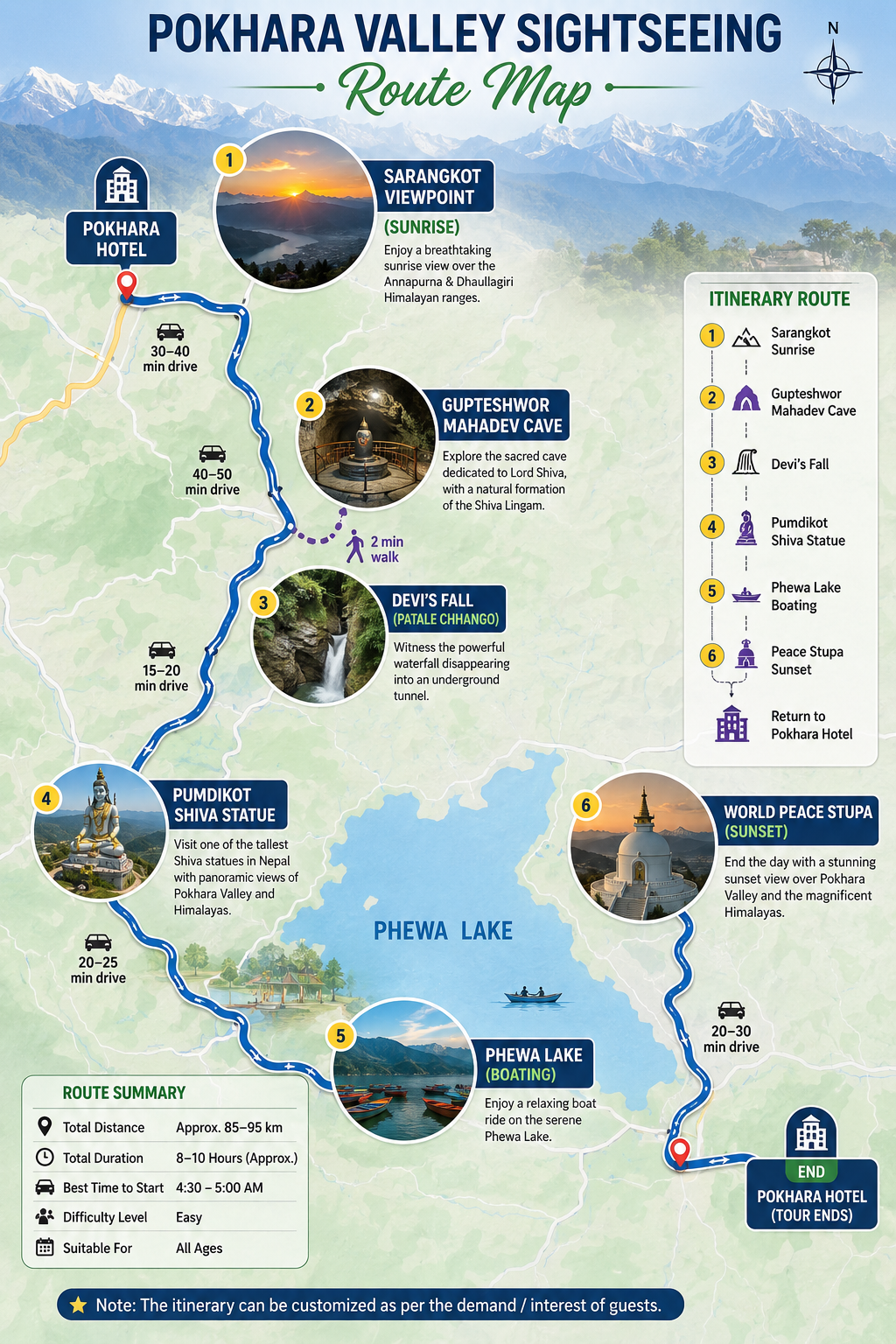
Route Map
Gear List / Packing Guide
| Category | Essential Items |
|---|---|
| Travel Documents | Passport or valid ID, Nepal visa (if required), travel insurance copy, hotel contact details, emergency contact information |
| Clothing | Comfortable breathable clothing, light jacket or sweater (early morning at Sarangkot), modest attire for temple visits, extra T-shirt (optional) |
| Footwear | Comfortable walking shoes or sneakers, sandals (optional) |
| Sun Protection | Sunglasses, sun hat or cap, sunscreen (SPF 30+), lip balm with SPF |
| Rain Protection | Compact umbrella or lightweight rain jacket (especially during monsoon) |
| Hydration & Snacks | Reusable water bottle, energy bars, light snacks, electrolyte packets |
| Personal Items | Mobile phone, power bank, camera, charger, wallet, cash (NPR), credit/debit card |
| Health & Safety | Personal medications, small first aid kit, hand sanitizer, wet wipes, insect repellent |
| Boating Essentials | Waterproof phone pouch, waterproof dry bag, quick-dry towel (optional), waterproof camera (optional) |
| Photography Gear | DSLR or mirrorless camera (optional), extra memory card, spare battery, binoculars (optional) |
| Temple Visit Essentials | Comfortable clothing covering shoulders and knees, scarf or shawl (optional), easy-to-remove footwear |
| Optional Items | Travel guidebook, notebook, reusable shopping bag, light gloves (winter), neck pillow for vehicle travel |
FAQ
The best things to do in Pokhara Valley include watching the sunrise from Sarangkot, exploring Gupteshwor Mahadev Cave, visiting Devi's Fall and the Pumdikot Shiva Statue, enjoying a boat ride on Phewa Lake, visiting Tal Barahi Temple, and witnessing the sunset from the World Peace Stupa.
Pokhara Valley is famous for its breathtaking Himalayan views, tranquil lakes, sacred temples, natural caves, waterfalls, adventure activities, and peaceful atmosphere, making it one of Nepal's most visited tourist destinations.
The must-visit attractions include Sarangkot, Phewa Lake, Tal Barahi Temple, Gupteshwor Mahadev Cave, Devi's Fall, Pumdikot Shiva Statue, and the World Peace Stupa.
Yes. A well-planned one-day tour allows visitors to experience Pokhara Valley's major attractions, including sunrise, cultural landmarks, boating, and sunset viewpoints.
Two to three days are ideal for exploring Pokhara Valley at a relaxed pace, although the major attractions can be covered comfortably in one full day.
Spring (March to May) and autumn (September to November) are the best seasons, offering pleasant weather, clear skies, and spectacular Himalayan views.
Yes. Pokhara Valley is an excellent family destination with easy sightseeing, boating, scenic viewpoints, parks, and cultural attractions suitable for visitors of all ages.
Yes. Most attractions are easily accessible by vehicle and require only short walks, making the tour comfortable for senior travelers.
Absolutely. The peaceful lakeside setting, mountain scenery, sunrise and sunset viewpoints, and romantic boating experience make Pokhara Valley a favorite honeymoon destination.
Yes. Pokhara Valley sightseeing itineraries can be customized based on guests' interests, available time, travel pace, and preferred attractions.
The tour highlights include Sarangkot Sunrise, Gupteshwor Mahadev Cave, Devi's Fall, Pumdikot Shiva Statue, Phewa Lake boating, Tal Barahi Temple, and the World Peace Stupa.
Yes. Most sightseeing packages include a relaxing boat ride on Phewa Lake, one of the most popular experiences in Pokhara.
A typical boating experience lasts between 45 minutes and 1.5 hours, depending on the chosen route and whether Tal Barahi Temple is included.
Yes. Most boating trips include a stop at Tal Barahi Temple, located on a small island in the center of Phewa Lake.
Sarangkot is renowned for its breathtaking sunrise views over the Annapurna and Dhaulagiri mountain ranges and panoramic views of Pokhara Valley.
The ideal time is early morning, generally between 5:00 AM and 6:30 AM, depending on the season.
Visitors can explore a sacred Shiva shrine, impressive limestone formations, and an underground viewpoint where the waters of Devi's Fall flow beneath the cave.
Devi's Fall is unique because the waterfall disappears into an underground tunnel, creating a spectacular natural phenomenon.
The Pumdikot Shiva Statue is one of Nepal's tallest Shiva statues and offers panoramic views of Pokhara Valley, Phewa Lake, and the Annapurna Himalayas.
The World Peace Stupa is famous for its peaceful surroundings, panoramic Himalayan views, and stunning sunset overlooking Phewa Lake and Pokhara Valley.
Late afternoon, between 4:30 PM and 6:30 PM, is the best time to enjoy spectacular sunset views.
Sarangkot, the World Peace Stupa, and Pumdikot provide some of the finest panoramic views of the Annapurna, Machhapuchhre, and Dhaulagiri mountain ranges.
Yes. Pokhara Valley offers an excellent introduction to Nepal's natural beauty, culture, spirituality, and adventure, making it perfect for first-time visitors.
Sarangkot, Phewa Lake, Tal Barahi Temple, the World Peace Stupa, Pumdikot Shiva Statue, and Devi's Fall are among the most photogenic locations.
Visitors should carry comfortable walking shoes, sunscreen, sunglasses, a hat, a light jacket, drinking water, a camera, and personal essentials.
The tour involves light to moderate walking, with most destinations accessible by private vehicle and only short walks required at each attraction.
Private cars, SUVs, vans, Hiace vehicles, and tourist buses are commonly used, depending on group size and travel preferences.
Autumn (September to November) and spring (March to May) usually provide the clearest skies and the best Himalayan visibility.
The tour cost depends on group size, vehicle type, guide services, and inclusions such as boating and entrance fees. Customized packages are available for different budgets.
A local travel expert provides reliable transportation, experienced guides, customized itineraries, local insights, and hassle-free arrangements, ensuring a comfortable and memorable Pokhara Valley experience.
More Details
 Pokhara Valley Sightseeing Accommodation Types
Pokhara Valley offers a wide range of accommodation options suitable for every type of traveler, from budget backpackers to luxury holidaymakers. Whether you are planning a one-day sightseeing tour or an extended stay, visitors can choose from comfortable guesthouses, boutique hotels, lakeside resorts, and luxury five-star properties. Most travelers prefer staying around the vibrant Lakeside area, which provides easy access to Phewa Lake, restaurants, shopping centers, and major sightseeing attractions. Luxury resorts on the surrounding hills also offer spectacular Himalayan views, peaceful surroundings, and premium hospitality.
Accommodation Overview
| Location | Accommodation Type |
|---|---|
| Lakeside, Pokhara | 3★–5★ Hotels, Boutique Hotels & Guesthouses |
| Phewa Lake Area | Lakeside Resorts & Boutique Hotels |
| Sarangkot | Mountain View Resorts & Luxury Hotels |
| Peace Stupa & Pumdikot Area | Eco Resorts, Boutique Hotels & Homestays |
Room Facilities
Most hotels and resorts in Pokhara provide modern facilities to ensure a comfortable and relaxing stay.
Twin, double, triple, and family rooms
Comfortable beds with quality mattresses
Private attached bathrooms with hot and cold showers
Air conditioning or heating (depending on the season)
Free Wi-Fi access
Flat-screen television
Tea and coffee making facilities
Wardrobe and luggage storage
Balcony rooms with lake or mountain views (selected properties)
Daily housekeeping service
Dining Facilities
Pokhara is well known for its diverse culinary scene, offering authentic Nepali cuisine alongside Indian, Chinese, Continental, and international dishes.
Dining facilities include:
Buffet and à la carte breakfast
Traditional Nepali cuisine
Indian, Chinese, and Continental meals
Fresh coffee and bakery items
Lakeside restaurants with mountain views
Vegetarian and vegan meal options
Local trout fish specialties
Bars and cafés serving fresh beverages
Additional Facilities
| Facility | Availability |
|---|---|
| Free Wi-Fi | Available in most hotels |
| Hot Shower | Available in all standard hotels |
| Air Conditioning | Available in selected hotels |
| Swimming Pool | Available in many 4★ and 5★ hotels |
| Spa & Wellness Center | Available in luxury hotels |
| Gym/Fitness Center | Available in selected hotels |
| Airport Transfers | Available upon request |
| Laundry Service | Available in most hotels |
| Room Service | Available in selected hotels |
| Parking Facility | Available in most properties |
Additional Charges
Some facilities and services may require additional payment depending on the hotel category.
| Service | Approximate Cost |
|---|---|
| Spa & Massage | USD 20–60 |
| Laundry Service | USD 3–10 |
| Airport Transfer | USD 10–20 |
| Boating Arrangement | Depends on package |
| Adventure Activities | Charged separately |
What to Expect
Accommodation in Pokhara ranges from budget-friendly guesthouses to luxurious lakeside resorts, ensuring comfortable stays for every traveler. Most hotels are located close to major attractions, making sightseeing convenient and hassle-free. Visitors can enjoy warm Nepalese hospitality, beautiful mountain views, excellent dining options, and modern amenities throughout their stay.
You can expect:
Comfortable and clean accommodation
Warm Nepalese hospitality
Beautiful lake or mountain views
Easy access to sightseeing attractions
Excellent restaurants and cafés nearby
Peaceful and relaxing environment
Modern facilities and quality service
Accommodation Tips
To enjoy a more comfortable stay during your Pokhara Valley sightseeing tour:
Book accommodation early during spring and autumn.
Choose Lakeside hotels for convenient access to attractions.
Request mountain-view rooms for the best experience.
Carry a light jacket for cool mornings and evenings.
Confirm hotel facilities before booking.
Keep valuables in the room safe whenever available.
Select hotels offering airport transfers if arriving by flight.
Choose accommodation based on sightseeing preferences and budget.
Why You'll Love Staying in Pokhara Valley?
Accommodation in Pokhara is much more than simply a place to spend the night. Whether staying beside the tranquil waters of Phewa Lake, enjoying panoramic Himalayan views from Sarangkot, or relaxing in a peaceful hillside resort, every stay enhances the overall travel experience. Comfortable rooms, excellent hospitality, delicious cuisine, and easy access to Pokhara's famous attractions make accommodation an unforgettable part of any Pokhara Valley sightseeing holiday.
 What to Expect from Pokhara Valley Sightseeing
Pokhara Valley Sightseeing offers one of Nepal's most rewarding travel experiences, combining breathtaking Himalayan scenery, peaceful lakes, sacred temples, caves, waterfalls, and panoramic viewpoints in a single day. From the golden sunrise at Sarangkot to a relaxing boat ride on Phewa Lake and a spectacular sunset from the World Peace Stupa, every destination showcases a unique side of Pokhara's natural beauty and cultural heritage.
The sightseeing tour is designed for travelers of all ages and fitness levels, requiring only short walks between attractions. Comfortable transportation, well-maintained roads, and flexible itineraries make the experience suitable for families, couples, senior citizens, photographers, and first-time visitors to Nepal.
Himalayan Mountain Views
Throughout the sightseeing tour, visitors enjoy magnificent views of some of Nepal's highest mountains.
| Mountain | Elevation |
|---|---|
| Annapurna I | 8,091 m |
| Dhaulagiri I | 8,167 m |
| Machhapuchhre (Fishtail) | 6,993 m |
| Annapurna South | 7,219 m |
| Hiunchuli | 6,441 m |
| Lamjung Himal | 6,983 m |
| Nilgiri | 7,061 m |
Diverse Landscapes
Pokhara Valley offers an incredible variety of landscapes within a short travel distance.
You'll experience:
Lush green hills
Snow-capped Himalayan peaks
Peaceful freshwater lakes
Underground limestone caves
Natural waterfalls
Forest-covered hillsides
Beautiful viewpoints
Traditional villages
Religious and Cultural Attractions
Pokhara is home to several important religious and cultural landmarks that reflect Nepal's diverse heritage.
Popular attractions include:
Tal Barahi Temple
Gupteshwor Mahadev Cave
Pumdikot Shiva Statue
World Peace Stupa
Traditional Hindu and Buddhist shrines
Local cultural sites
These attractions offer:
Religious significance
Peaceful surroundings
Traditional architecture
Cultural experiences
Excellent photography opportunities
Natural Attractions
Pokhara is famous for its spectacular natural beauty and outdoor attractions.
Visitors can explore:
Phewa Lake
Devi's Fall
Gupteshwor Cave
Sarangkot Viewpoint
Beautiful forests
Scenic mountain landscapes
Photography Opportunities
Pokhara Valley offers countless locations for unforgettable photographs.
Popular photography spots include:
Sarangkot Sunrise Viewpoint
Phewa Lake
Tal Barahi Temple
Devi's Fall
Gupteshwor Mahadev Cave
Pumdikot Shiva Statue
World Peace Stupa
Lakeside Pokhara
Spiritual and Peaceful Experiences
Pokhara combines spirituality with natural beauty, offering visitors peaceful places for reflection and relaxation.
Visitors can experience:
Ancient Hindu temples
Buddhist monuments
Meditation-friendly surroundings
Peaceful lakeside environment
Mountain viewpoints
Traditional religious ceremonies
Phewa Lake Boating Experience
A boat ride on Phewa Lake is one of the highlights of the sightseeing tour.
During the boating experience, visitors can enjoy:
Traditional wooden boat ride
Visit to Tal Barahi Temple
Beautiful reflections of Machhapuchhre
Peaceful lakeside scenery
Excellent photography opportunities
Relaxing atmosphere
World Peace Stupa Sunset
The sightseeing tour concludes with a breathtaking sunset from the World Peace Stupa.
From here visitors can enjoy:
Panoramic views of Pokhara Valley
Sunset over Phewa Lake
Views of the Annapurna Himalayan Range
Peaceful Buddhist surroundings
Excellent photography opportunities
A Typical Day on the Tour
| Time | Activity |
|---|---|
| Early Morning | Hotel pickup and drive to Sarangkot |
| Sunrise | Enjoy sunrise over the Annapurna Himalayas |
| Morning | Breakfast followed by Gupteshwor Mahadev Cave and Devi's Fall |
| Late Morning | Visit Pumdikot Shiva Statue |
| Midday | Lunch at a local restaurant |
| Afternoon | Boating on Phewa Lake and visit Tal Barahi Temple |
| Evening | Visit World Peace Stupa for sunset |
| Night | Return to hotel |
What Makes Pokhara Valley Sightseeing Special?
Pokhara Valley Sightseeing is much more than a regular city tour. It combines spectacular Himalayan mountain views, peaceful lakes, sacred temples, unique caves, beautiful waterfalls, and unforgettable sunrise and sunset experiences in a single journey. From witnessing the first rays of sunlight over the Annapurna Range at Sarangkot to relaxing on Phewa Lake and ending the day at the World Peace Stupa, every moment creates lasting memories. Whether traveling for leisure, photography, spirituality, or family holidays, Pokhara Valley Sightseeing with Phewa Lake Boating offers one of Nepal's finest sightseeing experiences.
 Best Time / Season to Visit Pokhara Valley Sightseeing
Pokhara Valley is a year-round travel destination, with each season offering a unique sightseeing experience. Spring and autumn are considered the best times to visit due to their pleasant weather, crystal-clear mountain views, and comfortable temperatures. Winter provides peaceful surroundings and excellent visibility of the Himalayas, while the monsoon season transforms the valley into a lush green paradise with vibrant landscapes and flowing waterfalls.
Best Seasons at a Glance
| Season | Months | Weather | Sightseeing Experience |
|---|---|---|---|
| 🌸 Spring | March – May | Mild & Clear | Best for Himalayan views, blooming flowers, and outdoor sightseeing |
| ☀️ Summer / Monsoon | June – August | Warm & Rainy | Lush green landscapes, fewer tourists, and spectacular waterfalls |
| 🍂 Autumn | September – November | Cool & Stable | Crystal-clear skies, ideal weather, and the best mountain visibility |
| ❄️ Winter | December – February | Cool & Dry | Peaceful atmosphere, fewer crowds, and excellent sunrise views |
🌸 Spring (March – May)
Spring is one of the most popular seasons for exploring Pokhara Valley.
Highlights include:
- Pleasant daytime temperatures
- Blooming rhododendron forests
- Crystal-clear Himalayan views
- Ideal weather for sightseeing
- Excellent conditions for boating on Phewa Lake
- Beautiful sunrise and sunset photography
- Comfortable outdoor activities
🍂 Autumn (September – November)
Autumn is widely regarded as the best season for Pokhara Valley sightseeing.
Why choose autumn?
- Stable weather conditions
- Spectacular Himalayan visibility
- Pleasant daytime temperatures
- Dry roads and walking paths
- Perfect boating conditions
- Colorful festival atmosphere
- Best season for photography
❄️ Winter (December – February)
Winter offers peaceful sightseeing with crisp mountain views.
Expect:
- Cool but comfortable weather
- Fewer tourists at attractions
- Crystal-clear morning skies
- Beautiful Himalayan panoramas
- Peaceful boating experience
- Comfortable daytime sightseeing
- Stunning winter sunrises
☀️ Summer / Monsoon (June – August)
Although it is the rainy season, Pokhara becomes incredibly green and refreshing.
During this season:
- Lush green hills and forests
- Spectacular waterfalls
- Refreshing atmosphere
- Fewer crowds at major attractions
- Lower hotel rates
- Occasional rain showers
- Clouds may partially block mountain views
Average Temperature
| Location | Daytime | Nighttime |
|---|---|---|
| Pokhara City | 20°C to 30°C | 15°C to 22°C |
| Sarangkot | 15°C to 25°C | 10°C to 18°C |
| Pumdikot | 18°C to 28°C | 12°C to 20°C |
| World Peace Stupa | 18°C to 28°C | 12°C to 20°C |
Weather Tips
- Dress in light, comfortable clothing during summer.
- Carry a light jacket for early mornings and evenings.
- Bring an umbrella or rain jacket during the monsoon season.
- Wear comfortable walking shoes for sightseeing.
- Use sunscreen, sunglasses, and a hat to protect against UV rays.
- Carry a reusable water bottle to stay hydrated.
- Start sightseeing early for the clearest mountain views.
Why Spring & Autumn Are Recommended
Spring and autumn provide the perfect combination of pleasant temperatures, stable weather, clear Himalayan views, and ideal sightseeing conditions. These seasons allow visitors to enjoy every major attraction, including Sarangkot Sunrise, Gupteshwor Mahadev Cave, Devi's Fall, Pumdikot Shiva Statue, Phewa Lake boating, and the World Peace Stupa under the best possible conditions. Whether traveling for photography, family holidays, cultural exploration, or relaxation, spring and autumn deliver the finest Pokhara Valley sightseeing experience.
 Nearby Places to Explore from Pokhara Valley Sightseeing
Pokhara Valley offers much more than its famous sightseeing attractions. If you have additional time before or after your sightseeing tour, you can explore several nearby destinations that showcase Nepal's natural beauty, cultural heritage, adventure activities, and Himalayan landscapes. From tranquil lakes and mountain villages to caves, viewpoints, and adventure hubs, these nearby attractions add even more memorable experiences to your Pokhara journey.
Popular Places to Explore
| Destination | Highlights |
|---|---|
| Begnas Lake | Peaceful lake, boating, fishing, and nature |
| Rupa Lake | Birdwatching, quiet surroundings, and local villages |
| Bindhyabasini Temple | Historic Hindu temple with mountain views |
| International Mountain Museum | Mountaineering history and Himalayan culture |
| Mahendra Cave | Natural limestone cave with impressive rock formations |
| Bat Cave | Home to thousands of bats and adventurous cave exploration |
| Davis Fall Area | Local shopping and cultural attractions |
| Dhampus Village | Traditional Gurung village with Himalayan scenery |
| Australian Camp | Short hiking destination with panoramic mountain views |
| Kahun Danda | Peaceful viewpoint overlooking Pokhara Valley |
Begnas Lake
Located about 15 kilometers from Pokhara, Begnas Lake is one of the valley's most peaceful destinations. Surrounded by green hills and traditional villages, it is an ideal place for relaxation, boating, fishing, and enjoying nature away from the busy Lakeside area.
Highlights include:
- Peaceful boating experience
- Beautiful mountain reflections
- Lakeside restaurants
- Fishing opportunities
- Scenic countryside views
Rupa Lake
Rupa Lake is the third-largest lake in Pokhara Valley and remains one of the region's hidden gems. The quiet surroundings make it a perfect destination for birdwatching, photography, and nature lovers.
Things to enjoy:
- Peaceful natural environment
- Birdwatching
- Local fishing villages
- Scenic walking trails
- Beautiful lake photography
Bindhyabasini Temple
One of Pokhara's oldest temples, Bindhyabasini Temple is dedicated to Goddess Bhagwati. Located on a small hill, it offers panoramic views of Pokhara City and the Annapurna Himalayas while serving as an important religious site for Hindu devotees.
Visitors can experience:
- Sacred Hindu temple
- Traditional architecture
- Mountain views
- Religious ceremonies
- Peaceful atmosphere
International Mountain Museum
The International Mountain Museum showcases Nepal's mountaineering history, Himalayan geology, local cultures, and famous climbing expeditions. It is an excellent destination for anyone interested in learning about the world's highest mountains.
Highlights include:
- Himalayan exhibits
- Mountaineering history
- Cultural displays
- Interactive galleries
- Educational experiences
Mahendra Cave
Mahendra Cave is a naturally formed limestone cave featuring impressive stalactites and stalagmites. The cave is one of Pokhara's popular natural attractions and offers a fascinating underground experience.
Visitors can enjoy:
- Limestone formations
- Underground passages
- Natural cave exploration
- Cool cave environment
- Photography opportunities
Bat Cave
Bat Cave, locally known as Chamere Gufa, is famous for its large population of bats. Visitors can observe thousands of bats hanging from the cave ceiling while exploring its narrow passages and adventurous exit.
Highlights include:
- Thousands of bats
- Natural limestone cave
- Adventure experience
- Unique photography
- Guided exploration
Dhampus Village
Dhampus is a beautiful traditional Gurung village located on the outskirts of Pokhara. It is well known for its traditional culture, terraced fields, and spectacular views of the Annapurna and Machhapuchhre mountain ranges.
Visitors can experience:
- Traditional Gurung culture
- Himalayan mountain views
- Local homestays
- Scenic hiking trails
- Peaceful rural lifestyle
Australian Camp
Australian Camp is a popular short hiking destination located above Pokhara. It offers breathtaking panoramic views of the Annapurna Himalayas and is perfect for travelers looking for a short nature escape.
Visitors can enjoy:
- Easy hiking trails
- Sunrise and sunset views
- Annapurna panorama
- Photography opportunities
- Fresh mountain air
Adventure & Recreational Experiences
Besides sightseeing, visitors can also enjoy:
- Boating on Phewa Lake
- Paragliding from Sarangkot
- Ziplining
- Ultralight flights
- Mountain biking
- Cycling around the valley
- Lakeside cafés and restaurants
- Shopping for handicrafts and souvenirs
Why Extend Your Trip?
Spending a few extra days in Pokhara allows travelers to discover peaceful lakes, traditional villages, fascinating caves, adventure activities, and spectacular Himalayan viewpoints beyond the main sightseeing circuit. Whether enjoying a quiet afternoon at Begnas Lake, hiking to Australian Camp, exploring Mahendra Cave, or experiencing the rich local culture in Dhampus Village, these nearby destinations make every Pokhara holiday even more rewarding. Extending your stay provides the perfect opportunity to experience the diverse natural beauty, adventure, and cultural heritage that make Pokhara one of Nepal's most remarkable travel destinations.
 Foods Available During Pokhara Valley Sightseeing
Pokhara Valley offers a diverse culinary experience that reflects Nepal's rich food culture while also catering to international travelers. During the sightseeing tour, visitors can enjoy everything from authentic Nepali dishes to Indian, Chinese, Tibetan, Continental, and Western cuisine. The Lakeside area is home to numerous cafés, restaurants, bakeries, and fine dining establishments, making it one of Nepal's best food destinations. Whether enjoying a traditional Nepali lunch, freshly brewed coffee by Phewa Lake, or local trout fish, Pokhara has something to satisfy every taste.
Breakfast Options
Start your sightseeing day with a delicious breakfast before heading to Sarangkot or other attractions.
Common breakfast choices include:
Pancakes
Toast with Butter and Jam
French Toast
Omelets
Boiled or Fried Eggs
Hash Browns
Porridge
Muesli with Milk or Yogurt
Fresh Seasonal Fruits
Tea or Coffee
Lunch & Dinner Options
Pokhara offers a wide selection of freshly prepared meals served at restaurants throughout the valley.
Popular dishes include:
Nepali Dal Bhat (Rice, Lentil Soup & Vegetables)
Thakali Set Meal
Chicken Curry with Rice
Fried Rice
Vegetable Curry
Chowmein
Fried Noodles
Momos (Steamed or Fried Dumplings)
Pasta
Pizza
Burgers
Sandwiches
Thukpa (Tibetan Noodle Soup)
Grilled Trout Fish
Drinks Available
Visitors can enjoy a variety of hot and cold beverages throughout the day.
Available drinks include:
Black Tea
Milk Tea
Masala Tea
Ginger Tea
Lemon Honey Tea
Fresh Coffee
Hot Chocolate
Fresh Fruit Juice
Soft Drinks
Mineral Water
Fresh Lemon Soda
Smoothies
Local Foods to Try
A visit to Pokhara is incomplete without tasting authentic local cuisine.
Recommended local dishes include:
Dal Bhat
Thakali Khana Set
Momos
Thukpa
Sel Roti
Gundruk
Dhido
Yak Cheese (available in selected cafés)
Fresh Trout Fish
Newari Snacks
Food Safety Tips
Following simple food safety practices will help ensure a pleasant dining experience.
Eat freshly cooked meals.
Drink bottled, boiled, or filtered water.
Choose clean and reputable restaurants.
Wash or sanitize hands before eating.
Avoid consuming uncovered street food.
Inform the restaurant about any food allergies.
Stay hydrated throughout the sightseeing tour.
Vegetarian & Vegan Options
Most restaurants in Pokhara offer excellent vegetarian and vegan choices.
Common options include:
Vegetable Dal Bhat
Vegetable Fried Rice
Vegetable Chowmein
Mushroom Curry
Mixed Vegetable Curry
Vegetable Momos
Fresh Salads
Soups
Porridge
Fresh Fruit Platters
Dining Experience
Dining in Pokhara is much more than enjoying delicious food. Many restaurants and cafés offer stunning views of Phewa Lake, the Annapurna Himalayas, and the vibrant Lakeside promenade. Visitors can relax with freshly brewed coffee, enjoy authentic Nepali hospitality, and sample a variety of local and international cuisines while taking in the beautiful surroundings. Evening dining beside the lake creates a peaceful and memorable atmosphere after a full day of sightseeing.
Why Food Makes Pokhara Valley Sightseeing Special
Food is an important part of every Pokhara Valley sightseeing experience. From traditional Nepali meals and famous Thakali cuisine to freshly prepared trout fish and international favorites, the valley offers something for every traveler. Combined with lakeside dining, mountain views, welcoming hospitality, and diverse culinary choices, every meal becomes an enjoyable part of exploring Pokhara. Whether starting the day with a hearty breakfast or ending it with dinner overlooking Phewa Lake, Pokhara's vibrant food scene adds lasting memories to every visit.
 Culture and Etiquette of Pokhara Valley Sightseeing
Pokhara Valley is not only famous for its breathtaking natural beauty but also for its rich cultural heritage and warm hospitality. Home to diverse ethnic communities including the Gurung, Magar, Newar, Brahmin, Chhetri, and Thakali people, Pokhara offers visitors an opportunity to experience traditional Nepalese culture alongside modern tourism. Throughout the sightseeing tour, visitors encounter sacred temples, Buddhist monuments, local markets, and friendly communities that reflect the harmonious blend of Hinduism and Buddhism. Respecting local customs and traditions helps create meaningful travel experiences while preserving the cultural identity of Pokhara Valley.
Local Communities
Pokhara Valley is home to several ethnic communities, each contributing to the region's unique culture and traditions.
You'll experience:
Traditional Gurung culture
Magar and Newar communities
Warm Nepalese hospitality
Traditional farming lifestyle
Local handicrafts and artisan culture
Family-run hotels and restaurants
Cultural Highlights
During the sightseeing tour, visitors can explore several important cultural and religious landmarks.
These include:
Tal Barahi Temple
Gupteshwor Mahadev Cave
Pumdikot Shiva Statue
World Peace Stupa
Bindhyabasini Temple
Traditional Hindu and Buddhist shrines
Local cultural festivals
Famous Religious Sites
Several sacred sites make Pokhara one of Nepal's important spiritual destinations.
| Religious Site | Highlights |
|---|---|
| Tal Barahi Temple | Sacred temple located on an island in Phewa Lake |
| Gupteshwor Mahadev Cave | Ancient Shiva shrine inside a limestone cave |
| Bindhyabasini Temple | Historic Hindu temple dedicated to Goddess Bhagwati |
| World Peace Stupa | Buddhist monument promoting world peace |
| Pumdikot Shiva Statue | One of Nepal's tallest statues of Lord Shiva |
Local Etiquette
Respecting local customs enhances the sightseeing experience and helps preserve cultural traditions.
Follow these simple guidelines:
Greet local people with "Namaste."
Dress modestly when visiting temples and religious sites.
Remove shoes before entering temples where required.
Ask permission before photographing local people.
Maintain silence inside temples and monasteries.
Respect religious ceremonies and worshippers.
Avoid touching sacred statues or religious objects.
Dispose of waste responsibly.
Responsible Tourism
Help preserve Pokhara's natural beauty and cultural heritage by practicing responsible travel.
You can contribute by:
Using reusable water bottles.
Avoiding single-use plastics.
Supporting local businesses and artisans.
Respecting wildlife and natural surroundings.
Keeping tourist attractions clean.
Following designated walking paths.
Purchasing locally made handicrafts and souvenirs.
Local Festivals
Visitors traveling during festival seasons may witness vibrant cultural celebrations.
Popular festivals include:
Dashain
Tihar
Holi
Buddha Jayanti
Teej
Maghe Sankranti
Losar
These festivals feature traditional music, cultural dances, religious ceremonies, colorful decorations, and community celebrations.
Traditional Lifestyle
Life in Pokhara beautifully combines traditional Nepalese culture with modern tourism.
You'll notice:
Traditional village settlements
Terraced farmland
Local handicraft shops
Family-owned restaurants
Traditional Nepali architecture
Peaceful lakeside lifestyle
Daily religious rituals at temples
Cultural Tips for Visitors
To make the most of your cultural experience:
Learn a few basic Nepali greetings.
Respect local traditions and religious beliefs.
Support locally owned hotels and restaurants.
Dress appropriately while visiting sacred places.
Carry cash when shopping at local markets.
Be courteous when interacting with local communities.
Leave cultural and religious sites exactly as you found them.
Why Culture Makes Pokhara Valley Sightseeing Special
Pokhara Valley Sightseeing is much more than exploring beautiful landscapes. It provides an opportunity to experience Nepal's rich cultural diversity, spiritual traditions, and genuine hospitality. Visiting sacred temples, peaceful Buddhist monuments, traditional communities, and lively local markets allows travelers to connect with the authentic character of Pokhara. Combined with breathtaking Himalayan scenery and warm local hospitality, these cultural experiences make every Pokhara Valley sightseeing tour truly memorable.
 Safety and Security During Pokhara Valley Sightseeing
Pokhara Valley is one of the safest tourist destinations in Nepal and welcomes thousands of domestic and international visitors every year. The major sightseeing attractions are well-developed, easily accessible by road, and regularly visited by travelers. Whether exploring Sarangkot, Gupteshwor Mahadev Cave, Devi's Fall, Pumdikot Shiva Statue, Phewa Lake, or the World Peace Stupa, visitors can enjoy a safe and comfortable experience by following basic travel precautions and local guidelines.
General Safety Tips
Following these simple precautions will help ensure a safe sightseeing experience.
Travel with a licensed guide or reputable travel company.
Keep valuables secure at all times.
Wear comfortable walking shoes with good grip.
Carry sufficient drinking water.
Start sightseeing early to avoid crowds and afternoon traffic.
Follow local safety instructions at each attraction.
Keep emergency contact information with you.
Boating Safety
Boating on Phewa Lake is one of the highlights of the tour and is considered safe when proper precautions are followed.
Follow these boating safety guidelines:
Wear the provided life jacket throughout the boat ride.
Follow the boat operator's instructions.
Remain seated while the boat is moving.
Avoid standing or leaning over the edge.
Keep cameras and mobile phones secured.
Do not overload the boat with luggage.
Avoid boating during severe weather conditions.
Walking Safety
Most sightseeing attractions involve short walks on paved paths, steps, or uneven surfaces.
Be careful when:
Walking around Sarangkot viewpoints.
Exploring Gupteshwor Mahadev Cave.
Using stairways inside the cave.
Walking near Devi's Fall viewpoints.
Climbing steps at the World Peace Stupa.
Walking around Pumdikot Temple Complex.
Exploring Lakeside pathways.
Weather Safety
Weather conditions in Pokhara can change quickly, especially during the monsoon season.
Carry:
Light rain jacket
Umbrella
Comfortable walking shoes
Sunglasses
Sun hat or cap
Sunscreen
Light jacket for early morning and evening
Reusable water bottle
Health & Hygiene
Maintaining good personal hygiene will help make your trip more enjoyable.
Drink bottled, boiled, or filtered water.
Eat freshly prepared meals.
Wash or sanitize hands before eating.
Carry personal medications.
Use sunscreen during sunny days.
Stay hydrated throughout the tour.
Take short breaks when needed.
Emergency Services
In case of an emergency:
Inform your guide or driver immediately.
Pokhara has several hospitals and medical clinics.
Police assistance is available throughout the city.
Emergency ambulance services operate within the valley.
Hotels can assist with emergency transportation if required.
Travel insurance is recommended for all international visitors.
Essential Safety Items
Carry these essential items for a comfortable sightseeing experience:
First-aid kit
Mobile phone
Power bank
Personal medications
Reusable water bottle
Sunglasses
Hat or cap
Light rain jacket
Camera
Identification documents
Safety Tips for Visitors
To enjoy a safe and memorable sightseeing experience:
Follow your guide's instructions.
Stay together with your group at crowded attractions.
Keep personal belongings secure.
Respect warning signs and restricted areas.
Wear comfortable clothing suitable for the weather.
Avoid littering and help keep attractions clean.
Be cautious when taking photographs near viewpoints.
Respect local customs and religious sites.
Why Safety Matters
Safety is an important part of every enjoyable journey. Pokhara Valley's well-developed tourism infrastructure, friendly local communities, reliable transportation, and easily accessible attractions make it one of Nepal's safest destinations for sightseeing. By following basic safety guidelines, respecting local regulations, and traveling responsibly, visitors can fully enjoy the spectacular Himalayan views, peaceful lakes, sacred temples, and unforgettable experiences that make Pokhara Valley one of Nepal's most popular travel destinations.
 Transportation Facilities for Pokhara Valley Sightseeing
Pokhara Valley has a well-developed transportation network, making it easy for visitors to explore its major attractions comfortably. Most sightseeing tours are conducted using private tourist vehicles, allowing travelers to visit Sarangkot, Gupteshwor Mahadev Cave, Devi's Fall, Pumdikot Shiva Statue, Phewa Lake, and the World Peace Stupa in a single day. Depending on group size and travel preferences, visitors can choose from private cars, SUVs, tourist vans, Hiace vehicles, minibuses, or coaches. Well-maintained roads and short driving distances ensure a smooth and enjoyable sightseeing experience.
Transportation Overview
| Route | Transportation | Approximate Duration |
|---|---|---|
| Pokhara Airport → Hotel | Private Car / Taxi | 10–20 Minutes |
| Hotel → Sarangkot | Private Vehicle | 30–40 Minutes |
| Sarangkot → Gupteshwor Mahadev Cave | Private Vehicle | 40–50 Minutes |
| Gupteshwor Cave → Devi's Fall | Walking | 2 Minutes |
| Devi's Fall → Pumdikot Shiva Statue | Private Vehicle | 15–20 Minutes |
| Pumdikot → Phewa Lake | Private Vehicle | 20–25 Minutes |
| Phewa Lake → World Peace Stupa | Boat + Vehicle / Private Vehicle | 20–30 Minutes |
| World Peace Stupa → Hotel | Private Vehicle | 20–30 Minutes |
Transportation Options
Depending on your itinerary and group size, several transportation options are available.
Transportation options include:
Private Car
SUV / Jeep
Tourist Van
Hiace
Minibus
Tourist Coach
Taxi Service
Motorbike Rental (optional)
Airport Transfers
Pokhara International Airport is conveniently located close to the city, making airport transfers quick and comfortable.
Airport transfer services include:
Private airport pickup and drop-off
Meet and greet service
Comfortable air-conditioned vehicles
Professional local drivers
Hotel transfer assistance
Private Sightseeing Vehicle
Private vehicles are the most popular option for Pokhara Valley sightseeing because they provide flexibility, comfort, and convenience.
Vehicle features include:
Comfortable seating
Air-conditioned interiors
Experienced local drivers
Flexible sightseeing schedule
Suitable for families, couples, and groups
Convenient hotel pickup and drop-off
Boating Transportation
Phewa Lake boating forms an important part of the sightseeing experience.
Boating facilities include:
Traditional wooden boats
Private boating options
Life jackets for all passengers
Experienced local boat operators
Tal Barahi Temple access by boat
Scenic lake crossings
Road Conditions
The roads connecting Pokhara's major attractions are generally well maintained and suitable for all types of tourist vehicles.
Visitors can expect:
Smooth paved roads
Short driving distances
Scenic mountain and lakeside routes
Easy access to major attractions
Comfortable travel throughout the day
Luggage Transportation
For day sightseeing tours, visitors usually carry only small personal belongings.
Recommended luggage includes:
| Item | Recommendation |
|---|---|
| Day Backpack | Highly Recommended |
| Camera Bag | Recommended |
| Water Bottle | Recommended |
| Personal Valuables | Keep with You |
| Large Suitcases | Leave at Hotel |
Transportation Tips
To enjoy a smooth sightseeing experience:
Book transportation in advance during peak tourist seasons.
Choose a private vehicle for greater flexibility.
Carry personal essentials in a small daypack.
Start the tour early for the best sunrise views at Sarangkot.
Keep cameras and valuables secure during the journey.
Wear comfortable clothing suitable for sightseeing.
Allow extra travel time during public holidays and festivals.
Follow your driver's and guide's instructions throughout the tour.
Why Transportation is Part of the Experience
Transportation in Pokhara is more than simply traveling between attractions. Every journey offers beautiful views of the Annapurna Himalayas, peaceful lakes, green hills, and traditional villages. Scenic drives, comfortable private vehicles, and relaxing boating on Phewa Lake become memorable parts of the overall sightseeing experience. With short travel distances, reliable road networks, and professional transportation services, visitors can comfortably explore Pokhara Valley while enjoying the region's spectacular natural beauty and cultural landmarks.
 Pokhara Valley Sightseeing Difficulty and Physical Fitness Required
Pokhara Valley Sightseeing is considered an easy and comfortable tour suitable for travelers of all ages. Unlike trekking adventures, the tour involves short walks, gentle stair climbing at selected attractions, and comfortable travel by private vehicle. Visitors can explore Sarangkot, Gupteshwor Mahadev Cave, Devi's Fall, Pumdikot Shiva Statue, Phewa Lake, and the World Peace Stupa without requiring any special trekking skills or prior hiking experience. Whether traveling with family, children, senior citizens, or first-time visitors, this sightseeing tour offers a relaxing and enjoyable experience.
Tour Overview
| Category | Details |
|---|---|
| Difficulty Level | Easy |
| Maximum Elevation | Approx. 1,600 m (Sarangkot) |
| Tour Duration | Full Day (8–10 Hours) |
| Walking Duration | 1–3 Hours (Total) |
| Trail Type | Paved Roads, Stone Steps, Walking Paths & Temple Grounds |
Physical Fitness Required
The sightseeing tour is suitable for:
Families with children
Senior citizens
Couples and honeymooners
First-time visitors to Nepal
Solo travelers
Photography enthusiasts
Nature lovers
Travelers seeking a relaxed holiday
Physical Preparation
No special physical preparation is required before joining the sightseeing tour.
Recommended activities include:
Regular walking
Light stretching
Comfortable daily exercise
Maintaining good hydration
Getting adequate rest before the tour
Wearing comfortable walking shoes
Tour Challenges
Although the tour is easy, visitors may encounter:
Early morning departure for sunrise
Short stair climbing at Sarangkot
Steps inside Gupteshwor Mahadev Cave
Walking around temple complexes
Uneven stone pathways at some attractions
Warm weather during summer afternoons
Crowded attractions during peak tourist seasons
Altitude Considerations
The sightseeing tour remains at relatively low elevations, making altitude sickness extremely unlikely.
| Location | Elevation |
|---|---|
| Pokhara City | 822 m |
| Phewa Lake | 742 m |
| Gupteshwor Mahadev Cave | 820 m |
| Devi's Fall | 820 m |
| Pumdikot Shiva Statue | Approx. 1,500 m |
| Sarangkot | Approx. 1,600 m |
| World Peace Stupa | Approx. 1,100 m |
Visitors generally do not experience altitude-related health issues during the tour.
Tips for an Enjoyable Tour
To make your sightseeing experience more comfortable:
Wear comfortable walking shoes.
Carry a reusable water bottle.
Apply sunscreen before sightseeing.
Wear sunglasses and a hat.
Carry a light jacket for early morning and evening.
Take short breaks between attractions.
Follow your guide's instructions.
Keep personal belongings secure.
Who Is This Tour Suitable For?
Pokhara Valley Sightseeing is ideal for travelers looking for a relaxing and enjoyable day tour without physical challenges. The tour is suitable for families, children, couples, senior citizens, photographers, cultural travelers, and anyone wishing to experience Pokhara's natural beauty and cultural heritage at a comfortable pace. Since most attractions are easily accessible by vehicle and involve only short walks, the tour can be enjoyed by visitors with average fitness levels.
Why Physical Fitness Matters
Although Pokhara Valley Sightseeing does not require strenuous physical activity, maintaining a basic level of fitness helps visitors enjoy the tour more comfortably. Comfortable walking, climbing a few steps at selected attractions, and spending a full day exploring become much easier with good general health. With minimal physical effort, travelers can fully appreciate the breathtaking Himalayan views, peaceful lakes, sacred temples, scenic caves, and unforgettable experiences that make Pokhara Valley one of Nepal's most popular sightseeing destinations.
 Pokhara Valley Sightseeing Cost Breakdown
The cost of a Pokhara Valley Sightseeing tour varies depending on the group size, vehicle type, guide services, accommodation category, and activities included in the package. Most sightseeing packages include private transportation, hotel pickup and drop-off, and visits to the valley's major attractions. Additional expenses may include entrance fees, boating on Phewa Lake, meals, personal shopping, and optional guide services. Planning your budget in advance helps ensure a smooth and enjoyable sightseeing experience.
Estimated Cost Breakdown
| Expense | Estimated Cost (USD) |
|---|---|
| Pokhara Valley Sightseeing Package | $40–120 per person* |
| Private Vehicle | Usually Included |
| Hotel Pickup & Drop-off | Usually Included |
| Professional Driver | Usually Included |
| Tour Guide (Optional) | $25–50 |
| Phewa Lake Boating | $8–20 |
| Entrance Fees | $10–20 |
| Meals | $10–30 |
| Personal Expenses | $20–100 |
*The final price depends on group size, vehicle category, and package inclusions.
What's Usually Included?
Most Pokhara Valley Sightseeing packages include:
Hotel pickup and drop-off
Private tourist vehicle
Professional driver
Fuel charges
Parking fees
Sightseeing according to the itinerary
Government taxes and service charges
Personal Expenses
Visitors should budget extra for the following items:
Lunch and refreshments
Phewa Lake boating fee
Entrance fees (where applicable)
Personal shopping
Souvenirs
Snacks and beverages
Optional guide service
Tips for driver and guide
Payment Methods
Most travel companies and hotels accept various payment options.
Available payment methods include:
Credit Card
Debit Card
Bank Transfer
Online Payment Gateway
Cash (Nepalese Rupees or USD)
Digital Wallets (selected businesses)
Money-Saving Tips
To reduce travel expenses:
Travel with a group to share vehicle costs.
Book sightseeing packages in advance.
Choose combined sightseeing packages with boating included.
Carry a reusable water bottle.
Enjoy meals at local restaurants for better value.
Book through a reliable local travel company.
Compare package inclusions before booking.
Additional Costs to Consider
| Optional Expense | Estimated Cost |
|---|---|
| Boating on Phewa Lake | USD 8–20 |
| Tour Guide | USD 25–50 |
| Lunch | USD 10–20 |
| Coffee & Refreshments | USD 3–10 |
| Souvenirs | Varies |
| Tips for Driver & Guide | Optional |
Budgeting Tips
Before starting your sightseeing tour:
Carry sufficient Nepalese Rupees for small purchases.
Keep small denomination notes for local shops.
Carry a debit or credit card as backup.
Set aside extra funds for shopping and meals.
Confirm package inclusions before payment.
Keep emergency cash for unexpected expenses.
Why Budget Planning is Important
Planning your budget allows you to enjoy Pokhara Valley Sightseeing without unexpected expenses. While most tour packages cover transportation and sightseeing logistics, visitors should also budget for boating, meals, entrance fees, shopping, and personal activities. Careful financial planning ensures a stress-free experience, allowing you to fully enjoy Sarangkot Sunrise, Gupteshwor Mahadev Cave, Devi's Fall, Pumdikot Shiva Statue, Phewa Lake boating, and the World Peace Stupa while making the most of your visit to one of Nepal's most beautiful destinations.
 Tips for Your Pokhara Valley Sightseeing Tour
Proper planning helps make your Pokhara Valley sightseeing experience comfortable, enjoyable, and hassle-free. Although the tour is easy and suitable for travelers of all ages, carrying the right essentials, starting early, and following a few practical travel tips will help you make the most of your visit. From enjoying the spectacular sunrise at Sarangkot to relaxing during a boat ride on Phewa Lake, these simple recommendations will ensure a memorable journey.
Before the Tour
Prepare yourself before beginning your sightseeing adventure.
Book your sightseeing tour in advance.
Check the weather forecast before departure.
Charge your mobile phone and camera.
Carry sufficient Nepalese Rupees for personal expenses.
Wear comfortable clothing suitable for the season.
Pack only the essentials for a day tour.
Get enough rest before the early morning departure.
During the Tour
Following these tips will help you enjoy a smooth and comfortable sightseeing experience.
Wear comfortable walking shoes.
Carry a reusable water bottle.
Apply sunscreen before going outdoors.
Wear sunglasses and a hat for sun protection.
Follow your guide's instructions.
Respect local customs and religious sites.
Take regular breaks when needed.
Keep personal belongings secure.
Packing Essentials
Carry the following items for a comfortable sightseeing experience:
Passport or valid identification
Mobile phone
Camera
Power bank
Reusable water bottle
Comfortable walking shoes
Light jacket
Hat or cap
Sunglasses
Sunscreen
Personal medications
Small backpack
Umbrella or rain jacket (during monsoon)
Cash for personal expenses
Health & Hydration Tips
Maintaining good health throughout the tour helps you enjoy every attraction comfortably.
Drink plenty of water throughout the day.
Eat freshly prepared meals.
Carry personal medications if required.
Use sunscreen to prevent sunburn.
Take short breaks during sightseeing.
Avoid skipping breakfast before the tour.
Wash or sanitize your hands before meals.
Money & Communication Tips
Planning ahead helps avoid inconvenience during the trip.
Carry sufficient Nepalese Rupees.
Keep small denomination notes for local purchases.
Most hotels and restaurants accept credit and debit cards.
ATMs are available throughout Pokhara.
Mobile network coverage is excellent across the sightseeing route.
Free Wi-Fi is available at many hotels and cafés.
Responsible Tourism Tips
Help preserve Pokhara's natural beauty and cultural heritage.
Carry a reusable water bottle.
Avoid single-use plastic whenever possible.
Dispose of waste responsibly.
Respect local customs and traditions.
Support local businesses and handicraft shops.
Do not damage natural or religious sites.
Help keep tourist attractions clean.
Helpful Advice
Start the tour early for the best sunrise views.
Dress in layers during cooler months.
Keep important documents in a safe place.
Take your time while exploring each attraction.
Respect boating safety instructions on Phewa Lake.
Keep cameras protected from water during boating.
Allow extra time for photography at scenic viewpoints.
Enjoy the journey without rushing between attractions.
Why These Tips Matter
Pokhara Valley Sightseeing is a relaxing and rewarding experience that combines spectacular Himalayan scenery, peaceful lakes, sacred temples, natural caves, waterfalls, and cultural heritage. A little preparation, the right clothing, essential travel items, and responsible travel habits can make your journey even more enjoyable. By following these practical tips, you'll be able to fully appreciate every destination, capture unforgettable photographs, and create lasting memories while exploring one of Nepal's most beautiful travel destinations.
 Documents Required for Pokhara Valley Sightseeing
Before starting your Pokhara Valley Sightseeing tour, it is important to carry the necessary travel documents for hotel check-ins, transportation, identity verification, and emergency situations. While the tour does not require extensive documentation, keeping both printed and digital copies of important documents ensures a smooth and hassle-free travel experience. Proper preparation allows you to enjoy the sightseeing tour with confidence and peace of mind.
Essential Documents
| Document | Required |
|---|---|
| Valid Passport (Foreign Nationals) | ✅ |
| Nepal Tourist Visa (Foreign Nationals) | ✅ |
| Valid Government-Issued Photo ID | ✅ |
| Hotel Booking Confirmation | Recommended |
| Tour Booking Confirmation | Recommended |
| Travel Insurance Certificate | Highly Recommended |
| Emergency Contact Details | Recommended |
For Indian Citizens
Indian nationals can travel to Nepal using either of the following:
Valid Passport
Original Voter ID Card
A Nepal Tourist Visa is not required for Indian citizens.
Nepal Tourist Visa
Most foreign nationals can obtain a Visa on Arrival at Tribhuvan International Airport in Kathmandu.
| Visa Duration | Fee (USD) |
|---|---|
| 15 Days | $30 |
| 30 Days | $50 |
| 90 Days | $125 |
Required for Visa on Arrival:
Valid Passport
Completed Visa Application Form
Passport-sized Photograph (recommended)
Visa Fee (USD or other accepted currency)
Travel Insurance
Although not mandatory for Pokhara Valley Sightseeing, comprehensive travel insurance is highly recommended.
Your policy should ideally cover:
Medical treatment and hospitalization
Emergency evacuation
Personal accident coverage
Trip cancellation or interruption
Lost or delayed baggage
Personal liability coverage
Transportation Documents
Keep the following documents readily accessible during your sightseeing tour:
Passport or Valid ID
Tour Booking Confirmation
Hotel Reservation Details
Flight Tickets (if applicable)
Emergency Contact Information
Recommended Additional Documents
It is useful to carry:
Passport photocopies
Digital copies stored on your phone or cloud storage
Travel itinerary
Emergency contact numbers
Medical prescriptions (if applicable)
International driving permit (if renting a vehicle)
Document Safety Tips
To protect your important documents during your trip:
Keep original documents in a waterproof pouch.
Carry photocopies separately from the originals.
Save digital copies on your phone and cloud storage.
Keep your passport and valuables with you at all times.
Avoid leaving important documents unattended in vehicles.
Before You Travel
Before starting your Pokhara Valley Sightseeing tour, make sure you have:
✔️ Valid Passport or Government-Issued Photo ID
✔️ Nepal Tourist Visa (if applicable)
✔️ Hotel Booking Confirmation
✔️ Tour Booking Confirmation
✔️ Travel Insurance
✔️ Passport Copies
✔️ Emergency Contact Information
✔️ Sufficient Cash or Payment Cards
Why Having the Right Documents is Important
Carrying the correct travel documents helps ensure a smooth and enjoyable sightseeing experience in Pokhara Valley. Whether checking into hotels, joining a sightseeing tour, renting a vehicle, or handling unexpected situations, having your identification, booking confirmations, and emergency information readily available provides convenience and peace of mind. Proper preparation allows you to focus on exploring Pokhara's breathtaking landscapes, cultural landmarks, and unforgettable attractions without unnecessary travel complications.
 Permits Needed for Pokhara Valley Sightseeing
Unlike trekking in Nepal's protected mountain regions, Pokhara Valley Sightseeing does not require any trekking permits. Most of the attractions are located within Pokhara Metropolitan City and are open to domestic and international visitors. However, certain attractions require entrance tickets or monument fees, while boating on Phewa Lake requires a boating ticket issued by the local boating association. If your sightseeing tour is arranged through a licensed travel company, these arrangements can usually be organized in advance for your convenience.
Required Permits & Entry Fees
| Permit / Ticket | Required | Purpose |
|---|---|---|
| Trekking Permit | ❌ No | Not required for Pokhara Valley Sightseeing |
| National Park Permit | ❌ No | Not applicable |
| Heritage Permit | ❌ No | Not required |
| Attraction Entrance Tickets | ✅ Yes (Selected Attractions) | Entry to sightseeing attractions |
| Phewa Lake Boating Ticket | ✅ Yes | Boat ride on Phewa Lake |
Attraction Entry Tickets
Some attractions charge a small entrance fee for maintenance and visitor facilities.
Entry tickets may be required for:
Gupteshwor Mahadev Cave
Devi's Fall
International Mountain Museum (if included)
Mahendra Cave (optional visit)
Bat Cave (optional visit)
The World Peace Stupa and Pumdikot Shiva Statue generally do not require special permits, although parking or local maintenance fees may apply in some cases.
Phewa Lake Boating Ticket
A boating ticket is required for visitors wishing to enjoy a boat ride on Phewa Lake.
Boating Details
Issued by the authorized boating association.
Available at the lakeside boating counter.
Life jackets are provided for all passengers.
Private and shared boats are available.
Additional charges may apply for extended boating duration.
Documents Required for Ticket Purchase
Visitors should keep the following available if requested:
Valid Passport (Foreign Nationals)
Government-Issued Photo ID
Tour Booking Confirmation (if applicable)
Payment for entrance fees or boating tickets
Why Are Entrance Fees Important?
Entrance fees help support:
Maintenance of tourist attractions
Conservation of cultural and religious sites
Improvement of visitor facilities
Environmental cleanliness
Tourism infrastructure development
Local community employment
Where Can Tickets Be Purchased?
| Attraction | Ticket Available At |
|---|---|
| Gupteshwor Mahadev Cave | Entrance Counter |
| Devi's Fall | Entrance Counter |
| International Mountain Museum | Museum Ticket Counter |
| Mahendra Cave | Entrance Counter |
| Bat Cave | Entrance Counter |
| Phewa Lake Boating | Lakeside Boating Counter |
Most licensed travel companies can also arrange tickets in advance as part of the sightseeing package.
Permit & Ticket Tips
Purchase tickets only from official counters.
Keep your entrance tickets until you leave the attraction.
Carry a valid photo ID during the tour.
Follow all attraction rules and safety guidelines.
Book through a licensed travel company for a hassle-free experience.
Carry sufficient cash for entrance fees if not included in the package.
Before You Start Your Tour
Before beginning your Pokhara Valley Sightseeing tour, make sure you have:
✔️ Valid Passport or Government-Issued Photo ID
✔️ Tour Booking Confirmation
✔️ Entrance Fee Budget
✔️ Phewa Lake Boating Ticket (if included)
✔️ Travel Insurance (Recommended)
✔️ Emergency Contact Information
Why Entry Tickets Matter
Although Pokhara Valley Sightseeing does not require trekking permits or national park permits, entrance tickets and boating fees play an important role in maintaining the region's most popular attractions. These contributions help preserve cultural monuments, improve visitor facilities, support environmental conservation, and promote sustainable tourism. By purchasing official tickets and following local regulations, visitors contribute to protecting Pokhara's natural beauty and cultural heritage for future generations.
 Booking and Payment Procedures for Pokhara Valley Sightseeing
Booking your Pokhara Valley Sightseeing tour is simple and can be completed through a licensed travel company, hotel, or authorized tour operator. Visitors can choose from private sightseeing tours, group departures, or fully customized itineraries based on their interests and travel schedule. Booking in advance is recommended, especially during the peak tourist seasons of spring and autumn, when hotels, vehicles, and guides are in high demand.
Booking Process
| Step | Description |
|---|---|
| 1 | Choose your preferred Pokhara Valley Sightseeing itinerary |
| 2 | Select your travel date |
| 3 | Confirm the package inclusions and exclusions |
| 4 | Provide your personal details |
| 5 | Pay the booking deposit (if applicable) |
| 6 | Receive your booking confirmation |
| 7 | Complete the remaining payment before the tour begins |
Information Required for Booking
To confirm your booking, you will usually need to provide:
Full name
Nationality
Passport copy (for foreign nationals if required)
Preferred travel date
Hotel name in Pokhara
Number of travelers
Emergency contact information
Special travel requirements (if any)
Payment Methods
Most travel companies accept a variety of secure payment options.
Available payment methods include:
Bank Transfer
Credit Card
Debit Card
Online Payment Gateway
Cash (Nepalese Rupees or USD)
Digital Wallets (selected operators)
Booking Deposit
Some travel companies may require a booking deposit to confirm your reservation.
The booking deposit is generally used to:
Reserve the private vehicle
Confirm guide services
Arrange hotel pickup and drop-off
Reserve boating services on Phewa Lake (if included)
Confirm customized tour arrangements
Before Confirming Your Booking
Before making your payment, carefully review:
Tour itinerary
Package inclusions and exclusions
Vehicle type
Guide services
Entrance fees
Boating arrangements
Cancellation and refund policy
Pickup and drop-off details
Last-Minute Bookings
Last-minute bookings are often available, depending on vehicle and guide availability.
Keep in mind:
Private vehicles may have limited availability during peak seasons.
Hotels may require advance confirmation for pickup services.
Popular attractions can become crowded during holidays.
Booking early provides greater flexibility and better availability.
Booking Tips
To make your booking process smooth and hassle-free:
Book your tour several days in advance during spring and autumn.
Read the itinerary carefully before confirming.
Verify all package inclusions and exclusions.
Keep copies of payment receipts and booking confirmations.
Inform your travel company about dietary requirements or mobility concerns.
Choose a licensed and reputable tour operator.
Confirm your pickup time one day before the tour.
Cancellation & Refund Policy
Cancellation policies vary between travel companies, but generally:
Cancellation charges may apply depending on the notice period.
Boating reservations may have separate cancellation terms.
Refund eligibility depends on the company's booking conditions.
Customized tours may have different cancellation policies.
Travel insurance may cover certain trip cancellations or interruptions.
Why Book with a Licensed Travel Company?
Choosing a registered and experienced travel company provides peace of mind throughout your journey.
Benefits include:
Professional local guides
Experienced drivers
Well-maintained tourist vehicles
Customized sightseeing itineraries
Reliable customer support
Transparent pricing
Safe and well-organized travel experience
Final Booking Advice
Booking your Pokhara Valley Sightseeing tour through a trusted and licensed travel company ensures a smooth, comfortable, and enjoyable travel experience. Planning ahead, reviewing the itinerary carefully, understanding the payment terms, and confirming all travel arrangements before departure help avoid unexpected issues. With every detail organized in advance, you can simply relax and enjoy the spectacular sunrise at Sarangkot, the peaceful boat ride on Phewa Lake, the sacred temples, scenic viewpoints, and the unforgettable beauty of Pokhara Valley.
 Factors to Consider Before Choosing Pokhara Valley Sightseeing
Pokhara Valley Sightseeing is one of Nepal's most popular day tours, offering breathtaking mountain views, peaceful lakes, cultural landmarks, and spiritual attractions. Before booking your tour, it is helpful to consider factors such as travel season, available time, transportation, budget, physical comfort, and the attractions you wish to visit. Choosing the right itinerary and a reliable travel company will ensure a comfortable, enjoyable, and memorable sightseeing experience.
Tour Overview
| Factor | Details |
|---|---|
| Tour Duration | Full Day (8–10 Hours) |
| Difficulty Level | Easy |
| Maximum Elevation | Approx. 1,600 m (Sarangkot) |
| Best Seasons | Spring (March–May) & Autumn (September–November) |
| Accommodation | Hotels, Resorts & Guesthouses |
| Transportation | Private Car, SUV, Van, Hiace, Minibus or Tourist Coach |
Physical Comfort
Pokhara Valley Sightseeing is suitable for almost every traveler.
Consider the following:
Comfortable walking for short distances.
Ability to climb a few stairways at selected attractions.
Comfortable sitting during vehicle travel.
Suitable for children and senior citizens.
No trekking experience required.
Available Time
Choose an itinerary that matches your travel schedule.
Options include:
Half-Day Pokhara Sightseeing
Full-Day Pokhara Valley Sightseeing
Private Customized Sightseeing Tour
Pokhara Sightseeing with Sarangkot Sunrise
Pokhara Sightseeing with Boating and Sunset Tour
Multi-Day Pokhara Holiday Package
Best Time to Travel
Selecting the right season greatly enhances the sightseeing experience.
Consider:
Spring for blooming flowers and pleasant weather.
Autumn for crystal-clear Himalayan views.
Winter for peaceful sightseeing and fewer crowds.
Monsoon for lush green landscapes and spectacular waterfalls.
Budget Planning
Before booking, estimate your overall travel expenses.
Your budget should include:
Sightseeing package cost
Accommodation
Meals and refreshments
Entrance fees
Boating charges
Personal shopping
Tips for driver and guide
Emergency funds
Weather Considerations
Weather conditions can affect visibility and sightseeing quality.
Before choosing your travel date, consider:
Morning weather for Sarangkot sunrise.
Monsoon rainfall.
Summer temperatures.
Winter mornings can be cool.
Clear weather provides the best mountain views.
Accommodation & Food
Choose accommodation and dining options according to your travel preferences.
Accommodation options include:
Lakeside hotels
Boutique hotels
Luxury resorts
Guesthouses
Eco-lodges
Food options include:
Traditional Nepali cuisine
Indian dishes
Chinese cuisine
Continental meals
Vegetarian and vegan options
Transportation
Comfortable transportation plays an important role in enjoying the sightseeing tour.
You'll typically experience:
Private tourist vehicle
Comfortable hotel pickup and drop-off
Well-maintained roads
Professional local drivers
Short driving distances between attractions
Optional boating on Phewa Lake
Choosing the Right Travel Company
A reliable travel company ensures a smooth and enjoyable sightseeing experience.
Look for a company that offers:
Government registration and licensing
Experienced local guides
Professional drivers
Transparent pricing
Well-maintained vehicles
Positive customer reviews
Customized itineraries
24/7 customer support
Essential Questions Before Booking
Ask yourself:
Does the itinerary include all major attractions?
Is Phewa Lake boating included?
Are entrance fees included in the package?
What type of vehicle will be provided?
Is hotel pickup and drop-off included?
Can the itinerary be customized?
What is included and excluded in the package price?
Is the travel company licensed and experienced?
Why Careful Planning Matters
Careful planning helps you make the most of your Pokhara Valley Sightseeing experience. By considering your travel season, available time, budget, transportation, accommodation, and the quality of your tour operator, you can enjoy a comfortable and well-organized journey. Selecting the right package allows you to experience Sarangkot Sunrise, Gupteshwor Mahadev Cave, Devi's Fall, Pumdikot Shiva Statue, Phewa Lake boating, and the World Peace Stupa at a relaxed pace, creating unforgettable memories in one of Nepal's most beautiful destinations.
Tour You Might Also Like


We are associated with