
Shivapuri & Chisapani Ramsar Bird Photography Tour - 4 Days
Trip snapshot
Everything you need to know at a glance
Trip overview
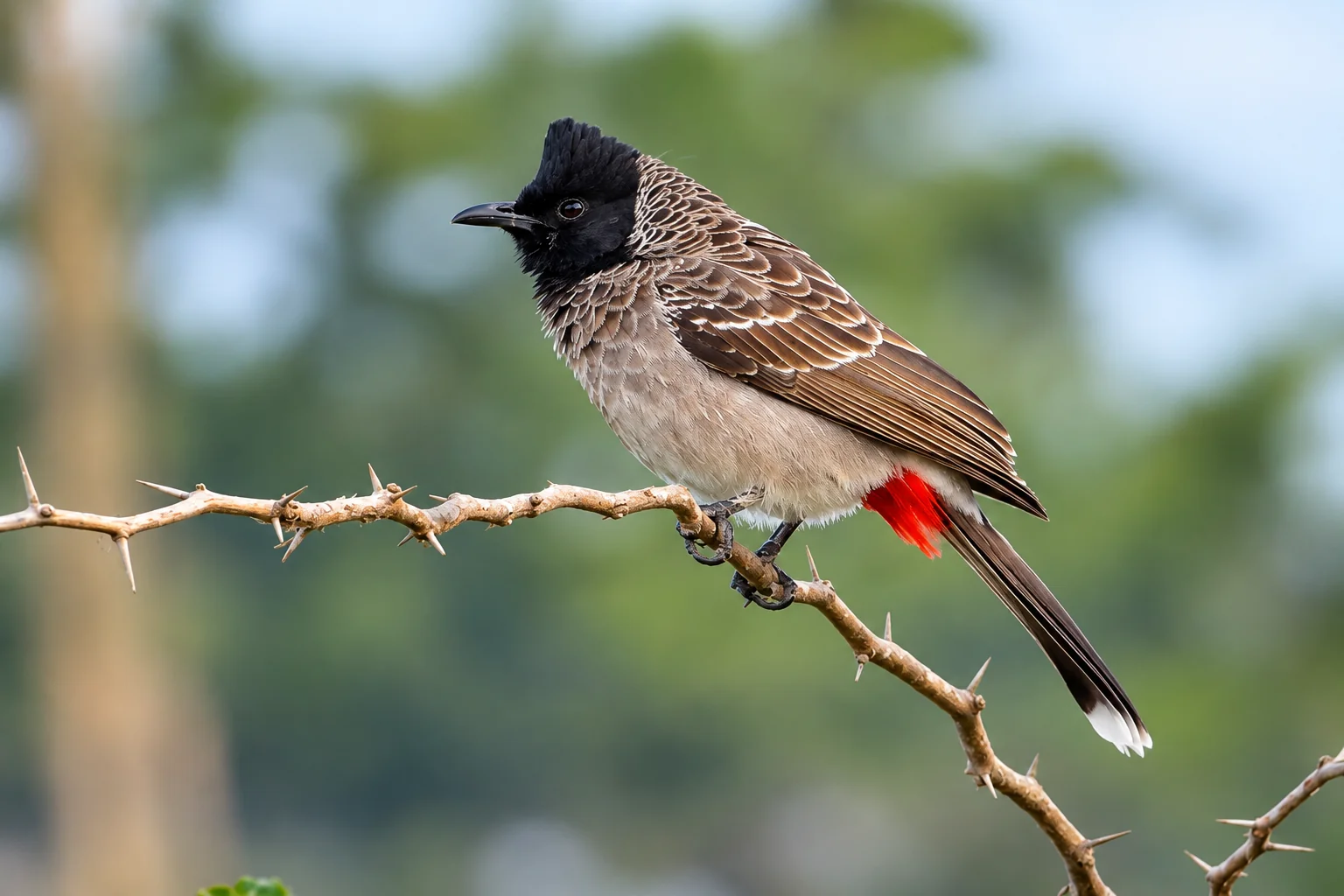
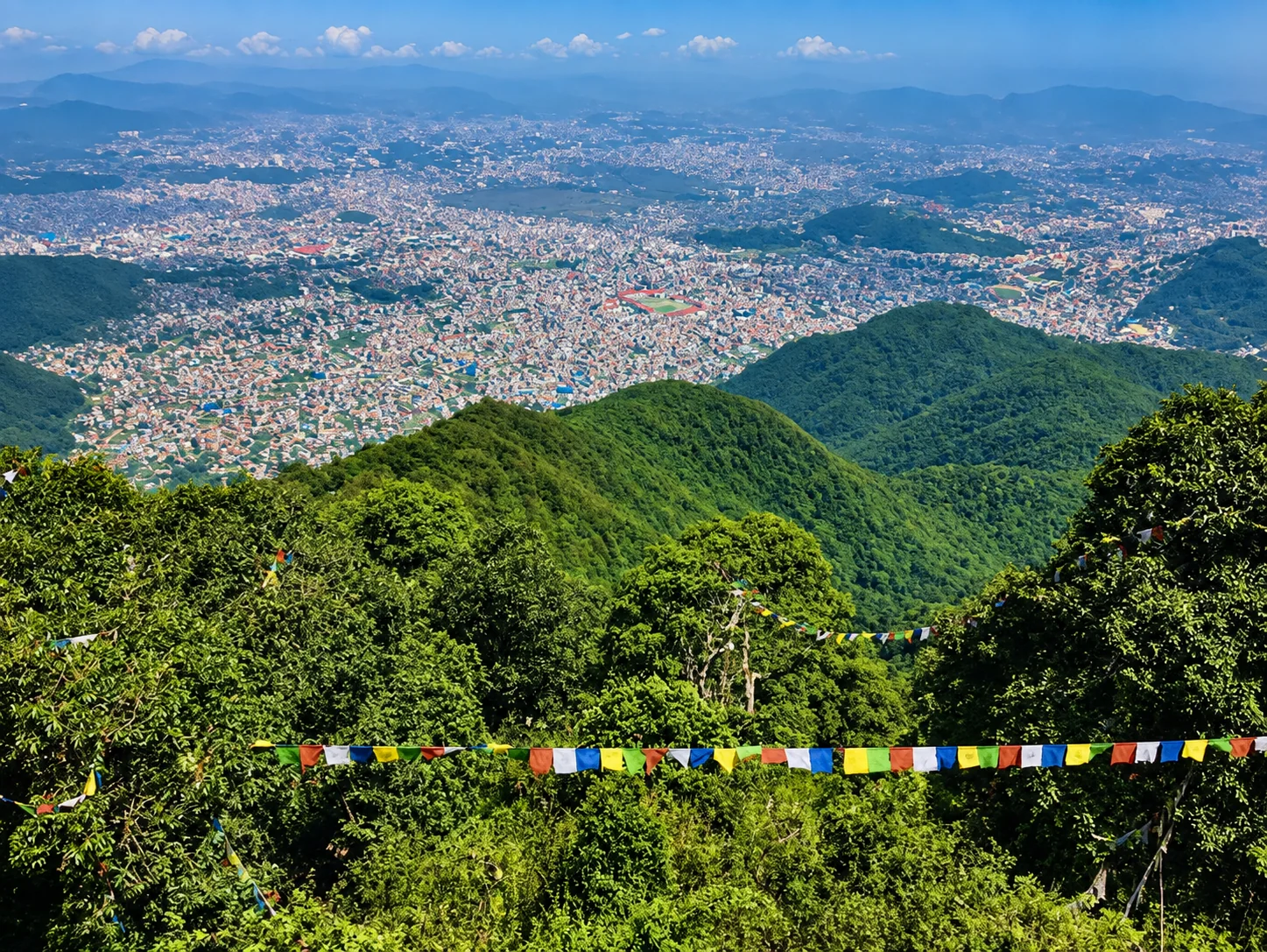
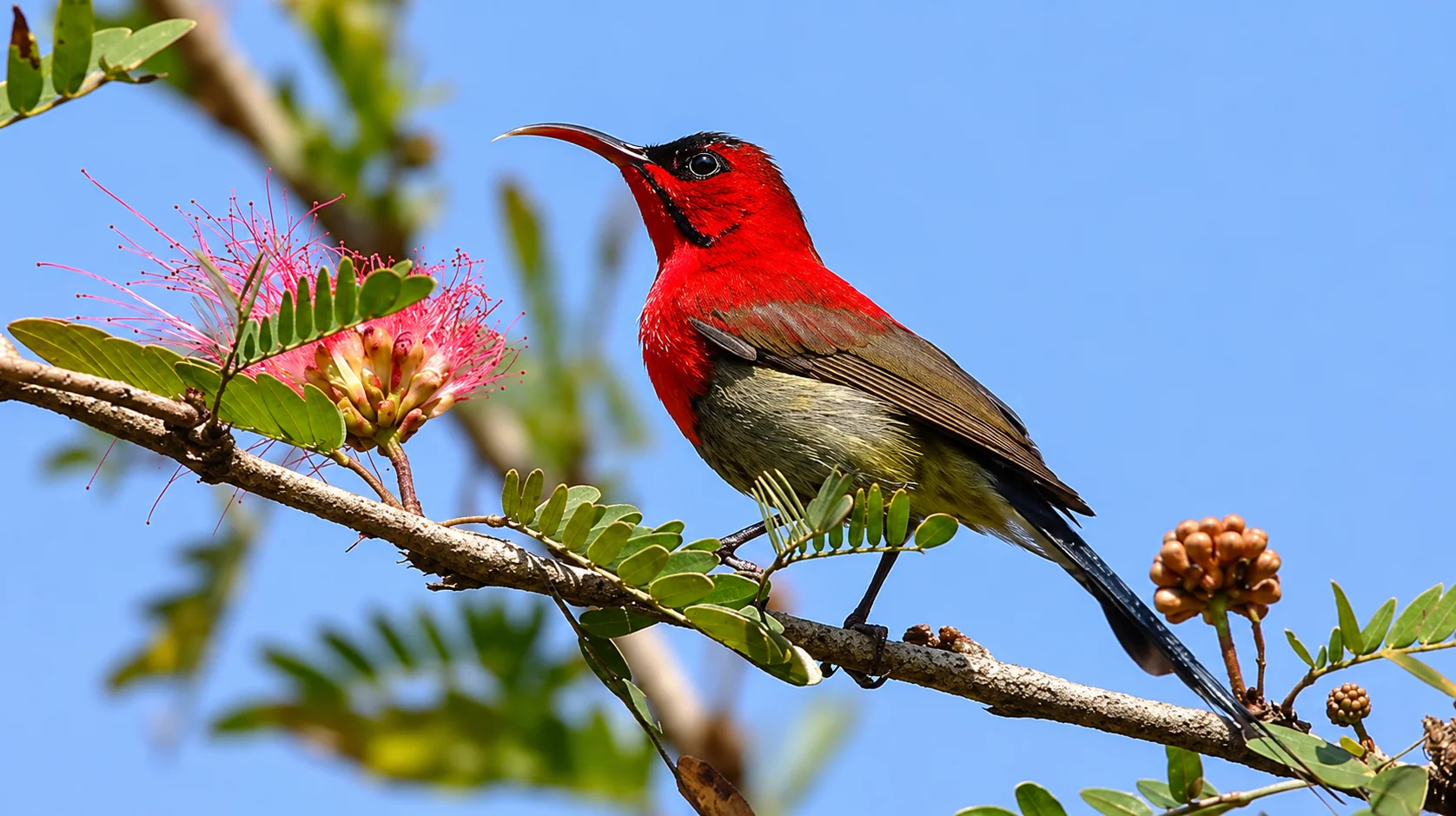
Experience a 4-day birdwatching and photography journey from Kathmandu through Sundarijal, Dhap Dam, Chisapani, and Nagarkot, combining forest trails, scenic landscapes, mountain viewpoints, and opportunities to observe Nepal's diverse birdlife. The journey is designed for birdwatchers, wildlife photographers, nature enthusiasts, and photography lovers seeking a rewarding nature escape near Kathmandu.
Travel through peaceful forest environments and mountain trails, with opportunities for early-morning birdwatching, bird photography, nature observation, and landscape photography. The journey concludes with a cultural visit to Bhaktapur Durbar Square before returning to Kathmandu.
Key Highlights
- 4-Day Birdwatching & Photography Tour
- Sundarijal to Dhap Dam Hike
- Dhap Dam to Chisapani Forest Trail
- Birdwatching & Wildlife Photography
- Scenic Chisapani Mountain Views
- Chisapani to Nagarkot Nature Walk
- Nagarkot Sunrise & Landscape Photography
- Bhaktapur Durbar Square Cultural Visit
Important Note : This itinerary can be customized according to your interests, preferences, photography goals, and available time. Route, activities, accommodation, and sightseeing can be adjusted upon request.
Day-by-day itinerary
-
Your journey begins with a morning pickup from your hotel in Kathmandu and a scenic drive towards Sundarijal, the gateway to the forested landscapes north of the Kathmandu Valley. After reaching Sundarijal, begin your hike through peaceful woodland trails, following streams and natural surroundings that provide excellent opportunities for birdwatching and wildlife photography. Keep your camera ready as you explore the diverse forest habitat and listen to the sounds of native birdlife.
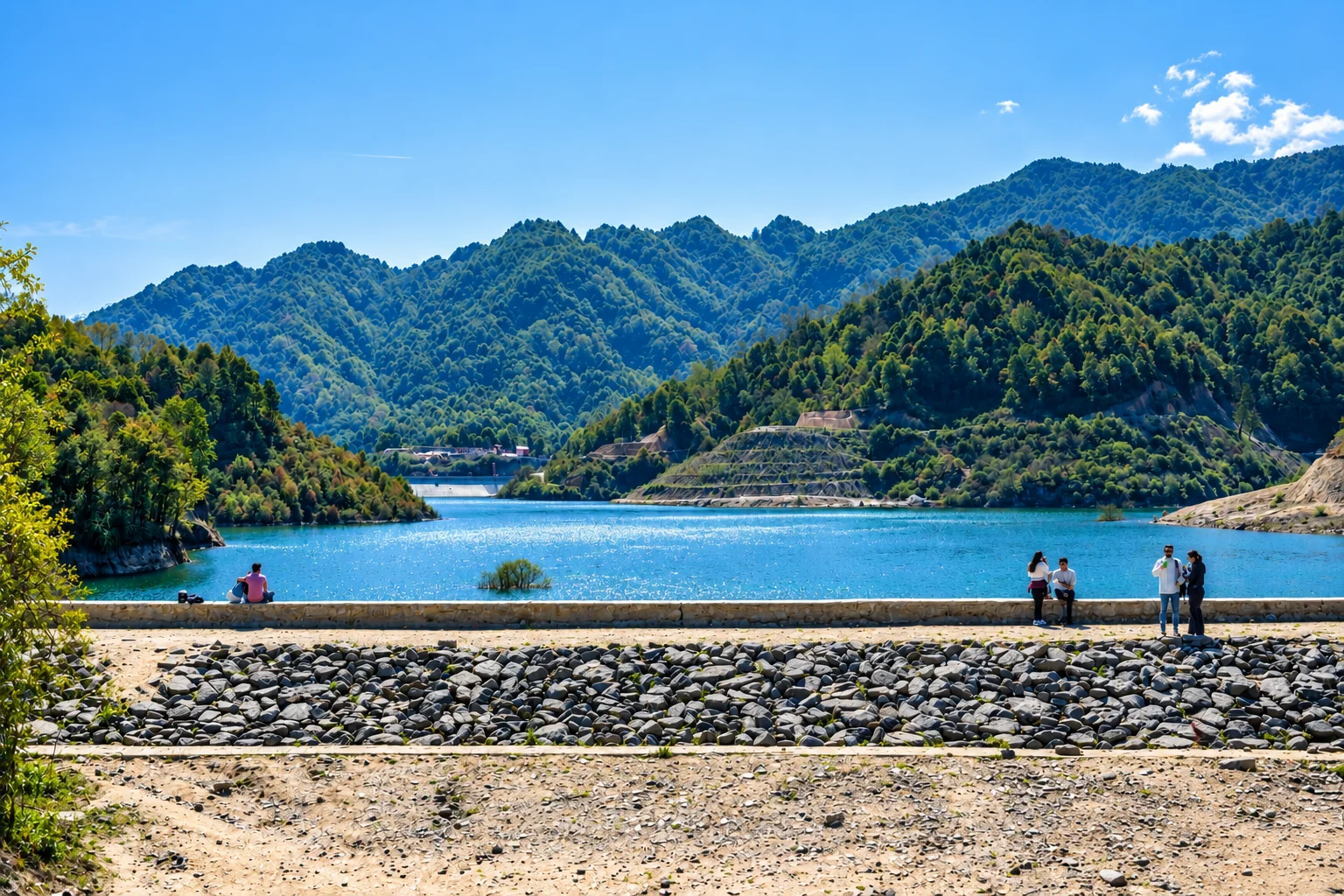
Continue towards Dhap Dam, enjoying the changing landscapes, green hills, and quiet surroundings along the trail. The area provides a pleasant setting for nature observation and photography, especially during the afternoon light. After reaching Dhap Dam, settle into your accommodation, enjoy dinner, and relax in the peaceful mountain environment.
Hiking Duration: Approx. 3–4 hours
Max. Altitude: Approx. 1,800 m
Meals: Lunch & Dinner
Accommodation: Eco-lodge / Lodge -
Begin the morning with the fresh mountain atmosphere around Dhap Dam, with time for early birdwatching and photography before breakfast. Afterward, continue your hike towards Chisapani, following scenic forest paths and gentle mountain trails. The route passes through natural landscapes and rural surroundings, offering opportunities to observe birds in their natural habitat and capture beautiful forest and countryside scenes.
As you approach Chisapani, the landscape opens to wider mountain views and peaceful hill settlements. Upon arrival, check into your lodge and take some time to relax. Enjoy the surrounding scenery during the evening and, if conditions are clear, capture the changing colors of the mountains before spending the night in Chisapani.
Hiking Duration: Approx. 4–5 hours
Max. Altitude: Approx. 2,165 m
Meals: Breakfast, Lunch & Dinner
Accommodation: Eco-lodge / Lodge -
Start the day early with birdwatching and photography in Chisapani, when bird activity is often ideal for nature enthusiasts. After breakfast, begin the scenic hike towards Nagarkot, following forest trails, hillside paths, and traditional rural landscapes. Along the way, enjoy opportunities to photograph birds, vegetation, local life, and panoramic mountain scenery.
Continue towards Nagarkot while taking time to appreciate the peaceful surroundings and changing views along the trail. Arrive in Nagarkot by afternoon and settle into your accommodation. The evening provides an excellent opportunity for landscape and nature photography, with beautiful views across the hills and Himalayan ranges before enjoying a relaxing overnight stay.
Hiking Duration: Approx. 5–6 hours
Max. Altitude: Approx. 2,175 m
Meals: Breakfast, Lunch & Dinner
Accommodation: Hotel / Lodge -
Begin your final day with an early morning sunrise and bird photography session in Nagarkot, taking advantage of the peaceful morning atmosphere and panoramic mountain surroundings. After breakfast, leave Nagarkot and drive towards Bhaktapur Durbar Square, a historic cultural center renowned for its traditional Newari architecture, temples, courtyards, and artistic details.
Spend time exploring the historic square and photographing its distinctive architecture and local atmosphere. After sightseeing, continue your scenic drive back to Kathmandu, concluding your 4-day journey with a combination of birdwatching, nature photography, hiking, mountain landscapes, and cultural exploration.
Sightseeing: Bhaktapur Durbar Square
Tour Duration: Approx. 5–7 hours
Meals: Breakfast & Lunch
What's included
Included
- Hotel Pick-up and Drop-off
- Tours and transfer by AC Vehicle in Private basis as per the above Itinerary
- Professional Trekking Guide throughout the Trek
- Meals on full board basis (Breakfast, Lunch & Dinner)
- A Bottle of Water during the Tour
- Accommodation at Homestay/ Lodge .
- Shivapuri-Nagarjun National Park entry fee
- All Entrance fee at Sightseeing spot
- Cultural Interaction with local Communities
- All local and Government Taxes
- Basic first-aid support
- 24/7 Emergency Support and Coordination by Organization
Not included
- All the Personal Expenses as Tip, Laundry, Beverages and Bar Bill etc.
- Accommodation, Meals, or Activities outside the Itinerary.
- Accommodation at Kathmandu Stay
- 10% Service Charge for Company.
- Fees charged by Banks for International Transcation
- Personal Travel Insurance (Recommended to cover Emergencies)
- Any Services or Costs not clearly listed under “Package Inclusions”
Dates & availability
There are no fixed group departures for this trip. We run it as a private trip on your preferred dates.
Route map
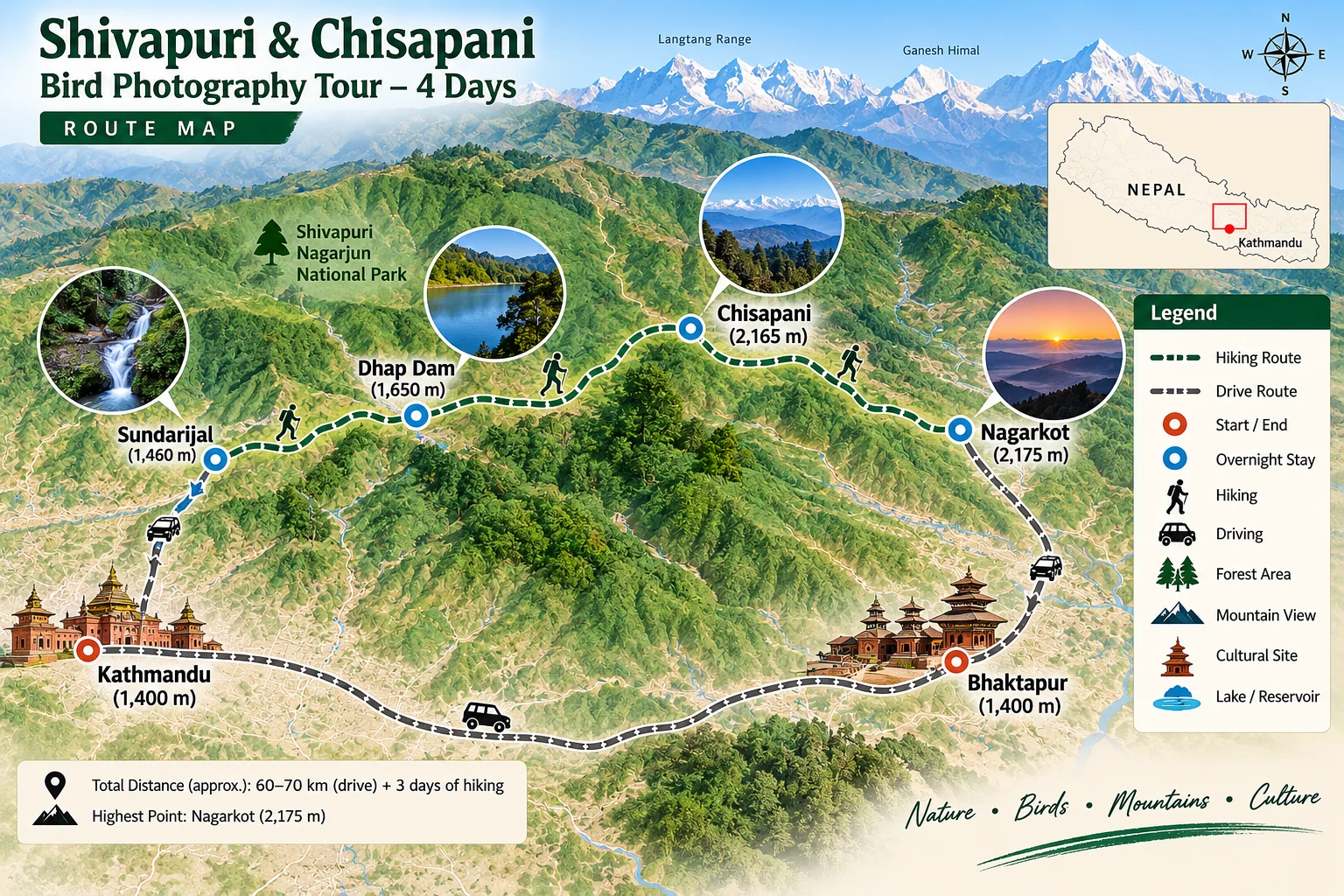 View full size
Packing list
| Essential Gear | ✓ |
|---|---|
| Comfortable hiking shoes | ✓ |
| Light backpack | ✓ |
| Warm & comfortable clothing | ✓ |
| Rain jacket | ✓ |
| Water bottle | ✓ |
| Sun protection | ✓ |
| Personal medicines | ✓ |
| Binoculars | ✓ |
| Camera & telephoto lens | ✓ |
| Extra batteries & memory cards | ✓ |
Frequently asked questions
What is the Shivapuri & Chisapani Bird Photography Tour?
It is a 4-day birdwatching, nature, hiking, and photography tour connecting Kathmandu, Sundarijal, Dhap Dam, Chisapani, Nagarkot, and Bhaktapur.
How many days are needed for the Shivapuri and Chisapani birdwatching tour?
The planned itinerary takes 4 days and 3 nights, allowing time for hiking, birdwatching, photography, nature exploration, and cultural sightseeing.
Where does the bird photography tour start and end?
The tour starts and ends in Kathmandu, with the route passing through Sundarijal, Dhap Dam, Chisapani, Nagarkot, and Bhaktapur.
What can I expect from birdwatching in Shivapuri and Chisapani?
You can explore forest habitats, mountain trails, and natural landscapes with opportunities to observe and photograph diverse birdlife.
Is the Shivapuri Chisapani tour suitable for bird photographers?
Yes. The itinerary includes dedicated opportunities for bird photography, nature observation, early-morning birdwatching, and landscape photography.
What are the main highlights of this birdwatching tour?
The main highlights include Sundarijal, Dhap Dam, Chisapani, Nagarkot, forest trails, birdwatching, photography, mountain views, and Bhaktapur Durbar Square.
Is this bird photography tour suitable for nature lovers?
Yes. The tour combines nature walks, forest exploration, birdwatching, scenic landscapes, and peaceful mountain environments, making it suitable for nature enthusiasts.
What is the best time for birdwatching in Shivapuri and Chisapani?
March to May and September to November are recommended seasons for this tour, offering favorable conditions for outdoor activities and photography.
What is the highest altitude reached on this tour?
The highest point on the planned itinerary is approximately 2,175 meters at Nagarkot.
How difficult is the Shivapuri and Chisapani hiking route?
The tour involves moderate hiking, with several hours of walking through forest trails and hilly terrain. A reasonable level of fitness is recommended.
Can beginners join the Chisapani birdwatching tour?
Yes. Beginners interested in birdwatching, nature photography, and hiking can join, provided they are comfortable with moderate walking.
What type of accommodation is available during the tour?
Accommodation is provided in eco-lodges, guesthouses, or local lodges along the route, with a hotel or lodge stay in Nagarkot.
Are meals included in the bird photography tour?
Yes. Breakfast, lunch, and dinner are included during the tour as specified in the itinerary.
What equipment should I bring for bird photography in Nepal?
Essential equipment includes binoculars, a camera with a telephoto lens, extra batteries, memory cards, comfortable hiking shoes, a daypack, and weather-appropriate clothing.
Is transportation included in the Shivapuri Chisapani tour?
Yes. Private transportation for the scheduled road transfers is included, while the main sections between destinations are completed by hiking.
Can the Shivapuri & Chisapani tour be customized?
Yes. The itinerary can be customized according to your interests, photography goals, preferences, and available time, including adjustments to activities, route, accommodation, and sightseeing.
Does the tour include sightseeing entrance fees?
Yes. Entrance fees for sightseeing attractions mentioned in the itinerary are included.
Can I combine birdwatching with cultural sightseeing in Nepal?
Yes. This itinerary combines birdwatching and nature photography with a cultural visit to Bhaktapur Durbar Square, creating a mix of nature and cultural experiences.
Is this a good short nature escape from Kathmandu?
Yes. The 4-day itinerary provides a convenient nature and birdwatching escape from Kathmandu without requiring a long-distance journey or domestic flight
Can I book a private or customized birdwatching tour in Nepal?
Yes. A private or customized Nepal birdwatching itinerary can be arranged according to your interests, preferred duration, route, photography requirements, and travel preferences.
More details
 Shivapuri & Chisapani Bird Photography Tour Accommodation Types
The Shivapuri & Chisapani Bird Photography Tour includes comfortable accommodation in local lodges, eco-lodges, guesthouses, and hotels along the route. Accommodation is selected to provide convenient access to the hiking trails, forest areas, birdwatching locations, and photography spots while allowing travelers to rest comfortably after each day of exploration.
Eco-Lodge and Local Lodge Accommodation
During the hiking sections of the tour, accommodation is generally provided in local lodges or eco-lodges located close to the walking route. These properties offer a peaceful environment surrounded by forests, hills, and rural landscapes.
Typical facilities may include:
- Comfortable and clean rooms
- Twin-sharing or private rooms where available
- Basic but convenient accommodation facilities
- Local hospitality
- Dining facilities
- Suitable locations for early-morning birdwatching
- Electricity and charging facilities, subject to availability
- Hot shower facilities at selected properties, subject to availability
Accommodation in Chisapani
Chisapani provides a peaceful overnight setting surrounded by forest landscapes, hills, villages, and mountain views. Staying locally allows travelers to begin early-morning birdwatching and photography without requiring a long transfer before the activity.
Accommodation generally includes:
- Local lodge or guesthouse
- Twin-sharing rooms
- Private rooms where available
- Basic room facilities
- Dining facilities
- Breakfast arrangements for early departures
- Peaceful surroundings suitable for nature lovers and photographers
Accommodation in Nagarkot
The final overnight stay is generally arranged in Nagarkot, where travelers can enjoy a more comfortable hotel or lodge environment after the day's hike from Chisapani.
Typical facilities may include:
- Comfortable private or twin-sharing rooms
- Attached bathroom where available
- Restaurant or dining facilities
- Hot shower facilities at selected hotels
- Wi-Fi at selected properties, subject to connectivity
- Countryside and mountain views
- Convenient access to sunrise and landscape photography locations
Room Sharing and Accommodation Arrangements
Accommodation is normally arranged on a twin-sharing basis for two travelers. Private or single rooms may be available at an additional cost, subject to availability at the selected accommodation.
| Accommodation Feature | Details |
|---|---|
| Accommodation Type | Eco-lodge, local lodge, guesthouse and hotel |
| Room Type | Twin-sharing / private room where available |
| Meals | Breakfast, lunch and dinner included during the tour |
| Location | Along the Sundarijal, Dhap Dam, Chisapani and Nagarkot route |
| Facilities | Basic to comfortable facilities depending on location |
| Single Room | Available on request at additional cost |
| Wi-Fi | Available at selected accommodations, subject to connectivity |
| Hot Shower | Available at selected lodges/hotels, subject to availability |
What to Expect from Accommodation
The accommodation on this bird photography tour focuses on comfort, convenience, peaceful surroundings, and easy access to nature, rather than luxury facilities. The lodges used during the hiking sections may offer simpler facilities, while accommodation in Nagarkot can provide comparatively greater comfort.
The accommodation experience allows travelers to stay close to the natural environment and begin early-morning birdwatching and photography activities conveniently. Facilities may vary depending on the location and availability of the selected lodge or hotel.
 What to Expect from the Shivapuri & Chisapani Bird Photography Tour
The Shivapuri & Chisapani Bird Photography Tour is designed for travelers who want to combine birdwatching, bird photography, forest hiking, nature exploration, mountain scenery, and cultural sightseeing within a short journey from Kathmandu. The tour follows a scenic route through forest trails, hill settlements, countryside landscapes, and viewpoints before returning to Kathmandu.
Birdwatching and Bird Photography
Birdwatching is the main focus of this tour. The route passes through forested areas and natural surroundings where travelers can spend time observing birds in their natural environment.
You can expect:
- Guided birdwatching walks
- Opportunities for bird photography
- Early-morning photography sessions
- Forest and woodland birdwatching
- Observation of birds in different natural habitats
- Time to stop, observe, and photograph without rushing
- Guidance from an experienced birdwatching or nature guide
Bird activity can vary according to season, weather, time of day, and natural conditions, so specific bird sightings cannot be guaranteed.
Forest Hiking and Nature Walks
The tour includes several days of walking through forest trails, hills, villages, and countryside landscapes. The walking sections provide opportunities to enjoy the natural surroundings while looking for birds and photography subjects.
Travelers can expect:
- Peaceful forest trails
- Natural landscapes and greenery
- Village paths and rural surroundings
- Streams and natural scenery along parts of the route
- Moderate uphill and downhill walking
- Regular opportunities for photography and observation
Dhap Dam and Chisapani Experience
Dhap Dam and Chisapani are important stops on the route, providing a combination of nature, open landscapes, forest surroundings, and peaceful mountain environments.
Travelers can spend time exploring the surroundings, observing bird activity, taking landscape photographs, and enjoying the quieter atmosphere away from Kathmandu.
Nagarkot Sunrise and Landscape Photography
After the hiking section, the journey continues toward Nagarkot. The area provides opportunities for sunrise photography, landscape photography, and relaxed morning birdwatching.
Depending on weather and visibility, travelers may enjoy:
- Early-morning photography
- Sunrise views
- Hill and countryside landscapes
- Birdwatching around the surrounding natural areas
- Photography of changing light and landscapes
Cultural Experience at Bhaktapur
The tour also combines nature and bird photography with a cultural visit to Bhaktapur Durbar Square. This provides an opportunity to experience traditional architecture, historic courtyards, temples, and Newari cultural heritage before returning to Kathmandu.
The cultural portion gives photographers additional subjects beyond wildlife, including:
- Traditional architecture
- Historic buildings
- Courtyards and streets
- Temples and cultural monuments
- Local lifestyle and surroundings
A Balanced Nature and Photography Experience
Rather than focusing only on birdwatching, this 4-day journey combines several experiences into one itinerary:
| Experience | What to Expect |
|---|---|
| Birdwatching | Guided observation in natural forest and countryside environments |
| Bird Photography | Opportunities for photographing birds and natural subjects |
| Hiking | Moderate walking through forests, villages and hill trails |
| Nature Exploration | Green landscapes, forests, streams and countryside |
| Landscape Photography | Hills, countryside, sunrise and natural scenery |
| Local Experience | Rural surroundings and local lodge hospitality |
| Sunrise Photography | Early-morning photography around Nagarkot |
| Cultural Sightseeing | Visit to Bhaktapur Durbar Square |
| Photography Learning | Time to practice observation, composition and wildlife photography |
Early-Morning Photography Opportunities
Early morning is an important part of the bird photography experience because travelers can explore the surroundings before beginning the day's main activities. The schedule allows time for birdwatching and photography when conditions are suitable.
Travelers should be prepared for early starts, particularly when the day's activities are planned around bird activity or sunrise photography.
A Suitable Experience for Nature and Photography Enthusiasts
The tour is suitable for travelers interested in birds, wildlife photography, nature, hiking, landscapes, and outdoor experiences. Professional photographers, photography enthusiasts, birdwatchers, and travelers simply looking for a nature-focused escape from Kathmandu can enjoy the experience.
The tour also provides a balance between active hiking and relaxed photography stops, allowing travelers to enjoy the journey rather than treating the route only as a trekking challenge.
Flexible Pace for Photography
Photography requires patience, and bird sightings can happen unexpectedly. The itinerary therefore allows opportunities to stop along suitable sections of the route for bird observation, photography, and nature appreciation, while maintaining the overall planned schedule.
This makes the journey different from a standard sightseeing tour, as the focus is on experiencing the natural environment and making time for photography along the way.
 Best Time / Season to Visit Shivapuri & Chisapani for Bird Photography
The Shivapuri & Chisapani Bird Photography Tour can be enjoyed throughout much of the year, but the experience can vary depending on season, weather, visibility, bird activity, temperature, and trail conditions. For bird photography, early mornings are generally especially valuable because travelers can explore the forest and surrounding natural areas when bird activity may be higher.
Spring Season: March to May
Spring is a pleasant period for exploring the forests and hills around Shivapuri and Chisapani. The landscape becomes greener, temperatures are generally comfortable for hiking, and the natural surroundings provide good conditions for photography.
During spring, travelers can enjoy:
- Comfortable conditions for forest hiking
- Green vegetation and natural landscapes
- Early-morning birdwatching
- Bird photography opportunities
- Landscape and nature photography
- Pleasant conditions for longer outdoor walks
Spring can be particularly suitable for travelers who want to combine bird photography with greenery, hiking, and nature exploration.
Summer and Monsoon Season: June to August
The summer and monsoon period brings rainfall and increased greenery to the hills. Rain can affect hiking trails and visibility, so travelers should be prepared for changing weather conditions.
During this period, travelers can expect:
- Lush green forest surroundings
- Fresh natural landscapes
- Occasional rainfall
- Wet and sometimes slippery trails
- Changing visibility
- Opportunities for nature and bird photography during suitable weather windows
A rain jacket, waterproof protection for camera equipment, and suitable hiking footwear are especially useful during this season.
Autumn Season: September to November
Autumn generally brings more stable weather conditions after the monsoon. The combination of clearer conditions, pleasant temperatures, and green landscapes can make this a comfortable period for hiking and photography.
Travelers can enjoy:
- Comfortable hiking conditions
- Clearer landscapes when weather permits
- Mountain and countryside photography
- Forest birdwatching
- Sunrise and landscape photography
- Pleasant conditions for outdoor activities
This season is also suitable for travelers who want to combine birdwatching, hiking, landscape photography, and cultural sightseeing.
Winter Season: December to February
Winter brings cooler temperatures, particularly during early mornings and evenings. The cooler conditions make warm clothing important, especially for travelers participating in sunrise and early-morning bird photography.
Travelers should be prepared for:
- Cold early mornings
- Comfortable daytime hiking conditions when weather is favorable
- Early-morning birdwatching
- Sunrise photography around Nagarkot
- Clear landscape views when visibility is good
- Cooler evenings at Chisapani and Nagarkot
A warm jacket, layers, gloves, and other suitable cold-weather clothing can make the experience more comfortable.
Best Time of Day for Bird Photography
For bird photography, early morning is an important period of the day. The tour is therefore designed to provide opportunities for early starts and morning observation where appropriate.
Early morning can provide:
- Cooler temperatures
- Softer natural light
- Time for focused bird observation
- Opportunities to photograph birds before the day's main hiking activities
- Sunrise and landscape photography opportunities
However, bird sightings remain dependent on natural conditions, weather, season, habitat, and bird movement, so specific species or sightings cannot be guaranteed.
Seasonal Overview for Bird Photography
| Season | General Conditions | Photography Opportunities |
|---|---|---|
| Spring | Green landscapes and comfortable temperatures | Bird, nature and landscape photography |
| Summer / Monsoon | Wet weather and lush greenery | Nature and bird photography during suitable weather |
| Autumn | Generally pleasant outdoor conditions | Bird, landscape and sunrise photography |
| Winter | Cooler mornings and evenings | Birdwatching, sunrise and landscape photography |
What to Pack According to the Season
Your packing list should be adjusted according to the season of travel.
Spring and Autumn:
- Comfortable hiking clothing
- Light jacket
- Hiking shoes
- Sun protection
- Water bottle
Summer / Monsoon:
- Waterproof jacket
- Rain protection for camera equipment
- Waterproof backpack cover
- Quick-drying clothing
- Good-grip hiking shoes
Winter:
- Warm jacket
- Thermal or layered clothing
- Gloves
- Warm socks
- Comfortable hiking shoes
For photography, travelers should also carry extra batteries, sufficient memory cards, a camera rain cover, and appropriate lenses according to their equipment.
Weather and Bird Photography Considerations
Bird photography is an outdoor activity, so conditions can change during the journey. Cloud cover, rainfall, temperature, visibility, and trail conditions can influence the photography experience.
The tour schedule may therefore be adjusted where reasonably necessary to maintain a comfortable and practical experience while keeping the main birdwatching, photography, hiking, and sightseeing objectives of the tour.
 Nearby Places to Explore from the Shivapuri & Chisapani Bird Photography Tour
The Shivapuri & Chisapani Bird Photography Tour passes through a scenic combination of forest areas, hill settlements, viewpoints, countryside landscapes, and cultural heritage sites. Along with birdwatching and photography, travelers can explore several nearby attractions depending on the itinerary, available time, and weather conditions.
Sundarijal
Sundarijal is the starting point for the hiking section of the tour. Located on the northern side of Kathmandu Valley, it provides access to forest trails and natural surroundings.
Travelers can enjoy:
- Forest surroundings
- Natural streams and water features
- Hiking trails
- Birdwatching opportunities
- Nature photography
- Peaceful surroundings away from the city
Sundarijal is also an important starting point for travelers entering the Shivapuri forest environment.
Dhap Dam
Dhap Dam is one of the notable natural stops along the route. Its surrounding hills, open landscapes, and forest environment provide opportunities for birdwatching and photography.
Travelers can spend time:
- Exploring the surrounding landscape
- Observing birds
- Photographing natural scenery
- Enjoying peaceful outdoor surroundings
- Taking a break during the hiking journey
The area can provide a different photography environment compared with the denser forest trails.
Chisapani
Chisapani is one of the main overnight destinations of the tour. Its elevated location, surrounding forests, rural settlements, and open landscapes make it an important stop for both nature lovers and photographers.
Activities around Chisapani can include:
- Early-morning birdwatching
- Bird photography
- Forest walks
- Landscape photography
- Village and countryside photography
- Sunrise and mountain-view photography when visibility permits
Nagarkot
Nagarkot is the final overnight destination before returning to Kathmandu. It is widely known as a hilltop destination offering countryside and mountain landscapes.
During the stay, travelers can enjoy:
- Sunrise photography
- Landscape photography
- Morning birdwatching
- Countryside views
- Relaxed nature walks
- Photography of changing light and mountain scenery
Weather and visibility determine how much of the surrounding mountain landscape can be seen.
Bhaktapur Durbar Square
Bhaktapur Durbar Square is included in the final day's sightseeing before returning to Kathmandu. The historic area provides an opportunity to combine the nature-focused journey with Nepal's traditional architecture and cultural heritage.
Travelers can explore:
- Historic temples
- Traditional Newari architecture
- Palace courtyards
- Stone and wooden structures
- Traditional streets
- Cultural and architectural photography
This visit adds a cultural dimension to the otherwise nature- and photography-focused tour.
Shivapuri Forest Environment
The forest landscape around the Shivapuri area is an important part of the birdwatching experience. Travelers can explore natural trails while observing the surrounding vegetation, birds, and other elements of the forest ecosystem.
The experience may include:
- Forest walks
- Bird observation
- Nature photography
- Wildlife observation where naturally encountered
- Quiet outdoor exploration
Specific wildlife or bird sightings cannot be guaranteed because they depend on natural conditions.
Nearby Attractions Overview
| Place | Main Experience | Suitable For |
|---|---|---|
| Sundarijal | Forest trails and natural surroundings | Hiking, birdwatching, nature photography |
| Dhap Dam | Open landscape and peaceful surroundings | Birdwatching, landscape photography |
| Chisapani | Forests, villages and hill landscapes | Bird photography, hiking, sunrise photography |
| Nagarkot | Sunrise and countryside views | Landscape photography, birdwatching |
| Bhaktapur Durbar Square | Heritage and traditional architecture | Cultural sightseeing, photography |
| Shivapuri Forest Area | Forest and natural environment | Birdwatching, nature walks, photography |
Combining Nature, Photography and Culture
One of the distinctive aspects of this journey is that it does not focus exclusively on birdwatching. The route combines forest exploration, bird photography, hiking, countryside landscapes, sunrise photography, and cultural sightseeing within a single 4-day experience.
This allows travelers to enjoy different types of photography and outdoor experiences while moving through the Shivapuri, Chisapani and Nagarkot areas before returning to Kathmandu.
 Foods Available During the Shivapuri & Chisapani Bird Photography Tour
The Shivapuri & Chisapani Bird Photography Tour includes breakfast, lunch, and dinner during the tour. Meals are generally provided at local lodges, guesthouses, or hotels along the route. The food arrangements are designed to provide travelers with sufficient energy for hiking, birdwatching, photography, and other outdoor activities.
Breakfast During the Tour
Breakfast is provided at the accommodation before starting the day's activities. On days with early-morning birdwatching or photography, breakfast timings can be arranged according to the day's schedule.
Breakfast may include:
- Tea or coffee
- Bread or toast
- Eggs
- Pancakes
- Porridge or cereal
- Seasonal fruit
- Local breakfast options
- Other available lodge breakfast items
The exact breakfast menu can vary depending on the accommodation.
Lunch During the Tour
Lunch is arranged during the day's hiking or sightseeing activities. Depending on the day's route, lunch may be served at a local lodge, guesthouse, or suitable restaurant along the journey.
Common meal options may include:
- Dal bhat with rice and lentils
- Vegetable curry
- Seasonal vegetables
- Noodles
- Fried rice
- Pasta
- Momo
- Soup
- Bread or other simple meals
Lunch arrangements are planned to provide travelers with enough energy for the remaining hiking and photography activities.
Dinner During the Tour
Dinner is generally served at the lodge or hotel where travelers stay overnight. After a day of hiking and bird photography, travelers can enjoy a warm and filling meal while relaxing at the accommodation.
Dinner options may include:
- Dal bhat
- Rice and vegetable dishes
- Noodles
- Fried rice
- Pasta
- Momo
- Soup
- Seasonal local dishes
Traditional Nepali Food
Travelers can experience traditional Nepali meals during the journey. Dal bhat is one of the common meal choices and generally consists of rice, lentils, vegetables, and accompanying side dishes.
Depending on the accommodation and availability, travelers may also have opportunities to try:
- Nepali-style vegetable dishes
- Local soups
- Momo
- Seasonal vegetables
- Traditional snacks
- Local tea
Food During Hiking Days
The hiking days require regular meals and adequate hydration. Travelers should have breakfast before starting the day's hike and carry drinking water and small personal snacks when necessary.
For longer walking sections, suitable snack options can include:
- Fruits
- Biscuits
- Chocolate
- Nuts
- Energy bars
- Dried fruits
Travelers with specific dietary requirements should inform us during the booking process so that suitable arrangements can be discussed with the accommodation providers.
Vegetarian and Special Dietary Requirements
Vegetarian food is generally available along the route. Other dietary requirements can also be discussed in advance, although the range of options may depend on the local accommodation and available ingredients.
Travelers should inform us before the tour if they require:
- Vegetarian meals
- Vegan meals
- Specific dietary restrictions
- Food allergies
- Other special meal arrangements
Drinking Water
Travelers should carry a reusable water bottle throughout the hiking sections. Drinking water availability can vary between locations, so it is advisable to refill water whenever a reliable source or suitable facility is available.
Travelers should avoid relying solely on natural water sources unless the water has been appropriately treated or confirmed as safe for drinking.
Food and Meal Overview
| Meal | Arrangement | Typical Options |
|---|---|---|
| Breakfast | At accommodation | Eggs, bread, porridge, pancakes, tea, coffee |
| Lunch | Lodge, restaurant or suitable stop | Dal bhat, noodles, rice, momo, pasta, vegetables |
| Dinner | At accommodation | Dal bhat, rice, noodles, soup, momo, vegetables |
| Snacks | Personal / available locally | Fruits, nuts, biscuits, chocolate, energy bars |
| Drinking Water | Carried and refilled along the route | Bottled or treated drinking water |
Food Experience on the Tour
The food experience combines local Nepali cuisine with familiar meals commonly available at tourist-oriented lodges and hotels. Since the tour passes through rural and hill areas, food choices may be simpler than those available in Kathmandu.
The focus is on providing fresh, filling, and practical meals that support the hiking, birdwatching, and photography activities throughout the 4-day journey.
 Culture and Etiquette of the Shivapuri & Chisapani Region
The Shivapuri & Chisapani Bird Photography Tour passes through forest areas, hill settlements, local communities, and traditional rural surroundings before continuing toward Nagarkot and Bhaktapur. Respecting local customs, communities, religious places, and the natural environment helps make the journey more enjoyable and responsible.
Respect for Local Communities
The route passes through areas where local communities live and work. Travelers should be respectful when walking through villages, interacting with residents, or photographing people.
Recommended practices include:
- Greet local people politely
- Respect private homes and properties
- Avoid entering private areas without permission
- Follow local instructions and guidance
- Keep noise levels reasonable
- Avoid disturbing people during daily activities
- Ask permission before taking close-up photographs of individuals
Photography Etiquette
Photography is an important part of this tour, but responsible photography should always be practiced. Travelers are encouraged to photograph birds, landscapes, architecture, and nature without disturbing the environment or local communities.
When photographing people:
- Ask permission before taking close-up portraits
- Respect a person's decision if they do not want to be photographed
- Avoid photographing sensitive or private situations
- Be respectful when photographing children
- Avoid blocking pathways while taking photographs
Respect for Religious and Cultural Places
The journey may pass through or visit areas with religious and cultural importance. Travelers should behave respectfully when visiting temples, monasteries, shrines, and other cultural sites.
General etiquette includes:
- Dress respectfully when visiting religious places
- Follow local instructions
- Remove shoes where required
- Avoid touching religious objects without permission
- Maintain a quiet and respectful atmosphere
- Follow photography restrictions where applicable
Local Lifestyle and Rural Environment
The areas around Chisapani and the surrounding hills provide opportunities to observe aspects of rural life. Travelers may encounter local farming activities, traditional houses, livestock, village paths, and everyday community activities.
Visitors are encouraged to observe respectfully and avoid interfering with local routines.
Environmental Responsibility
As a bird photography and nature-focused journey, protecting the environment is an important part of the experience.
Travelers should:
- Avoid littering
- Carry personal waste until a suitable disposal point is available
- Avoid disturbing birds and other wildlife
- Stay on established trails where possible
- Avoid damaging plants and vegetation
- Do not remove natural objects from the environment
- Keep noise low in birdwatching areas
- Avoid feeding wild birds or other wildlife
Birdwatching Etiquette
Responsible birdwatching helps protect the natural behavior of birds and other wildlife. Photography should never take priority over the welfare of the subject.
During birdwatching activities:
- Maintain a reasonable distance from birds
- Avoid chasing birds for photographs
- Keep sudden movements and loud noises to a minimum
- Follow the guidance of the birdwatching guide
- Avoid disturbing nests or breeding areas
- Do not use inappropriate methods to attract birds
- Give birds sufficient space to move naturally
Cultural Etiquette at Bhaktapur
The Bhaktapur sightseeing portion provides an opportunity to experience traditional architecture and cultural heritage. Travelers should respect the historic environment and local community while exploring the area.
Visitors should:
- Follow designated visitor routes where applicable
- Respect historic structures and monuments
- Avoid touching or climbing on protected structures
- Dispose of waste properly
- Ask before photographing individuals
- Follow instructions provided at heritage sites
Local Food and Hospitality
Staying in local lodges and guesthouses provides an opportunity to experience local hospitality. Travelers are encouraged to interact politely with accommodation staff and local hosts and to appreciate the simple facilities available in rural and hill areas.
Food preferences and dietary requirements should be communicated in advance whenever possible.
Culture and Etiquette at a Glance
| Area | Recommended Practice |
|---|---|
| Local Communities | Be polite and respect local privacy |
| Photography | Ask permission before photographing people closely |
| Religious Places | Dress respectfully and follow local customs |
| Birdwatching | Maintain distance and avoid disturbing birds |
| Environment | Do not litter or damage vegetation |
| Historic Sites | Respect monuments and follow site rules |
| Noise | Keep noise low in villages and birdwatching areas |
| Local Hospitality | Respect local hosts and accommodation staff |
Responsible Travel Experience
Following simple cultural and environmental practices helps preserve the natural surroundings, local heritage, and community atmosphere along the Shivapuri, Chisapani, Nagarkot, and Bhaktapur route. Responsible behavior also allows travelers to enjoy bird photography and nature exploration without unnecessarily disturbing the places and communities they visit.
 Safety and Security on the Shivapuri & Chisapani Bird Photography Tour
The Shivapuri & Chisapani Bird Photography Tour combines forest hiking, birdwatching, photography, road travel, and cultural sightseeing. Following basic safety practices helps travelers enjoy the journey comfortably while protecting their personal belongings, photography equipment, and overall well-being.
Follow the Guide During Hiking
The hiking sections pass through forest trails, hills, and local settlements. Travelers should follow the instructions of the guide, particularly when walking through unfamiliar trails or areas with changing terrain.
Travelers should:
- Stay with the group whenever possible
- Follow the designated hiking route
- Listen to the guide's instructions
- Avoid taking unfamiliar shortcuts
- Walk carefully on uneven sections
- Allow appropriate time for rest and photography stops
Be Careful on Forest Trails
Forest and hill trails can include uneven surfaces, stones, roots, steps, muddy sections, and slippery areas, particularly after rainfall. Appropriate footwear is important for maintaining stability during the hike.
Recommended precautions include:
- Wear comfortable hiking shoes with good grip
- Walk carefully on wet or slippery sections
- Use additional support when required
- Avoid running on downhill sections
- Keep both hands available when negotiating difficult sections
- Take breaks when necessary
Weather and Changing Conditions
Weather conditions can change during a mountain and forest journey. Rain, fog, cloud cover, strong sunlight, and cooler temperatures can affect both hiking and photography.
Travelers should carry:
- Rain jacket or waterproof layer
- Warm clothing according to the season
- Sun protection
- Reusable water bottle
- Small personal backpack
- Waterproof protection for photography equipment
The itinerary may be adjusted when necessary because of weather or trail conditions.
Bird Photography Safety
Photography equipment can sometimes require travelers to stand still for extended periods or move carefully through uneven terrain. Travelers should prioritize personal safety while looking for photography opportunities.
For safe photography:
- Avoid stepping off unstable trails for a photograph
- Do not approach birds too closely
- Avoid disturbing nests or wildlife
- Keep camera equipment secure while hiking
- Use a suitable camera strap or bag
- Be particularly careful when photographing near slopes or wet surfaces
- Follow the guide's recommendations regarding suitable photography positions
Protection of Camera and Personal Equipment
Bird photography equipment can be valuable and sensitive to moisture, dust, and accidental impact. Travelers should take reasonable precautions throughout the tour.
Useful items include:
- Camera bag or backpack
- Waterproof camera cover
- Lens cleaning cloth
- Extra batteries
- Extra memory cards
- Protective cases for lenses and accessories
- Power bank where appropriate
Travelers should avoid leaving valuable equipment unattended in public areas or vehicles.
Personal Health and Hydration
Hiking and outdoor photography require regular hydration and adequate energy. Travelers should drink sufficient water and take breaks when needed.
It is recommended to:
- Carry enough drinking water
- Eat regular meals
- Take short rest breaks during hiking
- Carry necessary personal medicines
- Inform the guide about relevant activity limitations before starting the hike
- Avoid continuing if you feel unwell or excessively fatigued
Emergency and First-Aid Support
Basic first-aid support can be available during the tour. The guide or tour team can assist with common minor issues and help coordinate further assistance when necessary.
Travelers should carry their own essential personal medication and inform the tour team in advance about any important requirements relevant to the journey.
Keeping Personal Belongings Safe
Travelers should keep passports, money, cameras, mobile phones, and other valuables secure throughout the tour.
Recommended practices include:
- Keep valuables in a secure daypack
- Avoid carrying unnecessary valuables
- Keep important documents protected from rain
- Check your belongings before leaving each accommodation
- Keep camera equipment with you during transfers and hiking
- Use accommodation storage facilities where available and appropriate
Safety Around Wildlife and Birds
The tour is focused on observing birds and nature in their natural surroundings. Travelers should maintain a respectful distance from wildlife and should never attempt to touch, feed, chase, or capture wild animals.
Birdwatching should always be conducted in a way that minimizes disturbance to wildlife.
Safety During Road Transfers
Private vehicle transfers are used for the scheduled road sections of the itinerary. Travelers should use seat belts where available and follow the driver's and guide's instructions.
During road travel:
- Keep personal belongings secure
- Remain seated while the vehicle is moving
- Follow the agreed pickup and drop-off arrangements
- Avoid leaving valuables unattended during stops
Important Safety Guidelines
| Safety Area | Recommended Practice |
|---|---|
| Hiking | Follow the guide and stay on the planned route |
| Footwear | Use comfortable shoes with good grip |
| Weather | Carry suitable rain and warm-weather protection |
| Hydration | Carry and regularly drink safe drinking water |
| Photography | Prioritize personal safety over getting a photograph |
| Wildlife | Maintain distance and avoid disturbing birds |
| Equipment | Protect cameras and lenses from rain and impact |
| Personal Items | Keep passports, money and valuables secure |
| Health | Rest when necessary and carry personal medicines |
| Vehicle Travel | Follow vehicle safety instructions and use seat belts |
Responsible and Comfortable Travel
The Shivapuri & Chisapani Bird Photography Tour is designed to combine outdoor exploration with photography and nature experiences. With suitable preparation, appropriate clothing and footwear, careful handling of photography equipment, and attention to the guide's instructions, travelers can enjoy the hiking and birdwatching activities in a safe and comfortable manner.
 Transportation Facilities for the Shivapuri & Chisapani Bird Photography Tour
The Shivapuri & Chisapani Bird Photography Tour combines private road transportation and guided hiking to provide a practical way to explore the forest trails, hill settlements, viewpoints, and cultural attractions included in the itinerary. Road transfers are arranged by private vehicle, while the main nature and birdwatching sections are explored on foot.
Private Vehicle Transportation
Private transportation is provided for the scheduled road sections of the tour. This allows the itinerary to remain flexible and provides convenient transfers between Kathmandu and the hiking areas, as well as between Nagarkot, Bhaktapur, and Kathmandu.
Private vehicle services generally cover:
- Kathmandu pickup and drop-off
- Transfer to Sundarijal
- Road transfer from the hiking route to the next scheduled destination where applicable
- Nagarkot to Bhaktapur transfer
- Bhaktapur to Kathmandu transfer
- Transportation according to the agreed itinerary
The vehicle type depends on the group size and transportation requirements.
Kathmandu to Sundarijal Transfer
The tour begins with a road journey from Kathmandu to Sundarijal, where the hiking section starts. Travelers can use the drive to prepare their photography equipment and enjoy the transition from the urban environment toward the forested hills.
The vehicle drops the group at the designated starting point before the guided hike begins.
Transportation During the Hiking Sections
The main sections between Sundarijal, Dhap Dam and Chisapani, as well as the hiking portion toward Nagarkot, are completed on foot.
This provides opportunities to:
- Explore forest trails
- Stop for birdwatching
- Photograph birds and landscapes
- Experience local surroundings
- Walk through hill and countryside areas
- Travel at a practical pace with photography stops
The guide accompanies travelers during the scheduled hiking sections.
Chisapani to Nagarkot Journey
The route from Chisapani toward Nagarkot primarily involves hiking through forests, villages, and countryside landscapes. Travelers can enjoy birdwatching and photography along the walking route before reaching Nagarkot.
The hiking pace can include suitable breaks for rest, observation, and photography while maintaining the planned itinerary.
Nagarkot to Bhaktapur Transportation
After the Nagarkot portion of the tour, private road transportation is used to travel toward Bhaktapur Durbar Square. This allows travelers to complete the cultural sightseeing portion without requiring additional long-distance hiking.
Bhaktapur to Kathmandu Transfer
Following the Bhaktapur sightseeing experience, the private vehicle transfers travelers back to Kathmandu. The tour can conclude at the agreed drop-off location in Kathmandu according to the booking arrangement.
Vehicle Facilities
The exact vehicle depends on group size and availability, but the transportation is selected to provide practical and comfortable travel for the planned road sections.
| Transportation Feature | Details |
|---|---|
| Transportation Type | Private vehicle |
| Starting Transfer | Kathmandu to Sundarijal |
| Hiking Sections | Travelled on foot with a guide |
| Nagarkot Transfer | Private road transportation as per itinerary |
| Bhaktapur Visit | Private vehicle transportation |
| Final Drop-Off | Kathmandu |
| Vehicle Type | Selected according to group size and requirements |
| Photography Equipment | Travelers carry their own photography equipment |
| Guide Support | Guide accompanies the scheduled hiking sections |
Transportation for Photography Equipment
Bird photography equipment can include cameras, telephoto lenses, binoculars, tripods, extra batteries, and other accessories. Travelers should carry their equipment in a suitable camera bag or daypack that can be comfortably managed during hiking.
For longer hiking sections, travelers should avoid carrying unnecessary equipment and should prioritize the equipment they actually intend to use.
Comfortable and Practical Travel
The transportation arrangements are designed to reduce unnecessary road travel and allow travelers to spend more time walking, birdwatching, photographing nature, and experiencing the local environment.
The combination of private road transportation and guided hiking makes the 4-day journey practical for travelers who want to experience the Shivapuri, Chisapani and Nagarkot areas without treating the entire journey as a conventional vehicle-based sightseeing tour.
 Shivapuri & Chisapani Bird Photography Tour Difficulty and Physical Fitness Required
The Shivapuri & Chisapani Bird Photography Tour is a moderate-level hiking and nature photography experience. It is suitable for travelers who are comfortable with several hours of walking on forest trails, hills, village paths, and uneven terrain. The tour is not designed as a technical trek, but a reasonable level of fitness is helpful because the itinerary includes multiple consecutive hiking days.
Overall Difficulty Level
The overall difficulty of the tour is moderate. The main challenge comes from the combination of daily walking, uphill and downhill sections, uneven forest trails, and carrying personal photography equipment.
The tour includes:
- Moderate-distance hiking
- Uphill and downhill walking
- Forest trails
- Uneven and occasionally slippery surfaces
- Village and countryside paths
- Several hours of walking each day
- Early-morning birdwatching sessions
- Regular photography and observation stops
Daily Hiking Requirements
The hiking distance varies according to the day's itinerary. Travelers should be prepared for several hours of walking, particularly on the sections between Sundarijal, Dhap Dam, Chisapani, and Nagarkot.
| Day | Main Route | Approx. Hiking Distance | Approx. Hiking Duration |
|---|---|---|---|
| Day 1 | Sundarijal to Dhap Dam | 10–12 km | 3–4 hours |
| Day 2 | Dhap Dam to Chisapani | 8–10 km | 4–5 hours |
| Day 3 | Chisapani to Nagarkot | 12–14 km | 5–6 hours |
| Day 4 | Nagarkot to Bhaktapur and Kathmandu | Short walking/sightseeing | 5–7 hours overall |
Actual walking time and distance can vary depending on the final route, weather, trail conditions, photography stops, and group pace.
Physical Fitness Required
A basic to moderate level of physical fitness is recommended. Travelers should be comfortable walking for several hours and handling gradual climbs and descents.
You should be able to:
- Walk continuously for several hours
- Manage moderate uphill sections
- Walk downhill on uneven trails
- Carry a small daypack
- Walk at a steady pace
- Take part in early-morning activities
- Manage outdoor conditions for multiple days
Is the Tour Suitable for Beginners?
Yes. The tour can be suitable for beginners who are reasonably active and comfortable with moderate hiking. Previous trekking experience is not essential, but travelers should prepare themselves for consecutive days of walking.
It is helpful to undertake regular walking or light hiking before the tour, particularly if you do not normally walk long distances.
Photography Equipment and Hiking
Bird photography equipment can add additional weight to the hiking experience. A camera body, telephoto lens, binoculars, tripod, spare batteries, and other accessories can become noticeable during several hours of walking.
Travelers should therefore consider carrying only the equipment they are comfortable carrying throughout the hiking sections.
A practical photography setup may include:
- Camera body
- Suitable telephoto lens
- Extra battery
- Extra memory card
- Binoculars
- Small camera bag or daypack
- Lens cleaning cloth
- Rain protection for equipment
Trail Conditions
Trail conditions can change according to weather and season. Forest paths may become wet or slippery during rainy periods, while uneven sections may require careful walking.
Travelers should use:
- Comfortable hiking shoes
- Good-grip footwear
- Lightweight clothing
- Rain protection when necessary
- A small daypack
- Walking poles if personally preferred
Rest and Photography Breaks
The tour is not intended to be a continuous race from one destination to another. Birdwatching and photography naturally require pauses, and the itinerary allows opportunities to stop for observation, photography, refreshments, and rest.
The guide can help maintain a practical pace while keeping the group aligned with the day's itinerary.
Suitability for Different Travelers
| Traveler Type | Suitability |
|---|---|
| Active Adults | Suitable |
| Birdwatchers | Suitable |
| Nature Photographers | Suitable |
| Photography Enthusiasts | Suitable |
| Beginner Hikers | Suitable with reasonable fitness |
| Families with Older Children | Depends on individual fitness |
| Senior Travelers | Depends on individual mobility and fitness |
| Experienced Trekkers | Generally comfortable |
| Travelers Uncomfortable with Long Walks | May find the hiking demanding |
How to Prepare Before the Tour
A little preparation can make the hiking experience more comfortable. Before the tour, travelers can improve their readiness by:
- Walking regularly
- Taking short hikes before departure
- Using comfortable hiking shoes in advance
- Practicing with the camera equipment they plan to carry
- Staying adequately hydrated
- Preparing suitable clothing for the season
- Keeping the daypack reasonably light
Who Should Consider This Tour?
The tour is particularly suitable for travelers who enjoy combining moderate hiking with birdwatching, nature photography, landscapes, and outdoor exploration. It offers an active experience without requiring technical mountaineering or specialized trekking skills.
Travelers should consider their individual fitness, mobility, and comfort with several hours of walking when deciding whether this itinerary is appropriate for them.
 Shivapuri & Chisapani Bird Photography Tour Cost Breakdown
The cost of the Shivapuri & Chisapani Bird Photography Tour depends on the services included in the selected package, accommodation arrangements, transportation, guide services, entrance fees, and any additional personal requirements. The package is designed to cover the main services required for the 4-day birdwatching, photography, hiking, and cultural sightseeing experience.
What Is Included in the Tour Cost
The tour cost generally covers the main services required during the scheduled itinerary.
These include:
- Airport or hotel pickup and drop-off as per the itinerary
- Private transportation for scheduled road transfers
- 3 nights' accommodation
- Breakfast, lunch, and dinner during the tour
- Experienced birdwatching or nature guide
- Guided birdwatching and photography walks
- Sightseeing according to the itinerary
- Entrance fees for the sightseeing attractions mentioned in the itinerary
- Applicable national park or conservation-area entry fees
- Basic first-aid support
- Government taxes and applicable service charges
Accommodation Cost
The package includes 3 nights of accommodation during the tour. Accommodation is generally arranged in local lodges, eco-lodges, guesthouses, or hotels depending on the location.
The accommodation cost covers the room arrangement included in the selected package, normally on a twin-sharing basis.
Single-room arrangements may involve an additional charge depending on availability and the selected accommodation.
Transportation Cost
Private transportation is included for the scheduled road sections of the itinerary. The transportation cost depends on the vehicle required for the group size and route.
The included transportation generally covers:
- Kathmandu to Sundarijal
- Scheduled road transfers during the itinerary
- Nagarkot to Bhaktapur
- Bhaktapur to Kathmandu
- Airport or hotel transfers where included in the booking arrangement
The hiking sections are completed on foot and do not involve vehicle transportation.
Food and Meal Cost
The package includes breakfast, lunch, and dinner during the tour as specified in the itinerary.
Meal costs included in the package generally cover the scheduled meals provided at the accommodation, lodges, restaurants, or suitable stops along the route.
Personal snacks, additional beverages, specialty food items, and meals outside the agreed itinerary may be charged separately.
Guide and Birdwatching Services
The tour includes an experienced birdwatching or nature guide to support travelers during the hiking and bird photography activities.
The guide service provides:
- Guided nature walks
- Birdwatching assistance
- Route guidance
- Support during photography walks
- Information about the surrounding natural environment
- Assistance with practical aspects of the hiking itinerary
Entrance Fees and Sightseeing Charges
Entrance fees for the sightseeing attractions specifically mentioned in the itinerary are included where stated in the package.
Depending on the final itinerary, applicable charges may include:
- Relevant protected-area or park entry fees
- Bhaktapur Durbar Square entrance fee
- Other sightseeing entrance fees specifically listed in the confirmed itinerary
Any attraction or activity added outside the confirmed itinerary may have an additional charge.
Personal Expenses Not Included
Certain expenses are normally paid directly by travelers and are not included in the standard tour cost.
These may include:
- Personal shopping
- Alcoholic beverages
- Additional drinks
- Laundry
- Personal snacks
- Personal medicines
- Medical expenses
- Travel insurance
- Camera and photography equipment
- Binoculars
- Tips and gratuities
- Services not mentioned in the itinerary
Photography Equipment Cost
The tour cost does not normally include photography equipment. Travelers are expected to bring their own equipment according to their photography requirements.
Possible personal equipment includes:
- Camera
- Telephoto lens
- Binoculars
- Tripod or monopod
- Extra batteries
- Memory cards
- Camera bag
- Rain protection for equipment
Tour Cost Overview
| Cost Category | Included / Excluded | Details |
|---|---|---|
| Accommodation | Included | 3 nights according to the package |
| Meals | Included | Breakfast, lunch and dinner |
| Private Transportation | Included | Scheduled road transfers |
| Birdwatching Guide | Included | Experienced nature/birdwatching guide |
| Photography Walks | Included | Guided birdwatching and photography activities |
| Sightseeing Fees | Included | Attractions specifically mentioned in the itinerary |
| Applicable Park/Area Fees | Included where applicable | According to the confirmed itinerary |
| First Aid | Included | Basic first-aid support |
| Government Taxes | Included | Applicable taxes/service charges |
| Travel Insurance | Excluded | Traveler's responsibility |
| Photography Equipment | Excluded | Camera, lenses, binoculars, etc. |
| Personal Expenses | Excluded | Shopping, extra drinks, laundry, etc. |
| Tips | Excluded | At the traveler's discretion |
| Additional Activities | Excluded | Services outside the confirmed itinerary |
Factors That Can Affect the Tour Cost
The final price may vary depending on several factors, including:
- Number of travelers
- Accommodation category
- Room-sharing arrangement
- Vehicle type
- Travel season
- Additional sightseeing
- Additional activities
- Single-room requirements
- Special meal arrangements
- Changes to the standard itinerary
For groups, private travelers, photographers, or organizations requiring specific arrangements, the final quotation can be prepared according to the confirmed requirements.
Transparent Tour Pricing
The final tour quotation should clearly specify the included services, excluded expenses, accommodation arrangements, transportation, meals, guide services, entrance fees, and applicable taxes. This allows travelers to understand what is covered by the package before confirming their booking.
Any additional service requested after confirmation can be discussed separately and added to the quotation where applicable.
 Tips for Your Shivapuri & Chisapani Bird Photography Tour
A little preparation can make the Shivapuri & Chisapani Bird Photography Tour more comfortable and productive. Since the journey combines moderate hiking, early-morning birdwatching, photography, nature walks, and cultural sightseeing, travelers should prepare for both outdoor activities and changing weather conditions.
Start Early for Bird Photography
Early morning is an important time for birdwatching and photography. Travelers should be prepared for early starts, particularly when the day's activities include morning birdwatching or sunrise photography.
Helpful practices include:
- Prepare your camera the night before
- Keep batteries fully charged
- Keep the camera easily accessible
- Carry your binoculars if using them
- Follow the guide's recommended timing
- Avoid unnecessary noise during early-morning walks
Carry Suitable Photography Equipment
You do not need to carry every piece of photography equipment you own. A practical setup is usually more comfortable during several hours of hiking.
Consider carrying:
- Camera body
- Suitable telephoto lens
- Extra batteries
- Extra memory cards
- Binoculars
- Camera bag or comfortable daypack
- Lens cleaning cloth
- Rain protection for your equipment
Protect Your Camera from Weather
Weather can change during the journey, particularly in the hill and forest areas. Rain and moisture can affect cameras, lenses, and other electronic equipment.
It is useful to carry:
- Camera rain cover
- Waterproof bag or protective pouch
- Waterproof backpack cover
- Microfiber or lens-cleaning cloth
- Dry storage protection for sensitive equipment
Wear Comfortable Hiking Shoes
The hiking sections include forest paths, uneven surfaces, uphill and downhill sections, and potentially wet or slippery trails.
Choose footwear that provides:
- Good grip
- Comfortable fitting
- Adequate support
- Protection from wet conditions
- Comfort for several hours of walking
Avoid using new footwear for the first time during the tour.
Keep Your Daypack Light
Carrying a heavy backpack for several hours can make photography and hiking more tiring. Take only the equipment and personal items you are likely to need during the day's activities.
A practical daypack may contain:
- Camera equipment
- Water bottle
- Rain jacket
- Personal medicines
- Sun protection
- Small snacks
- Extra batteries and memory cards
- Essential personal belongings
Carry Sufficient Drinking Water
Regular hydration is important during hiking. Carry a reusable water bottle and refill it at appropriate facilities along the route.
It is advisable not to rely on untreated natural water sources unless the water has been properly treated or confirmed safe for drinking.
Dress According to the Season
The temperature and weather can change between morning and afternoon. Layered clothing is useful because it allows travelers to adjust their clothing according to the conditions.
Depending on the season, carry:
- Light jacket
- Warm layers
- Rain jacket
- Comfortable hiking trousers
- Sun protection
- Warm clothing for winter mornings
Be Patient While Photographing Birds
Bird photography often requires patience. Birds may move quickly, remain hidden, or appear only briefly. Avoid rushing from one location to another simply to obtain a photograph.
Instead:
- Observe before photographing
- Follow the guide's advice
- Remain quiet near birdwatching areas
- Maintain a respectful distance
- Avoid chasing birds
- Be ready with your camera when activity begins
Respect Birds and the Natural Environment
The purpose of the tour is to observe birds in their natural environment without disturbing them.
Travelers should:
- Never chase birds for photographs
- Avoid disturbing nests
- Maintain a suitable distance
- Keep noise low
- Avoid feeding wild birds
- Stay on appropriate trails
- Do not damage vegetation
- Take all personal waste with you
Prepare for Moderate Hiking
The tour involves multiple days of walking. Travelers who do not regularly hike can prepare by walking regularly before the trip.
Before departure, consider:
- Taking regular walks
- Practicing on uphill and downhill routes
- Wearing your hiking shoes in advance
- Practicing with your camera bag
- Building comfortable walking endurance
- Preparing your equipment beforehand
Keep Important Personal Items Secure
Carry important belongings carefully throughout the journey.
These may include:
- Passport or identification
- Money and cards
- Mobile phone
- Camera equipment
- Personal medicines
- Travel documents
Check your belongings before leaving each accommodation or stopping point.
Follow the Guide's Instructions
The guide is familiar with the planned route and can provide practical assistance during hiking, birdwatching, and photography activities.
Follow the guide's instructions regarding:
- Trail routes
- Weather conditions
- Birdwatching locations
- Photography positions
- Rest stops
- Timing
- Cultural and environmental practices
Allow Extra Time for Photography
Bird photography does not always follow a fixed schedule. A bird may appear unexpectedly, or a particular landscape may provide an excellent photography opportunity.
Allowing reasonable time for observation and photography makes the experience more enjoyable without unnecessarily rushing through the itinerary.
Essential Tips at a Glance
| Tip | Recommendation |
|---|---|
| Birdwatching | Start early and remain patient |
| Camera | Carry suitable lenses and spare batteries |
| Memory Cards | Carry sufficient storage |
| Footwear | Use comfortable, good-grip hiking shoes |
| Clothing | Dress according to the season |
| Rain Protection | Protect both yourself and camera equipment |
| Water | Carry a reusable water bottle |
| Backpack | Keep it light and practical |
| Wildlife | Maintain distance and avoid disturbance |
| Fitness | Prepare for several hours of walking |
| Guide | Follow route and safety instructions |
| Environment | Avoid littering and protect nature |
Final Preparation Before Departure
Before starting the tour, make sure your camera batteries are charged, memory cards have sufficient space, hiking shoes are ready, clothing matches the weather, and important personal items are packed.
A well-prepared traveler can spend more time enjoying the forests, trails, birds, landscapes, and photography opportunities along the Shivapuri, Dhap Dam, Chisapani, and Nagarkot route.
 Documents Required for the Shivapuri & Chisapani Bird Photography Tour
The documents required for the Shivapuri & Chisapani Bird Photography Tour depend on the traveler's nationality, travel arrangements, and the applicable entry or sightseeing requirements. Travelers should carry their valid identification and essential travel documents throughout the tour.
Passport and Identification
International travelers visiting Nepal should carry a valid passport throughout the journey. It may be required for hotel check-in, identification, travel arrangements, or other services during the tour.
Travelers should ensure that:
- Their passport is valid for the required period of travel
- Passport details match their booking information
- A copy or digital backup of the passport is kept separately
- The original passport is stored securely during the tour
Nepal Visa or Entry Documentation
International visitors should have the appropriate Nepal visa or entry authorization according to their nationality and applicable immigration requirements.
Travelers should confirm their individual visa requirements before traveling to Nepal. Visa-related requirements can differ by nationality.
Travel Booking Confirmation
Travelers should keep a copy of their confirmed tour booking or travel confirmation. This can help with communication regarding the itinerary, accommodation, transportation, and scheduled services.
The confirmation may include:
- Traveler name
- Tour name
- Travel dates
- Number of travelers
- Accommodation details
- Transportation arrangements
- Included services
- Contact information
Accommodation Confirmation
Accommodation details are generally included in the tour confirmation or itinerary. Travelers may keep a digital or printed copy of the accommodation information for reference during the journey.
This can be useful when:
- Checking into accommodation
- Confirming the overnight location
- Communicating with the tour team
- Coordinating pickup or transfers
Identification for Domestic Travelers
Nepali travelers should carry an appropriate form of identification when required for travel, accommodation, or other services.
A government-issued identification document can be useful for verification during the trip.
Travel Insurance Documents
Travel insurance is recommended for international travelers and may provide coverage according to the policy purchased. Travelers who have travel insurance should carry their insurance policy details and emergency contact information.
Insurance documentation may be useful in case of:
- Medical emergencies
- Trip interruptions
- Lost belongings
- Other covered travel-related situations
The specific coverage depends on the individual insurance policy.
Emergency Contact Information
Travelers should keep important emergency contacts easily accessible. This may include:
- Tour operator contact
- Accommodation contact
- Insurance emergency contact
- Family or emergency contact
- Relevant local emergency services
Keeping this information both digitally and offline can be useful when traveling through areas with limited connectivity.
Documents for Photography Equipment
Normally, travelers can carry their personal photography equipment for the tour. Those carrying professional or specialized equipment should keep relevant purchase or ownership documentation where appropriate, particularly when traveling internationally.
Useful records may include:
- Camera details
- Lens details
- Equipment purchase records
- Insurance documentation, if applicable
Permits and Entry Receipts
Where applicable, permits, protected-area entry documents, and sightseeing entrance tickets are arranged or included according to the confirmed itinerary.
Travelers should keep any issued permits, tickets, or receipts safely during the relevant portion of the tour.
Document Checklist
| Document | Who May Need It | Purpose |
|---|---|---|
| Passport | International travelers | Identification and travel |
| Nepal Visa / Entry Documentation | International travelers | Entry into Nepal |
| Tour Booking Confirmation | All travelers | Confirming tour services |
| Accommodation Details | All travelers | Hotel/lodge check-in and reference |
| Government ID | Nepali travelers / where required | Identification |
| Travel Insurance | Travelers with insurance | Emergency and claim information |
| Emergency Contacts | All travelers | Quick access during emergencies |
| Permits / Entry Tickets | Where applicable | Protected areas and attractions |
| Photography Equipment Records | International photographers where appropriate | Equipment reference |
Keep Digital and Physical Copies
It is useful to maintain both digital and physical copies of important documents. Store digital copies securely on your phone or cloud storage and keep essential physical documents protected from moisture and damage.
Important documents should be accessible but not unnecessarily exposed during hiking activities.
Before Starting the Tour
Before departure, travelers should check that their passport or identification, visa or entry documentation where applicable, booking confirmation, accommodation information, insurance details, and emergency contacts are ready.
Specific document or entry requirements can vary according to nationality and current regulations, so international travelers should verify the requirements applicable to their own circumstances before traveling.
 Permits Needed for the Shivapuri & Chisapani Bird Photography Tour
The Shivapuri & Chisapani Bird Photography Tour passes through forest and protected-area environments, as well as cultural sightseeing locations. Applicable entry permits, entrance tickets, and other required fees depend on the specific route and attractions included in the confirmed itinerary.
Shivapuri-Nagarjun National Park Entry
The hiking route around the Shivapuri area may require entry into the Shivapuri-Nagarjun National Park. Where the confirmed itinerary enters the protected area, the applicable park entry fee is required.
The entry arrangement allows travelers to access the designated areas of the park according to the applicable regulations.
Entry Requirements for Chisapani Route
The route toward Chisapani passes through forest and local trail areas. Any applicable entry requirements or fees are arranged according to the route and regulations applicable at the time of travel.
Travelers should follow the instructions of the guide and relevant authorities when entering protected or regulated areas.
Bhaktapur Durbar Square Entrance
The final day of the tour includes sightseeing at Bhaktapur Durbar Square. An entrance ticket is required for access to the heritage area, according to the applicable visitor category and current regulations.
Where stated in the confirmed package, the entrance fee for the sightseeing attraction included in the itinerary is covered by the tour cost.
Photography and Protected Areas
Bird photography inside protected areas should follow the applicable rules and regulations. Travelers should avoid activities that disturb birds, wildlife, vegetation, or protected sites.
During photography, travelers should:
- Follow designated trails where required
- Respect protected-area regulations
- Avoid disturbing birds and wildlife
- Maintain an appropriate distance from wildlife
- Avoid entering restricted areas
- Follow the guide's instructions
- Follow any photography restrictions applicable to specific sites
Permits and Entrance Fees Included in the Package
Where applicable, the tour package includes the required entry fees for the attractions and protected areas specifically mentioned in the confirmed itinerary.
The package may cover:
- Applicable national park entry fees
- Sightseeing entrance fees mentioned in the itinerary
- Bhaktapur Durbar Square entrance fee
- Other applicable entry charges specifically stated in the confirmed package
Any additional attraction or area added outside the confirmed itinerary may require an additional fee.
Who Arranges the Permits and Entry Fees?
For services included in the confirmed package, the tour operator coordinates the applicable entry arrangements and fees as required for the itinerary.
Travelers should provide accurate identification details when required for permits, tickets, or other official arrangements.
Permit and Entry Overview
| Area / Attraction | Requirement | Arrangement |
|---|---|---|
| Shivapuri-Nagarjun National Park | Applicable park entry fee | Arranged according to the confirmed route |
| Chisapani Route | Applicable local/protected-area requirements | According to the confirmed itinerary |
| Bhaktapur Durbar Square | Heritage entrance ticket | Included where stated in the package |
| Bird Photography Areas | Follow applicable photography and conservation rules | Guide assistance provided |
| Additional Attractions | May require additional entrance fees | Paid separately unless included |
Important Note About Permits
Permit and entrance requirements can change according to government regulations, protected-area rules, visitor category, and the exact route used. The applicable requirements will therefore be confirmed for the travel date and included in the final booking information where they form part of the package.
Travelers should follow the instructions of the guide and local authorities throughout the tour to ensure that the birdwatching and photography activities remain within the applicable rules.
 Booking and Payment Procedures for the Shivapuri & Chisapani Bird Photography Tour
Booking the Shivapuri & Chisapani Bird Photography Tour is designed to be straightforward and convenient. Travelers can confirm the 4-day, 3-night tour by providing their travel details and confirming the required arrangements with Khushi Travels & Consulting Group.
Step 1: Send Your Travel Enquiry
Begin by contacting us with your preferred travel dates and basic trip requirements.
Please provide:
- Preferred travel dates
- Number of travelers
- Nationality
- Preferred room arrangement
- Any dietary requirements
- Photography or birdwatching interests
- Any specific transportation requirements
- Special requests, if applicable
Step 2: Receive the Tour Details and Quotation
After receiving your requirements, we provide the relevant tour information and quotation based on the confirmed group size, travel dates, accommodation, transportation, and services.
The quotation can include details such as:
- Tour duration
- Accommodation
- Meals
- Transportation
- Guide services
- Sightseeing
- Applicable entrance fees
- Included services
- Excluded services
- Total tour cost
Step 3: Confirm the Itinerary
Before making the final booking, travelers should review the proposed itinerary and confirm that the planned route and services meet their requirements.
The confirmed itinerary normally covers:
Kathmandu → Sundarijal → Dhap Dam → Chisapani → Nagarkot → Bhaktapur → Kathmandu
Any agreed changes should be confirmed before the booking is finalized.
Step 4: Provide Required Traveler Information
Once the itinerary is confirmed, travelers may need to provide the information required for accommodation, transportation, permits, or other applicable arrangements.
Depending on the traveler and booking, this may include:
- Full name
- Nationality
- Passport details for international travelers where required
- Contact information
- Arrival and departure details
- Room-sharing preferences
- Special dietary requirements
Only the information required for the confirmed arrangements should be provided.
Step 5: Make the Required Payment
A booking deposit or advance payment may be required to confirm the tour and secure accommodation, transportation, guide services, and other arrangements.
The payment amount and payment deadline will be communicated in the quotation or booking confirmation.
Payment arrangements can vary according to:
- Group size
- Travel dates
- Accommodation requirements
- Booking lead time
- Customized services
- Agreed payment terms
Step 6: Booking Confirmation
After the required payment and booking details are received, the tour arrangements can be confirmed.
The traveler receives relevant booking information, which may include:
- Confirmed itinerary
- Accommodation details
- Transportation information
- Guide information where applicable
- Included services
- Meeting or pickup details
- Important travel instructions
Step 7: Pre-Tour Coordination
Before the tour begins, our team can coordinate the final practical details with the traveler.
This may include:
- Pickup location
- Pickup time
- Contact details
- Accommodation information
- Weather-related updates
- Packing recommendations
- Photography equipment preparation
- Final itinerary confirmation
Payment Methods
Available payment methods depend on the traveler's location and the booking arrangement. The applicable payment options and account details will be provided directly during the booking process.
Travelers should make payments only through the official payment details provided by Khushi Travels & Consulting Group.
Cancellation and Amendment
Cancellation and amendment conditions depend on the booking terms confirmed at the time of reservation. Charges may apply where accommodation, transportation, guide services, or other arrangements have already been secured.
Travelers should review the applicable cancellation, amendment, refund, and no-show conditions before making the final payment.
Last-Minute Bookings
Last-minute bookings may be possible depending on the availability of accommodation, transportation, guides, and applicable entry arrangements.
Travelers planning to book close to the departure date are encouraged to contact us as early as possible so that availability can be checked before confirmation.
Booking and Payment Overview
| Booking Stage | What Happens |
|---|---|
| 1. Enquiry | Traveler provides dates, group size and requirements |
| 2. Quotation | Tour cost and included services are provided |
| 3. Itinerary Confirmation | Traveler reviews and confirms the planned itinerary |
| 4. Traveler Details | Required information is provided |
| 5. Payment | Required advance or agreed payment is made |
| 6. Confirmation | Tour arrangements are confirmed |
| 7. Pre-Tour Coordination | Pickup and final travel details are coordinated |
| 8. Tour Departure | Traveler joins the confirmed tour |
Booking Confirmation Checklist
Before the tour begins, travelers should make sure they have received and checked:
- Confirmed travel dates
- Final itinerary
- Tour cost
- Included and excluded services
- Accommodation details
- Transportation arrangements
- Pickup information
- Payment confirmation
- Relevant entrance or permit arrangements
- Emergency contact information
Book Your Shivapuri & Chisapani Bird Photography Tour
To arrange the Shivapuri & Chisapani Bird Photography Tour, contact Khushi Travels & Consulting Group with your preferred dates, number of travelers, and requirements. Our team can coordinate the accommodation, transportation, birdwatching guide, meals, sightseeing, and other services included in the confirmed itinerary.
 Factors to Consider Before Choosing the Shivapuri & Chisapani Bird Photography Tour
Before booking the Shivapuri & Chisapani Bird Photography Tour, travelers should consider their interests, fitness level, preferred travel season, photography requirements, accommodation expectations, and available time. Understanding these factors helps ensure that the 4-day itinerary matches your travel style and expectations.
Your Main Travel Interest
This tour is primarily designed for travelers interested in birdwatching, bird photography, nature, hiking, landscapes, and outdoor exploration.
It can be particularly suitable if you want to combine:
- Birdwatching
- Wildlife and nature photography
- Forest walks
- Moderate hiking
- Landscape photography
- Sunrise photography
- Rural and local experiences
- Cultural sightseeing
Bird Photography Expectations
Bird photography is influenced by natural conditions, including season, weather, habitat, time of day, and bird activity. Specific bird species or sightings cannot be guaranteed.
Travelers should choose the tour with the expectation of experiencing nature and observing birds in their natural surroundings rather than expecting guaranteed sightings.
Hiking and Physical Fitness
The tour includes several days of moderate hiking. Travelers should be comfortable walking for several hours on forest trails, hills, village paths, and uneven surfaces.
Consider your ability to:
- Walk several hours in a day
- Manage uphill and downhill sections
- Walk on uneven trails
- Carry a small photography daypack
- Participate in early-morning activities
Travel Season and Weather
Weather can influence both hiking and photography conditions. Travelers should consider the seasonal conditions before selecting their travel dates.
Important factors include:
- Temperature
- Rainfall
- Trail conditions
- Visibility
- Sunrise conditions
- Photography opportunities
- Comfort during early-morning activities
Appropriate clothing and rain protection should be selected according to the season.
Photography Equipment
Travelers should consider what photography equipment they actually need for the hiking sections. Carrying heavy equipment for several hours can make the journey more demanding.
Before departure, consider:
- Camera body
- Telephoto lens
- Binoculars
- Extra batteries
- Memory cards
- Camera bag
- Tripod or monopod, if required
- Rain protection
A practical and lightweight setup can make the hiking experience more comfortable.
Accommodation Expectations
Accommodation during the hiking sections generally consists of local lodges, eco-lodges, or guesthouses, while Nagarkot may offer comparatively more comfortable hotel or lodge accommodation.
Travelers should understand that facilities can vary depending on the location and property.
Meal Preferences
Breakfast, lunch, and dinner are included according to the confirmed itinerary. Food options may vary between Kathmandu-area establishments, local lodges, and hill accommodations.
Travelers with specific dietary requirements should communicate them in advance.
Private or Group Travel
The experience can be arranged according to the confirmed booking requirements. Travelers should consider whether they prefer traveling as an individual, couple, family, or group.
The number of travelers can affect:
- Vehicle requirements
- Room arrangements
- Overall tour cost
- Guide arrangements
- Meal coordination
Time Available for the Trip
The tour requires 4 days and 3 nights, making it suitable for travelers looking for a relatively short nature and photography experience near Kathmandu.
Before booking, make sure the four-day schedule fits comfortably with your:
- International travel schedule
- Domestic travel plans
- Hotel arrangements
- Other Nepal activities
- Arrival and departure dates
Interest in Cultural Sightseeing
Although bird photography and nature exploration are the main focus, the itinerary also includes Bhaktapur Durbar Square.
Travelers interested in combining nature with cultural heritage can include this sightseeing experience as part of the overall journey.
Budget and Included Services
Before confirming the tour, carefully review what is included in the quoted price and what is not.
Consider:
- Accommodation category
- Meals
- Private transportation
- Guide services
- Entrance fees
- Photography equipment
- Personal expenses
- Travel insurance
- Additional activities
Understanding these details helps avoid unexpected expenses during the tour.
Safety and Comfort Requirements
Travelers should consider their comfort with outdoor conditions, moderate hiking, changing weather, and early starts.
You should be prepared for:
- Uneven trails
- Variable weather
- Early-morning activities
- Several hours of walking
- Carrying personal equipment
- Rural and hill accommodation
Environmental and Responsible Travel Values
As a nature and bird photography experience, travelers should be willing to follow responsible tourism practices.
This includes:
- Respecting birds and wildlife
- Avoiding disturbance
- Not littering
- Following designated trails
- Respecting local communities
- Following protected-area regulations
- Practicing responsible photography
Factors to Consider at a Glance
| Factor | What to Consider |
|---|---|
| Main Interest | Birdwatching, photography, nature and hiking |
| Tour Duration | 4 days / 3 nights |
| Difficulty | Moderate |
| Fitness | Comfortable with several hours of walking |
| Photography | Suitable camera and telephoto equipment recommended |
| Season | Weather and trail conditions vary |
| Accommodation | Local lodges, eco-lodges, guesthouses and hotels |
| Meals | Breakfast, lunch and dinner included |
| Transportation | Private road transfers plus hiking |
| Cultural Visit | Bhaktapur Durbar Square |
| Bird Sightings | Dependent on natural conditions |
| Personal Expenses | Not included unless specifically stated |
| Travel Insurance | Recommended and normally arranged separately |
| Responsible Travel | Wildlife, environmental and cultural respect required |
Is This Tour Suitable for You?
The Shivapuri & Chisapani Bird Photography Tour is designed for travelers who want to spend several days walking through forests and hill landscapes, observing birds, practicing photography, enjoying nature, and experiencing local and cultural surroundings.
Considering your fitness, photography interests, preferred travel season, accommodation expectations, and available time before booking will help you prepare appropriately for the journey.
You might also like

We are associated with