


Eco Tourism in Nepal: Sustainable Travel, Wildlife & Nature Tours

Eco Tourism in Nepal: Sustainable Travel, Wildlife & Nature Tours
Eco tourism in Nepal is becoming an increasingly important way to experience the country's mountains, forests, wetlands, wildlife, villages and cultural landscapes while supporting conservation, local communities and responsible tourism. From protected national parks and conservation areas to community homestays, forest trails, village experiences and nature-based wellness retreats, Nepal offers a wide range of opportunities for travelers who want to explore responsibly.
Nepal's eco tourism potential is closely connected with its extraordinary geographic and ecological diversity. The country includes subtropical Terai landscapes, middle-hill forests, Himalayan valleys, high-altitude ecosystems, wetlands and culturally diverse rural communities. Its protected areas provide important opportunities for wildlife conservation, biodiversity protection, trekking, nature tourism and community-based tourism.
In 2026, sustainable and responsible tourism continues to receive significant attention in Nepal. Nepal Tourism Board has been promoting responsible tourism, product diversification, trail-based tourism, community participation and sustainable tourism development. These developments are creating opportunities to explore Nepal through experiences that combine nature, culture, local communities and responsible travel practices.
For travelers, eco tourism provides an opportunity to experience Nepal beyond conventional sightseeing. An eco tourism journey can combine wildlife, trekking, village life, local food, community accommodation, nature photography, cultural experiences and wellness in one carefully planned itinerary.
At Khushi Travels and Consulting Group Pvt. Ltd., we focus on creating customized Nepal travel experiences that connect travelers with nature, communities and authentic local experiences while providing transportation, accommodation, guides, permits, activities and complete ground support.
What Is Eco Tourism in Nepal?
Eco tourism is a form of responsible travel that focuses on natural environments while supporting conservation, local communities, cultural heritage and environmental awareness.
In Nepal, eco tourism can include wildlife safaris, birdwatching, forest walks, nature photography, community-based tourism, village homestays, sustainable trekking, conservation-area trekking, wetland exploration, farm experiences, local food experiences, traditional cultural activities, nature-based wellness and low-impact outdoor adventures.
Eco tourism is not simply about visiting a national park or staying in accommodation described as environmentally friendly. A genuinely responsible tourism experience considers how travelers move between destinations, where they stay, who provides local services, how tourism benefits communities, how wildlife is treated and how environmental impacts can be reduced.
Why Eco Tourism Is Important for Nepal
Nepal's natural environment is one of its most valuable tourism resources. Protected forests, wetlands, mountains, rivers and grasslands provide habitats for wildlife while also supporting tourism activities such as trekking, hiking, wildlife viewing, birdwatching and photography.
Eco tourism can support local employment by creating opportunities for guides, drivers, porters, cooks, homestay operators, lodge owners, farmers, handicraft producers and community tourism organizations.
It can also help keep tourism income within local communities when travelers use locally owned accommodation, restaurants, transport services, guides and locally produced products.
Responsible tourism can contribute to conservation awareness by helping visitors understand the importance of forests, wetlands, wildlife habitats and protected areas.
Community tourism can also help preserve traditional food, architecture, crafts, festivals, cultural practices and local knowledge by creating economic opportunities connected to cultural heritage.
Nepal's Current Eco Tourism Situation in 2026
Nepal's tourism sector is increasingly focusing on sustainable and responsible tourism alongside established trekking, adventure, cultural and wildlife tourism products.
In 2026, Nepal Tourism Board has highlighted sustainable tourism, trail-based tourism and product diversification. New trail initiatives in eastern Nepal are being promoted with attention to environmental stewardship, community participation, hospitality development and local economic opportunities.
Sustainable tourism initiatives are also supporting tourism infrastructure and community livelihoods in different rural and trekking destinations.
The current tourism environment also requires flexibility. Weather events, floods, landslides and infrastructure conditions can affect particular destinations or travel corridors at different times. Travelers should therefore check current conditions for their specific route rather than assuming that conditions are identical throughout Nepal.
Responsible travel during changing conditions means respecting local communities, following official information, allowing additional travel time and adjusting itineraries when necessary.
Best Eco Tourism Destinations in Nepal
Nepal provides eco tourism opportunities across the Terai, mid-hills and Himalayan regions. Different destinations are suitable for different forms of responsible travel, including wildlife tourism, community tourism, trekking, photography, birdwatching and wellness.
Chitwan National Park
Best for: Wildlife safari, birdwatching, jungle walks, canoeing, nature photography and Tharu cultural experiences.
Chitwan National Park is one of Nepal's most important wildlife destinations. Its forests, grasslands and river environments provide habitat for diverse wildlife and bird species.
Travelers can experience responsible wildlife safaris, nature walks, birdwatching, canoeing, photography and community-based cultural activities.
For travelers looking for a structured wildlife experience, Khushi Travels offers a Chitwan National Park Tour that can also be incorporated into a customized Nepal eco tourism itinerary.
Bardia National Park
Best for: Wildlife photography, jungle safari, birdwatching, tiger-focused wildlife experiences and wilderness travel.
Bardia National Park provides a more remote wildlife experience with extensive forests, grasslands and river ecosystems.
Travelers can combine jeep safaris, nature walks, birdwatching, wildlife photography and local community experiences.
For photographers and wildlife enthusiasts, Khushi Travels offers a Royal Bengal Tiger and One-Horned Rhino Photography Tour in Bardia National Park designed around wildlife observation and photography.
Koshi Tappu Wildlife Reserve
Best for: Birdwatching, wetlands, wildlife photography and nature exploration.
Koshi Tappu is an important destination for travelers interested in wetland ecosystems and birdlife. It can be particularly attractive for birdwatchers, photographers, students, researchers and nature enthusiasts.
Khushi Travels provides a Koshi Tappu Wildlife Reserve Safari that can be combined with other destinations to create a longer nature and wildlife itinerary.
Annapurna Conservation Area
Best for: Sustainable trekking, mountain villages, biodiversity, community experiences and Himalayan landscapes.
The Annapurna region combines mountain scenery, forests, traditional villages and culturally diverse communities. Trekking through the region can provide opportunities to experience local accommodation, traditional food, community services and natural landscapes.
Khushi Travels offers an Annapurna Circuit Trek that can be incorporated into a customized sustainable trekking program.
For travelers who prefer a shorter Himalayan village experience, the Pokhara to Ghandruk Trek provides an opportunity to experience traditional village landscapes and the Annapurna foothills.
Langtang National Park
Best for: Himalayan trekking, forests, mountain villages, biodiversity, photography and cultural experiences.
Langtang National Park is one of the most accessible protected areas from Kathmandu and offers a combination of forests, mountain landscapes, wildlife habitats and Tamang cultural heritage.
Travelers looking for a Himalayan eco trekking experience can choose the Langtang Valley Trek and explore the region on foot.
For travelers particularly interested in Himalayan biodiversity and wildlife photography, Khushi Travels also offers a Red Panda Photography Tour in Langtang National Park.
Shivapuri-Nagarjun National Park
Best for: Short hikes, forest walks, birdwatching, nature photography and easy access from Kathmandu.
Shivapuri-Nagarjun National Park is an excellent option for travelers who want a nature experience without traveling far from Kathmandu.
The forest environment provides opportunities for hiking, birdwatching, photography and short nature excursions.
Khushi Travels provides a Shivapuri-Nagarjun National Park Photography Excursion Tour for travelers interested in nature and photography.
Travelers who want to combine nature with relaxation can consider the 3-Day Shivapuri Wellness and Recreation Package.
Gosaikunda and the Langtang Region
Best for: Himalayan trekking, high-altitude landscapes, mountain lakes, forests and spiritual experiences.
Gosaikunda is one of Nepal's most recognized high-altitude lake destinations. The trekking journey combines mountain landscapes, forests, local settlements and culturally significant environments.
Travelers can explore this region through the Gosaikunda Lake Trek as part of a responsible Himalayan trekking itinerary.
Manaslu Conservation Area
Best for: Remote trekking, mountain ecosystems, traditional villages and conservation-oriented adventure.
The Manaslu region provides an opportunity to experience remote Himalayan landscapes, traditional settlements and diverse mountain ecosystems.
The Manaslu Circuit Trekking can be included in a customized sustainable trekking program for travelers looking for a longer and more remote Himalayan experience.
Shuklaphanta National Park
Best for: Wildlife, birdwatching, grassland ecosystems and less-developed safari experiences.
Shuklaphanta provides an alternative wildlife experience in western Nepal and can be suitable for travelers looking beyond the country's more established safari destinations.
Khushi Travels provides a Shuklaphanta Wildlife Tour for travelers interested in exploring western Nepal's wildlife environments.
Sirubari Community Homestay
Best for: Community tourism, homestays, village life, local food and cultural experiences.
Community-based tourism is an important component of eco tourism because travelers can interact directly with local residents while supporting accommodation, food, guiding and cultural services within the community.
Khushi Travels provides the Sirubari Homestay Trek Experience for travelers who want to experience village life through a community-oriented travel model.
Panauti
Best for: Cultural tourism, heritage, village experiences, local food and short nature-oriented escapes.
Panauti can be incorporated into eco-cultural itineraries where travelers want to combine traditional settlements, heritage, local cuisine and nearby countryside.
The Panauti Cultural Tour can be combined with nearby nature and community experiences.
Chisapani, Nagarkot and Dhulikhel
Best for: Short trekking, forest trails, sunrise and sunset, village landscapes and Himalayan views.
The Chisapani-Nagarkot-Dhulikhel area is suitable for travelers with limited time who still want a walking-based nature experience outside Kathmandu.
The Chisapani-Nagarkot-Dhulikhel Scenic Trek connects several scenic destinations through a multi-day walking experience.
Travelers looking for a shorter nature excursion can consider the Nagarkot Sunrise or Sunset Tour.
Helambu
Best for: Community trekking, mountain scenery, forests and cultural experiences.
Helambu is suitable for travelers who want to experience nature and community-based trekking relatively close to Kathmandu.
The Helambu Recreational Trail can be customized according to travel duration, walking ability and accommodation preferences.
Pharping
Best for: Wellness, meditation, Buddhist heritage, monasteries, nature and spiritual experiences.
Eco tourism does not need to focus exclusively on wildlife. Nature, spirituality and wellness can also form part of responsible travel.
The Pharping Wellness and Retreat can be incorporated into an eco-wellness itinerary around Kathmandu Valley.
Pokhara Valley
Best for: Lakes, boating, nature walks, mountain views, village experiences and wellness.
Pokhara provides an excellent base for combining nature tourism with mountain, lake, cultural and community experiences.
Travelers can explore Phewa Lake, surrounding hills, scenic viewpoints, village trails and nearby mountain destinations.
The Pokhara Valley Sightseeing and Boating at Phewa Lake can be incorporated into a broader eco tourism itinerary.
Eco Tourism Activities in Nepal
Eco tourism in Nepal can be customized around wildlife safaris, birdwatching, nature walks, jungle walks, wildlife photography, landscape photography, wetland exploration, canoeing, forest exploration and biodiversity observation.
Community-oriented experiences can include village homestays, local cooking experiences, farm visits, village walks, traditional food tasting, handicraft experiences, cultural programs and local storytelling.
Trekking and hiking can include conservation-area trekking, forest hiking, village trekking, mountain trekking, short scenic hikes, nature trails and community trekking.
Nature-based wellness can include yoga, meditation, forest walks, retreats, spiritual experiences and relaxation programs.
Responsible adventure can include hiking, trekking, cycling, rafting, nature-based camping and other low-impact outdoor activities where appropriate.
Suggested 5-Day Eco Tourism and Wildlife Itinerary
Kathmandu - Chitwan - Pokhara
Day 1: Kathmandu Arrival: Airport pickup, hotel check-in, trip briefing and an optional cultural or nature-oriented evening experience.
Day 2: Kathmandu to Chitwan: Travel toward Chitwan, check in to nature-oriented accommodation and participate in a village or community experience.
Day 3: Chitwan Wildlife and Nature: Early morning birdwatching, canoeing, nature walk and responsible wildlife safari.
Day 4: Chitwan to Pokhara: Scenic journey toward Pokhara followed by a lakeside nature experience.
Day 5: Pokhara and Departure: Morning nature activity, optional local experience and departure transfer.
Suggested 7-Day Community and Eco Tourism Journey
Kathmandu - Chitwan - Pokhara - Ghandruk - Kathmandu
Day 1: Kathmandu arrival and cultural orientation.
Day 2: Kathmandu to Chitwan with a village and community experience.
Day 3: Wildlife safari, birdwatching, canoeing and nature walk.
Day 4: Chitwan to Pokhara.
Day 5: Pokhara to Ghandruk and village experience.
Day 6: Ghandruk community experience, forest walk, local food and homestay.
Day 7: Return toward Kathmandu.
The Pokhara to Ghandruk Trek can be incorporated into this type of community-focused itinerary.
Suggested 10-Day Nepal Eco Tourism Circuit
Kathmandu - Chitwan - Pokhara - Ghandruk - Kathmandu - Koshi Tappu
This extended itinerary can combine Nepal's cultural heritage, forests, wildlife, wetlands, mountains and communities.
Days 1-2: Kathmandu cultural and nature experiences.
Days 3-4: Chitwan wildlife, birdwatching, canoeing and community experiences.
Days 5-6: Pokhara nature and lake experiences.
Days 7-8: Ghandruk village and community trekking.
Day 9: Return toward Kathmandu.
Day 10: Optional extension toward Koshi Tappu for birdwatching and wetland tourism.
The Koshi Tappu Wildlife Reserve Safari can be incorporated into a longer eastern Nepal nature program.
Short Eco Tourism Itinerary from Kathmandu
Travelers with limited time do not need to undertake a long trek to experience eco tourism.
Day 1: Kathmandu to Chisapani.
Day 2: Chisapani to Nagarkot.
Day 3: Nagarkot to Dhulikhel.
This itinerary can be organized through the Chisapani-Nagarkot-Dhulikhel Scenic Trek.
Another shorter option can combine Kathmandu with Shivapuri-Nagarjun National Park through the Shivapuri-Nagarjun National Park Photography Excursion Tour.
Eco Tourism Combined with Wellness in Nepal
Nepal's natural environments can also be combined with wellness and spiritual travel.
Nature, yoga, meditation, retreats and cultural experiences can be incorporated into responsible wellness journeys.
Travelers can consider the 3-Day Shivapuri Wellness and Recreation Package or Pharping Wellness and Retreat as part of a customized eco-wellness program.
Eco Tourism and Community-Based Tourism
Community participation is one of the most important elements of sustainable tourism.
A community-based tourism experience allows travelers to spend time in villages, stay in locally managed accommodation, eat local food and learn directly from residents.
This approach can support local employment, women-led tourism businesses, local agriculture, traditional food, handicrafts, cultural preservation, community infrastructure and local entrepreneurship.
The Sirubari Homestay Trek Experience is an example of a community-oriented tourism experience.
Likewise, the Panauti Cultural Tour can be combined with nearby rural and nature experiences.
Eco Tourism and Wildlife Photography
Wildlife photography can be an important component of eco tourism when conducted responsibly.
Nepal provides opportunities to photograph rhinoceros, tigers, birds, Himalayan landscapes, red pandas, forests, villages, mountains, lakes and cultural life.
Khushi Travels offers the Royal Bengal Tiger and One-Horned Rhino Photography Tour in Bardia National Park and the Red Panda Photography Tour in Langtang National Park for travelers interested in specialist wildlife photography.
The Shivapuri-Nagarjun National Park Photography Excursion Tour provides a more accessible nature photography experience close to Kathmandu.
Wildlife photography should always prioritize the welfare of animals. Visitors should not feed, chase, corner or intentionally disturb wildlife for photographs.
Eco Tourism and Sustainable Trekking
Trekking is one of Nepal's strongest nature tourism products, but responsible trekking requires careful planning.
Eco-friendly trekking can focus on using established trails, supporting local lodges, hiring local guides and porters, reducing plastic waste, managing water use, respecting local communities, following conservation-area rules and carrying waste responsibly.
Khushi Travels provides several trekking options that can be integrated into sustainable travel programs, including the Langtang Valley Trek, Annapurna Circuit Trek, Manaslu Circuit Trekking and Gosaikunda Lake Trek.
Responsible Eco Tourism During Changing Conditions in Nepal
Responsible tourism becomes particularly important when destinations experience floods, landslides, extreme weather or infrastructure damage.
Travelers should check current road conditions, follow official destination updates, allow additional travel time, avoid restricted areas, remain flexible with itineraries, support operating local businesses and respect communities recovering from disasters.
Travel insurance is also recommended for international visitors, particularly for itineraries involving trekking, remote destinations or multiple transportation segments.
At Khushi Travels, we can review route conditions during itinerary planning and adjust transportation, accommodation or destinations when necessary.
How Khushi Travels Supports Eco Tourism in Nepal
Khushi Travels and Consulting Group Pvt. Ltd. is a Kathmandu-based travel company providing travel planning, transportation, accommodation, trekking, sightseeing, wildlife, community tourism and customized ground-handling services in Nepal.
Our eco tourism approach is based on connecting travelers with nature, local communities, responsible service providers and authentic experiences.
Eco Tourism Package Design: We create customized itineraries based on travel duration, budget, group size, fitness level, destination interests, wildlife interests, cultural interests, accommodation requirements, transportation preferences and sustainability priorities.
Wildlife and Nature Tours: Our nature-oriented portfolio includes experiences in Chitwan, Bardia, Koshi Tappu, Shuklaphanta, Langtang, Shivapuri-Nagarjun and other destinations.
Community Tourism: We can arrange homestays, village walks, community lodges, local guides, local food experiences, cultural experiences and rural tourism programs.
Eco Trekking and Hiking: We can arrange short hikes, community trekking, conservation-area trekking and customized Himalayan trekking programs.
Accommodation: Depending on destination and availability, we can arrange hotels, eco-lodges, community lodges, homestays, tea houses, resorts and nature-oriented accommodation.
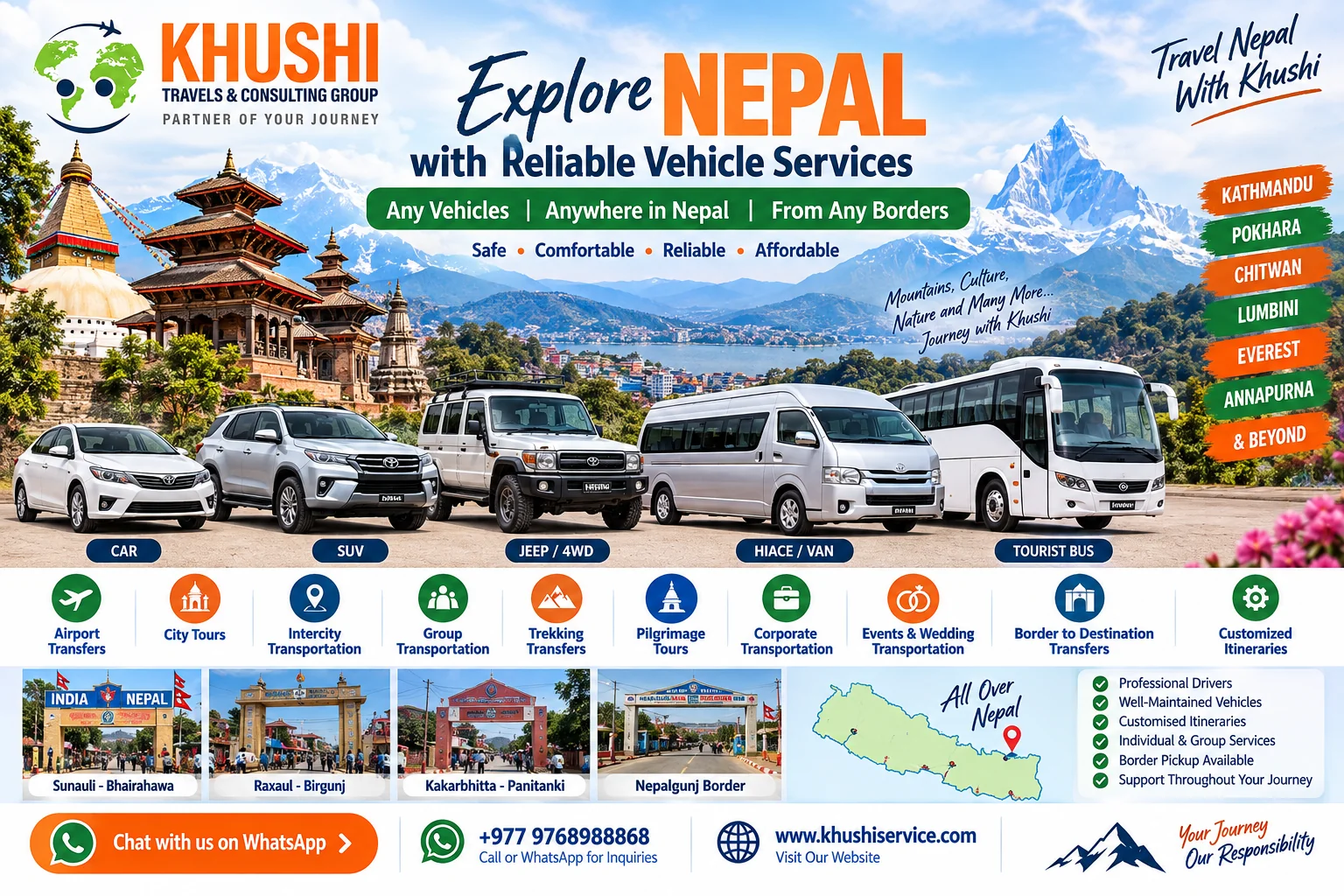
Transportation: Our ground transportation arrangements can include private cars, SUVs, Scorpio, Hiace, tourist buses, local jeeps, airport transfers and domestic flights.
Guides and Local Support: We can coordinate local guides, trekking guides, wildlife guides and activity-specific support according to the destination.
Permits and Documentation: Where applicable, we can assist with national park entry, conservation-area permits, trekking documentation, TIMS-related arrangements and destination-specific formalities. Actual requirements are checked according to the regulations applicable to the selected destination.
Our Eco Tourism Approach
Eco tourism should not simply be a marketing label. It should influence how a trip is designed and operated.
Local Accommodation: Where appropriate, we prioritize locally operated accommodation and community-based stays.
Local Employment: We work with local guides, drivers, porters, cooks and tourism service providers according to the destination.
Local Food: Travelers can experience local cuisine and support local food businesses.
Responsible Wildlife Viewing: Wildlife experiences should follow park regulations and ethical viewing practices.
Waste Reduction: Travelers are encouraged to reduce single-use plastics and carry waste responsibly.
Cultural Respect: Local customs, religious practices, traditional communities and cultural heritage should be respected.
Community Benefit: Tourism should create opportunities for local businesses and residents rather than concentrating tourism expenditure outside the destination.
Eco Tourism for International Travelers
International visitors can combine multiple forms of responsible tourism into one Nepal itinerary.
A traveler could combine Chitwan, Pokhara, Ghandruk and Kathmandu for a journey combining wildlife, mountains, village tourism and culture.
Another itinerary could combine Kathmandu, Langtang, Pokhara and Chitwan for travelers interested in trekking, mountain landscapes, lakes and wildlife.
Travelers with more time can consider Kathmandu, Shivapuri, Chitwan and Bardia for a nature and wildlife-focused journey.
The Explore Nepal Tour: Kathmandu, Pokhara and Muktinath can also be customized with nature, community and responsible travel experiences for travelers who want to combine cultural, mountain and landscape tourism.
Eco Tourism for Families
Families can enjoy eco tourism without undertaking difficult high-altitude trekking.
Suitable experiences can include wildlife safari, birdwatching, short forest walks, village visits, farm experiences, local food, cultural activities, lakeside nature activities and short scenic hikes.
A family itinerary can be designed around comfortable accommodation, shorter travel days and age-appropriate activities.
Eco Tourism for Senior Travelers
Eco tourism can also be designed for senior travelers.
Instead of long trekking days, an itinerary can emphasize comfortable transportation, short nature walks, wildlife safari, scenic viewpoints, community experiences, cultural tourism, wellness and comfortable accommodation.
The program can be adjusted according to individual mobility, preferred pace and travel requirements.
Eco Tourism for Students and Educational Groups
Eco tourism can provide valuable educational opportunities.
Student groups can study biodiversity, wildlife conservation, forest ecosystems, wetlands, climate change, sustainable tourism, community development, traditional agriculture and local culture.
Customized educational itineraries can include guided interpretation, community interaction and conservation-focused experiences.
Eco Tourism for International Travel Agencies and B2B Partners
Khushi Travels can also work with overseas travel agencies and tour operators that want to develop eco tourism products in Nepal.
We can provide local ground handling including airport reception, transportation, hotels, homestays, trekking, wildlife programs, local guides, permits, meals, community experiences, tour coordination, emergency assistance and itinerary adjustments.
This makes Khushi Travels suitable as a Nepal-based destination management and ground-handling partner for responsible tourism programs.
Best Time for Eco Tourism in Nepal
The ideal season depends on the destination and activity.
Spring: March to May is generally suitable for trekking, village tourism, nature walks, flowering landscapes and mountain views.
Autumn: September to November is generally favorable for trekking, mountain scenery and many outdoor experiences, subject to current weather and route conditions.
Winter: December to February can be suitable for lower-altitude hiking, wildlife tourism and selected community experiences, although high-altitude trekking requires careful planning.
Monsoon: June to August can provide lush landscapes and some specialized experiences, but heavy rainfall can affect roads, trails and mountain travel.
For any current trip, travelers should check actual weather and destination conditions rather than relying solely on a general seasonal calendar.
How Travelers Can Practice Responsible Tourism in Nepal
Carry a Reusable Water Bottle: Reduce unnecessary use of disposable plastic bottles.
Follow Leave No Trace Principles: Do not leave garbage along trails, forests, rivers or campsites.
Use Local Services: Choose local guides, homestays, restaurants, lodges and transport providers where practical.
Respect Wildlife: Never feed or intentionally disturb wildlife.
Respect Local Communities: Ask permission before photographing people, homes and private activities.
Respect Religious and Cultural Sites: Follow local dress, photography and behavioral rules.
Avoid Unnecessary Resource Consumption: Use water and energy responsibly, particularly in remote areas.
Support Local Products: Buy genuine locally produced crafts and products.
Frequently Asked Questions About Eco Tourism in Nepal
What is eco tourism in Nepal? Eco tourism in Nepal is responsible travel focused on nature, wildlife, conservation, local communities, cultural heritage and reducing negative environmental impacts.
Why is Nepal suitable for eco tourism? Nepal has diverse ecosystems ranging from subtropical forests and wetlands to Himalayan environments, along with protected areas and culturally diverse communities.
What are the best eco tourism destinations in Nepal? Important options include Chitwan, Bardia, Koshi Tappu, Langtang, Annapurna, Manaslu, Shivapuri-Nagarjun, Ghandruk, Sirubari, Panauti, Helambu and other community and nature-based destinations.
Is eco tourism suitable for families? Yes. Eco tourism can include wildlife, short hikes, village experiences, nature walks, birdwatching and cultural activities suitable for families.
Can senior travelers enjoy eco tourism in Nepal? Yes. Itineraries can be designed around comfortable transportation, short walks, wildlife experiences, cultural activities and suitable accommodation.
Can eco tourism include trekking? Yes. Sustainable trekking is one of Nepal's important forms of nature-based tourism.
Is Chitwan suitable for eco tourism? Yes. Chitwan provides opportunities for wildlife, birdwatching, canoeing, nature walks and community experiences.
Is Bardia good for wildlife photography? Yes. Bardia is suitable for wildlife-focused photography programs, subject to park regulations and wildlife conditions.
What can travelers experience in Koshi Tappu? Koshi Tappu is particularly suitable for birdwatching, wetlands, wildlife observation and nature photography.
Can I stay in a community homestay? Yes. Community homestays can be incorporated into suitable eco tourism itineraries.
Does eco tourism mean camping? No. Eco tourism can include hotels, lodges, eco-lodges, tea houses, homestays and camping depending on the destination.
Can eco tourism include cultural tourism? Yes. Cultural experiences can complement nature and community tourism.
Can eco tourism include wildlife safari? Yes. Wildlife safari is an important component of nature tourism in Nepal.
Is birdwatching available in Nepal? Yes. Nepal provides birdwatching opportunities in wetlands, forests, protected areas, hills and mountain environments.
Can photographers join eco tourism tours? Yes. Wildlife, bird, mountain, landscape and cultural photography can be incorporated into customized programs.
What is community-based tourism? Community-based tourism involves local residents participating in tourism activities and receiving economic or social benefits from tourism.
How does eco tourism help local communities? Tourism can generate income through accommodation, guiding, transportation, food, handicrafts and community tourism services.
What is the best season for eco tourism in Nepal? It depends on the destination and activity. Spring and autumn are generally suitable for many trekking and outdoor experiences, while wildlife and wetland destinations have their own seasonal considerations.
Can eco tourism be arranged from Kathmandu? Yes. Kathmandu can be the starting point for short nature trips, forest hikes, village experiences, trekking and longer eco tourism circuits.
Can Khushi Travels arrange transportation? Yes. We can coordinate private vehicles, SUVs, Scorpio, Hiace, tourist buses, local jeeps, airport transfers and domestic flights according to the itinerary.
Can Khushi Travels arrange accommodation? Yes. We can arrange hotels, lodges, homestays, resorts, tea houses and other suitable accommodation according to destination and availability.
Can Khushi Travels arrange local guides? Yes. Local guides and activity-specific support can be arranged according to the selected destination.
Can Khushi Travels arrange wildlife tours? Yes. We can arrange wildlife and nature programs in destinations such as Chitwan, Bardia, Koshi Tappu, Shuklaphanta and other suitable areas.
Can Khushi Travels customize eco tourism packages? Yes. Customized eco tourism programs can be designed according to travel dates, group size, budget, interests and physical ability.
Can international travel agencies work with Khushi Travels? Yes. Khushi Travels can provide Nepal-based ground handling and destination management support for international travel agencies and tour operators.
Can eco tourism include wellness? Yes. Nature, yoga, meditation, retreats and cultural experiences can be combined into eco-wellness programs.
Can eco tourism be combined with trekking? Yes. Community and conservation-area trekking can form the main component of a sustainable Nepal itinerary.
Can eco tourism be affordable? Yes. Homestays, local transportation, community accommodation and shorter nature experiences can help create cost-effective eco tourism programs.
What should travelers pack for an eco tour? Depending on the destination, travelers should consider comfortable walking shoes, reusable water bottles, weather-appropriate clothing, sun protection, personal medication, a daypack and reusable travel items.
Do eco tourism trips require permits? Some national parks, conservation areas and trekking regions require permits or entry fees. Requirements depend on the destination and current regulations.
How should travelers behave around wildlife? Travelers should maintain an appropriate distance, avoid feeding animals and never chase or deliberately disturb wildlife.
How can tourists reduce plastic waste? Using reusable bottles, minimizing disposable packaging and carrying waste responsibly are simple ways to reduce environmental impact.
Can students participate in eco tourism? Yes. Educational eco tourism programs can focus on biodiversity, conservation, community development, climate awareness and sustainable tourism.
Can corporate groups participate in eco tourism? Yes. Nature retreats, community experiences, wellness programs and responsible outdoor activities can be customized for corporate groups.
Can wildlife and mountain tourism be combined? Yes. Nepal's geography makes it possible to combine Terai wildlife experiences with mid-hill and Himalayan destinations.
What makes tourism responsible? Responsible tourism considers environmental impact, local economic benefit, cultural respect, conservation and community participation.
Is eco tourism possible during monsoon? Yes, but route selection and weather conditions are important. Roads, trails and mountain areas can be affected by heavy rainfall.
Can eco tourism include village homestays? Yes. Homestays are an excellent way to experience local communities, food, traditions and rural lifestyles.
Can eco tourism be combined with photography? Yes. Wildlife, birdwatching, mountain landscapes, forests, villages and cultural experiences can all be incorporated into photography-focused itineraries.
Why choose Khushi Travels for eco tourism in Nepal? Khushi Travels can coordinate accommodation, transportation, guides, trekking, wildlife experiences, community tourism, permits and customized ground services, allowing travelers to manage multiple elements of their Nepal journey through one local travel partner.
Plan Your Eco Tourism Journey with Khushi Travels
Eco tourism in Nepal is much more than visiting a beautiful natural destination. It is about how you travel, where you stay, who benefits, how you interact with communities, how you treat wildlife and what you leave behind.
From wildlife-rich national parks and wetlands to Himalayan trekking routes, village homestays, forest trails, cultural settlements and wellness destinations, Nepal provides opportunities for many different types of responsible travelers.
Whether you are planning a short nature escape from Kathmandu, a wildlife photography tour, a community homestay, a birdwatching holiday, a Himalayan eco trek, a family nature vacation or a multi-destination sustainable Nepal tour, Khushi Travels can design the itinerary around your interests.
Our approach combines Nature + Conservation + Community + Culture + Local Experiences + Responsible Travel + Professional Ground Support.
For individual travelers, families, groups, photographers, students, international travel agencies and B2B tour operators, we can develop customized eco tourism programs throughout Nepal.
Travel Nepal. Explore Nature. Support Communities. Respect Culture. Leave a Positive Footprint.
Contact Khushi Travels and Consulting Group Pvt. Ltd.
Khushi Travels and Consulting Group Pvt. Ltd.
Location: Sorahkhutte, Thamel, Kathmandu, Nepal.
Website: www.khushiservice.com
Email: info@khushiservice.com
WhatsApp / Contact: +977 9768988868 / +977 9768988869
General Contact: +977 9741707759
Similar Blogs

We are associated with