

Restricted Areas of Nepal: Complete Guide to Permits, Costs, Documents and Itineraries For 2026/2027

Restricted Areas of Nepal: Complete Guide to Permits, Costs, Documents and Itineraries For 2026/2027
Nepal is famous for its Himalayan trekking routes, but some of the country's most spectacular destinations are located in areas classified by the Government of Nepal as Restricted Areas. These regions are known for their remote landscapes, high mountains, ancient villages, Tibetan-influenced cultures, monasteries, and limited infrastructure.
Unlike regular trekking destinations, restricted areas require special trekking permits and are subject to additional regulations. Most restricted-area treks must be arranged through a government-registered trekking agency, and trekkers generally need to travel with a licensed guide.
Popular restricted-area destinations include Upper Mustang, Upper Dolpo, Lower Dolpo, Manaslu, Tsum Valley, Nar Phu, Humla, Kanchenjunga, Mugu, Bajhang, Darchula, Dolakha, Rasuwa, Sankhuwasabha, and parts of Solukhumbu.
These areas offer some of Nepal's most rewarding trekking experiences, but they also require careful preparation because of their remoteness, limited road access, limited medical facilities, and changing weather conditions.
What Are Restricted Areas in Nepal?
Restricted Areas are specific parts of Nepal where the Government regulates trekking and tourism because of their geographical location, environmental sensitivity, cultural importance, border sensitivity, or limited infrastructure.
Foreign trekkers cannot simply enter these areas independently. A special trekking permit must be obtained before entering the designated restricted zone.
The permit is different from a national park or conservation-area entry permit. Depending on the route, trekkers may need several permits, such as:
- Restricted Area Trekking Permit
- TIMS Card
- National Park Entry Permit
- Conservation Area Permit
- Local government or heritage fees, where applicable
The exact permits depend on the trekking route.
Why Visit the Restricted Areas of Nepal?
Restricted-area trekking is ideal for travelers looking for quieter trails and less-commercialized Himalayan experiences.
Major attractions include:
- Remote Himalayan valleys
- Ancient Tibetan-influenced villages
- Buddhist monasteries and chortens
- Traditional mountain lifestyles
- Dramatic high-altitude landscapes
- Snow-covered mountain passes
- Rare wildlife and alpine ecosystems
- Fewer trekkers compared with Everest and Annapurna
- Authentic cultural experiences
- Remote Himalayan settlements
Upper Mustang, for example, is famous for its desert-like Himalayan landscape and ancient Tibetan Buddhist culture, while Manaslu and Tsum Valley combine dramatic mountain scenery with traditional villages and monasteries.
Upper Dolpo and Lower Dolpo offer particularly remote landscapes, including high passes, deep valleys, traditional settlements, and access to the spectacular Phoksundo region.
Restricted Areas of Nepal and Current Permit Costs
The following table summarizes the principal restricted-area permit categories currently listed by the Department of Immigration.
| Restricted Area | Permit Cost | Main Trekking Highlights |
|---|---|---|
| Upper Mustang | USD 50/person/day | Lo Manthang, Lo-Gekar, Tibetan culture |
| Upper Dolpo | USD 500 first 10 days, then USD 50/day | Shey, Phoksundo, high passes, remote valleys |
| Manaslu | USD 100/week Sep-Nov; USD 75/week Dec-Aug | Larkya La, Manaslu, Nubri Valley |
| Humla | USD 50/week | Limi Valley, Tibetan culture, remote Himalaya |
| Taplejung / Kanchenjunga | USD 20/week for first 4 weeks | Kanchenjunga, Olangchung Gola region |
| Lower Dolpo | USD 20/week | Phoksundo region, remote Dolpo |
| Dolakha | USD 20/week | Gaurishankar region |
| Tsum Valley | USD 40/week Sep-Nov; USD 30/week Dec-Aug | Mu Gompa, Chumling, Chhekampar |
| Sankhuwasabha | USD 20/week for first 4 weeks | Makalu and remote eastern Himalaya |
| Solukhumbu restricted area | USD 20/week for first 4 weeks | Remote Khumbu areas |
| Rasuwa | USD 20/week | Gosaikunda restricted sections |
| Nar Phu / Manang | USD 100/week Sep-Nov; USD 75/week Dec-Aug | Nar, Phu, Kang La |
| Bajhang | USD 90/week | Saipal region |
| Mugu | USD 100/week | Remote western Himalaya |
| Darchula | USD 90/week | Vyas Valley and far-western Himalaya |
Important: Permit fees can change through government regulations. Travelers should confirm the current rate before departure.
1. Upper Mustang Restricted Area
Upper Mustang is one of Nepal's most famous restricted trekking destinations. The region lies north of the Annapurna and Dhaulagiri ranges and has a distinctive high-altitude desert landscape.
The trek passes through traditional villages, ancient monasteries, caves, dramatic cliffs, and the historic walled city of Lo Manthang.
For a detailed travel option, see the Upper Mustang Tiji Festival Tour 2027: Explore Lo Manthang & Ancient Himalayan Culture.
Permit Cost
USD 50 per person per day.
The permit covers designated parts of Lomanthang, Lo-Ghekar Damodarkunda, and Baragung Muktichetra.
Suggested Itinerary
Day 1: Kathmandu to Pokhara
Day 2: Pokhara to Jomsom and Kagbeni
Day 3: Kagbeni to Chele
Day 4: Chele to Ghami
Day 5: Ghami to Tsarang
Day 6: Tsarang to Lo Manthang
Day 7: Explore Lo Manthang
Day 8: Lo Manthang to Dhi Gaon or nearby area
Day 9: Return toward Ghami
Day 10: Ghami to Chele
Day 11: Chele to Kagbeni
Day 12: Kagbeni to Jomsom
Day 13: Fly Jomsom to Pokhara
Day 14: Pokhara to Kathmandu
The itinerary can be extended or customized depending on transportation, walking pace, and available time.
2. Manaslu Restricted Area
The Manaslu Circuit is one of Nepal's most popular restricted-area trekking routes. It combines spectacular mountain scenery with remote Himalayan villages and Tibetan-influenced culture.
The trek's major attraction is Larkya La Pass, which reaches approximately 5,106 meters.
For a detailed itinerary and package, see the Manaslu Circuit Trekking package.
Permit Cost
For the restricted Manaslu section:
September-November
- USD 100 per person per week
- USD 15 per person per day after the first week
December-August
- USD 75 per person per week
- USD 10 per person per day after the first week
Suggested Itinerary
Day 1: Kathmandu to Machha Khola
Day 2: Machha Khola to Jagat
Day 3: Jagat to Deng
Day 4: Deng to Namrung
Day 5: Namrung to Samagaon
Day 6: Acclimatization at Samagaon
Day 7: Samagaon to Samdo
Day 8: Samdo to Dharamsala
Day 9: Cross Larkya La Pass and descend to Bimthang
Day 10: Bimthang to Dharapani
Day 11: Dharapani to Besisahar
Day 12: Besisahar to Kathmandu
A longer itinerary can include acclimatization days and side trips.
3. Tsum Valley Restricted Area
Tsum Valley is a culturally rich Himalayan valley located in the Manaslu region. The valley is known for ancient Buddhist monasteries, traditional villages, and relatively limited tourist development.
Major attractions include Chumling, Chhekampar, Nile and Mu Gompa.
For travelers interested in exploring this region, see the Tsum Valley Trek package.
Permit Cost
September-November: USD 40 per person per week
December-August: USD 30 per person per week
Additional daily charges apply after the initial permit period.
Suggested Itinerary
Day 1: Kathmandu to Machha Khola
Day 2: Machha Khola to Jagat
Day 3: Jagat to Lokpa
Day 4: Lokpa to Chumling
Day 5: Chumling to Chhekampar
Day 6: Chhekampar to Nile
Day 7: Explore Nile and Mu Gompa
Day 8: Nile to Chumling
Day 9: Chumling to Lokpa
Day 10: Lokpa to Deng
Day 11: Deng to Namrung
Day 12: Namrung to Samagaon
Day 13: Samagaon to Dharapani
Day 14: Dharapani to Besisahar and onward
Tsum Valley can also be combined with the Manaslu Circuit.
4. Nar Phu Valley Restricted Area
Nar Phu is a remote Himalayan valley in the Manang region. The trek offers a combination of dramatic mountain landscapes, traditional villages, Buddhist monasteries, and high mountain passes.
The route is commonly combined with the Annapurna Circuit.
Permit Cost
September-November: USD 100 per person per week
December-August: USD 75 per person per week
Additional daily fees apply after the initial period.
Suggested Itinerary
Day 1: Kathmandu to Dharapani
Day 2: Dharapani to Koto
Day 3: Koto to Meta
Day 4: Meta to Phu Gaon
Day 5: Explore Phu Gaon
Day 6: Phu Gaon to Nar
Day 7: Explore Nar
Day 8: Nar to Ngawal via Kang La Pass
Day 9: Ngawal to Manang
Day 10: Manang to Yak Kharka
Day 11: Yak Kharka to Thorong Phedi
Day 12: Cross Thorong La to Muktinath
Day 13: Muktinath to Jomsom
Day 14: Jomsom to Pokhara
5. Upper Dolpo Restricted Area
Upper Dolpo is one of Nepal's most remote trekking regions. It is famous for its spectacular landscapes, high passes, Tibetan Buddhist culture, traditional villages, and the beautiful Shey Phoksundo region.
This trek requires significantly more preparation than many popular trekking routes.
Permit Cost
USD 500 per person for the first 10 days
After 10 days:
USD 50 per person per additional day
Because of the high permit cost, transportation and logistics, Upper Dolpo is generally considered one of Nepal's most expensive trekking destinations.
Suggested Itinerary
A typical Upper Dolpo expedition can take around 18-25 days or more, depending on the route.
Example:
Day 1: Kathmandu to Nepalgunj
Day 2: Nepalgunj to Juphal
Day 3: Juphal to Dunai
Day 4: Dunai to Ankhe
Day 5: Ankhe to Somdu
Day 6: Somdu to Phoksundo
Day 7: Explore Phoksundo Lake
Day 8: Phoksundo to Sallaghari
Day 9: Cross Kang La
Day 10: Shey region
Day 11-15: Shey and surrounding villages
Day 16-20: High-pass and remote valley section
Day 21: Return toward Juphal
Day 22: Juphal to Nepalgunj
Day 23: Nepalgunj to Kathmandu
The exact route should be designed according to weather, flight availability, camping requirements, and permit duration.
6. Lower Dolpo Restricted Area
Lower Dolpo is more accessible than Upper Dolpo but remains a remote Himalayan trekking destination.
The region includes the spectacular Phoksundo Lake, traditional villages, mountain passes, and remote valleys.
Permit Cost
USD 20 per person per week
After the initial week, an additional daily fee applies.
Suggested Itinerary
Day 1: Kathmandu to Nepalgunj
Day 2: Nepalgunj to Juphal
Day 3: Juphal to Dunai
Day 4: Dunai to Ankhe
Day 5: Ankhe to Somdu
Day 6: Somdu to Phoksundo
Day 7: Explore Phoksundo Lake
Day 8: Phoksundo to Yak Kharka
Day 9: Cross the relevant high pass
Day 10: Continue toward lower Dolpo settlements
Day 11-14: Trek through remote villages
Day 15: Return toward Juphal
Day 16: Fly to Nepalgunj
Day 17: Kathmandu
7. Humla Restricted Area
Humla is located in far-western Nepal and offers one of the country's most remote trekking experiences.
The Limi Valley is particularly famous for its Tibetan-influenced culture, traditional villages, monasteries, and dramatic mountain scenery.
Permit Cost
USD 50 per person per week
Additional daily charges apply after the first week.
Suggested Itinerary
Day 1: Kathmandu to Nepalgunj
Day 2: Nepalgunj to Simikot
Day 3: Simikot to Dharapuri
Day 4: Dharapuri to Kermi
Day 5: Kermi to Yari
Day 6: Yari to Hilsa
Day 7: Hilsa to Limi Valley region
Day 8-12: Explore Limi Valley
Day 13-16: Return toward Simikot
Day 17: Simikot to Nepalgunj
Day 18: Nepalgunj to Kathmandu
The itinerary varies significantly according to the selected route.
8. Kanchenjunga / Taplejung Restricted Area
The eastern region around Kanchenjunga is home to some of Nepal's most spectacular mountain scenery.
The restricted areas listed under Taplejung include parts of Phantanglung, Mikwakhola and Sirijunga Rural Municipalities.
Permit Cost
USD 20 per person per week for the first four weeks
The rate increases for longer stays.
Suggested Kanchenjunga Itinerary
Day 1: Kathmandu to Bhadrapur
Day 2: Drive to Taplejung area
Day 3: Taplejung to Sekathum
Day 4: Sekathum to Amjilosa
Day 5: Amjilosa to Gyabla
Day 6: Gyabla to Ghunsa
Day 7: Acclimatization at Ghunsa
Day 8: Ghunsa to Khangpachen
Day 9: Khangpachen to Lhonak
Day 10: Explore Kanchenjunga Base Camp area
Day 11: Return toward Ghunsa
Day 12-16: Return trek
Day 17: Drive toward Bhadrapur
Day 18: Fly to Kathmandu
Other Restricted Areas of Nepal
Nepal's restricted-area system is not limited to the major trekking destinations.
The Department of Immigration also lists restricted areas in:
Dolakha
Restricted sections include parts of Gaurishankar Rural Municipality and Bighu Rural Municipality.
Sankhuwasabha
Restricted sections include parts of Bhotkhola and Makalu Rural Municipalities.
Solukhumbu
A restricted section exists within Khumbu Pasang Lhamu Rural Municipality.
Rasuwa
Certain areas of Gosaikunda Rural Municipality are classified as restricted.
Bajhang
Saipal Rural Municipality is included in the restricted-area permit system.
Mugu
Mugumakarmarong Rural Municipality is included in the restricted-area list.
Darchula
Vyas Rural Municipality is included in the restricted-area system.
The applicable permit fees vary by region and should be checked before booking.
Documents Required for Restricted Area Trekking
Foreign trekkers should prepare the following documents.
1. Valid Passport
A valid passport is required for the trekking permit application.
2. Valid Nepal Visa
The passport should contain a valid Nepal visa where applicable.
3. Passport Details
A clear copy of the passport biodata page is required for the permit application.
4. Travel Insurance
Travel insurance details are required as part of the restricted-area permit application.
For high-altitude trekking, insurance should cover:
- Trekking activities
- High-altitude evacuation
- Emergency medical treatment
- Helicopter evacuation, where applicable
5. Passport-Size Photograph
Keep recent passport-size photographs available, although the exact digital requirements may vary depending on the application process.
6. Trekking Itinerary
A detailed itinerary is required for the restricted-area permit application.
The itinerary should be prepared on the trekking agency's official letterhead with appropriate authorization.
7. Guide and Porter Insurance
The Department's current checklist also requires insurance documentation for guides and porters accompanying the trek.
Is a Guide Mandatory?
Restricted-area trekking is not the same as independent trekking on ordinary routes.
A restricted-area permit is processed through a government-registered trekking agency, and the trek should be organized according to the government's applicable guide and agency requirements.
In addition, Nepal Tourism Board's current TIMS provisions require licensed guides on numerous major trekking routes, including Manaslu, Tsum Valley, Nar Phu, Upper Mustang, Upper Dolpo, Lower Dolpo, Humla and Kanchenjunga routes.
Travelers should therefore plan restricted-area treks with a registered trekking agency and licensed guide rather than attempting to arrange the trek independently.
TIMS Card for Restricted Area Trekking
TIMS means Trekkers' Information Management System.
Depending on the route and current regulations, trekkers may need a TIMS Card in addition to their restricted-area permit.
The current Nepal Tourism Board information lists a charge of:
- NPR 1,000 for SAARC nationals
- NPR 2,000 for other nationals
TIMS requirements and fees can change, so the trekking agency should confirm the applicable requirement for the exact route before departure.
Other Permits You May Need
A restricted-area permit does not necessarily replace all other permits.
Depending on your route, you may also require:
Conservation Area Permit
For routes passing through conservation areas such as Annapurna or Manaslu.
National Park Entry Permit
Required where the trekking route enters a national park.
TIMS Card
Required on applicable trekking routes.
Local Fees
Some municipalities or local destinations may have additional entrance or local charges.
Your trekking agency should check the complete permit combination for the exact itinerary.
Estimated Cost of Restricted Area Trekking
The trekking permit is only one part of the total cost.
Your total budget can include:
| Expense | Typical Cost Range |
|---|---|
| Restricted Area Permit | USD 20-500+ depending on region |
| TIMS | NPR 1,000-2,000 where applicable |
| Conservation/National Park Permit | Depends on route |
| Guide | Approximately USD 25-40/day |
| Porter | Approximately USD 20-30/day |
| Accommodation | Approximately USD 15-40/night |
| Food | Approximately USD 20-40/day |
| Domestic Flights | Approximately USD 100-500+ depending on route |
| Private Jeep/Transport | Approximately USD 100-250+ per vehicle/day |
| Insurance | Approximately USD 50-200+ |
| Agency Service | Depends on itinerary and group size |
These are planning estimates rather than fixed government rates. The actual package price depends on group size, season, transportation, accommodation, guide/porter requirements, camping logistics, domestic flights, and route.
Approximate Total Trekking Budget
For planning purposes, travelers can consider the following broad ranges:
Manaslu Trek
USD 1,200-2,000+ per person
Tsum Valley Trek
USD 1,200-1,900+ per person
Nar Phu Trek
USD 1,300-2,100+ per person
Upper Mustang Trek
USD 1,500-2,500+ per person
Kanchenjunga Trek
USD 1,500-2,500+ per person
Lower Dolpo Trek
USD 1,800-3,000+ per person
Humla / Limi Valley Trek
USD 1,800-3,000+ per person
Upper Dolpo Trek
USD 3,000-5,000+ per person
Upper Dolpo is considerably more expensive because of its high restricted-area permit cost, remote domestic flights, camping logistics, staff, food transportation, and longer expedition duration.
These figures should be treated as approximate planning budgets, not quotations.
Best Time to Trek in Nepal's Restricted Areas
The ideal season depends on the specific region.
Spring: March to May
Spring is one of the best trekking seasons.
Advantages include:
- Stable weather
- Clear mountain views
- Rhododendron flowers
- Comfortable daytime temperatures
- Good visibility
Kanchenjunga, Manaslu and other eastern Himalayan routes are particularly attractive during spring.
Autumn: September to November
Autumn is generally considered the best overall season for Himalayan trekking.
Advantages include:
- Clear skies
- Excellent mountain visibility
- Stable weather
- Comfortable trekking conditions
- Good trail conditions
However, permit fees for some restricted areas such as Manaslu, Tsum Valley and Nar Phu are higher during September-November.
Winter: December to February
Winter is possible in some lower-altitude areas but can be difficult at high elevations.
Major challenges include:
- Snow
- Freezing temperatures
- Closed high passes
- Limited accommodation
- Flight disruptions
Upper Mustang can be particularly attractive in winter because of its relatively dry rain-shadow climate, but route conditions should still be checked.
Monsoon: June to August
Many trekking routes in Nepal receive heavy rainfall during the monsoon.
However, some rain-shadow destinations such as Upper Mustang and parts of Dolpo can remain suitable.
Road and flight conditions can still cause delays, so flexibility is important.
Accommodation in Restricted Areas
Accommodation varies significantly from region to region.
Teahouse Trekking
Available on relatively developed routes such as:
- Manaslu
- Upper Mustang
- Nar Phu
- Some Kanchenjunga routes
Camping Trekking
Often required or strongly recommended in:
- Upper Dolpo
- Lower Dolpo
- Humla
- Remote Kanchenjunga routes
- Some remote western Himalayan routes
Camping treks require additional staff, tents, cooking equipment, food supplies, and logistics.
Food and Drinking Water
Teahouses generally serve simple meals such as:
- Dal Bhat
- Noodles
- Pasta
- Rice
- Soup
- Momos
- Tibetan bread
- Eggs
- Potatoes
- Porridge
- Tea and coffee
In remote camping areas, meals are prepared by the trekking kitchen staff.
Trekkers should drink treated or purified water. Water purification tablets, filters, or a reliable purification system are recommended.
Altitude and Acclimatization
Many restricted-area treks reach elevations above 4,000 meters, with some crossing passes above 5,000 meters.
Altitude sickness is therefore an important consideration.
A good itinerary should include:
- Gradual altitude gain
- Acclimatization days
- Adequate hydration
- Appropriate walking pace
- Proper rest
- Emergency evacuation planning
Do not ignore symptoms such as severe headache, difficulty breathing, confusion, unusual weakness, or loss of coordination.
If serious altitude-related symptoms develop, descending to a lower elevation is often the most important response.
Restricted Area Trekking Difficulty
| Trek | Difficulty |
|---|---|
| Tsum Valley | Moderate to Difficult |
| Manaslu Circuit | Difficult |
| Upper Mustang | Moderate to Difficult |
| Nar Phu | Difficult |
| Kanchenjunga | Difficult |
| Lower Dolpo | Difficult to Very Difficult |
| Humla | Difficult |
| Upper Dolpo | Very Difficult |
Difficulty depends on altitude, distance, weather, accommodation, trail conditions, high passes, and the trekker's physical condition.
What to Pack for a Restricted Area Trek
Essential equipment includes:
- Good trekking boots
- Waterproof jacket
- Down jacket
- Thermal layers
- Fleece jacket
- Trekking trousers
- Warm hat
- Gloves
- Sunglasses
- Sunscreen
- Sleeping bag
- Water bottle
- Water purification system
- Headlamp
- Trekking poles
- First-aid kit
- Personal medication
- Power bank
- Universal travel adapter
- Passport copies
- Insurance documents
- Permit copies
- Cash in Nepalese rupees
For camping treks, the agency normally provides major camping equipment.
Safety and Emergency Preparation
Restricted areas are remote and may have limited medical facilities.
Before departure:
- Purchase suitable travel insurance.
- Confirm that your insurance covers high-altitude trekking.
- Confirm helicopter evacuation coverage.
- Carry emergency contact details.
- Keep copies of your passport and permits.
- Inform your family or emergency contact about your itinerary.
- Follow your guide's instructions.
- Allow additional days for weather and transportation delays.
Domestic flights to remote mountain airports can be affected by weather. Building buffer days into the itinerary is strongly recommended.
Can Restricted Area Treks Be Customized?
Yes.
Restricted-area trekking itineraries can usually be customized according to:
- Number of trekking days
- Fitness level
- Arrival and departure dates
- Domestic flights
- Private jeep transportation
- Accommodation preference
- Camping or teahouse trekking
- Acclimatization requirements
- Side trips
- Cultural experiences
- Group size
For example, travelers can combine:
Manaslu + Tsum Valley
Nar Phu + Annapurna Circuit
Upper Mustang + Annapurna Circuit
Upper Dolpo + Lower Dolpo
Kanchenjunga North + South Base Camp
The feasibility depends on permits, route conditions, transportation, and available time.
Why Book a Restricted Area Trek Through a Registered Agency?
Restricted trekking requires more preparation than ordinary trekking.
A registered agency can help arrange:
- Restricted-area permits
- TIMS
- Conservation-area permits
- National park permits
- Licensed guide
- Porter
- Insurance documentation
- Domestic flights
- Private transportation
- Accommodation
- Camping logistics
- Food and equipment
- Emergency coordination
- Trekking itinerary
- Permit documentation
The Department of Immigration currently operates the restricted trekking permit service through its online system, and agencies must maintain their required company and tourism-related documentation to submit applications.
Important Notes for Restricted Area Trekkers
- Restricted-area permits are generally issued for specified routes and periods.
- Trekkers should remain within the permitted route.
- Carry your permit during the trek.
- Authorities may request to see your permit.
- Do not assume a regular trekking permit allows access to a restricted zone.
- Permit fees can change.
- Domestic flights can be delayed due to weather.
- Remote treks require sufficient contingency days.
- Travel insurance is strongly recommended.
- The exact permit combination should be confirmed before departure.
Frequently Asked Questions
What is a restricted area in Nepal?
A restricted area is a designated part of Nepal where the Government regulates tourist access and requires special trekking permits.
Can I trek in a restricted area independently?
Restricted-area trekking should be arranged through a government-registered trekking agency, and applicable guide requirements must be followed.
What is the most expensive restricted-area permit?
Upper Dolpo has one of the highest permit charges, currently USD 500 per person for the first 10 days, followed by USD 50 per additional day.
Is Upper Mustang still a restricted area?
Yes. Upper Mustang remains under the restricted-area permit system.
How much does an Upper Mustang permit cost?
The current official rate is USD 50 per person per day.
Is Manaslu a restricted area?
Parts of the Manaslu region are classified as restricted and require a special permit.
Is Tsum Valley a restricted area?
Yes. Tsum Valley requires a special restricted-area permit.
Do I need TIMS for restricted-area trekking?
TIMS requirements depend on the route and current regulations. Many major trekking routes require TIMS and a licensed guide.
Do I need travel insurance?
Insurance documentation is required as part of the current restricted-area permit application process, and comprehensive high-altitude trekking and evacuation coverage is strongly recommended.
How many days are required for a restricted-area trek?
It depends on the destination. Tsum Valley may take around 10-15 days, Manaslu around 12-18 days, Upper Mustang around 12-18 days, while Upper Dolpo and Humla can require 18-30 days or more.
Which restricted-area trek is best for beginners?
Among restricted-area routes, Upper Mustang is generally more accessible from a logistical perspective, but it still requires proper preparation and a restricted-area permit.
Which restricted-area trek is the most remote?
Upper Dolpo, Lower Dolpo and Humla are among the most remote trekking regions in Nepal.
Can restricted-area treks be done by private groups?
Yes. Private departures can be arranged for couples, families, friends, or corporate groups, subject to applicable permit and guide requirements.
Can I combine two restricted areas?
Some combinations are possible, but they depend on geography, permits, transportation, trekking seasons and available time.
Are permit fees included in trekking packages?
They can be included in a trekking package, but travelers should always check the quotation carefully to confirm which permits, transportation, accommodation and services are included.
Final Thoughts
Nepal's restricted areas offer some of the country's most extraordinary trekking experiences. From the ancient kingdom of Upper Mustang and the remote valleys of Dolpo to the spectacular mountains of Manaslu, Kanchenjunga, Nar Phu and Humla, these routes provide a deeper experience of Nepal's Himalayan landscape and culture.
For travelers who want to explore Nepal beyond the classic Everest and Annapurna routes, restricted areas offer an opportunity to experience remote Himalayan landscapes, traditional communities and authentic mountain culture with fewer trekkers and a greater sense of adventure.
However, restricted-area trekking requires more planning than standard trekking. Proper permits, a registered trekking agency, licensed guides, insurance, transportation arrangements, acclimatization and contingency planning are essential.
Before booking, always confirm the latest permit regulations and fees with the Department of Immigration or a registered Nepal trekking agency, as government requirements can change.
Plan Your Restricted Area Trek in Nepal
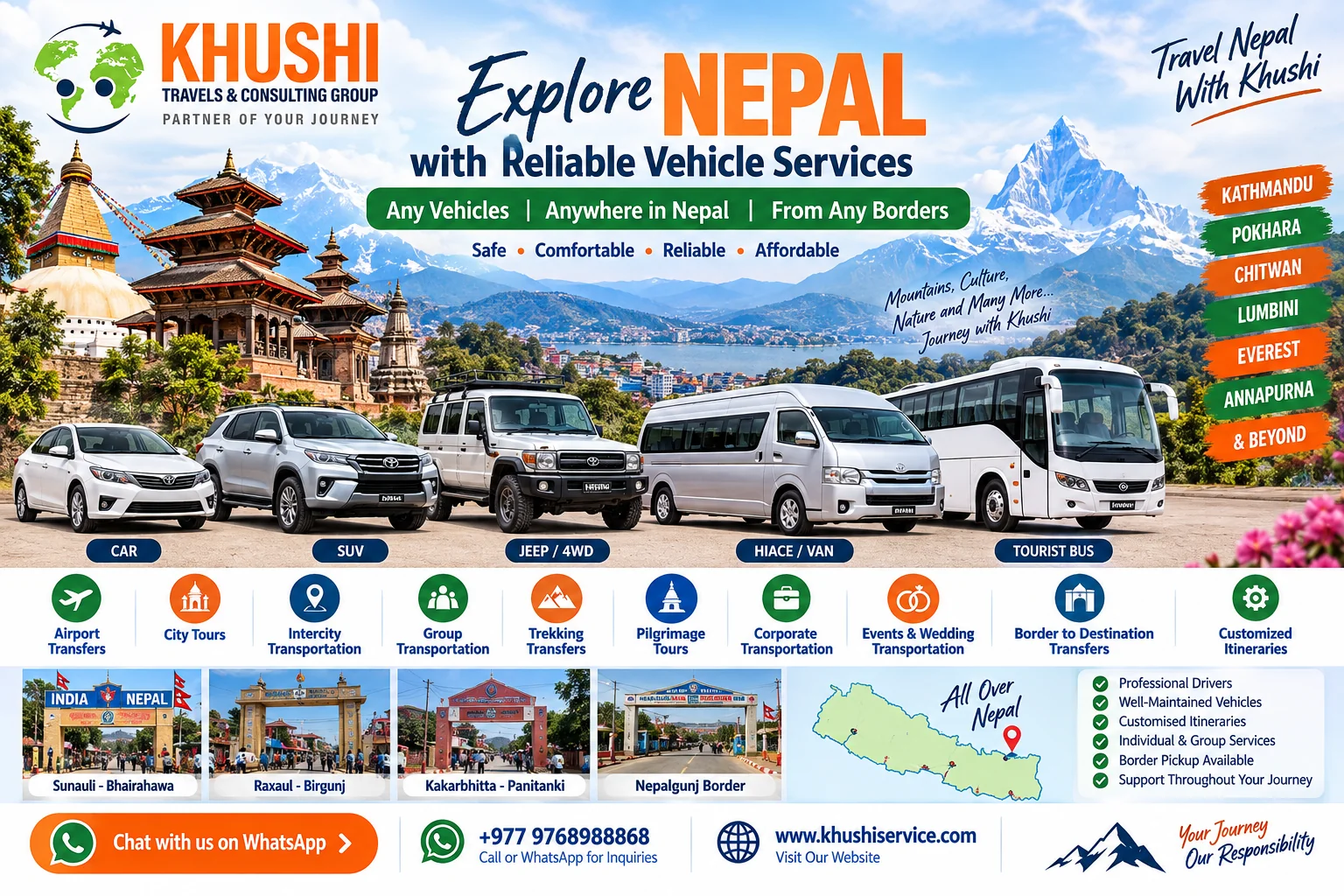
Khushi Travels and Consulting Group can arrange customized restricted-area trekking programs in Nepal, including:
- Upper Mustang
- Manaslu Circuit
- Tsum Valley
- Nar Phu Valley
- Upper Dolpo
- Lower Dolpo
- Kanchenjunga
- Humla
- Other restricted Himalayan regions
Packages can be customized according to your travel dates, group size, budget, trekking duration, accommodation preference and transportation requirements.
Contact a registered Nepal trekking agency to check the latest permit requirements, availability and itinerary before confirming your trip.
Similar Blogs
We are associated with