Is Mardi Himal Good for Beginners? 2027 Guide

Yes, with conditions. The Mardi Himal Trek in the Annapurna Conservation Area near Pokhara needs no technical climbing and uses teahouses, so fit first-timers can complete the trek in 5 to 7 days. The catch is altitude. Mardi Himal Base Camp sits at about 4,500m, higher than Annapurna Base Camp, so slow pacing and an extra acclimatization night matter more than fitness alone.
Why Mardi Himal Gets Called a Beginner Trek
Several real advantages explain the reputation:
- Short drive to the trailhead. Kande and Dhampus Phedi are the usual starting points, roughly a 40-minute drive from Pokhara.
- A young, well-served route. The trail officially opened in 2012, and some operators call Mardi Himal one of the shortest and easiest treks in Nepal.
- Simple paperwork. No restricted-area permit applies, which keeps the paperwork lighter than on Manaslu or Upper Mustang.
- Quieter than the big names. Mardi Himal is growing in popularity but is less crowded than Annapurna Base Camp.
- No technical climbing. The trail is a walking route through rhododendron forest and then open ridge.
“Beginner-friendly” can hide one fact, though. The highest point is above most first-time trekkers’ previous experience.
Mardi Himal at a Glance
| Detail | Figure |
|---|---|
| Region | Annapurna Conservation Area, near Pokhara |
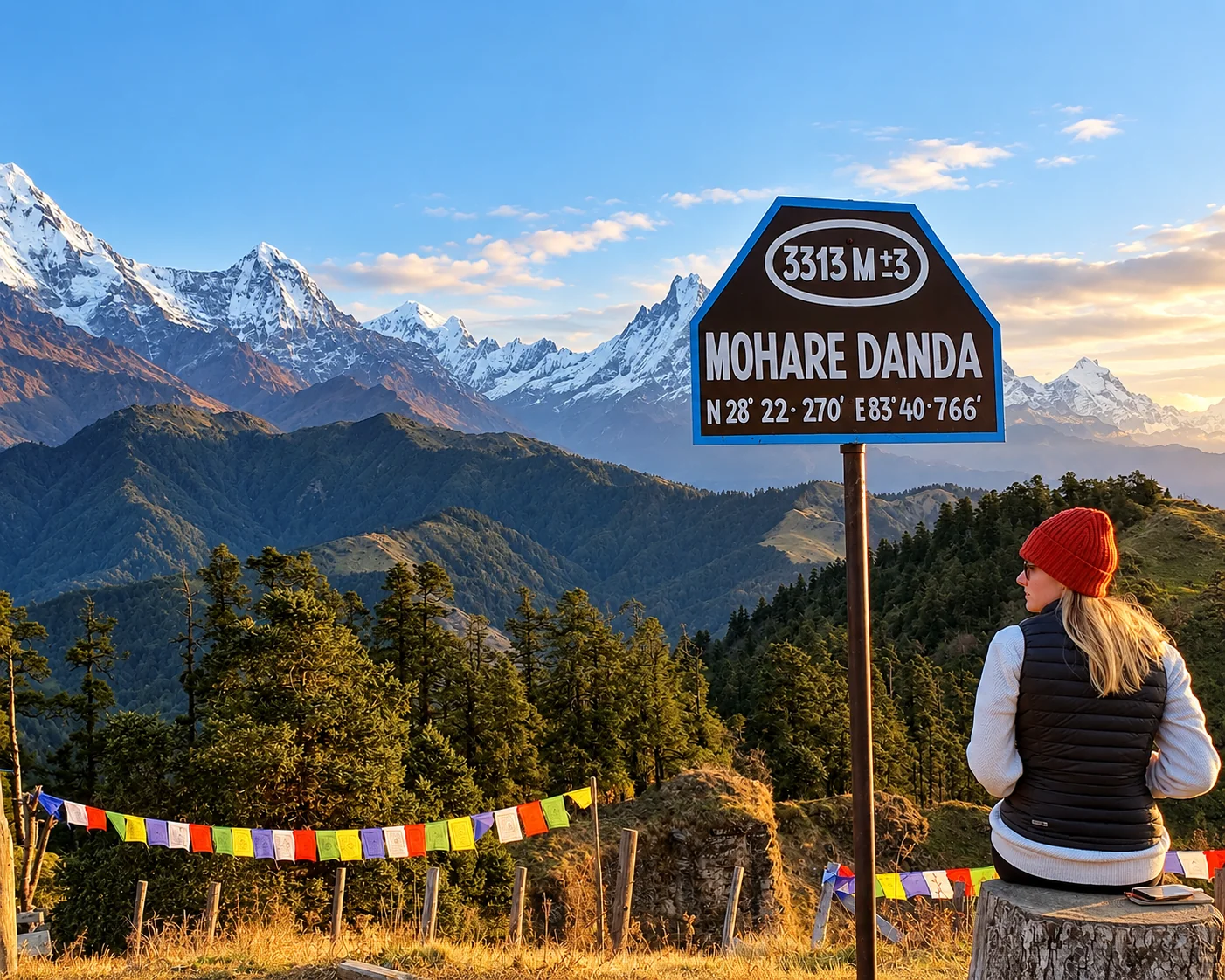
| Highest point | Mardi Himal Base Camp, about 4,500m |
| Upper viewpoint | About 4,200m, used when conditions stop the final push |
| High Camp | Roughly 3,550m to 3,900m, depending on the source |
| Typical trekking time | 5 to 7 days (packages including Kathmandu and Pokhara days run 9 to 11 days) |
| Daily walking | About 4 to 6 hours, plus the pre-dawn push from High Camp |
| Technical climbing | None |
| Permits | ACAP required; TIMS and guide rules described differently by operators |
| Best seasons | Spring (March to May) and autumn (September to November) |
| Difficulty | Moderate: short on days, demanding on altitude |
The Route, Stage by Stage
| Stage | Approx. altitude | What to expect |
|---|---|---|
| Pokhara to Kande or Dhampus Phedi | Pokhara ~822m; trailheads ~1,700m to 2,050m | A 30 to 40 minute drive |
| Deurali or Pothana | ~1,900m to 2,100m | Forest climb and first tea stops |
| Forest Camp (Kokar) | ~2,600m | Rhododendron and oak forest, teahouses |
| Low Camp | ~3,050m to 3,150m | Forest thins; open ridge views toward Machhapuchhre |
| High Camp | ~3,550m to 3,900m | Cold nights; base for the sunrise push |
| Upper viewpoint | ~4,200m | Close views of the Fishtail and Annapurna South |
| Mardi Himal Base Camp | ~4,500m | Highest point of the trek |
| Descent via Siding | ~1,750m | Gurung village life, then a drive to Pokhara |
Altitude figures for High Camp and the stages around it differ between operators, so treat the numbers above as approximate and confirm them with the guide.
What Makes Mardi Himal Beginner-Friendly
- Gradual forest start. The first two days stay under a canopy, which makes the body’s early adjustment easier.
- Teahouse support. Each stage ends at a lodge with meals, so no tents or cooking gear are required.
- Clear views from day three. Mardi Himal, Machhapuchhre (Fishtail), Annapurna South, and Hiunchuli appear close from Low Camp onward.
- Flexible length. A 6 to 7 day schedule leaves a buffer for weather or a slow day.
- Easy exit. The descent through Siding returns to a Pokhara road within a day.
What Beginners Underestimate
Altitude arrives fast for the number of days. On one commonly sold itinerary, sleeping altitude climbs from about 1,925m to 2,600m, then 3,150m, then 3,600m over three consecutive nights. The last two gains are about 550m and 450m, at or just above the 300 to 500m daily guideline often quoted for sleeping altitude above 3,000m.
The summit morning starts in the dark. Operators describe leaving High Camp around 4 to 4:30 AM to reach the base camp or viewpoint for sunrise. The round trip is quoted anywhere from about 2 to 5 hours depending on operator, pace, and conditions.
Nights are cold. High Camp can fall near or below freezing in spring and autumn and lower in winter, so a warm sleeping bag matters.
The upper ridge is narrow in places. The path is a walking trail, but steep drops on either side call for focus, especially in wind, mist, or snow.
Facilities thin out. Rooms are basic, and hot showers, charging, and Wi-Fi are limited and paid at higher stages.
The rules have shifted. Guide and TIMS requirements are described differently by different operators, covered in the permits section below.
Mardi Himal vs Other Beginner Treks from Pokhara
| Trek | Duration | Highest point | Difficulty | Best for |
|---|---|---|---|---|
| 2-Day Astam Village Himalayan Hike | 2 days | ~1,650m | Low | The shortest village introduction |
| Pokhara to Ghandruk Trek | 3 days | 1,940m | Moderate | Gurung culture |
| Panchase Hill Eco Hike | 5 days | 2,517m | Low | Forest and quiet viewpoints |
| Ghorepani Poon Hill Trek | 6 days | 3,210m | Moderate | The classic sunrise |
| Mardi Himal Trek (custom request) | 5 to 7 trekking days | ~4,500m | Moderate, altitude-led | Quiet ridge, close Fishtail views |
| Annapurna Base Camp Trek | 9 days | 4,130m | Moderate | The Sanctuary amphitheater |
Mardi Himal Base Camp sits about 370m above Annapurna Base Camp. Fewer days do not mean lower altitude. For deeper comparisons, read Short Treks from Pokhara and Is Poon Hill Sunrise Worth It?.
Should Beginners Do Mardi Himal? A Straight Answer
Mardi Himal is a good fit if:
- Regular walking or hiking is already part of the routine
- 6 to 7 trekking days are available, with a spare day for weather
- A 4 AM start and cold nights sound acceptable
- Quieter ridge trails matter more than village culture
Start with something gentler if:
- This is the first multi-day trek and fitness is untested (try the Pokhara to Ghandruk Trek or Panchase Hill Eco Hike)
- A heart, lung, or blood-pressure condition makes altitude risky without medical advice
- Only 4 to 5 days are available, which compresses acclimatization
- Cold, early mornings are a dealbreaker
A Beginner-Paced 7-Day Structure
This is a suggested structure for planning, not a fixed Khushi Travels package.
- Day 1: Drive from Pokhara to Kande or Dhampus Phedi, then hike to Pothana or Deurali
- Day 2: Climb to Forest Camp (~2,600m)
- Day 3: Continue to Low Camp (~3,050m to 3,150m)
- Day 4: Walk to High Camp early, then rest and take a short acclimatization stroll
- Day 5: Leave in the dark for the upper viewpoint or Mardi Himal Base Camp, then return to High Camp for breakfast and start descending
- Day 6: Descend through Siding village (~1,750m) and drive to Pokhara
- Day 7: Spare day for weather or slow pacing, or recovery in Pokhara
Permits and Rules for 2027
| Requirement | What 2026 sources report |
|---|---|
| ACAP (Annapurna Conservation Area Permit) | Required. NPR 3,000 for foreign nationals, NPR 1,000 for SAARC nationals |
| Restricted area permit | Not required |
| TIMS card | Some operators list it at NPR 2,000 through a registered agency, while another source says it is not enforced on standard Annapurna routes in 2026 |
| Licensed guide | Some sources say mandatory since April 2023, while another calls a guide strongly recommended rather than legally required |
| Local municipality fee | Mentioned by two sources as collected at a checkpoint by the Machhapuchhre Rural Municipality Mardi Himal ACAP Permit Fee in 2026 +7 |
Rules have changed several times since 2023, and operators describe them differently. The March 2026 relaxation covered restricted areas, which Mardi Himal is not. Khushi’s own restricted areas update explains that change. Khushi Travels confirms the current requirement at booking. For the wider region, see the Annapurna Conservation Area guide and the restricted areas permit guide.
Best Time to Go in 2027
| Season | Conditions on the Mardi Himal Trek |
|---|---|
| Spring (March to May) | Rhododendron bloom, mild days, good views; busy |
| Monsoon (June to August) | Leeches, wet trails, cloud over the peaks |
| Autumn (September to November) | Clearest skies and most stable weather; busiest |
| Winter (December to February) | Cold, freezing nights, snow likely on the upper ridge |
Spring and autumn suit beginners best. For wet-season alternatives, see the monsoon travel guide.
Preparing Physically (4 to 6 Weeks)
- Walk 45 to 60 minutes several times a week, adding hills or stairs
- Build up to a loaded daypack of 5 to 8 kg
- Add leg and core strength work twice a week
- Test boots on a longer day, such as the Kalikasthan Thulakot Day Hike or the 2-Day Astam Village Himalayan Hike near Pokhara
- Review the altitude section of How Hard Is the Larke Pass Trek? for symptoms and prevention
This is general travel guidance, not medical advice. Anyone with a heart condition, respiratory condition, or other health concern should consult a doctor before booking an altitude trek.
What to Pack
- Layers, a down jacket, waterproof shell, hat, and gloves
- A warm sleeping bag for High Camp
- Broken-in trekking boots and warm socks
- A headlamp for the pre-dawn push
- Trekking poles, sunscreen, sunglasses, and a reusable bottle
- Cash in Nepali Rupees for permits, charging, and showers
- Travel insurance covering trekking to at least 4,500m and helicopter evacuation
The Nepal trekking gear guide and the packing list on the Annapurna Base Camp Trek page give fuller checklists.
Plan Mardi Himal with Khushi Travels
Mardi Himal is not on the fixed package list, so the practical route is a request through Customize Trip. Send dates, group size, and fitness level, and the team can advise whether Mardi Himal or a gentler Annapurna-region trek fits best. Contact us or message WhatsApp to start.
Good pairings around the trek include:
- Pokhara Valley Sightseeing with Boating at Phewa Lake
- Paragliding with Himalayan Views in Pokhara
- The 1-Day Ayurvedic Wellness Experience in Kathmandu
- The 4-Day Restorative Yoga & Wellness Retreat for a longer wind-down
Khushi Travels & Consulting Group is associated with NMA, NTB, TAAN, KEEP, and the Himalayan Rescue Association. See the registrations and why travel with us pages.
Frequently Asked Questions
1. Is the Mardi Himal Trek good for beginners?
The Mardi Himal Trek in the Annapurna Conservation Area near Pokhara suits fit first-time trekkers who walk slowly and allow enough days for acclimatization, since the route needs no technical climbing and runs through teahouse villages. Mardi Himal Base Camp sits at about 4,500m, however, so beginners wanting a gentler first Himalayan trek can start with the Ghorepani Poon Hill Trek in the Annapurna region.
2. Is the Mardi Himal Trek easier than the Annapurna Base Camp Trek?
The Annapurna Base Camp Trek in the Annapurna Sanctuary runs 9 days on the Khushi Travels itinerary and reaches 4,130m, while the Mardi Himal Trek needs fewer days. Mardi Himal Base Camp rises about 370m higher than Annapurna Base Camp, so a shorter schedule does not mean lower altitude, and the Annapurna Base Camp guide adds detail on the Sanctuary route.
3. How many days do beginners need for the Mardi Himal Trek?
Beginners are best served by 6 to 7 trekking days on the Mardi Himal Trek from Pokhara, because an extra night at Low Camp or High Camp gives the body more time to adjust before the push toward Mardi Himal Base Camp. Compressed 4 to 5 day versions exist, and pacing for a Mardi Himal itinerary can be discussed through the Customize Trip page.
4. Is the Mardi Himal Trek safe for first-time trekkers?
The Mardi Himal Trek follows a walking trail without technical sections, and the main risk for first-time trekkers is Acute Mountain Sickness above 3,500m, so slow pacing, regular hydration, and early reporting of symptoms to the guide matter most. The trekking travel insurance guide explains the coverage worth carrying for Annapurna-region treks.
5. Is the Mardi Himal Trek suitable for children or older travelers?
Fit teenagers and active older travelers can attempt the Mardi Himal Trek on a slower itinerary, although the High Camp nights are cold and the base camp push starts before dawn. Families wanting a gentler Annapurna-region option can look at the Pokhara to Ghandruk Trek in Ghandruk village or browse the Family Holiday collection.
6. How high is Mardi Himal Base Camp?
Mardi Himal Base Camp stands at about 4,500m in the Annapurna Conservation Area, with an upper viewpoint near 4,200m and High Camp between roughly 3,550m and 3,900m depending on the source. The Annapurna Conservation Area guide covers the wider region around Mardi Himal and Pokhara.
7. Is altitude sickness a risk on the Mardi Himal Trek?
Altitude sickness is a real risk on the Mardi Himal Trek because sleeping altitudes pass 3,500m at High Camp and the sunrise push reaches about 4,500m. Walking slowly, drinking 3 to 4 liters of water daily, and telling the guide about headache or nausea early reduce risk, and the altitude section of the How Hard Is the Larke Pass Trek guide explains symptoms and prevention in depth.
8. How many hours do trekkers walk each day on the Mardi Himal Trek?
Daily stages on the Mardi Himal Trek typically run 4 to 6 hours between the Pokhara-side trailhead, Forest Camp, Low Camp, and High Camp, and the sunrise push from High Camp to Mardi Himal Base Camp adds a further 2 to 5 hours round trip depending on pace and conditions. The Ghorepani Poon Hill Trek near Ghorepani involves 4 to 7 hours of walking daily for comparison.
9. Is the Mardi Himal Trek harder than the Ghorepani Poon Hill Trek?
The Mardi Himal Trek is generally harder than the Ghorepani Poon Hill Trek because Mardi Himal Base Camp (about 4,500m) sits far above Poon Hill (3,210m) and the upper ridge runs colder and narrower. Poon Hill still demands steady fitness for the Ulleri staircase, and the Is Poon Hill Sunrise Worth It? guide explains the Poon Hill climb in detail.
10. Does the Mardi Himal Trek involve technical climbing?
No technical climbing, ropes, or crampons are normally needed on the standard Mardi Himal Trek from Kande or Dhampus Phedi to Mardi Himal Base Camp in clear spring and autumn conditions, only steady ridge walking with steep and narrow sections in the upper stages. Trekkers wanting an even gentler walk can read the Short Treks from Pokhara guide.
11. What is the best season for the Mardi Himal Trek in 2027?
Spring (March to May) and autumn (September to November) offer the most stable weather and clearest views of Machhapuchhre (Fishtail) and Annapurna South on the Mardi Himal Trek near Pokhara. The Khushi Travels Annapurna Base Camp Trek in the Annapurna Sanctuary follows the same two seasons.
12. Can the Mardi Himal Trek be done in winter?
Winter trekking on the Mardi Himal Trek is possible but cold, with freezing nights at High Camp and snow likely on the upper ridge, so only well-equipped trekkers with a licensed guide should consider December to February departures. The Nepal trekking gear guide lists cold-weather essentials for Annapurna-region treks.
13. Is the monsoon a good time for the Mardi Himal Trek?
The monsoon (June to August) brings leeches in the lower forest, slippery paths, and cloud over the Annapurna peaks on the Mardi Himal Trek, so wet-season travelers usually prefer village options such as the 3-Day Lwang Village & Tea Garden Tour near Pokhara. The monsoon travel guide lists more wet-season ideas across Nepal.
14. How cold does High Camp get on the Mardi Himal Trek?
High Camp on the Mardi Himal Trek commonly falls near or below freezing at night in spring, autumn, and winter, so a warm sleeping bag, down jacket, hat, and gloves belong on the packing list. The packing list on the Annapurna Base Camp Trek page from Khushi Travels offers a useful template for Mardi Himal.
15. What permits are needed for the Mardi Himal Trek in 2027?
The Annapurna Conservation Area Permit (ACAP) is required for the Mardi Himal Trek, and 2026 sources list the fee as NPR 3,000 for foreign nationals and NPR 1,000 for SAARC nationals, with no restricted area permit involved. TIMS enforcement and a local municipality fee are described differently by different operators, so Khushi Travels confirms the current rules before any Annapurna-region departure.
16. Is a guide mandatory for the Mardi Himal Trek?
Operators describe the guide rule for the Mardi Himal Trek differently: some state a licensed guide has been mandatory since April 2023, while others call a guide strongly recommended rather than legally required. The March 2026 restricted area update concerned restricted areas rather than the Annapurna Conservation Area, and Khushi Travels verifies the current requirement at booking.
17. Does the Mardi Himal Trek need a restricted area permit?
No restricted area permit applies to the Mardi Himal Trek, since the route lies inside the open Annapurna Conservation Area near Pokhara. The Manaslu Circuit Trek in the Manaslu region and the restricted areas permit guide cover routes where such permits do apply.
18. Can beginners trek the Mardi Himal Trek without a guide?
Independent trekking on the Mardi Himal Trek depends on the current guide and TIMS rules, and first-time trekkers gain navigation, safety, and altitude support from a licensed guide on the narrow upper ridge regardless. A guided private departure can be requested through the Customize Trip page.
19. How much do permits cost for the Mardi Himal Trek?
Permit costs for the Mardi Himal Trek total roughly USD 25 to 40 for foreign nationals in 2026 sources, made up of NPR 3,000 for the ACAP plus a TIMS fee of NPR 1,000 to 2,000 where applicable, with guide fees extra. Permit offices were reported to accept cash only, and the Annapurna Conservation Area guide explains where fees go.
20. Where does the Mardi Himal Trek start?
The Mardi Himal Trek usually starts from Kande or Dhampus Phedi after a drive of roughly 30 to 40 minutes from Pokhara, then climbs through Deurali or Pothana toward Forest Camp. The Dhampus Sarangkot Trek through the Annapurna foothills starts from the same Pokhara gateway and suits travelers wanting a shorter walk.
21. How do trekkers travel from Kathmandu to the Mardi Himal Trek?
Trekkers reach Pokhara from Kathmandu by domestic flight (about 25 to 30 minutes), tourist bus, or private vehicle (about 6 to 7 hours), then drive to the Mardi Himal Trek trailhead. The Khushi Travels Annapurna Base Camp Trek page lists the same Kathmandu to Pokhara options, and the Pokhara guide covers the lake city.
22. What accommodation is available on the Mardi Himal Trek?
Teahouses and basic lodges serve the Mardi Himal Trek at Forest Camp, Low Camp, and High Camp with simple twin rooms, shared bathrooms, and dining halls, while hot showers and Wi-Fi become limited and paid at higher altitude. Hotels in Pokhara suit the nights before and after the trek, and the Pokhara Valley Sightseeing with Boating at Phewa Lake fills a rest day well.
23. How should beginners prepare physically for the Mardi Himal Trek?
Four to six weeks of regular walking, stair climbing, and loaded-daypack hikes build the stamina needed for the Mardi Himal Trek, and a Pokhara warm-up such as the Kalikasthan Thulakot Day Hike or the 2-Day Astam Village Himalayan Hike tests fitness cheaply before the main trek.
24. Is travel insurance needed for the Mardi Himal Trek?
Travel insurance covering trekking to at least 4,500m and emergency helicopter evacuation is strongly recommended for the Mardi Himal Trek, because Mardi Himal Base Camp sits above the altitude cap in some default policies. The Khushi Travels travel insurance page and the trekking insurance guide explain what to check.
25. What should be packed for the Mardi Himal Trek?
Layers, a warm sleeping bag, a down jacket, a waterproof shell, gloves, a hat, a headlamp for the pre-dawn base camp push, and broken-in boots suit the Mardi Himal Trek, and the Nepal trekking gear guide plus the packing list on the Annapurna Base Camp Trek page cover the full kit.
26. Which is better for a first Himalayan trek near Pokhara, Mardi Himal or Ghorepani Poon Hill?
The Ghorepani Poon Hill Trek (6 days, 3,210m) is the gentler first choice because of lower altitude and more village lodges, while the Mardi Himal Trek (about 4,500m) suits trekkers wanting quieter ridge trails and a higher final viewpoint after some trekking experience. The Poon Hill travel guide adds route detail.
27. Is the Mardi Himal Trek crowded?
The Mardi Himal Trek is quieter than the Annapurna Base Camp route but has grown popular since the trail opened in 2012, so peak spring and autumn dates can fill teahouses at High Camp. The Panchase Hill Eco Hike near Pokhara offers a calmer alternative with Annapurna, Dhaulagiri, Machhapuchhre, and Manaslu views.
28. Which easier treks prepare beginners for the Mardi Himal Trek?
The Pokhara to Ghandruk Trek in Ghandruk village, the Panchase Hill Eco Hike near Pokhara, and the Ghorepani Poon Hill Trek in the Annapurna region build trail fitness before the Mardi Himal Trek, and the Short Treks from Pokhara guide compares all three.
29. Can the Mardi Himal Trek be combined with Pokhara activities?
Pokhara recovery days pair well with the Mardi Himal Trek, including the Pokhara Valley Sightseeing with Boating at Phewa Lake, the Paragliding with Himalayan Views in Pokhara, and the 1-Day Ayurvedic Wellness Experience back in Kathmandu. The what to do after trekking in Nepal guide lists more ideas.
30. Can Khushi Travels arrange a Mardi Himal Trek?
Mardi Himal is not on the fixed package list of Khushi Travels & Consulting Group, so a Mardi Himal itinerary starts as a request through the Customize Trip page with dates, group size, and fitness level, and the team advises whether Mardi Himal or a gentler Annapurna-region trek fits best. Annapurna-region trips already listed appear under Trekking & Hiking.
31. How early should the Mardi Himal Trek be planned for 2027?
Spring and autumn 2027 dates for Pokhara-side treks such as the Mardi Himal Trek fill early, so starting plans 2 to 3 months ahead helps secure guides and teahouse space near High Camp; contact Khushi Travels or message WhatsApp to begin.
Ready to Plan Your Annapurna-Region Trek?
Contact Khushi Travels or message WhatsApp. Reach Mr. Dinesh (9768988868) or Mr. Sunil Sharma (9768988869) directly by phone.
Khushi Travels & Consulting Group Pvt. Ltd. | Sorahkhutte, Kathmandu, Nepal | info@khushiservice.com | khushiservice.com
Similar Blogs
We are associated with