Short Treks from Pokhara: Poon Hill, Astam, Ghandruk and More

Pokhara is the gateway to some of Nepal's best short treks. The Ghorepani Poon Hill Trek (6 days, 3,210m) delivers the famous Annapurna and Dhaulagiri sunrise. The Pokhara to Ghandruk Trek (3 days, 1,940m) focuses on traditional Gurung village culture. The 2-Day Astam Village Himalayan Hike (2 days, 1,650m max) is the gentlest and shortest option. All three start and end in Pokhara and need no technical climbing experience.
Pokhara: The Launchpad for Nepal's Best Short Treks
Pokhara isn't just Nepal's adventure capital, it's also where most of the country's best beginner-to-moderate short treks begin. Within a few hours of the city, you can reach famous Himalayan viewpoints, traditional Gurung villages, and forest trails, all without the logistics of a high-altitude expedition. This guide compares the three treks we get asked about most, plus a few other short options worth knowing about.
Quick Comparison
| Trek | Duration | Max altitude | Difficulty | From |
|---|---|---|---|---|
| Ghorepani Poon Hill Trek | 6 days (4-6 day options) | 3,210m | Moderate | On request |
| Pokhara to Ghandruk Trek | 3 days (2 nights) | 1,940m | Moderate | $300 (was $350) |
| 2-Day Astam Village Hike | 2 days | 1,650m (Dhampus) | Low to moderate | On request |
Ghorepani Poon Hill Trek: The Classic Sunrise
Best for: Travelers who want the single most famous short-trek sunrise in Nepal.
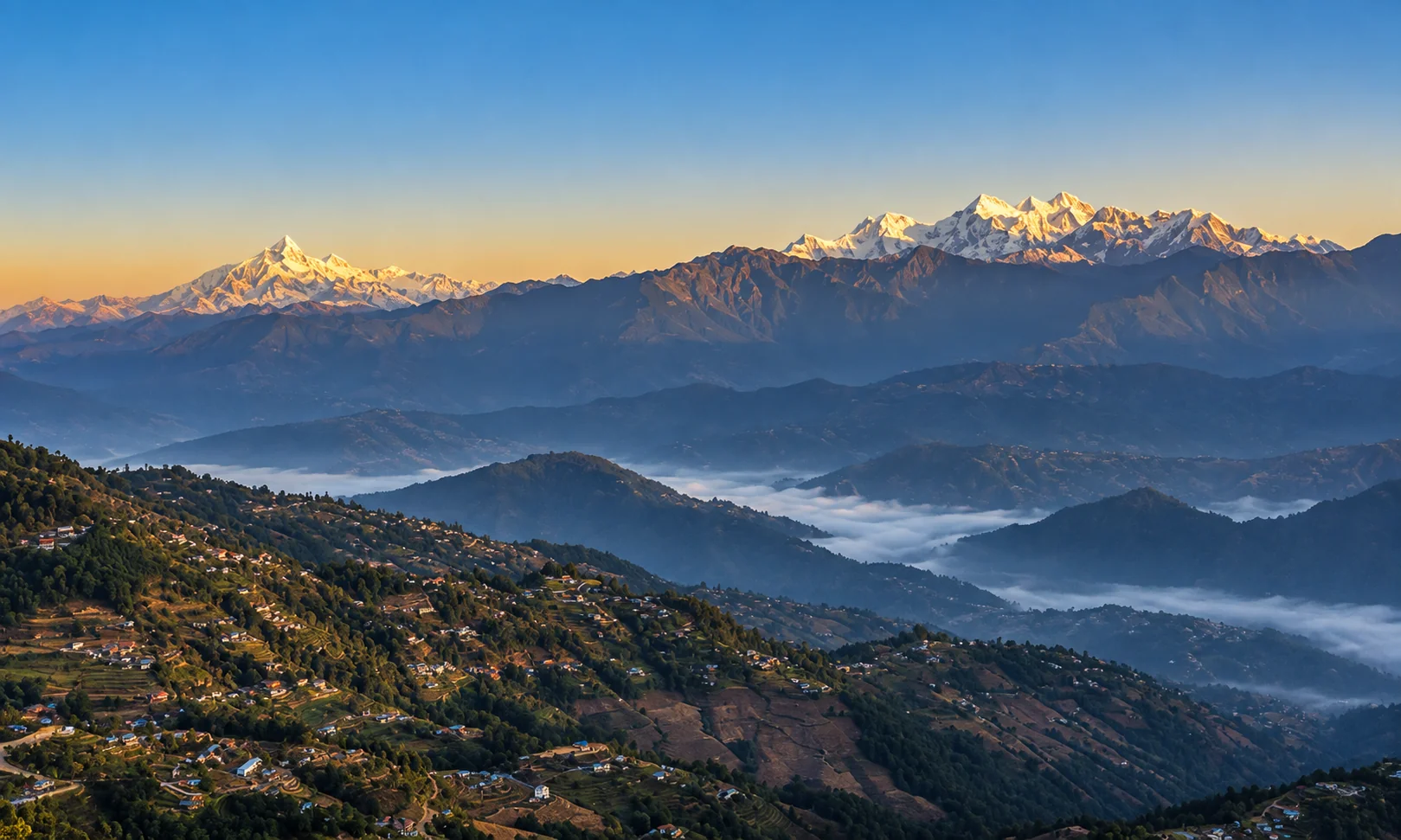
The Ghorepani Poon Hill Trek is built around one unforgettable moment: watching the sun rise over the Annapurna and Dhaulagiri ranges from the Poon Hill viewpoint at 3,210m. The standard route runs Nayapul → Tikhedhunga → Ghorepani → Poon Hill → Tadapani → Ghandruk → back to Pokhara, passing through rhododendron forests, terraced farmland, and traditional Gurung and Magar villages along the way.
The route:
- Day 1: Drive from Kathmandu toward Tikhedhunga (1,540m), 8-10 hours
- Day 2: Trek Tikhedhunga to Ghorepani
- Day 3: Sunrise hike to Poon Hill (3,210m), then trek to Tadapani
- Day 4: Trek Tadapani to Ghandruk
- Day 5: Drive Ghandruk to Pokhara, with boating on Phewa Lake
- Day 6: Drive Pokhara to Kathmandu
| Duration | 6 days (standalone 4-5 day versions also available) |
| Max altitude | 3,210m (Poon Hill) |
| Difficulty | Moderate |
| Daily walking | 4-7 hours |
| Best season | Spring (Mar-May) and autumn (Sep-Nov), though trekkable year-round |
| Accommodation | 3-star hotel in Kathmandu, teahouses/lodges on trek |
| Price | On request |
What's included: Hotel pickup/drop-off, a bottle of water, an experienced government-licensed English-speaking guide, national park entry, ACAP permit fees, all taxes, 24/7 emergency support, lodge accommodation during the trek, and a 3-star Kathmandu hotel (BB plan).
What's not included: Personal expenses, tips, bank fees, and porter service (available at $20/day if requested).
Permits required: Annapurna Conservation Area Permit (ACAP), and a TIMS card where currently applicable. No restricted-area permit is needed.
Pokhara to Ghandruk Trek: Gurung Village Culture
Best for: Travelers who want authentic village culture alongside mountain views, in just 3 days.
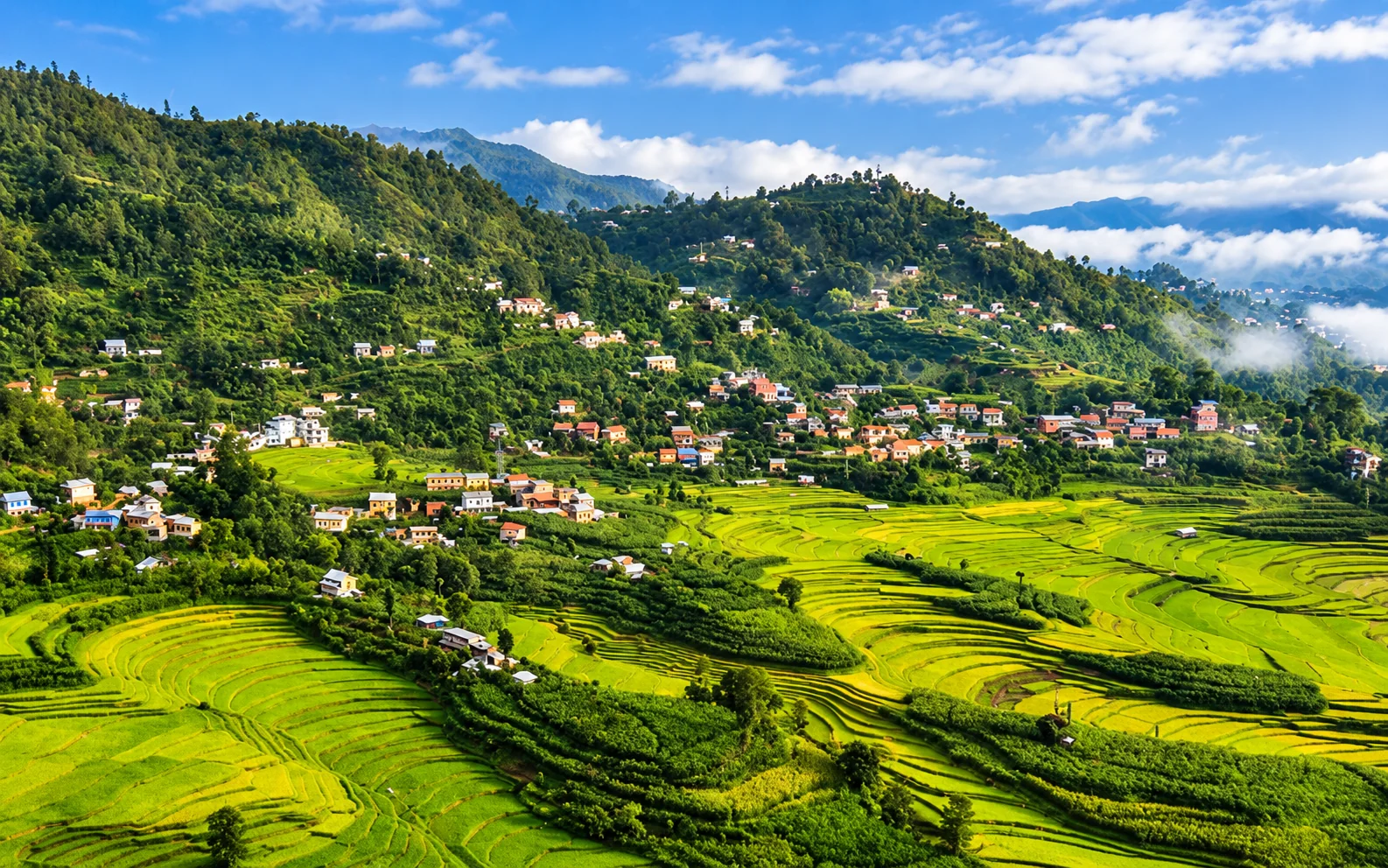
The Pokhara to Ghandruk Trek centers on Ghandruk, one of Nepal's largest and most beautiful Gurung villages. You'll walk through stone-paved streets, visit the Gurung Museum and a local monastery, and take in views of Annapurna South, Machhapuchhre (Fishtail), Hiunchuli, Gangapurna, and Annapurna III.
The route:
- Day 1: Drive Pokhara to Kimche (52km, 2-2.5 hrs), then an optional short trek (2km, 45-60 min) to Ghandruk (1,940m). A direct drive option also exists for travelers who'd rather skip the walk.
- Day 2: Explore Ghandruk Village at leisure
- Day 3: Return to Pokhara
| Duration | 3 days (2 nights) |
| Max altitude | 1,940m (Ghandruk) |
| Difficulty | Moderate (easy to moderate in detail) |
| Daily walking | 1.5-4 hours |
| Best season | March-May and September-November |
| Accommodation | 3-5 star hotel in Pokhara, mountain lodge/teahouse in Ghandruk |
| Price | From $300 per person (reduced from $350) |
What's included: Lodge/teahouse accommodation, a bottle of water, cultural interaction with local communities, all taxes, full-board meals, a guide, hotel pickup/drop-off, all staff-related expenses, and the ACAP permit fee.
What's not included: Personal expenses, personal travel insurance, tips (customary but not mandatory), and bank fees.
Can be extended to: Australian Camp, Dhampus, Landruk, Jhinu Danda hot springs, Poon Hill, Annapurna Base Camp, or combined with Pokhara sightseeing, Chitwan, Bandipur, Kathmandu, Nagarkot, or Lumbini.
2-Day Astam Village Hike: The Gentlest Introduction
Best for: Travelers with very limited time who still want a genuine village hiking experience.
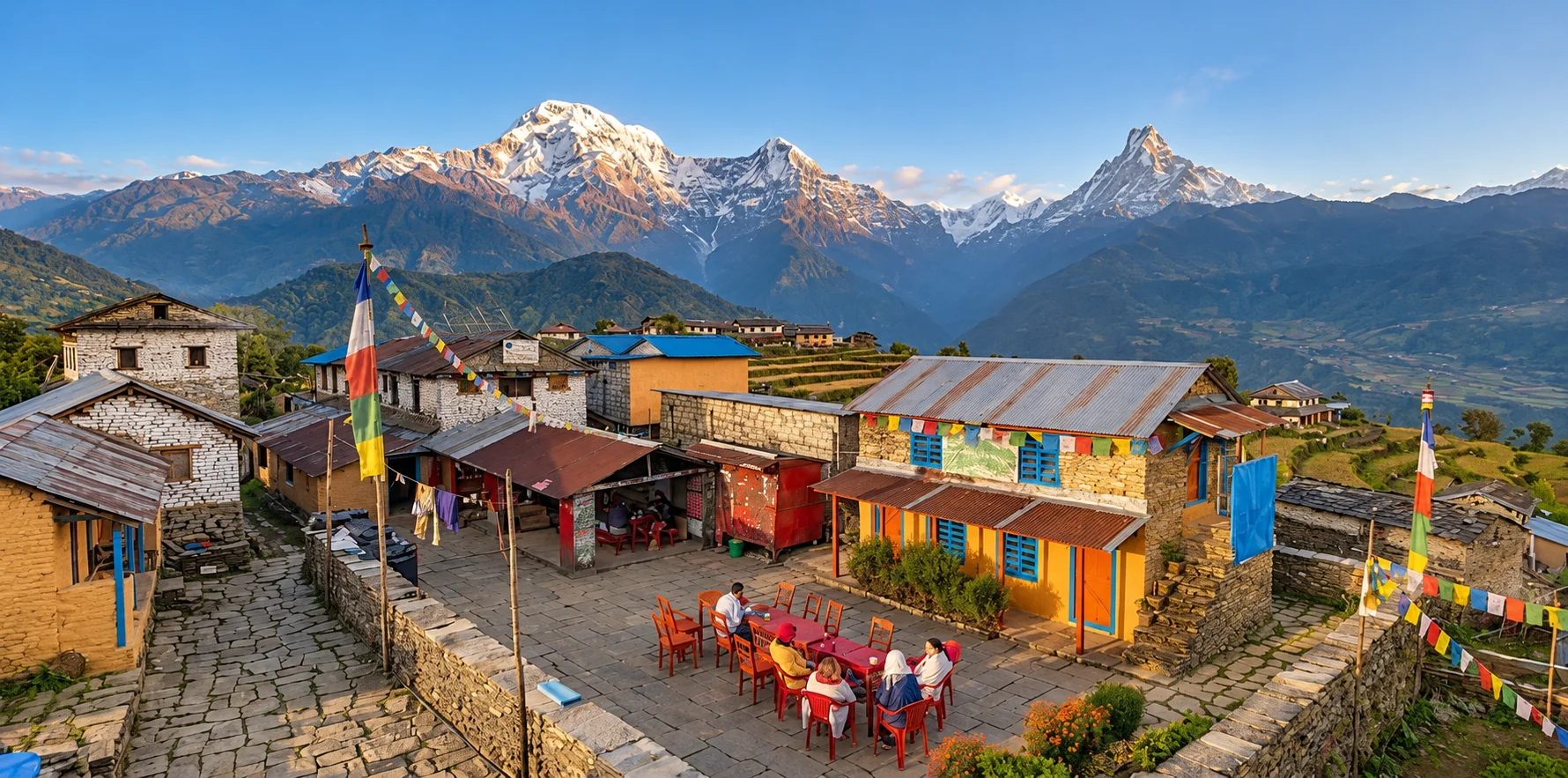
The 2-Day Astam Village Himalayan Hike is the shortest and gentlest of the three. It starts with a drive to Dhampus, then a hike through rhododendron and pine forests to the peaceful hilltop settlement of Astam, with an overnight homestay before descending to Hemja the next day.
The route:
- Day 1: Drive Pokhara to Dhampus (1-1.5 hrs), then hike Dhampus to Astam Village (approx. 7-8km, 3-4 hours). Overnight at a local guesthouse or homestay.
- Day 2: Sunrise and village exploration in Astam, then hike to Hemja (approx. 2.5-3 hours), followed by a drive back to Pokhara (30-40 min)
| Duration | 2 days |
| Max altitude | 1,650m (Dhampus); Astam itself sits around 1,500m |
| Difficulty | Low (easy to moderate in detail) |
| Daily walking | 2.5-3 hours per section, roughly 3-4 hours total per day |
| Best season | September to May (spring and autumn specifically recommended for best visibility) |
| Accommodation | Local guesthouse/homestay in Astam only (Pokhara accommodation not included) |
| Price | On request |
What's included: A traditional welcome on arrival at the international airport, private transportation (Pokhara-Dhampus and Hemja-Pokhara), a professional hiking guide, breakfast/lunch/dinner during the hike, one night's accommodation in Astam, entrance fees at sightseeing spots, a water bottle, cultural interaction, and all taxes.
What's not included: Personal expenses, accommodation in Pokhara itself, personal travel insurance, and a 10% service charge.
Note on altitude: This package's own pages list slightly different maximum altitude figures (1,600m in the snapshot, 1,650m at Dhampus in the detailed sections, and roughly 1,500m for Astam itself). All versions agree this is a low-altitude hike with no altitude sickness risk, so the exact figure matters less here than on higher treks.
Which One Should You Choose?
| If you want... | Choose |
|---|---|
| The classic Himalayan sunrise photo | Ghorepani Poon Hill Trek |
| Deep village and Gurung culture in less time | Pokhara to Ghandruk Trek |
| The shortest possible taste of Himalayan hiking | 2-Day Astam Village Hike |
| A mountain panorama without an early sunrise wake-up | Ghandruk or Astam over Poon Hill |
| The lowest-altitude, gentlest option | Astam Village Hike |
| To combine culture, nature, and a famous viewpoint | Ghorepani Poon Hill Trek |
Still deciding? Contact us with how many days you have and what matters most to you, sunrise, culture, or ease, and we'll recommend the right fit.
Other Short Treks from Pokhara Worth Knowing About
These three aren't the only options in our catalog. A few others worth mentioning, though we'd recommend confirming current details directly with our team before booking:
- Panchase Hill Eco Hike (5 days): A nature-focused route in the Pokhara region, good if you want more days of forest and hill walking than Ghandruk offers but without Poon Hill's altitude.
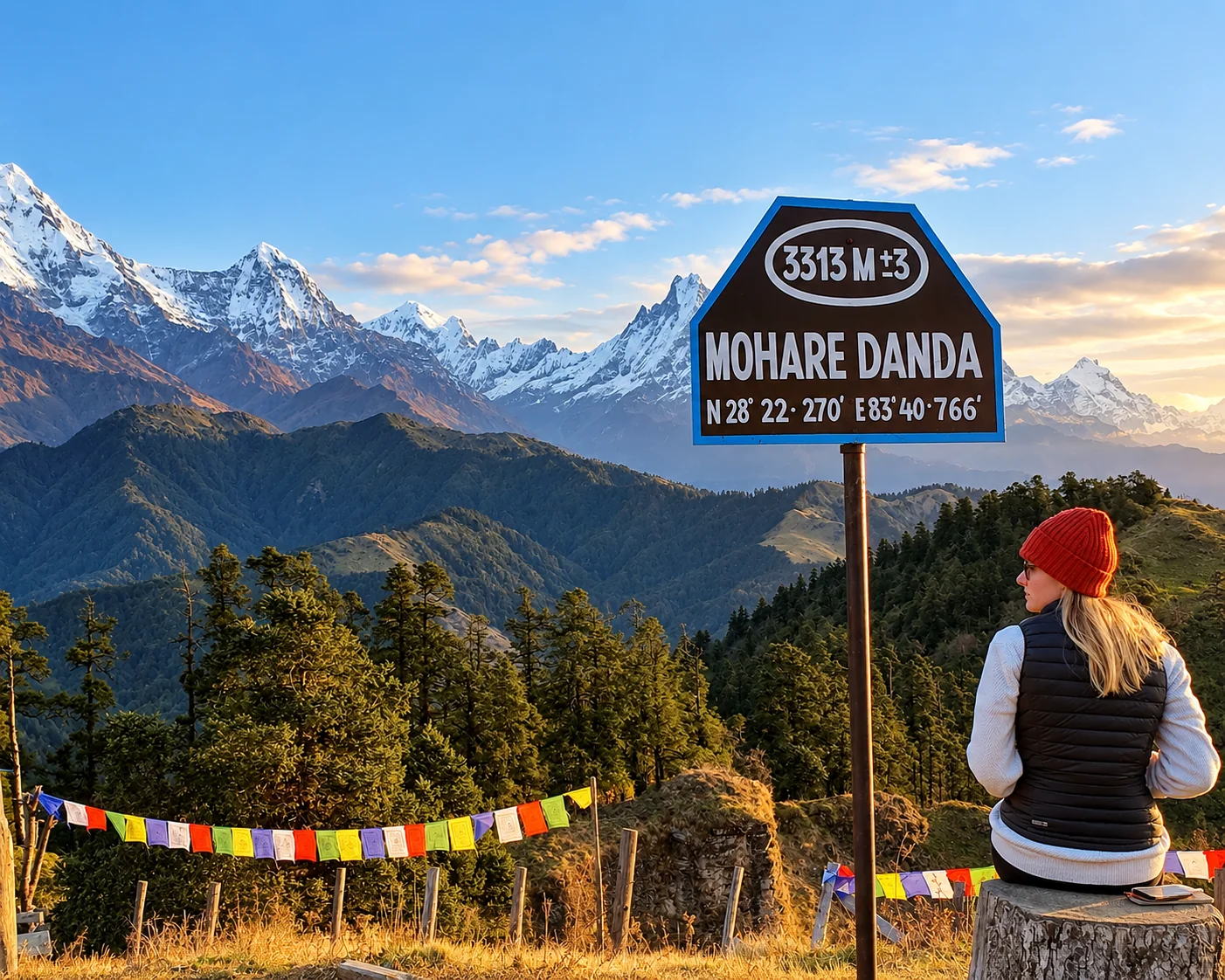
- Mohare Khopra Danda Trek: Combines village trails with wide Himalayan views, a good option if you've already done Poon Hill and want a less-crowded alternative in the same region.
- 3-Day Lwang Village & Tea Garden Tour: A gentler countryside experience centered on village life and tea gardens rather than mountain viewpoints.
- Dhampus Sarangkot Trek (3 days): Passes through the Annapurna foothills; ask us for current route details and pricing.
Permits: What You'll Need
All three main treks in this guide pass through or near the Annapurna Conservation Area, so an ACAP (Annapurna Conservation Area Permit) applies. This is included in the package price for all three. A TIMS card may be required depending on current regulations, this is arranged by our team as needed. No restricted-area permit is required for any of these three routes.
Best Time to Trek from Pokhara
| Season | What to expect |
|---|---|
| Spring (March-May) | Blooming rhododendrons, pleasant temperatures, good visibility |
| Autumn (September-November) | The most reliable season: clear skies, stable weather, best mountain visibility |
| Winter (December-February) | Cold mornings, often clear days, fewer trekkers |
| Monsoon (June-August) | Lush green landscapes, frequent rain, reduced visibility, muddier trails |
Spring and autumn are recommended across all three treks. The Astam hike's own package notes it's trekkable September through May, making it a reasonable winter option if you want to avoid the coldest months on a higher route like Poon Hill.
What to Pack
- Comfortable trekking shoes with good grip, plus extra socks
- Layered clothing: t-shirts, fleece, warm jacket, rain jacket
- A 20-30L daypack
- Sun hat, sunglasses, sunscreen
- 1-2 liters of water (reusable bottle), water purification if preferred
- Personal medicines and a basic first-aid kit
- Power bank and camera
- Trekking poles (helpful on Poon Hill's stone staircases especially)
- Travel insurance that covers trekking and emergency evacuation
Food Along the Way
All three routes pass through teahouses and lodges serving a mix of Nepali, Gurung, Tibetan, Indian, Chinese, and Continental food. Dal Bhat (rice, lentil soup, vegetables) is the most common and filling choice everywhere. Vegetarian options are widely available on all three treks; let us know about dietary requirements in advance.
After Your Trek
- Relax by Phewa Lake or take a boat ride in Pokhara
- Visit the World Peace Pagoda or International Mountain Museum
- Soak in the natural hot springs at Jhinu Danda (easily added to the Ghandruk itinerary)
- Consider a longer trek next time: Annapurna Base Camp Trekking is a natural next step for travelers who enjoyed any of these three
For Kathmandu-area short treks, see our guides to Best Day Hikes Near Kathmandu, the Chisapani, Nagarkot & Dhulikhel Trek, and Sailung Hill.
Book Your Pokhara Trek
All three treks are run by Khushi Travels & Consulting Group, a Kathmandu-based company established in 2025 by a team with more than 17 years of travel experience, associated with NTB, TAAN, and the Himalayan Rescue Association. See our registrations and why travel with us. Every itinerary can be customized, Customize Trip to add extra days, swap destinations, or adjust accommodation. Contact us or message WhatsApp for current pricing and availability.
Frequently Asked Questions
1. What's the best short trek from Pokhara?
It depends on your priorities. Poon Hill is best for the classic Himalayan sunrise. Ghandruk is best for Gurung village culture in less time. Astam is best if you only have 2 days.
2. How many days do I need for a short trek from Pokhara?
Astam needs just 2 days, Ghandruk needs 3, and Poon Hill typically needs 4 to 6 days, though shorter versions exist.
3. Which trek has the best mountain views?
Poon Hill offers the widest panorama, including Dhaulagiri (8,167m), Annapurna I (8,091m), and Machhapuchhre. Ghandruk and Astam both offer strong views of Annapurna South, Machhapuchhre, and Hiunchuli, without the early sunrise climb.
4. Which is the easiest of the three treks?
The Astam Village Hike is rated the gentlest (low to easy-moderate), with shorter daily walking times and the lowest maximum altitude.
5. Can I do more than one of these treks on the same trip?
Yes. Ghandruk can be combined with Poon Hill, or extended to include Dhampus, Jhinu Danda hot springs, or Annapurna Base Camp. Customize Trip to build a combination.
6. How difficult is the Poon Hill trek?
Rated moderate, with 4-7 hours of daily walking including the famous stone staircases at Ulleri. No technical climbing skills are required.
7. How difficult is the Ghandruk trek?
Rated moderate (easy to moderate in detail), with 1.5-4 hours of daily walking and well-maintained trails.
8. How difficult is the Astam hike?
The gentlest of the three, rated low to easy-moderate, with roughly 3-4 hours of walking per day on village and forest trails.
9. Do I need prior trekking experience for any of these?
No. All three are considered beginner-friendly, though Poon Hill involves more sustained walking and a steeper staircase section than the other two.
10. Is altitude sickness a concern on any of these treks?
Only mildly on Poon Hill (3,210m), where some trekkers may notice mild symptoms. Ghandruk (1,940m) and Astam (1,650m max) carry very low altitude risk.
11. Are these treks suitable for families with children?
Yes, all three are considered family-friendly, with Ghandruk and Astam being the most manageable for younger children given their lower altitude and shorter daily walks.
12. Are these treks suitable for senior travelers?
Yes, with reasonable fitness and a comfortable pace. Ghandruk's low altitude (1,940m) and well-maintained trails make it particularly approachable for older travelers.
13. What's the best season for these treks?
Spring (March-May) and autumn (September-November) across all three, offering the most stable weather and best mountain visibility.
14. Can I trek in winter?
Yes, especially the Astam hike, which is specifically noted as trekkable from September through May. Poon Hill can also be done in winter with warm clothing, often with clear skies and fewer crowds.
15. Can I trek during the monsoon?
It's possible on all three, but expect wet, slippery trails and reduced mountain visibility between June and August.
16. What accommodation is provided?
Poon Hill includes a 3-star Kathmandu hotel plus teahouses/lodges on the trail. Ghandruk includes a 3-5 star Pokhara hotel plus a mountain lodge in Ghandruk. Astam includes one night in a local homestay or guesthouse (Pokhara accommodation is not included).
17. Do these treks include a guide?
Yes, all three include an experienced, English-speaking guide as a standard inclusion.
18. What permits do I need?
All three require the Annapurna Conservation Area Permit (ACAP), included in the package price. A TIMS card may apply depending on current regulations.
19. How much do these treks cost?
The Ghandruk trek starts from $300 per person (reduced from $350). Poon Hill and Astam are priced on request based on your group size and dates. Contact us for a quote.
20. What's included in the price?
Generally: guide, accommodation during the trek, meals, permits, transportation, and emergency support. Exact inclusions vary slightly by trek, see each section above for specifics.
21. What's not included?
Personal expenses, tips, personal travel insurance, and bank transaction fees are excluded from all three packages.
22. Is travel insurance required?
Not included in any of the three packages but strongly recommended, and should cover trekking and emergency evacuation. See our travel insurance page.
23. Do I need a guide on all three treks?
A guide is included as standard, though Astam's documentation notes a guide isn't strictly mandatory for every section, we still recommend using one for navigation and local insight.
24. Can I combine any of these treks with Annapurna Base Camp?
Yes, particularly Ghandruk, which the package itself notes can be extended toward Annapurna Base Camp. Ask us about building a combined itinerary.
25. What else can I add to a Pokhara trek?
Popular additions include Australian Camp, Dhampus, Jhinu Danda hot springs, Phewa Lake boating, and Pokhara sightseeing. Ghandruk's itinerary can also extend to Chitwan, Bandipur, Kathmandu, Nagarkot, or Lumbini.
26. How do I book?
Contact us, message us on WhatsApp, or email info@khushiservice.com.
Ready to Choose Your Pokhara Trek?
Contact Khushi Travels or message us on WhatsApp, tell us your available days, and we'll recommend the right route. You can also call Mr. Dinesh (9768988868) or Mr. Sunil Sharma (9768988869).
Khushi Travels & Consulting Group Pvt. Ltd. | Sorahkhutte, Kathmandu, Nepal | info@khushiservice.com | khushiservice.com
Similar Blogs
We are associated with