
Chisapani, Nagarkot and Dhulikhel: A 4-Day Ridge Walk Explained

The Chisapani, Nagarkot & Dhulikhel Trek is a 4-day ridge walk around the rim of the Kathmandu Valley, from Sundarijal through forest to Chisapani (2,300m), on to the famous sunrise viewpoint at Nagarkot, and down to the hill town of Dhulikhel. It's entirely road-accessible, no flights needed, rated moderate difficulty with 4 to 7 hours of daily walking, and stays below altitude-sickness-risk elevations throughout.
Why Walk This as One Trek Instead of Three Separate Trips
Chisapani, Nagarkot, and Dhulikhel are each well-known destinations in their own right, and many travelers visit them individually, as single-day trips or separate short hikes. What this 4-day itinerary does differently is connect them by trail, on foot, as one continuous ridge walk around the Kathmandu Valley rim.
That changes the experience in a real way. Instead of three isolated visits, each reached by vehicle, you walk the actual landscape between them: forest, farmland, and village paths linking one viewpoint to the next.
The 4-Day Itinerary
Day 1: Kathmandu to Sundarijal, trek to Chisapani (2,300m)
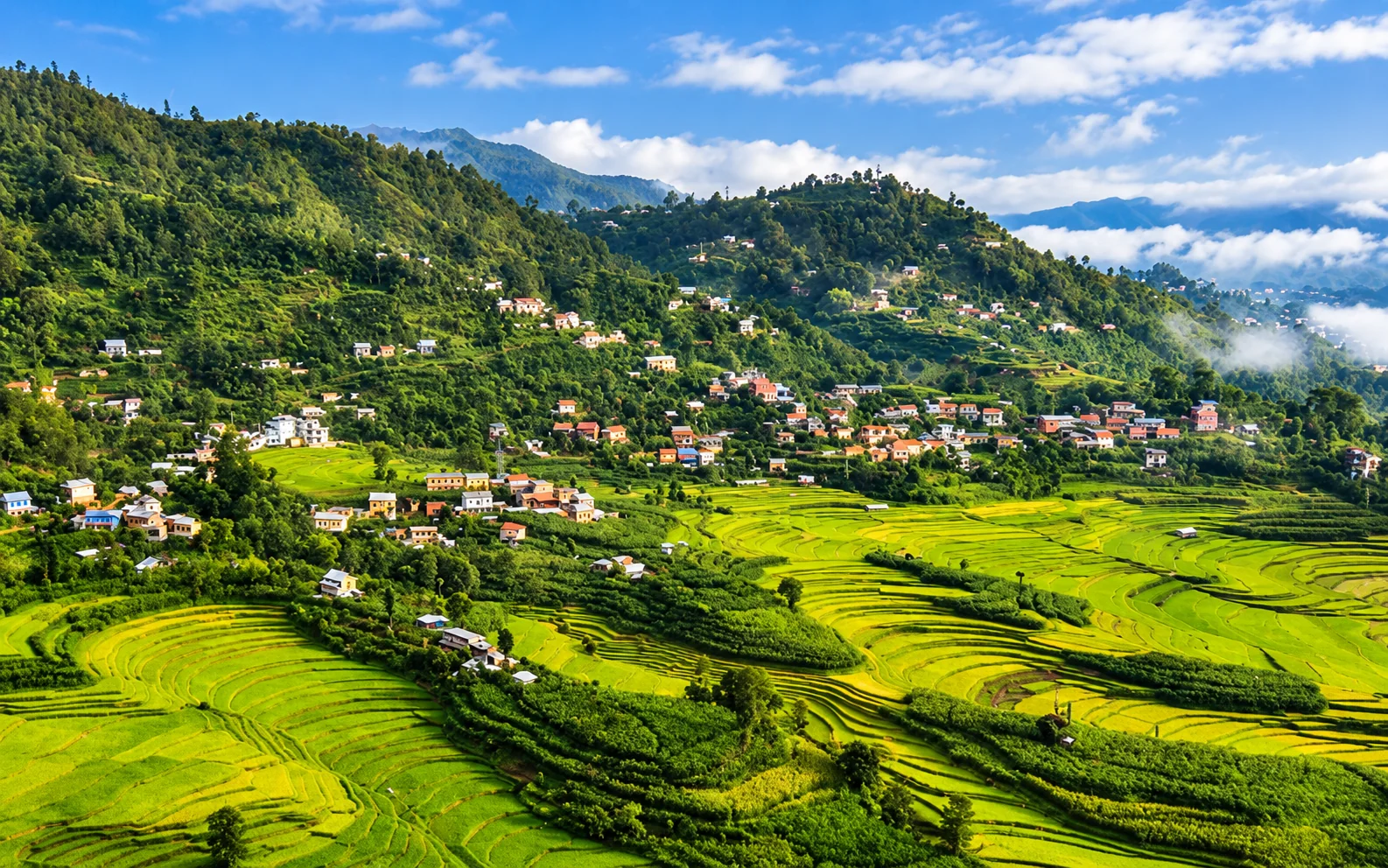
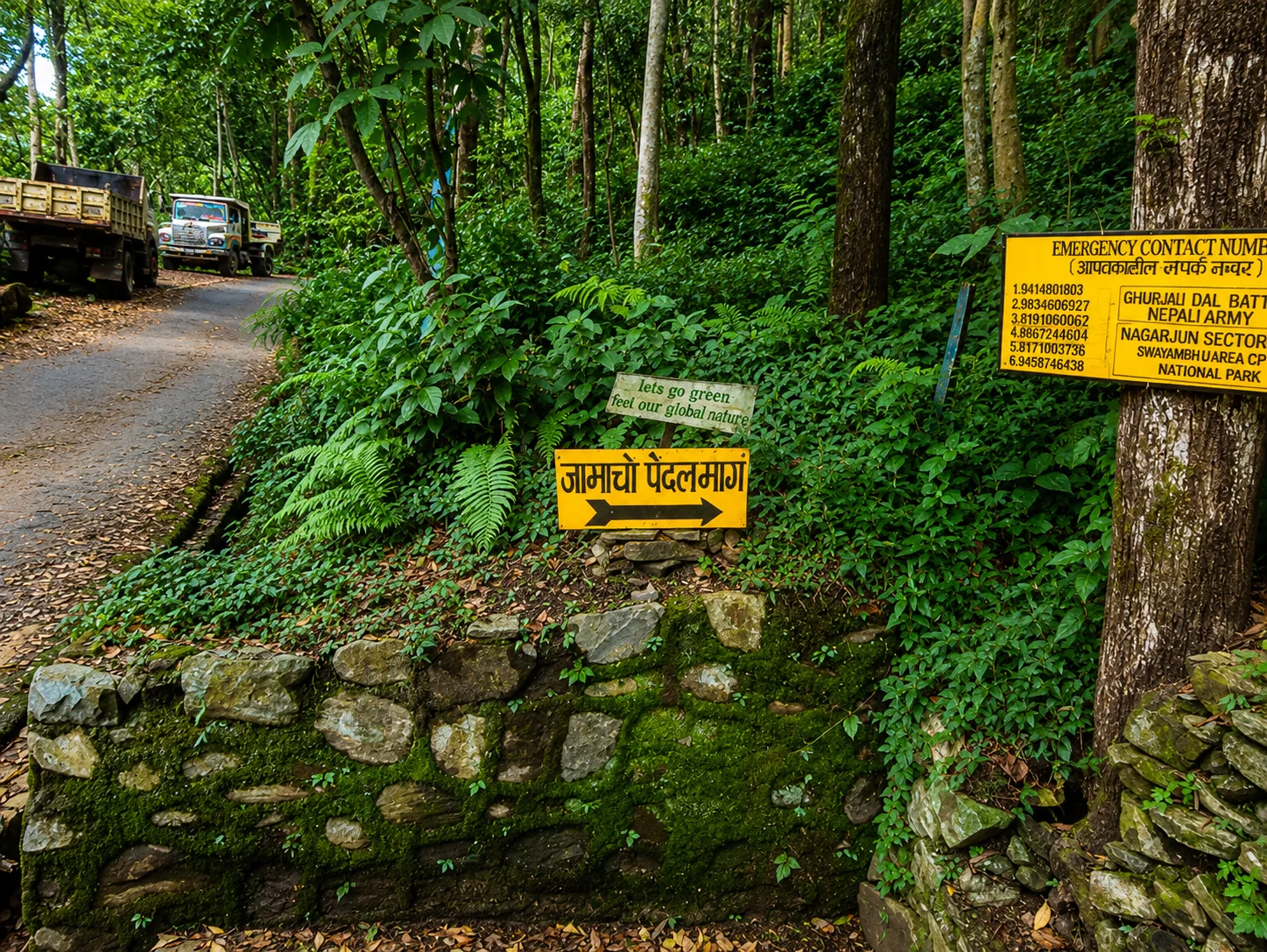
After breakfast, drive from Kathmandu (1,400m) to Sundarijal, the trek's starting point. From here, the hike begins through Shivapuri Nagarjun National Park, passing forests, streams, stone steps, and terraced fields, continuing through local villages and woodland trails before reaching Chisapani at 2,300m. Walking takes approximately 4 to 5 hours. Overnight at a teahouse or lodge.
Day 2: Chisapani to Nagarkot (2,195m)
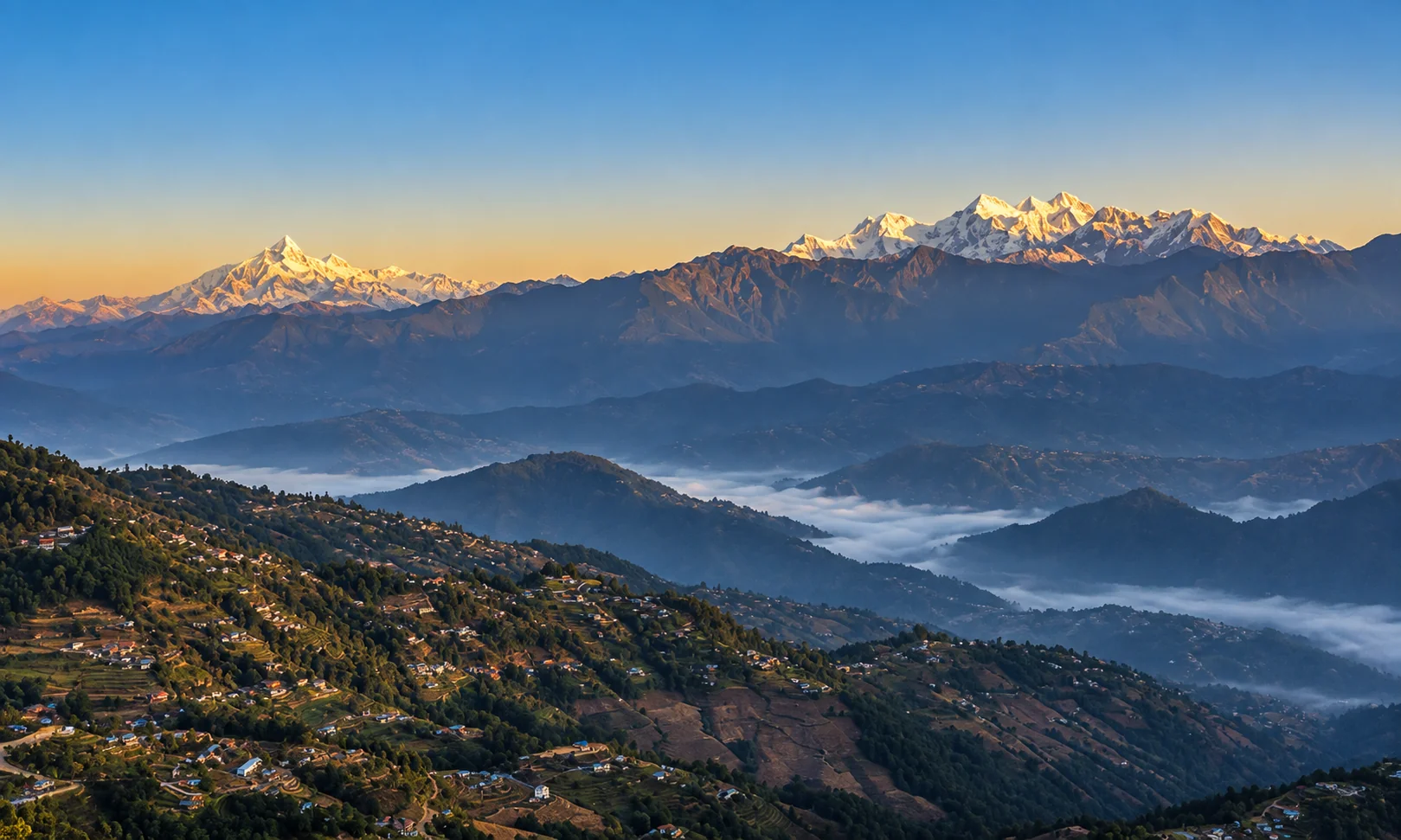
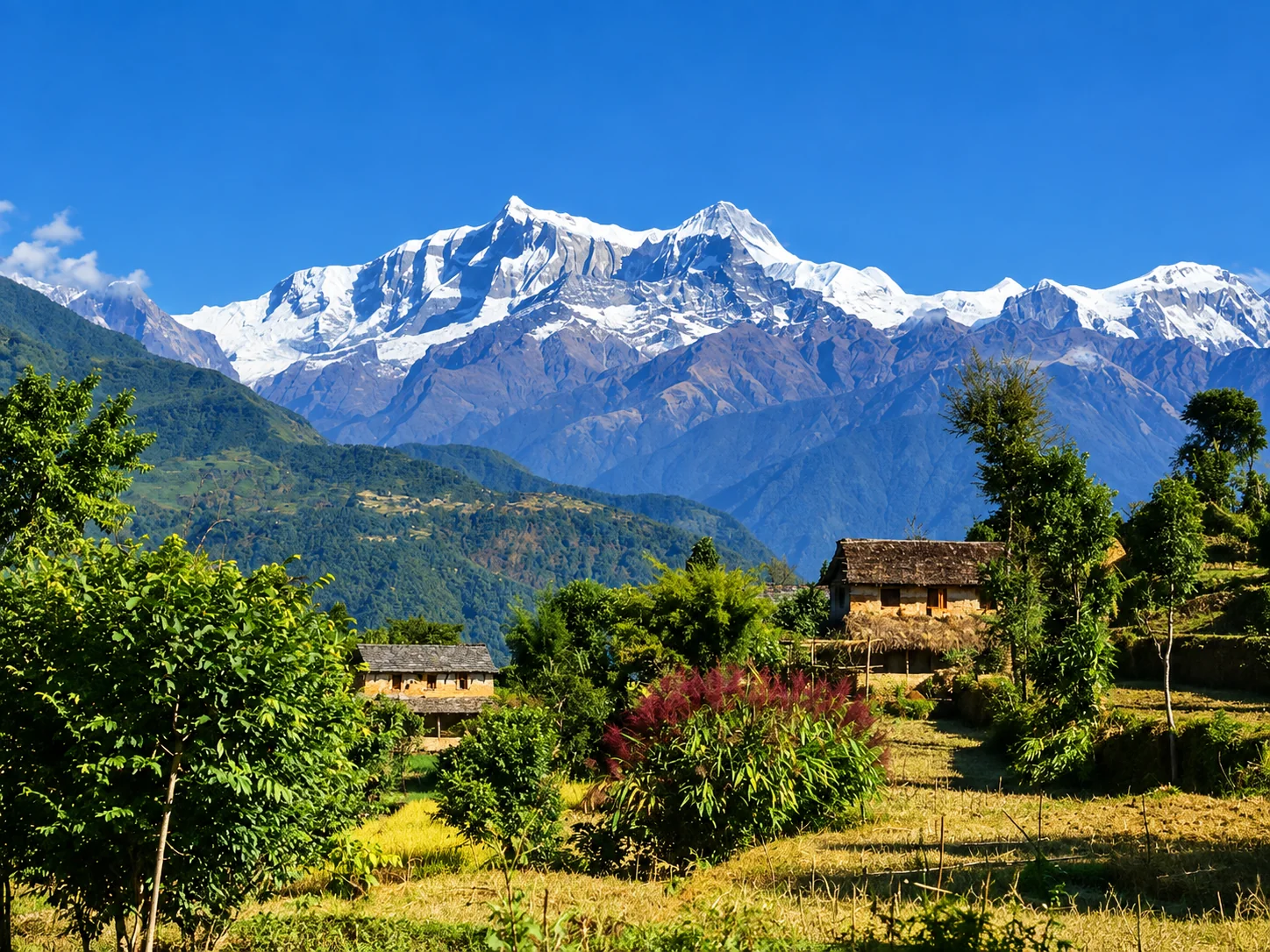
The trail continues through forests, villages, terraced farmland, and scenic ridges toward Nagarkot, one of Nepal's most famous viewpoints for sunrise, sunset, and mountain scenery. Overnight at a hotel or lodge in Nagarkot.
Day 3: Nagarkot to Dhulikhel (1,550m)
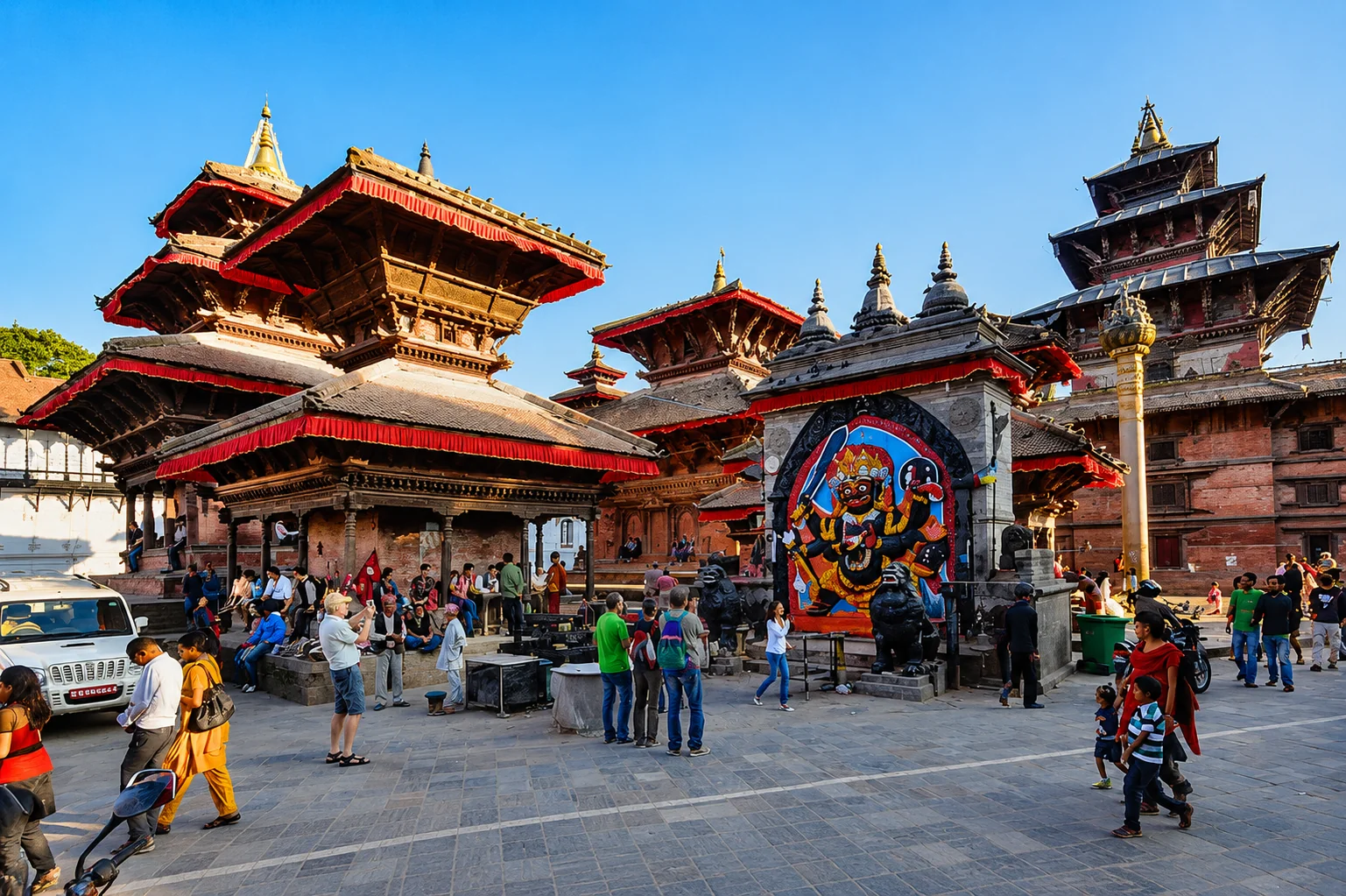
From Nagarkot, the trail descends gradually through peaceful countryside, forests, farmland, and local settlements toward Dhulikhel, a hill town known for its traditional atmosphere and Himalayan views. Overnight at a hotel or local lodge.
Day 4: Explore Dhulikhel, drive back to Kathmandu
A relaxed final morning to explore Dhulikhel's scenic viewpoints and traditional town atmosphere, followed by the drive back to Kathmandu (1,400m).
| Duration | 4 days |
| Max altitude | 2,300m (Chisapani) |
| Difficulty | Moderate |
| Best season | March-May and September-November |
| Daily walking | Approximately 4 to 7 hours |
| Accommodation | Teahouse/lodge (Chisapani), hotel/lodge (Nagarkot, Dhulikhel) |
| Transportation | Private vehicle (Kathmandu-Sundarijal and Dhulikhel-Kathmandu only; the rest is on foot) |
| Group size | Any |
| Price | On request, tailored to group size and dates |
See the full Chisapani, Nagarkot & Dhulikhel Trek package page for current departures and full inclusions.
What You'll Actually Experience
Real forest trekking through Shivapuri Nagarjun National Park. Day 1 is a genuine 4 to 5-hour hike through the same protected forest covered in our Shivapuri Nagarjun & Bagdwar Hike.
The classic Nagarkot sunrise and sunset, reached on foot. Most visitors arrive at Nagarkot by vehicle, as in our Nagarkot Sunrise with Changunarayan Hike. Arriving here after a full day's trek from Chisapani gives the same iconic viewpoint a different weight.
A gradual descent into Dhulikhel's traditional atmosphere. Day 3 trades viewpoint drama for a quieter, more grounded experience.
Village life throughout, not just at the start or end. The route passes traditional settlements at every stage, with family-run teahouses and lodges.
A Day-by-Day Look at What Changes
Day 1 feels like entering the forest. The transition from Kathmandu's noise to Shivapuri's quiet happens quickly, and Chisapani's arrival at dusk is a strong contrast.
Day 2 feels like the heart of the trek. This is the longest and most varied walking day, building toward Nagarkot's famous panorama. It's the day most trekkers describe as the most demanding and the most rewarding.
Day 3 feels like a wind-down. The descent toward Dhulikhel is gentler underfoot and quieter in character.
Day 4 feels like arrival. Dhulikhel's relaxed morning gives the trek a proper close rather than an abrupt end.
Who Walks This Route
- Independent travelers extending a Kathmandu stay who want one proper multi-day trek without a high-altitude region
- Couples and friends looking for a shared physical challenge
- Photographers drawn by two distinct sunrise/sunset viewpoints within one trip
- Fit families with older children, given the moderate daily walking
- Trekkers building fitness before a bigger Himalayan trek like Everest Base Camp or Annapurna Base Camp
Responsible Travel on This Route
- Greet local residents politely; a simple "Namaste" goes a long way
- Ask permission before photographing people, particularly in villages and around religious sites
- Stay on established trails rather than cutting through farmland or forest undergrowth
- Carry out all personal waste, especially through the Shivapuri Nagarjun National Park section
- Dress modestly when passing temples, monasteries, or religious sites along the route
- Support local teahouses, lodges, and shops in Chisapani, Nagarkot, and Dhulikhel
Should You Do It? A Straight Answer
Do it if:
- You've already done one or more of Chisapani, Nagarkot, or Dhulikhel individually and want to see how they connect
- You want a genuine multi-day trek without flying anywhere or reaching high altitude
- You're comfortable with 4 to 7 hours of daily walking over several consecutive days
- You want forest, farmland, village life, and two of Nepal's best-known viewpoints in one continuous journey
Skip it, or choose something else, if:
- You only want the Nagarkot sunrise without the surrounding trek (choose Nagarkot Sunrise with Changunarayan instead)
- You want a single, focused forest hike (choose Shivapuri Nagarjun & Bagdwar)
- You have limited time (choose from Best Day Hikes Near Kathmandu or the 2-Day Kakani Suryachaur Hike)
- You'd rather focus on village and cultural immersion (choose the Balthali Eco Trek)
Difficulty and Who It Suits
This trek is rated moderate. Daily walking runs approximately 4 to 7 hours, with Day 2 typically the longest and most demanding stretch. Maximum altitude stays at 2,300m, low enough that serious altitude-related problems are uncommon compared to higher Himalayan treks.
This makes it suitable for:
- Reasonably fit beginners comfortable with consecutive days of walking
- Travelers ready to step up from a shorter hike near Kathmandu
- Fit families and older travelers, with a comfortable pace
- Anyone wanting Himalayan scenery without high-altitude logistics
What's Included and What Isn't
Included: Hotel pickup and drop-off, a professional trekking guide throughout, accommodation at lodge/teahouse along the route, full-board meals, all entrance and national park fees, local and government taxes, a basic first-aid kit, all staff-related expenses, and 24/7 emergency support.
Not included: Personal expenses, costs from political disruption or events beyond the company's control, personal travel insurance (must cover trekking and evacuation), international bank fees, and a 10% company service charge.
Best Time to Go
| Season | What to expect |
|---|---|
| Spring (March-May) | Pleasant temperatures, clear or mostly clear mountain views |
| Autumn (September-November) | Clear Himalayan views, stable weather, excellent sunrise/sunset conditions |
| Winter (December-February) | Cold mornings and evenings, clear but colder |
| Monsoon (June-August) | Frequent rain, slippery trails, reduced visibility |
Food Along the Route
Teahouses and lodges serve a genuine mix of cuisines. Dal Bhat Tarkari is the most common and filling option, alongside noodles, momos, fried rice, and soups. Nagarkot and Dhulikhel offer wider variety, including Indian and Continental dishes. Vegetarian meals are widely available; let us know about dietary requirements in advance.
What to Pack
- A 20-30L daypack
- Comfortable, sturdy trekking shoes
- Light layers and a warm jacket
- Rain jacket or poncho
- Sun hat and a warm cap
- 1-2 liters of water (reusable bottle)
- UV-protected sunglasses
- Sunscreen (SPF 30+)
- Personal first-aid items and toiletries
- Passport and any required permits
- Optional: trekking poles
- Travel insurance that specifically covers trekking and emergency evacuation
Permits: What's Required
The Sundarijal-to-Chisapani section passes through Shivapuri Nagarjun National Park, so a national park entry permit or fee applies. This is included in your package price. No other restricted-area or special trekking permits are typically required for this valley-rim route.
How This Compares to the Individual Hikes
| Trip | Duration | Covers |
|---|---|---|
| Nagarkot Sunrise with Changunarayan | Full day | Nagarkot only, by vehicle |
| Shivapuri Nagarjun & Bagdwar Hike | Full day | Shivapuri forest only |
| 2-Day Kakani Suryachaur Hike | 2 days | Different route, similar format |
| Chisapani, Nagarkot & Dhulikhel Trek | 4 days | All three connected by trail, plus Dhulikhel |
| Balthali Eco Trek | 3 days | Panauti, Balthali, Namobuddha, Dhulikhel |
Similar and Complementary Trips
- If you want more after this trek: the longer Langtang Gosaikunda Trek
- If Dhulikhel's heritage interested you most: Panauti Cultural Tour or Panauti, Namobuddha & Dhulikhel Cultural Hike
- If the forest section was your favorite part: 3-Day Shivapuri Wellness & Recreation Package
- If you want a shorter taste of a similar format: 2-Day Kakani Suryachaur Hike
Using This Trek as Training for a Bigger One
Several travelers use this route to test fitness and gear before a longer Himalayan trek:
- 4 to 7 hours of daily walking over 4 consecutive days mirrors the rhythm of Annapurna Base Camp or lower sections of Everest Base Camp, without altitude risk
- Teahouse-style accommodation previews real trekking-lodge conditions
- Moderate elevation changes test your legs without altitude sickness exposure
Ready for a Bigger Adventure Later?
- Annapurna Base Camp Trekking
- Everest Base Camp Trekking (14 days)
- Manaslu Circuit Trekking
- Tamang Heritage Trail Trek (9 days)
Browse all trips to see the full range.
After the Trek
- A full rest day before any further activity
- The 1-Day Ayurvedic Wellness Experience to unwind
- The 4-Day Restorative Yoga & Wellness Retreat for a deeper reset
- A relaxed Kathmandu Valley Tour
For other options, see Best Day Hikes Near Kathmandu or One Day in Kathmandu?
Book the Chisapani, Nagarkot & Dhulikhel Trek
This trek is run by Khushi Travels & Consulting Group, a Kathmandu-based company established in 2025 by a team with more than 17 years of travel experience, associated with NTB, TAAN, and the Himalayan Rescue Association. See our registrations and why travel with us. Contact us or message WhatsApp for current pricing.
Frequently Asked Questions
1. What is the Chisapani, Nagarkot & Dhulikhel Trek?
A 4-day ridge trek around the Kathmandu Valley rim, connecting Sundarijal, Chisapani, Nagarkot, and Dhulikhel entirely on foot between road transfers at the start and end.
2. Where does the trek start and end?
The trekking section starts at Sundarijal, reached by a drive from Kathmandu. The route continues on foot through Chisapani and Nagarkot to Dhulikhel, ending with a drive back to Kathmandu.
3. Do I need a domestic flight for this trek?
No. The entire trek is accessible by road from Kathmandu.
4. What is the maximum altitude reached?
2,300m at Chisapani, well below elevations where altitude sickness becomes a significant concern.
5. How far is each daily walking section?
Approximately 4 to 5 hours on Day 1, with Day 2 typically the longest at up to 7 hours. Day 3 is a gradual descent.
6. What makes each day of this trek different?
Day 1 is forest-heavy; Day 2 builds to Nagarkot's panorama; Day 3 is a gentler descent; Day 4 is a relaxed close before returning to Kathmandu.
7. How difficult is this trek?
Rated moderate, based on daily walking duration and varied terrain rather than high altitude.
8. Is this trek suitable for beginners?
Yes, for reasonably fit beginners comfortable with several consecutive days of walking.
9. Is this trek suitable for families?
Yes, for fit families comfortable with multi-day walking.
10. How should I prepare physically?
Walk regularly beforehand, gradually increasing distance, including uphill and downhill sections.
11. Is altitude sickness a concern on this trek?
Not significantly, given the 2,300m maximum altitude.
12. Can I use this trek as training for a bigger Himalayan trek?
Yes, many travelers do, given the similar daily walking rhythm without altitude risk.
13. What's the best time to do this trek?
March to May and September to November.
14. Can I do this trek in the monsoon?
Possible but less favorable, with rain, slippery trails, and reduced visibility.
15. Is winter trekking an option?
Yes, with clear but cold conditions.
16. Will I see sunrise and sunset on this trek?
Chisapani and Nagarkot are both known for sunrise and sunset views, weather permitting.
17. What accommodation is provided?
Teahouses/lodges in Chisapani, hotels/lodges in Nagarkot and Dhulikhel.
18. What meals are included?
Breakfast, lunch, and dinner on trekking days.
19. What food will I actually find along the route?
Dal Bhat, noodles, momos, fried rice, and soups, with wider variety in Nagarkot and Dhulikhel.
20. Do I need a guide?
Yes, included throughout the trek.
21. What permits are required?
A Shivapuri Nagarjun National Park entry permit for the Sundarijal-to-Chisapani section, included in your package.
22. How much does this trek cost?
Pricing is tailored to your group and dates, provided on request.
23. What's included in the price?
Pickup/drop-off, guide, accommodation, full-board meals, entrance and park fees, taxes, first-aid kit, and emergency support.
24. What's not included?
Personal expenses, political/force-majeure costs, travel insurance, bank fees, and a 10% service charge.
25. Is travel insurance required?
Not included but strongly recommended, covering trekking and evacuation.
26. Will I have phone signal and Wi-Fi along the route?
Available at many accommodations, more limited in Chisapani and forest sections.
27. Who is this trek best suited for?
Independent travelers, couples, photographers, fit families, and trekkers building fitness for bigger treks.
28. Is this trek good for solo travelers?
Yes, with a guide included throughout.
29. Is this a good first multi-day trek for someone with no experience?
Yes, a reasonable introduction given the moderate altitude and established trail.
30. Are there etiquette guidelines I should follow?
Greet locals politely, ask before photographing people, dress modestly near religious sites, stay on trails, and carry out waste.
31. Can I support local communities during this trek?
Yes, by staying at and eating in local teahouses and lodges along the route.
32. Can this trek be extended or customized?
Yes, with extra nights, destinations, or activities added on request.
33. How does this compare to doing Nagarkot as a single-day trip?
A single-day visit reaches Nagarkot by vehicle; this trek reaches it on foot after a full day's walk.
34. Can I do just part of this route instead of all 4 days?
Individual destinations are available as shorter trips; ask us about partial-route options.
35. What should I do after completing this trek?
Rest, consider a wellness day, or continue exploring Kathmandu at a gentler pace.
36. Can I combine this trek with a bigger Himalayan trek later?
Yes, many use it as a warm-up before routes like Annapurna or Everest Base Camp.
37. What should I pack for this trek?
A daypack, sturdy shoes, layered clothing, rain protection, sun protection, water, and first-aid items.
38. How do I book the Chisapani, Nagarkot & Dhulikhel Trek?
Contact us, message us on WhatsApp, or email info@khushiservice.com.
Ready to Walk the Ridge?
Contact Khushi Travels or message us on WhatsApp to book this trek. You can also call Mr. Dinesh (9768988868) or Mr. Sunil Sharma (9768988869).
Khushi Travels & Consulting Group Pvt. Ltd. | Sorahkhutte, Kathmandu, Nepal | info@khushiservice.com | khushiservice.com
Similar Blogs
We are associated with