Jamacho Hike: Monasteries, Forests and Mountain Views in One Day

I hiked the Jamacho Hike solo, in autumn, and it's the rare day hike near Kathmandu that actually delivers three different things in one trip: proper forest walking, a genuine gumba and stupa stop, and a clear view of the Himalayan range at the top. If you only have one day and can't decide between nature, culture, or views, this hike doesn't make you choose.
7:30 AM: Starting Out
No 4 AM alarm for this one, which was its own small relief after the Nagarkot sunrise start. I left Kathmandu at a normal morning hour, alone, no guide, which by this point had become my preferred way to hike. You notice more when you're not managing a conversation, and Jamacho, I'd soon learn, rewards noticing.
The approach to the hill starts through forest almost immediately, similar in feel to Shivapuri Nagarjun but shorter and more varied, climbing steadily rather than rolling.
9:00 AM: The Forest Section
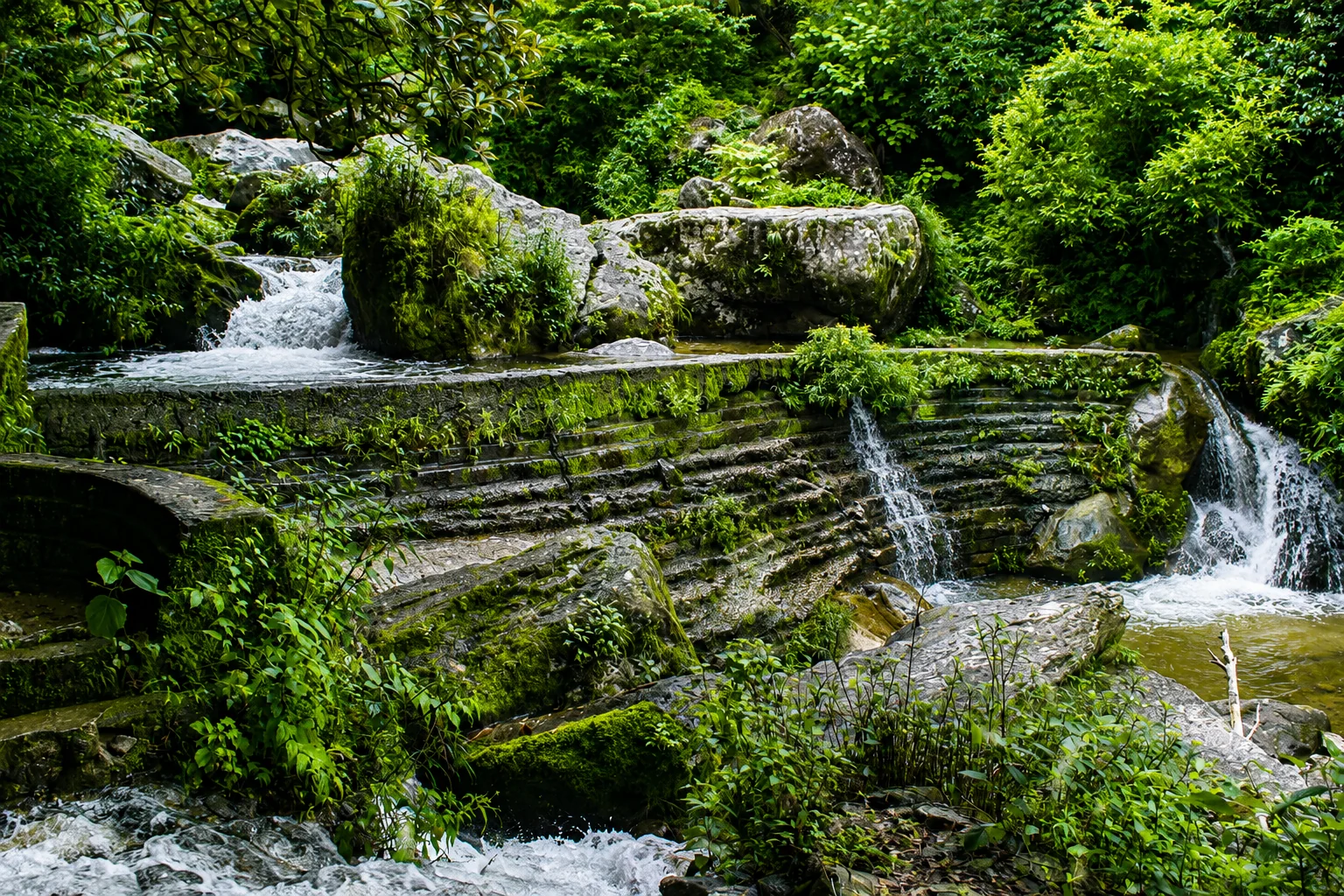
This part of the hike is pure tree cover, dense enough that the city disappears quickly, both visually and in sound. Autumn had the undergrowth somewhere between green and gold, and the trail had that dry, leaf-litter crunch underfoot that only shows up once the monsoon has properly passed.
What struck me about Jamacho compared to the other hikes I'd done is how compact the whole experience is. You're not walking for hours through a single kind of terrain. The forest gives way to something else fairly quickly, which keeps the day feeling varied rather than repetitive.
10:30 AM: The Monastery
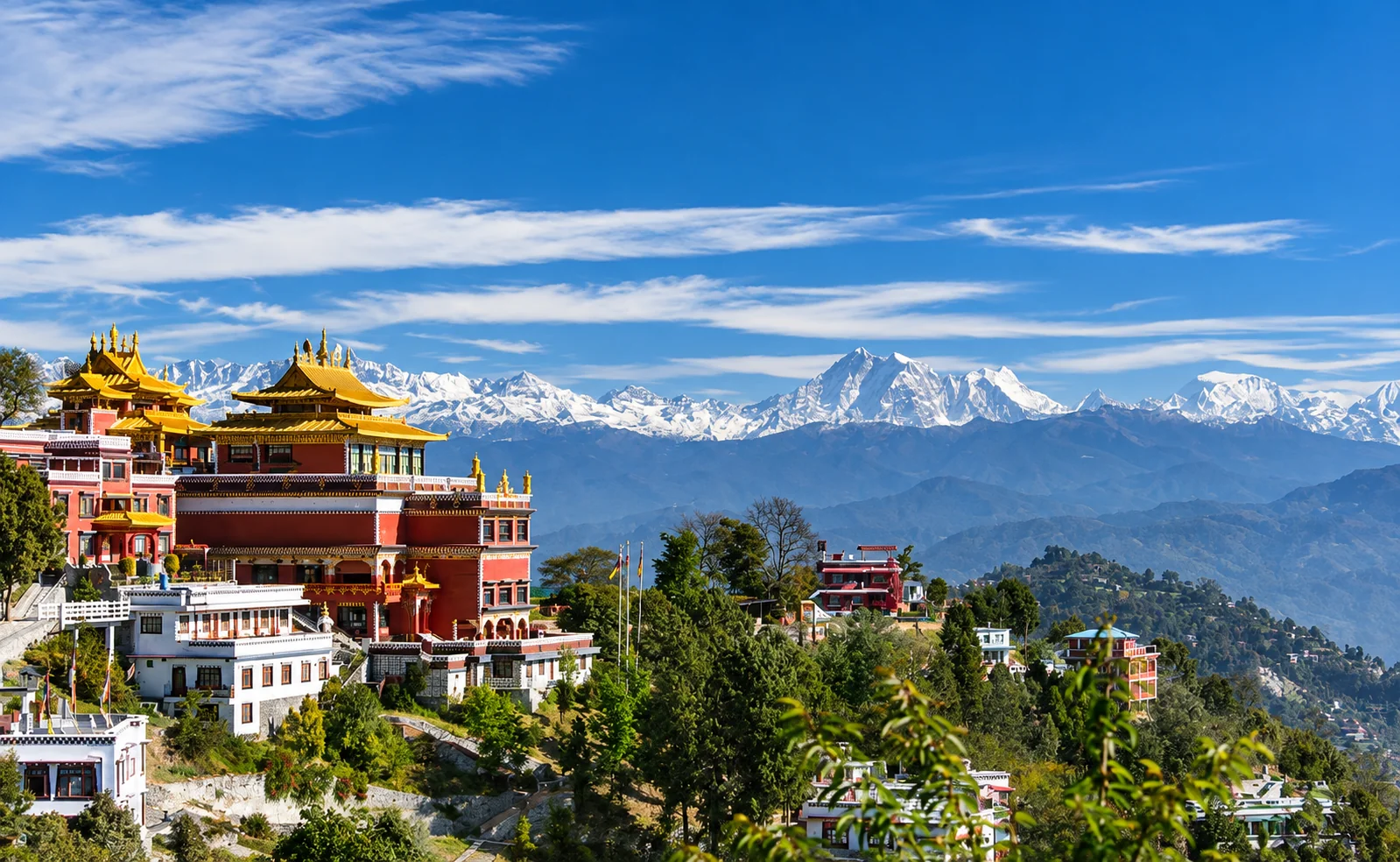
Partway up, the trail opens onto a small gumba with a stupa beside it, and I stopped properly rather than just walking past. Prayer flags were strung across the stupa and out toward the surrounding trees, faded in places from sun and wind, the way they always are at sites that have been there a while, moving slightly in whatever breeze made it through the forest. There's a different quality to the quiet at a place like this than the quiet of a forest trail, less about absence of noise and more about a kind of settled stillness that's been built up over time.
I spent longer there than I'd planned to, which seems to be a common effect of these places. It's easy to treat a monastery stop as a five-minute photo point, but sitting with it a little longer changes how the rest of the hike feels afterward.
12:00 PM: The Final Climb
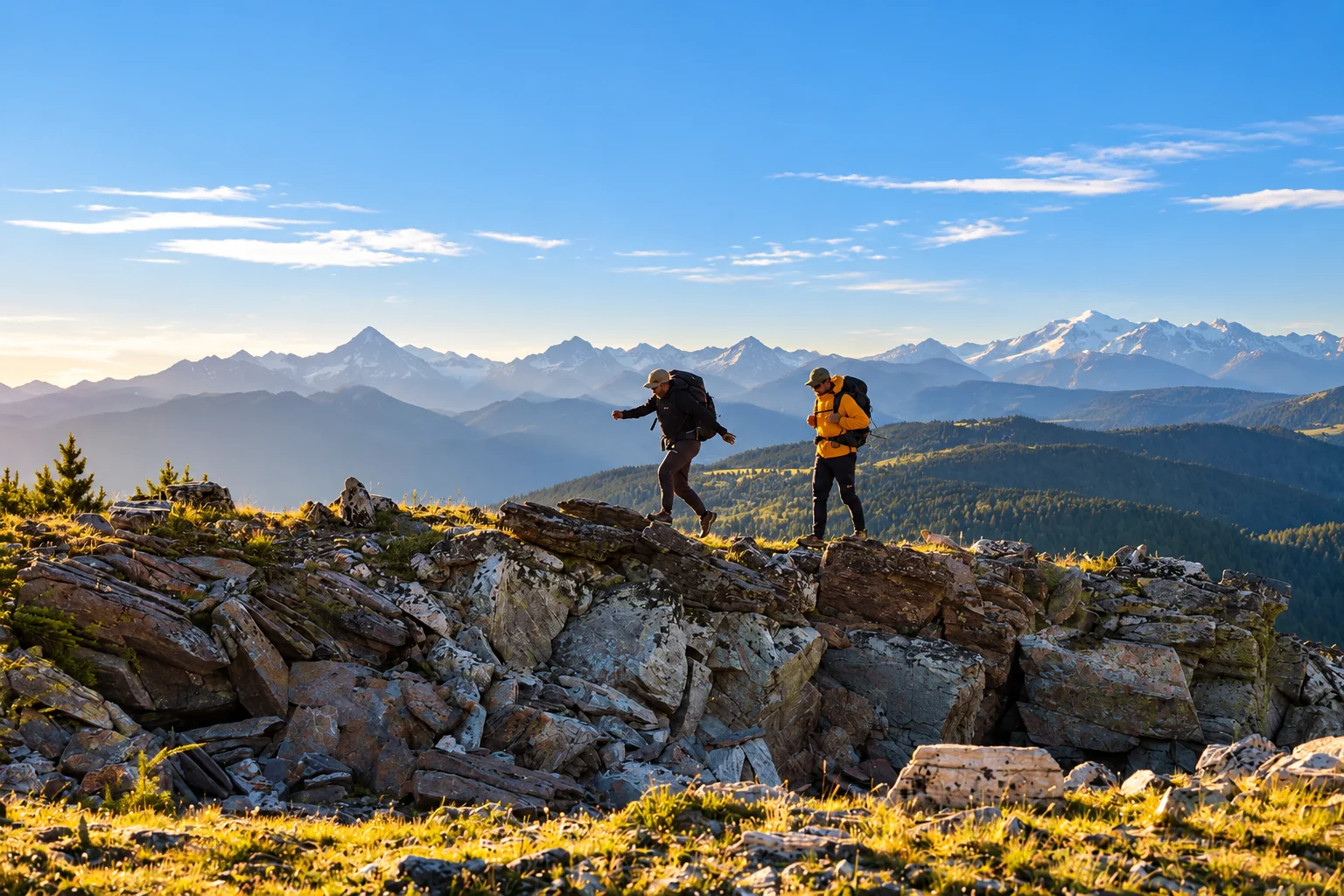
From the gumba, the trail climbs again toward the top of Jamacho, and this stretch felt like the most physically demanding part of the day, not difficult exactly, but a proper climb after the gentler forest walking lower down. Knowing the view was close kept the pace up.
12:45 PM: The View
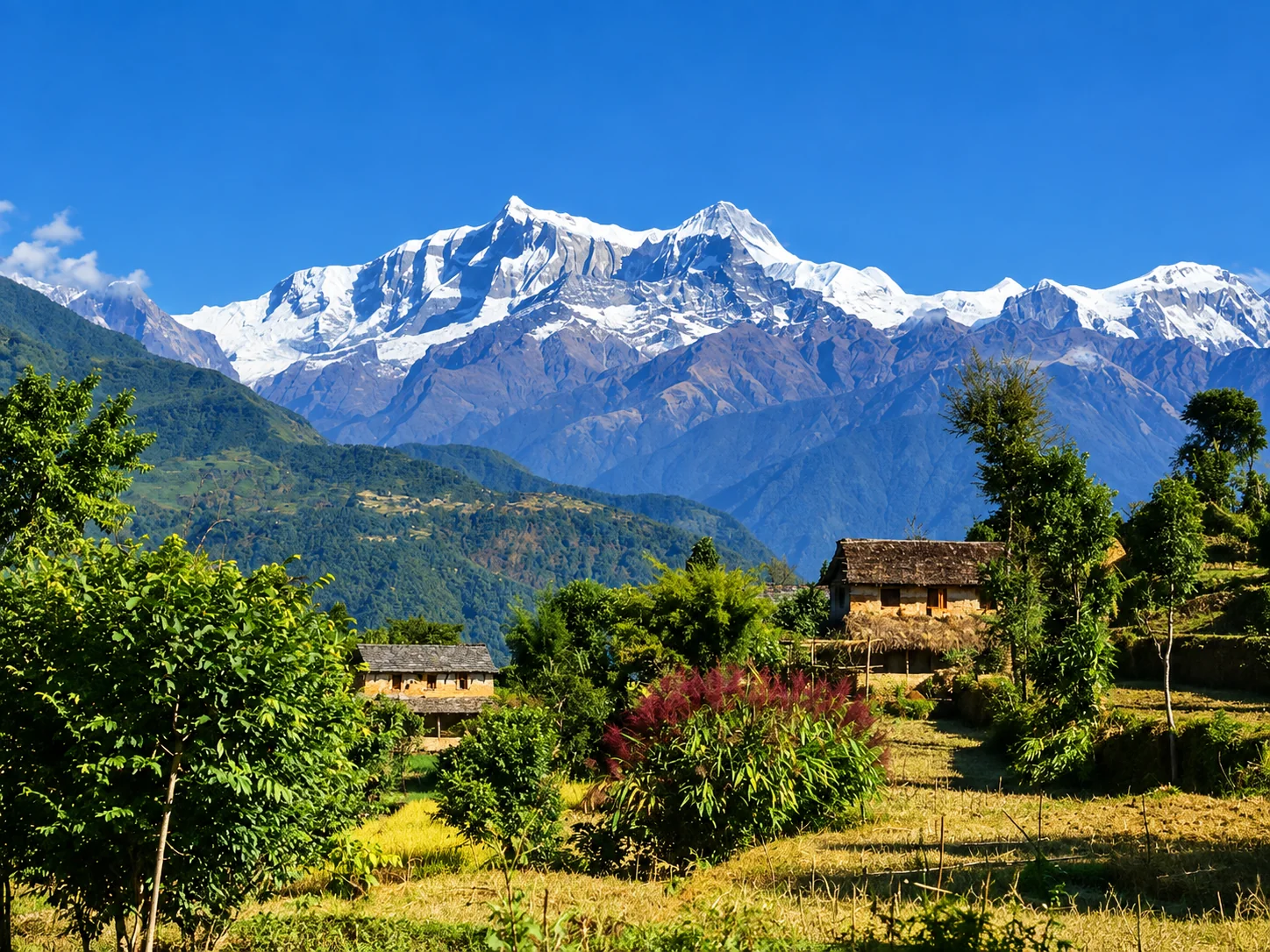
This was the payoff, and it delivered. The sky was completely clear that day, and from the top of Jamacho the Himalayan range stretched out along the horizon, unobstructed. After the enclosed feeling of the forest and the quiet of the stupa, the sudden openness of the view felt almost disproportionate, like the hike had been building toward exactly this moment without my quite realizing it.
I stayed up there for a while, eating lunch with that view in front of me, which is a specific kind of good that's hard to replicate anywhere else.
2:30 PM: Back Down and Back to Kathmandu
The descent retraces the same forest and passes the gumba again, though it felt different on the way down, less discovery, more a kind of closing loop. By the time I reached the bottom, I'd had forest, culture, physical effort, and a clear mountain view, all inside a single day, which is genuinely rare for a hike this close to Kathmandu.
Was It Worth It?
Completely. Of all the day hikes I've done near Kathmandu, Jamacho is the one that feels most complete in a single package. Nagarkot gives you a sunrise. Shivapuri Nagarjun gives you forest and quiet. Jamacho gives you a bit of everything, forest, a real stupa and prayer-flag stop, a proper climb, and a clear Himalayan view at the end, without needing an early alarm or a full exhausting day.
Should You Do It? A Straight Answer
Do it if:
- You want forest, culture, and mountain views in a single hike rather than choosing one
- You don't want a 4 AM start
- You're comfortable with a proper climb near the top
- You want to hike solo and set your own pace
Skip it, or pick a different hike, if:
- You specifically want a sunrise moment (choose Nagarkot instead)
- You want the absolute least physical effort (choose the Chandragiri Cable Car & Champadevi Hike)
- You want a longer, more immersive forest day with no climb at the end (choose Shivapuri Nagarjun & Bagdwar)
What I'd Tell a First-Timer
- Don't rush the gumba and stupa stop. It's tempting to treat it as a quick photo point on the way to the view, but it's worth sitting with for a while, especially with the prayer flags moving in the breeze.
- Save some energy for the final climb. The stretch after the monastery is the most demanding part of the day, so pace yourself through the forest section.
- Bring lunch to eat at the top. The view is good enough to linger at, and eating there rather than rushing back down is worth the extra few minutes.
- Go on a clear day if you can. The mountain view is the payoff of the hike, and like any Himalayan viewpoint, it depends entirely on the weather.
- Bring valid ID. Nepali citizens need a citizenship card or student ID, and foreign visitors need their original passport. Both are required at the Phulbari Gate checkpoint, and the fee must be paid in cash.
- Wear proper shoes. Forest trail, monastery grounds, and a final climb all call for grip and ankle support, not sandals.
- Solo is fine, but let someone know your plan, the same practice I follow on any of these hikes.
Entry Fee and Permit Details
If you're planning this hike yourself rather than booking it as a package, here's what you'll need at the gate:
| Nepali Citizens | Foreign Visitors | |
| Entry fee | NPR 100 | NPR 1,000 |
| Where to pay | Phulbari (Fulbari) Gate checkpoint, Balaju | Phulbari (Fulbari) Gate checkpoint, Balaju |
| Payment method | Cash (NPR) | Cash (NPR) |
| ID required | Any Nepali citizenship card or student ID card | Original passport, to verify nationality |
A few practical notes: Nepali citizens should carry a citizenship card or a student ID card, and foreign visitors should bring their original passport, not a photo or copy, since ID is checked at the counter for both. Carry small denominations if possible, since change at a checkpoint gate isn't guaranteed. When you book the Jamacho Hike with us, we handle this at the gate, so you don't need to manage cash or paperwork yourself.
Entry fees are current as of 2026/2027 and may change. Confirm with us or at the gate before your visit.
What Autumn Gave Me
Autumn is a strong choice for Jamacho specifically because it combines two things this hike needs: dry, comfortable forest trails after the monsoon, and clear skies for the mountain view at the top. I had both. That combination isn't guaranteed in every season.
| Season | What to expect on this trail |
| Autumn (Sep-Nov) | Dry trails, clear skies, strong chance of a full mountain view; this is when I went |
| Winter (Dec-Feb) | Cold, often clear, good views but a chillier climb |
| Spring (Mar-May) | Warmer, some haze that can soften the mountain view |
| Monsoon (Jun-Aug) | Lush forest, muddy trail, mountain view usually obscured |
Is This Hike Difficult?
Easy to moderate overall, with the final stretch to the top being the most demanding part. It's shorter than a full day at Shivapuri Nagarjun, but has more sustained climbing than the gentler Chandragiri Cable Car & Champadevi Hike. If you're reasonably fit and comfortable with a steady uphill push near the end, you'll manage it well.
How This Compares to Other Forest and Viewpoint Hikes
- Shivapuri Nagarjun & Bagdwar Hike: longer, more purely forest-focused, no major viewpoint payoff at the end
- Nagarkot Sunrise with Changunarayan Hike: the view comes with an early sunrise start rather than a midday climb
- Chandragiri Cable Car & Champadevi Hike: easier overall, but without the forest and monastery stretch that makes Jamacho feel varied
- Panauti, Namobuddha & Dhulikhel Cultural Hike: more heavily weighted toward heritage and temples if the gumba stop at Jamacho is what appealed to you most
After the Hike
A satisfying, moderately tiring day rather than an exhausting one. Good ways to spend the evening:
- Rest, and let the climb settle before planning anything else physical
- Book the 1-Day Ayurvedic Wellness Experience the next day
- If the gumba and stupa stop was your favorite part, consider the Kopan Monastery Retreat Experience for a deeper version of that same stillness
For a full comparison of Kathmandu's day hikes, see Best Day Hikes Near Kathmandu: 10 Easy Trails for Beginners. If you only have one day and are still deciding, read One Day in Kathmandu? Here Is the Hike You Should Take. And if forest quiet without a climb sounds better, read about my day at Shivapuri Nagarjun.
Book the Jamacho Hike
The Jamacho Hike is run by Khushi Travels & Consulting Group, a Kathmandu-based company established in 2025 by a team with more than 17 years of travel experience, associated with NTB, TAAN, and the Himalayan Rescue Association. See our registrations and why travel with us. Contact us or message WhatsApp to check current timing and guide options.
Frequently Asked Questions
1. Is the Jamacho Hike worth doing?
Yes, based on my own solo trip. It's one of the few day hikes near Kathmandu that combines forest, a real gumba and stupa stop, and a clear Himalayan view in a single day.
2. Did you actually see the mountains from Jamacho?
Yes. I went on a clear autumn day and had an unobstructed view of the Himalayan range from the top.
3. Is this hike difficult?
Easy to moderate. The final stretch to the top is the most demanding part, a proper climb after the gentler forest section. I managed it comfortably as a solo hiker.
4. Can I hike Jamacho solo?
Yes, I did it alone with no guide. It's still good practice to tell someone your plan and expected return time, and a guide can add local knowledge about the gumba and trail.
5. Is there really a monastery on this trail?
Yes. The trail passes a small gumba and stupa partway up, strung with prayer flags, and I stopped there rather than just walking past, it's worth taking time at.
6. How much does it cost to enter Jamacho?
Entry fees differ by nationality. Nepali citizens pay NPR 100, while foreign visitors pay NPR 1,000 per person. Both are purchased in cash (Nepali Rupees) at the Phulbari (Fulbari) Gate checkpoint in Balaju.
7. What ID do I need to enter Jamacho?
Nepali citizens need a citizenship card or a student ID card. Foreign visitors need their original passport, not a photo or copy, to verify nationality when purchasing the ticket. Both are checked at the counter.
8. Where and how do I pay the Jamacho entry fee?
The fee is paid at the Phulbari (Fulbari) Gate checkpoint in Balaju, in cash, in Nepali Rupees. Carry small denominations if possible, since change at the gate isn't guaranteed. When you book with us, we handle this payment at the gate for you.
9. What's the best season for this hike?
Autumn (September to November) is a strong choice, combining dry trails with clear skies for the mountain view. I went in autumn and had both.
10. How long does the Jamacho Hike take?
It's a full-day hike. I started at a normal morning hour and was back in Kathmandu by mid-afternoon. Ask us for a realistic estimate when you book.
11. How does Jamacho compare to Nagarkot?
Nagarkot is built around a sunrise moment with an early start. Jamacho gives you forest, a gumba, and a mountain view later in the day, without needing to wake up before dawn. Read about both: my Nagarkot sunrise and this hike.
12. How does Jamacho compare to Shivapuri Nagarjun?
Shivapuri Nagarjun is longer and more purely forest-focused, with no major viewpoint payoff. Jamacho is shorter and ends with a clear mountain view. Read about my Shivapuri Nagarjun day for comparison.
13. Do I need to be very fit for this hike?
Reasonable fitness is enough, especially for the final climbing section. It's more demanding than the cable car hike but less of a commitment than a full day at Shivapuri Nagarjun.
14. What should I pack for the Jamacho Hike?
Proper walking shoes with grip, water, a lunch you can eat at the viewpoint, a light layer for the top, valid ID (citizenship/student card or passport), cash for the entry fee, and a camera for both the gumba and the mountain view.
15. Is the monastery open to visitors?
The gumba and stupa along the trail are generally open to respectful visitors. Dress modestly, and if it's customary at the site, walk clockwise around the stupa as is traditional.
16. Can I see the mountains if it's hazy or cloudy?
Not reliably. Like any Himalayan viewpoint, the view depends on the weather. Autumn and winter give the best chances of a clear day like mine.
17. Is this hike good for a first visit to Nepal?
Yes, it's a strong choice because it introduces forest walking, Buddhist heritage, and a mountain view all in one trip, a good sampler of what the hills around Kathmandu offer.
18. Is there food or water available on the trail?
Facilities are limited once you're on the trail itself. Carry enough water and food for the full day, including lunch to eat at the top.
19. Can I do this hike in the monsoon?
It's possible, but expect muddy trails and a mountain view that's likely obscured by cloud. If the view matters most to you, autumn or winter is a better choice.
20. Is a guide necessary for the Jamacho Hike?
Not strictly, I went without one, but a guide adds context at the gumba and local knowledge of the trail, and arranges your entry permit so you don't need to handle payment yourself. Contact us to arrange one.
21. What time should I start to reach the top and back comfortably?
Starting in the morning gives you enough time for the forest section, the monastery stop, and the final climb, with daylight to spare for the way down. Exact timing depends on the season, so confirm with us when booking.
22. Can I combine this hike with a monastery retreat?
Yes. If the stillness of the gumba and stupa appealed to you, the Kopan Monastery Retreat Experience offers a longer, more immersive version of that same experience.
23. Is Jamacho suitable for photography?
Yes, in two very different ways: the gumba, stupa, and prayer flags lower down, and wide Himalayan panoramas from the top. Few hikes this close to Kathmandu offer both.
24. How far is Jamacho from central Kathmandu?
It's reachable within a reasonable drive from the city, similar in distance to other popular day hikes in the valley rim. Ask us for exact travel time from your location.
25. Can I pair this hike with other Kathmandu activities on the same trip?
Yes. Many travelers follow it with a wellness day, such as the 1-Day Ayurvedic Wellness Experience, or explore the Kathmandu Valley Tour on a different day.
26. How do I book?
Contact us, message us on WhatsApp, or email info@khushiservice.com.
Ready to Hike It Yourself?
Contact Khushi Travels or message us on WhatsApp to book the Jamacho Hike. You can also call Mr. Dinesh (9768988868) or Mr. Sunil Sharma (9768988869).
Khushi Travels & Consulting Group Pvt. Ltd. | Sorahkhutte, Kathmandu, Nepal | info@khushiservice.com | khushiservice.com
Similar Blogs
We are associated with