Halesi Mahadev Temple Tour 2027: Holy Cave Temple
Trip snapshot
Everything you need to know at a glance
Trip overview
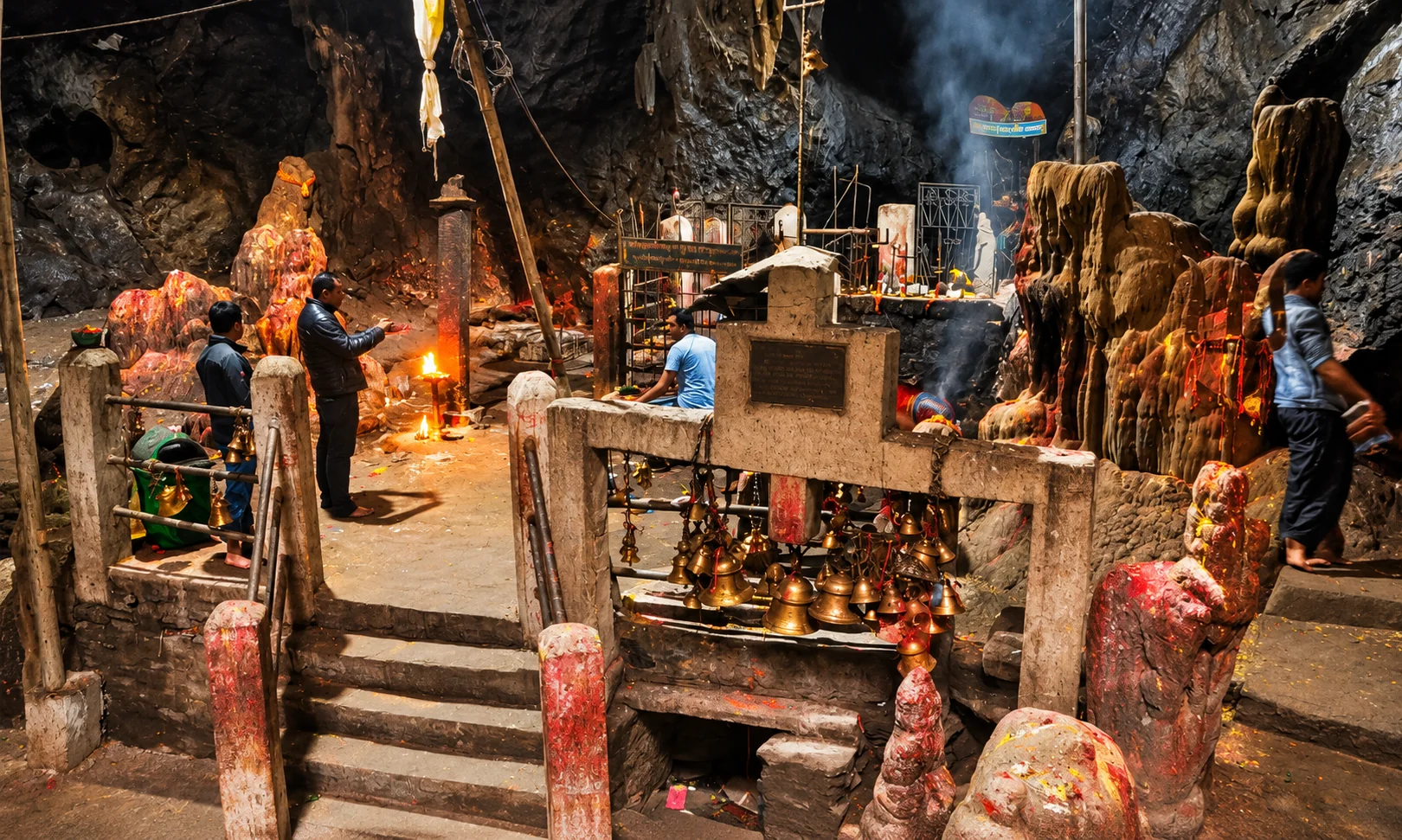
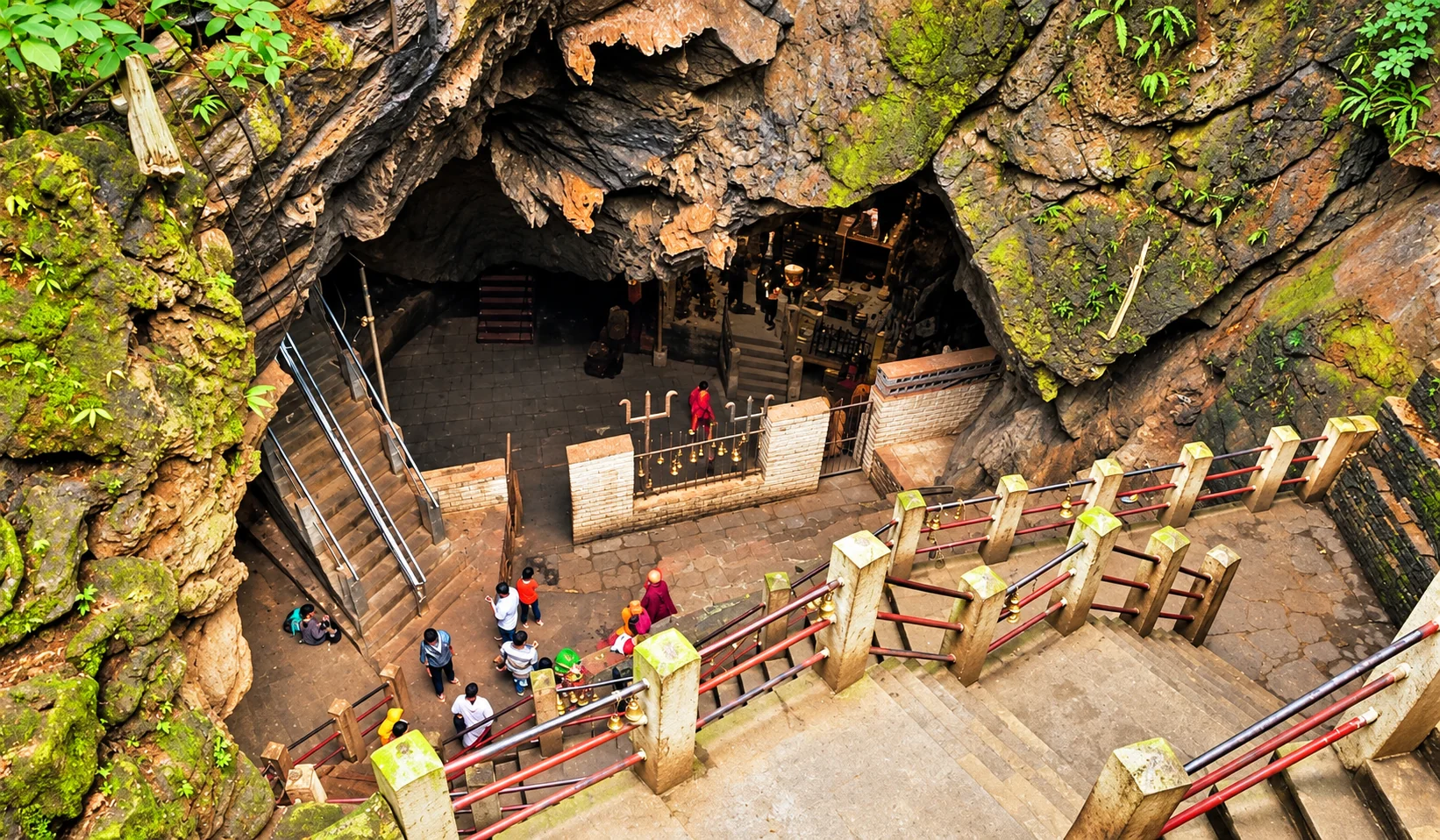
Halesi Mahadev Temple, located in Khotang, Nepal, is a sacred pilgrimage site revered by Hindus, Buddhists, and the local Kirat community. According to Hindu legend, Lord Shiva took refuge in the cave while escaping Bhasmasur, who had received a dangerous boon. In Tibetan Buddhist tradition, the cave is known as Maratika, where Guru Padmasambhava and Mandarava are believed to have attained spiritual realization associated with longevity. Today, pilgrims visit for worship, meditation, and blessings.
Key Highlights
- Sacred cave shrine dedicated to Lord Shiva.
- Important Hindu and Buddhist pilgrimage destination.
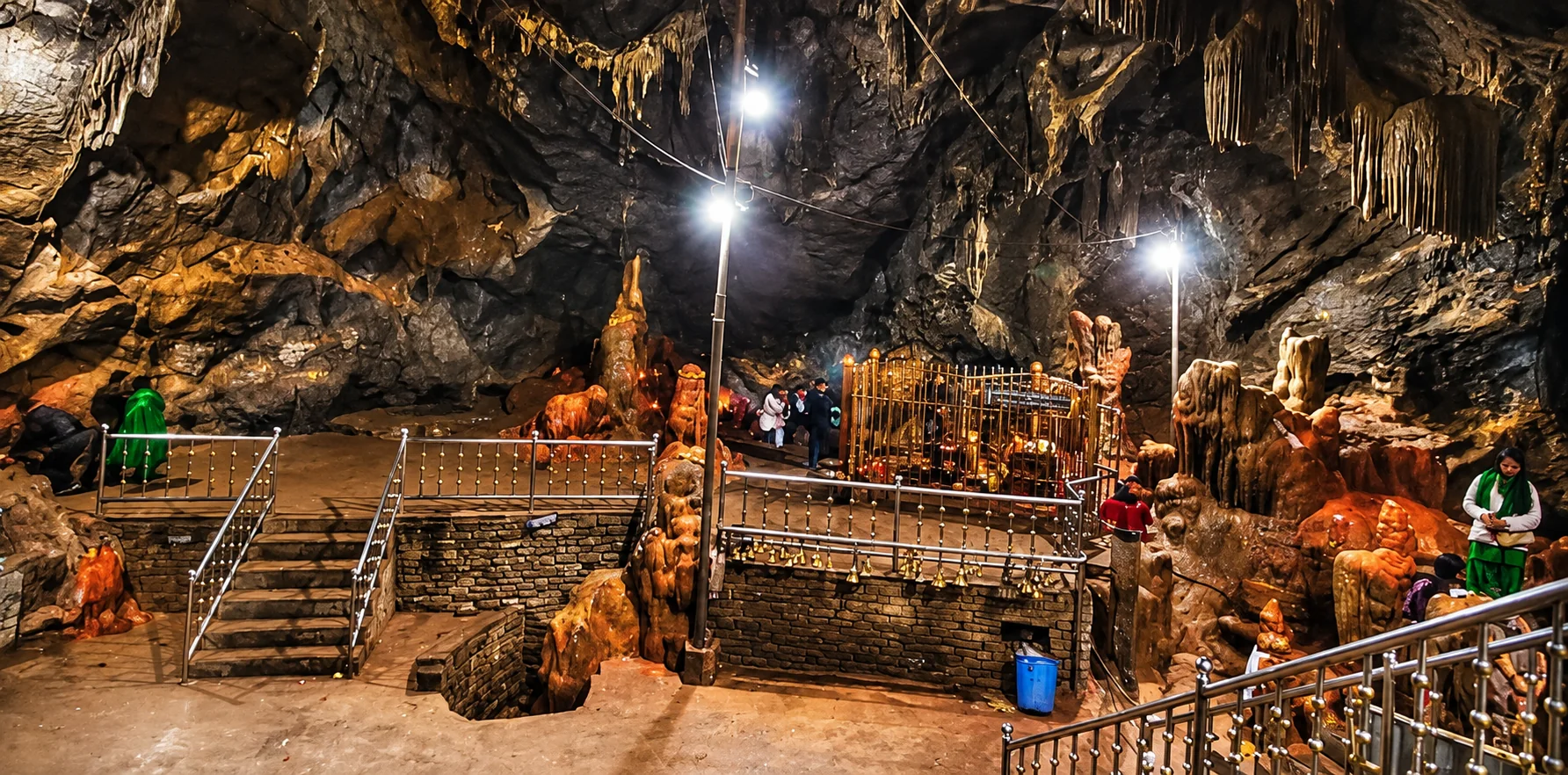
- Fascinating natural limestone cave formations.
- Spiritual significance of Maratika Cave.
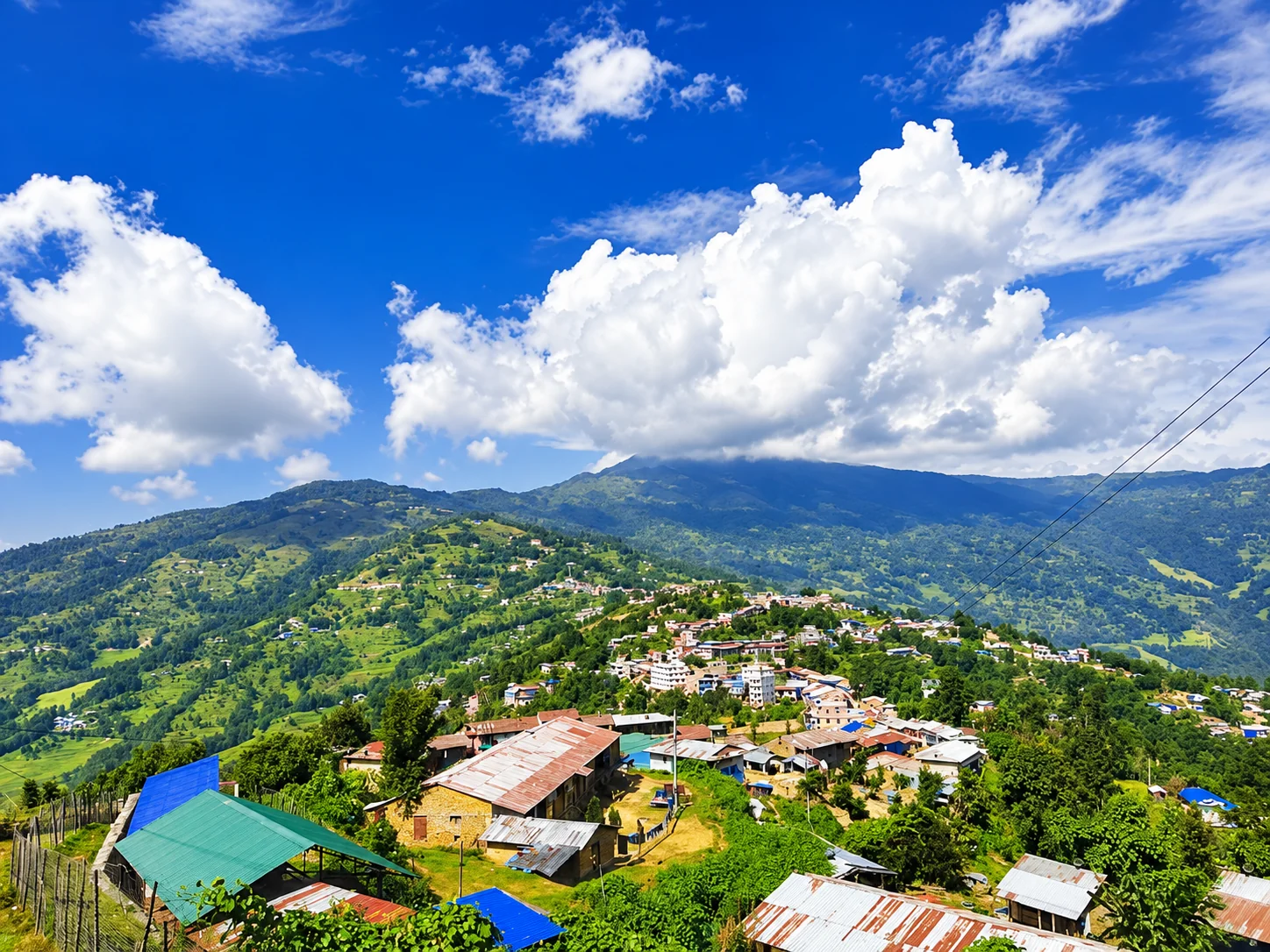
- Scenic hills and rural landscapes of Khotang.
- Ideal for a 2-day pilgrimage from Kathmandu.
Important Note: The itinerary can be extended upon request to include additional destinations, sightseeing activities, or overnight stays. Khushi Travels offers flexible, customized tour arrangements to suit your travel preferences, schedule, and budget.
Day-by-day itinerary
-
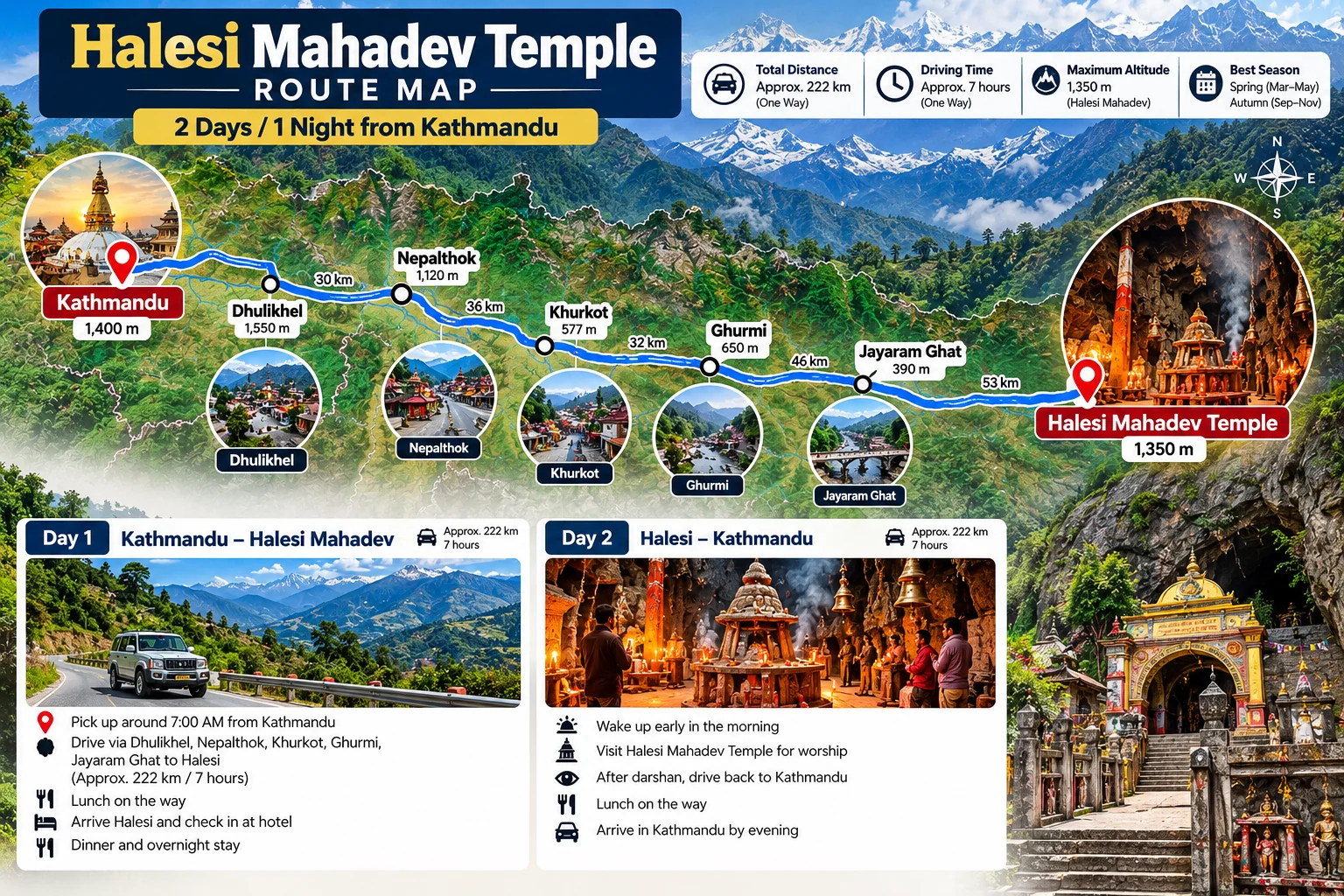
Begin your journey around 7:00 AM with a pickup from Kathmandu. Drive towards Halesi Mahadev Temple through Dhulikhel, Nepalthok, Khurkot, Ghurmi, and Jayaram Ghat, enjoying the scenic hills, river valleys, and rural landscapes along the way. Stop for lunch at a suitable restaurant en route.
Upon arrival in Halesi, check in to your hotel and relax after the journey. Depending on your arrival time, explore the surrounding area or prepare for the following morning's temple visit. Enjoy dinner and an overnight stay at the hotel near Halesi Mahadev Temple.
Activity: Scenic Drive and Local Exploration
Distance: Approximately 222 km
Driving Time: Approximately 7 hours, depending on road conditions
Meals: Lunch and Dinner
-
Wake up early and visit the sacred Halesi Mahadev Temple, renowned for its natural caves and religious significance. Offer prayers, explore the accessible cave areas, and experience the spiritual atmosphere of this important Hindu and Buddhist pilgrimage destination.
After completing the temple visit, return to the hotel for breakfast. Check out and begin the drive back to Kathmandu, following the same route through Jayaram Ghat, Ghurmi, Khurkot, Nepalthok, and Dhulikhel. Stop for lunch along the way and continue towards Kathmandu, where the tour concludes upon arrival.
Activity: Temple Darshan and Return Drive
Driving Time: Approximately 7 hours, depending on road conditions
Meals: Breakfast and Lunch
Important Note: The itinerary can be extended upon request to include additional sightseeing, nearby spiritual sites, or extra overnight stays. Travel times may vary depending on traffic and road conditions.
What's included
Included
- Hotel Pick-up and Drop-off
- Professional Tour guide throughout the Tour
- Tour Map with detailed briefing before Departure
- Accommodation at Hotel During Tour
- Meals on full board basis (Breakfast, Lunch & Dinner)
- Fee of local Entry Permits
- All Entrance fee at Sightseeing spot
- A Bottle of Water during the Tour
- All staff-related expenses, including salaries, meals, and Transportation
- Cultural Interaction with local Communities
- 24/7 Emergency Support and Coordination by Organization
Not included
- All the Personal Expenses as Tip, Laundry, Beverages and Bar Bill etc.
- Personal Travel Insurance (Recommended to cover Emergencies)
- Accommodation, Meals, or Activities outside the Itinerary.
- Fees charged by Banks for International Transcation
- 10% Service Charge for Company.
- Any Services or Costs not clearly listed under “Package Inclusions”
Dates & availability
There are no fixed group departures for this trip. We run it as a private trip on your preferred dates.
Route map
 View full size
Packing list
| S.N. | Essential Gear | Purpose |
|---|---|---|
| 1 | Comfortable shoes | Walking and cave visits |
| 2 | Warm jacket | Cool mornings and evenings |
| 3 | Comfortable clothing | Travel and temple visits |
| 4 | Raincoat or umbrella | Rain protection |
| 5 | Small daypack | Carrying essentials |
| 6 | Water bottle | Hydration |
| 7 | Personal medications | Health and safety |
| 8 | Toiletries | Personal hygiene |
| 9 | Mobile phone and power bank | Communication |
| 10 | Cash and ID | Expenses and identification |
| 11 | Sunscreen and cap | Sun protection |
| 12 | Overnight bag | One-night stay |
Note: Wear modest clothing and take extra care on slippery cave steps.
Frequently asked questions
What is Halesi Mahadev Temple?
Halesi Mahadev Temple is a sacred cave shrine in Khotang District, Nepal, dedicated to Lord Shiva. Halesi Mahadev Temple is revered by Hindus, Buddhists, and the local Kirat community, and is often called the “Pashupati of the East.”
Where is Halesi Mahadev Temple located?
Halesi Mahadev Temple is located in Halesi Tuwachung Municipality in Khotang, eastern Nepal. Halesi Mahadev Temple sits among scenic hills and rural landscapes, roughly 222 km from Kathmandu by road.
Why is Halesi Mahadev Temple sacred to Hindus?
According to Hindu legend, Lord Shiva took refuge in the Halesi Mahadev Temple cave while escaping Bhasmasur, a demon who had received a dangerous boon. Halesi Mahadev Temple is therefore regarded as a holy site of divine protection.
Why is Halesi Mahadev Temple important to Buddhists?
In Tibetan Buddhist tradition, the Halesi Mahadev Temple cave is known as Maratika Cave. Guru Padmasambhava and Mandarava are believed to have attained spiritual realization associated with longevity at Halesi Mahadev Temple.
What is Maratika Cave?
Maratika Cave is the Buddhist name for the sacred cave at Halesi Mahadev Temple. Maratika Cave is associated with longevity practice, meditation, and the spiritual attainments of Guru Padmasambhava.
Who was Bhasmasur in the Halesi Mahadev Temple legend?
Bhasmasur was a demon who received a boon allowing him to turn anyone to ashes by touching their head. Lord Shiva hid inside the Halesi Mahadev Temple cave to escape Bhasmasur, according to Hindu tradition.
How far is Halesi Mahadev Temple from Kathmandu?
Halesi Mahadev Temple is approximately 222 km from Kathmandu. The Halesi Mahadev Temple tour route passes through Dhulikhel, Nepalthok, Khurkot, Ghurmi, and Jayaram Ghat.
How long does it take to drive from Kathmandu to Halesi Mahadev Temple?
The drive from Kathmandu to Halesi Mahadev Temple takes approximately 7 hours, depending on road conditions. Travelers who start around 7:00 AM usually reach Halesi Mahadev Temple by late afternoon.
How many days are needed for a Halesi Mahadev Temple tour?
A 2-day Halesi Mahadev Temple tour from Kathmandu is ideal. Day 1 covers the drive to Halesi, and Day 2 covers the temple visit and the return journey to Kathmandu.
What is the itinerary for the Halesi Mahadev Temple tour?
Day 1 includes a scenic drive from Kathmandu to Halesi Mahadev Temple, hotel check-in, and an overnight stay. Day 2 includes an early morning darshan at Halesi Mahadev Temple, breakfast, and the drive back to Kathmandu.
What is the best time to visit Halesi Mahadev Temple?
October to April offers clear skies and comfortable weather for a Halesi Mahadev Temple tour. Festival periods such as Maha Shivaratri and Balachaturdashi bring large pilgrim gatherings to Halesi Mahadev Temple.
Which route does the Halesi Mahadev Temple tour follow?
The Halesi Mahadev Temple tour follows Kathmandu, Dhulikhel, Nepalthok, Khurkot, Ghurmi, Jayaram Ghat, and Halesi. The Halesi Mahadev Temple return journey follows the same road.
What is included in the Halesi Mahadev Temple tour package?
A standard Halesi Mahadev Temple tour package includes Kathmandu pickup, private transport, one night of hotel accommodation near Halesi Mahadev Temple, and meals listed in the itinerary. Exact inclusions depend on the operator.
Which meals are served during the Halesi Mahadev Temple tour?
Day 1 of the Halesi Mahadev Temple tour includes lunch and dinner. Day 2 includes breakfast and lunch before the tour ends in Kathmandu.
What time does the Halesi Mahadev Temple tour start from Kathmandu?
The Halesi Mahadev Temple tour starts around 7:00 AM with a pickup from Kathmandu. An early departure leaves enough time to reach Halesi Mahadev Temple and rest before the morning darshan.
Is Halesi Mahadev Temple suitable for elderly pilgrims?
Halesi Mahadev Temple can suit elderly pilgrims who are comfortable with a long road journey. The cave areas at Halesi Mahadev Temple involve narrow passages and steps, so elderly travelers should move slowly and seek assistance when needed.
Is the cave at Halesi Mahadev Temple difficult to enter?
The accessible cave areas at Halesi Mahadev Temple are manageable for most travelers. Some passages inside Halesi Mahadev Temple are narrow and slippery, so sturdy footwear and careful movement are recommended.
What natural features can visitors see at Halesi Mahadev Temple?
Visitors to Halesi Mahadev Temple can see natural limestone cave formations, sacred shrines, and surrounding hills. Halesi Mahadev Temple also offers views of rural Khotang landscapes.
Why do pilgrims visit Halesi Mahadev Temple?
Pilgrims visit Halesi Mahadev Temple for worship, meditation, and blessings. Halesi Mahadev Temple attracts devotees seeking spiritual merit, longevity blessings, and peace.
Is Halesi Mahadev Temple important to the Kirat community?
Yes, Halesi Mahadev Temple holds cultural and spiritual importance for the local Kirat community. Halesi Mahadev Temple reflects Nepal’s shared Hindu, Buddhist, and indigenous traditions.
What should travelers pack for the Halesi Mahadev Temple tour?
Travelers should pack comfortable clothing, non-slip shoes, a flashlight, a rain jacket, drinking water, and offerings for prayer. Modest dress is advised when visiting Halesi Mahadev Temple.
Are there hotels near Halesi Mahadev Temple?
Yes, basic hotels and lodges operate near Halesi Mahadev Temple. Accommodation near Halesi Mahadev Temple is simple, so advance booking through a tour operator is recommended.
Can Halesi Mahadev Temple be visited in one day?
A one-day visit to Halesi Mahadev Temple is not practical because the drive from Kathmandu takes about 7 hours each way. A 2-day Halesi Mahadev Temple tour offers a more comfortable and spiritual experience.
Is the road to Halesi Mahadev Temple safe?
The road to Halesi Mahadev Temple is generally drivable year-round, but conditions vary with weather. Monsoon rain can cause delays, so travelers should check road updates before starting the Halesi Mahadev Temple tour.
How can travelers book a Halesi Mahadev Temple tour from Kathmandu?
Travelers can book a Halesi Mahadev Temple tour through a licensed Nepal travel operator by confirming dates, group size, transport, and hotel preferences. Early booking is advised during Maha Shivaratri and peak pilgrimage seasons at Halesi Mahadev Temple.
More details
 Halesi Mahadev Temple Accommodation Types
Halesi Mahadev Temple, located in Khotang, Nepal, offers several accommodation options for pilgrims and travelers visiting the sacred caves. During the 2 Days / 1 Night tour from Kathmandu, visitors can stay in local hotels, guesthouses, lodges, or homestays near Halesi Bazaar. These accommodations provide a convenient place to rest after the road journey and prepare for temple darshan the following day.
Accommodation in Halesi Bazaar


Halesi Bazaar is a convenient area for visitors exploring Halesi Mahadev Temple. Local hotels and guesthouses offer basic rooms and essential facilities, with some properties providing dining services. Staying nearby makes it easier to visit the sacred caves early in the morning and explore the pilgrimage area.
Hotels and Guesthouses


Hotels and guesthouses around Halesi provide practical accommodation for families, couples, individual pilgrims, and tour groups. Facilities may include beds, private or shared bathrooms, hot water, and dining areas, depending on the property. Travelers should confirm room availability and facilities before arrival, especially during major religious festivals.
Local Homestays


Local homestays may be available in and around the Halesi area. They can offer a chance to experience rural Nepali hospitality, local lifestyles, and home-cooked meals. Facilities are generally simpler than those of standard hotels, and availability should be confirmed in advance.
Types of Accommodation Available
| Accommodation Type | Main Features | Best Suited For |
|---|---|---|
| Local hotels | Basic private rooms and essential facilities | Families and pilgrims |
| Guesthouses | Simple rooms and convenient locations | Budget travelers |
| Local lodges | Basic accommodation, sometimes with meals | Short stays |
| Homestays | Local hospitality and cultural experiences | Travelers interested in local life |
Important Accommodation Information
- Room facilities: Beds, blankets, and basic furniture, depending on the property.
- Bathrooms: Attached or shared facilities may be available.
- Meals: Local hotels and restaurants may serve Nepali and Indian-style food.
- Advance booking: Recommended for groups and busy pilgrimage periods.
- Location: Staying near Halesi Bazaar helps reduce travel time to the temple.
- Comfort level: Confirm hot water, room type, and other essential facilities before booking.
For the 2 Days / 1 Night Halesi Mahadev Temple Tour, Khushi Travels can arrange accommodation according to your budget, group size, and comfort preferences. Booking early is advisable during Maha Shivaratri and other major religious occasions when rooms may be limited.
 What to Expect from the Halesi Mahadev Temple Visit
Halesi Mahadev Temple offers a meaningful pilgrimage experience combining Hindu religious traditions, Buddhist heritage, natural limestone caves, and the peaceful landscapes of Khotang, Nepal. During the 2 Days / 1 Night tour, visitors can explore the sacred cave complex, offer prayers, learn about local legends, and experience the spiritual atmosphere of one of eastern Nepal's important pilgrimage destinations.
Sacred Cave Darshan and Worship

Visitors can explore the accessible areas of the sacred caves and offer prayers at the shrines associated with Lord Shiva. According to Hindu tradition, the caves are connected with the legend of Lord Shiva and Bhasmasur. Pilgrims often visit to seek blessings, perform religious rituals, and experience the spiritual significance of the temple.
Natural Limestone Caves

The temple complex is famous for its naturally formed caves, rocky walls, uneven surfaces, and distinctive underground spaces. Exploring the accessible sections provides an opportunity to appreciate the natural formations and religious features of the site. Visitors should take care on damp or slippery steps and follow local safety instructions.
Hindu and Buddhist Spiritual Heritage


Halesi is sacred to both Hindus and Tibetan Buddhists. It is known as Halesi Mahadev in Hindu tradition and Maratika Cave in Tibetan Buddhism. Buddhist tradition associates the cave with Guru Padmasambhava and Mandarava and their spiritual realization connected with longevity. This shared religious importance makes the destination particularly meaningful for pilgrims from different backgrounds.
Scenic Surroundings and Local Culture


Beyond the temple, visitors can enjoy views of the surrounding hills, rural settlements, and countryside. The local area offers opportunities to observe everyday village life and experience the hospitality of eastern Nepal. Depending on arrival time, travelers may explore the nearby bazaar and surrounding areas before their overnight stay.
Pilgrimage Experience at a Glance
| Experience | What to Expect |
|---|---|
| Temple darshan | Prayers and worship at sacred shrines |
| Cave exploration | Accessible natural caves and rocky passages |
| Spiritual heritage | Hindu and Buddhist religious traditions |
| Photography | Cave entrances and surrounding landscapes, subject to site rules |
| Local exploration | Halesi Bazaar and nearby rural surroundings |
| Overnight stay | Local hotel, guesthouse, or lodge |
Important Visitor Information
- Wear comfortable shoes for walking and steps.
- Dress respectfully when visiting religious areas.
- Follow instructions from temple authorities and local caretakers.
- Check photography restrictions before taking pictures inside the caves.
- Allow sufficient time for darshan, especially during festivals.
- Visitors with mobility difficulties should consider the uneven surfaces and stairs before entering the caves.
The Halesi Mahadev Temple visit combines religious devotion, natural cave exploration, and local cultural experiences, making it a rewarding highlight of the 2 Days / 1 Night pilgrimage tour from Kathmandu.
 Best Time / Season to Visit Halesi Mahadev Temple
The best time to visit Halesi Mahadev Temple in Khotang, Nepal, is generally during spring (March to May) and autumn (September to November). These seasons usually offer comfortable temperatures and favorable conditions for road travel, temple visits, and exploring the sacred caves. However, Halesi Mahadev Temple is open to pilgrims throughout the year, subject to local access and conditions.
Spring Season (March to May)
Spring is a pleasant season for visiting Halesi Mahadev Temple. The surrounding hills become greener, and daytime conditions are generally suitable for exploring the temple complex and nearby areas. It is a good choice for families, pilgrims, and travelers planning a comfortable two-day journey from Kathmandu.
Why visit in spring?
- Generally pleasant daytime temperatures.
- Green countryside and scenic landscapes.
- Suitable conditions for sightseeing and cave visits.
- Good opportunities for outdoor photography.
Autumn Season (September to November)
Autumn is another excellent season for a Halesi pilgrimage. After the monsoon, the weather often becomes clearer, although rainfall can continue in September. October and November are particularly attractive for travelers seeking comfortable weather and scenic road journeys.
Why visit in autumn?
- Often favorable conditions for road travel.
- Clearer skies and pleasant daytime weather.
- Suitable for family and group pilgrimages.
- Opportunities to experience Nepal's festive season.
Winter Season (December to February)

Winter can be a suitable time to visit Halesi Mahadev Temple, especially for travelers who prefer cooler weather and a quieter pilgrimage experience. Mornings and evenings may be cold, so carrying a warm jacket is recommended. Check road and weather conditions before departure.
Things to consider in winter:
- Cool mornings and evenings.
- Pack warm clothing.
- Check road conditions before traveling.
- Plan enough time for the return journey.
Monsoon Season (June to August)

The monsoon brings lush green landscapes to the Halesi region, but heavy rainfall can make road travel less predictable. Landslides, muddy roads, and travel delays may occur in hilly areas. Visitors planning a monsoon pilgrimage should check local weather forecasts and road conditions before leaving Kathmandu.
Things to consider during the monsoon:
- Possible road delays and landslides.
- Carry a raincoat or umbrella.
- Wear footwear with good grip.
- Keep the itinerary flexible.
Best Months to Visit Halesi Mahadev Temple
| Month | General Conditions | Recommendation |
|---|---|---|
| January–February | Cool and generally dry | Suitable with warm clothing |
| March–May | Pleasant weather and greener hills | Excellent |
| June–August | Rainfall and possible road disruptions | Travel with caution |
| September | Monsoon may continue early in the month | Good when conditions improve |
| October–November | Generally pleasant and clearer | Excellent |
| December | Cooler weather and potentially clear days | Very good |
Best Time for Religious Festivals
Maha Shivaratri is one of the most important occasions for visiting Halesi Mahadev Temple, attracting devotees who come to worship Lord Shiva. Other religious occasions may also bring larger crowds. Festival dates follow the lunar calendar, so check the dates for your intended travel year and arrange accommodation and transportation in advance.
Final Recommendation
March to May and October to November are generally the best periods for a Halesi Mahadev Temple pilgrimage. For your 2 Days / 1 Night tour from Kathmandu, October and November are particularly good choices, although actual conditions depend on the weather and road situation. If traveling during the monsoon, confirm road accessibility before departure.
 Nearby Places to Explore from Halesi Mahadev Temple
Halesi Mahadev Temple is a major pilgrimage destination in Khotang, eastern Nepal. Visitors can combine temple darshan with exploring nearby sacred caves, Buddhist spiritual sites, local settlements, and the surrounding hills. These additional experiences can enrich your 2 Days / 1 Night pilgrimage tour, depending on available time and local access conditions.
1. Maratika Cave

8
Maratika Cave is the Buddhist name associated with the sacred cave complex at Halesi. It is an important pilgrimage site in Tibetan Buddhist tradition, associated with Guru Padmasambhava and Mandarava. Visitors can explore accessible cave areas and learn about the cave's spiritual significance.
Main highlights: Sacred caves, Buddhist heritage, meditation traditions, and spiritual pilgrimage.
2. Halesi Mahadev Cave Complex

The natural cave complex is the principal attraction of Halesi. Its rocky interiors, shrines, stone steps, and distinctive natural formations make it significant for both religious visitors and those interested in geology. Explore only accessible sections and follow local safety instructions.
Main highlights: Natural limestone formations, sacred shrines, cave exploration, and Hindu religious legends.
3. Maratika Monastery


Maratika Monastery is associated with the Buddhist spiritual heritage of the Halesi area. Visitors interested in Tibetan Buddhist traditions can appreciate the peaceful religious atmosphere, prayer practices, and cultural connections of the region. Respect monastery rules and ask permission before photographing religious activities.
Main highlights: Buddhist traditions, prayer flags, spiritual atmosphere, and religious heritage.
4. Halesi Bazaar


Halesi Bazaar is the local commercial center serving pilgrims and surrounding communities. Visitors can explore small shops, purchase refreshments, find local meals, and observe everyday life in this rural part of Khotang. It is also a convenient area for accommodation before or after temple darshan.
Main highlights: Local shops, food, rural culture, and everyday village life.
5. Surrounding Hills and Rural Landscapes

The hills and countryside around Halesi offer scenic views of rural settlements, terraced farmland, and green landscapes. Travelers can enjoy photography and short local walks where access is suitable. These experiences are best arranged with local guidance, especially when exploring unfamiliar paths.
Main highlights: Rural landscapes, terraced fields, village scenery, and photography.
Suggested Nearby Sightseeing Plan
| Available Time | Suggested Activities |
|---|---|
| 1–2 hours | Explore the main Halesi Mahadev cave complex |
| Half day | Visit the sacred caves and nearby Buddhist spiritual sites |
| Additional free time | Explore Halesi Bazaar and surrounding rural areas |
Travel Tips for Exploring Nearby Places
- Wear comfortable shoes for cave steps and uneven paths.
- Follow religious customs at temples and monasteries.
- Ask permission before photographing worshippers or ceremonies.
- Confirm local access and opening arrangements before visiting additional sites.
- Allow sufficient time for your return drive to Kathmandu.
Recommendation: For your 2 Days / 1 Night Halesi Mahadev Temple Tour, prioritize the main cave complex, Buddhist spiritual heritage, and Halesi Bazaar. These experiences fit most naturally into the existing itinerary without requiring substantial additional travel.
 Foods Available near Halesi Mahadev Temple
Halesi Mahadev Temple and the surrounding Halesi Bazaar area offer simple local dining options for pilgrims and travelers. During the 2 Days / 1 Night pilgrimage tour from Kathmandu, visitors can enjoy traditional Nepali meals, Indian-style dishes where available, snacks, and hot beverages. Food choices vary by restaurant, season, and availability, so travelers with specific dietary requirements should confirm their options before arrival.
1. Traditional Nepali Food


Dal bhat is a common and filling meal in Nepal, typically served with rice, lentil soup, vegetable curry, and pickles. It is a practical choice for pilgrims who want a satisfying lunch or dinner during the journey. Other local dishes may include rice, seasonal vegetables, curry, and roti, depending on the restaurant.
Common dishes: Dal bhat, vegetable curry, rice, lentils, roti, and pickles.
2. Breakfast Options


Local hotels and eateries may serve simple breakfasts before temple darshan or the return drive to Kathmandu. Availability depends on the establishment and the time of day. If you plan an early morning visit, confirm breakfast arrangements with your hotel in advance.
Common options: Chapati, bread, eggs, biscuits, tea, and coffee.
3. Lunch Options


Lunch can usually be arranged at local restaurants or suitable roadside eateries during the drive between Kathmandu and Halesi. Depending on the menu, travelers may find dal bhat, fried rice, noodles, vegetable curry, and other simple meals. Your driver or tour operator can help identify convenient stops along the route.
Common options: Dal bhat, fried rice, noodles, momos where available, and vegetable curry.
4. Dinner near Halesi Mahadev Temple

After arriving in Halesi, travelers can enjoy dinner at their hotel or a nearby restaurant. Meal choices may be simpler than those in Kathmandu, so it is advisable to confirm availability, especially for larger groups or visitors with specific dietary needs.
Common options: Dal bhat, rice and curry, noodles, soup, and seasonal vegetables.
5. Vegetarian and Special Dietary Options


Vegetarian meals are common in Nepal, and travelers may be able to find rice, lentils, vegetables, and roti near the temple. However, vegan meals and food for specific allergies may require advance arrangements. Inform your tour operator or restaurant about dietary requirements before ordering.
Meal Plan for the Two-Day Tour
| Day | Meals | Suggested Arrangement |
|---|---|---|
| Day 1 | Lunch and dinner | Lunch during the drive; dinner near Halesi |
| Day 2 | Breakfast and lunch | Breakfast before temple darshan; lunch during the return journey |
Tips for Eating around Halesi
- Choose freshly prepared, thoroughly cooked meals.
- Drink safe or treated water.
- Inform restaurants about allergies and dietary restrictions.
- Carry light snacks for the road journey.
- Confirm which meals are included in your tour package.
Important Note: Restaurant menus and meal availability may vary. Khushi Travels can coordinate meal stops and suitable food arrangements according to your itinerary, group size, and dietary preferences.
 Culture and Etiquette at Halesi Mahadev Temple
Halesi Mahadev Temple is an important spiritual destination in Khotang, Nepal, revered by Hindu, Buddhist, and local Kirat communities. Visitors can experience centuries-old religious traditions, sacred cave worship, and local cultural practices. Respecting religious customs and maintaining appropriate behavior helps ensure a meaningful pilgrimage experience.
Religious Traditions and Sacred Heritage

Halesi is known as Halesi Mahadev in Hindu tradition and Maratika Cave in Tibetan Buddhist tradition. Hindu pilgrims visit to worship Lord Shiva, while Buddhist pilgrims associate the caves with Guru Padmasambhava and Mandarava. The region's cultural identity also includes the traditions of the local Kirat community.
Appropriate Clothing and Temple Behavior

Wear modest and respectful clothing when visiting the temple and sacred caves. Keep noise to a minimum, follow instructions from temple authorities, and remove footwear wherever required. Avoid touching religious objects or offerings without permission.
Prayer, Offerings, and Rituals

Pilgrims may offer flowers, incense, or other traditional offerings according to local customs and temple rules. Visitors are welcome to observe religious rituals respectfully without interrupting worshippers. Follow the guidance of local caretakers regarding permitted offerings and ritual practices.
Photography and Respect for Local Communities
The temple and surrounding countryside provide opportunities for photography, but restrictions may apply inside sacred areas. Always check before taking photographs of shrines, ceremonies, monks, or worshippers. Ask local residents for permission before taking close-up photographs.
Cultural Etiquette Checklist
| Situation | Recommended Behavior |
|---|---|
| Greeting local people | Use a polite “Namaste” |
| Entering sacred areas | Follow temple rules |
| Clothing | Dress modestly |
| Photography | Ask permission where appropriate |
| Religious offerings | Follow local guidance |
| Visiting monasteries | Maintain a quiet and respectful manner |
| Exploring caves | Follow safety instructions |
| Interacting with residents | Respect privacy and local customs |
Responsible Tourism Practices
- Avoid littering around the temple and caves.
- Respect religious ceremonies and prayer areas.
- Do not disturb sacred objects, offerings, or natural formations.
- Support local businesses when purchasing food and services.
- Follow instructions from temple staff and local guides.
Important Note: Halesi Mahadev Temple is an active place of worship, not simply a sightseeing attraction. During your 2 Days / 1 Night pilgrimage tour, observe local customs, respect different religious traditions, and follow all instructions provided by temple authorities.
 Safety and Security at Halesi Mahadev Temple
Visiting Halesi Mahadev Temple in Khotang, Nepal, is a meaningful pilgrimage experience for Hindu and Buddhist devotees and visitors interested in Nepal’s spiritual heritage. Although the temple is suitable for a pilgrimage trip, travelers should take care when exploring the natural caves, climbing stone steps, walking through crowded worship areas, and traveling along the hilly road from Kathmandu. Following basic safety precautions helps make your visit comfortable, peaceful, and enjoyable.
Safety Inside Halesi Mahadev Temple and the Sacred Caves
The Halesi Mahadev cave complex contains natural rock formations, steps, and passages that may be uneven, narrow, or slippery in some places. Visitors should walk slowly and remain attentive, especially when entering or leaving the caves.
- Wear comfortable shoes with good grip for walking on stone steps.
- Use available handrails and hold them when climbing or descending.
- Watch your head in low-ceiling areas and narrow passages.
- Avoid running, pushing, or rushing through crowded sections.
- Do not enter closed, restricted, or unsafe cave areas.
- Follow instructions from temple staff and local guides.
- Keep children close and assist elderly visitors on steps.
- Avoid touching fragile natural formations or climbing on rocks.
Road Safety When Traveling from Kathmandu to Halesi


The road journey from Kathmandu to Halesi is approximately 222 km and generally takes around 7 hours each way, depending on traffic, road conditions, and stops. Since the route passes through hilly areas, travel time may increase during bad weather or road maintenance.
- Choose a reliable vehicle with a professional, experienced driver.
- Wear seat belts throughout the journey.
- Avoid unnecessary late-night driving on unfamiliar roads.
- Check road conditions and weather before departure.
- Allow extra travel time rather than rushing to reach the temple.
- Take breaks during the journey to stretch, eat, and rest.
- Follow local traffic rules and avoid using a phone while driving.
During the monsoon season, heavy rain can cause landslides, road damage, and delays. Confirm the route is accessible before departure, especially if traveling during or immediately after severe weather.
Personal Belongings and Crowd Safety

Halesi Mahadev Temple may become busy during religious festivals, special पूजा days, and peak pilgrimage periods. Keeping your belongings secure and remaining aware of your surroundings can help prevent avoidable problems.
- Keep cash, mobile phones, identification, and valuables secure.
- Carry only the cash and personal items needed for the visit.
- Keep your bag close to you in crowded areas.
- Agree on a meeting point if traveling with a group.
- Keep children within sight at all times.
- Avoid leaving valuables unattended in vehicles or public areas.
- Respect queues and follow directions from temple personnel.
Health, Hydration, and Personal Comfort
Although Halesi Mahadev Temple is not a high-altitude trekking destination, visitors may need to walk uphill, climb stairs, and spend time exploring the cave complex. Preparing for these activities is especially important for older travelers, children, and people who find stairs difficult.
- Carry drinking water and drink regularly.
- Bring personal medication and basic first-aid supplies.
- Wear comfortable clothing suitable for the weather.
- Carry a light jacket during cooler months.
- Take breaks whenever you feel tired or uncomfortable.
- Avoid entering caves if you feel dizzy, unwell, or unable to manage the steps safely.
- Travelers with mobility limitations should assess the steps and access conditions before visiting.
If you have a medical condition that affects walking, balance, or breathing, consider discussing the trip with a healthcare professional before departure.
Weather and Seasonal Safety
Weather can affect both the road journey and the walking conditions around the temple. Check the forecast before traveling and adjust your plans when conditions are unfavorable.
| Season | Possible concern | Safety recommendation |
|---|---|---|
| Spring (March–May) | Warm afternoons and sun exposure | Carry water, sunscreen, and a cap |
| Monsoon (June–August) | Rain, slippery paths, possible road disruption | Check road conditions and use footwear with good grip |
| Autumn (September–November) | Generally favorable travel conditions, but weather can vary | Carry a light jacket and check the forecast |
| Winter (December–February) | Cold mornings and evenings | Wear layers and bring warm clothing |
Safety Checklist Before Visiting Halesi Mahadev Temple
Use this checklist to prepare for your two-day, one-night pilgrimage.
- Comfortable, non-slip walking shoes
- Drinking water and personal medication
- Charged mobile phone and power bank
- Identification and emergency contact details
- Suitable clothing and a light jacket
- Reliable transport and a confirmed accommodation booking
- Weather and road-condition check before departure
- Awareness of cave restrictions and temple instructions
- Travel insurance, where appropriate
Safety Tips for Families and Senior Citizens
Families and older travelers can enjoy the pilgrimage by allowing sufficient time for walking and avoiding unnecessary physical strain.
- Walk at a comfortable pace and take breaks as needed.
- Assist older family members on steep or uneven steps.
- Keep children away from restricted cave passages and exposed edges.
- Avoid crowded sections if movement becomes difficult.
- Confirm accommodation and transport arrangements in advance.
- Do not force anyone to explore the caves if the steps or passages are uncomfortable.
For visitors with limited mobility, confirm current access conditions with the tour operator or temple management before traveling.
Important Safety Information for Your Halesi Mahadev Temple Tour
Halesi Mahadev Temple is both a sacred religious site and a natural cave complex. Visitors should follow temple rules, avoid unsafe areas, protect the surrounding environment, and respect other pilgrims. During severe weather, road disruptions, or other safety concerns, follow local authorities' guidance and postpone travel if necessary.
For a more comfortable experience, Khushi Travels & Consulting Group Pvt. Ltd. can arrange a customized two-day, one-night Halesi Mahadev Temple tour from Kathmandu, including transportation, accommodation, and itinerary planning according to your requirements.
 Transportation Facilities to Halesi Mahadev Temple
Halesi Mahadev Temple is located in Halesi Tuwachung Municipality, Khotang District, Koshi Province, eastern Nepal. The temple is approximately 222 km by road from Kathmandu, and the journey usually takes around 7 hours, depending on traffic, road conditions, weather, and stops along the way. Visitors can travel by private car, jeep, tourist vehicle, or public transport. Choosing the right transportation depends on your budget, group size, comfort preferences, and travel schedule.
Road Transportation from Kathmandu to Halesi Mahadev Temple

Road travel is the most practical option for reaching Halesi Mahadev Temple from Kathmandu. The journey passes through hilly landscapes, rural settlements, river valleys, and roadside towns. Travelers can stop along the route for meals, refreshments, and rest breaks.
The approximate road distance is 222 km, with a typical journey time of around 7 hours. Actual travel time may vary because of traffic congestion, road construction, weather, and local road conditions.
Private Car or SUV


Hiring a private car or SUV is a convenient choice for families, couples, small groups, and pilgrims who prefer a flexible travel schedule. Private transportation allows you to stop for meals, refreshments, photographs, and rest breaks along the route.
- Suitable for families and small groups.
- Provides flexibility for departure and return times.
- Offers a more private and comfortable journey.
- Can be arranged with a driver familiar with Nepal's road conditions.
- Convenient for a two-day, one-night pilgrimage package.
An SUV or suitable jeep may be preferable when road conditions, luggage requirements, or passenger needs make it more appropriate than a smaller car.
Jeep and Group Vehicle Options

A jeep, van, or other suitable passenger vehicle can be arranged depending on the size of your group. This option works well for families traveling together, pilgrimage groups, and private tours.
| Vehicle type | Suitable for | Main advantage |
|---|---|---|
| Private car | Couples and small families | Privacy and flexibility |
| SUV or jeep | Small groups and travelers needing a suitable higher-clearance vehicle | Practicality for varying road conditions |
| Hiace or passenger van | Medium-sized groups | Shared transportation and group convenience |
| Tourist bus | Larger groups, subject to availability and route suitability | Can accommodate more passengers |
Vehicle capacity, luggage space, comfort, and route suitability should be confirmed before booking. A larger vehicle is not automatically the best choice for every section of the journey.
Public Transportation to Halesi Mahadev Temple

Budget-conscious travelers may consider public buses or other locally available passenger services toward the Halesi area. However, services, departure points, schedules, and drop-off locations can vary.
Before traveling by public transport, confirm:
- The departure location and operating schedule.
- Whether the service goes directly to Halesi or requires a transfer.
- The final drop-off point and distance to your accommodation or temple.
- Luggage arrangements and expected journey duration.
- Return transportation availability for the following day.
Public transportation may require more flexibility than a private vehicle, particularly for travelers planning a short two-day pilgrimage.
Kathmandu to Halesi Mahadev Temple: Route and Travel Time
The journey from Kathmandu generally follows the eastern road network toward the Halesi area, passing through places such as Dhulikhel, Nepalthok, Khurkot, Ghurmi, and Jayaram Ghat, depending on the route used.
| Travel detail | Approximate information |
|---|---|
| Starting point | Kathmandu |
| Destination | Halesi Mahadev Temple, Khotang |
| Road distance | Approximately 222 km |
| Driving time | Around 7 hours each way |
| Main transportation | Private car, SUV, jeep, van, or public transport |
| Recommended duration | 2 days / 1 night |
| Stops | Meals, refreshments, and rest breaks as needed |
These figures are estimates rather than guaranteed travel times. Check current road conditions before departure.
Local Transportation Around Halesi Mahadev Temple

After reaching Halesi, visitors can explore the temple complex and nearby religious sites on foot where access permits. Some sections involve walking, steps, and uneven surfaces, so comfortable footwear is recommended.
For nearby destinations or accommodation located farther from the temple, ask your hotel or driver about locally available transportation. Confirm the walking distance and accessibility if you are traveling with senior citizens, children, or anyone with limited mobility.
Transportation Tips for Your Halesi Mahadev Temple Visit
- Book your vehicle in advance, especially during Maha Shivaratri and other busy pilgrimage periods.
- Start early from Kathmandu to allow time for road delays and temple visits.
- Confirm the total fare, fuel arrangements, parking costs, and any additional charges before departure.
- Use seat belts and choose a reliable driver.
- Check weather forecasts and road conditions, especially during the monsoon.
- Carry drinking water, snacks, personal medication, and a charged phone.
- Plan the return journey before starting your temple visit.
- Allow extra time for meals and rest stops rather than relying on an exact arrival time.
Transportation Arrangements with Khushi Travels
For a convenient pilgrimage, Khushi Travels & Consulting Group Pvt. Ltd. can arrange private transportation for a 2-day, 1-night Halesi Mahadev Temple tour from Kathmandu. Vehicle options can be selected according to group size, comfort preferences, and budget.
Your tour can include:
- Pickup from Kathmandu.
- Private vehicle and driver.
- Roadside meal and rest stops.
- Transportation to and from Halesi.
- Assistance with accommodation and itinerary planning.
- Customized arrangements for families and pilgrimage groups.
Confirm the vehicle type, inclusions, and total package price when booking so that your transportation arrangements match your travel requirements.
 Halesi Mahadev Temple: Maximum Altitude, Travel Distance, and Driving Hours
Halesi Mahadev Temple is a famous pilgrimage destination in the Khotang District of eastern Nepal. Situated among the hills of the Halesi region, the temple is known for its sacred caves, religious significance, and natural surroundings. Visitors traveling from Kathmandu can reach Halesi by road, making it suitable for a two-day, one-night pilgrimage tour.
Maximum Altitude of Halesi Mahadev Temple

Halesi Mahadev Temple is situated at an approximate altitude of 1,350 metres (4,429 feet) above sea level. This moderate elevation makes it accessible to most visitors without the high-altitude challenges associated with Himalayan trekking destinations.
The temple complex includes sacred caves and surrounding walking areas. Visitors should still be prepared for stairs, uneven surfaces, and uphill walking in certain sections.
Distance from Kathmandu to Halesi Mahadev Temple
The approximate road distance between Kathmandu and Halesi Mahadev Temple is 222 km one way. The journey passes through Nepal's hilly countryside, river valleys, roadside settlements, and rural landscapes.
The actual distance and route may vary depending on the road selected and current road conditions.
| Travel detail | Approximate information |
|---|---|
| Starting point | Kathmandu |
| Destination | Halesi Mahadev Temple, Khotang |
| One-way road distance | Approximately 222 km |
| Round-trip road distance | Approximately 444 km |
| Recommended tour duration | 2 days / 1 night |
| Main transportation | Private car, SUV, jeep, van, or public transport |
Driving Hours from Kathmandu to Halesi

The drive from Kathmandu to Halesi Mahadev Temple generally takes around 7 hours one way, although the total journey can be longer because of traffic, road maintenance, weather, and meal stops.
For a comfortable journey, travelers should depart early from Kathmandu and allow sufficient time for breaks along the way.
- Kathmandu to Halesi: Approximately 7 hours.
- Halesi to Kathmandu: Approximately 7 hours, depending on conditions.
- Total driving time: Approximately 14 hours for the round trip, excluding extended stops.
These are estimates, not guaranteed travel times. Check current road conditions before departure.
Main Route from Kathmandu to Halesi Mahadev Temple
The road journey generally follows the eastern highway network toward Halesi, passing through several towns and settlements along the way.
| Route section | Travel information |
|---|---|
| Kathmandu to Dhulikhel | Departure from Kathmandu Valley |
| Dhulikhel to Nepalthok | Continue along the eastern road network |
| Nepalthok to Khurkot | Road journey through hilly terrain |
| Khurkot to Ghurmi | Continue toward eastern Nepal |
| Ghurmi to Jayaram Ghat | Travel through the surrounding hill region |
| Jayaram Ghat to Halesi | Continue toward the temple area |
The exact route may change depending on road conditions, construction, and the driver's chosen route.
Walking Distance and Physical Difficulty at the Temple

The main journey to Halesi is by road, but visiting the temple and caves requires some walking. Certain sections may involve stone steps, uneven paths, narrow passages, and changes in elevation.
The visit is generally suitable for ordinary pilgrims who can manage stairs and short walks. Visitors with mobility limitations should assess the access conditions in advance, and children should remain under adult supervision around steps and cave entrances.
Travel Distance and Altitude Summary
| Category | Details |
|---|---|
| Temple altitude | Approximately 1,350 m (4,429 ft) |
| Kathmandu to Halesi | Approximately 222 km |
| Round-trip distance | Approximately 444 km |
| One-way driving time | Around 7 hours |
| Round-trip driving time | Around 14 hours, excluding extended stops |
| Walking requirement | Walking and stairs around the temple and caves |
| Suggested itinerary | 2 days / 1 night |
Important Travel Tips
- Start early from Kathmandu to make the most of your first day.
- Check weather forecasts and road conditions before leaving.
- Carry water, snacks, and personal medication.
- Wear comfortable shoes for the temple steps and cave pathways.
- Plan meal and rest stops during the drive.
- Allow extra time for traffic or unexpected road delays.
- Confirm your accommodation and return transportation in advance.
Khushi Travels & Consulting Group Pvt. Ltd. can arrange a customized two-day, one-night Halesi Mahadev Temple tour from Kathmandu, including transportation, accommodation, and itinerary planning according to your travel preferences.
 Halesi Mahadev Temple Tour Cost Breakdown
The cost of visiting Halesi Mahadev Temple depends on your transportation choice, accommodation standard, meal arrangements, group size, and travel season. For travelers departing from Kathmandu, a two-day, one-night pilgrimage is a practical option that allows time for the road journey, temple darshan, and exploration of the sacred caves.
Transportation Costs for Halesi Mahadev Temple


Transportation is usually one of the main expenses for a Halesi Mahadev Temple tour because the round-trip road journey from Kathmandu is approximately 444 km. The total cost depends on the vehicle type, passenger numbers, fuel, driver arrangements, and current road conditions.
- Private car: Suitable for couples and small families.
- SUV or jeep: A practical option for small groups seeking flexibility.
- Hiace or passenger van: Suitable for families and medium-sized groups.
- Public transportation: May reduce individual travel expenses, but schedules and transfers need to be confirmed.
For private vehicles, ask whether the quoted price includes fuel, driver expenses, parking, and any additional charges.
Accommodation Costs in Halesi

Accommodation costs vary according to room type, facilities, season, and availability. Travelers can generally look for local hotels, guesthouses, or other available lodging around Halesi Bazaar.
| Accommodation type | Cost considerations |
|---|---|
| Basic guesthouse | Usually the budget-oriented option |
| Standard hotel | Cost depends on room facilities and services |
| Private room | Price varies by occupancy and room category |
| Group accommodation | May offer better value when rooms are shared or booked together |
Confirm the room rate, number of guests, hot-water availability, attached bathroom, and breakfast inclusion before booking. Exact current prices should be obtained directly from the accommodation provider.
Food and Meal Expenses

Food expenses depend on the restaurant, menu, and meals included in your tour package. Local restaurants may offer traditional Nepali meals, rice and lentils, vegetable dishes, noodles, tea, and simple breakfast options.
For a standard two-day, one-night itinerary, the expected meal arrangement may be:
| Day | Meals |
|---|---|
| Day 1 | Lunch and dinner |
| Day 2 | Breakfast and lunch |
Check whether these meals are included in the package price. Snacks, beverages, specialty food, and meals ordered outside the agreed arrangement may cost extra.
Temple Visits and Entrance Fees
Halesi Mahadev Temple is primarily a religious pilgrimage destination. Visitors should confirm any applicable entrance charges, cave fees, parking fees, or special arrangements with local authorities or temple management before traveling.
- General worship and darshan arrangements should be confirmed locally.
- Donations and offerings are generally a personal choice.
- Additional charges may apply for parking or other services.
- Carry some Nepalese rupees for small purchases and local expenses.
Fees and policies may change, so do not rely on an unverified price when preparing your travel budget.
Estimated Cost Categories for a Two-Day Halesi Tour
The following table outlines the main expenses to consider. It is a budgeting checklist rather than a fixed quotation because actual rates depend on your arrangements.
| Expense category | What to include |
|---|---|
| Transportation | Round-trip vehicle, fuel, driver expenses |
| Accommodation | One night's stay |
| Meals | Lunch and dinner on Day 1; breakfast and lunch on Day 2, if included |
| Temple-related expenses | Applicable fees, offerings, and donations |
| Personal expenses | Snacks, beverages, shopping, and miscellaneous purchases |
| Optional services | Guide or additional sightseeing, if arranged |
| Contingency | Extra funds for delays or unexpected expenses |
Factors That Affect the Total Tour Cost
Several factors can increase or reduce the overall cost of your Halesi Mahadev Temple pilgrimage.
- Group size: Sharing a private vehicle can reduce the transportation cost per person.
- Vehicle category: A larger or more comfortable vehicle may cost more.
- Accommodation standard: Room facilities and occupancy affect the price.
- Meal plan: Included meals and restaurant choices influence the total.
- Travel season: Busy pilgrimage dates may affect room and transport availability.
- Additional sightseeing: Extra destinations or overnight stays increase the budget.
- Road conditions: Delays or route changes may create additional expenses.
How to Save Money on Your Halesi Mahadev Temple Tour
- Travel with family or a group to share transportation costs.
- Book accommodation and transportation in advance during busy pilgrimage periods.
- Choose a package with clearly defined inclusions.
- Confirm meal arrangements before departure.
- Carry cash for small purchases and services.
- Avoid unnecessary last-minute changes to your itinerary.
- Keep a contingency budget for unexpected expenses.
Booking a Halesi Mahadev Temple Tour with Khushi Travels
Khushi Travels & Consulting Group Pvt. Ltd. can organize a customized 2-day, 1-night Halesi Mahadev Temple tour from Kathmandu. The package can be tailored to your group size, transportation preference, accommodation requirements, and budget.
Before confirming your booking, request a quotation that clearly specifies:
- Round-trip transportation and vehicle type.
- One night's accommodation.
- Included meals.
- Applicable entrance or parking fees.
- Driver expenses and other transport charges.
- Excluded personal expenses and optional services.
For an accurate per-person tour price, the key details are your number of travelers and preferred vehicle type. These allow the total transportation and accommodation costs to be calculated more appropriately.
 Essential Travel Tips for Halesi Mahadev Temple
Visiting Halesi Mahadev Temple is a rewarding spiritual experience for pilgrims, families, and travelers exploring Nepal's religious heritage. Located in Khotang District, eastern Nepal, the temple is known for its sacred caves, Hindu and Buddhist traditions, and peaceful hill surroundings. Proper planning helps you enjoy the journey from Kathmandu, explore the temple comfortably, and complete your two-day, one-night pilgrimage smoothly.
Plan Your Halesi Mahadev Temple Trip in Advance

Planning ahead is especially useful because the road journey from Kathmandu takes approximately seven hours each way under suitable conditions. Arrange your transportation and accommodation before departure, particularly during busy pilgrimage periods.
- Choose your travel dates according to the weather and road conditions.
- Confirm your hotel or guesthouse booking in Halesi.
- Plan your departure time from Kathmandu.
- Check whether transportation, accommodation, and meals are included in your package.
- Allow additional time for road delays and temple visits.
- Confirm any applicable temple or cave fees before traveling.
Start Early from Kathmandu


An early departure gives you more flexibility during the journey and helps you reach Halesi with time to check in, rest, and prepare for your temple visit.
The road distance is approximately 222 km one way. Travel time can change because of traffic, road maintenance, weather, and meal breaks.
- Have breakfast before departure or arrange a suitable stop.
- Carry drinking water and light snacks.
- Take breaks during the drive.
- Avoid scheduling important activities immediately after your estimated arrival.
- Keep your driver informed about your planned return schedule.
Wear Comfortable Clothing and Walking Shoes

Visiting the temple and cave complex may involve walking on uneven paths, climbing steps, and passing through narrow areas. Comfortable clothing and suitable footwear make the experience easier.
- Wear shoes with good grip for walking on stone steps.
- Choose modest clothing suitable for a religious site.
- Carry a light jacket during cooler weather.
- Bring a raincoat or umbrella during the rainy season.
- Keep a small bag for water, medication, and personal essentials.
- Follow local instructions about removing footwear in designated areas.
Respect Religious Customs and Local Traditions
Halesi Mahadev is a sacred destination associated with Hindu, Buddhist, and local Kirat traditions. Visitors should approach the temple and caves respectfully, whether they are visiting for worship, cultural exploration, or sightseeing.
- Maintain a quiet and respectful manner inside sacred spaces.
- Follow the instructions of temple staff and religious personnel.
- Ask permission before photographing people or religious ceremonies.
- Respect offerings, prayer areas, and sacred objects.
- Avoid littering or disturbing other visitors.
- Follow any photography restrictions displayed at the site.
Carry Essential Items for the Journey
Pack carefully for the two-day, one-night trip so that you have everything needed for the drive, overnight stay, and temple visit.
| Essential item | Why it is useful |
|---|---|
| Identification | Useful for travel and accommodation registration |
| Cash in Nepalese rupees | For meals, local purchases, offerings, and small expenses |
| Drinking water | Helps maintain hydration |
| Comfortable shoes | Useful for steps and uneven paths |
| Personal medication | Supports your individual health needs |
| Mobile phone and power bank | Helps with communication and navigation |
| Light jacket | Useful during cooler mornings and evenings |
| Rain protection | Helpful during wet weather |
| Small overnight bag | Convenient for a one-night stay |
| Basic toiletries | Useful for your accommodation |
Choose the Best Season for Your Visit
Spring and autumn are generally convenient seasons to consider for a Halesi pilgrimage, although actual conditions vary from year to year.
- Spring (March–May): Suitable for travel when roads and weather conditions are favorable.
- Autumn (September–November): Often a good period for road journeys and temple visits.
- Winter (December–February): Bring warm clothing for cooler mornings and evenings.
- Monsoon (June–August): Check for rain, slippery walking surfaces, and possible road disruptions.
Always check the current forecast and road conditions before departure rather than relying only on seasonal expectations.
Plan Your Meals and Overnight Accommodation


Local hotels and guesthouses around Halesi may offer basic accommodation and traditional Nepali meals. Facilities and availability vary, so confirm your requirements before arriving.
For a typical two-day tour, you may arrange:
- Day 1: Lunch during the drive and dinner after reaching Halesi.
- Day 2: Breakfast before or after the temple visit, followed by lunch during the return journey.
Confirm the exact meal schedule and package inclusions with your tour operator. If you have dietary requirements, communicate them in advance.
Follow Safety Precautions Inside the Caves

The caves are natural formations, so visitors should take care when walking through them.
- Walk slowly on uneven or slippery surfaces.
- Use available handrails.
- Watch your head in low-ceiling passages.
- Keep children close to accompanying adults.
- Do not enter restricted or unsafe areas.
- Avoid climbing on rocks or touching fragile formations.
- Follow local guidance if access is restricted because of weather or other conditions.
Manage Your Budget and Personal Expenses
Your overall travel cost depends on transportation, accommodation, meals, group size, and optional services. Preparing a simple budget helps you avoid unexpected expenses.
Before booking, check whether your package includes:
- Round-trip transportation from Kathmandu.
- One night's accommodation.
- Meals listed in the itinerary.
- Driver expenses and fuel.
- Any applicable entrance or parking fees.
- Optional sightseeing or guide services.
Keep additional money for beverages, snacks, shopping, offerings, and unexpected travel costs.
Recommended Tips for a Comfortable Pilgrimage
| Travel situation | Recommendation |
|---|---|
| Long road journey | Start early and allow time for breaks |
| Busy festival dates | Book transportation and accommodation in advance |
| Cave exploration | Wear suitable footwear and follow instructions |
| Family travel | Keep children supervised |
| Senior travelers | Allow extra time for steps and walking |
| Rainy weather | Check road conditions and carry rain protection |
| Photography | Follow local rules and ask permission when appropriate |
| Return journey | Confirm the departure time and allow for delays |
Final Recommendations for Your Halesi Mahadev Temple Tour
For a smooth visit, plan your transportation and accommodation in advance, carry essential items, respect religious customs, and allow enough time for both the road journey and temple exploration. A two-day, one-night itinerary from Kathmandu is a practical option for experiencing Halesi Mahadev Temple without rushing the pilgrimage.
Khushi Travels & Consulting Group Pvt. Ltd. can arrange transportation, accommodation, and a customized itinerary according to your group size, schedule, and budget.
 Documents Required for Halesi Mahadev Temple Visit
Visiting Halesi Mahadev Temple in Khotang District, Nepal, is generally straightforward for domestic travelers and international visitors. For a two-day, one-night pilgrimage from Kathmandu, it is helpful to carry valid identification, accommodation and transportation details, and any documents required for your individual travel arrangements. Requirements may vary depending on your nationality and travel circumstances.
Identification Documents for Domestic Travelers
Nepali citizens traveling from Kathmandu to Halesi should carry an accepted form of identification. Although routine temple visits generally do not require a special pilgrimage permit, identification may be useful for hotel registration and other travel arrangements.
- Nepali citizenship certificate, where appropriate.
- National identity card or another accepted form of identification.
- Driving licence if you are driving.
- Accommodation booking confirmation, if applicable.
- Tour booking or transportation confirmation, if traveling with an operator.
Confirm the identification requirements with your hotel or transportation provider before departure.
Documents Required for International Travelers
International visitors should carry their valid passport and ensure that their Nepal immigration status is in order. Visa requirements depend on nationality and the applicable entry rules.
Recommended documents include:
- Valid passport.
- Valid Nepal visa or other applicable immigration documentation, where required.
- Copies or secure digital versions of important travel documents.
- Hotel reservation details.
- Tour and transportation booking confirmations.
- Travel insurance information, if insured.
Visitors should verify current Nepal entry and visa requirements through official Nepal immigration or embassy resources before traveling.
Hotel and Tour Booking Documents
For travelers booking a two-day, one-night Halesi Mahadev Temple tour, keeping booking information accessible can make check-in and transportation arrangements easier.
| Document or information | Purpose |
|---|---|
| Hotel confirmation | Confirms accommodation arrangements |
| Tour booking confirmation | Records the agreed itinerary and services |
| Payment receipt | Helps verify payments made |
| Transportation details | Confirms pickup time and vehicle arrangements |
| Emergency contact details | Useful if plans change or assistance is needed |
| Travel insurance details | Helps access policy information when necessary |
Keep copies of important documents separately from the originals where practical.
Are Permits Required for Halesi Mahadev Temple?
For a standard visit to Halesi Mahadev Temple and its accessible cave complex, a special trekking permit is generally not required. This is a pilgrimage visit rather than a trekking route that ordinarily requires trekking permits.
However, temple management may apply local access rules, entrance charges, or restrictions for particular areas or activities. Confirm any current requirements locally before visiting.
- No special trekking permit is generally needed for a regular temple visit.
- Carry identification for general travel and accommodation purposes.
- Follow temple rules and any posted restrictions.
- Check for applicable fees or special arrangements before departure.
Documents to Keep During Your Journey
During the drive from Kathmandu to Halesi, keep essential documents and contact details somewhere easily accessible but secure.
- Passport or identification document.
- Hotel and tour booking confirmations.
- Driver or tour operator contact number.
- Emergency contact information.
- Travel insurance details, if applicable.
- Copies of important documents stored securely on your phone.
Avoid sharing sensitive document information unnecessarily, and do not leave passports or valuables unattended.
Document Checklist for Halesi Mahadev Temple
Use this checklist before leaving Kathmandu.
- Valid identification or passport.
- Applicable visa or immigration documents for international travelers.
- Hotel reservation confirmation.
- Tour and transportation details.
- Payment receipt, if applicable.
- Emergency contact information.
- Travel insurance information, if applicable.
- Secure digital or photocopied backups of important documents.
Important Information Before Departure
Document requirements can differ according to nationality, accommodation policies, and individual travel arrangements. Confirm any specific requirements before departure, especially if you are an international visitor.
Khushi Travels & Consulting Group Pvt. Ltd. can assist with transportation, accommodation, and itinerary arrangements for a two-day, one-night Halesi Mahadev Temple pilgrimage from Kathmandu. Before booking, confirm the services included and keep your travel documents ready for a smooth journey.
 Permits and Entrance Fees for Halesi Mahadev Temple
Halesi Mahadev Temple, located in Halesi Tuwachung Municipality in Khotang District, Nepal, is an important pilgrimage destination for Hindu, Buddhist, and local Kirat communities. Visitors can plan a temple visit as part of a two-day, one-night journey from Kathmandu. Before traveling, it is useful to understand the general permit requirements, possible entrance fees, and local rules for visiting the sacred caves.
Are Permits Required for Halesi Mahadev Temple?
For a standard pilgrimage to Halesi Mahadev Temple and its publicly accessible cave areas, a special trekking permit is generally not required. The visit is primarily a religious and cultural experience rather than a trekking expedition through a restricted conservation area.
Visitors should still follow local access regulations and any instructions issued by temple management.
- A special trekking permit is generally unnecessary for a regular temple visit.
- Carry valid identification for your journey and accommodation arrangements.
- Follow posted notices and instructions from temple personnel.
- Confirm any special access requirements before visiting restricted areas or participating in organized activities.
Halesi Mahadev Temple Entrance Fees
Entrance fees and local charges may vary depending on the areas visited and current management policies. Some travel information has reported a possible charge of around NPR 100 per cave, but this should not be treated as a confirmed current fee.
Before your visit, verify whether any entrance charge applies to the temple, individual caves, parking, or other facilities.
| Expense | Important information |
|---|---|
| General temple visit | Confirm current arrangements locally |
| Cave entrance | A fee may apply; verify the current amount |
| Religious offerings | Optional and based on personal preference |
| Donations | Voluntary, unless a specific service has an agreed charge |
| Vehicle parking | Confirm locally if applicable |
| Guide services | Additional cost if arranged |
Documents to Carry for Your Visit
Although a special pilgrimage permit is generally not needed, carrying identification and booking information is advisable for a comfortable journey.
- Nepali travelers: Carry an accepted form of identification.
- International travelers: Carry a valid passport and applicable Nepal visa or immigration documents.
- Tour participants: Keep transportation and hotel confirmations accessible.
- Drivers: Carry the required driving documents and vehicle paperwork.
International visitors should check the applicable Nepal entry requirements before departure.
Rules for Visiting the Sacred Caves
The caves are both religious sites and natural formations. Visitors should respect worshippers and follow local safety instructions while exploring.
- Follow instructions from temple staff and local guides.
- Use designated entrances and pathways.
- Do not enter restricted or unsafe sections.
- Avoid climbing on rocks or damaging natural formations.
- Follow photography restrictions, if posted.
- Keep the caves and surrounding areas clean.
- Wear suitable footwear for steps and uneven surfaces.
How to Confirm Current Fees and Regulations
Since local fees and access arrangements can change, confirm the latest information before traveling.
- Contact temple management or local authorities for current entrance-fee information.
- Ask your accommodation provider about any locally applicable charges.
- Confirm parking and other vehicle-related fees with your driver or tour operator.
- Check whether any special rules apply during major festivals or religious events.
Important Information for Your Halesi Mahadev Temple Tour
For a standard two-day, one-night Halesi Mahadev Temple tour from Kathmandu, a special trekking permit is generally not required. However, the current entrance fee, including any possible cave charge, should be verified locally before departure. Keep some Nepalese rupees available for applicable fees, offerings, meals, and small personal expenses.
Khushi Travels & Consulting Group Pvt. Ltd. can help arrange transportation, accommodation, and itinerary planning for your Halesi Mahadev Temple pilgrimage. Confirm the latest local fees and the inclusions in your tour package before booking.
 Booking and Payment for Halesi Mahadev Temple Tour
Booking a Halesi Mahadev Temple tour in advance helps you organize transportation, accommodation, meals, and sightseeing for a comfortable pilgrimage. Located in Khotang District, eastern Nepal, Halesi Mahadev Temple is suitable for a two-day, one-night trip from Kathmandu. Travelers can choose a private tour, a family package, or a customized group pilgrimage according to their schedule and budget.
How to Book a Halesi Mahadev Temple Tour
Booking your trip is straightforward when you confirm the travel dates, group size, transportation, and accommodation requirements in advance.
- Choose your travel dates: Select suitable dates based on your schedule, weather, and road conditions.
- Confirm the number of travelers: Specify the number of adults and children traveling.
- Select transportation: Choose a private car, SUV, jeep, or passenger van according to your group size.
- Arrange accommodation: Decide on your preferred hotel or guesthouse for one night in Halesi.
- Confirm the itinerary: Review the temple visit, driving schedule, meal arrangements, and return journey.
- Request a quotation: Ask for a clear breakdown of the total tour cost and included services.
- Confirm your booking: Review the booking terms and make the agreed payment.
What Is Included in a Halesi Mahadev Temple Tour Package?
The inclusions depend on the package you select and the agreement with your tour operator. A typical two-day, one-night package may include the following services.
| Service | Possible inclusion |
|---|---|
| Transportation | Round-trip travel between Kathmandu and Halesi |
| Driver | Driver services for the scheduled journey |
| Accommodation | One night's stay in a hotel or guesthouse |
| Meals | Meals specified in the itinerary |
| Temple visit | Time allocated for darshan and cave exploration |
| Itinerary planning | Arrangements for the scheduled tour |
| Additional services | Guide services or other activities, if agreed |
Always review the written quotation before booking. Do not assume that meals, entrance fees, parking, personal expenses, or guide services are included unless they are specifically listed.
Payment Methods for Your Halesi Mahadev Temple Tour
Payment arrangements depend on the travel agency and the selected package. Before making a payment, confirm the accepted payment methods and the terms of your booking.
Possible payment methods may include:
- Bank transfer.
- Mobile banking or supported digital payment services.
- Other payment methods accepted by the tour operator.
- An advance deposit followed by the remaining balance, if agreed.
Request a receipt or written payment confirmation after completing your transaction. For international travelers, confirm any applicable currency conversion or transaction charges before paying.
Advance Booking and Reservation Confirmation
Advance booking is recommended if you plan to travel during Maha Shivaratri, other religious festivals, public holidays, or busy pilgrimage periods. Early arrangements can help you secure a suitable vehicle and accommodation.
Before confirming your reservation, check the following details:
- Travel date and departure time.
- Number of passengers.
- Vehicle category and passenger capacity.
- Hotel name and room arrangements.
- Meals included in the package.
- Total price and payment schedule.
- Cancellation and refund conditions.
- Contact details for your driver or tour coordinator.
Keep your booking confirmation accessible during the journey.
Cancellation and Refund Policy
Cancellation and refund conditions vary by tour operator, hotel, vehicle provider, and booking terms. Before paying an advance deposit, ask for the cancellation policy in writing.
Important points to confirm include:
- The deadline for cancelling without a charge, if applicable.
- Whether an advance payment is refundable.
- Charges for cancellations close to departure.
- Procedures for changing travel dates.
- Arrangements if road closures, severe weather, or other disruptions affect the trip.
- Whether refunds are available for unused services.
Do not rely on verbal assurances alone. Read and retain the agreed booking conditions.
Customized Halesi Mahadev Temple Tour Options
A customized tour allows you to adjust the itinerary according to your travel needs. Khushi Travels & Consulting Group Pvt. Ltd. can help plan a two-day, one-night pilgrimage from Kathmandu, subject to availability and the services agreed upon.
Possible arrangements include:
- Private transportation for couples and families.
- Suitable vehicles for group pilgrimages.
- Accommodation according to your budget.
- Meal arrangements based on your preferences.
- Additional time for temple darshan and cave exploration.
- Flexible departure times, where practical.
- Customized arrangements for senior citizens and families.
Inform the tour operator about mobility needs, dietary requirements, and any other special requests before booking.
Booking Checklist Before Making Payment
Use this checklist to ensure that your tour arrangements are clear.
- Travel dates and passenger numbers confirmed.
- Transportation type and total fare confirmed.
- Accommodation and room arrangements confirmed.
- Included meals and services listed.
- Applicable fees and excluded expenses clarified.
- Advance payment and balance-payment terms understood.
- Cancellation and refund policy received.
- Booking confirmation and payment receipt obtained.
- Tour operator's contact details saved.
Book Your Halesi Mahadev Temple Tour with Khushi Travels
Khushi Travels & Consulting Group Pvt. Ltd. offers travel-planning assistance for visitors wishing to explore Halesi Mahadev Temple from Kathmandu. You can request a customized two-day, one-night itinerary with transportation, accommodation, and meal arrangements based on your preferences.
For a quotation, provide your preferred travel date, number of travelers, and vehicle requirements. Review the package inclusions, total cost, and payment conditions before confirming your reservation.
 Important Factors to Consider Before Visiting Halesi Mahadev Temple
Visiting Halesi Mahadev Temple is a meaningful pilgrimage experience that combines religious devotion, cultural heritage, and exploration of Nepal's natural caves. Located in Halesi Tuwachung Municipality, Khotang District, the temple can be visited on a two-day, one-night journey from Kathmandu. Before departure, travelers should consider transportation, weather, accommodation, physical accessibility, travel expenses, and local religious customs to ensure a comfortable and well-organized trip.
Choose the Right Time to Visit Halesi Mahadev Temple
The season you choose can influence road conditions, travel comfort, and your overall pilgrimage experience.
- Spring (March–May): A suitable period to consider for comfortable travel and sightseeing.
- Autumn (September–November): Often favorable for road journeys and outdoor exploration.
- Winter (December–February): Carry warm clothing for cooler mornings and evenings.
- Monsoon (June–August): Check weather forecasts and road conditions because rain may cause delays or disruptions.
If you plan to visit during Maha Shivaratri or another major religious occasion, arrange transportation and accommodation early.
Consider the Road Distance and Driving Time
The road distance from Kathmandu to Halesi Mahadev Temple is approximately 222 km one way. The journey usually takes around seven hours, although actual travel time depends on traffic, weather, road maintenance, and rest stops.
Before traveling, consider the following:
- Depart early from Kathmandu.
- Allow additional time for unexpected delays.
- Confirm the route with your driver or tour operator.
- Check current road conditions before departure.
- Plan meal and rest stops along the way.
- Confirm the return departure time from Halesi.
A flexible schedule is particularly important for a short two-day pilgrimage.
Select Suitable Transportation
Your transportation choice affects the cost, comfort, and flexibility of your journey.
| Transportation option | Best suited for | Important consideration |
|---|---|---|
| Private car | Couples and small families | Comfortable and flexible |
| SUV or jeep | Small groups | Confirm vehicle suitability and luggage space |
| Hiace or passenger van | Medium-sized groups | Check passenger capacity and comfort |
| Public transport | Budget-conscious travelers | Confirm schedules, transfers, and return services |
Choose a reliable vehicle and an experienced driver. Confirm the total fare, fuel arrangements, driver expenses, and any additional charges before booking.
Book Accommodation in Advance
Accommodation around Halesi may include local hotels and guesthouses with varying facilities. Availability and room standards can differ, especially during busy pilgrimage periods.
Before confirming your stay, check:
- Room availability and occupancy.
- Attached bathroom and hot-water facilities.
- Meal availability.
- Distance from the temple.
- Check-in and check-out times.
- Total room cost and any additional charges.
If you are traveling with children, elderly family members, or a large group, communicate your requirements when making the reservation.
Prepare for Walking and Cave Exploration
Although Halesi Mahadev Temple is accessible by road, exploring the temple and cave complex may involve stairs, uneven surfaces, and narrow passages.
- Wear comfortable shoes with good grip.
- Walk carefully on stone steps and potentially slippery surfaces.
- Follow temple staff instructions.
- Keep children supervised.
- Allow extra time for elderly visitors.
- Avoid restricted or unsafe areas.
- Do not climb on rocks or damage natural formations.
Visitors with limited mobility should confirm access conditions before departure.
Respect Religious Customs and Cultural Traditions
Halesi Mahadev Temple is revered by Hindu, Buddhist, and local Kirat communities. Visitors should respect the religious significance of the site, even when visiting primarily for cultural exploration.
- Wear modest clothing.
- Maintain a quiet and respectful manner in sacred areas.
- Follow instructions about removing footwear.
- Ask permission before photographing people or ceremonies.
- Respect offerings, shrines, and religious objects.
- Follow any posted photography restrictions.
- Avoid littering or disturbing other worshippers.
Understand the Total Tour Cost
The overall cost depends on transportation, accommodation, meals, group size, and optional services. Prepare a budget before booking and clarify which services are included.
| Expense | What to consider |
|---|---|
| Transportation | Round-trip vehicle, fuel, and driver expenses |
| Accommodation | One night's stay |
| Meals | Included meals and additional food expenses |
| Temple-related expenses | Any applicable fees and voluntary offerings |
| Personal expenses | Snacks, drinks, shopping, and miscellaneous purchases |
| Optional services | Guide services or additional sightseeing |
| Emergency allowance | Extra funds for unexpected expenses |
Confirm current temple or cave charges locally rather than relying on unverified fee information.
Check Weather and Road Conditions
Weather can affect both the road journey and the conditions around the caves. Rain may make steps and pathways slippery, while road disruptions may increase travel time.
Before departure:
- Check the local weather forecast.
- Confirm road accessibility with a reliable local source.
- Carry a raincoat or umbrella during the monsoon.
- Keep warm clothing available during cooler months.
- Follow official guidance if severe weather or road closures occur.
If conditions become unsafe, adjust your schedule rather than rushing the journey.
Carry Essential Documents and Personal Items
Prepare your belongings before leaving Kathmandu to avoid unnecessary inconvenience.
Recommended items include:
- Valid identification or passport.
- Applicable immigration documents for international visitors.
- Hotel and tour booking confirmations.
- Cash in Nepalese rupees.
- Mobile phone and power bank.
- Personal medication and basic first-aid supplies.
- Drinking water and light snacks.
- Comfortable walking shoes.
- Weather-appropriate clothing.
- Emergency contact information.
International visitors should check the current Nepal entry and visa requirements applicable to their nationality.
Plan Meals and Dietary Requirements
Local hotels and restaurants around Halesi may offer traditional Nepali food, including dal bhat, rice, vegetables, noodles, and simple breakfast options. Food availability varies by establishment and time of day.
For a typical two-day itinerary, you may arrange:
| Day | Suggested meal arrangement |
|---|---|
| Day 1 | Lunch during the drive and dinner in Halesi |
| Day 2 | Breakfast before or after the temple visit and lunch during the return journey |
Confirm meal inclusions before booking. Inform your accommodation or tour operator in advance about vegetarian preferences, allergies, or other dietary requirements.
Consider Senior Citizens and Family Travelers
Halesi Mahadev Temple can be visited by families and older travelers, but individual comfort depends on mobility, stamina, and the ability to manage stairs.
- Allow sufficient time for walking and resting.
- Avoid rushing between the caves and temple areas.
- Keep children close in crowded areas.
- Confirm accommodation and vehicle accessibility.
- Assess cave access before traveling with anyone who has difficulty walking.
- Carry necessary medication and emergency contact information.
A customized itinerary can make the trip more comfortable for travelers with different needs.
Confirm Permits, Entrance Fees, and Local Rules
A special trekking permit is generally not required for a standard visit to Halesi Mahadev Temple and its publicly accessible cave areas. However, local fees, access restrictions, and temple rules may change.
Before visiting:
- Confirm whether any entrance or cave fee applies.
- Ask about parking or other local charges.
- Follow instructions from temple management.
- Respect restrictions on photography and access.
- Keep some cash available for applicable expenses.
Choose a Reliable Tour Operator
If you prefer an organized pilgrimage, choose a tour operator that provides clear pricing, confirmed arrangements, and a practical itinerary.
Before booking, verify:
- The company and its contact details.
- Vehicle type and transportation inclusions.
- Accommodation arrangements.
- Meal inclusions and exclusions.
- Payment terms and cancellation policy.
- Support available if road conditions affect your plans.
Request written confirmation of the services and total price before making payment.
Final Recommendations Before Your Halesi Mahadev Temple Visit
A successful Halesi Mahadev Temple pilgrimage begins with practical planning. Choose suitable travel dates, arrange reliable transportation, confirm accommodation, prepare for cave exploration, and respect the site's religious and cultural traditions.
For a two-day, one-night Halesi Mahadev Temple tour from Kathmandu, Khushi Travels & Consulting Group Pvt. Ltd. can assist with transportation, accommodation, meal arrangements, and itinerary planning according to your schedule and budget.
Before departure, reconfirm road conditions, accommodation, applicable local fees, and all package inclusions to help ensure a smooth and enjoyable pilgrimage.
You might also like

10 Days Kathmandu, Chitwan, Lumbini & Pokhara Tour Package: Nepal's Complete Cultural, Wildlife & Scenic Journey

Muktinath Tour Package via Pokhara & Jomsom: A Sacred Pilgrimage Adventure in Nepal

Kalinchowk Tour Package: Experience Snow, Cable Car & Kalinchowk Bhagwati Temple

Muktinath Tour - Land Beyond the Mountains

Muktinath Tour by Flight: The Fastest and Most Comfortable Pilgrimage to Muktinath Temple

Upper Mustang Tiji Festival Tour 2027: Explore Lo Manthang & Ancient Himalayan Culture
We are associated with