Pikey Peak Trek 2027: Best Everest View Trek in Nepal
Trip snapshot
Everything you need to know at a glance
Trip overview
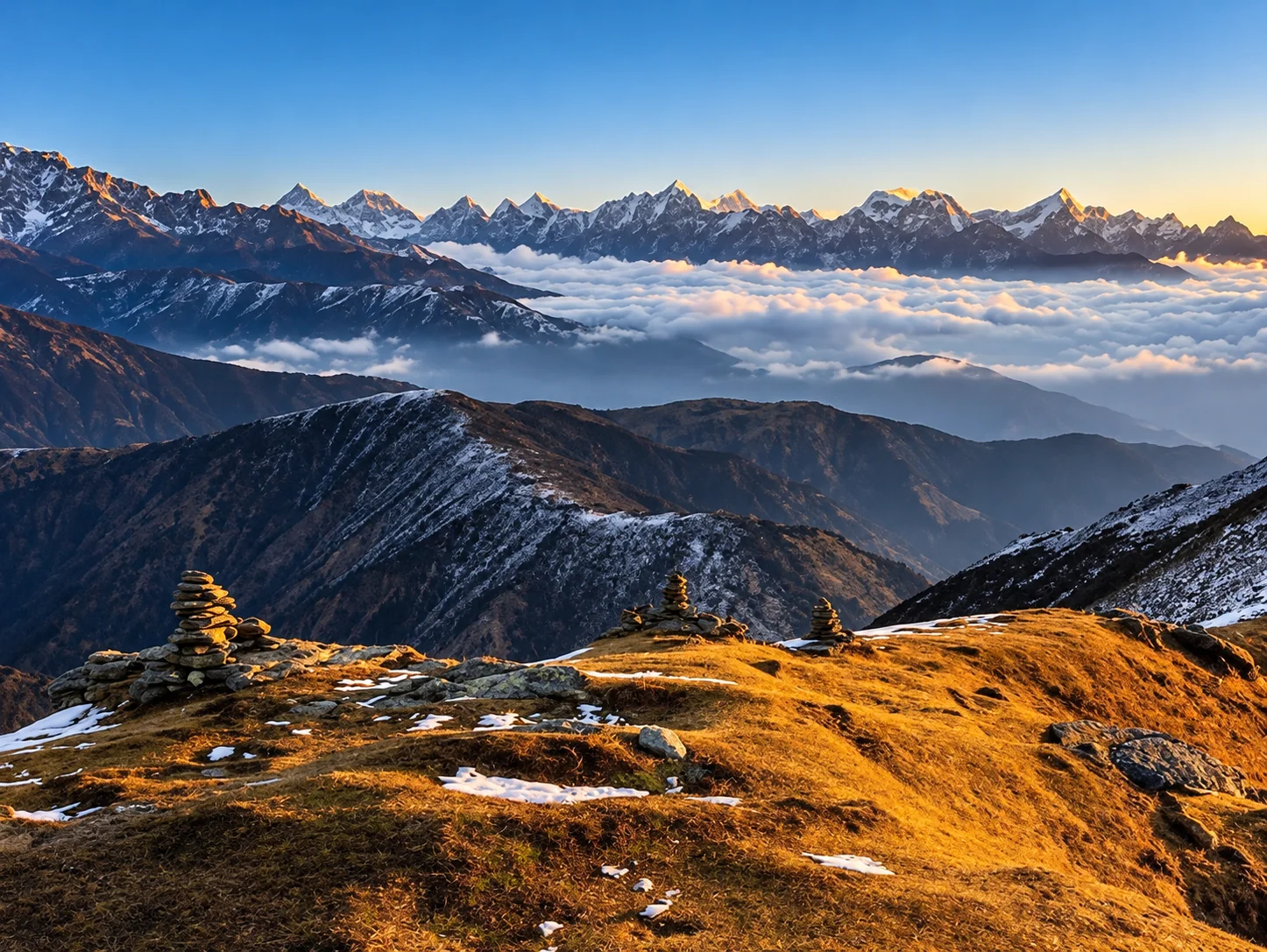
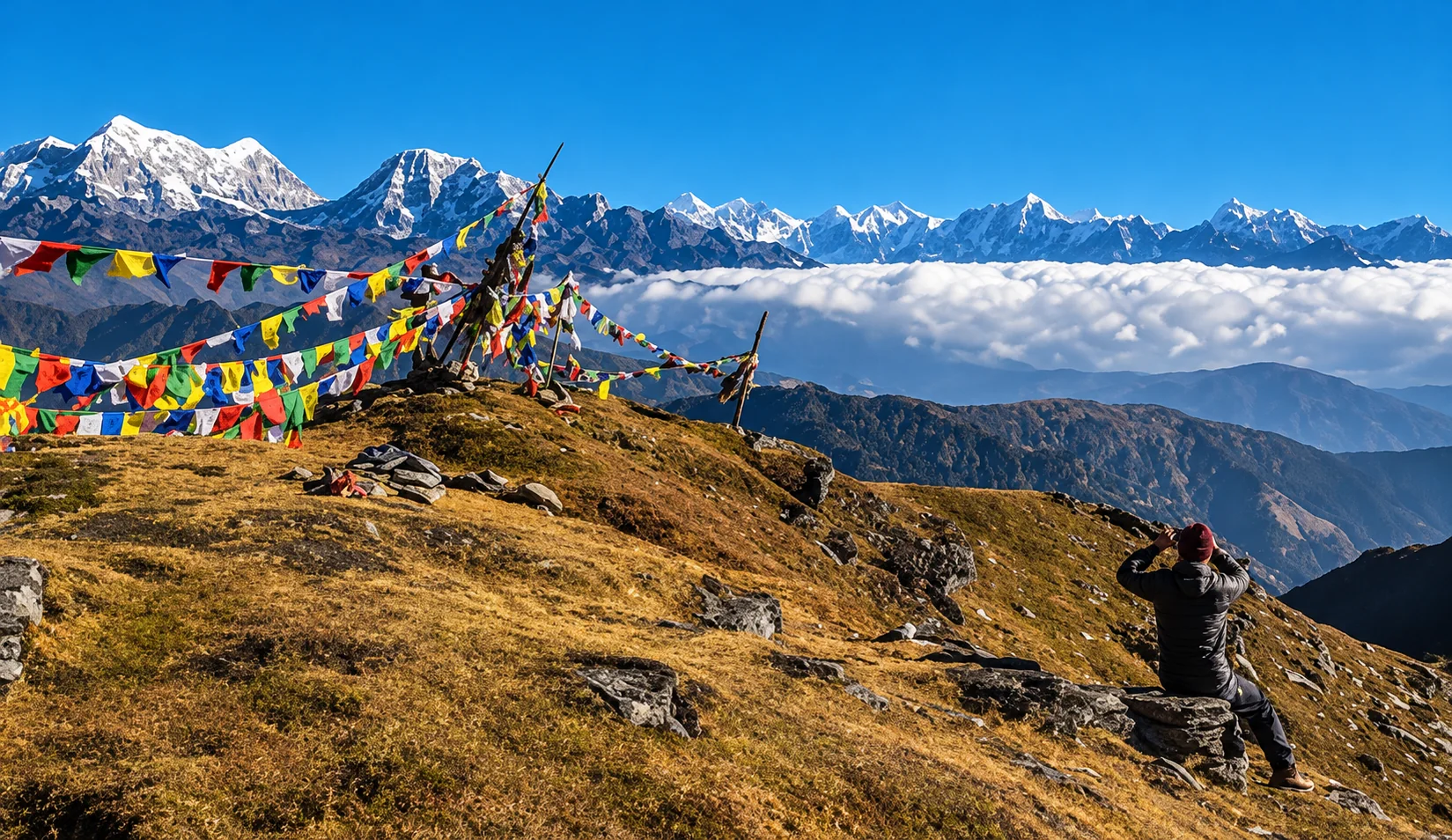
The Pikey Peak Trek 2027 is a beautiful 5-day Himalayan adventure in Nepal’s lower Everest region, offering stunning views of Mount Everest and other snow-capped peaks, scenic mountain trails, traditional Sherpa villages, peaceful forests, and rich local culture. Reaching Pikey Peak at approximately 4,065 metres is the main highlight, providing spectacular sunrise and sunset panoramas across the Himalayas. Along the way, trekkers can explore charming mountain settlements, visit Buddhist monasteries, experience authentic Sherpa hospitality, and enjoy the peaceful atmosphere of the Solukhumbu region. The trail passes through picturesque hills, rhododendron forests, and open ridgelines, creating excellent opportunities for photography and nature exploration. With its moderate difficulty, rewarding mountain scenery, and cultural experiences, this trek is ideal for nature lovers, photographers, families with suitable fitness, and adventure seekers looking for one of Nepal’s best short Everest-view trekking experiences without undertaking a long and demanding expedition.
Key Highlights
- Stunning Everest Views from Pikey Peak viewpoint.
- Spectacular Himalayan Sunrise over snow-capped mountains.
- Authentic Sherpa Culture and traditional mountain villages.
- Peaceful Forest Trails through pine and rhododendron forests.
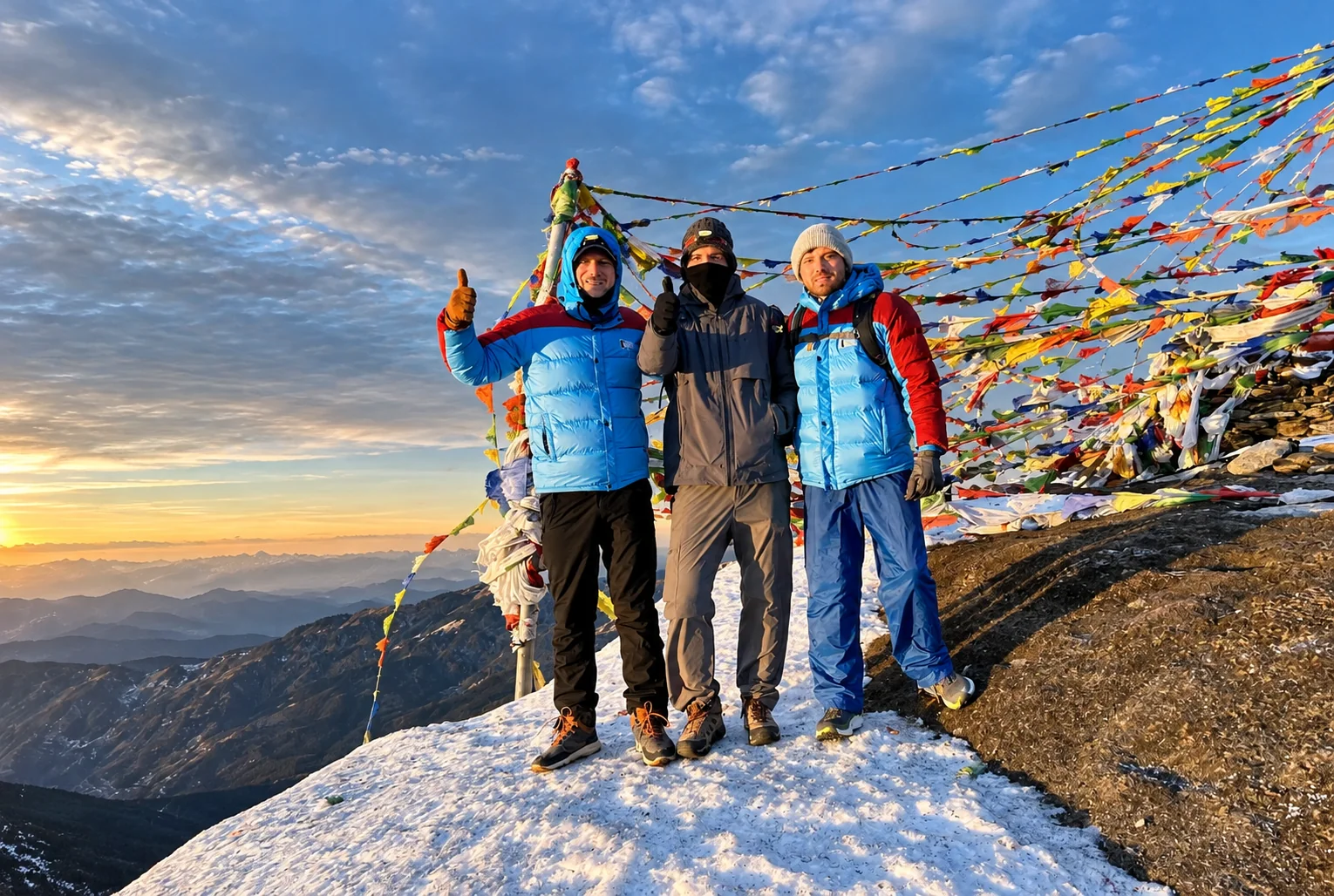
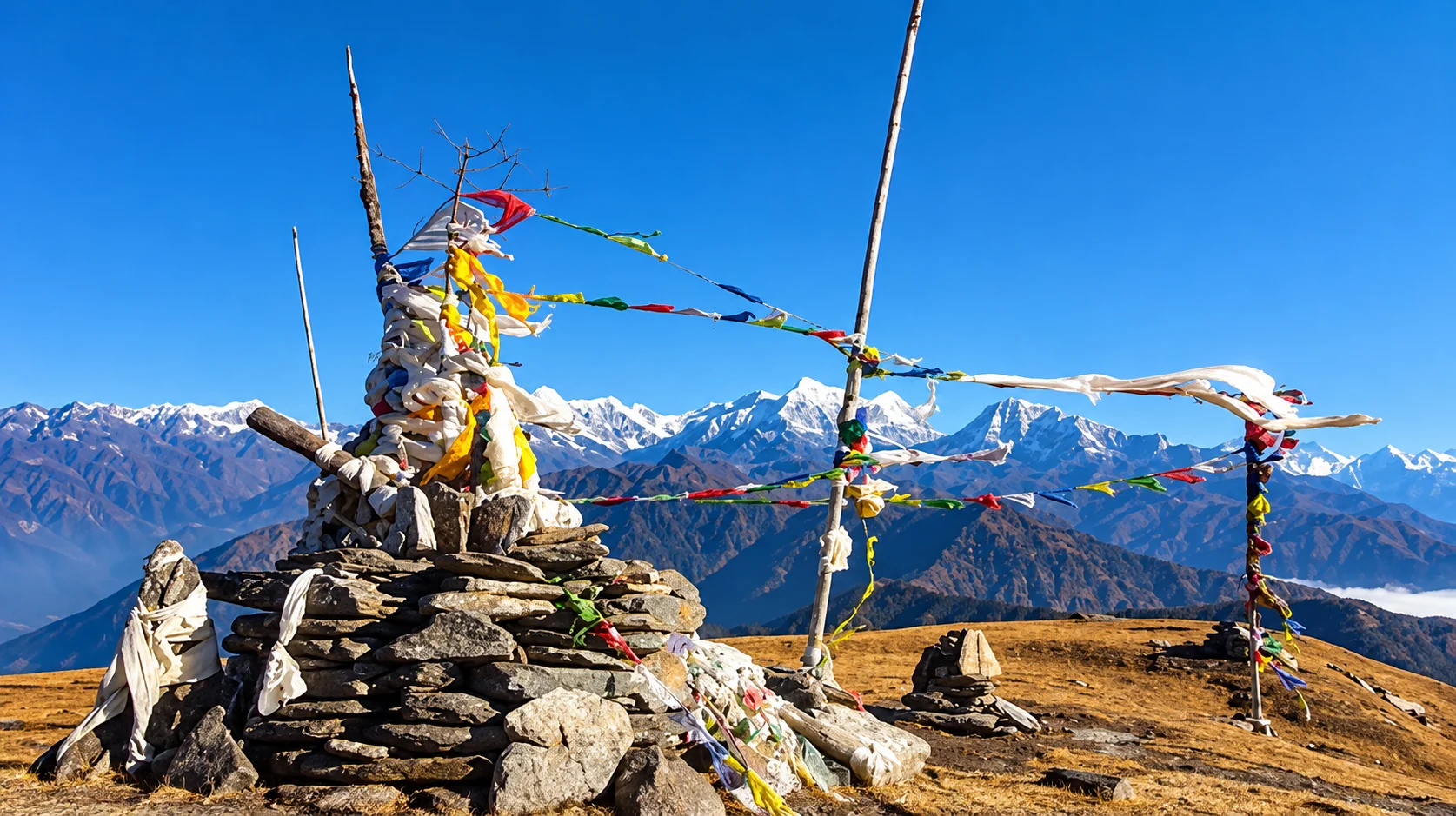
- Buddhist Monasteries and beautiful prayer flags.
- Scenic Mountain Landscapes with excellent photography opportunities.
- Perfect 5-Day Adventure for a short Everest-view trekking experience.
Important Note: The Pikey Peak Trek itinerary can be customized according to your travel dates, budget, fitness level, preferred accommodation, and personal interests. Contact us for a tailor-made trekking experience that suits your needs and preferences.
Day-by-day itinerary
-
Begin your journey with an early-morning departure from Kathmandu towards Dhap, a beautiful hilltop settlement in the Solukhumbu region and the starting point of the Pikey Peak Trek. Enjoy a scenic drive through winding mountain roads, green hills, terraced farmland, rivers, and traditional villages as you gradually leave the Kathmandu Valley behind. Along the way, experience the changing landscapes of rural Nepal and enjoy occasional stops for refreshments, lunch, and photographs. As you approach Dhap, the surroundings become increasingly peaceful, with rolling hills and distant Himalayan views on clear days. Upon arrival, check in at a local teahouse or mountain lodge, relax after the long drive, and prepare for the trekking adventure ahead. Enjoy dinner and an overnight stay in Dhap.
- Activity: Scenic Mountain Drive
- Driving Time: Approx. 7–8 hours
- Meals: Lunch and Dinner
- Accommodation: Teahouse or Mountain Lodge
-
Begin your day with breakfast at the teahouse in Dhap before starting your trek towards Jhapre, a charming mountain village known for its peaceful surroundings and beautiful Himalayan scenery. Follow scenic trails through rolling hills, pine forests, terraced farmland, and traditional settlements while enjoying fresh mountain air and panoramic views of the surrounding landscapes. Along the way, take breaks to rest, capture photographs, and appreciate the natural beauty of the Solukhumbu region. As you approach Jhapre, enjoy the tranquil atmosphere of this traditional Sherpa village, where you may explore a local Buddhist monastery, observe prayer flags, and experience the region's rich cultural heritage. Upon arrival, check in at a local teahouse, relax, and enjoy dinner while taking in the mountain surroundings before an overnight stay.
- Activity: Scenic Trekking & Sherpa Village Exploration
- Trekking Duration: Approx. 5–6 hours
- Meals: Breakfast, Lunch and Dinner
- Accommodation: Teahouse or Mountain Lodge
-
Begin your day with breakfast at the teahouse in Jhapre before continuing your trek towards Pikey Peak Base Camp. Follow beautiful mountain trails through rhododendron forests, open ridgelines, rolling hills, and peaceful highland landscapes while enjoying increasingly impressive views of the Himalayan range. Along the way, pass traditional yak-grazing areas and scenic viewpoints where you can stop to rest, take photographs, and appreciate the natural beauty of the Solukhumbu region. As you gain altitude, the surroundings become more alpine, offering magnificent views of snow-capped peaks on clear days. Upon reaching Pikey Peak Base Camp, settle into a local teahouse or mountain lodge, enjoy the peaceful mountain atmosphere, and prepare for the early-morning hike to Pikey Peak the following day. Enjoy dinner and an overnight stay at base camp.
- Activity: High-Altitude Trekking & Himalayan Viewpoints
- Trekking Duration: Approx. 6–7 hours
- Meals: Breakfast, Lunch and Dinner
- Accommodation: Teahouse or Mountain Lodge
-
Start your day early in the morning with a hike towards Pikey Peak viewpoint to witness a spectacular Himalayan sunrise. From the summit, at approximately 4,065 metres, enjoy breathtaking panoramic views of Mount Everest and other majestic Himalayan peaks on clear days. Take time to capture memorable photographs and appreciate the peaceful atmosphere of the mountains before returning to base camp for breakfast. After breakfast, continue your descent towards Phaplu through scenic mountain trails, beautiful forests, rolling hills, and traditional Sherpa settlements. Along the way, enjoy the changing landscapes and occasional mountain viewpoints while taking breaks for rest and lunch. Upon reaching Phaplu, check in at a local hotel or lodge, relax after a rewarding day of trekking, and enjoy dinner before an overnight stay.
- Activity: Himalayan Sunrise View & Scenic Trekking
- Trekking Duration: Approx. 7–8 hours, including the sunrise hike
- Meals: Breakfast, Lunch and Dinner
- Accommodation: Hotel or Lodge
-
Begin your day with breakfast at the hotel in Phaplu before checking out and starting the scenic drive back to Kathmandu. Travel along winding mountain roads, passing traditional villages, terraced hillsides, rivers, and green countryside while enjoying the changing landscapes of rural Nepal. Along the way, take short breaks for refreshments, lunch, and photographs as you gradually make your way towards the Kathmandu Valley. Upon arrival in Kathmandu, transfer to your hotel or your preferred drop-off point, marking the end of your memorable 5-day Pikey Peak Trek adventure filled with spectacular Himalayan views, Sherpa culture, and rewarding mountain experiences.
- Activity: Scenic Mountain Drive & Departure
- Driving Time: Approx. 8–9 hours, depending on road conditions
- Meals: Breakfast and Lunch
What's included
Included
- Hotel Pick-up and Drop-off
- Tours and transfer by AC Vehicle in Private basis as per the above Itinerary
- Professional Trekking Guide throughout the Trek
- Meals on full board basis (Breakfast, Lunch & Dinner)
- Accommodation at lodge/ Tea House during the Trek
- A Bottle of Water during the Tour
- Cultural Interaction with local Communities
- National park Entry ticket .
- TIMS card fee and registration
- All Entrance fee at Sightseeing spot
- All local and Government Taxes
- Basic first-aid support
- 24/7 Emergency Support and Coordination by Organization
Not included
- All the Personal Expenses as Tip, Laundry, Beverages and Bar Bill etc.
- Accommodation, Meals, or Activities outside the Itinerary.
- Porter services and additional luggage assistance.
- Personal Travel Insurance (Recommended to cover Emergencies)
- 10% Service Charge for Company.
- Fees charged by Banks for International Transcation
- Accommodation at Kathmandu Stay
- Any Services or Costs not clearly listed under “Package Inclusions”
Dates & availability
There are no fixed group departures for this trip. We run it as a private trip on your preferred dates.
Packing list
| Category | Essential Gear |
|---|---|
| Clothing | Moisture-wicking shirts, trekking pants, fleece jacket, down jacket |
| Outerwear | Waterproof jacket and trousers, windproof layer |
| Footwear | Comfortable trekking boots, warm socks, camp shoes |
| Headwear | Warm hat, sun hat, neck gaiter, gloves |
| Backpack | 30–40 L daypack, rain cover, packing bags |
| Sleeping | Sleeping bag suitable for cold mountain nights |
| Sun Protection | Sunglasses, sunscreen, lip balm |
| Personal Care | Toothbrush, toothpaste, quick-dry towel, hand sanitizer |
| First Aid | Personal medicines, basic first-aid kit, blister plasters |
| Hydration | Reusable water bottle, water purification tablets |
| Trekking Accessories | Trekking poles, headlamp, spare batteries |
| Documents | Passport or ID, permits, travel insurance details |
| Electronics | Mobile phone, power bank, charging cables |
| Optional Items | Camera, binoculars, energy bars, snacks |
Note: Pack warm layers for early-morning and evening temperatures around Pikey Peak (4,065 m). Weather can change quickly, so waterproof clothing and sturdy trekking boots are essential.
Frequently asked questions
What is the Pikey Peak Trek in Nepal?
The Pikey Peak Trek is a short Himalayan trekking adventure in Nepal’s Solukhumbu region, famous for panoramic views of Mount Everest and other Himalayan peaks, traditional Sherpa villages, Buddhist monasteries, and peaceful mountain trails.
How many days are required for the Pikey Peak Trek?
The Pikey Peak Trek can be completed in 5 days, including the drive from Kathmandu to Dhap, trekking through Jhapre and Pikey Peak Base Camp, a sunrise hike to Pikey Peak, descent to Phaplu, and the return drive to Kathmandu.
What is the maximum altitude of the Pikey Peak Trek?
Pikey Peak reaches approximately 4,065 metres (13,337 feet) above sea level, making it a rewarding viewpoint for panoramic Himalayan scenery and sunrise photography.
When is the best time to do the Pikey Peak Trek?
Spring (March to May) and autumn (September to November) are generally the best seasons for the Pikey Peak Trek because of pleasant trekking conditions, clearer mountain views, and comfortable daytime temperatures.
Is the Pikey Peak Trek suitable for beginners?
The Pikey Peak Trek is suitable for reasonably fit beginners who can manage several hours of walking on uneven mountain trails. Regular walking or hiking practice before departure can help improve comfort and endurance.
Do trekkers need a guide for the Pikey Peak Trek?
Hiring an experienced trekking guide is recommended for route navigation, local cultural knowledge, accommodation coordination, and assistance during unexpected situations. Confirm the latest guiding requirements before departure.
What permits are required for the Pikey Peak Trek?
Permit requirements and local fees can depend on the selected route and current regulations. Trekkers should confirm applicable local entry fees and any required documentation with their trekking agency before starting the journey.
What type of accommodation is available during the Pikey Peak Trek?
Accommodation generally consists of basic teahouses and mountain lodges along the trekking route, with simple rooms, beds, blankets, and shared bathroom facilities. Hotel accommodation can be arranged in Kathmandu according to the tour package.
What food is available during the Pikey Peak Trek?
Teahouses commonly serve traditional Nepali meals such as dal bhat, noodles, rice, soups, potatoes, eggs, and seasonal vegetables. Meal choices may become more limited at higher or more remote overnight stops.
How difficult is the Pikey Peak Trek?
The Pikey Peak Trek is generally considered a moderate trek because it involves consecutive walking days, uphill and downhill trails, and an early-morning summit hike. Fitness, weather, and trail conditions can affect the overall difficulty.
Can trekkers see Mount Everest from Pikey Peak?
Yes, Pikey Peak is known for its impressive panoramic views of Mount Everest on clear days. Other Himalayan peaks may also be visible, depending on weather conditions and visibility.
What should I pack for the Pikey Peak Trek?
Essential items include sturdy trekking boots, warm layered clothing, a down jacket, waterproof outerwear, gloves, a warm hat, sunglasses, sunscreen, a reusable water bottle, a headlamp, personal medicines, and a comfortable daypack.
Is travel insurance necessary for the Pikey Peak Trek?
Travel insurance is strongly recommended. Choose a policy that covers trekking at the planned maximum altitude, medical treatment, and emergency helicopter evacuation where available.
Is the Pikey Peak Trek suitable for families?
The trek can suit active families with older children who are comfortable walking for several hours and staying in basic mountain lodges. Parents should consider fitness, cold weather, altitude, and the daily walking schedule before booking.
How do trekkers travel from Kathmandu to the Pikey Peak Trek starting point?
Travelers typically drive from Kathmandu to Dhap by road, with the journey taking approximately 7 to 9 hours depending on the chosen route, traffic, and road conditions. A private vehicle or suitable 4WD jeep can be arranged according to the package.
What is the trekking duration from Dhap to Jhapre?
The trek from Dhap to Jhapre generally takes around 5 to 6 hours, depending on walking pace, trail conditions, rest breaks, and the selected route.
What is the highlight of the Pikey Peak Trek?
The main highlight is the early-morning hike to Pikey Peak for sunrise and panoramic Himalayan views. The journey also offers Sherpa cultural experiences, forest trails, traditional villages, Buddhist monasteries, and peaceful mountain landscapes.
Are trekking poles necessary for the Pikey Peak Trek?
Trekking poles are optional but useful for maintaining balance and reducing strain on the knees during uphill and downhill sections. They can be particularly helpful on uneven trails or when the ground is wet or snowy.
Can the Pikey Peak Trek itinerary be customized?
Yes, the Pikey Peak Trek itinerary can be customized according to travel dates, budget, fitness level, accommodation preferences, transportation arrangements, and additional sightseeing interests, subject to route conditions and available services.
What is included in a Pikey Peak Trek package?
A package may include Kathmandu accommodation, teahouse stays during the trek, ground transportation, a professional trekking guide, meals during trekking days, and applicable permits or local fees. Confirm the final inclusions and exclusions with the tour operator before booking.
More details
 Pikey Peak Trek Accommodation Types
The Pikey Peak Trek offers a combination of comfortable hotels in Kathmandu, traditional teahouses, and locally operated mountain lodges in Nepal’s Solukhumbu region. During this five-day journey, trekkers can experience the peaceful Himalayan environment while staying in welcoming accommodations surrounded by forests, traditional Sherpa villages, rolling green hills, and spectacular mountain scenery. Accommodation facilities vary according to the location, altitude, and season, with more basic options available near Pikey Peak and relatively comfortable facilities in Kathmandu and Phaplu.
Accommodation in Kathmandu


Kathmandu offers a wide range of accommodation options, including budget guesthouses, standard tourist hotels, boutique properties, and luxury hotels. Before starting the Pikey Peak Trek, travellers can enjoy a comfortable overnight stay with facilities such as private bathrooms, hot showers, Wi-Fi, restaurants, and breakfast, depending on the property selected. Staying around Thamel is convenient for purchasing trekking equipment, arranging last-minute essentials, meeting the trekking guide, and preparing for the drive to Dhap.
After completing the trekking portion, travellers can also arrange an additional night in Kathmandu to rest after the journey. The hotel category, room type, breakfast arrangements, and number of nights included should be confirmed when booking the package.
Teahouse Accommodation Along the Pikey Peak Trail


Along the Pikey Peak trail, accommodation is generally provided in basic teahouses and mountain lodges operated by local communities. At Dhap and Jhapre, trekkers can expect simple rooms with beds, mattresses, pillows, and blankets. Shared bathroom facilities are common, while selected lodges may offer private bathrooms. Facilities can become more limited near Pikey Peak Base Camp, particularly during busy trekking seasons when rooms may be in high demand.
Dining areas often serve as communal spaces where trekkers can enjoy warm meals, rest after walking, and share experiences with other travellers. Menus commonly feature dal bhat, noodles, soups, rice, potatoes, eggs, and other simple meals, depending on the lodge.
Since accommodation options vary along the route, the exact overnight location near Pikey Peak Base Camp should be confirmed before departure. A warm sleeping layer and suitable sleeping bag can be useful during colder periods, especially when temperatures drop overnight.
Hotel or Lodge Accommodation in Phaplu


After the sunrise hike to Pikey Peak and the descent toward Phaplu, trekkers can stay overnight in a local hotel or lodge before returning to Kathmandu. Phaplu provides a convenient place to relax, enjoy a warm meal, and recover after several days of trekking. Accommodation standards vary between properties, but some lodges offer more comfortable rooms and facilities than those available at higher trekking elevations.
Depending on the selected property, facilities may include private or shared bathrooms, hot showers, dining areas, electricity, and Wi-Fi. Availability of these services should be checked in advance rather than assumed.
An overnight stay in Phaplu also helps divide the return journey into manageable stages according to the itinerary. Travellers should confirm whether the accommodation, meals, and transportation from Phaplu to Kathmandu are included in their trekking package.
Types of Accommodation Available
| Accommodation type | Main features | Best suited for |
|---|---|---|
| Tourist hotels in Kathmandu | Private rooms, restaurants, hot showers, Wi-Fi, and varying comfort levels | Before and after trekking |
| Mountain teahouses in Dhap and Jhapre | Basic rooms, beds, blankets, and shared facilities | Trekking nights |
| Mountain lodges near Pikey Peak | Simple rooms, dining areas, and basic facilities | Overnight stays along the trail |
| Local hotels and lodges in Phaplu | Basic to standard rooms and dining facilities | Rest before returning to Kathmandu |
Important Accommodation Information
- Room facilities: Beds, mattresses, pillows, and blankets are commonly available in trekking lodges, but standards vary.
- Bathrooms: Shared bathrooms are common along the trail; attached bathrooms may be available in selected properties.
- Hot showers: Availability varies, and additional charges may apply.
- Electricity and charging: Charging facilities depend on the lodge and may involve an extra fee.
- Wi-Fi and mobile networks: Connectivity can be limited or unreliable in remote mountain areas.
- Meals: Most teahouses and lodges provide dining areas where breakfast, lunch, and dinner can be arranged.
- Advance booking: Reservations are recommended during the spring and autumn trekking seasons, especially for groups.
- Sleeping arrangements: Private rooms may be available, but room sharing could be necessary when accommodation is limited.
For the five-day Pikey Peak Trek with Khushi Travels & Consulting Group Pvt. Ltd., the exact accommodation plan should be coordinated with the itinerary, seasonal availability, and traveller preferences. Private rooms, upgraded hotels, and additional nights can be discussed when arranging the package.
 What to Expect from the Pikey Peak Trek
The Pikey Peak Trek is a rewarding Himalayan adventure that combines scenic mountain trails, traditional Sherpa villages, peaceful forests, and panoramic views of the Everest region. This five-day journey is ideal for travellers who want to experience the beauty and culture of the Nepalese Himalayas without committing to a long expedition. From the drive through the countryside to the memorable sunrise from Pikey Peak, each day offers a different experience.
Scenic Mountain Views and the Pikey Peak Sunrise


One of the major highlights of the Pikey Peak Trek is the early-morning hike to the summit, which stands at approximately 4,065 metres (13,337 feet). On a clear day, the viewpoint offers sweeping Himalayan panoramas, including views of Mount Everest and other prominent peaks in the region. The changing colours of the mountains at sunrise create excellent opportunities for landscape photography.
The summit experience depends on weather conditions and visibility. Clouds, wind, or snowfall can sometimes limit the views, so reaching the top does not guarantee a clear mountain panorama. Trekkers should dress warmly, carry a headlamp for the early start, and follow their guide's instructions during the ascent and descent.
Traditional Sherpa Villages and Natural Landscapes


The trail passes through rural settlements, open hillsides, forested paths, and landscapes shaped by local Himalayan communities. Around Dhap and Jhapre, trekkers can experience the quieter side of Nepal's mountain tourism, with traditional houses, terraced farmland, prayer flags, and views of surrounding hills and peaks.
Depending on the season, sections of the trail may feature blooming rhododendrons, fresh green vegetation, or clear mountain scenery. Spring is especially attractive for forest walks, while autumn often brings crisp air and excellent visibility. Along the way, visitors may encounter local residents going about their daily activities and gain a better understanding of life in the Solukhumbu region.
Respect for local customs is important. Ask permission before photographing people, dress appropriately when visiting religious sites, and follow local guidance around monasteries, shrines, and prayer flags.
Trekking Experience, Daily Walking, and Local Hospitality


The five-day itinerary combines road travel with several days of walking at increasing elevations. The journey generally begins with a drive from Kathmandu to Dhap, followed by trekking toward Jhapre and the Pikey Peak area. After the summit sunrise, the route descends toward Phaplu, from where travellers return to Kathmandu by road.
Trekkers should expect uphill sections, downhill walking, uneven trails, and changing weather. Although the route is shorter than many popular Himalayan treks, the altitude and daily walking hours still require reasonable fitness and preparation. Walking at a steady pace, drinking enough water, and taking regular breaks can make the experience more comfortable.
Accommodation is usually in local teahouses and mountain lodges, where travellers can enjoy simple meals and warm hospitality. The facilities are generally more basic than city hotels, particularly near higher elevations. The trek is best suited to people who enjoy nature, mountain scenery, cultural experiences, and a moderate physical challenge.
What Makes the Pikey Peak Trek Special?
- Himalayan panoramas: Enjoy opportunities to view Everest and surrounding peaks from the Pikey Peak viewpoint when the weather is clear.
- Short trekking itinerary: Experience the Solukhumbu region on a five-day journey from Kathmandu and back.
- Local culture: Discover traditional villages and experience the hospitality of mountain communities.
- Nature and photography: Capture forests, rolling hills, mountain lodges, and sunrise scenery.
- Peaceful trails: Experience a quieter trekking alternative to some of Nepal's busier Himalayan routes.
- Teahouse experience: Stay in locally operated lodges and enjoy simple meals during the journey.
Important Information Before You Start
Weather and trail conditions can change quickly in the mountains. Carry warm layers, waterproof clothing, comfortable trekking boots, sun protection, and a reusable water bottle. Your daily walking time may vary according to your pace, weather, trail conditions, and the location of your accommodation.
With Khushi Travels & Consulting Group Pvt. Ltd., the Pikey Peak Trek itinerary can be customized according to your available time, fitness level, accommodation preferences, and transportation requirements. The final route and overnight stops should be confirmed before departure.
 Best Time / Season to Visit Pikey Peak
The best time to visit Pikey Peak is generally during spring (March to May) and autumn (September to November), when trekking conditions are often favourable and mountain views can be spectacular. These seasons offer opportunities to explore the forests, traditional Sherpa villages, and open ridgelines of the Solukhumbu region while enjoying panoramic views of the Himalayas.
Pikey Peak can be visited in other seasons as well, but weather, visibility, temperature, and trail conditions can affect the experience. Choosing the right season helps you plan your clothing, transportation, accommodation, and overall trekking itinerary.
Spring Season (March to May)


Spring is one of the most attractive seasons for the Pikey Peak Trek. As winter ends, the weather gradually becomes warmer, forests begin to bloom, and the surrounding hills become greener. Rhododendrons may flower along suitable sections of the trail, particularly during March and April, adding colour to the mountain landscape.
Daytime conditions are often comfortable for walking, although mornings and evenings can remain cold at higher elevations. Early mornings generally offer the best opportunity for mountain photography before clouds develop later in the day.
- Best months: March and April, with May also possible.
- Weather: Generally mild during the day, with colder mornings and nights.
- Scenery: Flowering forests, green hills, and snow-covered mountain peaks.
- Best for: Nature lovers, photographers, and trekkers who prefer milder temperatures.
Late spring can bring haze or afternoon clouds, so clear views of Everest are never guaranteed.
Autumn Season (September to November)


Autumn is generally considered the best overall season for the Pikey Peak Trek, particularly in October and November. After the summer monsoon, the air often becomes clearer, the trails gradually dry, and the Himalayan panorama can be especially impressive. These conditions make autumn an excellent choice for travellers hoping to enjoy the sunrise from Pikey Peak.
The daytime weather is often suitable for trekking, but temperatures can drop considerably after sunset. Since this is a popular trekking period in Nepal, arranging accommodation and transportation in advance is advisable.
- Best months: October and November.
- Weather: Usually dry, with cool mornings and cold nights at higher elevations.
- Scenery: Clear mountain horizons, golden hillsides, and panoramic Himalayan views.
- Best for: First-time trekkers, mountain photographers, and travellers prioritising visibility.
September can also be suitable, particularly later in the month, but residual monsoon rain and cloud cover may affect trail conditions and mountain visibility.
Winter Season (December to February)


Winter offers a quieter experience for trekkers who are comfortable with cold weather. On clear days, the dry air can provide excellent mountain views, and the trails may be less crowded than during spring and autumn. Depending on snowfall, the upper sections can also offer beautiful winter scenery.
However, temperatures at higher elevations can fall below freezing, particularly overnight and before sunrise. Snow, ice, and strong winds may make the ascent more difficult, and some lodges may have limited services during the quieter season.
- Best months: December to February, subject to current conditions.
- Weather: Cold mornings and nights, with occasional snowfall at higher elevations.
- Scenery: Snow-covered ridges and potentially clear Himalayan panoramas.
- Best for: Experienced or well-prepared trekkers seeking quieter trails.
Carry insulated clothing, gloves, a warm hat, and suitable footwear. Check recent weather forecasts and trail conditions with your guide before departure. Winter trekking should be adjusted or postponed if snow or ice makes the route unsafe.
Monsoon Season (June to August)


The monsoon season brings frequent rainfall to much of Nepal. The hills around Pikey Peak become lush and green, but persistent clouds can obscure the mountain views that make this trek special. Forest trails may become muddy and slippery, leeches may be present in lower forested areas, and heavy rainfall can affect road travel to and from the trekking region.
Although trekking may still be possible during suitable weather windows, the monsoon is generally the least favourable season for travellers whose main goal is to see Everest and other Himalayan peaks.
- Months: June, July, and August.
- Weather: Frequent rain, humidity, cloud cover, and occasional poor visibility.
- Scenery: Lush vegetation, misty hills, and green forests.
- Best for: Flexible travellers who accept wet trails and uncertain mountain views.
If travelling during this period, use waterproof clothing, carry dry bags for electronics, and check road and trail conditions before setting out. Allow extra time for transportation delays.
Best Season at a Glance
| Season | Months | Main advantage | Main consideration |
|---|---|---|---|
| Spring | March to May | Flowering forests and milder walking conditions | Possible haze and afternoon clouds |
| Autumn | September to November | Generally clear skies and excellent mountain visibility | Higher demand for accommodation |
| Winter | December to February | Quiet trails and potentially clear views | Freezing temperatures and possible snow |
| Monsoon | June to August | Lush green landscapes and fewer trekkers | Rain, slippery trails, and poor visibility |
Which Month Should You Choose for the Pikey Peak Trek?
October and November are excellent choices if your priority is clear Himalayan scenery and a memorable sunrise from the summit. March and April are also highly recommended if you want to combine mountain views with spring flowers and greener landscapes.
December through February can suit well-equipped trekkers who are prepared for cold conditions. June through August is generally less suitable for travellers seeking reliable mountain views.
For the five-day Pikey Peak Trek offered by Khushi Travels & Consulting Group Pvt. Ltd., the departure date should be selected with seasonal weather, road conditions, lodge availability, and your return travel schedule in mind. Whatever month you choose, the final sunrise experience will depend on the weather.
 Nearby Places to Explore from the Pikey Peak Trek
The Pikey Peak Trek offers more than spectacular Himalayan views. The surrounding Solukhumbu region features traditional Sherpa settlements, Buddhist monasteries, peaceful forests, scenic mountain viewpoints, and culturally significant villages. Depending on your available time, route, and transportation arrangements, you can explore several nearby places before, during, or after your trek.
These destinations provide opportunities to experience local culture, learn about Himalayan traditions, and enjoy the natural beauty of eastern Nepal.
Jhapre Village
Jhapre is one of the notable overnight stops on the Pikey Peak trekking route. Situated on a hillside in the Solukhumbu region, the village offers peaceful surroundings, traditional homes, mountain scenery, and opportunities to observe local Sherpa culture. It is an excellent place to rest after trekking from Dhap and prepare for the following day's walk toward the Pikey Peak area.
Visitors can explore the village on foot, photograph the surrounding landscape, and experience the hospitality of local teahouses. Depending on the weather, the surrounding hills and distant Himalayan peaks can provide beautiful views, especially during the early morning.
Jhapre is particularly appealing to travellers who enjoy cultural experiences and quieter mountain settlements away from busy tourist centres.
Pikey Peak Summit and Viewpoint


The Pikey Peak summit is the main highlight of the trek, reaching approximately 4,065 metres (13,337 feet) above sea level. The viewpoint is known for its panoramic Himalayan scenery, which can include Mount Everest and other major peaks when conditions are clear.
Many trekkers begin the summit hike before sunrise to experience the changing colours of the mountains at dawn. Prayer flags and the expansive mountain horizon create memorable photography opportunities, while the quiet surroundings make the viewpoint a rewarding place to appreciate the natural landscape.
The summit hike requires appropriate clothing, a headlamp for an early start, and careful attention to weather and trail conditions. Mountain visibility is not guaranteed, so allow enough time in the itinerary to enjoy the experience without rushing.
Thupten Chholing Monastery


Thupten Chholing Monastery, located in the Junbesi area of Solukhumbu, is an important Buddhist monastery associated with Tibetan Buddhist traditions. The monastery and its surrounding settlement provide insight into the religious heritage and spiritual life of Himalayan communities.
Travellers interested in Buddhist culture may appreciate the monastery's traditional architecture, prayer flags, religious artwork, and peaceful mountain setting. Visiting respectfully can add a cultural dimension to a trekking holiday, particularly for those interested in Himalayan spirituality and local customs.
Planning note: Thupten Chholing is not automatically included in the standard five-day Pikey Peak itinerary. Visiting it may require additional walking, transportation, or an overnight stay, depending on the route and available time. Confirm access and visiting arrangements locally before planning an excursion.
Junbesi Village


Junbesi is a traditional Himalayan village in the Solukhumbu region, known for its mountain setting, Sherpa culture, and Buddhist heritage. The settlement offers a glimpse of rural life, with traditional homes, cultivated fields, local lodges, and views of the surrounding hills.
Travellers can walk through the village, learn about local traditions, and experience the slower pace of life in the Himalayas. Junbesi is also a useful area to consider when planning a longer Solukhumbu journey that combines trekking with cultural exploration.
Because Junbesi is not necessarily on the direct route followed by every Pikey Peak itinerary, visiting it may require an extension or a revised route. Discuss the walking distance, road access, and accommodation arrangements with your trekking operator.
Phaplu and Salleri


Phaplu and Salleri are useful places to explore around the end of the Pikey Peak Trek. These settlements serve as local centres for transportation, accommodation, shopping, and everyday activities in the Solukhumbu region.
Phaplu is particularly relevant to the five-day itinerary because trekkers descend toward the area before returning to Kathmandu by road. Depending on your schedule, you may have time to walk around the settlement, visit local shops, enjoy a meal, or observe daily life in this mountain region.
Salleri offers a wider local market atmosphere, with shops and services used by residents and travellers. Additional exploration should be planned around the return journey because road travel to Kathmandu can take a substantial part of the day.
Nearby Places at a Glance
| Destination | Main attraction | Best suited for |
|---|---|---|
| Jhapre Village | Traditional village life and mountain scenery | Culture and photography |
| Pikey Peak Summit | Sunrise and Himalayan panoramas | Trekking and mountain views |
| Thupten Chholing Monastery | Buddhist traditions and monastery architecture | Spiritual and cultural exploration |
| Junbesi Village | Sherpa heritage and rural landscapes | Cultural experiences |
| Phaplu | Local settlement and trekking-route access | Rest and local exploration |
| Salleri | Local market and regional town life | Shopping and cultural discovery |
Important Travel Information
- Route planning: Not every destination listed above is included in the standard five-day Pikey Peak Trek.
- Additional time: Monastery visits and village extensions may require extra walking days or road transportation.
- Weather: Clear mornings often provide better opportunities for mountain photography, although visibility varies.
- Local customs: Dress respectfully at monasteries, remove footwear where requested, and ask permission before photographing people.
- Transportation: Road conditions can change with weather, so allow flexibility when arranging additional destinations.
- Accommodation: Confirm overnight stops in advance if extending your trip beyond the standard itinerary.
With Khushi Travels & Consulting Group Pvt. Ltd., the Pikey Peak Trek can be customized to include additional cultural experiences and nearby destinations, subject to route feasibility, available time, road conditions, and accommodation availability.
 Foods Available on the Pikey Peak Trek
The Pikey Peak Trek offers a variety of traditional Nepali meals and simple dishes prepared at local teahouses and mountain lodges. Food is an important part of the trekking experience, providing energy for daily walks while allowing travellers to experience local Himalayan hospitality. Along the route from Dhap and Jhapre toward Pikey Peak and Phaplu, trekkers can generally find filling meals such as dal bhat, noodle soup, fried rice, potatoes, eggs, and other basic dishes.
Food choices may become more limited at higher elevations because ingredients and supplies must be transported to remote mountain settlements. Travellers should eat regular meals, drink sufficient safe water, and carry a few energy-rich snacks for longer walking days.
Traditional Nepali Food: Dal Bhat and Local Meals


Dal bhat is one of the most common and practical meals available during trekking in Nepal. It typically consists of steamed rice, lentil soup, vegetable curry, and pickles. Depending on the lodge, the meal may also include additional vegetables or other side dishes. It provides carbohydrates and plant-based protein that help replenish energy after several hours of walking.
Other traditional options may include vegetable curry with rice, roti, potatoes, and seasonal vegetables. Availability depends on the lodge, the season, and the supplies brought into the area.
For trekkers spending several days on the trail, familiar and freshly prepared local meals can be a convenient way to maintain a regular eating routine. Ask the lodge staff about ingredients if you have allergies or dietary restrictions.
Breakfast, Soups, Noodles, and Quick Meals


Breakfast at trekking lodges commonly includes some combination of eggs, toast, porridge, pancakes, potatoes, and tea or coffee. The exact menu varies, so trekkers with an early summit start should confirm breakfast timing with their lodge the evening before.
During lunch or dinner, popular choices may include noodle soup, vegetable soup, fried rice, pasta, potatoes, and simple rice dishes. Hot soup can be particularly comforting during cold mornings and evenings near higher elevations.
These meals provide practical alternatives when you want something lighter than dal bhat. However, menus may be smaller at remote stops, so do not expect the same variety available in Kathmandu.
Drinks, Snacks, and Food for Energy


Hot drinks such as black tea, milk tea, ginger tea, lemon tea, and coffee are commonly available at many teahouses. Availability varies by location. Drinking enough water throughout the day is important, particularly while walking uphill and gaining altitude. Use treated, filtered, or otherwise safe drinking water rather than assuming that untreated tap or stream water is safe.
Carrying lightweight snacks can help maintain energy between meals. Useful options include:
- Nuts and dried fruit.
- Energy bars or granola bars.
- Chocolate or biscuits.
- Trail mix.
- Electrolyte sachets, if appropriate for your needs.
Avoid carrying excessive snacks because they add weight to your backpack. Refill your water bottle whenever safe drinking water is available, and plan ahead for the early-morning hike to Pikey Peak.
Typical Food Options Along the Pikey Peak Route
| Food category | Common examples | Why it is useful |
|---|---|---|
| Traditional meals | Dal bhat, rice, lentils, vegetable curry | Filling meals for recovery and energy |
| Breakfast | Eggs, porridge, toast, pancakes | Helps prepare for daily walking |
| Soups and noodles | Noodle soup, vegetable soup | Warm and convenient meals |
| Quick meals | Fried rice, potatoes, pasta | Alternative choices for lunch or dinner |
| Hot drinks | Tea, ginger tea, coffee | Warm drinks during cold conditions |
| Trekking snacks | Nuts, dried fruit, energy bars | Convenient energy between meals |
Vegetarian, Vegan, and Special Dietary Requirements
Vegetarian meals are often available at Nepali teahouses, particularly rice, lentils, vegetable curry, potatoes, and vegetable noodles. Vegan, gluten-free, and other specialised dietary options may be more difficult to arrange in remote locations because ingredients and food preparation facilities are limited.
If you have specific dietary requirements, inform your trekking company before departure. Confirm ingredients directly with lodge staff, especially if you have a food allergy or require strict avoidance of particular ingredients. Travellers with serious allergies should not rely solely on a dish's name to determine whether it is safe.
Important Food and Drinking Water Tips
- Eat regularly: Have breakfast before trekking and arrange lunch and dinner around the day's walking schedule.
- Choose freshly prepared food: Eat food that is thoroughly cooked and served hot.
- Drink safe water: Use properly treated or filtered water and refill your bottle at reliable sources.
- Carry snacks: Keep a small supply for the trail and the early-morning summit hike.
- Confirm meal inclusions: Check whether breakfast, lunch, and dinner are included in your trekking package.
- Communicate dietary needs: Notify your guide and accommodation providers in advance.
- Budget for extras: Bottled drinks, speciality snacks, and some hot drinks may cost extra.
For the five-day Pikey Peak Trek with Khushi Travels & Consulting Group Pvt. Ltd., meal arrangements should be confirmed alongside the itinerary. The standard route generally relies on local teahouse menus, so travellers should remain flexible about food choices, especially near higher elevations.
 Culture and Etiquette of the Pikey Peak Trek
The Pikey Peak Trek offers an opportunity to experience the traditional culture, Buddhist heritage, and daily life of Himalayan communities in Nepal’s Solukhumbu region. Along the trail, trekkers may encounter Sherpa villages, Buddhist monasteries, prayer flags, mani walls, stupas, and local people whose traditions are closely connected with the mountains and Tibetan Buddhist influences.
Respecting local customs is an important part of responsible trekking. By learning a few basic cultural practices before departure, travellers can build positive relationships with local communities and make their journey more meaningful.
Sherpa Culture and Traditional Village Life

The Solukhumbu region is home to Sherpa communities known for their Himalayan heritage, mountain knowledge, hospitality, and strong cultural traditions. Villages along and around the Pikey Peak route provide glimpses of rural life, including traditional homes, farming activities, local shops, and community gatherings.
As you walk through settlements such as Jhapre, you may see residents carrying out their daily activities and maintaining longstanding customs. The pace of life is often quieter than in Kathmandu, and local teahouses provide opportunities to interact with people who live and work in the mountains.
Travellers should approach cultural encounters with curiosity and respect. A friendly greeting, polite conversation, and willingness to follow local guidance can make interactions more enjoyable. Always ask permission before photographing people, homes, or private activities.
Buddhist Monasteries, Prayer Flags, and Sacred Sites


Buddhist traditions are visible throughout many Himalayan communities. Prayer flags, stupas, mani walls, prayer wheels, and monasteries are important cultural and spiritual features that trekkers may encounter in the Solukhumbu region.
Prayer flags carry sacred prayers and symbols, while mani walls often contain carved Buddhist mantras. These structures should be treated respectfully as religious features rather than ordinary decorations.
When passing a mani wall, stupa, or other sacred structure, follow the customary direction of movement, generally keeping the structure on your left. If you enter a monastery, remove your shoes when requested, dress modestly, speak quietly, and follow any photography restrictions. Avoid touching religious objects unless permission is given.
Local Customs, Etiquette, and Responsible Travel


Good etiquette helps preserve the welcoming atmosphere of the villages along the Pikey Peak Trek. Although customs can vary between communities and religious sites, a few general practices are useful throughout the journey.
- Greet people politely: A traditional Nepali greeting such as “Namaste” is widely understood and appreciated.
- Dress respectfully: Wear appropriate clothing when visiting monasteries and religious sites.
- Ask before taking photographs: Obtain permission before photographing people, ceremonies, or private property.
- Respect religious structures: Follow local instructions around prayer wheels, stupas, mani walls, and monasteries.
- Remove footwear when requested: Some religious and private indoor spaces require visitors to remove their shoes.
- Avoid littering: Carry rubbish with you until you find a suitable disposal point.
- Support local businesses: Purchase meals and services from local lodges, shops, and community businesses where possible.
- Respect privacy: Avoid entering homes, farms, or restricted areas without permission.
Cultural Experiences Along the Pikey Peak Trek
| Cultural feature | What travellers may experience | Recommended etiquette |
|---|---|---|
| Sherpa villages | Traditional houses and everyday village life | Respect privacy and ask before taking photographs |
| Buddhist monasteries | Religious architecture and spiritual traditions | Dress modestly and follow monastery rules |
| Prayer flags | Sacred flags displaying Buddhist prayers | Do not remove or damage them |
| Mani walls and stupas | Religious carvings and sacred structures | Generally pass with the structure on your left |
| Local teahouses | Traditional meals and mountain hospitality | Treat hosts and staff respectfully |
| Local markets | Everyday commerce and regional products | Ask before photographing vendors or their goods |
Festivals and Religious Traditions
Festivals and religious observances are an important part of life in many Himalayan communities. Buddhist celebrations, monastery ceremonies, and local gatherings may take place at different times of the year. The exact events available to visitors depend on the local calendar and the village you visit.
If your trek coincides with a festival or ceremony, ask your guide whether visitors are welcome and whether any special rules apply. Some ceremonies are open to respectful observers, while others may be private or intended primarily for community members.
Do not assume that a particular festival will occur during your trip. If experiencing a cultural event is important to you, check the dates and local arrangements before booking.
Important Cultural Tips for Travellers
- Learn a few basic Nepali greetings before arriving.
- Listen to your guide's advice when visiting religious or culturally sensitive places.
- Ask permission before photographing individuals, especially children and religious ceremonies.
- Avoid loud behaviour near monasteries, shrines, and prayer areas.
- Do not leave rubbish on trails or around villages.
- Respect local beliefs even when they differ from your own.
- Choose locally operated accommodation and services to support the mountain economy.
The Pikey Peak Trek is not only a mountain adventure but also an opportunity to appreciate the cultural heritage of the Solukhumbu region. With Khushi Travels & Consulting Group Pvt. Ltd., travellers can include cultural stops and local experiences where appropriate to the itinerary, available time, and community access.
 Safety and Security on the Pikey Peak Trek
The Pikey Peak Trek is a rewarding Himalayan journey through the Solukhumbu region of Nepal, but trekkers should prepare for changing weather, uneven mountain trails, altitude-related challenges, and remote locations. Although the route is suitable for many travellers with reasonable fitness and proper preparation, safe trekking requires careful planning, suitable equipment, and awareness of local conditions.
Following basic safety precautions helps you enjoy the mountain scenery, traditional villages, and sunrise views while reducing avoidable risks throughout the journey.
Altitude Awareness and Physical Fitness


Pikey Peak reaches approximately 4,065 metres (13,337 feet), where the lower oxygen pressure can affect some travellers. Altitude-related symptoms may include headache, nausea, dizziness, unusual tiredness, and reduced appetite. These symptoms should never be ignored, particularly if they worsen during the ascent.
Before starting the trek, prepare with regular walking, stair climbing, hiking, or other cardiovascular exercise. During the journey, maintain a steady pace, drink safe water regularly, eat adequate meals, and inform your guide if you feel unwell.
- Walk slowly and avoid rushing uphill.
- Allow time for rest during long walking days.
- Tell your guide immediately if you develop altitude-related symptoms.
- Do not continue ascending when altitude sickness is suspected.
- Seek prompt medical assistance if symptoms worsen.
Severe symptoms, including difficulty breathing at rest, confusion, or difficulty walking straight, require emergency medical attention and immediate descent with assistance. Do not rely on medication alone or continue the trek to reach the summit.
Weather Conditions and Trail Safety


Weather in the mountains can change quickly, even during spring and autumn. Rain can make trails muddy and slippery, while snow, ice, strong winds, and low visibility may make exposed sections more challenging. Conditions around the summit can be particularly cold during early-morning sunrise hikes.
Wear sturdy trekking boots with good grip, carry waterproof clothing, and bring warm layers suitable for the expected temperatures. A headlamp is essential for an early summit start, and trekking poles can help with balance on steep or uneven sections.
Always follow your guide's instructions and avoid approaching exposed edges for photographs. If weather conditions deteriorate significantly, changing the route, delaying the summit hike, or cancelling an ascent may be the safest decision.
Health, Emergency Preparedness, and Trekking Equipment


A basic first-aid kit and suitable personal equipment can help you manage minor problems during the trek. Carry personal medication, blister care supplies, sunscreen, sunglasses, a reusable water bottle, and a fully charged mobile phone. A power bank is useful because charging facilities may be limited at remote lodges.
Mobile coverage and access to medical facilities may be unreliable along parts of the route. Before departure, discuss emergency arrangements with your trekking operator and make sure your guide knows about any relevant medical conditions or allergies.
Travel insurance should cover trekking at the maximum altitude of your itinerary and emergency evacuation, including helicopter rescue where available and medically necessary. Check the policy exclusions, activity limits, and claims procedure before purchasing insurance.
Common Safety Risks and How to Reduce Them
| Potential risk | Recommended precaution |
|---|---|
| Altitude sickness | Ascend gradually, recognise symptoms, and descend when medically necessary |
| Slippery trails | Wear suitable boots and use trekking poles where helpful |
| Cold temperatures | Carry insulating layers, gloves, and warm headwear |
| Rain or snowfall | Bring waterproof clothing and check forecasts |
| Dehydration | Drink safe water regularly and eat proper meals |
| Blisters and minor injuries | Use well-fitted boots and carry a basic first-aid kit |
| Limited communication | Carry a charged phone and confirm emergency arrangements |
| Road delays | Allow flexibility for the drives to Dhap and back from Phaplu |
Safety Tips Before and During the Trek
- Choose appropriate guidance: Consider trekking with a qualified guide familiar with the Pikey Peak route and current local conditions.
- Check the forecast: Review weather conditions before the trek and before the summit hike.
- Pack carefully: Bring warm clothing, rain protection, suitable footwear, a headlamp, and essential medication.
- Stay on established trails: Avoid shortcuts and follow your guide's route instructions.
- Protect your belongings: Keep passports, cash, phones, and other valuables secure.
- Use safe drinking water: Treat or filter water from sources that are not confirmed safe.
- Share your itinerary: Ensure someone knows your planned route and expected return.
- Respect your limits: Do not attempt the summit if you are unwell, exhausted, or facing unsafe weather.
Important Safety Information for the Pikey Peak Trek
The five-day Pikey Peak itinerary involves road travel from Kathmandu to Dhap, trekking through the mountain villages and Pikey Peak area, descending toward Phaplu, and returning to Kathmandu. Road conditions, weather, and walking times may change, so flexibility is important.
With Khushi Travels & Consulting Group Pvt. Ltd., travellers should confirm the itinerary, guide arrangements, insurance requirements, and emergency procedures before departure. A safe trek prioritises health and weather conditions over reaching the summit on a fixed schedule.
Important note: Trekking involves inherent risks, and no route can be guaranteed completely safe. The photographs are illustrative examples of mountain trails and trekking conditions, not a representation of current weather or trail safety.
 Transportation Facilities for the Pikey Peak Trek
Transportation is an important part of the Pikey Peak Trek because the journey combines road travel through Nepal's countryside with several days of trekking in the Solukhumbu region. The standard five-day itinerary begins with a drive from Kathmandu to Dhap, continues on foot through villages and mountain trails toward Pikey Peak, descends toward Phaplu, and finishes with a return drive to Kathmandu.
Travellers can choose private transportation for greater flexibility or explore shared transport options where available. The best option depends on budget, group size, road conditions, comfort preferences, and the selected itinerary.
Kathmandu to Dhap by Road


The journey generally begins in Kathmandu, where trekkers travel by road toward Dhap, the starting point for the standard trekking itinerary described here. The drive passes through countryside, river valleys, terraced hills, and mountain settlements, offering a glimpse of rural Nepal along the way.
The journey typically takes around 7 to 9 hours, depending on the route, traffic, road conditions, weather, and stops. Some sections of the drive may be winding or rough, particularly closer to the trekking region.
Private vehicles can offer greater flexibility for meal breaks, photography stops, and departure times. Travellers using shared transportation should confirm departure schedules, transfer arrangements, luggage limits, and the final drop-off point in advance.
Transportation During the Trek

Once the trek begins, transportation is primarily on foot. Trekkers walk along established trails connecting villages, forests, hillsides, and mountain viewpoints. The route generally includes Dhap to Jhapre, a trek toward the Pikey Peak area, and a descent toward Phaplu after the summit hike.
There is generally no need for a vehicle between the planned overnight stops when following the standard walking itinerary. However, alternative routes, road access, and local conditions may affect arrangements.
A comfortable daypack, well-fitted trekking boots, and trekking poles can make walking easier on uneven or steep sections. If you need porter assistance, arrange it before departure and confirm the permitted luggage weight and additional cost.
Phaplu to Kathmandu by Road


After completing the trekking portion, travellers descend toward Phaplu and prepare for the return journey to Kathmandu. The drive generally takes around 8 to 9 hours, although actual travel time can be longer depending on road conditions, traffic, construction, and weather.
A private vehicle may be more convenient for families, small groups, and travellers carrying extra luggage. Shared transport may be a more economical alternative, but availability and schedules should be verified locally.
It is advisable to avoid scheduling an important international flight immediately after the expected arrival in Kathmandu. Allow a buffer for road delays, especially during periods of heavy rain or road disruption.
Transportation Options for the Pikey Peak Trek
| Transportation option | Main features | Best suited for |
|---|---|---|
| Private jeep or SUV | Flexible departure times and convenient stops | Couples, families, and small groups |
| Private van or larger vehicle | More passenger and luggage capacity, subject to road suitability | Groups travelling together |
| Shared jeep | Potentially lower cost, with less flexibility | Budget-conscious travellers |
| Public transportation | May be economical but can require transfers and additional planning | Independent travellers |
| Walking on the trekking trail | Main form of travel between trekking stops | All trekkers following the standard route |
Vehicle suitability depends on the road conditions and the size of the group. Confirm the actual vehicle type with the operator before booking.
Transportation Costs and Booking Considerations
Transportation costs depend on the vehicle, number of passengers, route, fuel prices, road conditions, and whether the service is private or shared. Private vehicles generally cost more overall but can be economical when the fare is divided among several travellers.
Before confirming your Pikey Peak Trek package, check whether the following items are included:
- Kathmandu to Dhap transportation.
- Phaplu to Kathmandu transportation.
- Transfers between hotels and transport departure points, if applicable.
- Driver charges, fuel, and applicable road fees.
- Luggage capacity and arrangements for additional bags.
- Stops for meals and rest during long drives.
- Contingency arrangements for road closures or delays.
Important Transportation Tips
- Start the road journey early to make the most of daylight hours.
- Carry drinking water, snacks, and any medication needed during long drives.
- Keep valuables and important travel documents with you.
- Confirm vehicle type, departure time, pickup point, and luggage limits before departure.
- Expect slower travel on winding or damaged mountain roads.
- Allow extra time for the return journey to Kathmandu.
- Check local road conditions shortly before travelling, particularly during the monsoon season.
With Khushi Travels & Consulting Group Pvt. Ltd., transportation can be arranged according to group size, budget, and comfort preferences. The exact vehicle, road itinerary, and departure arrangements should be confirmed before the trip.
Important note: The images are illustrative examples of Nepal's mountain roads and trekking trails. Actual transportation arrangements and journey times depend on the selected package and current road conditions.
 Pikey Peak Trek: Maximum Altitude, Trekking Distance, and Walking Hours
The Pikey Peak Trek is a short Himalayan trekking adventure in Nepal's Solukhumbu region, offering mountain panoramas, traditional villages, forest trails, and a memorable sunrise viewpoint. The trek reaches approximately 4,065 metres (13,337 feet) at Pikey Peak and combines road transportation with several days of walking.
Understanding the maximum altitude, daily walking hours, trekking distance, and elevation changes helps you prepare physically and choose suitable clothing, equipment, and accommodation for the journey.
Maximum Altitude of the Pikey Peak Trek
The highest point of the standard Pikey Peak Trek is approximately 4,065 metres (13,337 feet) above sea level. From the summit, trekkers may enjoy expansive views of Mount Everest and other Himalayan peaks when the weather is clear.
Although the trek is relatively short compared with longer Himalayan expeditions, the elevation can affect breathing, stamina, and sleep. Walking at a steady pace and allowing enough time for rest are important, particularly during the ascent to the summit before sunrise.
Trekkers should understand the symptoms of altitude sickness and inform their guide if they develop a headache, nausea, dizziness, or unusual fatigue. Severe symptoms require immediate medical attention and descent when appropriate.
Trekking Distance and Daily Walking Hours

The five-day itinerary generally includes a drive from Kathmandu to Dhap, trekking toward Jhapre and Pikey Peak Base Camp, a sunrise hike to the summit followed by a descent toward Phaplu, and a return drive to Kathmandu.
Walking time and distance vary according to the exact route, overnight accommodation, trail conditions, and the pace of the group. The following table provides approximate planning estimates rather than guaranteed measurements.
| Day | Route | Approximate walking time |
|---|---|---|
| Day 1 | Kathmandu to Dhap by road | No scheduled trekking |
| Day 2 | Dhap to Jhapre | 4–6 hours |
| Day 3 | Jhapre to Pikey Peak Base Camp area | 5–7 hours |
| Day 4 | Sunrise hike to Pikey Peak, then descend toward Phaplu | 7–8 hours |
| Day 5 | Phaplu to Kathmandu by road | No scheduled trekking |
The actual daily distance in kilometres should be confirmed against the final route and overnight stops. In particular, the descent from Pikey Peak toward Phaplu may vary depending on the trail selected.
Elevation Changes and Trekking Difficulty

The Pikey Peak Trek includes gradual ascents, steeper uphill sections, uneven paths, and descents through mountain terrain. As the route gains elevation, walking may become more demanding because of thinner air and colder conditions.
The summit hike usually starts early to reach the viewpoint around sunrise. This means trekkers may need to walk in darkness or low light, making a headlamp and appropriate footwear particularly important.
The trek is generally considered a moderate challenge for travellers with reasonable fitness and some preparation. Previous high-altitude trekking experience is helpful but not essential for everyone. Regular walking, stair climbing, and uphill exercise before departure can improve comfort on the trail.
Pikey Peak Trek Altitude and Walking Summary
| Trekking detail | Approximate information |
|---|---|
| Maximum altitude | 4,065 m / 13,337 ft |
| Total itinerary | 5 days |
| Main trekking area | Solukhumbu, Nepal |
| Starting point | Dhap |
| Main summit | Pikey Peak |
| Final trekking destination | Phaplu |
| Typical trekking difficulty | Moderate |
| Main physical challenges | Uphill walking, altitude, long summit day, uneven trails |
| Best preparation | Regular walking, hill training, and suitable trekking equipment |
Important Information About Distance and Altitude
- Daily distance: Confirm the exact kilometres with the final itinerary because route variations can change the total.
- Walking duration: Times are estimates and exclude some meal breaks, photography stops, and extended rests.
- Summit conditions: Weather, snow, ice, and visibility may affect the ascent.
- Altitude adjustment: Follow your guide's advice and do not ascend further if altitude sickness is suspected.
- Physical preparation: Train for consecutive days of walking rather than relying only on short walks.
- Route confirmation: Ensure the planned overnight stops and descent route toward Phaplu are clearly specified.
With Khushi Travels & Consulting Group Pvt. Ltd., the Pikey Peak Trek can be adapted to suit your available time, walking pace, and fitness level. Before booking, request the final itinerary with verified daily distances, elevation profiles, walking hours, and overnight locations.
Important note: The photographs are illustrative examples of Pikey Peak's mountain terrain. Altitude and walking-time figures are approximate; confirm route-specific measurements before departure.
 Pikey Peak Trek Cost Breakdown
The cost of the Pikey Peak Trek depends on the number of trekking days, group size, transportation arrangements, accommodation standards, meals, guide services, and any additional activities included in the package. This five-day journey from Kathmandu to Dhap, through the Pikey Peak region, and back from Phaplu can be arranged as a private trek or, where available, a group departure.
Understanding the main expenses before booking helps you compare packages, plan your budget, and identify which services are included in the advertised price.
Transportation Costs


Road transportation is an important part of the Pikey Peak Trek budget. The standard itinerary includes travel from Kathmandu to Dhap at the beginning and a return journey from Phaplu to Kathmandu at the end. The cost depends on whether you choose a private jeep, SUV, van, or shared transport.
A private vehicle offers greater flexibility for departure times, rest stops, and luggage arrangements. Shared transportation may reduce the cost per person but can involve fixed schedules, limited luggage space, and less flexibility. Road conditions and seasonal disruptions can also affect the final transportation expense.
Accommodation and Meal Costs


Accommodation during the trek is generally provided in simple teahouses and mountain lodges. Rooms typically have basic beds and blankets, while bathroom arrangements and other facilities vary. Food costs depend on the menu, location, and meals included in your package.
As a broad planning guide, one published trekking cost estimate lists lodging and food at approximately US$38 per day, while other operators offer packages with different inclusions and comfort levels. These figures are indicative, not fixed rates for every lodge.
Guide, Porter, and Permit Costs


A trekking guide helps with route navigation, daily arrangements, local cultural information, and communication with lodges. Hiring a porter is optional for many packages and can make the trek more comfortable by reducing the weight you carry.
Permit and local fee requirements depend on the route and applicable regulations. Confirm the current requirements and charges with your trekking operator before booking, rather than assuming that every package includes the same permits.
For budgeting purposes, ask for a written quotation that separately identifies guide services, porter services, permit fees, and staff expenses. This makes it easier to compare different operators fairly.
Estimated Pikey Peak Trek Budget
The following figures are indicative planning estimates in US dollars per person for a five-day trek. They are not an official tariff or a confirmed quotation from Khushi Travels.
| Expense category | Estimated budget |
|---|---|
| Road transportation | $60–$200 |
| Teahouse accommodation | $20–$50 |
| Meals during the trek | $75–$150 |
| Trekking guide | $150–$200 |
| Permits and local fees | $0–$50 |
| Personal expenses and contingency | $40–$100 |
These ranges are illustrative budgeting allowances, not guaranteed market prices. Actual costs depend on group size, route, service level, and current local charges. Transportation estimates may cover shared travel or part of a private-vehicle arrangement, so check for overlap before adding them together.
For comparison, published five-day Pikey Peak packages advertise prices ranging from around US$399 for selected departures to US$600 or more, depending on group size and inclusions. Some operators charge considerably more for solo travellers or upgraded services.
What Is Usually Included in a Pikey Peak Trek Package?
The inclusions vary between trekking companies, so always check the package details before paying.
Commonly included, depending on the package:
- Transportation from Kathmandu to Dhap and from the final trekking point back to Kathmandu.
- Teahouse or mountain-lodge accommodation.
- A licensed trekking guide.
- Meals during the trekking days.
- Applicable permits and local fees.
- Government taxes and service charges.
Commonly excluded or charged separately:
- International flights and Nepal visa fees.
- Personal travel insurance and emergency evacuation coverage.
- Meals in Kathmandu that are not specified in the itinerary.
- Soft drinks, bottled water, snacks, and alcoholic beverages.
- Hot showers, Wi-Fi, laundry, and device charging where charged separately.
- Porter services, unless included.
- Guide and porter tips.
- Personal trekking equipment and extra accommodation nights.
- Additional costs arising from delays, route changes, or emergency situations.
How to Save Money on the Pikey Peak Trek
- Travel with a group: Shared transportation and guide costs can reduce the per-person price.
- Choose standard accommodation: Basic teahouses are generally more economical than upgraded hotels.
- Confirm inclusions: Compare the full package rather than choosing only the lowest advertised price.
- Bring essential gear: Using your own suitable equipment can reduce rental expenses.
- Carry practical snacks: Buying some familiar snacks before leaving Kathmandu may help manage incidental costs.
- Keep an emergency reserve: Allow extra funds for delays, unexpected transport expenses, and changes in weather.
- Book with a clear itinerary: Verify the route, overnight stops, meals, transportation, and permit arrangements in writing.
Final Cost Considerations
The total cost of the Pikey Peak Trek depends primarily on group size, transportation, accommodation, guide arrangements, meals, and the services included in your package. A solo trekker using private transportation will generally pay more per person than a group sharing the same vehicle and guide.
For a package with Khushi Travels & Consulting Group Pvt. Ltd., request an itemised quotation showing exactly what is included and excluded. This will help you plan your budget confidently and avoid unexpected expenses during the trek.
 Tips for the Pikey Peak Trek
The Pikey Peak Trek is a rewarding Himalayan adventure that combines mountain panoramas, traditional Sherpa villages, forest trails, and a memorable sunrise viewpoint. Although this five-day trek is shorter than many other Himalayan journeys, proper preparation is essential because the route reaches approximately 4,065 metres (13,337 feet) and includes long walking days, changing weather, and remote mountain accommodation.
Preparing your fitness, clothing, documents, and daily essentials in advance will help you enjoy the trek more comfortably and safely.
Prepare Your Physical Fitness Before the Trek

You do not necessarily need advanced mountaineering experience for the Pikey Peak Trek, but reasonable physical fitness is important. The route includes uphill climbs, uneven trails, descents, and an early-morning hike to the summit.
Start preparing several weeks before departure by walking regularly, climbing stairs, hiking on hills, or performing moderate cardiovascular exercise. Practising with a daypack can also help you become comfortable carrying water, snacks, warm clothing, and personal items.
During the trek, maintain a steady pace rather than trying to keep up with faster walkers. Take breaks when needed, eat regular meals, and communicate with your guide if you feel unwell or unusually exhausted.
Pack Appropriate Clothing and Trekking Equipment

Mountain temperatures can change significantly between daytime walking and the early-morning summit hike. Layered clothing allows you to adjust to changing temperatures, while waterproof equipment helps protect you from rain, wind, and unexpected weather.
Essential items to pack include:
- Comfortable, well-fitted trekking boots with good grip.
- Moisture-wicking base layers and warm insulating clothing.
- Waterproof jacket and trousers.
- Warm hat, gloves, and suitable trekking socks.
- A headlamp with spare batteries for the sunrise hike.
- A daypack, reusable water bottle, and water-treatment method.
- Sunscreen, sunglasses, and personal toiletries.
- Personal medication and a basic first-aid kit.
- Trekking poles, if helpful for balance and downhill walking.
- Power bank and charging cables.
- Passport and relevant travel documents.
A sleeping bag may be useful during colder periods, particularly at higher elevations. Check with your trekking operator whether blankets, sleeping bags, and equipment rentals are available before departure.
Plan for Altitude, Weather, and the Summit Sunrise

Pikey Peak reaches approximately 4,065 metres, so altitude awareness is important even for experienced hikers. Walk gradually, drink safe water regularly, and allow yourself enough time to rest. A headache, nausea, dizziness, or unusual fatigue may indicate altitude sickness. Inform your guide immediately if symptoms develop, and do not continue ascending if altitude sickness is suspected.
The summit hike often begins before sunrise. Prepare warm clothing and a headlamp the previous evening, keep essential items within easy reach, and confirm the departure time with your guide.
Mountain weather can change rapidly, and clear views are never guaranteed. Check the forecast before the summit hike and follow local advice about whether conditions are suitable for the ascent.
Practical Tips for a More Comfortable Trek
Small preparations can make a noticeable difference during a multi-day trekking journey.
- Start early: Follow your guide's recommended departure times to allow sufficient daylight for walking.
- Eat adequately: Enjoy regular meals and carry lightweight snacks for longer trail sections.
- Drink safe water: Use properly treated or filtered water and refill your bottle at reliable sources.
- Protect yourself from the sun: UV exposure can be strong at higher elevations, even when the air feels cold.
- Keep cash available: Remote villages may have limited card-payment facilities or ATMs.
- Respect local culture: Ask permission before photographing residents and follow local customs at monasteries.
- Keep electronic devices charged: Charging facilities and electricity may be limited at some mountain lodges.
- Carry out your rubbish: Avoid leaving plastic packaging, tissues, or other waste along the trail.
- Allow travel flexibility: Road journeys to Dhap and back from Phaplu can take longer than expected.
Common Mistakes to Avoid on the Pikey Peak Trek
| Common mistake | Better approach |
|---|---|
| Packing too many unnecessary items | Carry only essential equipment and suitable clothing |
| Walking too quickly at altitude | Maintain a steady pace and rest when needed |
| Starting the summit hike unprepared | Arrange a headlamp, warm layers, and suitable footwear |
| Ignoring weather changes | Check forecasts and follow your guide's advice |
| Assuming every lodge has modern facilities | Confirm bathroom, shower, and charging arrangements |
| Forgetting travel insurance | Check coverage for trekking altitude and emergency evacuation |
| Carrying insufficient cash | Prepare enough local currency for personal expenses |
| Scheduling an immediate flight after the trek | Allow a buffer for road delays and unexpected changes |
Booking and Preparation Tips
Before booking the five-day Pikey Peak Trek with Khushi Travels & Consulting Group Pvt. Ltd., confirm the final itinerary, accommodation arrangements, transportation, guide services, meals, permit requirements, and package exclusions.
Ask for the exact overnight locations and expected walking hours, particularly for the summit day and descent toward Phaplu. If you have dietary restrictions, mobility concerns, or specific accommodation preferences, communicate these before the trip so arrangements can be discussed in advance.
Make sure your travel insurance covers the maximum altitude of the trek and emergency evacuation where required. Keep copies of important documents and share your emergency contact details with your trekking operator.
 Documents Required for the Pikey Peak Trek
Preparing the necessary documents before starting the Pikey Peak Trek helps ensure a smooth journey through Nepal’s Solukhumbu region. Travellers should carry valid identification, confirm any applicable trekking permits or local entry requirements, and keep their booking and insurance information accessible throughout the trip.
The documents required can vary according to nationality, the final trekking route, and regulations in effect at the time of travel. It is best to confirm the current requirements with your trekking operator before departure.
Passport and Identification Documents


International travellers should carry their valid passport throughout the journey. Keep a digital copy and a separate photocopy in case the original document is lost or damaged. Travellers should also check their passport's validity requirements and Nepal visa arrangements before travelling.
For domestic travellers, an appropriate government-issued identification document may be useful for transport bookings, accommodation registration, or identity verification. The specific documents accepted can vary by provider.
Recommended documents include:
- Valid passport for international travellers.
- Applicable Nepal visa or entry documentation.
- Passport photocopies and secure digital copies.
- Government-issued identification for domestic travellers.
- Emergency contact details.
Trekking Permits and Local Entry Requirements


Before beginning the Pikey Peak Trek, confirm whether your selected route requires any trekking permits, local entry fees, or other authorisations. Requirements can change, and different routes in the Solukhumbu region may be subject to different regulations.
Do not assume that permits required for other popular trekking areas, such as Sagarmatha National Park or Gaurishankar Conservation Area, automatically apply to the standard Pikey Peak route. Equally, do not assume that no permits or local fees are required without checking the current rules.
Ask your trekking operator to confirm the applicable requirements, whether fees are included in your package, and which documents you must carry during the trek.
Travel Insurance, Booking Confirmation, and Emergency Details


Travel insurance is strongly recommended for the Pikey Peak Trek. Since the route reaches approximately 4,065 metres (13,337 feet), check that your policy specifically covers trekking at the planned altitude and emergency evacuation, including helicopter rescue where available and medically necessary.
Keep your policy details and emergency assistance telephone number accessible. Your trekking operator may also request your insurance information before departure.
It is useful to carry the following documents and details:
- Travel insurance certificate and emergency assistance contacts.
- Trekking booking confirmation and final itinerary.
- Contact details for your trekking operator and guide.
- Emergency contact information for family or friends.
- Copies of any relevant medical information or prescriptions.
- Transportation and accommodation confirmations, where applicable.
Documents Checklist for the Pikey Peak Trek
| Document | Who should carry it? | Purpose |
|---|---|---|
| Valid passport | International travellers | Identification and travel formalities |
| Nepal visa or applicable entry documents | International travellers, where required | Entry into Nepal |
| Government-issued identification | Domestic travellers | Identification and verification |
| Applicable permits or fee receipts | As required by the selected route | Trekking and local entry compliance |
| Travel insurance details | All trekkers are advised to have coverage | Medical assistance and emergency evacuation |
| Booking confirmation | All trekkers | Verifies the agreed package and services |
| Final itinerary | All trekkers | Confirms route and overnight arrangements |
| Emergency contact details | All trekkers | Supports communication during an emergency |
Important Document Preparation Tips
- Check requirements early: Verify current entry, permit, and identification requirements before departure.
- Keep originals secure: Carry essential original documents safely and store separate copies.
- Save offline copies: Mobile internet may be unreliable in remote mountain areas.
- Confirm permit inclusions: Ask whether the package price includes applicable permits and local fees.
- Check insurance exclusions: Ensure your policy covers the planned altitude and relevant emergency evacuation costs.
- Protect personal information: Avoid leaving passports or sensitive documents unattended in shared accommodation.
- Share emergency contacts: Make sure your guide or trekking operator knows how to contact your emergency contact if necessary.
Final Document Check Before Departure
For the five-day Pikey Peak Trek arranged with Khushi Travels & Consulting Group Pvt. Ltd., confirm your identification, travel insurance, booking confirmation, transportation arrangements, and route-specific permit requirements before leaving Kathmandu.
The exact documentation checklist should be based on your nationality, itinerary, and the rules in force on your travel dates. Confirm any uncertain requirements with your trekking operator or the relevant official authority rather than relying on outdated information.
 Permits Needed for the Pikey Peak Trek
The Pikey Peak Trek takes place in Nepal’s Solukhumbu region and passes through rural villages, forested trails, and Himalayan viewpoints. Before starting the trek, travellers should confirm whether their chosen route requires trekking permits, local entry fees, or other authorisations.
Permit requirements can vary according to the route, applicable regulations, and travel dates. Confirming these details in advance helps prevent unexpected expenses and delays during the journey.
Trekking Permits for the Pikey Peak Route
The standard Pikey Peak route is different from some popular trekking routes that enter designated national parks or conservation areas. Permits required for those other destinations should not automatically be assumed to apply to Pikey Peak.
Depending on the selected itinerary and current regulations, trekkers may need to comply with local administrative requirements or pay applicable entry fees. The precise requirements should be verified before departure with the trekking operator or relevant local authorities.
For the five-day itinerary from Kathmandu to Dhap, trekking toward Pikey Peak, descending toward Phaplu, and returning to Kathmandu, ask your operator to confirm the applicable permits for the exact route and overnight stops.
Documents and Information Needed for Permit Arrangements
Before departure, prepare the identification and travel information that may be needed for permit processing or local registration. Requirements can differ depending on your nationality and the rules in force.
Useful documents and details include:
- Valid passport: International travellers should carry their passport and keep a secure copy.
- Passport-sized photographs: Carry these if requested by the relevant authority or permit provider.
- Identification documents: Domestic travellers should bring appropriate government-issued identification.
- Travel itinerary: Keep a copy showing the planned route and overnight locations.
- Trekking operator details: Confirm the contact information of your trekking company and guide.
- Permit receipts or documents: Keep any issued permits and payment receipts accessible during the trek.
Not every item on this list is necessarily required for every traveller. Confirm the actual requirements before your departure date.
Permit Fees and Cost Considerations
The cost of permits or local entry fees depends on the applicable regulations and the exact route. Do not rely on an outdated fee estimate or assume that a particular permit is required without checking current official information.
When requesting a trekking quotation, ask your operator to specify whether any applicable permits, entry fees, local charges, and administrative costs are included in the package price.
| Cost item | What to confirm |
|---|---|
| Trekking permits | Whether any permits are required for your specific route |
| Local entry fees | Whether the itinerary passes through areas with applicable fees |
| Administrative charges | Whether permit processing or service charges apply |
| Permit documentation | Which identification documents are needed |
| Package inclusions | Whether applicable fees are included in the quoted price |
How to Arrange Permits Before the Trek
The simplest approach is to confirm permit requirements while finalising your itinerary. Your trekking operator can help identify the relevant authorities, explain the required documentation, and clarify whether any arrangements must be completed before arrival at the trailhead.
Follow these steps before departure:
- Confirm the exact trekking route and overnight stops.
- Ask whether permits or local entry fees apply to that route.
- Verify current requirements with the relevant authorities.
- Provide the requested identification documents.
- Confirm whether permit costs are included in your package.
- Keep any issued permits or receipts available during the trek.
Avoid leaving permit arrangements until the last minute, particularly if your itinerary includes additional destinations beyond the standard Pikey Peak route.
Important Permit Information for International and Domestic Travellers
Permit and identification requirements may differ for Nepali citizens, Indian nationals, and travellers from other countries. International visitors should also ensure their Nepal entry documentation is in order.
If you plan to extend the trek toward other destinations in Solukhumbu, the applicable requirements may change. For example, adding routes that enter protected areas can introduce additional permit requirements.
With Khushi Travels & Consulting Group Pvt. Ltd., confirm the latest permit requirements and any associated charges before booking or beginning the trek. The final checklist should match your nationality, travel dates, and actual route.
 Booking and Payment Procedures for the Pikey Peak Trek
Booking the Pikey Peak Trek in advance helps you organise transportation, accommodation, trekking guide services, meals, and other arrangements for your five-day Himalayan journey. Whether you are travelling solo, as a couple, with family, or in a group, confirming the itinerary and package inclusions before making payment helps ensure a smoother experience.
The booking process generally involves selecting your travel dates, confirming the number of travellers, reviewing the itinerary, agreeing on the package price, and receiving a written booking confirmation.
How to Book the Pikey Peak Trek

The first step is to contact your trekking operator with your preferred travel dates, group size, and accommodation requirements. Share any special requests, such as private transportation, a private room where available, porter services, or additional nights in Kathmandu.
Before confirming your booking, review the proposed five-day itinerary carefully. The standard route generally includes a drive from Kathmandu to Dhap, trekking through the Jhapre and Pikey Peak area, a descent toward Phaplu, and a return drive to Kathmandu.
A clear booking confirmation should identify the travel dates, route, accommodation arrangements, transportation, guide services, meals, and the services included in the package. Any changes to the standard itinerary should be agreed upon before payment.
Payment Methods and Deposit Arrangements


Payment arrangements vary between trekking operators. Depending on the company, travellers may be able to pay through a bank transfer, an accepted online payment service, or another approved payment method.
Some operators request an advance deposit to confirm transportation, accommodation, and guide arrangements, with the remaining balance payable before departure or according to the written booking terms. The deposit percentage, payment deadline, transaction fees, and accepted currencies should be confirmed directly with your operator.
Before transferring money, verify the company's official payment details and request a receipt. Avoid sending payments to unverified personal accounts or relying solely on informal messages as proof of a confirmed booking.
Booking Confirmation and Pre-Departure Arrangements


After the booking is confirmed, keep a copy of your itinerary, payment receipt, accommodation details, and the trekking operator's contact information. Before departure, confirm your meeting time, transport arrangements, guide details, and any equipment you need to bring.
International travellers should also check their Nepal entry requirements and arrange suitable travel insurance covering trekking at the planned altitude. If you have dietary requirements or need specific accommodation arrangements, communicate these before the trip.
A final pre-departure confirmation is particularly useful during busy trekking seasons, when accommodation availability and transportation schedules may change.
Booking and Payment Checklist
| Booking stage | What to confirm |
|---|---|
| Initial enquiry | Travel dates, group size, and preferred itinerary |
| Package quotation | Total price and inclusions |
| Itinerary confirmation | Route, walking days, overnight stops, and return transport |
| Accommodation | Hotel and teahouse arrangements |
| Guide and staff | Guide services and optional porter arrangements |
| Deposit payment | Amount, deadline, and accepted payment methods |
| Final payment | Balance due date and any additional charges |
| Booking confirmation | Written confirmation and payment receipt |
| Before departure | Meeting point, transport time, documents, and equipment |
Cancellation, Refunds, and Booking Changes
Before making a payment, read the operator's cancellation and refund policy carefully. The policy should explain the applicable deadlines, refundable amounts, administrative fees, and treatment of payments already made to hotels, transport providers, or other suppliers.
Ask how changes to travel dates, group size, or itinerary will be handled. Weather, road closures, illness, and other unexpected circumstances may affect trekking arrangements, so it is useful to understand the available alternatives before booking.
Do not assume that deposits are automatically refundable or that every itinerary change can be made without extra charges. The written booking terms should clearly explain the applicable conditions.
Important Tips for Booking the Pikey Peak Trek
- Book ahead during peak seasons: Spring and autumn are popular trekking periods, so early planning can improve accommodation and transport availability.
- Request an itemised quotation: Check transportation, accommodation, meals, guide services, permits, and exclusions.
- Verify payment details: Use the company's confirmed payment channels and retain receipts.
- Review the itinerary: Confirm the exact overnight locations, summit day, and return journey.
- Ask about additional costs: Clarify charges for porter services, hot showers, charging, personal expenses, and extra nights.
- Check insurance coverage: Confirm that your policy covers the trek's maximum altitude and emergency evacuation where required.
- Keep written records: Save the booking confirmation, cancellation terms, and operator contact details.
Booking with Khushi Travels & Consulting Group Pvt. Ltd.
Travellers interested in the Pikey Peak Trek can contact Khushi Travels & Consulting Group Pvt. Ltd. to discuss their preferred dates, group size, transportation, accommodation, and package requirements.
Before confirming the trip, request a written quotation with the complete itinerary, inclusions, exclusions, payment schedule, and cancellation policy. This helps you understand exactly what you are paying for and what arrangements will be made before departure.
The five-day itinerary can be discussed for private groups or customised travel plans, subject to route feasibility, accommodation availability, and current local conditions.
 Factors to Consider Before Choosing the Pikey Peak Trek
Choosing the Pikey Peak Trek involves considering your available time, physical fitness, preferred travel season, budget, accommodation expectations, and interest in Himalayan culture. This five-day journey through Nepal's Solukhumbu region is an appealing option for travellers seeking mountain panoramas and traditional village experiences without undertaking a long expedition.
Before confirming your trip, review the following factors to determine whether the Pikey Peak Trek suits your travel plans and expectations.
Physical Fitness and Trekking Experience

The Pikey Peak Trek is generally suitable for travellers with reasonable fitness who can manage several consecutive days of walking. The route includes uphill sections, uneven trails, descents, and an early-morning hike to the summit at approximately 4,065 metres (13,337 feet).
Previous high-altitude trekking experience can be helpful, but many reasonably fit beginners may also be able to complete the route with appropriate preparation and guidance. Before travelling, build your stamina through regular walking, hill hikes, stair climbing, and moderate cardiovascular exercise.
Consider your health, walking pace, and ability to handle cold weather and altitude. If you have concerns about whether the trek is appropriate for you, consult a qualified healthcare professional before departure.
Travel Season and Weather Conditions
The season you choose can significantly influence your trekking experience. Spring, from March to May, often brings milder daytime temperatures and flowering vegetation. Autumn, from September to November, is generally favoured for clearer mountain views and comfortable trekking conditions.
Winter can offer quieter trails and beautiful snowy landscapes, but freezing temperatures and snowfall may make some sections more difficult. During the monsoon, rain, slippery trails, cloud cover, and road disruptions can affect the journey.
Choose your travel dates according to your priorities. If seeing the Everest panorama and sunrise is particularly important, spring and autumn are generally good choices, although mountain visibility is never guaranteed.
Budget, Accommodation, and Transportation Preferences

Your budget will influence the type of transportation, accommodation, and services you select. The standard five-day itinerary includes road travel between Kathmandu and the trekking region, mountain-lodge accommodation, trekking guide services, and meals according to the selected package.
Private transportation generally offers greater flexibility, while shared transport may reduce the cost per person. Mountain teahouses are usually simpler than city hotels, and facilities such as private bathrooms, hot showers, Wi-Fi, and charging points vary by property.
Before booking, compare the complete package price rather than the advertised starting price alone. Confirm whether transportation, accommodation, meals, guide services, applicable permits, and taxes are included.
Important Factors to Compare Before Booking
| Factor | What to consider | Why it matters |
|---|---|---|
| Trek duration | Five-day itinerary and available travel time | Helps determine whether the route fits your schedule |
| Fitness level | Uphill walking, long trekking days, and altitude | Helps you prepare for the physical demands |
| Travel season | Weather, visibility, temperature, and trail conditions | Influences comfort and summit opportunities |
| Group size | Solo, private group, or shared departure | Affects cost and transportation arrangements |
| Accommodation | Standard teahouses or upgraded options where available | Determines comfort and facilities |
| Transportation | Private jeep, SUV, van, or shared transport | Affects flexibility and journey cost |
| Guide and porter services | Included services and optional assistance | Helps clarify support during the trek |
| Permits and fees | Current requirements for the chosen route | Helps prevent unexpected expenses |
| Travel insurance | Trekking altitude and emergency evacuation coverage | Provides important financial protection |
| Itinerary flexibility | Additional nights or alternative arrangements | Helps accommodate changing conditions |
Cultural Interests and Natural Experiences
The Pikey Peak Trek is particularly attractive to travellers who enjoy a combination of mountain scenery, traditional villages, and local cultural experiences. Along the route, you may encounter Buddhist religious features, prayer flags, local teahouses, and communities whose lifestyles are connected to the Himalayan environment.
If you are interested in cultural exploration, consider allowing additional time for suitable village visits or nearby destinations. However, attractions outside the standard itinerary may require extra walking, transportation, or overnight accommodation.
Respect local customs, ask permission before photographing residents, and follow guidance when visiting monasteries or other religious sites.
Group Size and Customisation Options
The right trekking arrangement depends on how you prefer to travel. Solo travellers may value individual flexibility, couples may prefer private transportation, and families or larger groups may benefit from coordinated accommodation and transport.
When considering a customised trek, discuss the following points with your operator:
- Preferred travel dates and number of participants.
- Private or shared transportation arrangements.
- Room preferences and accommodation standards.
- Meal requirements and dietary restrictions.
- Optional porter services and luggage limits.
- Additional nights or cultural excursions.
- Expected walking hours and the planned summit day.
Any customised itinerary should remain realistic about walking distances, altitude, road conditions, and accommodation availability.
Safety, Insurance, and Emergency Planning
Safety should be a priority when selecting any Himalayan trekking route. The Pikey Peak Trek reaches approximately 4,065 metres, and travellers should understand the possibility of altitude sickness, cold temperatures, changing weather, and limited access to medical facilities.
Choose appropriate clothing and footwear, carry essential medication, and follow your guide's advice. Make sure your travel insurance covers trekking at the planned altitude and emergency evacuation where required. Confirm how your operator handles emergencies, route changes, and transportation delays.
Do not choose a package based solely on its price. The quality of the guide services, clarity of the itinerary, realistic walking schedule, and emergency arrangements are also important considerations.
Final Checklist Before Choosing the Pikey Peak Trek
Before confirming your trip with Khushi Travels & Consulting Group Pvt. Ltd., check that:
- Your travel dates allow enough time for the five-day itinerary.
- You are comfortable with the expected walking hours and maximum altitude.
- Your clothing and equipment are suitable for the selected season.
- The accommodation and transportation arrangements meet your expectations.
- Package inclusions, exclusions, and payment terms are clear.
- Current permit requirements have been verified.
- Your travel insurance covers the planned trek and emergency evacuation.
- You understand the cancellation policy and arrangements for unexpected delays.
The Pikey Peak Trek can be a rewarding choice for travellers looking for a shorter Himalayan adventure with mountain views, cultural encounters, and traditional teahouse stays. Choosing the right season, preparing properly, and confirming the details in advance will help you make an informed decision.
You might also like

Manaslu Circuit Trek Package: A Complete Himalayan Adventure Across Larke Pass

Holy Mt Kailash Via Kathmandu & Lhasa Tour for Indian Nationals

Deluxe Overland Tour Via Kyrung – Indian Nationals

Tamang Heritage Trail Trek Package: Experience the Culture and Landscapes of the Langtang Region

Langtang Gosaikunda Trek Package: A Himalayan Journey Through Langtang Valley and the Sacred Gosaikunda Lakes

Ama Yangri Trek Package: A Scenic Short Trek in the Helambu Region of Nepal
We are associated with