

Manaslu Conservation Area, Nepal: Complete Travel & Trekking Guide 2026/2027

Manaslu Conservation Area, Nepal: Complete Travel & Trekking Guide 2026/2027
Manaslu Conservation Area is one of Nepal's most spectacular Himalayan destinations, combining high mountain landscapes, remote Himalayan villages, ancient Buddhist culture, dramatic river valleys, glaciers, forests, rich biodiversity and challenging trekking routes around Mount Manaslu, 8,163 metres, the eighth-highest mountain in the world.
Located in northern Gorkha District of central Nepal, Manaslu Conservation Area covers approximately 1,663 square kilometres and extends from around 600 metres to the summit of Mount Manaslu. The conservation area was established in 1998 and is managed through the Manaslu Conservation Area Project under the National Trust for Nature Conservation.
The region is particularly important because it combines biodiversity conservation, traditional Himalayan culture and sustainable tourism. The protected landscape includes Nubri Valley, Kutang and Tsum Valley, where communities maintain strong Himalayan and Tibetan-influenced Buddhist traditions.
For travellers looking for an authentic Himalayan experience away from heavily commercialised trekking destinations, Manaslu offers an exceptional combination of adventure, culture, nature, wildlife, photography, spirituality and community-based tourism.
At Khushi Travels & Consulting Group Pvt. Ltd., we arrange complete Manaslu trekking and travel services, including itinerary planning, trekking permits, conservation-area permits, accommodation, transportation, professional guides, porters, meals, trekking logistics, airport services, Kathmandu sightseeing and customised private trips.
Quick Facts About Manaslu Conservation Area
| Information | Details |
|---|---|
| Location | Northern Gorkha District, Nepal |
| Conservation Area Established | 28 December 1998 |
| Area | Approximately 1,663 sq. km |
| Highest Mountain | Mount Manaslu, 8,163 m |
| Main River Valley | Budhi Gandaki River |
| Major Trek | Manaslu Circuit Trek |
| Other Major Trek | Tsum Valley Trek |
| Famous High Pass | Larkya La Pass, approximately 5,106 m |
| Main Entrance | Jagat |
| Major Communities | Gurung and Tibetan-influenced Himalayan communities |
| Mammals | About 39 recorded species |
| Birds | About 201 recorded species |
| Reptiles | 3 recorded species |
| Butterflies | 11 recorded species |
| Plants | More than 2,000 recorded species |
| Forest Types | 11 reported forest types |
| Accommodation | Teahouses, trekking lodges and camping on selected routes |
| Best Trekking Seasons | Spring and autumn |
| Main Activities | Trekking, wildlife observation, birdwatching, photography, cultural tourism and mountaineering |
Manaslu is particularly important for biodiversity because its large elevation range creates many different ecological environments, from lower-elevation forests and agricultural landscapes to alpine meadows, glacial valleys and high Himalayan terrain.
Where Is Manaslu Conservation Area?
Manaslu Conservation Area is located in northern Gorkha District of Nepal, close to the Nepal-China border. The protected landscape follows the Budhi Gandaki River valley toward the high Himalayas surrounding Mount Manaslu.
The region is administratively associated with Chumnubri Rural Municipality and includes seven major areas: Sirdibas, Chumchet, Chhekampar, Bihi, Prok, Lho and Samagaun.
The area can broadly be understood through three geographical and cultural landscapes. The northwestern part includes Nubri Valley, particularly Samagaun, Lho and Prok. The middle section includes the Bihi or Kutang area, while the northeastern section includes Tsum Valley.
Jagat village in Sirdibas is the principal entrance to the Manaslu Conservation Area.
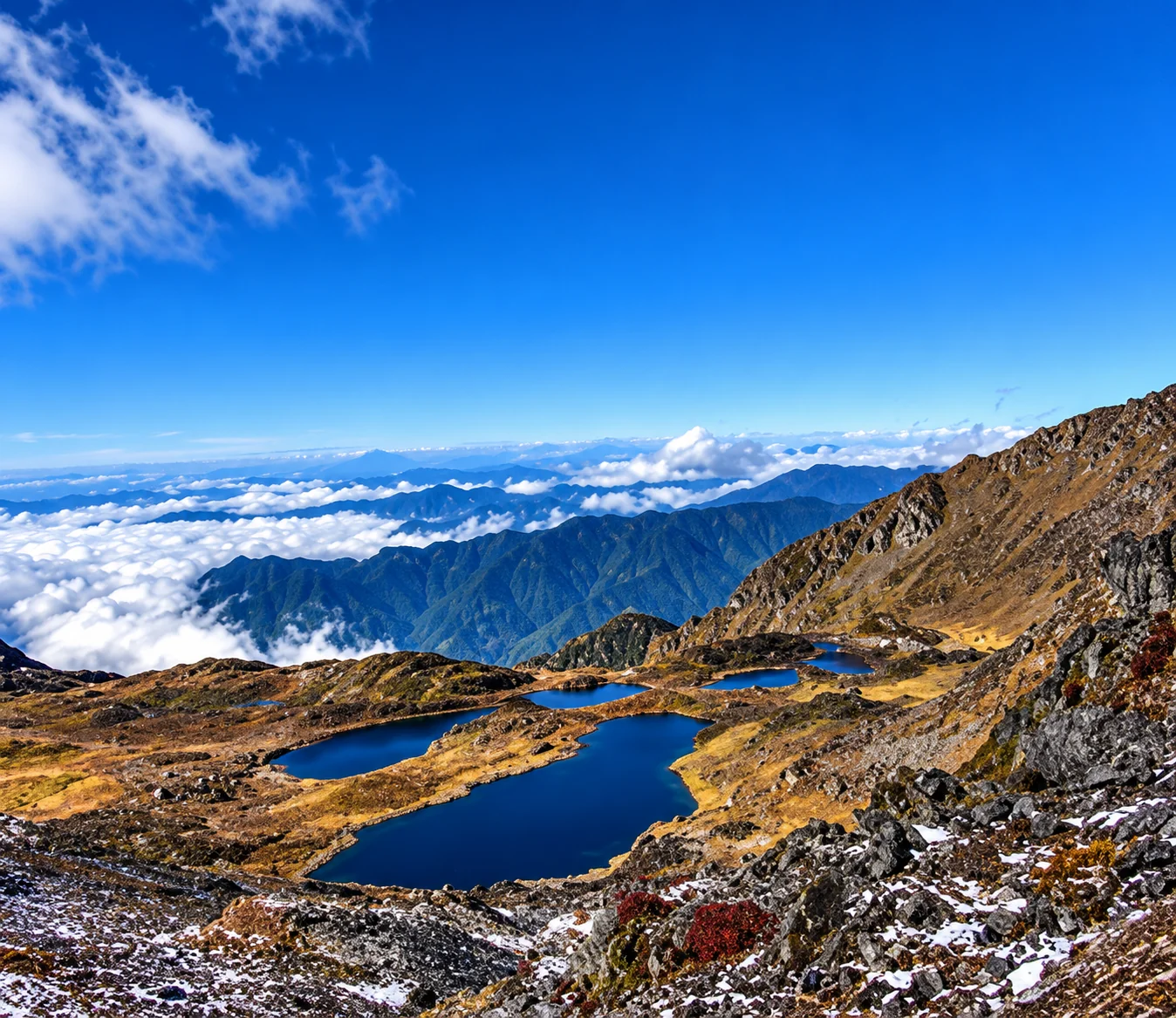
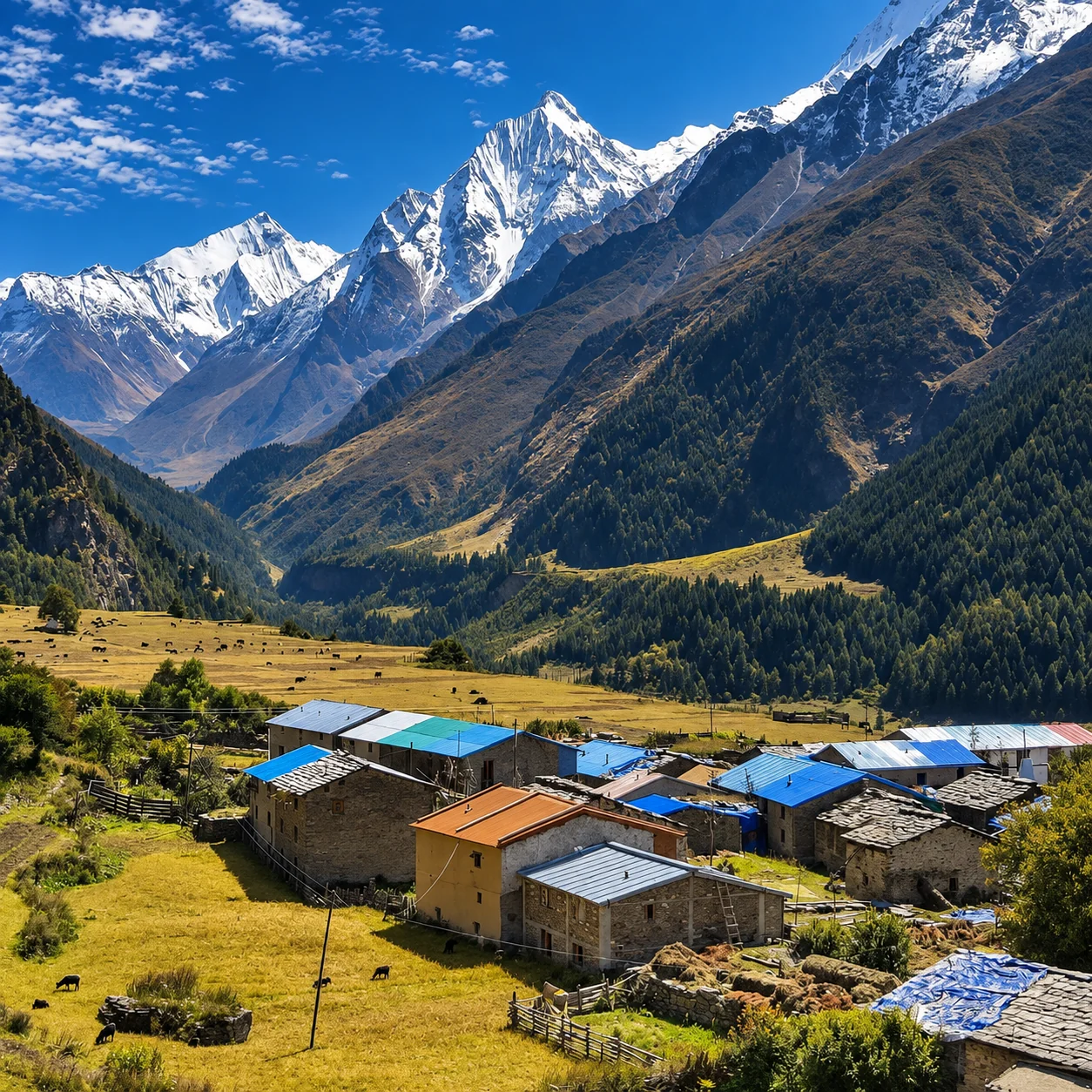
As travellers move deeper into the region, the environment changes dramatically. Lower sections contain forests, rivers, waterfalls and cultivated terraces, while the upper sections become increasingly alpine, with barren mountain slopes, glaciers, high passes and dramatic Himalayan peaks.
Why Visit Manaslu Conservation Area?
Manaslu is much more than a mountain trekking destination. It is a protected Himalayan landscape where nature, culture, spirituality, biodiversity and adventure exist together.
The region is ideal for travellers who want to experience a quieter and more culturally immersive side of Nepal.
The major reasons to visit include:
- Mount Manaslu and surrounding Himalayan peaks
- Manaslu Circuit Trek
- Tsum Valley
- Larkya La Pass
- Traditional Himalayan villages
- Buddhist monasteries
- Tibetan-influenced culture
- Himalayan wildlife
- Diverse flora
- Birdwatching
- Mountain photography
- Community-based tourism
- Remote Himalayan landscapes
- High-altitude adventure
Mount Manaslu
The central attraction of the region is Mount Manaslu, standing at 8,163 metres.
Mount Manaslu dominates the upper Himalayan landscape and provides spectacular views from several sections of the Manaslu Circuit. As trekkers move through Namrung, Lho, Sama Gaun and surrounding areas, the mountain scenery becomes increasingly impressive.
For photographers, Manaslu offers outstanding opportunities for sunrise, sunset and mountain landscape photography. The combination of snow-covered peaks, traditional villages, prayer flags and changing Himalayan light creates some of the most memorable visual experiences in the region.
Manaslu Circuit Trek
The Manaslu Circuit Trek is the most famous trekking route in the conservation area.
The trail follows the Budhi Gandaki Valley through remote settlements before climbing toward the high Himalayan environment and crossing Larkya La Pass before descending toward Bhimtang and the Marsyangdi side.
The trek combines:
- High Himalayan scenery
- Traditional villages
- Buddhist culture
- Forests
- Rivers
- Waterfalls
- Glacial landscapes
- High mountain passes
- Local hospitality
- Wildlife habitats
- Remote Himalayan communities
For travellers looking for a challenging Himalayan journey with strong cultural and natural elements, the Manaslu Circuit provides a comprehensive Nepal trekking experience.
Explore our [Manaslu Circuit Trek package] through Khushi Travels for a professionally arranged trekking experience with permits, guides, transportation and other travel services.
Tsum Valley
Tsum Valley is one of the most culturally distinctive areas connected with the Manaslu region.
The valley is known for its Tibetan Buddhist traditions, ancient monasteries, traditional stone houses, remote settlements, sacred landscapes and dramatic Himalayan scenery.
Travellers can experience:
- Buddhist monasteries
- Traditional villages
- Ancient religious heritage
- Mountain landscapes
- Local Himalayan culture
- Prayer walls and chortens
- Remote walking trails
- Traditional lifestyles
A Tsum Valley extension is ideal for travellers who want to spend additional time experiencing Himalayan culture rather than simply completing the Manaslu Circuit.
Explore our [Tsum Valley Trek package] for a dedicated cultural and Himalayan trekking experience.
Traditional Himalayan Villages
Villages such as Jagat, Deng, Namrung, Lho, Sama Gaun and Samdo provide opportunities to experience traditional mountain lifestyles.
Agriculture and animal husbandry have historically been important to local communities, while tourism and trade have become increasingly significant sources of income.
The architecture, monasteries, prayer flags, mani walls, agricultural terraces and traditional houses provide an authentic cultural environment.
Travellers should remember that these are living communities rather than tourist attractions. Respect for local customs and privacy is essential.
Buddhist Culture and Monasteries
The upper Manaslu region has a strong Buddhist cultural identity.
Travellers encounter:
- Buddhist monasteries
- Mani walls
- Prayer wheels
- Chortens
- Prayer flags
- Traditional Buddhist architecture
- Religious ceremonies
- Sacred landscapes
- Ancient cultural practices
Visitors should behave respectfully around monasteries and religious sites.
When entering a monastery, follow local instructions, dress respectfully and avoid touching religious objects without permission.
Flora of Manaslu Conservation Area
The flora of Manaslu Conservation Area changes significantly with altitude.
The lower valleys contain relatively warmer forests and agricultural landscapes, while higher elevations support coniferous forests, alpine shrubs, meadows and specialised high-altitude vegetation.
Current NTNC information reports more than 2,000 plant species and 11 forest types within the conservation area.
Major plant and vegetation communities include:
- Rhododendron
- Pine
- Fir
- Oak
- Birch
- Juniper
- Himalayan conifers
- Alpine shrubs
- Alpine grasses
- Wildflowers
- Medicinal plants
- Mosses and lichens
Rhododendron Forests
Rhododendron forests are particularly attractive during spring when many hillsides become covered with colourful flowers.
The forests provide habitat for birds, insects and other wildlife while also helping stabilise mountain slopes.
Travellers should enjoy these forests without picking flowers or damaging vegetation.
Pine, Fir and Other Himalayan Forests
Pine, fir, birch, oak and other Himalayan tree species occur across different elevations.
As altitude increases, the composition of the forest changes according to temperature, rainfall, soil and exposure.
These forests are important for biodiversity, watershed protection, soil stability and local livelihoods.
Juniper and Alpine Vegetation
Juniper becomes increasingly characteristic of the colder and higher Himalayan environment.
At still higher elevations, forests gradually disappear and are replaced by alpine shrubs, grasses, mosses, lichens and small flowering plants.
These plants have adapted to strong winds, freezing temperatures, short growing seasons and intense sunlight.
Medicinal Plants
Local communities have traditionally used Himalayan plants for medicinal purposes.
Medicinal plants are culturally and economically important, but uncontrolled collection can damage natural populations.
Visitors should never collect medicinal plants or other natural resources from the conservation area.
Fauna of Manaslu Conservation Area
Manaslu Conservation Area is an important habitat for Himalayan wildlife.
Current NTNC information records approximately 39 mammal species, 201 bird species, 3 reptile species and 11 butterfly species.
Important mammals include:
- Snow leopard
- Lynx
- Musk deer
- Red fox
- Himalayan jackal
- Brown bear
- Blue sheep
- Himalayan tahr
- Himalayan serow
- Woolly hare
- Himalayan marmot
Snow Leopard
The snow leopard is one of the most important flagship species associated with the Manaslu landscape.
This elusive high-altitude predator lives in remote Himalayan habitats and is naturally difficult to observe.
Travellers should never expect a guaranteed sighting. The value of visiting the region lies in experiencing and supporting the conservation of its habitat rather than simply trying to see a particular animal.
Blue Sheep
Blue sheep are important high-altitude herbivores and are also an important prey species for snow leopards.
They are adapted to steep rocky Himalayan terrain and may sometimes be observed in high-altitude areas.
Himalayan Tahr
The Himalayan tahr is another important mountain herbivore found in the conservation area.
Its ability to move through steep terrain allows it to occupy environments that are difficult for many other animals to access.
Musk Deer and Other Mammals
Musk deer, Himalayan serow, marmots, foxes and other mammals contribute to the ecological diversity of the Manaslu landscape.
Some species live primarily in forests while others inhabit alpine and high-altitude environments.
Wildlife sightings depend on season, weather, habitat and natural animal behaviour.
Birds of Manaslu Conservation Area
Manaslu provides habitat for a wide range of Himalayan birds.
Recorded species include:
- Snow partridge
- Tibetan snowcock
- Chukar partridge
- Himalayan griffon
- Golden eagle
- Other Himalayan mountain birds and raptors
The changing elevation makes the region interesting for birdwatchers because different habitats support different bird communities.
Reptiles and Butterflies
The conservation area also supports reptiles and butterflies.
Current NTNC information records three reptile species and 11 butterfly species.
Although these species may receive less attention than large mammals, they are important components of the region's wider ecosystem.
Biodiversity and Conservation Importance
Manaslu's ecological importance comes largely from its extraordinary vertical range.
Within one protected landscape, travellers can move from relatively warm valleys and forests to cold alpine and glacial environments.
This creates habitats for:
- Forest species
- Mountain ungulates
- Carnivores
- Birds
- Butterflies
- Reptiles
- Alpine plants
- Medicinal plants
- High-altitude ecosystems
The Manaslu Conservation Area Project uses an integrated conservation and development approach that connects biodiversity conservation with sustainable natural-resource management, local communities and sustainable tourism.
Major Attractions in Manaslu Conservation Area
Jagat
Jagat is one of the principal entrances to the Manaslu Conservation Area and an important starting point for the Manaslu Circuit Trek.
After the road journey from Kathmandu, many trekkers begin their walking journey from this area.
Jagat is also associated with visitor registration and conservation-area management.
Deng
Deng is a traditional Himalayan settlement surrounded by steep mountain terrain, forests and the Budhi Gandaki Valley.
It is commonly used as an overnight stop during the Manaslu Circuit.
Namrung
Namrung is an important transition point toward the higher Himalayan environment.
From here, the scenery becomes increasingly dominated by high mountains, Buddhist cultural landscapes and traditional Himalayan settlements.
Lho
Lho is known for its spectacular Himalayan scenery and Buddhist cultural environment.
The village provides impressive views toward the Manaslu massif and is an important cultural stop on the route.
Sama Gaun
Sama Gaun, also written as Samagaun, is one of the most important settlements on the Manaslu Circuit.
It is commonly used as an acclimatisation base and provides access to:
- Manaslu Base Camp
- Birendra Lake
- Pungyen Gompa
- Himalayan viewpoints
- Surrounding mountain landscapes
Samdo
Samdo is a high-altitude settlement close to the Nepal-Tibet border region.
The environment becomes distinctly alpine, with broad mountain valleys, barren slopes and dramatic Himalayan peaks.
Dharamsala / Larkya Phedi
Dharamsala is the traditional high-altitude preparation point before crossing Larkya La.
Because of the altitude and demanding terrain, proper acclimatisation is particularly important.
Larkya La Pass
Larkya La is the highest point of the classic Manaslu Circuit.
At approximately 5,106 metres, the crossing is one of the most challenging and memorable parts of the trek.
Weather can change quickly, so trekkers should follow their guide's recommendations and allow flexibility in the itinerary.
Bhimtang
Bhimtang marks the dramatic descent from the high pass.
After crossing Larkya La, the landscape gradually changes from high alpine terrain toward forests and lower Himalayan valleys.
Best Time to Visit Manaslu Conservation Area
The principal trekking seasons are spring and autumn.
Spring: March to May
Spring generally provides favourable trekking conditions, increasingly clear mountain views and blooming rhododendrons and other mountain flowers.
The lower and middle elevations can be particularly attractive during this period.
Autumn: September to November
Autumn is one of the most popular trekking periods in Manaslu.
Travellers generally choose this season because of favourable visibility, cooler temperatures and good Himalayan photography conditions.
Winter: December to February
Winter can bring:
- Heavy snowfall
- Very cold temperatures
- Frozen trails
- Difficult Larkya La conditions
- Limited accommodation at some high elevations
Experienced trekkers can consider winter with additional preparation and professional support.
Monsoon: June to August
The monsoon period can bring:
- Heavy rainfall
- Landslides
- Muddy trails
- Road disruptions
- Reduced mountain visibility
Travel during monsoon requires additional flexibility and regular checking of local conditions.
Current Access Situation in 2026
For travellers planning Manaslu in 2026, current route conditions should be checked before departure.
The Nepal Tourism Board reported on 11 September 2026 that damaged structures along the trekking route connecting Chumnubri Rural Municipality Ward 4, Namrung, had been restored to a condition suitable for trekking and that the earlier restriction on that affected section had been lifted.
Travellers should nevertheless continue to monitor local conditions because rainfall, landslides, snowfall, road conditions and trail conditions can change quickly in the Himalayan environment.
Manaslu Trekking Permits
Manaslu includes restricted trekking areas, so foreign trekkers need the applicable trekking permits.
The Department of Immigration states that restricted-area trekking permits are mandatory for foreign visitors and are issued through authorised trekking agencies.
The current Department of Immigration fee table lists the following Gorkha Manaslu restricted-area rates:
| Travel Period | Restricted-Area Permit |
|---|---|
| September-November | USD 100 per person per week |
| Beyond first week, September-November | USD 15 per person per day |
| December-August | USD 75 per person per week |
| Beyond first week, December-August | USD 10 per person per day |
These rates should be reconfirmed at the time of booking because government regulations and fee schedules can change.
Tsum Valley Restricted-Area Permit
Travellers combining Tsum Valley with Manaslu should also consider the separate restricted-area permit applicable to Tsum Valley.
The current Department of Immigration fee table lists:
| Travel Period | Tsum Valley Restricted-Area Permit |
|---|---|
| September-November | USD 40 per person per week |
| Beyond first week, September-November | USD 7 per person per day |
| December-August | USD 30 per person per week |
| Beyond first week, December-August | USD 7 per person per day |
The final permit requirement depends on the exact route and itinerary.
Manaslu Conservation Area Entry Permit
In addition to restricted-area requirements, visitors entering the conservation area need the applicable conservation-area entry permit.
The current NTNC online permit system states that the conservation-area entry permit is valid for single entry, must be carried throughout the trip and must be shown when requested by authorised conservation personnel.
Children below 10 years do not require the conservation-area entry permit under the current NTNC system.
Rules and Regulations for Manaslu Conservation Area
Because Manaslu is a protected conservation landscape and contains restricted trekking areas, travellers must follow government regulations and conservation-area rules.
These rules are intended to protect biodiversity, natural resources, local communities, religious heritage and the safety of visitors.
Carry Your Permit
Travellers must carry the applicable conservation-area and trekking permits throughout the journey.
The permit may be checked by authorised personnel at conservation checkpoints and other relevant locations.
Follow Restricted-Area Regulations
Foreign visitors entering restricted sections of Manaslu must obtain the appropriate restricted-area trekking permit through an authorised trekking agency.
Do not enter restricted sections without the required documentation.
Do Not Fly a Drone Without Permission
Drone operation is regulated in conservation areas.
Travellers must obtain prior approval from the relevant authorities before operating a drone.
Do not assume that bringing a drone into the region means that you have permission to fly it.
Do Not Hunt or Disturb Wildlife
Hunting, trapping, chasing or deliberately disturbing wildlife is prohibited.
Visitors should observe animals from a safe distance and never attempt to feed, capture or approach wild animals.
Do Not Collect Plants or Flowers
Visitors should not:
- Pick wildflowers
- Remove medicinal plants
- Collect rare plants
- Break branches
- Remove natural objects
- Collect butterflies or other wildlife
Enjoy the natural environment without removing anything from it.
Do Not Buy Wildlife Products
Travellers should never purchase products made from:
- Animal skins
- Bones
- Horns
- Feathers
- Musk
- Other wildlife parts
Avoiding these products helps reduce demand for illegal wildlife collection and trade.
Stay on Established Trails
Trekkers should stay on established trails and avoid creating shortcuts across mountain slopes.
Staying on designated trails helps reduce soil erosion, vegetation damage, trail degradation and disturbance to wildlife habitats.
Do Not Litter
Travellers should carry their waste with them when suitable disposal facilities are unavailable.
Use reusable bottles and containers wherever possible and avoid unnecessary single-use plastic.
Protect Rivers and Water Sources
Do not throw plastic, food waste, soap, chemicals or other waste into rivers, streams or springs.
Water sources are essential to local communities, livestock, wildlife and ecosystems.
Respect Local Communities
Manaslu is a living cultural landscape.
Visitors should:
- Ask permission before photographing people.
- Respect private property.
- Avoid entering homes without permission.
- Dress respectfully.
- Follow local customs.
- Avoid unnecessary noise.
- Support locally operated businesses.
Respect Buddhist Religious Sites
When visiting monasteries and religious monuments:
- Follow local instructions.
- Dress appropriately.
- Remove shoes where required.
- Avoid touching religious objects unnecessarily.
- Do not interrupt religious ceremonies.
- Ask before photographing sensitive religious activities.
- Walk respectfully around stupas and monuments according to local custom.
Avoid Unnecessary Campfires
Visitors should avoid unnecessary campfires and reduce pressure on local forest resources.
Where possible, choose accommodation that uses sustainable energy and efficient heating systems.
Manaslu Circuit Trek Difficulty
The Manaslu Circuit is generally considered a challenging high-altitude trek.
The major challenges include:
- Long walking days
- Steep ascents and descents
- High altitude
- Larkya La Pass
- Cold temperatures
- Remote terrain
- Basic accommodation
- Rapid weather changes
- Limited medical infrastructure
- Difficult emergency access
Good preparation, gradual acclimatisation and professional support are strongly recommended.
Altitude and Acclimatisation
Altitude is one of the most important considerations on the Manaslu Circuit.
A sensible itinerary should allow the body enough time to adapt.
Practical altitude principles include:
- Ascend gradually.
- Walk at a controlled pace.
- Drink adequate fluids.
- Eat regular meals.
- Avoid excessive alcohol.
- Communicate symptoms to your guide immediately.
- Do not ignore serious altitude symptoms.
- Be prepared to descend when medically necessary.
Sama Gaun is particularly important because it provides an opportunity for acclimatisation before moving toward Samdo and Larkya Phedi.
Suggested Manaslu Circuit Trek Itinerary
A comfortable Manaslu Circuit generally requires approximately 14-18 trekking days depending on transportation, acclimatisation, side trips and walking pace.
16-Day Manaslu Circuit Trek
| Day | Route | Experience |
|---|---|---|
| Day 1 | Kathmandu → Machha Khola | Scenic road journey |
| Day 2 | Machha Khola → Jagat | River valley trekking |
| Day 3 | Jagat → Deng | Forests and villages |
| Day 4 | Deng → Namrung | Himalayan landscapes |
| Day 5 | Namrung → Lho → Sama Gaun | Mountain and Buddhist culture |
| Day 6 | Sama Gaun | Acclimatisation |
| Day 7 | Sama Gaun → Samdo | High-altitude landscape |
| Day 8 | Samdo → Dharamsala | High-altitude trekking |
| Day 9 | Dharamsala → Larkya La → Bhimtang | High-pass crossing |
| Day 10 | Bhimtang → Dharapani | Forest descent |
| Day 11 | Dharapani → Tal/Chame area | Lower Himalayan landscapes |
| Day 12 | Chame → Besisahar | Road/trekking connection |
| Day 13 | Besisahar → Kathmandu | Return journey |
| Day 14 | Kathmandu | Rest and leisure |
| Day 15 | Kathmandu sightseeing | Cultural tour |
| Day 16 | Airport transfer | Departure |
The exact route can be adjusted according to road conditions, accommodation availability, weather, local regulations and the traveller's physical condition.
18-Day Manaslu Circuit with Better Acclimatisation
For travellers who prefer a slower and more comfortable pace, an 18-day program provides additional flexibility.
The suggested structure is:
Days 1-2: Kathmandu preparation and road journey.
Days 3-5: Jagat, Deng and Namrung.
Days 6-7: Namrung, Lho and Sama Gaun.
Day 8: Acclimatisation at Sama Gaun.
Day 9: Sama Gaun to Samdo.
Day 10: Samdo acclimatisation and local exploration.
Day 11: Samdo to Dharamsala.
Day 12: Dharamsala to Larkya La and Bhimtang.
Days 13-15: Bhimtang, Dharapani and lower valley.
Day 16: Return toward Kathmandu.
Day 17: Kathmandu sightseeing and rest.
Day 18: Departure.
Suggested Tsum Valley and Manaslu Circuit Itinerary
Travellers with additional time can combine Tsum Valley and Manaslu Circuit.
A comprehensive trip generally requires approximately 20-24 days depending on transportation, acclimatisation and side trips.
Suggested 24-Day Structure
- Kathmandu arrival.
- Kathmandu preparation and briefing.
- Kathmandu to Machha Khola.
- Machha Khola to Jagat.
- Jagat to Lokpa.
- Lokpa to Chumling.
- Chumling to Chhekampar.
- Chhekampar to Nile.
- Nile to Mu Gompa.
- Tsum Valley exploration.
- Tsum Valley to Lokpa.
- Lokpa to Deng.
- Deng to Namrung.
- Namrung to Lho.
- Lho to Sama Gaun.
- Acclimatisation at Sama Gaun.
- Sama Gaun to Samdo.
- Samdo to Dharamsala.
- Dharamsala to Larkya La and Bhimtang.
- Bhimtang to Dharapani.
- Return toward Kathmandu.
- Kathmandu leisure.
- Kathmandu sightseeing.
- International departure.
The exact route and permit requirements should be confirmed according to the final itinerary.
Accommodation During the Manaslu Trek
Accommodation is primarily provided through local teahouses and trekking lodges.
Typical facilities may include:
- Twin or shared rooms
- Shared bathrooms
- Dining rooms
- Local meals
- Hot drinks
- Charging facilities at selected lodges
- Limited Wi-Fi
- Basic heating arrangements
Facilities become progressively simpler at higher elevations.
Travellers should therefore expect a genuine Himalayan trekking experience rather than city-hotel standards.
Camping can also be arranged for selected routes and customised expeditions where appropriate.
Food During the Manaslu Trek
Food along the Manaslu Circuit generally includes a mixture of Nepali, Tibetan-influenced and international-style trekking meals.
Breakfast options can include:
- Tibetan bread
- Pancakes
- Eggs
- Porridge
- Toast
- Tea
- Coffee
Lunch and dinner can include:
- Dal bhat
- Rice
- Noodles
- Pasta
- Soup
- Momos
- Tibetan-style dishes
- Seasonal vegetables
Dal bhat remains one of the most practical trekking meals because it provides carbohydrates, protein and vegetables.
Vegetarian and other dietary requirements can be communicated before departure.
Transportation to Manaslu
The Manaslu journey generally begins with road transportation from Kathmandu toward the trekking trailhead.
Depending on the selected route and current road conditions, transportation can include:
- Private car
- Jeep
- Tourist vehicle
- 4WD
- Local transportation for selected budget itineraries
For private trekking groups, Khushi Travels can arrange dedicated 4WD transportation.
Road conditions can change considerably, particularly during and after the monsoon season, so the transportation plan may be adjusted according to actual local conditions.
What to Pack for Manaslu
Essential clothing includes:
- Moisture-wicking base layers
- Fleece jacket
- Down or insulated jacket
- Waterproof jacket
- Trekking trousers
- Thermal layers
- Warm gloves
- Warm hat
- Sun hat
- Trekking socks
Essential trekking equipment includes:
- Good hiking boots
- Trekking poles
- Sleeping bag
- Headlamp
- Water bottles
- Water purification tablets or filter
- Backpack
- Duffel or porter bag
- Sunglasses
- Sunscreen
- Personal first-aid supplies
Essential documents include:
- Passport
- Nepal visa
- Travel insurance
- Passport photographs where required
- Trekking permits
- Emergency contact information
Travel Insurance for Manaslu
Travel insurance should be arranged before trekking.
Travellers should confirm that their insurance covers:
- High-altitude trekking
- Emergency medical treatment
- Helicopter evacuation
- Search and rescue
- Trip cancellation
- Trip interruption
- Lost baggage
Do not assume that a standard travel insurance policy automatically covers trekking at high altitude.
Emergency and Rescue Planning
Manaslu is a remote Himalayan destination, so emergency planning is important.
Potential emergency situations include:
- Altitude sickness
- Injury
- Severe weather
- Trail blockage
- Landslides
- Acute illness
Khushi Travels can coordinate with local trekking staff and assist with emergency arrangements when required.
Actual helicopter evacuation depends on weather, helicopter availability, medical necessity, insurance arrangements and local operating conditions.
Mobile Network and Internet
Connectivity varies significantly along the Manaslu route.
Travellers may find:
- Mobile coverage in some lower settlements
- Limited connectivity at higher elevations
- Wi-Fi at selected lodges
- Unreliable service in remote sections
Travellers should not depend entirely on mobile internet during the trek.
Photography and Drone Regulations
Manaslu offers exceptional photography opportunities, including:
- Mountain landscapes
- Buddhist monasteries
- Traditional villages
- Prayer flags
- Rivers and forests
- Wildlife
- Himalayan sunrises
- Himalayan sunsets
Drone operation is regulated, and prior approval is required before flying a drone in the conservation area.
Responsible Tourism in Manaslu
Manaslu Conservation Area is based around conservation and community participation.
Travellers can support sustainable tourism by:
- Staying in locally operated lodges
- Hiring local guides and porters
- Purchasing local products
- Avoiding unnecessary single-use plastic
- Carrying reusable water bottles
- Respecting monasteries
- Following local customs
- Avoiding littering
- Staying on designated trails
- Respecting wildlife
- Conserving water and electricity
Responsible tourism helps ensure that tourism benefits local communities while reducing pressure on the fragile Himalayan environment.
Culture and Etiquette
Manaslu is home to communities with strong Himalayan and Buddhist traditions.
Visitors should:
- Ask permission before photographing people.
- Dress respectfully around monasteries.
- Respect religious ceremonies.
- Avoid touching religious objects unnecessarily.
- Respect prayer wheels and mani walls.
- Follow local instructions.
- Avoid loud behaviour near religious sites.
- Respect private property.
- Avoid entering homes without permission.
A respectful traveller becomes part of the local experience rather than simply passing through it.
Cost of a Manaslu Trek
The total cost depends on:
- Number of trekking days
- Group size
- Travel season
- Accommodation category
- Private or group trek
- Guide and porter requirements
- Transportation
- Permits
- Meals
- Tsum Valley extension
- Kathmandu hotel category
- Domestic transportation
- Travel insurance
- Emergency arrangements
| Cost Category | Usually Included |
|---|---|
| Kathmandu hotel | Optional/package dependent |
| Airport transfers | Yes, if selected |
| Trekking permits | Yes |
| Conservation permits | Yes |
| Guide | Yes |
| Porter | Optional or package dependent |
| Accommodation | Usually included |
| Meals | Usually included during trekking |
| Ground transportation | Yes, depending on itinerary |
| Travel insurance | Traveller's responsibility |
| Personal expenses | No |
| Drinks and snacks | Usually no |
| Emergency evacuation | Insurance/actual cost dependent |
We provide a customised quotation rather than one fixed price because group size, route, transportation, accommodation and travel dates can significantly change the final cost.
Why Book Your Manaslu Trek With Khushi Travels?
At Khushi Travels & Consulting Group Pvt. Ltd., we provide more than a trekking reservation. We coordinate the different components of your Nepal journey through one dedicated travel company.
Before arrival, we can assist with:
- Personal itinerary planning
- Visa guidance
- Trekking consultation
- Permit preparation
- Hotel booking
- Travel insurance guidance
- Airport transfer planning
During the trek, we can arrange:
- Professional trekking guide
- Porter services
- Trekking permits
- Conservation-area permits
- Lodge accommodation
- Meals according to package
- Private transportation
- Trekking equipment guidance
- Route coordination
- Emergency assistance
After the trek, we can arrange:
- Kathmandu accommodation
- Airport transfer
- Kathmandu sightseeing
- Shopping arrangements
- Hotel extension
- International and domestic air-ticket assistance
- Additional Nepal tours
Why Choose Khushi Travels for Manaslu?
Our approach is designed for travellers who want one local Nepal travel company to coordinate their experience from arrival to departure.
We can arrange:
- Private Manaslu Circuit Trek
- Small-group Manaslu Trek
- Tsum Valley Trek
- Tsum Valley and Manaslu Circuit
- Manaslu Base Camp Trek
- Manaslu photography journeys
- Cultural and village experiences
- Custom trekking programs
- Pre- and post-trek Kathmandu tours
- Airport pickup and drop-off
- Hotel accommodation
- Domestic and international air tickets
- Private vehicles and 4WD
- Professional guides
- Porters
- Trekking permits
- Travel documentation support
- 24/7 local assistance
For international tour operators and overseas travel agencies, we can also work as a Nepal ground-handling and B2B travel partner, providing local logistics and operational support.
Suggested Manaslu Travel Packages
Option 1: Classic Manaslu Circuit
Duration: 16-18 Days
Ideal for: First-time Manaslu trekkers.
Highlights: Budhi Gandaki Valley, Namrung, Lho, Sama Gaun, Samdo, Larkya La and Bhimtang.
For the dedicated package, visit the Manaslu Circuit Trek package from Khushi Travels.
Option 2: Manaslu Circuit and Kathmandu
Duration: 18-20 Days
Ideal for: International travellers.
Includes: Manaslu trek, Kathmandu accommodation, sightseeing, airport services and trekking logistics according to the selected package.
Option 3: Tsum Valley and Manaslu
Duration: 20-24 Days
Ideal for: Experienced trekkers who want additional cultural exploration.
Highlights: Tsum Valley, monasteries, traditional villages, Sama Gaun, Manaslu Circuit and Larkya La.
For the dedicated Tsum Valley experience, visit the Tsum Valley Trek package from Khushi Travels.
Option 4: Private Premium Manaslu Trek
Duration: Flexible.
Ideal for: Couples, families, friends and private groups.
Features: Private transportation, carefully selected accommodation, dedicated guide, porter support and flexible itinerary planning.
Manaslu Trekking for Indian Travellers
Indian travellers can explore Manaslu through professionally organised private trekking packages.
Khushi Travels can assist with:
- Kathmandu hotel
- Airport transfers
- Private transportation
- Trekking permits
- Guide
- Porter
- Accommodation
- Meals
- Kathmandu sightseeing
- Domestic flight arrangements where required
- Customised group departures
For Indian travel agencies, we can also provide B2B Nepal ground-handling services and customised group quotations.
Manaslu Trek for International Travellers
For travellers arriving from the USA, Europe, Australia, the UK, Israel, Southeast Asia and other international markets, we can coordinate the complete journey.
International arrival → Kathmandu → Trek preparation → Manaslu Circuit → Kathmandu → Cultural sightseeing → Airport departure
This approach allows travellers to coordinate their Nepal experience through one local travel company.
Useful Information Before Booking Manaslu
Airport Arrival: Our representative can meet you at Tribhuvan International Airport and transfer you to your Kathmandu hotel.
Trip Briefing: A pre-trek briefing can be arranged before departure.
Transportation: Private 4WD, local jeep, tourist vehicle or other suitable transportation can be arranged depending on the itinerary.
Trek Starting Point: The starting point depends on the selected route and current road conditions.
Highest Altitude: Approximately 5,106 metres at Larkya La Pass.
Accommodation: Teahouses and lodges are standard, with camping available for selected itineraries.
Meals: Breakfast, lunch and dinner can be included during the trekking package.
Drinking Water: Filtered, treated or bottled water may be available depending on location.
Physical Fitness: Good physical fitness is strongly recommended.
Families and Seniors: The standard circuit is demanding. Alternative lower-altitude Himalayan programs can be designed where appropriate.
Guide and Porter: Professional guide and porter services can be arranged.
Luggage: Duffel bags can be carried by porters subject to agreed weight limits.
Internet: Connectivity varies significantly.
ATM: ATM access becomes extremely limited or unavailable in remote trekking areas. Carry sufficient Nepalese currency.
Photography: Photography is generally encouraged, but ask permission before photographing people or religious ceremonies.
Drone: Prior approval is required.
Booking: Early booking is recommended during peak trekking seasons.
Travel Insurance: High-altitude trekking and emergency evacuation coverage should be confirmed before departure.
FAQS
What is Manaslu Conservation Area famous for?
Manaslu Conservation Area is famous for Mount Manaslu, the Manaslu Circuit Trek, Larkya La Pass, Tsum Valley, traditional Himalayan villages, Buddhist culture, spectacular mountain scenery and diverse Himalayan biodiversity.
Where is Manaslu Conservation Area located in Nepal?
Manaslu Conservation Area is located in northern Gorkha District of Nepal. The protected region follows the Budhi Gandaki River valley and includes important trekking areas such as Nubri Valley, Tsum Valley and the surrounding Himalayan landscapes.
What is the Manaslu Circuit Trek?
The Manaslu Circuit Trek is a high-altitude trekking route that travels around the Manaslu massif. The journey passes through forests, river valleys, traditional villages, Buddhist settlements and high Himalayan landscapes before crossing Larkya La Pass.
How many days are needed for the Manaslu Circuit Trek?
Most travellers should allow around 14 to 18 days for a properly planned Manaslu Circuit Trek, depending on the itinerary, transportation arrangements, acclimatisation days and walking pace.
What is the best itinerary for the Manaslu Circuit Trek?
A well-planned Manaslu Circuit itinerary normally includes gradual altitude gain, an acclimatisation day around Sama Gaun, the Samdo and Dharamsala sections, the Larkya La Pass crossing and sufficient time for the return journey.
What is the best time to visit Manaslu Conservation Area?
Spring from March to May and autumn from September to November are generally preferred for trekking because of favourable weather and mountain visibility. Winter and monsoon conditions can be more challenging at different sections of the route.
Which trek offers the best mountain views in the Manaslu region?
The Manaslu Circuit Trek provides extensive mountain scenery throughout the route, with particularly impressive views around Lho, Sama Gaun, Samdo, Dharamsala, Larkya La and Bhimtang.
Is the Manaslu Circuit Trek suitable for beginners?
The Manaslu Circuit Trek is generally more suitable for trekkers who have some previous hiking or trekking experience. Beginners can undertake it with appropriate physical preparation, professional guidance, gradual acclimatisation and a suitable itinerary.
How difficult is the Manaslu Circuit Trek?
The Manaslu Circuit Trek is considered a challenging Himalayan trek because of its long walking days, altitude gain, remote terrain, changing weather and the high-altitude crossing of Larkya La Pass.
What is the highest point of the Manaslu Circuit Trek?
The highest point of the classic Manaslu Circuit Trek is Larkya La Pass, which is approximately 5,106 metres above sea level.
What is Larkya La Pass?
Larkya La is the high mountain pass crossed during the Manaslu Circuit Trek. The pass connects the upper Manaslu region with the route toward Bhimtang and is one of the most demanding and scenic sections of the trek.
Is Manaslu Circuit Trek safe?
The Manaslu Circuit Trek can be undertaken safely with proper preparation, acclimatisation, qualified trekking support, appropriate equipment, travel insurance and attention to weather and trail conditions.
Do I need a guide for the Manaslu Circuit Trek?
Manaslu is a regulated trekking region, and current restricted-area requirements should be followed. Travellers should arrange the required permits and trekking support through an authorized trekking or travel operator according to the regulations applicable to their route.
Do I need a permit for Manaslu Conservation Area?
Yes. Travellers entering Manaslu Conservation Area need the applicable conservation-area permit, and trekkers on restricted sections also require the relevant restricted-area permit.
How much does the Manaslu Circuit Trek permit cost?
The restricted-area permit fee varies by season and duration. Current Department of Immigration rates for the Manaslu restricted area are USD 100 per person per week from September to November, with an additional USD 15 per day beyond the first week, and USD 75 per person per week from December to August, with an additional USD 10 per day beyond the first week.
Can I trek Manaslu independently?
Because Manaslu includes restricted trekking areas, travellers must comply with current government regulations regarding permits, trekking arrangements and guide requirements. It is important to verify the applicable rules for the planned route before departure.
Can I combine Tsum Valley with Manaslu Circuit Trek?
Yes. Tsum Valley can be combined with the Manaslu Circuit Trek to create a longer Himalayan journey featuring Buddhist heritage, remote villages, mountain landscapes and additional cultural experiences.
What is Tsum Valley famous for?
Tsum Valley is known for its traditional Himalayan villages, Buddhist monasteries, religious heritage, mountain scenery and distinctive local culture.
How many days are needed for Tsum Valley and Manaslu Circuit Trek?
A combined Tsum Valley and Manaslu Circuit Trek commonly requires approximately 20 to 24 days, depending on the selected itinerary, acclimatisation requirements, transportation and trekking pace.
What are the best places to visit in Manaslu Conservation Area?
Important places include Jagat, Deng, Namrung, Lho, Sama Gaun, Samdo, Dharamsala, Larkya La and Bhimtang. Tsum Valley is another major attraction for travellers interested in culture and Himalayan landscapes.
What makes Manaslu Conservation Area unique?
Manaslu Conservation Area is unique because it combines high Himalayan mountains, diverse ecosystems, remote settlements, traditional cultures, Buddhist heritage, wildlife and challenging trekking routes within one protected landscape.
What wildlife can be seen in Manaslu Conservation Area?
The conservation area supports diverse wildlife, including species such as blue sheep, Himalayan tahr, musk deer and other Himalayan mammals. Rare species such as snow leopard inhabit suitable high-altitude habitats but are difficult to observe.
Can I see snow leopards in Manaslu Conservation Area?
Snow leopards occur in suitable high-altitude habitats of the Himalayan region, including the broader Manaslu landscape. However, they are elusive and sightings are rare, so seeing one cannot be guaranteed during a trek.
What birds can be seen in Manaslu Conservation Area?
Manaslu Conservation Area supports a wide variety of Himalayan and lower-elevation bird species. The conservation area contains approximately 201 recorded bird species, with species varying according to habitat, elevation and season.
What flora is found in Manaslu Conservation Area?
The conservation area contains more than 2,000 plant species, including rhododendrons, pine, fir, juniper and alpine vegetation. Different plant communities occur across the area's wide elevation range.
Is Manaslu good for wildlife and nature photography?
Yes. Manaslu provides opportunities for mountain, landscape, wildlife, bird, flora and cultural photography. Photographers should follow conservation rules and avoid disturbing wildlife or local communities.
What are the best things to do in Manaslu Conservation Area?
Popular activities include trekking, mountain photography, wildlife observation, birdwatching, cultural exploration, visiting Buddhist heritage sites, exploring traditional villages and crossing high Himalayan passes.
Is Manaslu a good destination for adventure travellers?
Manaslu is well suited to adventure travellers interested in challenging trekking, high-altitude landscapes, remote Himalayan environments, mountain photography and culturally immersive journeys.
Is Manaslu suitable for families?
The classic Manaslu Circuit is a demanding high-altitude trek and may not be suitable for every family member. Families with older children and previous trekking experience can consider appropriate sections or customized itineraries based on fitness, age and altitude tolerance.
Is Manaslu suitable for senior citizens?
Senior travellers should consider their physical fitness, previous trekking experience, altitude tolerance and medical advice before undertaking a high-altitude Manaslu trek. A slower itinerary with appropriate acclimatisation may be considered for suitable travellers.
What accommodation is available on the Manaslu Circuit?
Accommodation mainly consists of teahouses and trekking lodges. Facilities are generally simple, particularly at higher elevations, with shared facilities common in several locations.
What food is available during the Manaslu Trek?
Common trekking meals include dal bhat, rice, noodles, soups, potatoes, Tibetan-style breads and other simple local and international dishes. Food choices can become more limited at higher elevations.
How do I get to Manaslu Conservation Area from Kathmandu?
Travellers normally travel by road from Kathmandu toward the Manaslu trekking region before beginning the trek. The exact starting point and transportation arrangements depend on the selected itinerary and current road conditions.
Can Khushi Travels arrange transportation for Manaslu?
Yes. Khushi Travels can assist with transportation arrangements for Manaslu trips, including private vehicle coordination, trekking transfers, Kathmandu transportation and return arrangements based on the selected itinerary.
Can Khushi Travels arrange Manaslu trekking permits?
Yes. Khushi Travels can assist with the required trekking and conservation-area permit arrangements for eligible Manaslu itineraries, subject to current government regulations and documentation requirements.
Can Khushi Travels arrange a private Manaslu Circuit Trek?
Yes. Khushi Travels can arrange private Manaslu Circuit Trek programs with itinerary planning, transportation, accommodation, trekking guide, porter arrangements and other required services.
Can Khushi Travels arrange a Manaslu Trek with guide and porter?
Yes. Khushi Travels can coordinate professional trekking guides and porter services according to the itinerary, group size, luggage requirements and trekking arrangements.
Can I customise my Manaslu Circuit Trek itinerary?
Yes. A Manaslu itinerary can be planned according to trekking pace, acclimatisation requirements, available travel days, transportation arrangements, cultural interests and whether Tsum Valley is included.
What is included in a Manaslu trekking package?
Depending on the selected package, inclusions may cover transportation, trekking permits, conservation fees, accommodation, meals, professional guide services, porter arrangements and necessary trekking coordination. Exact inclusions should always be confirmed before booking.
What costs are usually excluded from a Manaslu package?
Common exclusions may include international flights, personal expenses, travel insurance, emergency evacuation costs, personal trekking equipment, alcoholic beverages, additional accommodation outside the agreed itinerary and other services not specifically listed in the package.
How can I plan a stress-free Manaslu Trek?
A well-organized trek should include advance permit preparation, suitable accommodation planning, reliable transportation, a realistic itinerary, acclimatisation days, appropriate equipment, travel insurance and professional local trekking support.
What should I pack for Manaslu Circuit Trek?
Essential items generally include layered clothing, warm insulation, waterproof outerwear, trekking boots, trekking poles, sleeping equipment when required, personal medication, water bottles, sun protection, headlamp, first-aid supplies and suitable high-altitude trekking equipment.
Is travel insurance required for Manaslu Trek?
Comprehensive travel insurance is strongly recommended for a high-altitude trek. The policy should be checked carefully to ensure that it covers trekking at the maximum altitude of the planned itinerary and emergency evacuation where applicable.
Are there ATMs in the Manaslu trekking region?
ATM access is limited in the remote trekking region. Travellers should carry sufficient Nepalese currency for personal expenses and should not rely on regular ATM access throughout the trek.
Is internet and mobile network available on Manaslu Trek?
Mobile coverage and internet availability vary significantly along the route. Connectivity can be available in some settlements but may be weak or unavailable in remote sections and at higher elevations.
Can I fly a drone in Manaslu Conservation Area?
Drone operation requires prior approval. Travellers should obtain the necessary permission before flying a drone and should follow all applicable aviation, conservation and local regulations.
What are the main rules for visiting Manaslu Conservation Area?
Visitors should carry the required permits, follow restricted-area regulations, avoid disturbing wildlife, avoid collecting plants, prevent littering, protect water sources, respect Buddhist sites and local communities, remain on established trails and obtain prior approval for drone use.
How can I travel responsibly in Manaslu Conservation Area?
Responsible travellers should minimize waste, use established trails, conserve water, respect local culture, avoid disturbing wildlife, support local businesses, reduce unnecessary use of firewood and follow conservation-area regulations throughout the journey.
Why should I book my Manaslu Trek through a local travel company?
A local travel company can coordinate permits, transportation, accommodation, guides, porters, itinerary planning and on-ground assistance while providing local knowledge about route conditions and logistics.
How can I book a Manaslu Circuit Trek with Khushi Travels?
Travellers can contact Khushi Travels & Consulting Group Pvt. Ltd. for itinerary planning, permit assistance, transportation, accommodation, guide and porter arrangements and customized Manaslu trekking services. The company can also arrange private and combined Manaslu and Tsum Valley trekking programs according to the traveller's requirements.
Book Your Manaslu Conservation Area Experience With Khushi Travels
A Manaslu journey requires careful coordination because it combines restricted-area permits, conservation regulations, remote transportation, high-altitude trekking, accommodation logistics and changing mountain conditions.
At Khushi Travels & Consulting Group Pvt. Ltd., we provide dedicated local support from your arrival in Kathmandu until your departure from Nepal.
Our services include:
- Manaslu Circuit Trek
- Tsum Valley Trek
- Tsum Valley and Manaslu Circuit
- Private and group trekking
- Trekking permits
- Conservation-area permits
- Professional guides
- Porters
- 4WD transportation
- Kathmandu hotels
- Airport transfers
- Kathmandu sightseeing
- Domestic and international air-ticketing support
- Travel consultation
- Customised itineraries
- B2B ground handling for international travel agencies
- 24/7 local assistance
Plan your Manaslu adventure with a local Nepal travel company that can coordinate your complete journey.
Khushi Travels & Consulting Group Pvt. Ltd.
 Office: +977-1-4975759
 Mobile: +977-9768988868
 Email: info@khushiservice.com
Booking: booking@khushiservice.com
 Website: www.khushiservice.com
 Address: Sorakhutte, Kathmandu, Nepal
Similar Blogs
We are associated with