Mardi Himal vs. Poon Hill: Which in 2027?

Pick Poon Hill if comfort, culture, a famous sunrise, and a shorter, lower trek matter most. Pick Mardi Himal if quieter ridge trails and closer views of Machhapuchhre appeal and fitness is solid. Poon Hill tops out at 3,210m, while Mardi Himal reaches roughly 4,200m to 4,500m, so altitude is the real dividing line, more than distance or scenery.
The Short Verdict
Choose the Ghorepani Poon Hill Trek if:
- This is a first Himalayan trek
- Four to six days are available
- Village culture, lodges, and the famous sunrise panorama matter
- The trip falls in winter, or close to the monsoon
Choose the Mardi Himal Trek if:
- Fewer trekkers and closer views of Machhapuchhre (Fishtail) matter more than comfort
- Cold nights and a pre-dawn ridge walk sound appealing
- Five to seven trekking days are available
- Training for a bigger altitude trek is part of the plan
Side-by-Side Comparison
| Feature | Ghorepani Poon Hill Trek | Mardi Himal Trek |
|---|---|---|
| Highest point | 3,210m (Poon Hill) | About 4,500m (base camp); upper viewpoint about 4,200m |
| Highest night | Ghorepani, about 2,850m | High Camp, about 3,550m to 3,900m |
| Typical days | 3 to 6 (Khushi package: 6 days from Kathmandu) | 5 to 7 trekking days from Pokhara |
| Daily walking | 4 to 7 hours | About 4 to 6 hours plus the pre-dawn push |
| Difficulty | Easy to moderate (Khushi page: moderate) | Moderate; some operators say challenging |
| Hardest part | Ulleri staircase and the crowded sunrise climb | Altitude, cold, and the narrow upper ridge |
| Views | Wide panorama with Dhaulagiri and Annapurna I | Close Machhapuchhre, Annapurna South, Hiunchuli |
| Crowds | One of Nepal’s busiest short treks | Quieter but growing |
| Culture | Gurung and Magar villages, Ghandruk | Mostly forest and ridge, then Siding village |
| Winter and monsoon | Better | Harder |
| Permits | ACAP; no restricted-area permit | ACAP; no restricted-area permit |
| Khushi Travels offering | Fixed package | Custom request |
Operators list Poon Hill at 3 to 5 days and Mardi Himal at 3 to 8 days from Pokhara, so durations overlap more than many guides admit.
Altitude: The Real Dividing Line
Poon Hill is a viewpoint at 3,210m, but the trek’s highest bed sits lower. Ghorepani is about 2,850m, and the sunrise climb gains roughly 360m from there. The body never sleeps above 3,000m on the Poon Hill route. The rest of the route drops through Tadapani to Ghandruk (1,940m).
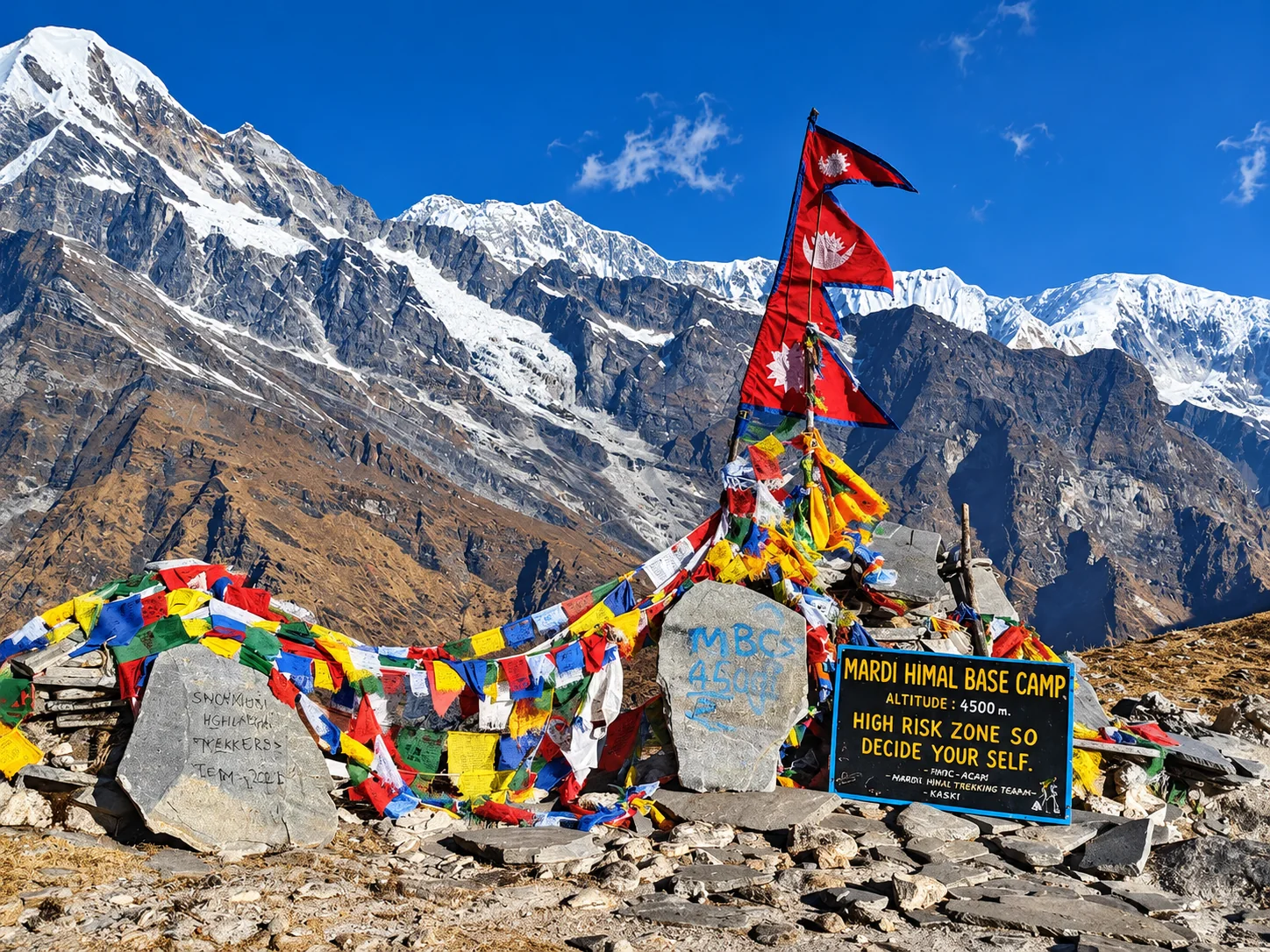
Mardi Himal works differently. Sleeping altitude climbs through Forest Camp (about 2,600m) and Low Camp (about 3,050m to 3,150m) to High Camp (about 3,550m to 3,900m), and then the pre-dawn push reaches the viewpoint or base camp. Altitude headaches and poor sleep become realistic risks, so pacing and an extra night matter.
This is general travel guidance, not medical advice. Anyone with a heart, lung, or blood-pressure condition should consult a doctor before choosing an altitude trek. For symptoms and prevention, read the altitude section of How Hard Is the Larke Pass Trek?
The Views: Panorama vs Proximity
Poon Hill is famous for wide sunrise panoramas of the Annapurna and Dhaulagiri ranges, while Mardi Himal gives closer views of Machhapuchhre and the Annapurna South face from ridge viewpoints.
- Poon Hill: a roughly 180-degree skyline including Dhaulagiri (8,167m), Annapurna I (8,091m), Annapurna South (7,219m), and Machhapuchhre (6,993m)
- Mardi Himal: Machhapuchhre looming close, plus Annapurna South, Hiunchuli (6,441m), and the Mardi Himal ridge itself
Both views depend on clear skies. Autumn gives the best odds on either trek. For a third option with a full amphitheater of peaks, see the Annapurna Base Camp Trek.
The Hard Parts, Honestly
On the Ghorepani Poon Hill Trek:
- The Ulleri staircase, thousands of stone steps, is the toughest stretch
- The sunrise climb leaves in the dark, and the platform can be packed in peak season
- Knees take a beating on the descent, so trekking poles help
On the Mardi Himal Trek:
- Sleeping above 3,500m brings altitude risk
- High Camp nights can fall near or below freezing
- The upper ridge is narrow in places, and the sunrise push starts around 4 AM
- Lodges get more basic above Forest Camp
Neither route is technical. The challenge is repeated uphill walking and long stair sections on the Poon Hill side, against higher altitude on the Mardi side.
Crowds, Lodges and Atmosphere
Mardi Himal usually has fewer trekkers, especially beyond Forest Camp, while Poon Hill gets busy in peak spring and autumn. Poon Hill compensates with a well-developed lodge network, regular villages, and an easier day rhythm. Mardi Himal feels more remote, but facilities thin out and comforts such as hot showers and Wi-Fi are limited and paid. Travelers wanting Annapurna views with few trekkers can also consider the Panchase Hill Eco Hike.
Culture and Villages
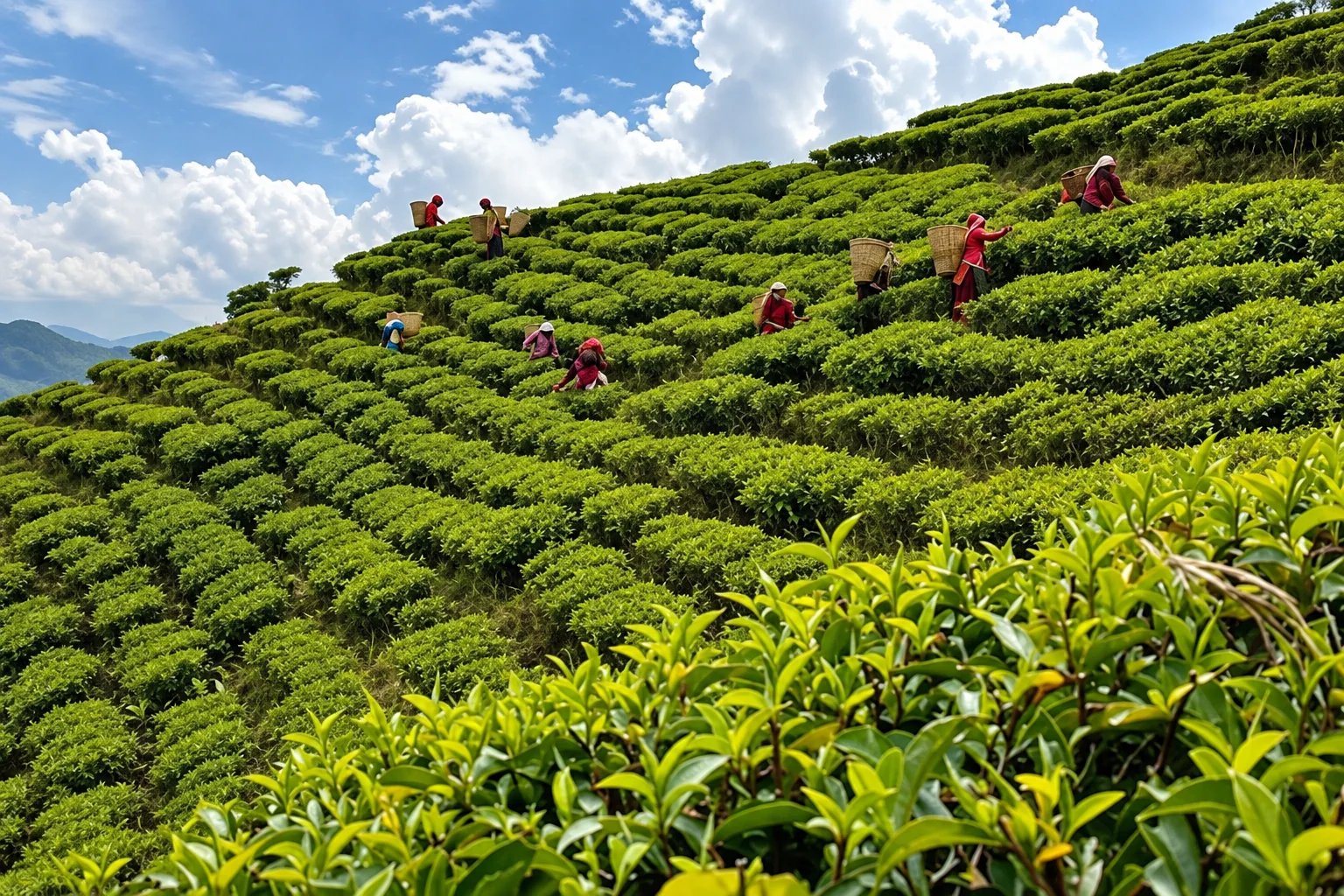
The Poon Hill route passes Gurung and Magar villages at Ghorepani, Tadapani, and Ghandruk, where stone-paved lanes, a Gurung museum, and local lodges add culture to the scenery. The Ghandruk village guide and the Pokhara to Ghandruk Trek go deeper. Mardi Himal is mostly forest, ridge, and mountain, and village life appears mainly at Siding on the descent. For culture without altitude, the 3-Day Lwang Village & Tea Garden Tour near Pokhara suits well.
Season by Season for 2027
| Season | Ghorepani Poon Hill Trek | Mardi Himal Trek |
|---|---|---|
| Spring (March to May) | Rhododendron bloom, good views, busy | Blooms and mild days, busy ridge |
| Monsoon (June to August) | Wet but workable, cloudy summit | Leeches, cloud, slippery trail; best avoided |
| Autumn (September to November) | Clearest views, busiest crowds | Clearest views, busiest crowds |
| Winter (December to February) | Cold but lodges stay open, often clear | Freezing nights, snow near High Camp |
Poon Hill is generally the better winter and monsoon choice, because the route stays lower and offers better lodge access. For wet-season ideas, see the monsoon travel guide.
Permits, Guides and Costs
| Item | Ghorepani Poon Hill Trek | Mardi Himal Trek |
|---|---|---|
| ACAP | Required | Required |
| Restricted-area permit | Not required | Not required |
| TIMS | Reported differently by operators | Reported differently by operators |
| Licensed guide | Included in the Khushi package | Rule reported differently; recommended |
| Porter | $20 per day, optional | Arranged on request |
| Price | On request | Quoted after a custom request |
The ACAP applies to both treks at NPR 3,000 for foreign nationals and NPR 1,000 for SAARC nationals, and permits roughly total USD 25 to 40 for foreign trekkers in 2026 sources. One operator states that foreign nationals can no longer trek either area without a guide, while others call a guide strongly recommended, so Khushi Travels confirms the current rule at booking. The March 2026 restricted area update concerned restricted areas, not the Annapurna Conservation Area. The Annapurna Conservation Area guide explains how fees support the region.
Fitness and Training Differences
- For Poon Hill: stair climbing, step-ups, and leg endurance, because the Ulleri staircase and the descent work the quads and knees
- For Mardi Himal: longer steady uphill walks, loaded-daypack hikes, and cold-weather practice
- For both: four to six weeks of regular walking, with a Pokhara warm-up such as the Kalikasthan Thulakot Day Hike or the 2-Day Astam Village Himalayan Hike
Which Should You Choose in 2027?
| Traveler | Better pick |
|---|---|
| First Himalayan trek | Poon Hill |
| Families with active children | Poon Hill, or the Ghandruk trek |
| Older travelers wanting a lower route | Poon Hill |
| Wide sunrise panorama with Dhaulagiri | Poon Hill |
| Closest Fishtail views and fewer crowds | Mardi Himal |
| Winter departure | Poon Hill |
| Only 4 days available | Poon Hill’s short version |
| 7 days and solid fitness | Mardi Himal |
| Altitude practice before a big trek | Mardi Himal |
| Culture-first travel | Poon Hill |
Can You Do Both?
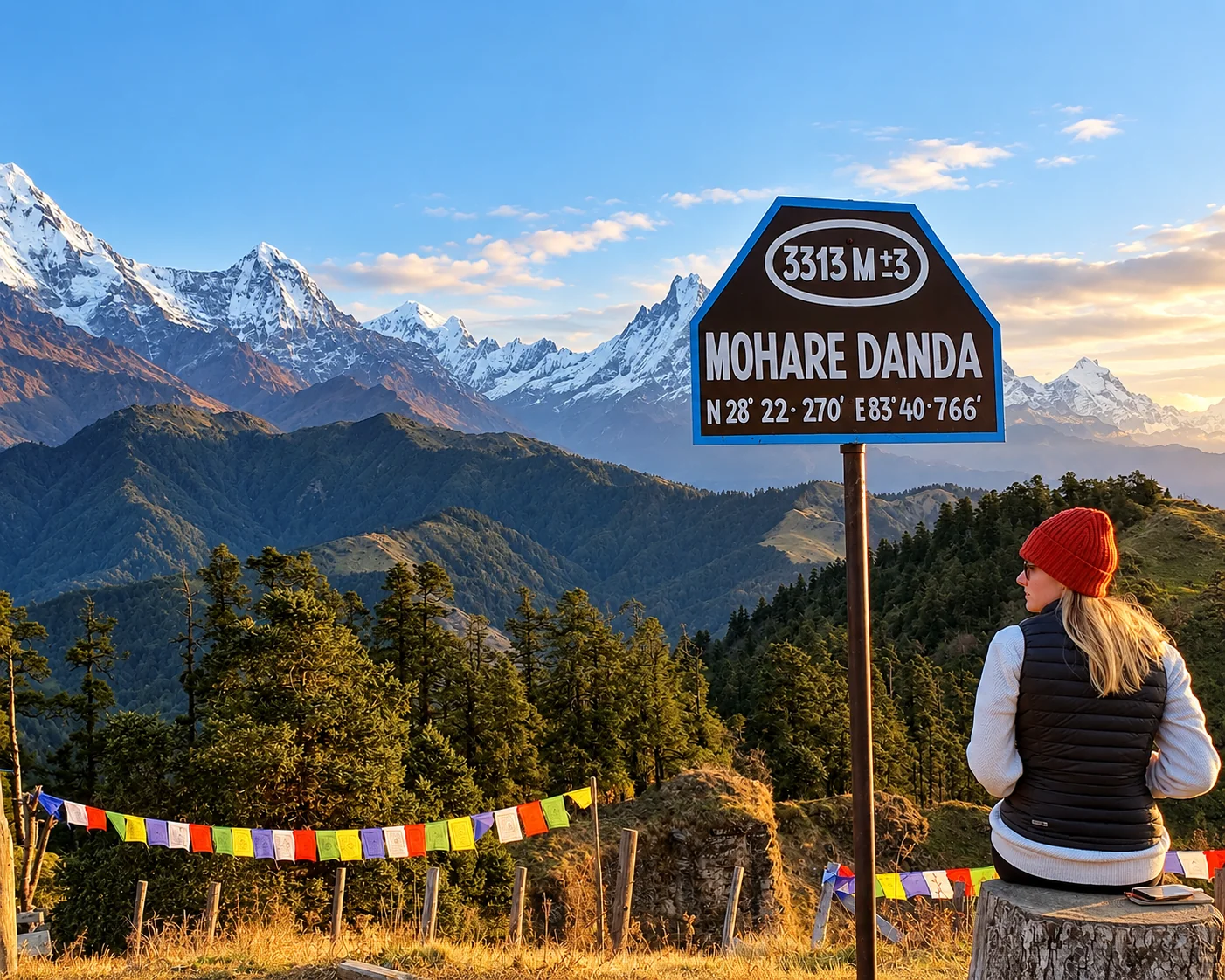
Yes. Operators publish combined Poon Hill and Mardi Himal itineraries, including an 8-day structure. The Ghorepani Poon Hill Trek page notes extensions toward Annapurna Base Camp, Mohare Danda, and Khopra Danda. A combined request can be sent through Customize Trip. A sensible progression for most first-timers is Poon Hill now, then Mardi Himal or the Annapurna Base Camp Trek on a later trip. For other options, read Short Treks from Pokhara.
Sample Plans
Ghorepani Poon Hill Trek (Khushi Travels, 6 days):
- Day 1: Drive from Kathmandu via Pokhara and Nayapul to Tikhedhunga (1,540m)
- Day 2: Trek to Ghorepani, including the Ulleri staircase
- Day 3: Sunrise at Poon Hill (3,210m), then trek to Tadapani
- Day 4: Trek to Ghandruk
- Day 5: Drive to Pokhara, with boating on Phewa Lake
- Day 6: Drive back to Kathmandu
Mardi Himal Trek (suggested 6 to 7 days, not a fixed package):
- Days 1 to 3: Kande or Dhampus Phedi to Forest Camp and Low Camp
- Day 4: High Camp, with rest
- Day 5: Pre-dawn push to the viewpoint or base camp, then descend
- Day 6: Descend through Siding and drive to Pokhara
- Day 7: Spare day for weather or recovery
What to Pack: Where the Two Differ
- Both treks: layers, rain jacket, broken-in boots, headlamp, sunscreen, reusable bottle
- Poon Hill extras: trekking poles for the stairs and a warm layer for the pre-dawn wait
- Mardi Himal extras: a warm sleeping bag, down jacket, gloves, hat, and insurance covering at least 4,500m
- Cover for either trek: travel insurance with helicopter evacuation
The Nepal trekking gear guide and the trekking insurance guide give full checklists.
After Either Trek
- Pokhara Valley Sightseeing with Boating at Phewa Lake
- Paragliding with Himalayan Views in Pokhara
- The 1-Day Ayurvedic Wellness Experience in Kathmandu
- The natural hot springs guide and the what to do after trekking guide
Plan Your Trek with Khushi Travels
The Ghorepani Poon Hill Trek can be booked as a private departure on request. For Mardi Himal or a combined itinerary, send dates, group size, and fitness level through Customize Trip. Contact us or message WhatsApp. Khushi Travels & Consulting Group is associated with NMA, NTB, TAAN, KEEP, and the Himalayan Rescue Association. See the registrations and why travel with us pages. For the Mardi Himal side in depth, read Is Mardi Himal Good for Beginners? and Is Poon Hill Sunrise Worth It?
Frequently Asked Questions
1. Which is better, Mardi Himal or Poon Hill?
Neither wins outright. The Ghorepani Poon Hill Trek in the Annapurna region suits first-time trekkers wanting comfort, culture, and a famous sunrise, while the Mardi Himal Trek near Pokhara suits fit trekkers wanting quieter ridge trails and closer views of Machhapuchhre. The Is Poon Hill Sunrise Worth It? guide explains the Poon Hill side in depth.
2. Which is better for beginners, Mardi Himal or Poon Hill?
The Ghorepani Poon Hill Trek is the gentler beginner choice because the highest night stays under 3,000m and village lodges appear daily, while the Mardi Himal Trek pushes sleeping altitude above 3,500m at High Camp. The Is Mardi Himal Good for Beginners? guide covers the Mardi Himal side.
3. Is Mardi Himal harder than Poon Hill?
Yes, the Mardi Himal Trek in the Annapurna Conservation Area is generally harder than the Ghorepani Poon Hill Trek, because Mardi Himal reaches up to 4,500m against 3,210m at Poon Hill. The Ghorepani Poon Hill Trek still includes the long Ulleri staircase, so both treks reward steady training, and the Short Treks from Pokhara guide compares effort across routes.
4. Which trek has better mountain views?
The Ghorepani Poon Hill Trek offers a wide sunrise panorama taking in Dhaulagiri and the Annapurna range, while the Mardi Himal Trek offers closer views of Machhapuchhre (Fishtail), Annapurna South, and Hiunchuli from the ridge. The Annapurna Base Camp Trek in the Annapurna Sanctuary offers a third close-up option.
5. Which trek is less crowded?
The Mardi Himal Trek is usually quieter than the Ghorepani Poon Hill Trek, which ranks among Nepal’s busiest short treks in peak spring and autumn. The Panchase Hill Eco Hike near Pokhara is quieter still for travelers wanting Annapurna views with few trekkers.
6. Which trek suits families with children?
The Ghorepani Poon Hill Trek and the Pokhara to Ghandruk Trek in Ghandruk village suit active families better than the Mardi Himal Trek, since altitude stays lower and lodges appear frequently. The Family Holiday collection lists more family trips.
7. Which trek is better for photographers?
The Ghorepani Poon Hill Trek rewards photographers with a sunrise panorama over Dhaulagiri and the Annapurna range plus village scenes at Ghandruk, while the Mardi Himal Trek rewards ridge compositions with Machhapuchhre close at hand. The Photography travel style page lists more photo-focused trips.
8. What are the highest altitudes of Mardi Himal and Poon Hill?
Poon Hill stands at 3,210m on the Ghorepani Poon Hill Trek, while Mardi Himal Base Camp stands at about 4,500m, with an upper viewpoint near 4,200m used by many operators. The Annapurna Conservation Area guide covers the region around both viewpoints.
9. Is altitude sickness a risk on Poon Hill or Mardi Himal?
Altitude sickness risk is low on the Ghorepani Poon Hill Trek because the highest night at Ghorepani sits near 2,850m, but risk rises on the Mardi Himal Trek because High Camp sleeps above 3,500m. The altitude section of the How Hard Is the Larke Pass Trek guide explains symptoms and prevention.
10. How many hours do trekkers walk each day?
The Ghorepani Poon Hill Trek involves 4 to 7 hours of walking daily on the Khushi Travels itinerary, and the Mardi Himal Trek typically runs 4 to 6 hours per stage plus a pre-dawn push from High Camp to the viewpoint. The Short Treks from Pokhara guide compares walking times across Pokhara-side routes.
11. What is the Ulleri staircase?
The Ulleri staircase is a long run of stone steps on the Ghorepani Poon Hill Trek between Tikhedhunga and Ghorepani, widely seen as the hardest stretch of the route, and trekking poles help on both ascent and descent. The Ghorepani Poon Hill Trek page lists the full itinerary.
12. Does either trek need technical climbing?
No technical climbing, ropes, or crampons are normally needed on the Ghorepani Poon Hill Trek or the Mardi Himal Trek in clear spring and autumn conditions, although the upper Mardi Himal ridge is steep and narrow. The Poon Hill travel guide describes the Poon Hill terrain in detail.
13. Which trek is better training for Annapurna Base Camp or Larke Pass?
The Mardi Himal Trek offers more altitude practice for trekkers planning the Annapurna Base Camp Trek in the Annapurna Sanctuary, while the Ghorepani Poon Hill Trek builds stair-climbing stamina. Trekkers eyeing the Manaslu Circuit Trek in the Manaslu region can read the Larke Pass vs. Thorong La guide first.
14. What is the best season for Mardi Himal and Poon Hill in 2027?
Spring (March to May) and autumn (September to November) suit both the Mardi Himal Trek and the Ghorepani Poon Hill Trek, with autumn offering the clearest skies and spring adding rhododendron bloom. The Annapurna Base Camp Trek page from Khushi Travels lists the same two seasons for the Annapurna region.
15. Which trek is better in winter?
The Ghorepani Poon Hill Trek is generally the better winter choice because lower altitude and well-used lodges ease the cold, while the Mardi Himal Trek brings freezing nights and snow near High Camp. The Nepal trekking gear guide lists cold-weather essentials.
16. Which trek is better in the monsoon?
Neither trek is ideal from June to August, though the Ghorepani Poon Hill Trek copes better because the route stays lower with more lodge access. The 3-Day Lwang Village & Tea Garden Tour near Pokhara and the monsoon travel guide suit wet-season travel better.
17. How many days are needed for each trek?
The Ghorepani Poon Hill Trek runs 6 days from Kathmandu on the Khushi Travels itinerary, with shorter 4 to 5 day versions possible, while the Mardi Himal Trek needs 5 to 7 trekking days from Pokhara. Dates and pacing can be discussed through the Customize Trip page.
18. How early should a 2027 trek be booked?
Spring and autumn 2027 departures for the Ghorepani Poon Hill Trek and Mardi Himal itineraries fill early, so starting plans 2 to 3 months ahead helps secure guides and lodge space; contact Khushi Travels or message WhatsApp to begin.
19. What permits are needed for Poon Hill and Mardi Himal?
Both the Ghorepani Poon Hill Trek and the Mardi Himal Trek lie inside the Annapurna Conservation Area, so the ACAP applies at NPR 3,000 for foreign nationals and NPR 1,000 for SAARC nationals, with no restricted-area permit required. The Annapurna Conservation Area guide explains where fees go.
20. Is a guide mandatory for Poon Hill or Mardi Himal?
Operators describe the guide rule for the Ghorepani Poon Hill Trek and the Mardi Himal Trek differently, with some stating foreign trekkers need a licensed guide and others calling a guide recommended, so Khushi Travels verifies the current rule at booking. The March 2026 restricted area update concerned restricted areas only.
21. Is a TIMS card needed for Poon Hill or Mardi Himal?
TIMS enforcement on the Ghorepani Poon Hill Trek and the Mardi Himal Trek is reported differently by operators, and the Khushi Travels Annapurna Base Camp Trek page also notes TIMS depends on current regulations, so confirmation happens before departure.
22. How much does each trek cost?
The Ghorepani Poon Hill Trek is priced on request on the Khushi Travels page, with an optional porter at $20 per day, while a Mardi Himal itinerary is quoted after a request through Customize Trip. Permits cost roughly USD 25 to 40 on either route in 2026 sources.
23. Is travel insurance needed for Poon Hill or Mardi Himal?
Travel insurance covering trekking and emergency helicopter evacuation is recommended for both treks, with the Mardi Himal Trek needing cover up to at least 4,500m and the Ghorepani Poon Hill Trek needing cover up to 3,210m. The Khushi Travels travel insurance page and the trekking insurance guide explain what to check.
24. Where do the two treks start?
The Ghorepani Poon Hill Trek on the Khushi Travels itinerary starts with a drive from Kathmandu via Pokhara and Nayapul to Tikhedhunga, while the Mardi Himal Trek usually starts from Kande or Dhampus Phedi about 30 to 40 minutes from Pokhara. The Pokhara guide covers the lake city used as a base for both.
25. Can Mardi Himal and Poon Hill be combined?
Operators publish combined Ghorepani Poon Hill and Mardi Himal itineraries, including an 8-day structure, and a combined request can be sent through the Customize Trip page. The Ghorepani Poon Hill Trek page also lists extensions toward Annapurna Base Camp, Mohare Danda, and Khopra Danda.
26. Can Khushi Travels arrange a Mardi Himal Trek?
Mardi Himal is not on the fixed package list of Khushi Travels & Consulting Group, so a Mardi Himal itinerary starts as a request through the Customize Trip page with dates, group size, and fitness level, and the team advises whether Mardi Himal or Poon Hill fits best. Listed Annapurna-region trips appear under Trekking & Hiking.
27. What accommodation is available on each trek?
The Khushi Travels Ghorepani Poon Hill Trek includes a 3-star Kathmandu hotel plus trek lodges at Tikhedhunga, Ghorepani, Tadapani, and Ghandruk, while Mardi Himal Trek lodges at Forest Camp, Low Camp, and High Camp are simpler, with limited paid showers and Wi-Fi. The Pokhara Valley Sightseeing with Boating at Phewa Lake fills a hotel rest day well.
28. What should be packed for each trek?
Layers, rain protection, broken-in boots, and a headlamp suit both the Ghorepani Poon Hill Trek and the Mardi Himal Trek, with trekking poles adding value on the Ulleri staircase and a warm sleeping bag adding value at Mardi Himal High Camp. The Nepal trekking gear guide covers the full kit.
29. How should trekkers prepare physically for each trek?
Four to six weeks of walking, stair climbing, and loaded-daypack hikes prepare trekkers for both the Ghorepani Poon Hill Trek and the Mardi Himal Trek, and a Pokhara warm-up such as the Kalikasthan Thulakot Day Hike or the 2-Day Astam Village Himalayan Hike tests fitness cheaply.
30. Which easier treks suit travelers wanting less than Poon Hill?
The 2-Day Astam Village Himalayan Hike near Pokhara, the Dhampus Sarangkot Trek through the Annapurna foothills, and the Pokhara to Ghandruk Trek in Ghandruk village all sit below Poon Hill in effort and altitude.
31. What is a sensible trek progression after Poon Hill?
A sensible progression starts with the Ghorepani Poon Hill Trek, then steps up to the Mardi Himal Trek or the Annapurna Base Camp Trek in the Annapurna Sanctuary, and later to the Annapurna Circuit Trek through Thorong La. The Short Treks from Pokhara guide maps the lower rungs.
32. What can trekkers do after finishing either trek?
Pokhara recovery options after the Ghorepani Poon Hill Trek or the Mardi Himal Trek include the Paragliding with Himalayan Views in Pokhara and the 1-Day Ayurvedic Wellness Experience in Kathmandu. The what to do after trekking guide lists more ideas.
Ready to Choose Your Annapurna Trek?
Contact Khushi Travels or message WhatsApp. Reach Mr. Dinesh (9768988868) or Mr. Sunil Sharma (9768988869) directly by phone.
Khushi Travels & Consulting Group Pvt. Ltd. | Sorahkhutte, Kathmandu, Nepal | info@khushiservice.com | khushiservice.com
Similar Blogs

We are associated with